DD
MM
YYYY

PAGES

DD
MM
YYYY

spot_img

PAGES

Home Blog Page 3657

Crypto analysts predict 2024’s crypto giants – Sponge V2 & Scorpion Casino

0

Sponge V2 and Scorpion Casino emerge as potential leaders in the predictions of leading crypto analysts for 2024. With innovative technologies and strategic developments, these projects aim to redefine the crypto industry’s landscape. But what sets them apart, and which one is poised to emerge as the ultimate crypto giant?

As we dive into the depths of Sponge V2 and Scorpion Casino, we’ll unravel their unique features, market strategies, and potential for exponential growth. Join us on this exploration of the crypto realm as we uncover the secrets behind 2024’s predicted giants and equip you with insights to navigate the ever-evolving world of digital assets.

Sponge V2: Bridging Security and Innovation

Sponge V2, overcoming past challenges with liquidity pool management, has transitioned to the Polygon network, prioritizing enhanced security and scalability. Beyond being a mere cryptocurrency, Sponge V2 serves as the cornerstone of a decentralized play-to-earn gaming ecosystem, offering users cost-effective solutions and heightened security measures. Its migration to Polygon underscores a commitment to longevity within the crypto space.

At the heart of Sponge V2 lies a steadfast dedication to safeguarding user assets and ensuring a seamless gaming experience. By leveraging the advanced security features of the Polygon network, Sponge V2 caters to security-conscious gamers and investors alike, positioning itself as a trustworthy option in an industry where trust is paramount.

Scorpion Casino: Pioneering Innovation in Online Gaming

Scorpion Casino (SCORP) represents a shift in the online gaming landscape, leveraging blockchain technology to deliver transparency and security. With a diverse array of offerings, including a comprehensive sportsbook and engaging casino games, Scorpion Casino has solidified its position as a premier destination for gaming enthusiasts worldwide.

Having been operational for over 1.5 years, Scorpion Casino has achieved significant milestones, including the successful launch of its updated V2 platform and strategic partnerships with industry leaders like Tenset. Moreover, its collaboration with major iGaming developers and influencers underscores its commitment to driving brand awareness and fostering community engagement.

Scorpion Casino has recently secured a notable listing on XT.com, which has boosted its presale fundraising efforts to close to $5 million. Currently, the presale is entering its concluding phase, capturing widespread interest from the crypto community.

Backed by a robust tokenomics model and a revenue-sharing system, Scorpion Casino offers investors a dynamic avenue for generating passive income amidst the volatility of the crypto market. With a proven track record of success and a growing ecosystem of partners and supporters, Scorpion Casino is primed for exponential growth in the coming year.

The Path to Crypto Greatness

While both Sponge V2 and Scorpion Casino present compelling investment opportunities within the crypto landscape, the latter emerges as the clear frontrunner for becoming one of 2024’s crypto giants. With its innovative approach to online gaming, robust tokenomics, and unwavering commitment to investor success, Scorpion Casino stands poised to deliver substantial returns for investors seeking to capitalise on the next big crypto investment.


More information on SCORP:

Presale: https://presale.scorpion.casino/

Twitter: https://twitter.com/ScorpionCasino

Telegram: https://t.me/scorpioncasino_official
Dogwifhat vs Scorpion Casino – which top crypto presale will give 100x gains this year?

0

Have you ever found yourself torn between two promising crypto presales, unsure which to invest in for maximum returns? In the realm of crypto investment, Dogwifhat and Scorpion Casino stand out as potential game-changers that can give up to 100x gains. Dogwifhat boasts innovative technology and a strong community, while Scorpion Casino offers unique utility within the growing world of decentralised finance (DeFi). Through this analysis, we uncover which presale holds the key to unlocking substantial gains in the crypto market.

Unveiling Dogwifhat: A Memetic Marvel

Dogwifhat, abbreviated as WIF, burst onto the cryptocurrency scene in 2023 with a nod to the popular Doge meme. Unlike traditional cryptocurrencies that boast utility-driven value propositions, Dogwifhat embraces simplicity and humour, featuring a Shiba Inu adorned with a comical hat in its logo. Its appeal lies predominantly in market speculation, with its value driven by community sentiment rather than tangible use cases.

Despite its lighthearted premise, Dogwifhat has garnered attention within the crypto community, rivalling the trading volumes of established meme coins like SHIB and PEPE. However, its speculative nature raises questions about long-term sustainability and inherent risks associated with meme-based cryptocurrencies. Investing in Dogwifhat presents a high-risk, high-reward scenario, where investors must navigate volatile market conditions driven by sentiment rather than fundamentals. While the potential for exponential gains exists, so too does the possibility of significant losses, making it a speculative venture suited for risk-tolerant investors seeking short-term profits.

Scorpion Casino: The Secret to Making Money While Having Fun

Scorpion Casino, symbolised by SCORP, represents a shift in the online gambling industry by integrating blockchain technology to enhance transparency, efficiency, and security. With a strategic focus on tapping into a flourishing market, online gaming, that’s projected to reach $145.6 billion by 2030, Scorpion Casino Token offers investors a gateway to passive income through its presale.

Supported by a robust tokenomics model encompassing buy-backs, burns, and revenue-sharing mechanisms, Scorpion Casino Token offers investors a dynamic avenue for generating passive income amidst the volatility of the crypto market. Unlike traditional cryptocurrencies, Scorpion Casino’s revenue-sharing system ensures a steady stream of income independent of market fluctuations.

Having already achieved significant milestones and partnerships, including the successful launch of its V2 platform and collaborations with industry leaders like Tenset, Scorpion Casino has cemented its position as a trailblazer in the crypto gaming sphere. Moreover, its reward system, coupled with partnerships with renowned influencers, underscores its commitment to driving brand awareness and fostering community engagement.

Scorpion Casino has also recently secured a notable listing on XT.com, which has boosted its presale fundraising efforts to close to $5 million. Currently, the presale is entering its concluding phase, capturing widespread interest from the crypto community.

In conclusion, while both Dogwifhat and Scorpion Casino offer unique value propositions within the crypto landscape, the latter emerges as the superior choice for investors seeking 100x gains in 2024. With its innovative approach to online gaming, robust tokenomics, and unwavering commitment to investor success, Scorpion Casino presents a compelling opportunity for passive income generation amidst the crypto bull run of 2024. As such, we encourage readers looking to capitalize on the next big crypto investment to explore the presale opportunities offered by Scorpion Casino and embark on a journey towards financial prosperity.


More information on SCORP:

Presale: https://presale.scorpion.casino/

Twitter: https://twitter.com/ScorpionCasino

Telegram: https://t.me/scorpioncasino_official
The Biden’s $10 Billion Intel Subsidy Is A Conglomerate Tax

1
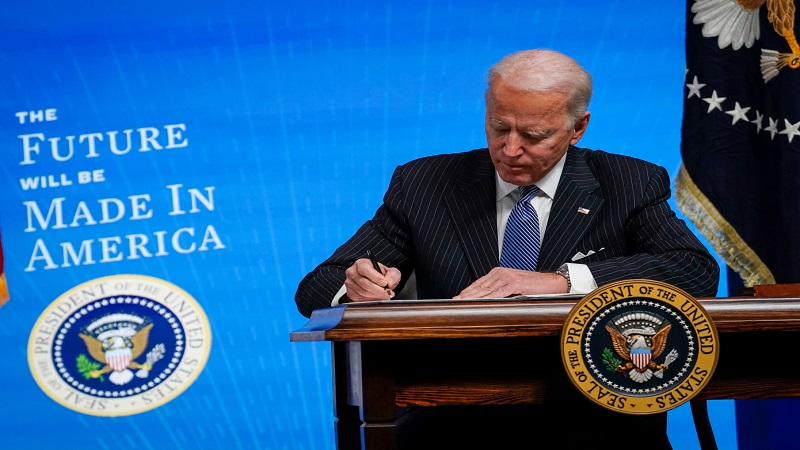
WASHINGTON, DC - JANUARY 25: U.S. President Joe Biden signs an executive order related to American manufacturing in the South Court Auditorium of the White House complex on January 25, 2021 in Washington, DC. President Biden signed an executive order aimed at boosting American manufacturing and strengthening the federal government's Buy American rules. (Photo by Drew Angerer/Getty Images)

Nations rise when they have pioneering entrepreneurs. And when those entrepreneurs become dominant, they demand concessions from governments, and in the process “tax” the citizens, for providing services which are critical and catalytic. I have called that “conglomerate tax”, a tax citizens pay to some of the leading companies in the world to serve them!

As noted in the press release, the Basing Authority will provide the land. That means Dangote Group will not have to pay for it. There is nothing wrong with that. He is investing to provide food security, provide youth employment and also improve the communities. That is what conglomerates do because they are the best creators of jobs, at least in short terms. While the state can plan to sell the land and invest the proceeds in startups, it may take years before those startups can generate the kind of employment and economic activity a conglomerate like Dangote can deliver in a year. For having that capacity, conglomerates tax nations. In other words, you have to subsidize their businesses through government supports for them to help you fix your pain points like unemployment as a government. They operate at the upstream level where the pain points are massive in the operations of governments. Their reward is Conglomerate Tax: the subsidization of their business operations due to their capabilities to help support government initiatives at scale.

Please note that Conglomerate Tax  is a global thing. U.S. government may waive taxes for GE but will not listen to Facebook because GE is a conglomerate. They are treated differently because they technically build nations. Government may have the money but may also need a special plastic for a new warplane. There are few companies that can deliver such products. So, a government may engage a company like GE to research and develop the plastic. The company can ask for concessions to take that risk. Those concessions are taxes to nations since the nations must still buy the plastics if the conglomerate succeeds.

Yes, Conglomerate Tax is global for Dangote Cement, Amazon, GE, etc and it remains “the subsidization of their business operations due to their capabilities to help support government initiatives at scale.”

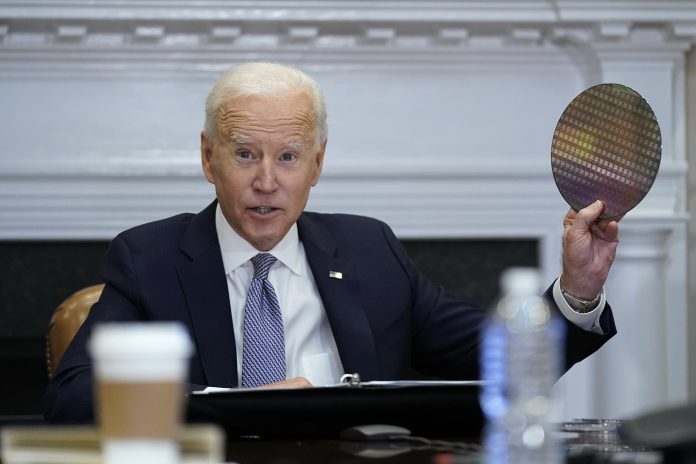
Today, we are reading that Biden’s government will provide $10 billion to enable Intel to decouple America from the risk of foreign semiconductor products: “In a concerted effort to bolster domestic semiconductor production, the Biden administration is engaged in discussions to allocate over $10 billion in subsidies to Intel Corp, a move motivated by the industry’s escalating significance in powering critical technologies across various sectors.

“This development, reported by Bloomberg News on Friday, reflects a strategic maneuver aimed at fortifying the United States’ semiconductor capabilities amidst global supply chain disruptions and geopolitical tensions.”

From cheap FX dollars to waived import duties to many other things, nations apply special goodies to conglomerates, because they have accumulated and compounded capabilities, to help governments pursue their missions. Yes, Intel is helping Biden’s government on its Made in America initiative and Intel will get $10 billion goodies. And that is why you must not be annoyed when Dangote Cement gets goodies you cannot access in your small Ovim store. It is what it is!

Updated 4 days ago

The federal government is giving the semiconductor chip maker GlobalFoundries $1.5 billion to expand its manufacturing facilities, the Biden Administration announced Monday. The grant is only the third issued under the Chips Act, which was passed in August 2022 with the goal of boosting domestic chip production but has seen little of its $53 billion pot doled out. Delays have become the norm for the industry; Intel recently announced it was pushing back production on a $20 billion Ohio plant, placing part of the blame on the slow rollout of the federal grant money. New York-based GlobalFoundries will also have access to federal loans up to $1.6 billion for the projects in its home state and neighboring Vermont.

Biden Administration Negotiates $10 Billion Subsidy for Intel to boost domestic Semiconductor production

Biden Administration Negotiates $10 Billion Subsidy for Intel to boost domestic Semiconductor production

0

In a concerted effort to bolster domestic semiconductor production, the Biden administration is engaged in discussions to allocate over $10 billion in subsidies to Intel Corp, a move motivated by the industry’s escalating significance in powering critical technologies across various sectors.

This development, reported by Bloomberg News on Friday, reflects a strategic maneuver aimed at fortifying the United States’ semiconductor capabilities amidst global supply chain disruptions and geopolitical tensions.

Sources familiar with the matter revealed that negotiations are ongoing, with Intel’s award package expected to encompass both loans and direct grants, aimed at revitalizing and expanding the American semiconductor industry.

The US Department of Commerce, entrusted with overseeing the disbursement of funds under the CHIPS Act, has refrained from confirming or denying the reports, maintaining a diplomatic silence amidst the sensitive negotiations. Similarly, Intel has opted to withhold comment on the ongoing developments.

The proposed subsidy to Intel aligns with broader initiatives outlined by the Biden administration to bolster the semiconductor sector, which plays a pivotal role in driving technological innovation, economic growth, and national security. Under the auspices of the $39 billion semiconductor program, the Department of Commerce has already unveiled two smaller grants, signaling a concerted effort to invigorate semiconductor manufacturing capabilities within the country.

Commerce Secretary Gina Raimondo’s earlier announcement regarding the imminent allocation of several funding awards denotes the urgency and commitment of the US government to strengthening domestic semiconductor production.

The semiconductor fund, a cornerstone of the government’s strategy, seeks to catalyze chip production and related supply chain investments, with a particular focus on building new factories and enhancing production capacities.

Intel, a stalwart in the semiconductor industry, has outlined ambitious plans to invest tens of billions of dollars in chip factories across various states, with a notable emphasis on a groundbreaking new site in Ohio, potentially positioned to become the world’s largest chip plant. However, recent reports hint at a potential delay in the completion of the Ohio facility until 2026, citing market dynamics and the gradual influx of federal funding as contributing factors.

Amidst the discussions surrounding federal subsidies, Nvidia has emerged as a key player in the semiconductor industry, reaching a market cap of $1.79 trillion. The California-based company has experienced significant growth and prominence in recent years, driven by its cutting-edge graphics processing units (GPUs) and contributions to artificial intelligence, high-performance computing, and data center technologies.

Further under the CHIPS Act, GlobalFoundries, a pivotal domestic semiconductor manufacturer, is poised to receive a substantial portion of the federal subsidy, as outlined in a preliminary agreement. The funding is earmarked for three projects, including the establishment of a new fabrication facility in Malta, New York, and expansions at existing sites in Malta and Burlington, Vermont.

Lael Brainard, director of the White House’s National Economic Council, emphasized the strategic importance of such investments in bolstering national security and technological prowess, noting the multifaceted significance of semiconductor investments in driving economic resilience and innovation.

“Today’s investment will protect our national security by expanding domestic production of chips used in technology such as satellites and space communications,” Brainard said on a call with reporters.

Senate Majority Leader Chuck Schumer hailed the announcement as a significant milestone for New York State, highlighting the anticipated job creation and economic benefits.

The projects are expected to create thousands of manufacturing and construction jobs over the next decade, contributing to the revitalization of local economies.

As semiconductor manufacturers gear up for a rebound in the industry, GlobalFoundries’ strategic upgrades underscore the anticipation of a future growth trajectory, further corroborated by projections indicating a double-digit growth in semiconductor sales for 2024.

While the negotiations surrounding Intel’s potential subsidy mark a significant step in strengthening domestic semiconductor production, the broader implications extend to reinforcing supply chain resilience, mitigating geopolitical risks, and fostering technological innovation.

The Chips Act was passed by Congress in 2022. The initiative responds to concerns regarding global supply chain vulnerabilities, production expenses, and geopolitical risks, particularly those related to Taiwan. Concurrently, tensions between the United States and China over technology are escalating as the 2024 presidential election approaches.

With ongoing discussions and investments, the semiconductor industry is poised to play a pivotal role in driving economic growth and innovation in the United States. The main goal of Washington is to boost domestic production, covering the edges that China could leverage to beat its sanctions. Analysts expect more companies like Nvidia to emerge in the industry in the near term.

EU Antitrust Act: Apple Faces €500 Million Fine for App Store Policies

0

In a recent development that could have far-reaching implications for American tech companies operating in Europe, the European Union has levied a hefty fine of €500 million (approximately $539 million) against Apple, according to Financial Times.

The fine follows a complaint lodged by Spotify, alleging that Apple’s policies within its App Store hinder competition by restricting apps from informing users about cheaper alternatives to Apple’s own music streaming service.

The crux of the matter lies in Apple’s concerted efforts to maintain control over the payment system within its App Store ecosystem. Spotify’s grievance, dating back to 2019, prompted an extensive investigation by EU regulators the following year. The investigation culminated in objections against Apple’s prohibition on app developers linking to external subscription sign-up pages within their apps—a policy that Apple eventually revised in 2022 under pressure from regulatory authorities in Japan.

While the €500 million fine may appear substantial, it pales in comparison to the potential penalty initially proposed by the EU, which hovered around $40 billion, equivalent to 10 percent of Apple’s annual global turnover. This instance isn’t the first time Apple has found itself at odds with European regulators. In 2020, the company faced charges totaling over a billion dollars, which were subsequently reduced to approximately $366 million by French authorities following an appeal by Apple.

When approached for comment, Apple’s representative, Emma Wilson, declined to address the specifics, stating that the company does not comment on speculation. Instead, she referred to previous statements made by another Apple spokesperson, Hannah Smith, who, in February of the previous year, expressed hope that the Commission would cease pursuing the case, asserting that it lacked merit. Similarly, European Commission spokesperson Lea Zuber opted not to comment on the matter.

This latest fine against Apple underscores the growing regulatory scrutiny faced by dominant tech players, particularly in Europe, where antitrust measures are being rigorously enforced to ensure a level playing field for competition. The EU’s actions against Apple are indicative of a broader trend wherein regulatory bodies are closely monitoring the conduct of tech giants to prevent anti-competitive practices and safeguard consumer interests.

Moreover, the implications of this fine extend beyond Apple, serving as a cautionary tale for other American tech companies operating in Europe. Other American tech companies such as Meta have had to face heavy fines for monopolistic and antitrust practices.

Last May, the EU slapped Meta with a record $1.3 billion privacy fine and ordered it to stop transferring users’ personal information across the Atlantic by October.

The EU’s regulators’ intensified scrutiny and enforcement of antitrust laws have been noted to be in contrast to the “lax” of the American counterparts. Analysts said companies across the tech sector will need to reassess their business practices to ensure compliance with evolving regulatory frameworks.

Failure to do so could result in significant financial penalties and reputational damage, ultimately impacting their fortunes in key markets such as the European Union.