DD
MM
YYYY

PAGES

DD
MM
YYYY

spot_img

PAGES

Home Blog Page 366

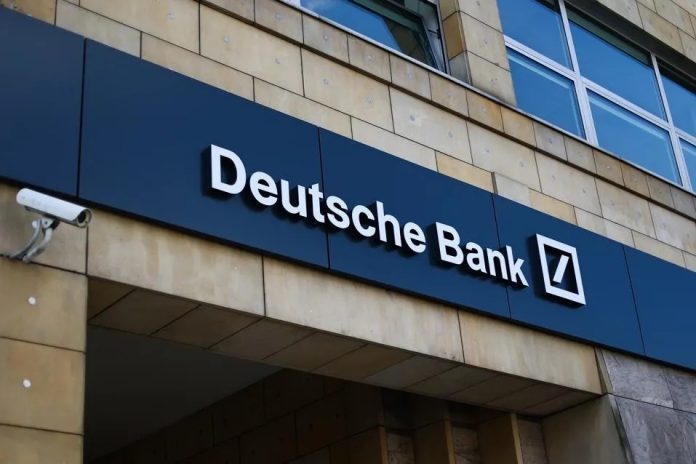
Deutsche Bank Predicts Central Bank Will Include Bitcoin and Gold As Reserve Portfolios By 2030

0

Deutsche Bank has forecasted that central banks are likely to include both Bitcoin and gold in their reserve portfolios by 2030, positioning them as complementary hedges against inflation, geopolitical risks, and the ongoing erosion of U.S. dollar dominance.

This outlook emerged in a series of research notes from the bank’s analysts, starting around September 2025, and gained traction in early October amid surging prices for both assets—Bitcoin surpassing $125,000 and gold nearing $4,000 per ounce.

Analysts Marion Laboure and Camilla Siazon argue that Bitcoin could evolve into a “modern cornerstone of financial security,” mirroring gold’s historical role in the 20th century. They emphasize that neither asset is expected to replace the dollar entirely, but both will likely “coexist on central bank balance sheets by 2030” due to their scarcity, low correlation with traditional assets, and strategic value.

The U.S. dollar’s portion of global reserves has fallen from 60% in 2000 to about 43% in 2025, prompting diversification. Central banks like those in China, Poland, and Turkey are already ramping up gold purchases, while Bitcoin’s institutional adoption signals growing legitimacy.

Despite being “backed by nothing,” Bitcoin’s volatility has hit historic lows even as prices rally, making it behave more like gold. Deutsche Bank highlights its potential as a store of value, especially for nations seeking to reduce U.S. financial exposure via decentralized networks.

Central banks currently hold about 35,200 tonnes of gold out of ~216,000 tonnes total supply. A 2025 World Gold Council survey shows 43% of central banks planning to increase holdings, with 95% expecting overall global reserves to rise.

This prediction aligns with broader trends: de-dollarization efforts, record ETF inflows hundreds of billions into Bitcoin ETFs since 2024, and recent U.S. policy moves like the strategic Bitcoin reserve under the Trump administration. The report, titled Gold’s Reign, Bitcoin’s Rise, has sparked widespread discussion.

scottmelker noted the weakening dollar as a key driver. Skeptics point to regulatory hurdles and Bitcoin’s past volatility, but the consensus is that this could accelerate sovereign adoption.

Deutsche Bank’s view isn’t about central banks “running to” these assets in panic but strategically allocating to them for resilience. If realized, it could solidify Bitcoin’s transition from speculative asset to global reserve contender alongside gold.

Implications of Central Banks Adopting Bitcoin and Gold by 2030

Central banks diversifying into Bitcoin and gold could accelerate the decline of the U.S. dollar’s dominance currently ~43% of global reserves, down from 60% in 2000. This shifts the global financial system toward a multipolar reserve structure, reducing reliance on fiat currencies like the dollar and euro.

Sovereign adoption would cement Bitcoin’s status as a legitimate asset class, likely boosting institutional and retail investment. This could drive Bitcoin prices higher, with some speculating $250,000+ by 2030, though volatility risks remain.

Increased central bank demand for gold already at 35,200 tonnes globally could sustain or elevate prices, potentially pushing gold beyond $4,000/oz, especially if inflation or geopolitical tensions persist.

Bitcoin’s maturing profile lower volatility despite price surges and gold’s stability could make them attractive for risk-averse central banks, potentially stabilizing portfolios but introducing new risks if Bitcoin’s price corrects sharply.

Nations like China, Russia, and BRICS countries, wary of U.S. sanctions and dollar weaponization, may accelerate Bitcoin and gold adoption to bypass SWIFT and reduce exposure to U.S. financial systems. This could weaken U.S. geopolitical leverage.

Bitcoin’s decentralized nature makes it appealing for countries seeking financial autonomy, while gold’s physicality offers tangible security. Central banks may balance both to hedge against different risks like cyber vs. physical threats.

Countries with significant Bitcoin or gold reserves could gain influence in a fragmented financial order, especially if digital assets become integral to cross-border trade or reserve settlements

Central bank Bitcoin holdings could spur investment in blockchain infrastructure, including custody solutions and regulatory frameworks. This might accelerate development of central bank digital currencies (CBDCs) or hybrid systems integrating crypto.

To accommodate Bitcoin, regulators worldwide would need to standardize rules on custody, taxation, and anti-money laundering, potentially reducing crypto’s “wild west” stigma but increasing compliance costs.

Both assets could serve as hedges against persistent inflation global CPI still elevated in 2025 and fiat debasement, protecting central bank purchasing power but potentially exacerbating wealth inequality if prices soar.

Sovereign backing could boost public confidence in Bitcoin, driving retail adoption but also raising concerns about speculative bubbles or exclusion of non-crypto holders.

Holding non-yielding assets like Bitcoin and gold could limit central banks’ ability to finance deficits or manipulate money supply, potentially altering traditional monetary policy frameworks.

Bitcoin’s low correlation with traditional assets could shift if central banks integrate it into reserves, potentially aligning its price movements more closely with macroeconomic trends. Bitcoin mining’s energy intensity could draw scrutiny, pushing central banks to favor “green” crypto solutions or face public backlash.

Central banks lack infrastructure for large-scale Bitcoin custody, and gold’s physical storage requires significant logistics, potentially slowing adoption.

If Deutsche Bank’s forecast materializes, central banks’ embrace of Bitcoin and gold could reshape global finance, legitimizing crypto, weakening dollar hegemony, and fostering a multipolar reserve system.

However, it introduces risks like market volatility, regulatory complexity, and geopolitical friction. Investors and policymakers should monitor adoption trends, regulatory developments, and price movements in both assets.
Global Debt Reaches Unprecedented Heights

0

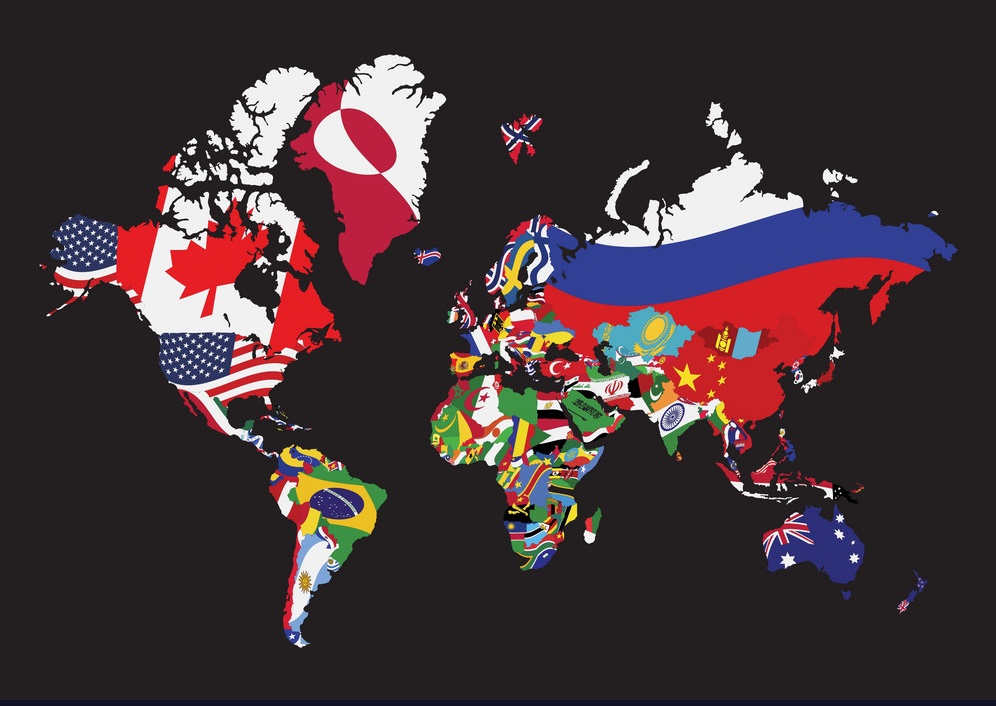
Global debt has indeed surged to new record levels in 2025, surpassing previous milestones amid easing financial conditions, persistent fiscal deficits, and uneven economic recovery.

According to the latest data from the Institute of International Finance (IIF), total global debt—including government, corporate, financial sector, and household borrowing—hit $337.7 trillion at the end of Q2 2025, up over $21 trillion from the first half of the year alone.

This marks a continuation of the upward trajectory seen earlier in the year, when debt reached $324 trillion in Q1. For context, this figure dwarfs global GDP estimates around $110-115 trillion for 2025, pushing the global debt-to-GDP ratio to approximately 324%—still elevated despite a slight moderation from pandemic peaks.

Emerging markets are bearing a disproportionate burden, with their debt-to-GDP ratio climbing to a record 242.4% and total emerging market debt exceeding $109 trillion. A softer U.S. dollar and accommodative central bank actions have lowered borrowing costs, encouraging more debt issuance.

The surge in global debt to $337.7 trillion by Q2 2025, as reported by the Institute of International Finance, is driven by several key factors: Central banks, particularly in advanced economies, have adopted looser monetary policies, including potential interest rate cuts and a softer U.S. dollar.

This reduces borrowing costs, encouraging governments, corporations, and households to take on more debt. Public debt, now over $102 trillion globally, is the primary driver. G7 countries are leading the increase due to persistent fiscal deficits and post-pandemic spending.

Emerging markets’ debt-to-GDP ratio hit 242.4%, with total debt exceeding $109 trillion. Countries like China, India, Brazil, and Poland saw significant nominal debt increases, driven by infrastructure spending and economic stimulus needs.

Developing countries face $921 billion in debt servicing costs in 2024, up 10% year-over-year. High interest rates 61 countries pay 10%+ of revenues and $7-8.2 trillion in upcoming bond/loan rollovers 10% in foreign currencies exacerbate borrowing needs.

While private debt stabilized in some regions like the U.S. private debt-to-GDP at 143%, surges in corporate borrowing in markets like Brazil and India offset declines, adding to the global total.

These factors, combined with uneven economic recovery and limited fiscal space, are pushing debt levels higher, with risks of further escalation if borrowing costs rise or growth slows. Global public debt alone reached $102 trillion in 2024 and is projected to climb toward 100% of global GDP by decade’s end if trends persist. In a severe adverse scenario, it could hit 117% by 2027.

Countries like China government debt-to-GDP nearing 100%, India, Brazil, and Poland saw the largest nominal increases. Developing nations face ballooning interest payments—$921 billion in 2024, up 10% year-over-year—with 61 countries devoting 10% or more of revenues to servicing debt.

While private lending has stabilized or declined in some areas, surges in corporate borrowing in markets like Brazil and India offset this. Accounts for ~$2T of Q1 growth; private debt at 206% of GDP.

Varies; 50% pay >6.5% of exports on servicing. High costs exacerbate inequality; Africa/Latin America hit hardest. This debt mountain isn’t just a number—it’s a ticking vulnerability.

80% of the global economy (by GDP), debt is both higher than pre-pandemic levels and rising faster, limiting fiscal space for investments in growth, climate resilience, or social services.

Emerging markets face a record $7-8.2 trillion in bond/loan rollovers through 2025, with 10% in foreign currencies, heightening default risks amid volatile commodity prices and trade tensions.

Experts warn of “bond vigilantes”—investors demanding higher yields on risky debt—potentially spiking borrowing costs further. At Davos 2025, IMF’s Gita Gopinath highlighted an “optimism bias” in projections, suggesting actual debt could be 10 percentage points higher than forecasted.

Policymakers are urged to prioritize fiscal reforms, debt transparency, and targeted spending to build resilience.If current trends hold, global debt could breach $350 trillion by year-end.

Inside the Growing Attention Around the Zero Knowledge Proof (ZKP) Whitelist

0

Zero Knowledge Proof (ZKP) has quickly positioned itself as a project attracting curiosity across the crypto space. Built on the foundation of privacy, scalability, and verifiable computation, it represents a framework where artificial intelligence and blockchain intersect to address critical issues of data trust and security. What sets it apart is the way it incorporates advanced cryptography into real-world use cases, especially in managing AI-driven compute while safeguarding intellectual property.

Now, with an upcoming crypto presale on the horizon, the focus has shifted to its whitelist. For investors and observers alike, this whitelist is not just another entry point. Instead, it is becoming a defining moment that could shape early engagement with a project many consider as one of the most compelling examples of how a zero knowledge proof blockchain can underpin practical applications in both AI and decentralized infrastructure.

A Whitelist That Signals Market Confidence

The growing spotlight on the whitelist stems from what it represents in the bigger picture. Whitelists in crypto often indicate exclusivity, but in this case, the Zero Knowledge Proof (ZKP) whitelist has come to stand as an entry point to something more substantial. It reflects both the scale of anticipation and the degree of interest in projects considered to be among the most closely watched presale coins in circulation today.

This interest is not purely speculative. At its core, the ZKP ecosystem ties into real challenges faced by industries moving toward decentralized compute and storage. By leveraging cryptographic proofs that secure both AI computations and sensitive data, ZKP makes its presence felt in ongoing conversations about where blockchain utility is heading. As such, the whitelist itself becomes more than a process — it is viewed as a step into a network that places privacy and scalability at its center.

In practice, the growing attention is less about short-term excitement and more about a narrative building around credibility. The upcoming crypto presale positions Zero Knowledge Proof (ZKP) in an environment where trust, verifiability, and use-case depth matter. This is why the whitelist has emerged as one of the early signals that this project may stand apart in a crowded field.

The Broader Appeal of Whitelist Access

For many observers, whitelist access is synonymous with early positioning. What makes Zero Knowledge Proof (ZKP) different is the way its whitelist is being viewed in parallel with its technological promises. Investors seeking presale coins are not only weighing potential returns but are increasingly focused on projects that offer structural innovation.

The ZKP ecosystem brings forward unique elements, particularly in how it handles AI workloads through a distributed network of nodes and storage. That operational design is reinforced by zero knowledge proofs that guarantee privacy while maintaining verifiability. When this is paired with an entry point like a whitelist, it presents early participants with the chance to align with a project that has a clearly articulated approach to some of the most pressing issues in blockchain and AI.

The effect is that the whitelist becomes more than a gatekeeping tool. It becomes a part of the project’s identity, a bridge between the promise of the zero knowledge proof blockchain and the wider market narrative about decentralization and data sovereignty. For many, this alignment creates an additional layer of appeal, as it combines both practical considerations and market sentiment in one focal point.

Anticipation Ahead of the Presale Phase

What is driving this momentum even further is the way anticipation has steadily built around the upcoming crypto presale. While specific details are not yet available, the very existence of strong whitelist talk has already created waves in communities tracking new crypto presale opportunities. For some, this reflects a market trend where interest gathers around projects with distinct value propositions rather than hype alone.

The structure of the ZKP ecosystem strengthens this impression. Its dual consensus approach — pairing computational intelligence with storage commitments — ensures that the network cannot be dismissed as theoretical. Even in early stages, it projects a balance between technical credibility and market readiness. As a result, the whitelist appears to function as a filter, giving those who pay attention early an opportunity to signal belief in the system before the broader presale phase.

Market conversations increasingly highlight the whitelist as a reference point. In fact, it is often cited as evidence that ZKP is not just another entry in the list of presale coins but rather a project that ties utility directly to participation. For early participants, this distinction makes the act of securing whitelist access an important marker, not just a formality.

The excitement also ties back to ZKP’s core identity. Positioned at the intersection of AI and blockchain, its credibility is reinforced by the privacy-preserving foundations of zero knowledge proofs. When viewed through the lens of an upcoming crypto presale, the whitelist creates anticipation not just about access but about alignment with a project seen as forward-leaning in both concept and execution.

Closing Analysis

The whitelist surrounding Zero Knowledge Proof (ZKP) has captured a degree of market attention that few presale coins manage at this stage. Far from being a routine step, it has become a central feature in discussions, blending exclusivity with the credibility of a project committed to privacy, scalability, and AI-driven blockchain solutions.

As anticipation continues to grow around the upcoming crypto presale, the whitelist stands as the first meaningful indicator of how ZKP may position itself in the months ahead. For observers and potential participants, it is not only an entry point but a signpost pointing toward how the broader market views the intersection of technology, trust, and participation in this new phase of blockchain development.

Find Out More At:

https://zkp.com/

Ozak AI Is to 2025 What Bitcoin Was to 2013: The Perfect Early Entry Setup

0

Crypto has constantly rewarded folks who act early, and no story illustrates this better than Bitcoin. In 2013, whilst Bitcoin was trading below $10, very few believed it might one day become an international financial force. Those who had the imagination and prescience to buy early and maintain built life-changing wealth.

Fast forward to 2025, and the equal form of early-stage possibility is emerging with Ozak AI, a hastily developing AI-blockchain project currently priced at just $0.012. Where Bitcoin reshaped digital cash, Ozak AI aims to redefine blockchain intelligence—creating self-mastering, adaptive networks that can think and evolve in real time.

Ozak AI Rides the Biggest Tech Trend Since Bitcoin

Unlike normal presale tokens that depend on short-lived hype, Ozak AI is backed by real generation. At its core are AI Prediction Agents, autonomous structures able to study blockchain information, predict outcomes, and execute shrewd moves. This offers Ozak AI the energy to make decentralized ecosystems smarter, faster, and more efficient.

The timing of this innovation is essential. In 2013, Bitcoin had the early mover benefit in crypto. In 2025, Ozak AI is positioned at the intersection of artificial intelligence and blockchain, two  of the fastest-developing global industries. This mixture makes it more than just a token—it’s a technological basis for what may be the following section of Web3 evolution.

The Power of Early Positioning at $0.012

Bitcoin’s early investors didn’t need huge capital to change their lives—they needed conviction and timing. Ozak AI at $0.012 offers that same kind of setup. A modest investment can buy a significant position at the early stage, before mainstream awareness drives the price higher.

For example, $1,000 at $0.012 secures more than 83,000 tokens. If the token hits $1, that becomes $83,000. If it reaches $5 or $10 in the coming years, the upside becomes truly transformative. This is what makes early-stage entries so powerful—they offer asymmetrical reward potential, where even small amounts can turn into major gains.

Momentum Backed by Real Traction and Partnerships

This opportunity isn’t just theoretical. Ozak AI has already raised more than $3.6 million during OZ presale and sold over 930 million tokens, reflecting fast-growing investor confidence. Unlike many early-stage projects, it’s backed by serious infrastructure and partnerships.

Perceptron Network provides distributed AI computation through 700,000+ nodes, SINT adds SDKs and AI agent integration, and HIVE delivers ultra-fast 30 ms blockchain signal processing. This kind of real backing is what sets Ozak AI apart from speculative presales. It’s not just promising innovation—it’s building it.

A Realistic Path to $1 and Beyond

In Bitcoin’s early years, going from $10 to $1,000 sounded ambitious—but it happened. In the case of Ozak AI, a move from $0.012 to $0.25–$0.50 in the next 12–18 months, and potentially $1 in 2026, is well within reach. The AI narrative is dominating the global tech landscape, and as blockchain intelligence adoption grows, Ozak AI is positioned to lead that wave.

Upcoming exchange listings, expanding token holder numbers, ecosystem development, and broader integration into Web3 applications are all key drivers that could accelerate this growth.

Crypto Rewards Early Movers—Ozak AI Is That Moment

Bitcoin created millionaires not because people bought at the top, but because a few believed at the beginning. In 2025, Ozak AI sits in a similar position—early, undervalued, and full of potential. Its $0.012 entry price gives investors the same kind of early setup Bitcoin offered in 2013.

Crypto history is written by early movers. Ozak AI has the technology, the narrative, and the timing to become one of the defining stories of this bull cycle. The window to enter early is open now—and just like with Bitcoin a decade ago, those who act today could be the wealth stories everyone talks about tomorrow.


About Ozak AI

Ozak AI is a blockchain-based crypto project that provides a technology platform that specializes in predictive AI and advanced data analytics for financial markets. Through machine learning algorithms and decentralized network technologies, Ozak AI enables real-time, accurate, and actionable insights to help crypto enthusiasts and businesses make the correct decisions.


For more, visit:

Website: https://ozak.ai/

Telegram: https://t.me/OzakAGI

Twitter: https://x.com/ozakagi


How First-Time Buyers Can Reach Millionaire Status: $15,000 in Ozak AI at $0.012 Will Be $1,250,000 at $1

0

Crypto markets in 2025 are filled with opportunities for new investors to turn small beginnings into life-changing fortunes. While major players like Bitcoin and Ethereum continue to show strength, the real wealth creation often happens in emerging projects with massive potential before they go mainstream.

One such project capturing attention is Ozak AI — an AI-powered blockchain ecosystem that’s transforming how intelligence and automation interact with decentralized systems. Currently priced at just $0.012, Ozak AI offers an early entry point that could turn a modest $15,000 investment into $1,250,000 if the token reaches $1. For first-time buyers who missed early Bitcoin or Ethereum, Ozak AI represents a second chance—but with a far more advanced technological foundation.

Ozak AI’s Ecosystem 

Ozak AI stands out in a crowded market by combining two of the most disruptive technologies of our time — artificial intelligence (AI) and blockchain. The project is developing a decentralized network of AI Prediction Agents, which are autonomous, self-learning systems capable of analyzing data, forecasting market movements, and executing intelligent decisions across DeFi and trading ecosystems.

This means Ozak AI doesn’t just exist as a token—it functions as an intelligent ecosystem. These AI agents can be used for automated trading, data modeling, predictive analytics, and even risk management tools. By making blockchain smarter and more adaptive, Ozak AI could revolutionize how decentralized platforms operate.

With AI markets projected to exceed $1.5 trillion by 2030, Ozak AI’s entry into this sector couldn’t be more timely. Its ability to integrate intelligence with blockchain efficiency positions it as a major contender for mass adoption.

Youtube embed:

Ozak AI Millionaire Math: $15,000 to $1,250,000

Ozak AI presale price of $0.012 gives investors a massive upside potential. A $15,000 investment today would buy 1,250,000 Ozak tokens. If Ozak AI reaches $1, that same holding would be worth $1,250,000.

While that figure would possibly appear ambitious, it’s now not unrealistic. Similar AI-based crypto projects like Fetch.AI (FET), Render (RNDR), and SingularityNET (AGIX) have reached multi-billion-dollar valuations, proving that innovative AI tokens can climb exponentially once they gain traction. Ozak AI’s strong basics and partnerships endorse its ability to comply with a similar trajectory.

Ozak AI Partnerships Strengthen Its Long-Term Potential

One of the most powerful indicators of Ozak AI’s long-time period achievement is its growing listing of strategic partnerships. The venture has teamed up with Perceptron Network, which operates over seven hundred,000 lively nodes, supplying distributed computing power for AI version schooling. Its collaboration with SINT—a platform specializing in AI marketers, SDK toolkits, and cross-chain bridges—gives Ozak AI cross-chain compatibility and superior improvement potential.

Additionally, Ozak AI’s partnership with HIVE permits 30 ms blockchain signal processing, permitting lightning-speedy AI insights and predictions. This technical aspect offers Ozak AI a competitive benefit in a space wherein speed and accuracy outline success.

The project has also been audited by using CertiK, indexed on CoinMarketCap and CoinGecko, and featured at Coinfest Asia 2025, alongside enterprise leaders like Manta Network, Coin Kami, and Forum Crypto Indonesia. These milestones replicate both transparency and growing recognition within the global crypto community.

Why First-Time Buyers Are Flocking to Ozak AI

For new investors entering the crypto market, Ozak AI represents a perfect mix of low entry cost, high upside potential, and real-world utility. The presale has already raised over $3.5 million, proving strong investor demand even before the token’s official launch. Analysts predict that Ozak AI could surge 50x–100x after exchange listings, fueled by rising excitement in AI-integrated blockchain projects.

More importantly, Ozak AI’s technology ensures it’s more than just a trend. Its AI-driven automation and predictive intelligence offer lasting value—exactly what long-term investors are seeking.

Ozak AI’s Realistic Millionaire Opportunity

For first-time buyers dreaming of financial independence, Ozak AI at $0.012 provides one of the most realistic millionaire opportunities in the 2025 market. The formula is simple: $15,000 today = $1,250,000 at $1—and Ozak AI’s roadmap, innovation, and partnerships make that path achievable.

As the world shifts toward intelligent, automated blockchain systems, Ozak AI stands at the center of that transformation. For those ready to take their first step into crypto, this may be the project that defines their financial future—a true chance to become a crypto millionaire by being early, not lucky.


About Ozak AI

Ozak AI is a blockchain-based crypto project that provides a technology platform that specializes in predictive AI and advanced data analytics for financial markets. Through machine learning algorithms and decentralized network technologies, Ozak AI enables real-time, accurate, and actionable insights to help crypto enthusiasts and businesses make the correct decisions.


For more, visit:

Website: https://ozak.ai/

Telegram: https://t.me/OzakAGI

Twitter : https://x.com/ozakagi