DD
MM
YYYY

PAGES

DD
MM
YYYY

spot_img

PAGES

Home Blog Page 3662

German government agrees to join EU military mission to Red Sea

0

The German government has decided to participate in the EU military mission in the Red Sea. This was announced by German Chancellor Angela Merkel on Monday. The mission is intended to ensure the safety of shipping in the region and defuse tensions between Ethiopia and Egypt over the Nile Dam.

The EU military mission in the Red Sea was decided by EU foreign ministers in December 2023. It is said to consist of about 3000 soldiers, several warships and aircraft. The mission will work closely with the United Nations, the African Union and regional actors.

Germany’s participation in the mission is a sign of solidarity with EU partners and responsibility for international security, said Angela Merkel. She emphasized that the mission is not a combat mission, but a preventive and stabilizing measure. She added that Germany continues to support diplomatic solutions to the conflicts in the region.

The German government’s decision was welcomed by most parties in the Bundestag. The Greens, who form a coalition with the CDU/CSU, said the mission was an important contribution to peacebuilding. The Social Democratic Party (SPD), the main opposition party, praised the mission as a step towards strengthening Europe’s defence identity.

The FDP demanded a clear mandate and control of the mission by parliament. The Left Party and the AfD rejected the mission and warned of an escalation of violence in the region.

What is EU military mission to Red Sea?

The European Union has recently launched a naval mission to protect international shipping in the Red Sea from attacks by Yemen’s Houthi rebels, who have been targeting commercial vessels in the area since the outbreak of the war in Gaza.

The mission, named Aspides, meaning protector, is based in Greece and commanded by Rear Admiral Vasileios Gryparis. It involves several EU member states, including France, Germany, and Italy, who will deploy naval assets and personnel to deter and intercept Houthi attacks.

The Red Sea is a vital maritime route for global trade, especially between Asia and Europe. According to the EU, about 12% of global trade and 40% of trade between Asia and Europe passes through the Red Sea.

The Houthi rebels, who control much of Yemen and are backed by Iran, have been launching missiles and drones against ships in the southern Red Sea and the Bab al-Mandab Strait, a narrow chokepoint that connects the Red Sea to the Gulf of Aden. The Houthis claim they are acting in solidarity with the Palestinians as Israel and Hamas wage war in Gaza.

The EU’s naval mission aims to ensure freedom of navigation and maritime security in the Red Sea, as well as to support diplomatic efforts to end the conflicts in Yemen and Gaza. The mission is part of the EU’s broader maritime strategy for the Northwest Indian Ocean, which covers a large area from the Strait of Hormuz to the Tropic of Capricorn and from the Red Sea toward the center of the Indian Ocean.

The EU has designated this area as a “maritime area of interest” and has established a mechanism called “coordinated maritime presence” (CMP) to increase European naval coordination and cooperation with regional partners.

The EU’s naval mission is also a sign of Europe’s willingness to take action against instability and threats in its neighborhood, as well as to assert its role as a global actor and a security provider.

The mission is an example of European defense cooperation and solidarity, which have been enhanced by initiatives such as Permanent Structured Cooperation (PESCO) and European Defense Fund (EDF). The mission also complements the existing U.S.-led Operation Prosperity Guardian, which includes several European countries among its members.

The EU’s naval mission faces several challenges and risks, however. The mission will have to coordinate with other actors operating in the area, such as Saudi Arabia, Egypt, Sudan, Djibouti, Eritrea, Somalia, Ethiopia, and China. The mission will also have to avoid escalation with Iran, which supports the Houthis and has its own naval presence in the region.

Moreover, the mission will have to deal with potential legal issues regarding the use of force and rules of engagement against non-state actors. Finally, the mission will have to cope with environmental hazards such as piracy, smuggling, terrorism, and climate change.

The EU’s naval mission to the Red Sea is an important step for Europe’s maritime strategy, regional cooperation, and defense integration. It demonstrates Europe’s commitment to uphold international law and security in a strategic area that affects its interests and values. It also shows Europe’s readiness to act autonomously and responsibly in a complex and volatile environment.

Bangladesh and India agree on using Non-Lethal Weapons to ensure zero border killing

In a significant development, Bangladesh and India have agreed to use non-lethal weapons by their border forces to ensure zero casualties along the 4,096-km frontier, the fifth-longest land border in the world. The decision was taken during the 51st biannual meeting of the Border Security Force (BSF) of India and the Border Guard Bangladesh (BGB) held in Dhaka from February 9 to 13.

The meeting discussed various issues related to border management, security cooperation, and mutual trust. The two sides reviewed the progress made in implementing the decisions taken at the previous meeting held in New Delhi in September 2023. They also exchanged views on how to further enhance coordination and cooperation in preventing cross-border crimes, smuggling, trafficking, and illegal migration.

The border issue between Dhaka and Delhi has been a source of tension and cooperation between the two countries since their independence from British colonial rule in 1947. The partition of India along religious lines led to the creation of East Pakistan, which later became Bangladesh after a bloody war of liberation in 1971. India supported Bangladesh’s independence struggle and provided refuge to millions of refugees who fled the Pakistani army’s atrocities.

Since then, India and Bangladesh have signed several agreements to demarcate their border, exchange enclaves, resolve disputes and enhance cooperation on security, trade and connectivity. However, many challenges remain unresolved, such as the fencing of the border, the management of river waters, the status of undocumented migrants and the rise of Islamist extremism.

One of the main reasons for the border crisis is the lack of effective border management by both sides. According to officials from India’s Border Security Force (BSF), which is responsible for guarding India’s border with Bangladesh, there are many gaps in the border management system that facilitate infiltration and cross-border crimes such as cattle smuggling and drug and human trafficking.

Many stretches of the border are yet to be fenced, while others are marked by rivers, forests and hills that make surveillance difficult. The BSF also faces allegations of using excessive force and killing civilians along the border.

The border crisis has serious implications for both countries and their relations. For India, a stable and friendly Bangladesh is vital for its security and economic interests in South Asia. India needs Bangladesh’s cooperation to counter terrorism, insurgency and smuggling in its northeastern states, as well as to access new markets and energy sources in Southeast Asia.

For Bangladesh, a good relationship with India is important for its development, trade and regional integration. Bangladesh also benefits from India’s assistance in various sectors such as health, education and infrastructure.

According to a joint statement issued after the meeting, both sides agreed to use non-lethal weapons by the border forces within the rules of engagement, with a view to bringing down border killings or injuries to zero. They also agreed to take appropriate measures against criminals involved in cross-border crimes such as smuggling of drugs, cattle, arms and ammunition, human trafficking and fake currency.

The joint statement said that both sides reiterated their commitment to uphold human rights and dignity of the people living in the border areas. They also agreed to conduct joint awareness campaigns to educate the border population about the sanctity of the international border and prevent them from crossing it illegally or inadvertently.

The meeting also witnessed the signing of a Joint Record of Discussions (JRD) between the two DGs, which reflects the deliberations and decisions taken during the meeting. The JRD will serve as a guideline for future cooperation and coordination between the two border forces.

The meeting was held in a cordial and friendly atmosphere, reflecting the mutual trust and understanding between the two countries. Both sides expressed satisfaction over the outcome of the meeting and hoped that it would further strengthen the bilateral relations and cooperation in the field of border management. The next DG-level meeting will be held in India in August 2024.


United Kingdom has become 3rd largest nation-state holders of Bitcoin

0

The United Kingdom has become the third largest nation-state holder of Bitcoin, according to a new report by Chainalysis. The report, which ranks countries by their estimated Bitcoin holdings, reveals that the UK has accumulated over 1.3 million BTC, worth about $60 billion at current prices. This puts the UK behind only the US and China in terms of Bitcoin ownership.

The report attributes the UK’s rise in the rankings to several factors, including:

The growing adoption of Bitcoin by institutional investors, such as MicroStrategy, Tesla and Square, which have established their European headquarters in London.

The increasing popularity of Bitcoin among retail investors, who have access to a variety of platforms and services that enable them to buy, sell and store Bitcoin easily and securely.

The supportive regulatory environment for crypto assets in the UK, which has fostered innovation and competition in the sector, while also providing clarity and protection for consumers and businesses.

The strong presence of the Bitcoin community and industry in the UK, which hosts some of the leading events, media outlets, research institutes and advocacy groups in the space.

The report also notes that the UK’s Bitcoin holdings are diversified across different segments of the population, reflecting the broad appeal and utility of the cryptocurrency. According to Chainalysis, about 40% of the UK’s Bitcoin is held by individuals, 30% by institutions, 20% by exchanges and 10% by other entities, such as miners, merchants and charities.

The report concludes that the UK is well-positioned to benefit from the continued growth and development of Bitcoin, as well as to contribute to its advancement and adoption. The report states:

“The UK is a global leader in many aspects of the Bitcoin ecosystem, from innovation and investment to education and advocacy. As Bitcoin becomes more mainstream and integrated into the global financial system, we expect the UK to play a key role in shaping its future.”

The UK has been one of the most progressive and supportive countries for Bitcoin and other cryptocurrencies. It has a vibrant and diverse crypto ecosystem, with many exchanges, wallets, brokers, payment services, and educational platforms. The UK also has a favorable regulatory environment, with clear and flexible guidelines from the Financial Conduct Authority (FCA) and HM Revenue and Customs (HMRC).

The FCA regulates crypto assets that fall under its jurisdiction, such as security tokens and e-money tokens. It also requires crypto businesses to register with it and comply with anti-money laundering and counter-terrorism financing rules. The FCA does not regulate Bitcoin or other unregulated tokens, such as utility tokens and exchange tokens. However, it warns consumers of the high risks and volatility involved in investing in these assets.

The HMRC treats Bitcoin and other cryptocurrencies as property for tax purposes. This means that individuals and businesses have to pay capital gains tax or corporation tax on any profits or losses from buying, selling, or exchanging crypto assets. The HMRC also provides guidance on how to calculate and report crypto-related income and expenses.

The UK’s position as the third largest nation holder of Bitcoin reflects its strong interest and adoption of this innovative technology. The UK has many advantages that make it an attractive destination for crypto investors, such as:

A stable and robust economy with a high GDP per capita and a low inflation rate. A well-developed financial sector with a high level of digitalization and innovation. A large and diverse population with a high level of internet penetration and smartphone usage.

A supportive and forward-looking government that embraces new technologies and fosters a competitive and dynamic business environment.

The UK also faces some challenges and risks that could affect its crypto market, such as:

The uncertainty and impact of Brexit on the UK’s trade and financial relations with the EU and other countries. The competition and pressure from other countries that are developing their own digital currencies or adopting more favorable crypto policies.

The potential for cyberattacks, fraud, theft, or hacking of crypto platforms or users. The volatility and unpredictability of crypto prices and market movements.

The UK has a significant role to play in the global crypto space as one of the leading holders of Bitcoin. It has the opportunity to leverage its strengths and overcome its challenges to become a hub for crypto innovation and adoption. It also has the responsibility to ensure that its crypto activities are conducted in a safe, secure, ethical, and sustainable manner.

Coinbase surges after beating analysts’ fourth-quarter earnings estimates

0

Coinbase, the leading cryptocurrency exchange platform, reported its fourth-quarter earnings on Thursday, surpassing analysts’ expectations and sending its shares soaring. The company posted revenue of $2.8 billion, up 71% from the previous quarter and beating the consensus estimate of $2.6 billion.

The company reported a net income of $1.3 billion, a 25% increase from the previous year. The revenue was driven by strong growth in trading volume, fees, and subscriptions, as well as new products and services such as Coinbase Earn, Coinbase Card, and Coinbase Commerce.

Its net income was $1.3 billion, or $6.42 per share, compared to $0.29 per share in the same period last year. Coinbase attributed its strong performance to the increased adoption and demand for crypto assets, as well as its diversified product offerings and global expansion.

Coinbase’s earnings report came amid a volatile period for the crypto market, which saw Bitcoin reach a new all-time high of over $69,000 in November, before plunging to below $40,000 in December. The company said it had 73 million verified users at the end of 2021, up 13% from the third quarter, and 7.4 million monthly transacting users, up 26%. It also said it had more than $223 billion in assets on its platform, representing 13% of the total crypto market share.

Coinbase’s shares jumped more than 10% in after-hours trading following the earnings release, reaching $281.50 as of 5:30 p.m. ET. The stock has gained more than 40% since its direct listing in April 2021, when it debuted at $250 per share. Analysts have been bullish on Coinbase’s prospects, citing its leadership position in the crypto space, its strong revenue growth and profitability, and its potential to benefit from the mainstream adoption of digital currencies.

Coinbase also provided guidance for the first quarter of 2022, projecting revenue of $2.4 billion to $2.6 billion, and net income of $800 million to $1 billion. The company said it expects to have 75 million to 80 million verified users, and 8 million to 9 million monthly transacting users by the end of March. It also said it plans to invest more in product innovation, customer service, regulatory compliance, and social impact initiatives in the coming year.

Coinbase’s CEO Brian Armstrong said in a letter to shareholders that the company’s mission is to increase economic freedom for everyone in the world, and that it is well-positioned to achieve that goal. “We believe that crypto is not only the future of finance, but also a powerful force for good in society,” he wrote. “We are proud of what we accomplished in 2021, and we are excited about the opportunities ahead in 2022 and beyond.”

Coinbase also highlighted its achievements in expanding its global presence, supporting more than 100 countries and 50 fiat currencies. The company added over 20 million verified users in 2023, bringing its total user base to over 80 million. Coinbase also increased its assets on platform to $320 billion, representing more than 10% of the total market capitalization of cryptocurrencies.

The company attributed its success to its mission of creating an open financial system for the world, and its vision of becoming the most trusted and easiest to use platform for anyone to access cryptocurrencies. Coinbase said it will continue to invest in innovation, security, compliance, and customer service to deliver the best experience for its users and partners.

Coinbase’s positive balance sheet for 2023 reflects the growing adoption and acceptance of cryptocurrencies as a legitimate and valuable asset class. The company’s performance also demonstrates its leadership and resilience in a highly competitive and dynamic industry. Coinbase is well-positioned to capitalize on the opportunities and challenges that lie ahead in the crypto space.

Thank You, LinkedIn Nation

0

Do you know that we log about 1 million views on Linkedin weekly? And in #Nigeria, we have one of the most engaged feeds by miles. Yes, our community here is very robust and dynamic. This is the power of building an organic community where every follower is REAL. I thank our community for considering a village boy from Ovim as being worthy of your follow and time. Thank you, and also LinkedIn as its products have scaled missions.

To appreciate more, I am open to support young people who want to productively get together, to expand the business-oriented playbooks which LinkedIn offers us here, in Aba, PHC, Kano, Lagos and Abuja. You can get an experienced person in the community to speak on Jobs, Careers, Tech, Opportunities in Nigeria, and similar topics. If you have no idea, feel free to check names here https://school.tekedia.com/faculty/ (I will ask the person to make time to speak in your meetup).

I will contribute towards the lunch. Organize yourself, and connect with Eyitayo Adeleke; his total budget is N1 million. Again, thanks and keep coming. When I write, I have liberation – and the fact that many read makes it amazing.

LinkedIn link

Economic Hardship likely to spark societal unrest in Nigeria – AfDB

0
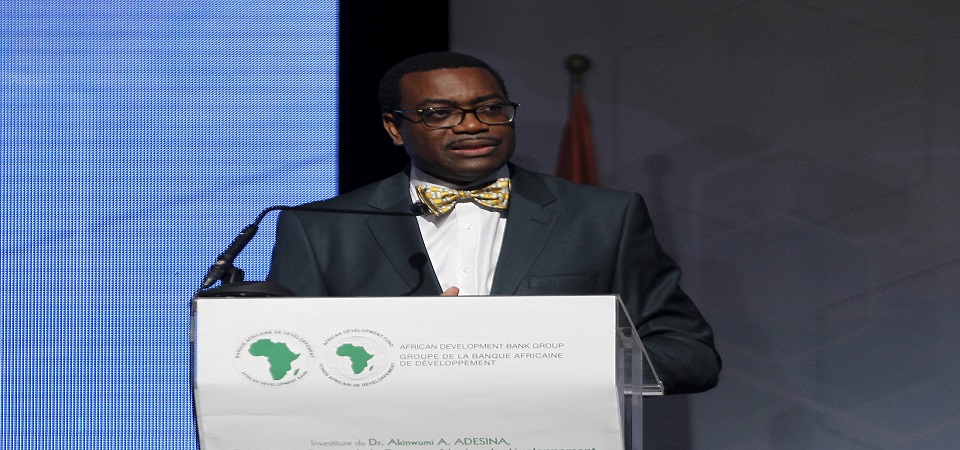
AfDB president Akinwumi Adesina
Akinwumi Adesina

The African Development Bank (AfDB) has issued a stern warning regarding the potential for social unrest across Nigeria due to increasing commodity and fuel prices, particularly in response to government policies such as subsidy removal.

The bank’s latest macroeconomic performance and outlook for 2024 highlight potential challenges for Africa, despite projecting higher economic growth compared to the previous year’s 3.2% recorded growth.

In its report, the AfDB emphasized Africa’s vulnerability to global supply chain disruptions, citing ongoing geopolitical tensions in Eastern Europe and the Middle East, as well as the El Niño phenomenon. These disruptions, it warned, could exacerbate energy and food inflation, posing significant consequences for social stability.

The report further cautioned that regional conflicts and political instability, often triggered by disruptions in constitutional governments, could divert vital resources away from development and social support towards security and defense.

“Internal conflicts and violence could also result from rising prices for fuel and other commodities due to weaker domestic currencies and reforms,” the report stated.

It also highlighted the negative economic implications of any unconstitutional takeover of government, which could lead to severe sanctions.

The warning comes at a crucial time for Nigeria, Africa’s most populous nation, which recently faced significant public outcry over the removal of fuel subsidies. This move, aimed at addressing economic challenges and fiscal deficits, has led to widespread protests across the country.

“For instance, the removal of fuel subsidies in Angola, Ethiopia, Kenya, and Nigeria and the resulting social costs have led to social unrest driven by economic hardship,” the report said.

The consequences of these policies are already evident, with ordinary Nigerians bearing the brunt of the economic hardships. High fuel prices have cascading effects, impacting transportation costs, food prices, and overall living expenses. For many Nigerians, already struggling to make ends meet, the removal of subsidies has exacerbated their financial burdens.

In urban centers like Lagos and Abuja, where the cost of living is already high, the sudden spike in fuel prices has further strained household budgets. Commuters face increased transportation costs, as public transportation operators pass on the higher fuel costs to passengers. This, in turn, affects businesses reliant on transportation for the movement of goods and services, leading to higher prices for consumers.

Rural communities are not spared from the economic fallout either. Farmers, who rely heavily on fuel for agricultural machinery and transportation of produce, find themselves grappling with higher operational costs. As a result, food prices surge, pushing many families further into poverty.

Moreover, the removal of fuel subsidies has a ripple effect on other sectors of the economy. Industries reliant on fuel for power generation or as raw materials experience cost escalations, potentially leading to layoffs and reduced production.

In response to the economic hardship, civil society groups and labor unions in Nigeria have announced plans to embark on a two-day warning strike, demanding a reversal of the subsidy removal and greater government accountability. There are concerns that the protest has the potential to escalate social unrest if the government fails to address the underlying economic grievances effectively.

The AfDB’s warning comes amid others, urging policymakers across Africa to consider the broader socio-economic implications of their decisions to mitigate the risk of unrest and ensure sustainable development for all citizens.