DD
MM
YYYY

PAGES

DD
MM
YYYY

spot_img

PAGES

Home Blog Page 3662

X now valued at $19 billion as corrected Posts by Community Notes become Ineligible for Revenue Sharing

0

X, the popular social media platform, has reached a new milestone in its valuation. According to Fortune, the company is now worth $19 billion, making it one of the most valuable tech companies in the world. The report cites unnamed sources familiar with the matter, who say that X has raised $1.5 billion in a new round of funding led by Tiger Global Management. The round values X at $19 billion, up from $10 billion in 2019.

X has been growing rapidly in recent years, thanks to its innovative features and loyal user base. The platform allows users to share short messages, or tweets, with their followers, as well as interact with other users through replies, likes, and retweets. X also offers live video streaming, news curation, and various tools for businesses and influencers.

X has also been expanding its global presence, especially in emerging markets. The company claims to have more than 300 million monthly active users, with over 80% of them outside the US. X has also invested in localizing its service and partnering with local media outlets and celebrities.

X’s impressive growth and valuation reflect its potential to become a dominant player in the social media landscape. The company faces competition from other platforms such as Facebook, Instagram, and TikTok, but it has carved out a niche for itself as a source of real-time information and conversation. X also has opportunities to monetize its user base through advertising, subscriptions, and e-commerce.

X’s CEO has expressed his vision for the company as a platform that serves the public conversation and empowers people to speak freely. He has also been vocal about his commitment to improving the health and safety of the platform, as well as addressing the challenges of misinformation, abuse, and censorship. X’s latest funding round is a testament to its success and ambition. The company is now valued at $19 billion, making it one of the most valuable tech companies in the world.

If you are a content creator on X, you might be wondering how Community Notes affect your earnings. Community Notes are a feature that allows users to flag and correct factual errors, spelling mistakes, or other issues in your posts. While this can help improve the quality and accuracy of your content, it also has a downside: posts that are corrected by Community Notes become ineligible for revenue share on X.

Why is this the case? The reason is that X wants to reward original and high-quality content that does not require external editing or verification. When a post is corrected by Community Notes, it means that the content was not sufficiently researched, proofread, or formatted by the creator. This lowers the credibility and value of the post, and therefore reduces its earning potential.

How can you avoid this situation? The best way to prevent your posts from being corrected by Community Notes is to follow the guidelines and best practices of X. Before you publish a post, make sure to: Check your facts and sources. Use reliable and reputable sources to support your claims and arguments. Avoid spreading misinformation or false rumors.

Proofread your spelling and grammar. Use a spell checker or a grammar tool to catch any errors or typos. Avoid using slang, jargon, or informal language that might confuse or offend your readers. Format your post properly. Use headings, bullet points, images, and other elements to make your post easy to read and navigate. Avoid using too many colors, fonts, or emojis that might distract or annoy your readers.

By following these tips, you can ensure that your posts are original and high-quality, and that they meet the standards of X. This will increase your chances of earning revenue share on X, and also boost your reputation and engagement with your audience.

Lionel Messi Makes History, Wins Eighth Ballon d’Or

0

Lionel Messi, the renowned Argentine and Inter Miami football star, has made fresh history by winning an unprecedented eighth Ballon d’Or award, a feat unmatched by any other player in the history of the sport.

Messi previously clinched the prestigious accolade in 2009, 2010, 2011, 2012, 2015, 2019, and 2021. Cristiano Ronaldo holds five Ballon d’Or titles, while Michel Platini, Johan Cruyff, and Marco van Basten have each won it thrice.

The 36-year-old maestro also becomes the second-oldest player to receive this esteemed honor, following his stellar performance in the 2022 World Cup in Qatar, where Argentina emerged as world champions. Only the inaugural awardee, Stanley Matthews in 1956, was older when he claimed the honor at 41.

Former Manchester United player and Inter Miami co-owner David Beckham had the honor of presenting Messi with the award in Paris.

In his acceptance speech, Messi expressed gratitude to his family, teammates, and voters, and particularly acknowledged fellow nominees Haaland and Mbappé for their exceptional performances. He dedicated the award to Diego Maradona and all of Argentina, recognizing their joy as the nation clinched the World Cup title.

“Thanks to everyone, especially my teammates. Thank you to everyone who voted for me. This Ballon d’Or is a great gift for all of Argentina. I don’t want to forget Haaland or Mbappé, who had a great year, spectacular, and in the coming years, they will win this award.

“The level [of competition] never decreases, I have been lucky to be here for many years. I want to provide a special mention for all those people who were happy that Argentina became world champions. Thanks also to all my family, my wife, my children, for being there in the worst moments, and they have helped me fulfill my dreams in football. Without you it would not have been possible,” Messi said.

Reflecting on his illustrious career, Messi expressed astonishment at the heights he has reached and acknowledged the privilege of playing for what he described as the best team in history.

“I couldn’t imagine having the career that I’ve had. Everything that I’ve achieved. The fortune I’ve had playing for the best team in the world, the best team in history. It’s nice to win these individual trophies. To win the Copa America and then the World Cup, to get it done is amazing,” he added.

Erling Haaland, renowned for his prolific scoring record, secured the Gerd Muller Trophy for the best striker of the year after netting an impressive 52 goals last season. Nigeria and Napoli striker Victor Osimhen ranked eight, becoming the first Nigerian player to reach that height. Messi’s closest rival, Cristiano Ronaldo, did not make the Ballon d’Or list this time.

Before Messi’s recognition, Barcelona and Spain midfielder Aitana Bonmatí was awarded the Ballon d’Or Féminin for her outstanding contributions at both club and international levels.

Additionally, Argentina’s Emiliano Martinez claimed the Yashin Trophy for best goalkeeper, and England’s Jude Bellingham of Real Madrid was honored with the Kopa Trophy for the world’s top player under 21.

Messi’s exceptional performances in the 2022 World Cup, culminating in Argentina’s triumph, solidified his legacy and earned him his eighth Ballon d’Or. His leadership and contributions on the field were instrumental in Argentina’s victory after a 36-year wait for World Cup glory.

Having faced heartbreak in previous World Cup campaigns, Messi’s crowning moment in Qatar was a testament to his resilience and determination to achieve football’s highest honor.

With his eighth Ballon d’Or, many believe that the former Barcelona playmaker has sealed his place as the Greatest of All Time in football.

All Rights Reserved!

0

I remember back then while I was still growing up, whenever we watched a new Nollywood movie, one of the unskippable intro pages would say “All rights reserved”. Same with books and novels; whenever I pick up a book to read I will see one of the early pages say “All Rights Reserved”.

With a childlike curiosity, I kept wondering and asking what the phrase “All rights reserved” meant. Not until I became a lawyer did I fully understand and appreciate what the phrase “All rights reserved” meant in its full legal context.

In layman’s terms; All Rights Reserved is an intellectual property protection that an author or a movie maker inscribed on his work as a disclaimer so as to ensure that the work is not copied, reproduced, distributed or dubbed without his consent or authorization. It simply means that the creator of the work has a copyright over the work. 

All rights reserved explained in a legal or intellectual property protection context means that the owner or creator of a work, such as content, intellectual property, or a product, retains exclusive rights and does not grant permission for others to use, copy, or distribute it without explicit authorization. This means that no one may use your work unless they obtain your explicit authorization or permission. 

Although this statement is not legally required nor is it a thing of necessity and failure to include it has no legal implication and does not rob the creator of the copyright he enjoys on his work, but authors and creators rather include the phrase on their work because just as it is said that “it is better to err on the side of caution”. 

So when it is not written as All Rights Reserved a copyright disclaimer issued by a creator over his work can be written in any of the following formats or styles; 

  1. the copyright symbol “©” affixed only 
  2. The name of the author or the creator of the work. It can also be the name of an organization, a business, or a corporate name affixed on the work to show ownership 
  3. The current year or year range in which the work was created 
  4. a statement of ownership (“All Rights Reserved”).

For example, if I want to issue a disclaimer over this article written in October 2023 as the publisher; I would notify others of the copyright by placing one of the following notations at the end of the article if it is a book it will be affixed on all the published copies of the book:

  • © October 2023 Stan Alieke 
  • Copyright 2023 Stan Alieke 
  • Copr. 2023 Stan Alieke 
  • All Rights Reserved Stan Alieke 2023

Please note that not adding this disclaimer or the All Rights Reserved phrase does not and will not in any way rob me of the copyright I ought to have enjoyed over the work as the creator.

The Vesting Of Land Under Nigerian Law

0

As widely understood as the basics of landed property transactions are in Nigeria, there is still a lot of little to no understanding on the legal framework governing land ownership in Nigeria and where rights of ownership of land emanate from.

This article aims to inform Its readers on what the law says concerning :-

– Who truly owns land in urban areas of Nigeria

– Who truly owns land in non-urban areas of Nigeria

– Applicable laws on interim land management

– Powers of the government concerning land

What is the overriding land law applicable all over Nigeria ?

The Land Use Act of 1978 remains the benchmark law concerning land matters in Nigeria.

Who truly owns all the land in a state?

– All land in a state is vested in the governor of the state in his capacity as a trustee by virtue of the Land Use Act for the use & common benefit of all Nigerians.

– All land in urban areas of a state shall be under the control and management of the governor of the state.

– All other land subject to the act, shall be under the control of the Local Government within the area of jurisdiction where a piece of land is situated.

The governor and local government chairmen are to be aided in their statutory functions concerning land by Land Use Allocation Committees.

What are the functions of Land Use & Allocation Committees?

– Advising the governor on any matter connected with the management of land under the governor’s control and management.

– Advising the governor on any matter connected with the management of land under his jurisdiction.

– Advising the governor on any matter connected with resettlement of persons affected by the revocation of rights of occupancy on the ground of overriding public interest.

– Determining disputes as to the amount of compensation payable under the Land Use Act for improvement on land.

For local governments, this committee is to be called a “Land Use Allocation Advisory Committee” which shall consist of such persons as may be determined by the governor after consultation with the local government and shall have responsibility for advising the local government on any matter connected with the management of land under Its jurisdiction.

What is the provision of the Land Use Act on the designation of urban areas?

– Subject to such general conditions as may be specified by the National Council Of States, the governor may for the purposes of the act by order published in the state gazette designate the parts of the area of the territory of the state constituting land in an urban area. 

What are the applicable legal provisions for the interim management of land?

– Until other provisions are made in that behalf and subject to the provisions of the Land Use Act, land under the control and management of the governor shall be administered:-

a). in the case of any state where the land tenure law of the former Northern Nigeria applies,in accordance with the provisions of that law;

b). in every other case, in accordance with the provisions of the state land law applicable in respect of state land and the provisions of the land tenure law of the state, as the case may be, shall have effect with such modifications as would bring these laws in conformity with the Land Use Act or its general intention.

What is the extent of a state governor’s powers concerning land under the Land Use Act?

Powers of the Governor concerning Land

– It shall be lawful for the governor in respect of land, whether or not in an urban area to :-

a). Grant statutory rights occupancy to any person for all purposes.

b). Grant easements appurtenant to statutory rights of occupancy.

c). Demand rental fees for any such land granted to any person.

d). Revise the said rental at such intervals as may be specified in the Certificate of Occupancy or where no intervals are specified therein at any time during the term of the statutory right of occupancy.

What are the powers of the local government in relation to non-urban land?

– Granting customary rights of occupancy to any person or organization for the use of land in the local government area for agricultural, residential and other purposes.

– The power to grant customary rights of occupancy to any person or organisation for the use of land for grazing purposes and such other purposes ancillary to agricultural purposes as may be customary in the local government area concerned.

– It shall be lawful for a local government to enter upon, use and occupy for public purposes any land within an area of its jurisdiction which is not an urban area or the subject of a statutory right of occupancy or an area acquired by the Federal Government or subject of any laws relating to minerals or mineral oils.

– A local government will however owe compensation for land it takes and enter upon any land except land acquired by the governor.

Zodia Custody expands in Hong Kong, receives VASP in Ireland; Taiwan proposes Crypto Bill

0

Zodia Custody, a digital asset custody service provider backed by Standard Chartered, has reportedly expanded its operations in Hong Kong. According to a report by The Block, Zodia Custody has obtained a trust license from the Hong Kong Monetary Authority (HKMA), which allows it to offer custodial services for cryptocurrencies and other digital assets in the city.

Zodia Custody was launched in December 2020 as a joint venture between Standard Chartered and Northern Trust, a global asset management firm. The company aims to provide institutional-grade custody solutions for cryptocurrencies, such as Bitcoin, Ethereum, XRP, Litecoin and Bitcoin Cash. Zodia Custody claims to combine the security and compliance standards of traditional finance with the innovation and agility of the crypto industry.

The expansion of Zodia Custody in Hong Kong is a sign of the growing demand for digital asset custody services in the region, especially from institutional investors. Hong Kong is one of the leading financial hubs in Asia and has been attracting crypto-related businesses with its supportive regulatory environment and vibrant ecosystem. Zodia Custody is not the only crypto custodian operating in Hong Kong. Other players include Hex Trust, BC Group and OSL.

Zodia Custody’s CEO, Maxime De Guillebon, said that the company is committed to supporting the development of the crypto industry in Hong Kong and beyond. He added that Zodia Custody will leverage its global network and expertise to offer customized solutions for its clients, while adhering to the highest standards of governance, risk management and compliance.

Zodia Custody is also planning to expand its services to other jurisdictions in the future, such as Singapore, Switzerland and the UK. The company said that it is working closely with regulators and industry associations to ensure that its offerings are aligned with the evolving regulatory frameworks and best practices for digital asset custody.

Zodia Markets receives virtual asset service provider registration in Ireland.

Zodia Markets, a leading provider of digital asset custody and brokerage services, has announced that it has obtained a virtual asset service provider (VASP) registration from the Central Bank of Ireland. This is a significant milestone for the company, as it enables it to offer its services to clients across the European Union under the Fifth Anti-Money Laundering Directive (5AMLD).

5AMLD is a legal framework that aims to prevent the use of the financial system for money laundering or terrorist financing and introduces new requirements for virtual currency providers and custodian wallet providers, among others. It also lowers the thresholds for customer due diligence measures for electronic money and remote payment transactions.

Zodia Markets was launched in 2020 as a joint venture between Standard Chartered and Northern Trust, two global financial institutions with a strong track record in innovation and compliance. The company aims to bridge the gap between traditional finance and the emerging digital asset ecosystem, by offering institutional-grade solutions that meet the highest standards of security, governance and regulation.

Zodia Markets’ VASP registration in Ireland follows its earlier authorization by the UK Financial Conduct Authority (FCA) in July 2023. The company is also pursuing VASP registrations in other jurisdictions, such as Singapore and Hong Kong, to expand its global footprint and serve a diverse range of clients.

“We are delighted to receive our VASP registration from the Central Bank of Ireland, which demonstrates our commitment to operating in a robust and transparent regulatory framework. This will allow us to provide our clients with access to the European digital asset market, which is one of the most dynamic and fast-growing in the world,” said Maxime de Guillebon, CEO of Zodia Markets.

He added: “As a regulated digital asset custodian and broker, we are uniquely positioned to offer our clients a seamless and secure way to invest in this new asset class, while benefiting from the expertise and backing of two well-established financial institutions. We look forward to working with regulators, industry partners and clients to foster the development and adoption of digital assets in Europe and beyond.”

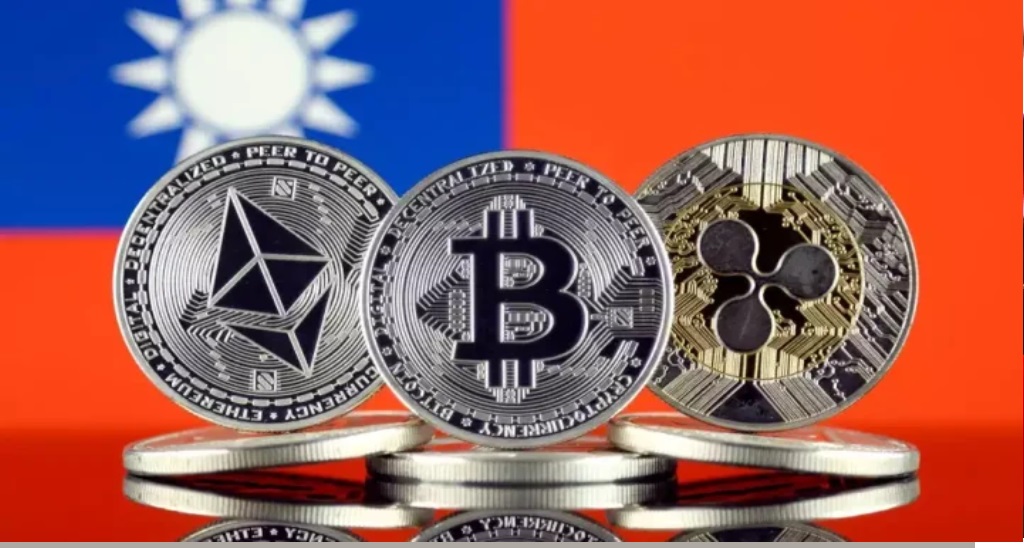
Taiwan proposes Crypto Bill with first reading passed at Parliament

Taiwan has taken a major step towards becoming a crypto-friendly jurisdiction, as the island nation’s parliament passed the first reading of a bill that aims to regulate cryptocurrencies and digital assets. The bill, titled “Digital Asset and Cryptocurrency Management Act”, was proposed by a group of lawmakers from the ruling Democratic Progressive Party (DPP) and the opposition Kuomintang (KMT) parties. The bill seeks to provide a clear legal framework for the development and innovation of the crypto industry in Taiwan, while also protecting the rights and interests of investors and consumers.

According to the bill, digital assets are divided into two categories: cryptocurrencies and digital tokens. Cryptocurrencies are defined as decentralized digital currencies that use cryptography to secure transactions and control the creation of new units. Digital tokens are defined as digital representations of rights or interests in goods, services, or assets. The bill also distinguishes between two types of digital asset service providers: custodial and non-custodial.

Custodial service providers are those who hold or manage digital assets on behalf of their customers, such as exchanges, wallets, or custodians. Non-custodial service providers are those who do not hold or manage digital assets for their customers, such as peer-to-peer platforms, decentralized applications, or smart contracts.

The bill stipulates that both custodial and non-custodial service providers must obtain a license from the Financial Supervisory Commission (FSC), the main financial regulator in Taiwan, before operating in the country. The FSC will also be responsible for overseeing and enforcing the compliance of digital asset service providers with relevant laws and regulations, such as anti-money laundering, consumer protection, and cybersecurity.

The bill also imposes certain obligations on digital asset service providers, such as conducting due diligence on their customers, reporting suspicious transactions, maintaining adequate capital and reserves, and disclosing information on fees, risks, and disputes.

The bill also grants certain rights and protections to digital asset holders and users, such as the right to access their own digital assets, the right to request refunds or compensation for losses caused by fraud or negligence of service providers, and the right to file complaints or lawsuits against service providers for breach of contract or violation of laws. The bill also establishes a dispute resolution mechanism for digital asset-related disputes, which will involve mediation by the FSC or arbitration by a designated institution.

Taiwan is poised to become one of the most progressive and forward-looking countries in Asia when it comes to crypto regulation. Taiwan stands out as a leader in creating a supportive and innovative regulatory framework. The island nation has been proactive in embracing the potential of blockchain technology and digital assets, while also ensuring consumer protection and financial stability.

Taiwan’s approach to crypto regulation is based on three main principles: flexibility, inclusiveness and experimentation. Flexibility means that the regulators are willing to adapt to the changing needs and challenges of the crypto industry, rather than imposing rigid and outdated rules. Inclusiveness means that the regulators are open to dialogue and collaboration with various stakeholders, including crypto exchanges, developers, investors and academics. Experimentation means that the regulators are supportive of pilot projects and sandbox initiatives that allow for testing new ideas and solutions in a controlled environment.

One of the key achievements of Taiwan’s crypto regulation is the establishment of the FinTech Regulatory Sandbox Act in 2018, which allows for innovative financial services to be offered without being subject to existing regulations for up to one year. The sandbox has enabled several crypto-related projects to launch and operate in Taiwan, such as a blockchain-based identity verification system, a crypto custody service and a tokenized real estate platform.

Another milestone of Taiwan’s crypto regulation is the recognition of security tokens as securities under the Securities and Exchange Act in 2019, which provides legal clarity and certainty for issuers and investors of such tokens. The regulators have also issued guidelines for initial coin offerings (ICOs) and anti-money laundering (AML) compliance for crypto businesses, as well as encouraged self-regulation by industry associations.

Taiwan’s crypto regulation is not only progressive but also forward-looking, as the regulators are constantly monitoring the global trends and developments in the crypto space and seeking to learn from best practices. Taiwan is also actively participating in international forums and initiatives on crypto regulation, such as the Financial Action Task Force (FATF) and the Global Blockchain Policy Forum. By creating a conducive and competitive environment for crypto innovation, Taiwan is poised to become one of the most progressive and forward-looking countries in Asia when it comes to crypto regulation.

Taiwan is ahead of many other countries in Asia and beyond in terms of its regulatory vision and support for the crypto industry. While some countries have banned or restricted crypto activities, Taiwan has adopted a balanced and pragmatic approach that fosters innovation while mitigating risks. Taiwan has also shown leadership and cooperation in shaping the global standards and norms for crypto regulation, contributing to the development of a more harmonized and interoperable framework.

The bill is seen as a positive development for the crypto industry in Taiwan, as it will provide legal certainty and legitimacy for digital asset activities and transactions. The bill will also foster innovation and competition in the crypto space, as it will encourage more entrepreneurs and investors to enter the market. Moreover, the bill will enhance consumer protection and investor confidence, as it will prevent fraud, money laundering, and other illicit activities involving digital assets.

The bill still needs to pass two more readings in parliament before becoming law. However, given the bipartisan support and public interest in the bill, it is expected that it will be enacted soon. Taiwan is poised to become one of the most progressive and forward-looking countries in Asia when it comes to crypto regulation.