DD
MM
YYYY

PAGES

DD
MM
YYYY

spot_img

PAGES

Home Blog Page 3665

Like What Microsoft Word did to Typists, Stenographers, OpenAI Sora (text to video) Goes After Video Creators

1

In secondary school, the Ovim Community League (OCL), the Ovim village’s community development unit, mandated that every kid must be exposed to shorthand. And the principal, Mr Ogbonnia, complained that no teacher was available to teach it. Within days, OCL hired shorthand teachers and sent them to the school. So, despite being a science student, I was compelled to learn basic shorthand.

Why did OCL do that? During the August meeting (a time in most Igbo communities where women return from anywhere they are to the villages to discuss the state of the villages), someone trumpeted how shorthand will guarantee 100% employment for boys and girls upon graduation. I attended a technical secondary school, built by the village, with motor vehicle technology, woodwork technology, etc offered in WAEC, and one would not have expected the shorthand to matter. But here, it was all about perception, and no one wanted to take any chances.

Good enough, Isaac Pitman shorthand had no impact; Microsoft Office destroyed it along with all the calls in typing and stenography.

And a new dawn is here: “OpenAI, has just announced a groundbreaking new project: Sora, a text to video model that can generate realistic and engaging videos from natural language inputs”. Good People, with this, all of us could become better video creators, and within months, video creators will begin to fade like typists and stenographers.

The video creators economy has a frontal attack now,  and if you are in this business, review your playbook because if Sora delivers something decent enough, not many will pay for most services. The implication of generative AI is massive as I have noted with Tekedia AI which understands me, and can summarize my speeches, with more than 98% accuracy within context. This is a new age: re-learn! 

Impact of OpenAI’s text to video model ‘Sora’ on Creator’s Economy

0

OpenAI, the research organization dedicated to creating artificial intelligence that can benefit humanity, has just announced a groundbreaking new project: Sora, a text to video model that can generate realistic and engaging videos from natural language inputs.

Text to video models are AI systems that can automatically generate videos from text inputs, such as captions, scripts, or summaries. These models have the potential to transform the creator’s economy, which is the growing sector of online content creation and monetization.

Sora is a deep learning system that leverages large-scale datasets of text and video to learn how to map natural language descriptions to video sequences. Sora can handle a wide range of domains and scenarios, such as news reports, product reviews, tutorials, sports highlights, and more. Sora can also generate videos with different styles, such as realistic, cartoon, or anime.

Sora is not only a powerful tool for content creation, but also a novel way of exploring and understanding the world through language and vision. Sora can help users discover new information, learn new skills, express their creativity, and have fun. Sora can also enable new applications and services that rely on natural language and video interaction, such as education, entertainment, journalism, and e-commerce.

Sora is the result of years of research and development by OpenAI’s talented team of engineers and scientists. Sora builds on the success of previous OpenAI projects, such as GPT-3, DALL-E, and CLIP, which have demonstrated the potential of large-scale language and vision models. Sora is also powered by OpenAI Codex, the system that can generate high-quality code from natural language commands.

Impact of text to video model on creator’s economy

One of the positive impacts of text to video models is that they can lower the barriers to entry for aspiring video creators. Video production requires a lot of skills, resources, and time, which can be challenging for many people who want to share their ideas, stories, or opinions online. Text to video models can simplify the process by allowing creators to focus on the content rather than the technical aspects of video making.

For example, a creator can write a script or a summary of their video idea, and then use a text to video model to generate a video that matches their vision. This way, they can save time, money, and effort, and reach a wider audience with their videos.

Another positive impact of text to video models is that they can enhance the quality and diversity of online video content. Text to video models can enable creators to produce videos that are more engaging, informative, and creative.

For instance, a creator can use a text to video model to add visual effects, animations, or transitions to their videos, or to generate videos in different styles, genres, or languages. Text to video models can also help creators to experiment with new formats, topics, or perspectives, and to express themselves in more ways than before.

However, text to video models also have some negative impacts on the creator’s economy. One of them is that they can increase the competition and pressure for existing video creators. Text to video models can make it easier for anyone to create and upload videos online, which means that there will be more content competing for the attention and engagement of viewers.

This can make it harder for established video creators to stand out and maintain their audience and income. Moreover, text to video models can create unrealistic expectations and standards for video quality and originality, which can put more stress and burden on creators who want to keep up with the trends and demands of the market.

Another negative impact of text to video models is that they can raise ethical and legal issues for the creator’s economy. Text to video models can pose challenges for the protection of intellectual property rights, privacy rights, and moral rights of creators and other stakeholders involved in online video production and consumption.

For example, a text to video model can generate videos that infringe on the copyrights or trademarks of other creators or entities, or that violate the privacy or personal data of individuals or groups. Additionally, a text to video model can generate videos that are misleading, deceptive, or harmful for the viewers or the society at large. For instance, a text to video model can create videos that spread false or biased information, promote hate speech or violence, or manipulate emotions or opinions.

Text to video models are powerful AI tools that can have significant impacts on the creator’s economy. They can bring both opportunities and challenges for online video creators and consumers. Therefore, it is important for the stakeholders in the creator’s economy to be aware of the potential benefits and risks of text to video models, and to use them responsibly and ethically.

Sora is currently in beta testing and will be available to the public soon. OpenAI invites interested users to sign up for early access and provide feedback on Sora’s performance and capabilities. OpenAI also encourages researchers and developers to collaborate with them on improving and expanding Sora’s functionality and scope.

OpenAI is excited to share Sora with the world and to see what amazing videos users will create with it. OpenAI believes that Sora is a significant step towards achieving their vision of creating artificial intelligence that can benefit all of humanity.

Egypt has officially stopped using the US dollar in trade

1
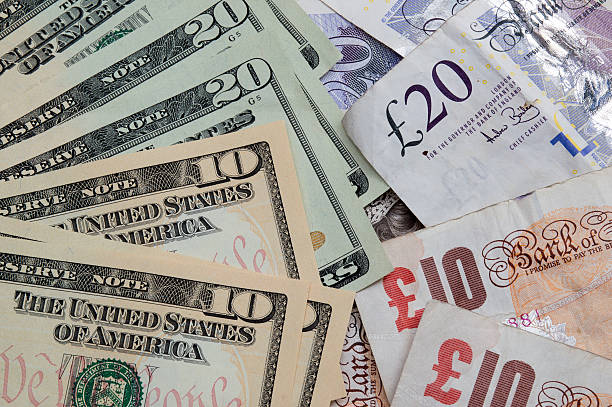
United States Ten and Twenty Dollar notes next to Ten and Twenty UK Pound Notes

Egypt has officially stopped using the US dollar in trade, a move that could have significant implications for the global economy and geopolitics.

On February 15th, 2024, Egypt announced that it would stop using the US dollar in all its trade transactions with other countries. Instead, it would use a basket of currencies that reflects its trade patterns and preferences.

The basket would include the euro, the Chinese yuan, the Russian ruble, the Turkish lira, the Indian rupee, and the African franc. Egypt said that this decision was based on economic rationality and sovereignty, and that it would enhance its trade competitiveness and financial stability.

Egypt is one of the largest economies in Africa and the Middle East, with a GDP of about $360 billion and a population of over 100 million. It is also a key ally of the United States in the region, receiving about $1.3 billion in military aid annually.

However, Egypt has been facing economic challenges in recent years, such as high inflation, public debt, and currency devaluation. The COVID-19 pandemic has also exacerbated these problems, as tourism and remittances, two major sources of foreign exchange, have declined sharply.

To address these issues, Egypt has been pursuing a series of reforms, including cutting subsidies, raising taxes, and liberalizing its exchange rate regime. In 2016, Egypt floated its currency, the Egyptian pound, allowing it to depreciate by about 50% against the US dollar.

This was done to attract foreign investment, boost exports, and secure a $12 billion loan from the International Monetary Fund (IMF). However, this also increased the cost of imports, especially of essential goods such as food and fuel, which are mostly denominated in US dollars.

To reduce its dependence on the US dollar and diversify its foreign reserves, Egypt has been exploring alternative currencies for trade and investment. In 2019, Egypt signed a currency swap agreement with China, allowing it to exchange Egyptian pounds for Chinese yuan.

This enabled Egypt to increase its trade with China, its largest trading partner, without using US dollars. Egypt has also been strengthening its ties with other emerging markets, such as Russia, Turkey, and India, and seeking to join regional economic blocs, such as the African Continental Free Trade Area (AfCFTA).

The move has been met with mixed reactions from other countries. Some have welcomed it as a sign of Egypt’s economic independence and diversification. Others have criticized it as a challenge to the US dollar’s dominance and a threat to the global financial system. The United States has expressed concern over Egypt’s decision and urged it to reconsider.

The US said that it would review its bilateral relations with Egypt, including its military aid and security cooperation. The US also warned that Egypt could face sanctions and isolation if it continued to defy the international monetary order.

Egypt’s decision to stop using the US dollar in trade is a bold and unprecedented one that could have far-reaching consequences for itself and the world. It could benefit Egypt by reducing its exposure to exchange rate fluctuations and enhancing its bargaining power with other countries.

It could also inspire other countries to follow suit and challenge the US dollar’s hegemony. However, it could also entail risks and costs for Egypt by alienating its traditional allies, inviting retaliation from the US, and disrupting its trade flows and financial markets.

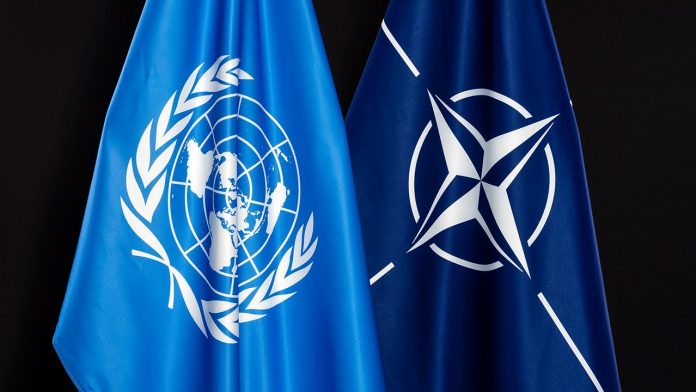
A Better NATO on modified UN Security Council with “attack on one member of the Council is an attack on all”

0

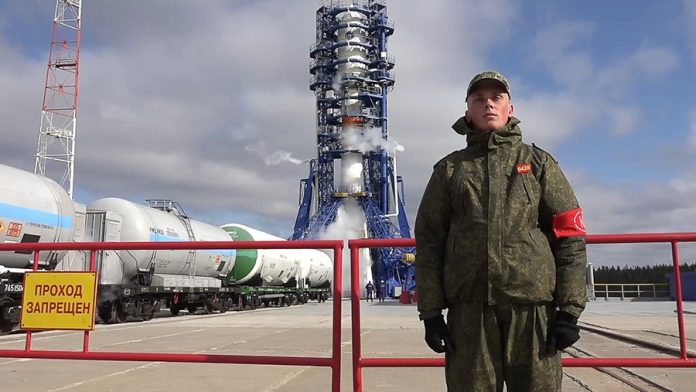
This is one of the auxiliary effects of the Russia-Ukraine war: “The White House has confirmed that the US has intelligence on Russia’s anti-satellite capability, which could pose a threat to the security and stability of the space domain. In a press briefing on Friday, the White House press secretary said that the US was aware of Russia’s development and testing of anti-satellite weapons, which could be used to damage or destroy satellites in orbit.”

Yes, with mutual trust gone, some of these nations will begin to work to bring sci-fi to reality. Like Mike Tyson said “Everybody has a plan until they get punched in the face”. Indeed, there are things which can hit this world, and all the defensive plans will fade. And nations like the US, Russia and China have those capabilities. Interestingly, the world has ceded rights for them to “keep” the world as permanent members of the UN Security Council. But yet, they show limited mutual respect among themselves. What again do they want?

These three countries are the only nations which have capacities to make military hardware, produce them and can sustain wars for years.  Others can barely last six months due to their production capacities and population. If that is the case, why can’t they just get along, and allow peace to reign?

With the announcement of Russia’s plan to have these nuclear anti-missile satellite capabilities, the US will up its own playbook from tomorrow, and in ten  years, Russia will up its own, and the vicious circle to world destruction continues. I call on the UN Security Council to modify its ordinance with “attack on one member of the Council is an attack on all”. That is a better NATO!

“US has intelligence on Russian Anti-Satellite capability” – The White House

“US has intelligence on Russian Anti-Satellite capability” – The White House

0

The White House has confirmed that the US has intelligence on Russia’s anti-satellite capability, which could pose a threat to the security and stability of the space domain.

In a press briefing on Friday, the White House press secretary said that the US was aware of Russia’s development and testing of anti-satellite weapons, which could be used to damage or destroy satellites in orbit.

The press secretary said that the US was concerned about the potential implications of such weapons for the peaceful use of outer space, as well as for the safety and sustainability of the space environment. The press secretary also said that the US was committed to maintaining and enhancing its space capabilities, and to working with allies and partners to deter and counter any threats to the space domain.

The press secretary urged Russia to refrain from any actions that could escalate tensions or undermine stability in space, and to engage in constructive dialogue on norms of behavior and responsible conduct in space.

The confirmation comes after a report by CNN earlier this week, which cited unnamed US officials as saying that Russia had conducted a test of a new anti-satellite missile system, known as Nudol, in December last year. The report said that the test was successful and demonstrated a significant improvement in Russia’s anti-satellite capability.

The report also said that the US intelligence community had assessed that Russia was developing other types of anti-satellite weapons, such as lasers and jammers, which could interfere with or disable satellites without physically destroying them.

Anti-satellite weapons are considered to be a serious threat to the security and stability of the space domain, as they could create debris that could endanger other satellites and spacecraft or create a situation of mutual vulnerability and mistrust among space-faring nations.

The US, Russia, China, and India are among the countries that have demonstrated anti-satellite capabilities in the past, either through kinetic or non-kinetic means. However, there is no international treaty or agreement that specifically regulates or prohibits the development or use of such weapons.

The only existing legal framework for outer space is the 1967 Outer Space Treaty, which bans the placement of nuclear weapons or other weapons of mass destruction in orbit but does not address conventional weapons or anti-satellite systems.

The US has been advocating for the development of norms of behavior and responsible conduct in space, as well as for enhancing transparency and confidence-building measures among space actors. The US has also been pursuing bilateral and multilateral cooperation on space security issues with allies and partners, such as NATO, Japan, Australia, India, and others.

The US has also expressed its willingness to engage in dialogue with Russia and China on space issues but has accused them of pursuing destabilizing activities and policies in space, such as developing anti-satellite weapons or proposing treaties that would limit US freedom of action in space.