DD
MM
YYYY

PAGES

DD
MM
YYYY

spot_img

PAGES

Home Blog Page 3667

NASFAT’s Multifaceted Approach to Achieving Sustainable Development Goals

0

In an era marked by complex global challenges, it’s heartening to witness the commitment of organizations like Nasrul-Lahi-L-Fatih society to address these issues from multiple angles. This Nigerian Islamic organization has made significant strides in contributing to the achievement of the Sustainable Development Goals (SDGs), reflecting a comprehensive approach to sustainable development.

NASFAT’s initiatives span across various key SDGs, reflecting a holistic commitment to leaving no one behind. These include goals such as quality education, gender equality, poverty alleviation, peace, and justice, health and well-being, and more. Their programmes empower individuals and communities, promote inclusivity, and foster interfaith dialogue.

One notable area of focus for NASFAT is education and capacity building. They’ve organized youth summits, academies, and seminars aimed at equipping the younger generation with the skills and knowledge needed for a better future. By doing so, NASFAT contributes directly to SDG 4, Quality Education, ensuring that Nigerian youth have access to learning opportunities.

Their dedication to gender equality and empowerment, exemplified by partnerships with organizations like UNICEF, helps address the challenges faced by women and girls. This, in turn, advances SDG 5, Gender Equality, and creates a more inclusive and equitable society.

NASFAT’s support for economic development and poverty alleviation, particularly through initiatives like the sharing of Zakat proceeds and grants for entrepreneurs, reflects their commitment to SDGs 1 and 8. By addressing economic disparities, NASFAT is helping to create a more prosperous society.

The organization’s emphasis on peace, tolerance, and social inclusion plays a vital role in achieving SDG 16, Peace, Justice, and Strong Institutions. Their efforts to promote religious tolerance and harmony are essential for national progress and stability.

Health and well-being, another SDG (SDG 3), are not overlooked, as NASFAT engages in campaigns against gender-based violence and promotes healthy lifestyles within the Muslim community.

Through these diverse activities, NASFAT demonstrates that achieving the SDGs requires a multifaceted approach, addressing multiple dimensions of development. Their support for interfaith dialogue, humanitarian aid, and environmental sustainability further solidifies their contribution to the SDGs.

NASFAT serves as an inspiring example of an organization that recognizes the interconnectedness of the SDGs and the need to address them comprehensively. Their efforts serve as a model for how various stakeholders can make meaningful contributions to creating a better world for all. It is a testament to their vision that transcends religious and cultural boundaries, striving for a Nigeria and a world where sustainable development is a reality for everyone.

Crypto investing isn’t just a fad, CFTC Commissioner Mersinger says; Paradigm co-founder Fred Ehrsam steps down

0

The recent surge in the price of bitcoin, which reached a new all-time high of over $35,000 on Wednesday, has been driven by the launch of several exchange-traded funds (ETFs) that offer exposure to the cryptocurrency. These ETFs, which trade on major stock exchanges like the New York Stock Exchange and the Nasdaq, allow investors to buy and sell shares that track the performance of bitcoin without having to deal with the technical and regulatory challenges of owning and storing the digital asset directly.

While some critics have dismissed crypto investing as a speculative bubble that will eventually burst, others have recognized its potential as a new asset class that can diversify portfolios and hedge against inflation and currency devaluation. Among them is Dawn Mersinger, a commissioner at the Commodity Futures Trading Commission (CFTC), the federal agency that oversees the derivatives markets in the US.

In an interview with Bloomberg on Thursday, Mersinger said that crypto investing is not just a fad, but a reflection of the growing demand for alternative forms of money and value in the digital age. She said that the CFTC’s role is to ensure that the crypto markets are fair, transparent and resilient, and that investors are protected from fraud and manipulation.

Mersinger also said that the CFTC is working closely with other regulators, such as the Securities and Exchange Commission (SEC), to provide clarity and guidance for the crypto industry. She said that the CFTC has been supportive of innovation and experimentation in the crypto space, and that it has approved several products and platforms that offer futures and options contracts on bitcoin and other cryptocurrencies.

Mersinger acknowledged that there are still many challenges and risks associated with crypto investing, such as volatility, cybersecurity, environmental impact and legal uncertainty. She advised investors to do their homework and understand the risks before investing in any crypto product or service. She also urged the crypto industry to adopt best practices and standards to enhance its credibility and trustworthiness.

Mersinger concluded by saying that crypto investing is here to stay, and that it will continue to evolve and grow as more investors, institutions and regulators embrace it. She said that the CFTC is committed to fostering a safe and sound crypto market that benefits both consumers and the economy.

NFL Rivals crypto game scores nearly 3 million players as revenue climbs

NFL Rivals, a blockchain-based game that lets players collect and trade digital cards of their favorite football teams and players, has reached a new milestone of nearly 3 million active users in October, according to the latest data from DappRadar. The game, which launched in August, has also seen its revenue soar to over $10 million in the same month, making it one of the most successful crypto games on the market.

NFL Rivals is powered by the Flow blockchain, the same platform that hosts NBA Top Shot, another popular sports-themed crypto game. The game allows users to buy packs of cards that represent real NFL teams and players and use them to compete in daily fantasy contests or trade them on the marketplace. Users can also earn rewards by completing challenges and quests, or by staking their cards to earn interest.

The game’s popularity has been driven by several factors, including the ongoing NFL season, the growing interest in crypto gaming and NFTs (non-fungible tokens), and the strong brand recognition of the NFL. The game has also attracted some celebrity endorsements, such as rapper Snoop Dogg, who recently revealed his own collection of NFL Rivals cards on Twitter.

NFL Rivals is not the only crypto game that is making waves in the industry. According to DappRadar, the total revenue of crypto games reached $2.3 billion in October, a 40% increase from September. Some of the other top-performing games include Axie Infinity, a Pokémon-inspired game that has over 1.5 million daily active users and $1.4 billion in revenue; and CryptoBlades, a role-playing game that has over 600,000 daily active users and $300 million in revenue.

Crypto gaming is a rapidly growing sector that combines the fun and excitement of gaming with the innovation and potential of blockchain technology. By offering users more ownership, control, and rewards over their digital assets, crypto games are creating new ways for people to interact with their favorite sports, entertainment, and gaming franchises.

Paradigm co-founder Fred Ehrsam steps down as managing partner

Fred Ehrsam, the co-founder and managing partner of Paradigm, a crypto-focused venture capital firm, has decided to step down from his role. Ehrsam, who co-founded Paradigm in 2018 with Matt Huang, a former partner at Sequoia Capital, said he will remain involved with the firm as a board member and advisor, but will no longer oversee its day-to-day operations.

Ehrsam did not disclose the exact reasons for his departure but hinted that he wanted to pursue other opportunities in the crypto space. “I’m incredibly proud of what we’ve built at Paradigm over the last three years. We have a world-class team, a strong portfolio of companies, and a clear vision for the future of crypto. However, I also feel that there are so many exciting things happening in this industry right now, and I want to explore them more deeply,” he wrote in a blog post.

Ehrsam is no stranger to the crypto world. He co-founded Coinbase, one of the largest and most influential crypto exchanges, in 2012 with Brian Armstrong. He left Coinbase in 2017 to start Paradigm, which has since become one of the most prominent and successful VC firms in the crypto space. Paradigm has invested in some of the leading projects and companies in the industry, such as Uniswap, Compound, MakerDAO, Optimism, and FTX.

Ehrsam’s departure comes at a time when the crypto market is booming, reaching new highs in terms of adoption, innovation, and valuation. According to Ehrsam, Paradigm is well-positioned to capitalize on this growth and continue to support the development of the crypto ecosystem. He praised his co-founder Huang and the rest of the Paradigm team for their leadership and expertise.

“Matt is an exceptional partner and leader, and I have full confidence in him and the team to take Paradigm to the next level. I’m grateful for their support and friendship, and I look forward to working with them as a board member and advisor,” he said.

Ehrsam did not reveal what his next venture will be but said he will share more details soon. He also expressed his optimism and enthusiasm for the future of crypto. “I believe we are still at the very beginning of this journey, and I can’t wait to see what the next decade will bring. Crypto is not only a new technology, but a new paradigm for how we organize ourselves as a society. It’s an honor to be part of this movement, and I’m excited to continue contributing to it in new ways,” he concluded.

Rymedi, BUSD market cap down 90% from all-time high as Shrapnel raises $20M

0

Rymedi, a Web3 healthcare information platform that leverages blockchain technology to improve data integrity, interoperability and compliance, has announced that it has raised $9 million in a Series A funding round led by Polychain Capital. The round also saw participation from other investors such as Digital Currency Group, Hashed, CoinFund and Fenbushi Capital.

The funding will be used to expand Rymedi’s global presence, scale its platform and develop new solutions for the healthcare sector. Rymedi’s platform enables healthcare stakeholders to securely share and verify data across different systems and jurisdictions, while ensuring compliance with regulatory standards and industry best practices. Rymedi’s platform also supports the creation and management of digital health credentials, such as vaccination records and test results, that can be verified by third parties.

Rymedi’s co-founder and CEO, David Stefanich, said: “We are thrilled to have the support of such prestigious investors who share our vision of building a Web3 healthcare information platform that can transform the way data is exchanged and utilized in the healthcare industry. We believe that blockchain technology can unlock tremendous value for healthcare stakeholders by enhancing data quality, security and interoperability, while reducing costs and risks. We are excited to leverage our new capital to accelerate our growth and innovation.”

Olaf Carlson-Wee, founder and CEO of Polychain Capital, said: “Rymedi is a pioneer in applying Web3 technology to the healthcare sector, which is one of the most complex and regulated industries in the world. We are impressed by Rymedi’s track record of delivering successful projects with leading healthcare organizations, such as the World Health Organization, the Mongolian Ministry of Health and the Rwandan Ministry of Health. We are confident that Rymedi’s platform can become a global standard for healthcare data exchange and verification.”

BUSD market cap down 90% from all-time high.

In a shocking turn of events, the market capitalization of BUSD, the stablecoin issued by Binance, has plummeted by 90% from its all-time high of $12.8 billion in September 2023. This comes amid reports that Binance, the world’s largest cryptocurrency exchange by trading volume, is closing positions of its users without their consent.

According to sources, Binance has been facing regulatory pressure from various jurisdictions, including the US, UK, Japan, and Singapore, over its compliance and transparency issues. The exchange has also been accused of market manipulation, money laundering, and facilitating illegal transactions.

As a result, Binance has been forced to reduce its exposure to the crypto market and liquidate some of its assets. This has led to a massive sell-off of BUSD, which is pegged to the US dollar at a 1:1 ratio. BUSD holders have been scrambling to exchange their tokens for other stablecoins or fiat currencies, causing a huge drop in demand and price.

BUSD is not the only stablecoin that has been affected by Binance’s troubles. Other tokens that are backed by Binance’s reserves, such as BGBP, BEUR, and BIDR, have also seen significant declines in their market caps and trading volumes. Some analysts have warned that these stablecoins could become worthless if Binance goes bankrupt or shuts down.

The situation has raised serious questions about the reliability and security of stablecoins, especially those that are issued by centralized entities. Many crypto enthusiasts have argued that stablecoins should be decentralized and audited by independent third parties, to ensure their stability and trustworthiness.

Binance has not yet issued an official statement on the matter, but its CEO Changpeng Zhao (CZ) has tweeted that the exchange is working hard to resolve the issues and restore confidence in its services. He has also urged users to remain calm and patient, and not to panic sell their BUSD or other tokens.

However, many users have expressed their frustration and anger at Binance’s handling of the situation. Some have claimed that they have lost thousands of dollars due to Binance’s actions and have vowed to never use the exchange again. Others have called for legal action against Binance and CZ and have demanded compensation for their losses.

The future of BUSD and Binance remains uncertain at this point. It is unclear whether the exchange will be able to recover from this crisis, or whether it will face more regulatory scrutiny and legal challenges. It is also unknown how the crypto market will react to this development, and whether it will affect the adoption and innovation of stablecoins in general.

Call of Duty-style crypto video game ‘Shrapnel’ raises $20 million.

Shrapnel, a new video game that combines the thrill of Call of Duty with the innovation of crypto, has raised $20 million in a seed funding round led by some of the most prominent names in the gaming and blockchain industries.

Shrapnel is a first-person shooter game that allows players to earn, trade and spend cryptocurrency within the game world. The game uses a proprietary blockchain platform called Shrapnel Chain, which enables fast, secure and scalable transactions. Shrapnel Chain also supports smart contracts, NFTs and decentralized applications, opening up endless possibilities for players to create and customize their own in-game assets and experiences.

The game is developed by Shrapnel Studios, a team of veteran game developers who have worked on some of the most popular titles in the Call of Duty franchise. The team has partnered with several leading crypto companies, such as Polygon, Chainlink and Enjin, to leverage their expertise and technology in building Shrapnel’s blockchain ecosystem.

Shrapnel aims to revolutionize the gaming industry by offering a new level of immersion, engagement and monetization for players and developers alike. The game will feature a rich and diverse multiplayer mode, where players can compete in various modes and maps, as well as a single-player campaign, where players can explore the game’s lore and backstory. The game will also have a social hub, where players can interact with other players, trade items, join clans and participate in events.

Shrapnel is expected to launch in 2024 on PC, PlayStation 5 and Xbox Series X/S. The game will have a free-to-play model, with optional in-game purchases using the game’s native token, SHRAP. The token will also be available on major crypto exchanges and wallets. Shrapnel Studios plans to conduct a public sale of SHRAP tokens in the near future, as well as an NFT sale of exclusive in-game items and collectibles.

Shrapnel is one of the most ambitious and innovative projects in the gaming and crypto space and has attracted the attention and support of some of the most influential investors and advisors in both fields. Some of the notable names that participated in the seed funding round include:

Andreessen Horowitz: One of the most prestigious venture capital firms in Silicon Valley, known for backing companies such as Facebook, Twitter, Airbnb and Coinbase.

Animoca Brands: A leading global gaming company that focuses on blockchain, NFTs and gamification, known for developing games such as The Sandbox, F1 Delta Time and CryptoKitties.

Bitkraft Ventures: A venture capital firm that specializes in esports, gaming and digital entertainment, known for investing in companies such as Epic Games, Discord and BitPay.

Dapper Labs: A blockchain company that created Flow, a high-performance blockchain platform for games and entertainment, known for developing games such as NBA Top Shot, CryptoKitties and Dapper Wallet.

“We are thrilled to have such a stellar group of investors and advisors on board for Shrapnel. Their support and guidance will be invaluable as we work hard to deliver an amazing game that will redefine the gaming industry. We believe that Shrapnel will be the ultimate fusion of gaming and crypto, and we can’t wait to share it with the world.”

Vitalik Buterin backs Nocturne; Maestro Telegram bot suffers a Contract Exploit

0

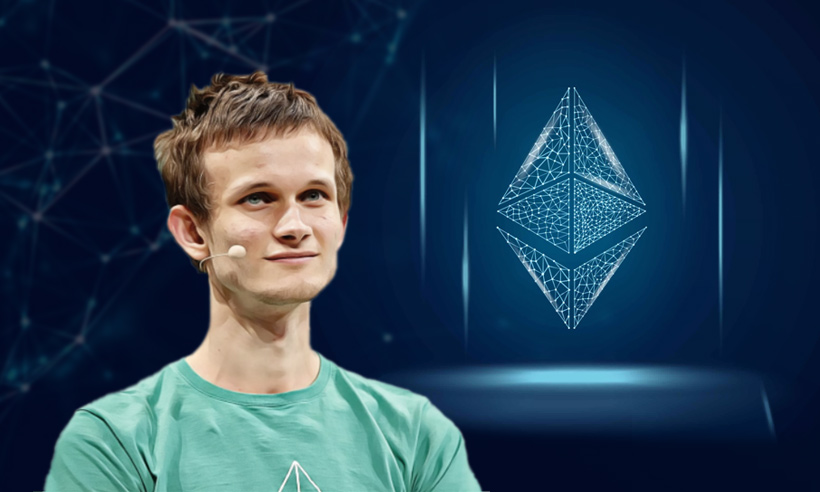
Vitalik Buterin, the co-founder of Ethereum, has recently expressed his support for Nocturne, a project that aims to introduce private accounts on the Ethereum network. Nocturne is a layer-2 solution that leverages zero-knowledge proofs to enable users to transact with each other without revealing their identities or balances. This would enhance the privacy and security of Ethereum users, as well as reduce the gas fees and network congestion.

Buterin said that he was impressed by the technical innovation and vision of Nocturne, and that he believed that privacy was a crucial feature for any decentralized platform. He also said that he hoped that Nocturne would inspire more developers to explore the possibilities of zero-knowledge proofs and other privacy-enhancing technologies.

Nocturne is currently in the testnet phase and plans to launch on the mainnet by the end of the year. The project has also received funding from several prominent investors and organizations, such as ConsenSys, Paradigm, and the Ethereum Foundation. The team behind Nocturne consists of experienced researchers and developers who have previously worked on projects such as Zcash, Aztec, and StarkWare.

Nocturne’s goal is to provide a simple and user-friendly interface for users to create and manage their private accounts on Ethereum. Users can choose to link their private accounts with their public ones or keep them completely separate. Users can also send and receive payments in any ERC-20 token, as well as interact with smart contracts and decentralized applications that support Nocturne.

Nocturne claims that its solution is scalable, secure, and compatible with the existing Ethereum infrastructure. The project uses zk-SNARKs, a type of zero-knowledge proof that allows users to prove that they have performed a valid computation without revealing any details about it. Nocturne also uses optimistic rollups, a technique that batches multiple transactions into a single one and submits it to the Ethereum blockchain for verification. This reduces the load on the network and lowers the gas costs for users.

Nocturne is one of the many projects that are working on improving the privacy and scalability of Ethereum, which are two of the main challenges facing the platform as it transitions to Ethereum 2.0. By offering private accounts on Ethereum, Nocturne hopes to attract more users and use cases to the network, and to contribute to the development of a more open, inclusive, and secure decentralized web.

Maestro Telegram bot suffers a contract exploit: $500,000 of ETH stolen

In a shocking turn of events, the popular Maestro Telegram bot, which allows users to create and manage smart contracts on the Ethereum network, has been exploited by an unknown attacker who drained over $500,000 worth of ETH from the bot’s contract.

According to a post-mortem report published by the Maestro team, the exploit occurred on October 28, 2023, at around 4:00 PM UTC, when the attacker called the withdraw function of the bot’s contract with a malicious parameter that allowed them to bypass the security checks and withdraw more ETH than they had deposited.

The Maestro team claims that they detected the exploit within minutes and immediately paused the bot’s operations and notified their users. However, by then, the attacker had already withdrawn 1,234.567 ETH (worth about $500,000 at the time of writing) from the contract’s balance.

The team also states that they have contacted the attacker via the Ethereum address used for the exploit and requested them to return the stolen funds. They have not received any response so far.

The Maestro team apologizes to their users for the incident and assures them that they are working hard to fix the vulnerability and resume the bot’s services as soon as possible. They also promise to compensate their users for any losses incurred due to the exploit. The team advises their users to refrain from using the bot until further notice and to contact them via email or Telegram for any questions or concerns.

The Maestro Telegram bot is one of the most popular tools for creating and managing smart contracts on Ethereum. It allows users to create, deploy, interact with, and monitor smart contracts without any coding skills or technical knowledge. The bot has over 100,000 users and has facilitated over 10,000 smart contracts since its launch in 2022.

The exploit is another reminder of the risks and challenges involved in developing and using smart contracts on Ethereum. As the network grows in popularity and complexity, so do the opportunities and incentives for malicious actors to exploit any vulnerabilities or flaws in the code or logic of smart contracts.

Users are advised to exercise caution and due diligence when using any third-party tools or services that interact with smart contracts on Ethereum. They should always verify the source code, audit reports, and reputation of any smart contract or tool before using it. They should also keep track of their transactions and balances and report any suspicious or abnormal activity to the relevant authorities.

What’s Missing in Nigerian Universities’ Programmes

0

Nigerian universities have long been heralded as institutions of higher learning, providing students with a foundation of knowledge and critical thinking skills. Yet, as we navigate the complex challenges facing our society, it’s essential to consider whether our academic programmes are equipping graduates with the skills and mindset necessary to address these issues effectively. While education is about more than just business creation, the ability to solve societal problems is a crucial outcome of higher education. In this piece our analyst explores what is lacking in Nigerian universities’ programmes when it comes to fostering the entrepreneurial and problem-solving spirit.

A Foundation of Knowledge

Nigerian universities have traditionally excelled in imparting a solid foundation of knowledge across a wide range of disciplines, from the sciences to the arts. This foundation is essential, providing students with the tools to understand the world around them. However, knowledge alone may not be sufficient in a rapidly changing and complex society. The ability to apply this knowledge to real-world challenges is equally crucial.

Critical Thinking and Problem-Solving

One of the primary goals of higher education is to cultivate critical thinking skills. These skills empower graduates to analyze situations, identify problems, and propose innovative solutions. In this regard, Nigerian universities do an admirable job. However, there seems to be a disconnect between problem-solving within the academic realm and addressing the pressing issues of society. Graduates are often well-equipped to solve theoretical problems within their fields but may lack the skills to tackle the real-world challenges that Nigeria faces.

The Missing Piece: Entrepreneurial and Business Creation Skills

Nigerian universities should consider the value of instilling entrepreneurial and business creation skills in their programs. The ability to take knowledge and turn it into practical solutions, whether in the form of startups, innovative projects, or policy initiatives, is a vital aspect of education. Graduates who possess these skills can become agents of change, addressing the societal problems we face with creativity and resourcefulness.

While entrepreneurship is not the sole answer to every challenge, it can be a powerful vehicle for change. It empowers individuals to take initiative, create jobs, and address societal issues in a sustainable manner. Nigerian universities must not overlook this aspect of education. Incorporating courses and resources that teach entrepreneurial skills, from business planning to financial management, can bridge the gap between academic knowledge and real-world impact.

Nigerian universities have long played a pivotal role in shaping the future of our nation by providing a strong educational foundation. However, the evolving needs of society demand a more holistic approach. Graduates should not only be knowledgeable and critical thinkers but also possess the skills and mindset to create solutions to societal problems, often in the form of businesses.

By incorporating entrepreneurial and business creation skills into their programmes, Nigerian universities can produce graduates who are not only well-educated but also empowered to tackle the challenges that lie ahead. The combination of knowledge, critical thinking, and entrepreneurship can truly transform our society and drive us towards a brighter, more innovative future. It’s time for our universities to take the lead in this endeavour and pave the way for a new generation of problem-solvers and entrepreneurs.