DD
MM
YYYY

PAGES

DD
MM
YYYY

spot_img

PAGES

Home Blog Page 367

SoftBank Buys ABB’s Robotics Division for $5.4bn, Deepening Its Bet on “Physical AI” Revolution

0

SoftBank Group Corp. has agreed to acquire the robotics division of Swiss engineering giant ABB Ltd. for $5.4 billion, in a landmark deal that marks Masayoshi Son’s most ambitious push yet to merge artificial intelligence with physical automation.

The transaction, announced on Wednesday, represents a major reshaping of both companies’ strategic priorities. For ABB, it’s a divestment from one of its most volatile but high-profile businesses. For SoftBank, it’s a major step toward establishing what Son calls “Physical AI” — the fusion of advanced machine learning models with robotics that can act, sense, and learn in the real world.

The ABB robotics acquisition gives SoftBank immediate global scale in industrial robotics, adding roughly 7,000 employees, a network of manufacturing plants across Europe, Asia, and North America, and a portfolio of over 400,000 industrial robots deployed globally. ABB’s robotics division generated $2.3 billion in revenue last year, contributing about 7% to ABB’s total sales.

While ABB’s robotics business has long been respected for its precision automation technology, it has struggled to maintain high profit margins due to intense competition from Japan’s Fanuc and Yaskawa, and Germany’s Kuka — now owned by China’s Midea Group. ABB’s decision to sell, rather than spin off the division, came after years of underperformance and challenges in integrating its robotics operations with its core electrification and automation segments.

ABB CEO Morten Wierod, who took over in 2023, told Reuters the sale offered “immediate value” and would allow ABB to focus on higher-margin and faster-growing areas.

“We always said that robotics is a market with much higher volatility,” he said. “This transaction allows us to channel resources into electrification, automation, and digitalization — markets where we see stable long-term growth.”

The deal is expected to close between mid-2026 and late 2026, pending regulatory approvals in the European Union, Japan, and the United States. ABB will receive about $5.3 billion in cash proceeds, which Wierod said would be used to expand production capacity, develop next-generation automation technologies, and fund potential acquisitions.

For SoftBank, the acquisition continues a series of aggressive moves to secure dominance in artificial intelligence and robotics infrastructure. In March, SoftBank bought chip design startup Ampere Computing for $6.5 billion, part of a broader strategy to control the hardware powering AI systems. The company has also invested heavily in automation startups such as Berkshire Grey, AutoStore, and Brain Corp, and led a $40 billion funding round in OpenAI, the maker of ChatGPT.

Son, who has previously described himself as “obsessed with AI,” said the ABB acquisition is designed to combine SoftBank’s growing AI software ecosystem with physical robotics platforms.

“SoftBank’s next frontier is physical AI,” he said. “Together with ABB Robotics, we will unite world-class technology and talent under our shared vision to fuse Artificial Super Intelligence and robotics — driving a groundbreaking evolution that will propel humanity forward.”

Industry experts see the move as part of SoftBank’s return to high-risk, high-reward investing after a period of restraint following the Vision Fund’s multibillion-dollar losses in 2020 and 2021.

ABB Exits an Uneven Market

ABB’s robotics division was once a symbol of the company’s innovation drive, supplying robots to major automakers and electronics firms. However, the division’s performance lagged in recent years due to uneven global demand and rising costs. In 2022, ABB reported that its robotics profit margin had dropped below 10%, far lower than its automation unit’s 17%.

Zürcher Kantonalbank, which had valued the division at slightly under $4 billion ahead of a planned IPO, called the $5.4 billion sale price “an unexpectedly strong outcome.” ABB’s shares rose 2% in early Zurich trading on Wednesday, while SoftBank’s stock fell slightly by 2%, as investors digested the scale of the acquisition.

The sale will also allow ABB to exit a sector facing structural headwinds. The global robotics market — valued at around $40 billion in 2024, according to Statista — is projected to grow 14% annually, driven by AI adoption and labor shortages. But the market is also becoming crowded with new entrants from China, South Korea, and the U.S., many of whom are offering cheaper, AI-powered robots.

The Rise of “Physical AI”

Son has spent years talking about “Singularity” — the moment when AI surpasses human intelligence. With the ABB acquisition, he appears to be pivoting that vision toward tangible, machine-driven productivity. The concept of “Physical AI” involves combining advanced AI systems like OpenAI’s GPT models with robotics capable of adapting to unpredictable physical environments, from warehouses and factories to homes and hospitals.

The acquisition will likely draw scrutiny from competition regulators, especially in Europe and Japan, where industrial robotics forms a critical export sector. The European Commission is expected to assess whether the deal gives SoftBank disproportionate influence over automation supply chains, particularly given its existing stake in several robotics and chip design firms.

In Japan, the government has generally supported Son’s AI vision, viewing it as aligned with Tokyo’s “Society 5.0” initiative — a national framework to fuse digital and physical innovation. Japanese industry officials believe the ABB deal could help strengthen domestic robotics and AI industries, especially as Japan faces chronic labor shortages.

The acquisition, expected to finalize within two years, will mark one of the largest-ever robotics takeovers and a defining moment for Son’s comeback as one of the tech industry’s most daring visionaries.

Trump Memecoin Issuer Seeks $200M+ Funding for Digital Asset Treasury

0

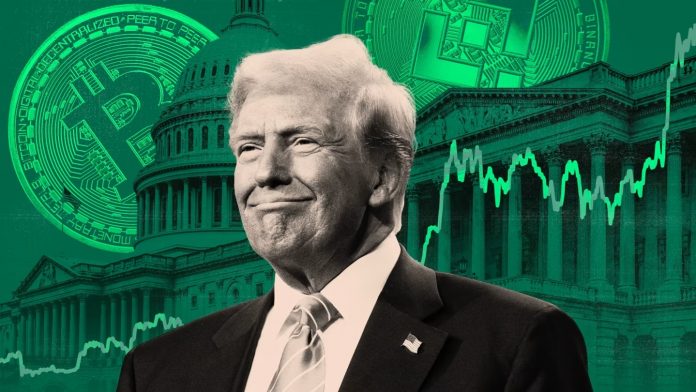
According to a Bloomberg report published on October 7, 2025, Fight Fight Fight LLC—the startup behind the official Donald Trump memecoin (TRUMP)—is actively pursuing at least $200 million in funding to launch a new digital asset treasury (DAT) company.

The entity would focus on accumulating and holding large quantities of the TRUMP token, aiming to stabilize its price amid recent declines. Sources familiar with the matter indicate ambitions could scale up to $1 billion, though the deal is still in early stages and hasn’t been formally announced.

Fight Fight Fight LLC is led by Bill Zanker, a longtime Trump associate and promoter known for ventures like the Learning Annex. The company issued the TRUMP memecoin just days before Trump’s second presidential inauguration in January 2025.

The memecoin launched with significant hype, peaking at around $44 shortly after debut. However, it has since slumped to approximately $7.57 as of October 8, 2025, per CoinGecko data. Its current market cap stands at about $1.5 billion, with a fully diluted valuation of $7.6 billion.

The proposed DAT would act as a steady buyer of TRUMP tokens, creating a price floor and boosting investor confidence. This mirrors broader trends in crypto, where over 80 similar treasury companies have launched in 2025 for various assets like Ethereum and XRP, though many have seen post-launch price drops.

This initiative expands the Trump family’s growing footprint in digital assets, which already includes: Bitcoin mining operations. A USD1-pegged stablecoin called Trumpbucks via World Liberty Financial (WLFI). WLFI’s own $1.5 billion treasury raised in August 2025 with Nasdaq-listed fintech Alt5 Sigma. Crypto-focused ETFs, including a proposed TRUMP ETF filing by Canary Capital. An NFT collection and a DeFi app.

The move comes as Trump has positioned himself as a pro-crypto advocate, promising a “golden age for crypto” during his campaign. Past efforts to sustain TRUMP’s visibility include a May 2025 dinner hosted by Trump for top token holders.

Reactions have been mixed, supporters hail it as a bullish signal for the token, while critics raise concerns about potential conflicts of interest and self-enrichment, especially given Trump’s role as president. This development highlights ongoing debates around memecoins’ speculative nature, where retail investors often face disadvantages compared to issuers and large traders.

Bloomberg notes that despite crypto’s “democratizing” rhetoric, small buyers in projects like TRUMP have historically underperformed. The token’s price and market dynamics could shift rapidly based on announcements.

Trumpbucks, more formally known as USD1, is a U.S. dollar-pegged stablecoin launched by World Liberty Financial (WLFI), a decentralized finance (DeFi) platform co-founded by Donald Trump Jr. and Eric Trump.

Introduced in March 2025 as part of the Trump family’s expanding crypto ecosystem, USD1 aims to bridge traditional finance (TradFi) and DeFi by offering a stable, dollar-backed digital asset for cross-border transactions, lending, and trading.

It positions itself as a compliant, institution-friendly alternative to dominant stablecoins like Tether (USDT) and Circle’s USDC, emphasizing transparency and U.S. government asset backing.The stablecoin’s development aligns with President Trump’s pro-crypto policies, including the GENIUS Act, which established federal regulations for stablecoins.

WLFI describes USD1 as “the US Dollar stablecoin upgraded for a new era of finance, stable, secure, and transparent by design.” USD1 maintains a 1:1 peg to the U.S. dollar, fully backed by a conservative mix of short-term U.S. Treasuries, cash deposits, and other cash equivalents.

Reserves are held in externally audited custodial accounts managed by an independent U.S.-based custodian. This structure ensures stability and allows issuers to earn yields from low-risk investments, similar to Tether’s model, which generated over $13 billion in profits in 2024.

Initially issued on Ethereum and BNB Chain, with expansions to Aptos launched October 6, 2025 for enhanced DeFi liquidity and cross-chain compatibility. It’s designed to be chain-neutral, enabling seamless trading on decentralized exchanges (DEXs).

Primarily for trading, collateral in DeFi lending protocols (e.g., WLFI’s own platform), and real-world asset (RWA) tokenization. WLFI plans to pair USD1 with tokenized commodities like oil, gas, cotton, and lumber, as well as real estate.

Upcoming features include a crypto-linked debit card for everyday spending, bridging crypto with fiat. WLFI token ($WLFI) holders can vote on USD1’s policies, such as reserve management and ecosystem development. An LLC tied to the Trump family owns about 38-40% of WLFI, potentially entitling them to up to 75% of net revenues.

USD1 has seen rapid growth since launch, reflecting the broader stablecoin market’s 46% expansion in 2025 total market cap: ~$237 billion. In May 2025, Abu Dhabi-backed MGX used $2 billion in USD1 to settle a Binance investment, citing its U.S. asset backing and compliance.

This was USD1’s largest transaction, despite being newly launched. WLFI proposed airdropping USD1 to $WLFI holders on BNB Chain to boost liquidity. WLFI’s $1.5 billion treasury via Nasdaq-listed ALT5 Sigma holds ~7.5% of $WLFI supply, with Eric Trump joining ALT5’s board.

The Trump family has reportedly earned ~$500 million from WLFI since inception, with $WLFI’s debut trading adding $5 billion to their paper wealth despite initial price dips. Co-founders include Zach Witkoff CEO, son of Trump’s Middle East envoy, who highlighted USD1’s appeal to “sovereign investors and major institutions” for secure DeFi integration.

Despite this, USD1’s growth underscores stablecoins’ role in reinforcing U.S. dollar dominance, as noted by Donald Trump Jr.

SEC to Formalize The “Innovation Exemption” For Crypto Companies By The End of The Year

0

U.S. Securities and Exchange Commission (SEC) is actively planning to formalize an “innovation exemption” specifically tailored to support crypto and blockchain companies.

This initiative, spearheaded by SEC Chair Paul Atkins, represents a significant pivot from the agency’s past “regulation by enforcement” approach under previous leadership, which many in the industry criticized as overly repressive and a driver of U.S. innovation overseas.

Instead, the exemption aims to create a structured “sandbox” environment where compliant firms can experiment with new technologies under lighter oversight, while still adhering to core investor protections.

Atkins has repeatedly stated that the SEC intends to initiate formal rulemaking for the exemption by the end of 2025, with potential finalization slipping into early 2026 depending on external factors like the ongoing U.S. government shutdown. He described it as a “top priority” during remarks at a Futures and Derivatives Law Report event in New York on October 7, 2025, emphasizing urgency despite bureaucratic hurdles.

The exemption would provide temporary relief from certain outdated securities regulations originally designed for traditional finance for innovative crypto projects. This includes: Testing decentralized finance (DeFi) protocols, tokenization of assets, staking/lending services, initial coin offerings (ICOs), airdrops, and network rewards.

Allowing startups to launch products without “burning millions on lawyers first,” as one industry executive put it, while giving the SEC a “front-row seat” to monitor real-world applications. Principles-based compliance rather than rigid rules, fostering “responsible experimentation.”

This is part of the SEC’s “Project Crypto” initiative, launched in July 2025, which seeks to modernize rules for digital assets, clarify the Howey Test for security classification, and harmonize with the Commodity Futures Trading Commission (CFTC).

It aligns with President Trump’s vision to make the U.S. the “crypto capital of the planet,” potentially unlocking up to $50 billion in institutional investments by 2026 and boosting public listings in the sector.

Atkins has framed it as a way to “bring innovation home” after years of uncertainty that pushed firms abroad—echoing sentiments from crypto leaders like Wendy Fu of Momentum Finance, who noted it could enable on-chain financial products without retroactive enforcement fears.

Potential Impact on Crypto Companies

This exemption could be transformative for U.S.-based crypto firms, reducing barriers to entry and encouraging domestic development. Here’s a quick comparison of the pre- and post-exemption landscape.

Critics, however, warn that the rules must be “tailored to how crypto actually works” to avoid becoming mere “regulatory theater.” If implemented effectively, it could accelerate mainstream adoption, revive U.S. public markets where listings have halved in three decades, and position America as a global leader in Web3.

The announcement has sparked optimism across crypto communities. ThuanCapital highlight its role in “bringing crypto back to the U.S.,” reflecting global interest.In summary, this isn’t just procedural—it’s a deliberate effort to end the “stagnation” in U.S. crypto and foster a pro-innovation ecosystem.

By providing temporary relief from stringent securities regulations, the exemption will reduce the legal and compliance costs that have historically deterred startups from launching in the U.S. This could lead to a surge in new DeFi protocols, tokenized assets, and blockchain-based financial products developed domestically.

The U.S. has lost significant crypto talent and companies to jurisdictions like Singapore, Dubai, and Switzerland due to regulatory uncertainty. The exemption could bring firms back, fostering job creation and positioning the U.S. as a hub for Web3 innovation.

A startup launching a tokenized real estate platform could test its product in the sandbox without fear of immediate SEC enforcement, encouraging experimentation that was previously offshored.

Clearer regulations could boost public listings of crypto firms, reversing the decline in U.S. IPOs down 50% over three decades. This would deepen liquidity in crypto markets and attract traditional finance players like BlackRock, which has already committed $22 billion to crypto-related investments.

As part of “Project Crypto,” the exemption could streamline overlapping jurisdictions between the SEC and CFTC, clarifying which assets are securities versus commodities. This reduces legal ambiguity for tokens like Ethereum or stablecoins.

The rulemaking process could face delays due to external factors like the U.S. government shutdown, potentially pushing finalization into 2026 and creating short-term uncertainty.

The sandbox environment will allow testing of innovative applications like tokenized securities, decentralized lending, and airdrops, accelerating their integration into mainstream finance. This could make crypto more accessible to retail and institutional users.

A pro-innovation stance from the SEC could shift public and corporate views on crypto, moving it from a speculative asset to a foundational technology for finance, supply chains, and more.

The exemption could position the U.S. as a global leader in blockchain technology, countering the dominance of jurisdictions like the EU with MiCA regulations and Asia. This aligns with strategic goals to “bring innovation home.”

The SEC must balance innovation with investor protection. Overly lax rules could invite fraud, while overly strict ones might render the exemption ineffective, as warned by industry critics calling for “tailored” regulations.

The ongoing U.S. government shutdown and potential shifts in political priorities could slow the rulemaking process, dampening industry momentum. While the exemption signals a bullish outlook, speculative hype.

A revitalized U.S. crypto sector could create thousands of high-skill jobs in tech, finance, and legal services, while boosting tax revenues from growing crypto firms. By enabling innovative financial products, the exemption could improve access to capital for underserved communities, though this depends on robust consumer protections.

The SEC’s innovation exemption could be a game-changer for the U.S. crypto industry, fostering innovation, attracting capital, and restoring global competitiveness. It promises to shift the regulatory paradigm from punitive to collaborative, potentially unlocking billions in investment and mainstreaming blockchain technology.

U.S. Lawmakers Warn $40bn in Loopholes Are Undermining Global Chip Export Controls on China

0

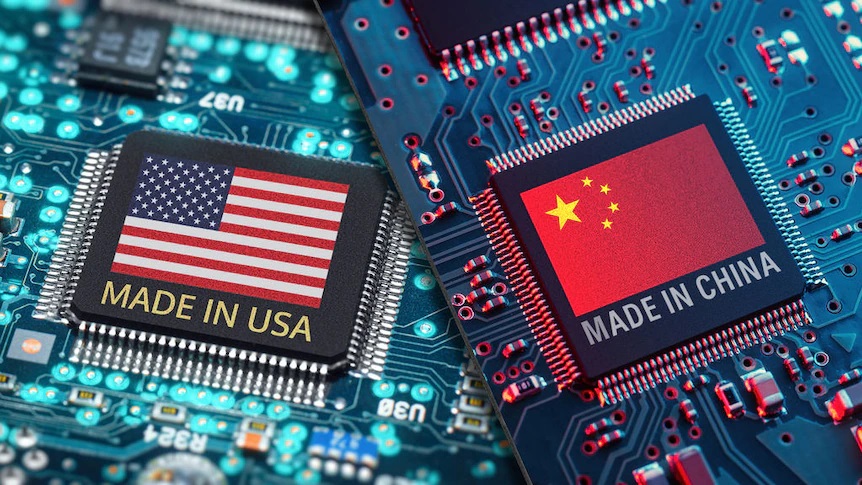
A new bipartisan investigation by the U.S. House Select Committee on China has revealed that gaps and inconsistencies in export control rules among the United States, Japan, and the Netherlands have allowed China to purchase nearly $40 billion worth of advanced chipmaking equipment — despite efforts by Washington and its allies to curtail Beijing’s access to cutting-edge semiconductor technology.

The report, obtained by Reuters, shows that China’s purchases of semiconductor manufacturing tools surged by 66% in 2023 from the previous year, when many of the restrictions were first introduced. Chinese firms legally acquired the equipment from top global suppliers, exploiting regulatory discrepancies among the allied nations tasked with enforcing export bans.

The findings pinpoint what lawmakers described as a critical failure in the West’s semiconductor containment strategy, with major implications for both global technology competition and national security.

The Loophole Effect

While Washington has imposed some of the world’s toughest controls on exports of advanced chipmaking tools to China, allied manufacturers, particularly in Japan and the Netherlands, have filled part of the gap left by U.S. companies barred from selling to Chinese clients.

The report notes that five of the world’s largest semiconductor equipment suppliers — Applied Materials, Lam Research, KLA, ASML, and Tokyo Electron — collectively sold $38 billion worth of tools to China last year. This accounted for nearly 39% of their global sales, highlighting how lucrative the Chinese market remains even under export restrictions.

“These are the sales that made China increasingly competitive in the manufacture of a wide range of semiconductors, with profound implications for human rights and democratic values around the world,” the committee warned in its findings.

The committee urged the United States and its allies to move beyond piecemeal bans targeting specific Chinese companies and instead adopt broader restrictions covering entire categories of chipmaking tools and components.

Washington’s National Security Push

For years, both Democratic and Republican administrations have viewed China’s rapid progress in semiconductor manufacturing as a strategic threat. Advanced chips are essential for artificial intelligence, supercomputing, and military modernization, making control over semiconductor technology a central pillar of U.S. national security policy.

The Trump administration has maintained some of the Biden-era trade policy toward China, while expanding restrictions to include not just finished chips but also the tools and software used to produce them. The latest revelations, however, suggest that these measures have not been watertight.

U.S. lawmakers say the lack of policy alignment among allies has weakened their collective leverage. Japan’s Tokyo Electron and the Netherlands’ ASML, two of the world’s most important equipment suppliers, have continued to sell to Chinese companies that American firms are prohibited from dealing with.

Mark Dougherty, president of Tokyo Electron’s U.S. unit, told Reuters that sales to China have started to decline this year as tighter export rules take hold. He acknowledged that more consistent coordination between the U.S. and Japan is still needed.

“I think it’s clear, from a U.S. perspective, there’s an outcome that is still desired that has not yet been achieved,” Dougherty said.

While Applied Materials and Lam Research did not respond to requests for comment, ASML and KLA said they could not comment until they reviewed the report in full. The committee noted that all five toolmakers cooperated with the investigation and were briefed on its findings.

Rising Concern Over Chinese Firms

The investigation also highlighted three Chinese chip firms — SwaySure Technology Co, Shenzhen Pengxinxu Technology Co, and SiEn (Qingdao) Integrated Circuits Co — as companies of “particular security concern.” U.S. officials believe these firms are part of a shadow supply chain network supporting Huawei Technologies, which remains blacklisted by Washington.

In December, the Commerce Department formally barred exports to the three companies, following warnings from committee leaders Chairman John Moolenaar (R-Mich.) and Ranking Member Raja Krishnamoorthi (D-Ill.), who accused the firms of working covertly to advance Huawei’s semiconductor capabilities.

A New Technological Battleground

Analysts warn that China’s aggressive pursuit of chipmaking self-sufficiency is reshaping the global semiconductor industry. Craig Singleton, a senior fellow at the Foundation for Defense of Democracies, said Beijing is now trying to “rewrite the entire supply chain” to reduce dependency on Western technology.

“What used to be niche tool segments are now battlegrounds,” Singleton said, adding that the competition is no longer about finished chips but about the underlying infrastructure and components that make chip fabrication possible.

The committee’s report called for tighter coordination among allies to prevent China from developing workarounds, including restrictions on components that could be repurposed for domestic tool production.

The findings come at a time when U.S.-China technological rivalry has expanded far beyond semiconductors, touching areas such as AI data centers, quantum computing, and telecommunications infrastructure. Both nations are vying for dominance in advanced technologies that are expected to define the global economy over the next decade.

While Washington’s export bans have slowed Beijing’s access to next-generation chips, the investigation shows that China’s semiconductor ecosystem remains resilient — leveraging global supply chains, state subsidies, and strategic partnerships to advance its ambitions.

The report serves as a warning for the U.S. and its allies that partial coordination is not enough in an era where chip technology has become as critical to national power as oil once was.

Voidify’s Proposal 64 to Bring Tornado Cash-Level Privacy to Solana, as Hyperliquid Airdrops Hypurr NFT

0

Voidify, a decentralized privacy protocol built on Solana, has announced an official partnership with Tornado Cash, the Ethereum-based mixer famous for using zero-knowledge proofs (ZKPs) to obscure transaction details like sender, receiver, and amounts.

This collaboration centers on Proposal 64, a governance initiative in Voidify’s DAO that aims to integrate Tornado Cash’s advanced privacy features directly into the Solana ecosystem, complete with a user-friendly interface (UI).

The proposal leverages ZKPs specifically zk-SNARKs to enable “shielded” transactions on Solana’s high-speed blockchain. Users can deposit fixed-denomination tokens into a privacy pool and withdraw to a new address without traceable links, mimicking Tornado Cash’s core mechanic but optimized for Solana’s low fees and fast finality.

Voidify’s community will vote on and oversee the rollout, ensuring alignment with user needs. Token holders of Voidify’s native Ø can participate as relayers, stakers, or miners, earning rewards while influencing decisions.

Implementation is targeted soon after community approval, potentially launching by late 2025. This addresses Solana’s transparency trade-off—its public ledger exposes whale movements, MEV sniping, and user tracking—making it a game-changer for DeFi privacy, tokenization, and confidential finance.

Solana’s growth in DeFi— $50B+ TVL has outpaced privacy tools, making this a timely boost for users concerned about surveillance. It could attract Ethereum users fleeing high gas fees while retaining Tornado Cash’s credibility.

This reinforces the push for “credible neutrality” in privacy tools, as seen in recent Ethereum innovations like Privacy Pools. On Solana, it aligns with ecosystem goals for modular, high-performance chains.

Market Demand: Privacy solutions have proven lucrative—Tornado Cash handled $7B+ in volume pre-sanctions—suggesting strong potential ffor Voidify and Solana’s privacy narrative.

Voidify positions itself as “the first Tornado Cash on Solana,” but this partnership elevates it to official status, fostering a unified ecosystem. Challenges include regulatory scrutiny Tornado Cash faced U.S. sanctions in 2022, but Solana’s growing institutional adoption could drive momentum.

OG Labs X Page Got Hacked 

0G Labs Twitter Account HackedOn October 5, 2025, the official X (Twitter) account of 0G Labs (@0G_labs )—a Layer 1 blockchain focused on AI infrastructure with $389M in funding— was compromised for about 24 hours.

The hacker posted phishing links promoting a fake “2nd airdrop” scam, alongside rants accusing the team of slashing a promised 12% community airdrop valued at ~$640M at peak to just $10M, labeling the project a “scam” and criticizing lax security like missing 2FA.

The intruder gained control around midnight GMT on Oct 5, likely via social engineering or weak auth no 2FA confirmed. They demanded the “promised airdrop” and mocked the team’s response.

Access to @0G_labs and @0G_Foundation was restored by Oct 6 morning. CEO Michael Heinrich (@michaelh_0g) detailed the incident in a thread, emphasizing quick recovery and community safety. No tokens are live yet, so no direct on-chain losses occurred.

Posts sparked FUD, with some users reporting accounts ironically leading to temp restrictions and others creating meme coins like $FOG on Pump.fun, which pumped then dumped. Calls for transparency on tokenomics, vesting, and a security audit grew.

0G Labs, backed by Hack VC and Samsung NEXT, remains a hot AI-crypto play, but this highlights ongoing risks in social media for crypto projects. The team pledged cross-channel verifications and enhanced security moving forward. DYOR—stick to official site links only.

Hyperliquid’s Hypurr NFT Airdrop: A $300M Milestone for DeFi Loyalty

Hyperliquid, the high-performance Layer-1 blockchain optimized for perpetuals trading, made waves last week with the airdrop of its Hypurr NFT collection.

This cat-themed series—depicting quirky avatars inspired by the community’s “moods, hobbies, tastes, and quirks”—has skyrocketed to a $300 million market cap just days after launch, marking one of the most explosive NFT drops in recent crypto history.

The event underscores Hyperliquid’s strategy of rewarding early adopters while building a “loyalty pass” for future ecosystem perks, blending meme culture with real utility in DeFi.

Out of 4,600 total NFTs, 4,313 went to Genesis Event participants from November 2024 early registrants who opted in. The Hyper Foundation received 144, and 143 were allocated to core contributors like Hyperliquid Labs and NFT artists. This sybil-resistant approach limited one NFT per qualified wallet to prevent farming abuse.

Dropped on September 28, 2025, via HyperEVM Hyperliquid’s EVM-compatible chain, the collection hit an opening floor of ~$50,000 1,458 HYPE tokens. It peaked at $81,000 before settling around $65,700–$68,000 as of October 7.

Total trading volume exceeded $135 million in the first 10 days, with $45 million in the initial 24 hours alone on platforms like OpenSea. Rarities fetched premiums—one early adopter sold Hypurr #21 for $467,000, and two others hit ~$460,000 each. Only ~10% of the supply has been listed, signaling strong holder conviction.

The surge isn’t just speculative froth—it’s tied to Hypurr’s positioning as a “high-signal loyalty credential.” Early fears that claiming the NFT would dilute token airdrops proved unfounded, and now holders view it as an on-chain ticket for ecosystem Airdrops.

Protocols like HyperLend $570M TVL and HypurrFi $150M TVL offer points boosts +5% for holders. Broader HyperEVM projects may follow, with rumors of Season 2 HYPE airdrops gated by Hypurr ownership.

Potential perks include reduced fees, yield multipliers, or governance access, turning it into a retention tool for Hyperliquid’s $5.86B TVL ecosystem. As prices rise, more projects align with Hyperliquid for airdrops, compounding demand.

Community sentiment on X echoes this: “Wealth is not leaving Hyperliquid soon,” with users farming via lending, staking, and trading on HyperEVM. This echoes Hyperliquid’s 2024 HYPE token airdrop 31% supply, $1.2B at TGE, $18B ATH, but Hypurr feels more “earned” due to its Genesis tie-in.

With 42% of HYPE still unclaimed, the chain’s momentum—200K orders/sec, <1s latency—positions it as a DeFi powerhouse amid rivals like Aster gaining ground. Shortly after launch, hackers stole 8 NFTs from compromised wallets, pocketing $400,000.

Sleuth ZachXBT flagged the incident, highlighting wallet security gaps in hyped drops. Broader ecosystem exploits like the $773K HyperDrive hack remind users: DYOR and secure your keys.

Critics also note the team’s unvested 143 NFTs $67M at peak floors, sparking debates on fairness. Hypurr revives NFT hype in a post-2021 bear market, proving utility-driven drops can thrive. It’s the third-largest NFT collection by market cap, outpacing many VC-backed tokens.

For Hyperliquid $45.21 HYPE price, $45B+ FDV, this cements its “all finance on one chain” vision, blending perps, lending, and memes. If utilities stack up, expect more reflexivity; otherwise, it risks a speculative cooldown.

Early birds turned free cats into fortunes, but the real play? Betting on HyperEVM’s growth. With Season 2 whispers and $2.2B L1 TVL, Hyperliquid’s ecosystem is just warming up.