DD
MM
YYYY

PAGES

DD
MM
YYYY

spot_img

PAGES

Home Blog Page 3671

Three crypto companies made it to Forbes’ annual fintech list

0

The fintech industry is constantly evolving and introducing new solutions to the market. However, not all of them are equally innovative and impactful. Forbes has recently published its annual list of 50 most innovative fintech companies, which showcases the leaders and disruptors in the field. Among them, only three are focused on cryptocurrency: Chainalysis, Fireblocks and Gauntlet.

Chainalysis is a blockchain analysis company that provides data and insights on crypto transactions, risks and compliance. It helps governments, businesses and institutions track and investigate illicit activities on the blockchain, such as money laundering, terrorism financing and ransomware attacks. Chainalysis also offers market intelligence and research reports on the crypto ecosystem.

Fireblocks is a platform that enables secure storage, transfer and issuance of digital assets. It leverages a combination of hardware, software and cloud infrastructure to protect crypto assets from cyberattacks, human errors and internal fraud. Fireblocks also integrates with over 400 partners, including exchanges, custodians, wallets and protocols, to facilitate seamless and efficient operations.

Gauntlet is a simulation platform that helps crypto projects optimize their protocols and strategies. It uses advanced techniques from game theory, machine learning and distributed systems to model complex scenarios and test the performance, security and profitability of crypto networks and applications. Gauntlet also provides consulting services and tools for developers, investors and regulators.

These three companies demonstrate how cryptocurrency is transforming the fintech industry and creating new opportunities for innovation. They also show how crypto businesses can leverage cutting-edge technology to solve real-world problems and deliver value to their customers and stakeholders.

Chainalysis provides data and insights on crypto transactions, has also been on the list for four years in a row. The company helps governments, regulators, law enforcement agencies and businesses track and investigate illicit activities involving cryptocurrencies. Chainalysis has raised over $500 million in funding and has a valuation of $4.2 billion.

If you are a crypto project looking for a way to test and improve your protocol or strategy, you might want to check out Gauntlet. Gauntlet is a simulation platform that uses cutting-edge techniques from computer science and economics to help you optimize your design choices and parameters.

With Gauntlet, you can run simulations with realistic market conditions and user behaviors, and get insights into the performance, security, and profitability of your project. Gauntlet can help you answer questions like:

How will your protocol react to different market scenarios? What are the optimal values for your protocol parameters? How can you reduce the risks of attacks or exploits? How can you increase user adoption and retention? And more.

With Fireblocks, you can easily access multiple exchanges, wallets, custodians and protocols from a single interface. You can also create and issue your own digital assets, such as stablecoins, tokens and NFTs. Fireblocks is trusted by over 500 institutions, including banks, hedge funds, fintech’s and crypto platforms.

These three companies are examples of how crypto is becoming more mainstream and integrated into the broader financial system. They also demonstrate how crypto can offer innovative solutions to various challenges and opportunities in the fintech sector. Forbes’ recognition of their achievements is a testament to their vision and impact.

UK Economy falls into Recession: What does it mean?

0

The UK economy has officially entered a recession for the first time in 11 years, after contracting by a record 9.9% in 2020 due to the impact of the coronavirus pandemic and the Brexit transition. A recession is defined as two consecutive quarters of negative economic growth, and the UK has now experienced three quarters of decline since the first lockdown in March 2020.

Why is the UK in recession?

The recession comes after households and businesses were battered by ongoing cost pressures and a lengthy run of interest rates that took Bank rate to 5.25% – the highest level since 2008. This heaped further cost pain on millions of mortgage borrowers, with all but the most in need seeing no energy bill or cost of living support this winter from the Government.

The recession has affected almost every sector of the economy, but some have been hit harder than others. The hospitality, leisure, travel and retail industries have suffered the most from the restrictions imposed to contain the virus, while the manufacturing, construction and financial sectors have shown some signs of recovery in recent months.

The recession has also had a significant impact on employment, with the unemployment rate rising to 5% in December 2023, the highest level since 2016. More than 800,000 people have lost their jobs since the start of the pandemic, and millions more are relying on government support schemes such as furlough and self-employment grants.

The government has announced several measures to support the economy during the crisis, such as extending the furlough scheme until April 2024, providing grants and loans to businesses, and offering tax relief and deferrals.

However, these measures have also increased the public debt, which reached a record £2.13 trillion at the end of December 2023, equivalent to 99.4% of GDP. The government faces a difficult trade-off between stimulating the economy and balancing the budget in the coming years.

The outlook for the UK economy remains uncertain, as it depends on several factors, such as the evolution of the pandemic, the effectiveness of the vaccination programme, the outcome of the trade negotiations with the EU and other countries, and the consumer and business confidence.

Chancellor Jeremy Hunt has said the recession comes off the back of high inflation and the recent run of interest rate rises, but insisted the economy was now turning a corner. It is likely to reinforce the case for the Bank of England to start cutting interest rates in 2024, given the threat to the wider economy from painfully high borrowing costs.

Some economists expect a strong rebound in economic activity once the lockdown restrictions are eased and most people are vaccinated, while others warn of a slow and uneven recovery that could take years to return to pre-pandemic levels.

The recession is a challenging and unprecedented situation for everyone, but there are also some opportunities for innovation and transformation. The pandemic has accelerated some trends that were already underway, such as digitalization, automation, remote working and online shopping.

These trends could create new jobs and markets, improve productivity and efficiency, and reduce environmental impact. The recession could also be an opportunity to rethink our economic model and priorities, and to invest in more sustainable and inclusive growth that benefits everyone.

President Putin says Russia is close to creating cancer vaccines

0

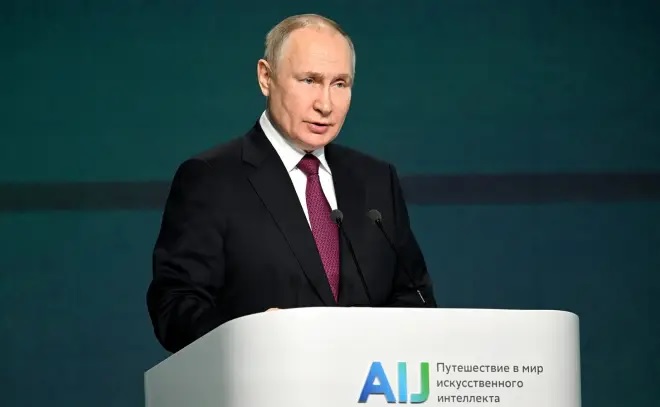
Russian President Vladimir Putin announced on Wednesday that his country is close to developing vaccines against cancer, a breakthrough that could save millions of lives worldwide. Speaking at a meeting of the Russian Academy of Sciences, Putin said that Russian scientists had made significant progress in the field of oncology and were working on several promising anti-cancer drugs.

According to Putin, one of the vaccines is based on a peptide that targets tumor cells and triggers an immune response. Another vaccine uses a modified virus that infects and destroys cancer cells. Both vaccines are currently undergoing clinical trials and have shown positive results so far.

Putin praised the achievements of Russian researchers and expressed hope that their work would lead to effective and affordable treatments for cancer patients. He also stressed the importance of investing in scientific research and innovation, especially in areas such as biotechnology, nanotechnology, and artificial intelligence.

Cancer is one of the leading causes of death globally, accounting for nearly 10 million deaths in 2020, according to the World Health Organization. The disease is caused by abnormal growth of cells that can spread to other parts of the body and interfere with vital functions. There are more than 100 types of cancer, each with different causes, symptoms, and treatments.

The development of vaccines against cancer has been a long-standing goal of medical science, but also a major challenge. Unlike infectious diseases, cancer is not caused by a single agent, but by a complex interaction of genetic, environmental, and lifestyle factors. Moreover, cancer cells are constantly evolving and adapting to evade the immune system and resist therapies.

Therefore, creating a universal vaccine that can prevent or cure all types of cancer is unlikely, but developing vaccines that target specific types or stages of cancer is possible and desirable. Such vaccines could either stimulate the body’s natural defenses to fight existing tumors or prevent the development of new ones.

Several countries and companies are working on various approaches to cancer vaccines, such as using synthetic DNA or RNA molecules, bacteria or viruses, or personalized antigens derived from patients’ own tumors. Some of these vaccines have already been approved for certain cancers, such as prostate cancer and melanoma, while others are still in experimental stages.

This method has the advantage of being able to elicit a strong and lasting immune response, as well as having the potential to target specific types of cancer. However, it also poses some risks, such as causing infections, inflammation, or autoimmune disorders, or triggering resistance or tolerance mechanisms in the cancer cells.

A third approach is to use personalized antigens derived from patients’ own tumors. This involves taking a sample of the tumor tissue and analyzing its genetic and molecular profile. Then, using bioinformatics tools and artificial intelligence, the most relevant and unique antigens are identified and synthesized.

These antigens are then used to create a customized vaccine for each patient, which is tailored to their specific type of cancer and immune system. This method has the benefit of being highly specific and effective, as it targets the individual characteristics of each tumor. However, it also faces some challenges, such as being costly, time-consuming, and technically demanding, as well as requiring adequate infrastructure and quality control.

These are just some examples of the diverse and exciting approaches that are being pursued in the field of cancer vaccines. Each one has its own strengths and limitations, and none of them is a silver bullet that can cure all cancers. However, by combining different strategies and technologies, and by collaborating across disciplines and sectors, we may be able to develop more effective and safer cancer vaccines in the near future.

The announcement by Putin adds Russia to the list of contenders in the race for cancer vaccines, a race that could have profound implications for global health and geopolitics. If Russia succeeds in developing effective and safe vaccines against cancer, it could not only improve the lives of millions of people in Russia and beyond, but also boost its reputation and influence as a scientific and technological power.

CBN revises Exchange Rate on Import duties amid Naira trading at above 1600/$ in Parallel Market

0

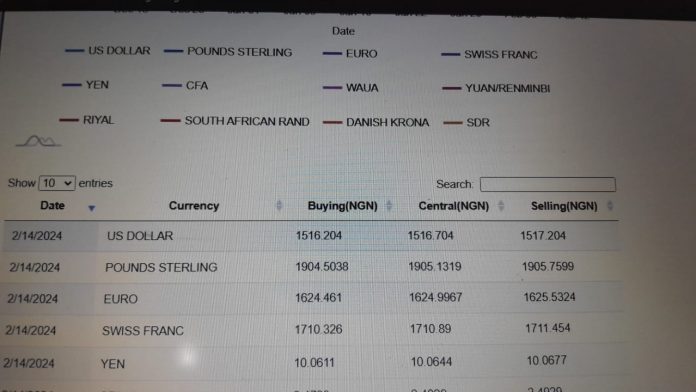
In a circular issued on February 14, 2024, the Central Bank of Nigeria (CBN) has revised the exchange rate for the payment of import duty and other charges on imported goods. The new rate is N1515.09 per US dollar, up from the previous rate of N1444.56 per US dollar. This represents a 4.88% increase in the exchange rate.

The circular, signed by the Director of Trade and Exchange Department of the CBN, stated that the adjustment was in line with the provisions of the Finance Act 2020, which empowers the CBN to determine the exchange rate for import duty purposes. The circular also stated that the new rate would take effect from February 15, 2024.

The implication of this adjustment is that importers of goods will have to pay more naira for their imports, which could lead to higher costs of production and inflationary pressures. The CBN said that the adjustment was necessary to reflect the market realities and to ensure uniformity of the exchange rate regime in the country.

The CBN also urged all authorized dealers, service providers and stakeholders to ensure strict compliance with the new exchange rate and to report any violations to the CBN for appropriate sanctions.

The Nigerian currency, the naira, has fallen to a record low of N1,600 per US dollar on the parallel market, according to traders and analysts. This represents a 20% depreciation since the beginning of the year, when the naira was trading at around N1,300 per dollar.

The naira’s decline as been attributed to several factors, including the persistent dollar scarcity in the country, the low oil prices that have reduced Nigeria’s foreign exchange earnings, the impact of the coronavirus pandemic on trade and remittances, and the lack of confidence in the CBN’s policies and interventions. Some experts have also blamed the CBN’s decision to ban cryptocurrency trading in Nigeria, wh

The official exchange rate, which is controlled by the Central Bank of Nigeria (CBN), remains at N1516 per dollar, but the gap between the official and parallel rates has widened significantly, creating distortions and uncertainties in the economy.

The naira’s depreciation has sparked widespread concerns among Nigerians, who fear that it will lead to higher inflation, lower purchasing power, reduced savings and investments, and increased hardship for businesses and households. Some have called on the CBN to devalue the official rate to reflect the market realities and ease the pressure on the naira. Others have urged the government to implement structural reforms that will diversify the economy, boost productivity, attract foreign investment, and improve governance and transparency.

The CBN has maintained that it will continue to defend the naira and ensure exchange rate stability, using various measures such as increasing forex supply, restricting forex access for some imports, imposing sanctions on erring dealers and operators, and promoting local production and consumption. The CBN has also assured Nigerians that it has enough reserves to meet its forex obligations and that there is no need to panic or resort to speculation.

However, some analysts have expressed doubts about the sustainability and effectiveness of the CBN’s interventions, given the widening gap between the official and parallel rates and the persistent dollar shortage. They have warned that unless the CBN adopts a more flexible and market-driven exchange rate regime, the naira will continue to depreciate and lose its value as a store of wealth and a medium of exchange.


Nigerian Mobility Startup Moove Secures $10 Million in Debt Funding to Expand Operations in India

0

Nigerian mobility Fintech startup that provides revenue-based vehicle financing and financial services to mobility entrepreneurs, Moove, has secured $10 million in debt funding from Stride Ventures to expand operations in India.

Having entered the Indian market in 2022, the funding aims to solidify Moove’s presence in the country and extend its operations to new cities, which include Delhi, Pune, and Kolkata.

Currently, the company operates in Bengaluru, Mumbai, and Hyderabad. Moove revealed that most of its vehicles in India are registered with Uber, and the cars it has financed have completed more than 30 million trips on the ride-sharing platform. The firm aims to expand its fleet to over 5,000 cars to boost its presence in India.

Speaking on Moove’s latest funding, regional managing director, of India and South Asia Moove, Binod Mishra said,

“Being facilitated by such a premier investor not only validates Move’s impact-driven model and growth potential but also paves the way for an additional revolving line of credit amounting to $10 million. Our vehicles have completed over 4.2 million trips, significantly impacting India’s mobility sector.

“With the robust support of Stride Ventures, we stand on the cusp of transforming vehicle ownership nationwide, propelling our mission forward”.

Also speaking, Apoorva Sharma managing partner at Stride Ventures highlighted the transformative impact of their partnership with Moove.

In his words,

“At Stride, we’re supporting companies that are crafting impact-driven models within the country, especially organizations like Moove, known globally for their inclusive business framework in the fintech and mobility industry.”

It is worth noting that in 2022, Moove launched in three supply deficit regions. The company further expanded to Hyderabad and Mumbai in July established its India headquarters in Gurgaon, Delhi in October, and further expanded to Bangalore in December.

In India, Moove competes with other firms such as OTO Capital, Revfin, Turno, and Ascend Capital.

Founded in 2020 by Jide Odunsi and Ladi Delano, Moove provides services to transportation business owners across various platforms such as ride-hailing, logistics, mass transit, and instant delivery. The company uses alternative credit sourcing technology and productivity data to achieve this.

The company currently operates in 9 markets across Africa, the Middle East, Europe, and Asia. Moove provides customers with access to vehicle financing, as well as a range of financial services that were previously inaccessible to them and their families, helping them to be more productive and successful.

The mobility company is committed to building the largest and most productive hybrid and EV fleet in the world, empowering customers with greener options and positively contributing to a more sustainable world.