DD
MM
YYYY

PAGES

DD
MM
YYYY

spot_img

PAGES

Home Blog Page 3677

PayPal to offer crypto services in UK; Taiwan to make Bitcoin legal Tender

0

PayPal, the global online payment platform, has announced that it has received regulatory approval from the Financial Conduct Authority (FCA) to provide cryptocurrency services in the United Kingdom. This means that PayPal customers in the UK will soon be able to buy, sell, hold and use various digital currencies, such as Bitcoin, Ethereum, Litecoin and Bitcoin Cash, within their PayPal accounts.

This is a significant milestone for PayPal, which launched its crypto service in the US last year and has seen a strong demand from its users. According to a recent survey by the company, more than half of its crypto customers said they are more likely to use digital currencies as a payment method after using PayPal’s service. Moreover, PayPal claims that its crypto service can help increase the adoption and awareness of cryptocurrencies among its 400 million users worldwide. Also, there have been new products like Mostbet aplikace which are distributed through digital systems.

PayPal’s crypto service in the UK will offer several features and benefits for its customers, such as:

Easy and secure access to cryptocurrencies through the PayPal app or website, without the need for additional wallets or passwords. Educational resources and guides to help customers understand the basics and risks of crypto investing. Real-time prices and charts to track the performance of different cryptocurrencies. The ability to convert cryptocurrencies to fiat currencies at any time, with no fees until 2022. The option to use cryptocurrencies as a funding source for purchases at millions of PayPal merchants around the world, with instant conversion at checkout.

PayPal’s crypto service in the UK is expected to launch in the coming weeks and will be available to verified customers who have a bank account or debit card linked to their PayPal account. The company plans to expand its crypto offering to other markets and regions in the future, as well as to introduce new features and functionalities.

PayPal’s move into the crypto space is part of its broader vision to become a “super app” that offers a variety of financial services and products to its customers. The company has recently acquired several fintech startups, such as Curv, a digital asset security firm, and Paidy, a Japanese buy now, pay later platform. PayPal also announced that it will launch its own digital wallet, called PayPal Cash Plus, which will allow customers to access their funds across different accounts and services.

PayPal’s entry into the UK crypto market is likely to have a positive impact on the growth and innovation of the local crypto ecosystem, as well as on the wider adoption and acceptance of digital currencies among consumers and businesses. PayPal’s crypto service will also face competition from other players in the space, such as Coinbase, Revolut, Wirex and Bitstamp, which offer similar or complementary services. However, PayPal’s brand recognition, large customer base and extensive merchant network could give it an edge over its rivals.

PayPal’s crypto service in the UK is a welcome addition to the diverse and dynamic crypto landscape in the country, which has been attracting more attention and investment from both local and global players. As one of the leading online payment platforms in the world, PayPal has the potential to bring crypto to the mainstream and make it more accessible and convenient for millions of people.

Taiwan to make Bitcoin legal Tender

In a historic move, Taiwan has announced that it will make Bitcoin a legal tender in the country, becoming the second nation in the world to do so after El Salvador. The decision was made by the Legislative Yuan, the unicameral legislature of Taiwan, after a heated debate and a close vote on October 30, 2023.

The bill, titled “The Digital Currency Legalization and Regulation Act”, aims to provide a clear legal framework for the use, exchange, taxation and regulation of Bitcoin and other cryptocurrencies in Taiwan. The bill also recognizes Bitcoin as a foreign currency for the purposes of foreign exchange and trade.

According to the bill, Bitcoin will be treated as a legal means of payment for all public and private transactions in Taiwan, as well as a store of value and a unit of account. The bill also stipulates that all individuals and businesses that deal with Bitcoin must register with the Financial Supervisory Commission (FSC), the main financial regulator in Taiwan, and comply with anti-money laundering and counter-terrorism financing rules.

The bill also grants the FSC the authority to issue licenses for cryptocurrency exchanges, custodial services, mining operations and other related businesses. The FSC will also be responsible for setting the standards and guidelines for the security, transparency and consumer protection of the cryptocurrency industry in Taiwan.

The bill was proposed by a coalition of lawmakers from various political parties, led by Chen Chih-Chung, a member of the ruling Democratic Progressive Party (DPP) and the son of former President Chen Shui-bian. Chen Chih-Chung said that the bill was motivated by the need to embrace the global trend of digitalization and innovation, as well as to boost Taiwan’s economy and competitiveness.

“Bitcoin is not only a technological innovation, but also a social and economic revolution. By making Bitcoin a legal tender, we are opening up new opportunities for our people, our businesses and our nation. We are also sending a clear message to the world that Taiwan is a leader in digital transformation and a defender of freedom and democracy,” Chen Chih-Chung said in a press conference after the bill was passed.

The bill was met with mixed reactions from different sectors of society. Some praised the bill as a bold and visionary move that would put Taiwan at the forefront of the cryptocurrency industry and attract more foreign investment and talent. Others criticized the bill as a risky and irresponsible gamble that would expose Taiwan to financial instability, cyberattacks, fraud and money laundering.

The bill also faced strong opposition from China, which considers Taiwan as part of its territory and has been increasing its military and diplomatic pressure on the island. China has banned all forms of cryptocurrency trading and mining since 2017 and has repeatedly warned Taiwan against any moves that would challenge its sovereignty or undermine its “one China” policy.

China’s Foreign Ministry spokesperson Zhao Lijian condemned Taiwan’s decision to make Bitcoin a legal tender as a “provocative and illegal act” that would “severely damage” cross-strait relations and regional peace and stability. Zhao Lijian also urged the international community to “reject and sanction” Taiwan’s “separatist” actions.

Taiwan’s President Tsai Ing-Wen defended the bill as a sovereign and democratic choice of the Taiwanese people and said that Taiwan would not bow to China’s threats or interference. Tsai Ing-Wen also expressed her confidence that Taiwan would be able to overcome any challenges or risks that might arise from adopting Bitcoin as a legal tender.

“Taiwan is a free and open society that respects innovation and diversity. We are not afraid of change or challenge. We believe that Bitcoin can bring positive changes to our economy, society and culture. We also believe that Bitcoin can help us strengthen our ties with our friends and allies around the world who share our values and vision,” Tsai Ing-Wen said in a televised address to the nation.

The bill is expected to take effect on January 1, 2024, after a two-month period of public consultation and preparation. The FSC has announced that it will issue detailed regulations and guidelines for the implementation of the bill before the end of this year.

The Bold Leadership in Abia State and a Conversation with Mr. Governor

0

Yesterday, I had a very great conversation with His Excellency, Dr Alex Otti, the Executive Governor of Abia State. I thanked His Excellency for his bold leadership, and most especially for what he is doing to fix the security challenges in the state.

Over the last few months, he has tried many playbooks and some of them are yielding results, like what we are seeing in the Lokpanta cattle market in Umunneochi LGA. For Abia State to thrive, security is key.

In Abia State, Mr. Governor is executing the playbooks. Of course, more work ahead because All ABIANS must rise with opportunities because we’re God’s Own People in a land of commerce and enterprise.

  • Abia Must Move Forward.
  • Nigeria Must Move Forward.
  • And Africa Must Move Forward.

Let’s make that happen. 

Prof Ndubuisi Ekekwe

Co-Chairman, Abia State Economic Transformation Council

Comment on Feed Indicators

Comment is here.

Someone’s Response: I guess you are truly expecting unrealistic and magical miracle within this short space this current govt has been in power. I feel your expectations within this time frame is rather uninformed.

Were you expecting out of blue developments, performance, industries, employments, jobs and investors, name them, to be immediate without laying foundations for these things to happen?

So cleaning up of Abia State, massive road constructions and networks, provision of security and protection of lives and properties and topnotch policy frameworks etc are not enough indications of the strategic direction of the current govt of Abia State?

As an investor, can you choose Abia State as an investment destination if the state is not secured, lives and properties are not protected?

Meanwhile, the Governor is achieving all these things including prompt and regular payment of state workers salaries and repayment of past governments’ loans with the limited state govt revenue that has over the decades much dependent on Federal govt allocation of which the past governments gave excuses and the current govt is changing that.

Please, our assessments should be fair, right and informed so that they don’t mislead others.

Ndu bu isi

0

Yes, “Ndu bu isi” is “life is first”, not “life is head”, contextually. In Igbo etymology, there are many variables which make translations very difficult and challenging. (You can argue that “head” and “first” are equivalents when viewed from the order of events, things etc (like head, tail), but outside the contexts of body parts. Life cannot be head (the human part) since the head is a subset of life)

For example, “Okonkwo is a fox because he is cunning” could be poorly translated to ‘Okonkwo is “nkita ohia”…’ using the Igbo name for “fox”. If you do that, you will fail in WAEC because in Igbo translation, context matters. The right translation is actually ‘Okonkwo is “mbe”…’ because tortoise is the equivalent of fox in Igbo axioms, idioms and folklores. In other words, everything the English people assign to “fox” in culture, the Igbos give to the “tortoise”. In WAEC, you would be expected to change fox with tortoise in the translation because “fox” is alien in Igbo culture.

That said, the “isi’ in Ndubuisi means “first”. Yes, I want you to know the meaning of my name. The full unwritten form is “Ndu bu isi uwa” [ life is the first thing in anything we do or plan to do on this earth]. That is why some mothers will call their sons named Ndubuisi “Isu uwa”, acknowledging the absolute superiority of life to all visions and earthly aspirations!

President Biden Signs Executive Order on AI

0

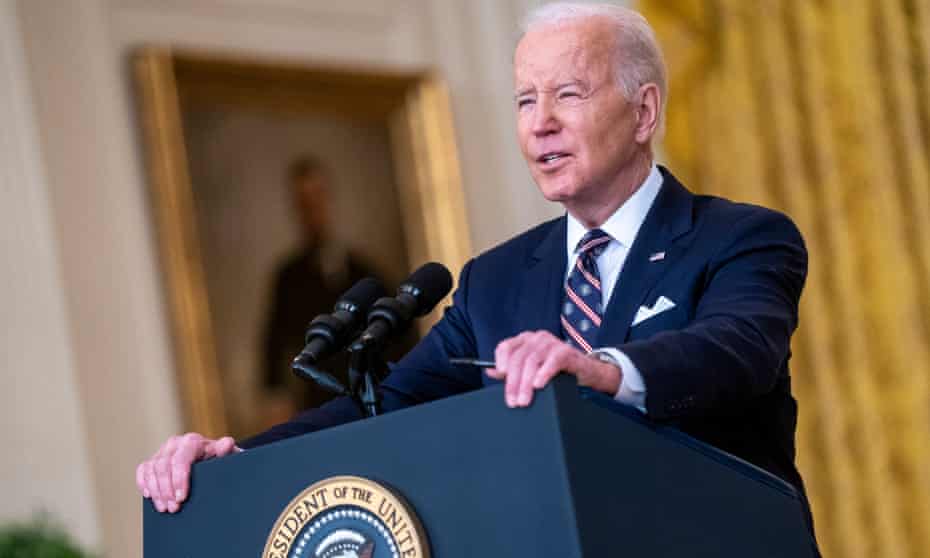
On October 27, 2023, President Joe Biden signed an executive order on artificial intelligence (AI) that aims to strengthen the U.S. leadership and competitiveness in this strategic domain. The executive order builds on the previous initiatives of the Trump and Obama administrations and outlines a comprehensive and coordinated approach to advancing AI research, development, deployment, and governance.

The executive order has four main objectives:

To promote trustworthy and responsible AI that respects human rights, civil liberties, privacy, and democratic values. To foster innovation and economic growth by investing in AI research and development, infrastructure, education, and workforce development. To enhance national and homeland security by leveraging AI for defense, intelligence, cybersecurity, and disaster response. To ensure global leadership and cooperation by engaging with allies and partners on AI issues and standards.

To achieve these objectives, the executive order establishes several mechanisms and actions, such as:

Creating an Interagency Policy Committee on Artificial Intelligence (IPC-AI) to coordinate AI policies and programs across the federal government. Launching a National Artificial Intelligence Initiative (NAII) to support and accelerate AI research and innovation in academia, industry, and non-governmental organizations. Establishing a National AI Advisory Committee (NAIAC) to provide advice and recommendations to the President and the IPC-AI on AI matters.

Developing a National AI Strategy (NAIS) to guide the implementation of the executive order and align with the national security strategy and the national economic strategy. Enhancing the AI regulatory framework by directing agencies to review and update their existing AI policies and regulations and issuing guidance on how to ensure trustworthy and responsible AI in the public and private sectors.

Expanding the AI talent pipeline by increasing funding for AI education and training programs, creating new scholarships and fellowships for AI students and researchers, and launching a National AI Service Corps to provide opportunities for civic engagement in AI projects. Strengthening the AI infrastructure by investing in high-performance computing, data, and network resources, as well as creating new testbeds and sandboxes for AI experimentation and evaluation.

Advancing the AI frontier by supporting cutting-edge research on topics such as explainable AI, trustworthy AI, human-AI collaboration, neuro-inspired AI, quantum AI, and biologically inspired AI. Promoting international collaboration on AI by participating in multilateral forums and initiatives, such as the Global Partnership on Artificial Intelligence (GPAI), the Organization for Economic Cooperation and Development (OECD) Principles on AI, and the United Nations activities on AI.

The objective is to foster innovation and economic growth by investing in AI research and development, infrastructure, education, and workforce development. This objective can benefit society by creating new opportunities for scientific discovery, technological breakthroughs, industrial competitiveness, and social welfare. It can also enhance the quality of life and well-being of people by improving their access to information, services, and resources.

The third objective is to enhance national and homeland security by leveraging AI for defense, intelligence, cybersecurity, and disaster response. This objective can benefit society by protecting the U.S. from external and internal threats, such as terrorism, espionage, sabotage, and natural disasters. It can also support the U.S. interests and values in the global arena by maintaining its strategic advantage and deterrence.

The fourth objective is to ensure global leadership and cooperation by engaging with allies and partners on AI issues and standards. This objective can benefit society by fostering a common understanding and vision for AI among different countries and stakeholders. It can also promote a peaceful and stable world order by addressing the global challenges and opportunities posed by AI, such as climate change, poverty reduction, human rights protection, and international security.

The executive order is a significant step forward for the U.S. in addressing the opportunities and challenges posed by AI. It demonstrates a clear vision and commitment to harnessing the potential of AI for the benefit of society, while ensuring its ethical and responsible use. It also signals a willingness to cooperate with other countries and stakeholders on developing common norms and standards for AI governance. The success of the executive order will depend on its effective implementation and evaluation, as well as on the sustained support from Congress, industry, academia, civil society, and the public.

Empowering Woxsen University MBA Students with Design Thinking for Sustainable Future

0

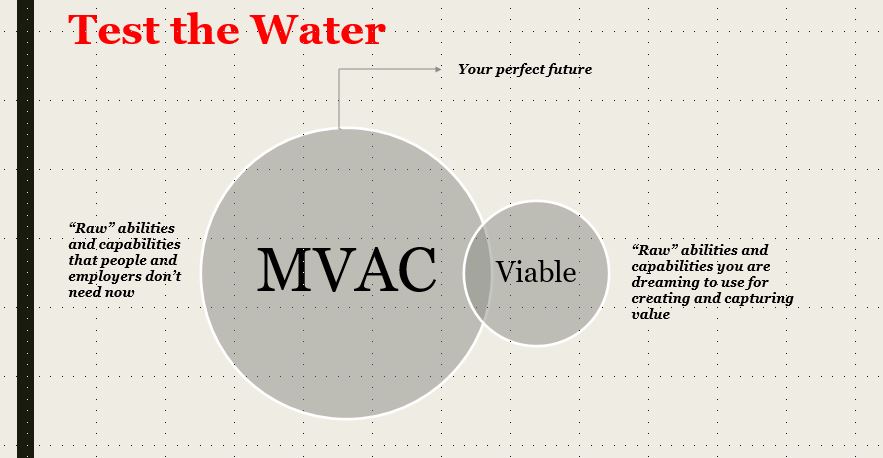
In today’s VUCA (Volatile, Uncertain, Complex, Ambiguous) world, the role of university graduates, especially those equipped with an MBA, is more critical than ever. They stand on the cusp of a transformative future, one in which they can leverage their abilities, capabilities, and knowledge to create sustainable solutions for our ever-changing society. At a recent seminar hosted by Woxsen University in India, I had the privilege of addressing a gathering of bright young minds, and I emphasized the pivotal role they can play in shaping the world through the abilities and capacities acquired over the years.

The Power of Design Thinking

Design thinking is more than just a buzzword; it’s a mindset, a problem-solving approach that transcends traditional boundaries. It encourages graduates to empathize, define, ideate, prototype, and test – a cycle that fosters innovation and creativity. In the VUCA world, where change is constant, design thinking becomes a powerful tool to adapt and thrive in the face of uncertainty.

Understanding Your Domain: SWOT Analysis

To chart a path toward a sustainable future in this VUCA environment, graduates must first understand their domain comprehensively. This begins with a SWOT analysis, a strategic tool that evaluates strengths, weaknesses, opportunities, and threats. In a world marked by volatility and ambiguity, a well-executed SWOT analysis provides a stable foundation for decision-making and adaptation.

Read: WHAT JOB SEEKERS MUST DO BEFORE APPLYING FOR JOBS IN NIGERIA

Navigating the Global Landscape: CAGE Framework

Today’s world is interconnected, and businesses are no longer confined by geographical borders. Graduates need to understand the global context in which they operate, especially in a VUCA world. The CAGE framework, which focuses on cultural, administrative, geographical, and economic factors, provides a structured way to assess the international landscape. This understanding is crucial in creating strategies that can sustain and thrive in the global arena, even in the face of complex and uncertain conditions.

Defining a Sustainable Future

A sustainable future is not just a distant goal; it’s a philosophy that can be applied in the next few minutes, hours, months, and years, even in a VUCA world. It revolves around the responsible use of personal and societal resources, ensuring that the value generated today doesn’t compromise the availability of those resources for future generations. In this volatile and uncertain landscape, it becomes even more critical to create and capture value responsibly.

In essence, a sustainable future is about finding the delicate balance between progress and preservation, even in the face of ambiguity and complexity. Graduates have the unique opportunity to explore their abilities and capabilities within the context of SWOT and CAGE framework analyses, crafting solutions that respect our world’s limited resources.

As university graduates, you are well-equipped to lead the charge towards a sustainable future in a VUCA world. Your academic journey, combined with the wisdom imparted by competent educators, has honed your skills and knowledge. Now, it’s your time to shine and make a difference. By embracing design thinking, analyzing your domain through the SWOT lens, and understanding the global landscape with the CAGE framework, you can contribute to the creation and capture of value that will not only benefit you but also society as a whole.

The future beckons and it’s a canvas waiting for your creative strokes, even in the midst of volatility, uncertainty, complexity, and ambiguity. Embrace the power of design thinking, analyze your domain through the SWOT lens, and understand the global landscape with the CAGE framework. In doing so, you’ll be on the path to a sustainable future, one where your actions today echo positively for many years to come, even in this VUCA world. This is your moment; seize it and lead the way to a brighter and more stable tomorrow.