DD
MM
YYYY

PAGES

DD
MM
YYYY

spot_img

PAGES

Home Blog Page 3678

$6.23m CBN fraud: Buhari’s signature was forged – former SGF Mustapha tells court

0
Nigerian leaders

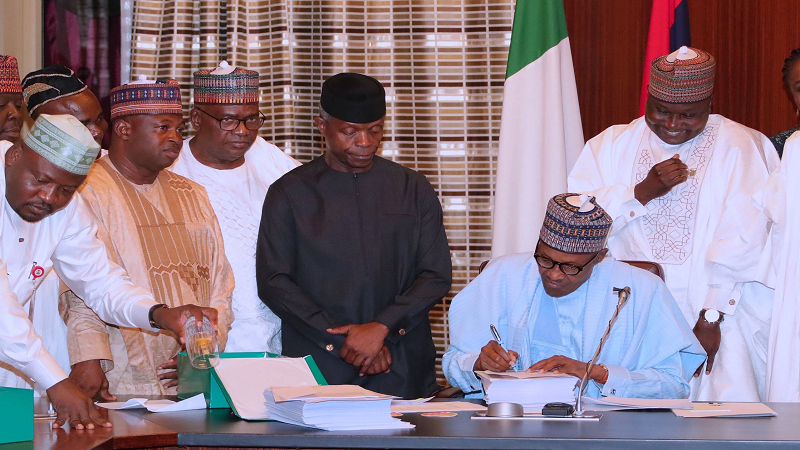
In a startling revelation, former Secretary to the Government of the Federation (SGF), Boss Mustapha, disclosed at the Federal High Court in Abuja on Tuesday, that the signature of former president Muhammadu Buhari was forged to steal over $6 million from the central bank’s vault.

Former governor of the Central Bank of Nigeria (CBN) Godwin Emefiele was accused of conspiracy and forging of signatures and documents in the name of former President Muhammadu Buhari to steal $6.23m from the central bank.

Mustapha, who served under the administration of former President Muhammadu Buhari, adamantly asserted that neither he nor the ex-president authorized such payments. He vehemently denied any involvement in the controversial disbursement of $6,230,000 to international election observers during the 2023 general elections.

The prosecution’s witness, Onyeka Ogbu, revealed during the trial of Emefiele, that the former apex bank head had approved the substantial sum of $6.2 million for international election observers. Emefiele is currently facing a litany of charges, including corrupt advantages, conspiracy, and obtaining by false pretenses, a sum amounting to $6,230,000.

Michael, a former branch controller of the CBN, corroborated Ogbu’s testimony, confirming that he processed the documents for the disbursement of the aforementioned funds at the behest of Emefiele. The approval for this substantial payment, made in cash, came directly from the office of the former CBN boss.

However, Boss Mustapha’s appearance as Prosecution Witness 2 threw a wrench into the proceedings. He adamantly denied any knowledge or approval of the transaction, asserting that the documents did not originate from the office of the President. Mustapha cast doubt on the authenticity of Buhari’s purported signature on the documents, alleging forgery. Furthermore, he expressed bewilderment at the notion of the Nigerian government funding foreign election observers.

Meanwhile, given the unfolding drama, a Special Investigator appointed by President Bola Tinubu to probe instances of fraud within the CBN has escalated the matter. The investigator has written to the International Police, National Central Bureau, urging them to issue a red notice for three individuals allegedly involved in the embezzlement scheme. Among them is Odoh Ocheme, a CBN staff member, along with Adamu Abubakar and Imam Abubakar.

The letter detailed the accusations against the trio, highlighting their purported conspiracy and forgery of documents in the name of the former President, resulting in the misappropriation of $6.23 million from the CBN’s coffers.

A letter made available to the media on Tuesday named Odoh Ocheme, a staff member of the apex bank, Adamu Abubakar, and Imam Abubakar on the list directed to Interpol.

The letter with reference number CR:3000/TSI/ABJ/VOL.1/85 and dated February 12, 2024, was addressed to the IGP and signed by the Head of Operations, Office of the Special Investigator, DCP Eloho Okpoziakpo.

It reads in part, “The Special Investigator appointed by the President and Commander-in-Chief of the Federal Republic of Nigeria to investigate the Central Bank of Nigeria, Related Entities, and other Key Government Business Entities kindly requests you to place the above-named individuals on INTERPOL RED NOTICE.

“In the course of the Special Investigator’s assignment, Mr Odoh Eric Ocheme, (staff of the CBN) now at large and the other two accomplices, also now at large, were discovered to have conspired and forged documents in the name of the President, Federal Republic of Nigeria with which they stole about US$6,230,000 in cash from the coffers of the CBN.”

Additionally, the Federal High Court in Abuja has slapped Abubakar, Ocheme, and Abubakar with six counts of charges, including false pretense, conspiracy, and forgery of documents.

“Consequent upon the above, a charge was filed and warrants of arrest have been issued by the Federal High Court of Nigeria, Abuja Division presided over by Hon. Justice ILE. Ekwo in Charge No. FHC/ABJ/CR/19/2024 B/w: Federal Republic of Nigeria v. Adamu Abubakar & 2 Ors for the arrest and production of the Defendants named above for their arraignment,” the letter added.

The implications of these revelations go beyond Nigeria’s economic shores. The alleged misappropriation of such a significant sum of money raises concerns about the transparency and integrity of financial institutions, particularly the CBN, which plays a pivotal role in shaping the country’s monetary policy and safeguarding its financial stability. The scandal threatens to undermine investor confidence, potentially deterring foreign investment and exacerbating economic challenges already facing the nation.

Furthermore, the involvement of high-ranking officials and the alleged forgery of presidential signatures tarnish the credibility of Nigeria’s governance structures. Such misconduct erodes public trust in government institutions and underscores the urgent need for comprehensive reforms to combat corruption and ensure accountability.

The Legacy of Herbert Wigwe’s Succession: Embracing Work-Life Balance in Corporate Leadership

0

In the intricate fabric of the corporate world, the unforeseen passing of a pivotal figure can send shockwaves not only through the affected organization but also across the broader industry spectrum.

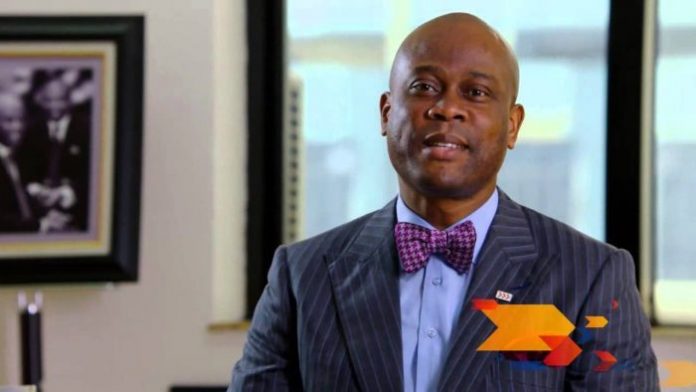
Such was the case with Access Holdings Plc, which recently grappled with the untimely loss of its Group Chief Executive Officer, Dr. Herbert Wigwe. Yet, amidst the somber ambiance, the appointment of Ms. Bolaji Agbede as the Acting Group CEO unveils critical insights into the delicate equilibrium between professional commitments and personal well-being.

Dr. Herbert Wigwe’s stewardship at Access Holdings Plc was characterized by remarkable accomplishments and strategic strides. During his tenure, the company witnessed exponential growth, solidifying its standing in the financial sector. His visionary leadership propelled Access Holdings Plc to unprecedented heights, garnering widespread admiration within the industry.

Upon assuming leadership in 2015, with prior service as the deputy managing director, Access Bank’s total assets were pegged at N2.6 trillion. Under his astute guidance, this figure experienced a staggering surge of 723 percent in less than a decade. Driven by his strategic acumen, the bank orchestrated a monumental merger with Diamond Bank in 2019, culminating in the formation of Africa’s largest bank by customer base, boasting over 42 million clients at the time.

Dr. Wigwe’s transformative initiatives extended beyond borders, spearheading Access Holdings’ expansion through mergers and acquisitions in Kenya, Mozambique, South Africa, Zambia, Botswana, and Angola. Pending endeavors included the acquisition of Uganda’s Finance Trust Bank Limited and Standard Chartered’s banking businesses in Cameroon, the Gambia, Sierra Leone, and Tanzania.

Under his stewardship, Access Holdings transitioned into a holding company in 2022, facilitating diversification into an array of financial services, spanning payments, pensions, and asset management. Noteworthy acquisitions such as Megatech Insurance Brokers Limited, Sigma Pensions Limited, and First Guarantee Pension Limited underscored the company’s strategic foresight and commitment to growth.

In addition to his corporate endeavors, Dr. Wigwe’s philanthropic footprint was substantial. Notably according to Bloomberg, he allocated half a billion dollars toward establishing a university in Isiokpo, Rivers State, aimed at fostering excellence in management, science, engineering, IT, and creative arts—a testament to his dedication to education and community development.

However, Dr. Wigwe’s sudden demise serves as a poignant reminder of life’s fragility and how fast the world moves. In response, the Board of Directors of Access Bank Group swiftly appointed Ms. Bolaji Agbede as the Acting Group CEO. With her extensive background in banking and business consultancy, coupled with her tenure at Access Holdings Plc, Ms. Agbede’s appointment signifies a seamless transition in leadership.

Nevertheless, this abrupt change at Access Holdings Plc underpins the imperative for individuals to prioritize familial bonds and personal well-being amidst the demands of professional pursuits. While Ms. Agbede’s appointment signifies continuity, it also denotes how fast the world moves on when you’re no longer there or incapable of serving the values you were once celebrated for.

Dr. Wigwe’s passing underscores the sobering reality that no measure of professional success can compensate for the absence of quality time spent with loved ones or the neglect of one’s health.

In a milieu where work often eclipses other facets of life, this event serves as a clarion call for individuals to reassess their priorities and cultivate healthier work-life equilibrium—because ultimately, life must persist beyond boardrooms and balance sheets.

While professional achievements hold significance, they must not come at the expense of one’s well-being or relationships. As the legacy of Dr. Herbert Wigwe is celebrated, let us heed the invaluable lessons his succession imparts about the importance of leading a gratifying and balanced life, where professional endeavors harmonize with personal fulfillment and familial bonds.

Total addressable market for Crypto is everyone with a Smartphone

0

One of the most common questions that investors and enthusiasts ask about cryptocurrencies is: how big is the market potential for this new form of money? In other words, what is the total addressable market (TAM) for crypto?

To answer this question, we need to consider two factors: the number of people who can access and use crypto, and the number of entities that can benefit from crypto. The first factor is relatively easy to estimate, since we have reliable data on the global smartphone penetration and adoption.

According to Statista, there were about 3.8 billion smartphone users in the world in 2021, and this number is expected to grow to 4.3 billion by 2023. This means that almost half of the world’s population already has or will soon have a device that can connect them to the internet and enable them to use crypto applications.

The second factor is more speculative, but also more exciting. It involves the possibility that not only humans, but also machines, can become participants in the crypto economy.

This idea is based on the assumption that artificial intelligence (AI) will become more advanced and autonomous in the near future, and that these intelligent agents will need a way to interact with each other and with humans in a trustless and decentralized manner.

Crypto provides a perfect solution for this scenario, since it allows machines to have their own identities, wallets, and incentives on the blockchain.

To illustrate this point, let us consider some examples of how AI robots could use crypto in different domains and contexts:

In the field of logistics and transportation, AI robots could use crypto to pay for their services, such as delivery, parking, charging, or maintenance. They could also earn crypto by providing these services to other robots or humans. For instance, a self-driving car could offer rides to passengers and receive crypto payments in return, or a drone could deliver packages and collect crypto tips.

In the field of entertainment and gaming, AI robots could use crypto to access and create content, such as music, videos, games, or art. They could also earn crypto by sharing their content with other robots or humans. For example, a musical robot could compose songs and sell them for crypto, or a gaming robot could play online games and win crypto prizes.

In the field of social and personal interactions, AI robots could use crypto to establish and maintain relationships with other robots or humans. They could also earn crypto by offering their skills, knowledge, or companionship. For example, a conversational robot could chat with lonely people and receive crypto donations, or a educational robot could teach students and get paid in crypto.

These are just some of the possible ways that AI robots could use crypto in the future. Of course, there are many challenges and risks involved in this vision, such as ethical, legal, and security issues. But there are also many opportunities and benefits for both humans and machines.

Therefore, we can argue that the TAM for crypto is not only limited by the number of people who own smartphones, but also by the number of AI robots that will soon join the network. This could potentially increase the TAM by several orders of magnitude, depending on how fast and how widely AI develops and adopts crypto. Of course, this is a very optimistic and futuristic vision, but it is not impossible or implausible.

In conclusion, the TAM for crypto is huge and growing. It encompasses everyone with a smartphone plus every AI robot that’s soon to be on-chain. This means that crypto has a tremendous opportunity to create value and impact for billions of users and entities across the world.

Will Blockchain technology be Cost-Plus Utilities?

0

Blockchain technology has been hailed as a revolutionary innovation that could transform various sectors of the economy, such as finance, supply chain, healthcare, and energy. However, some critics have argued that blockchains are inefficient, costly, and environmentally harmful, and that they will eventually become obsolete or commoditized by more centralized solutions.

A cost-plus utility is a service provider that charges customer based on the cost of production plus a fixed profit margin. This is typically the case for natural monopolies, such as electricity, water, or gas distribution, where the high fixed costs of infrastructure and network effects make it difficult for new entrants to compete. Cost-plus utilities are often regulated by the government to ensure fair pricing and quality standards.

Blockchains, on the other hand, are decentralized networks of nodes that validate transactions and store data using cryptographic protocols. Blockchains are designed to be trustless, transparent, and immutable, and to enable peer-to-peer transactions without intermediaries. Blockchains are also incentivized by rewards or fees that are paid to the nodes for their computational work.

One of the main challenges that blockchains face is scalability, or the ability to handle a large number of transactions per second without compromising security or decentralization. As the demand for blockchain services grows, so does the need for more computing power, storage space, and bandwidth. This results in higher costs for the nodes and the users of the network.

Some solutions that have been proposed to address the scalability issue include:

Layer 2 solutions: These are protocols that run on top of the main blockchain (layer 1) and process transactions off-chain, using the main blockchain as a settlement layer. Examples of layer 2 solutions include state channels, sidechains, plasma chains, and rollups.

Sharding: This is a technique that splits the blockchain into smaller partitions or shards, each with its own set of nodes and transactions. Sharding allows parallel processing and reduces the load on each node.

Interoperability: This is the ability of different blockchains to communicate and exchange data or value with each other. Interoperability can enable cross-chain transactions and increase the network effect of blockchains.

These solutions aim to improve the efficiency, performance, and usability of blockchains, while preserving their core features and benefits. However, they also introduce new trade-offs and challenges, such as:

Implementing these solutions requires sophisticated engineering and coordination among different stakeholders. They also increase the attack surface and potential points of failure of the system.

Security: Moving transactions off-chain or across chains may expose them to more risks or vulnerabilities than on-chain transactions. For example, layer 2 solutions may rely on trusted third parties or custodians to facilitate off-chain transactions or disputes.

Compatibility: Different blockchains may have different standards, protocols, or governance models that make it difficult to interoperate with each other. For example, some blockchains may use different consensus algorithms or smart contract languages than others.

Therefore, it is not clear whether these solutions will be able to achieve the optimal balance between scalability, security, and decentralization that blockchains aspire to.

Another challenge that blockchains face is competition from more centralized alternatives that may offer lower costs, higher speeds, or better user experience than blockchains.

Manta Network (MANTA) and Kava (KAVA) Pump, Everlodge (ELDG) Listed on Uniswap, Can It 30x?

0

As the effects of the Bitcoin ETF approval winds down, the crypto market is experiencing an uptrend and many cryptocurrencies are exhibiting bullish tendencies. After its listing on Binance, Manta Network (MANTA) has continued to pump with Kava (KAVA) also witnessing a significant rally in the past week. Everlodge (ELDG), one of the revolutionary DeFi companies disrupting real estate, has launched on Uniswap. Let’s have a look at how the token may skyrocket in the bull run.

Everlodge (ELDG) Listed on Uniswap As the Project Attracts Investors

As Manta Network and Kava are pumping, Everlodge will revolutionize the real estate industry with its unique qualities. The real estate sector has often been the sole preserve of the affluent, giving no way for average earners to give the investment a trial. However, with Everlodge, the story will change as investors can now own digital real estate properties at low fees.

Through Everlodge, investors can become fractional owners of real estate properties such as luxury homes and villas. These properties will be minted into digital NFTs. Investors can purchase fractional or whole NFTs. With as little as $100, individuals can purchase these NFTs which is a digital representation of these assets. Within its ecosystem, Everlodge has a marketplace for buying and selling assets, a launchpad for further platform developments, a reward club for committed members, and a lending platform for collateral loans.

The platform presale was highly successful with investors committing their resources to purchase the platform’s native token, ELDG, an  ERC20 token built on the Ethereum blockchain. The tokens airdrop has been scheduled for February 16th with the tokens liquidity already locked for 2 years. In terms of security, the smart contract has been audited by InterFi Network with the KYC verified by the BlockAudit team.

Those who joined the project at the first stage of presale have gotten over 150% ROI with more to come when the token is listed on Tier – 1 crypto exchange. With Everlodge’s status as a game changer in the $280 Trillion real estate market, an investment in Everlodge could give investors a huge profit. Going by the prediction of analysts, Everlodge will return 30x profit when the project is launched, making it one of the best cryptos to invest in now

Manta Network (MANTA) Began to Pump After Binance Listing

Barely a month after its listing on Binance, Manta Network (MANTA) became one of the best cryptos to invest in Q1 due to the massive rally the token has witnessed in the past month. The Manta Network price has surged by over 22% in the past 30 days with another 6% rally in the past week according to CoinMarketCap data.

While still new in the market, the Manta Network resilience will be tested as recently seen from the DDoS attack on the network. Although the effect of the attack was seen with the slight decrease on the Manta Network value, that has not changed analysts opinion about the token. Analysts believe that if the token could keep the bears away from resurfacing, the Manta Network price could climb $5 in the bull run.

Kava (KAVA) Price Prediction

The crypto market analysis shows that Kava (KAVA) is trending bullish after battling the bear trend for weeks. Having declined by a slight 7% in the past month, the Kava price has begun to increase, with a 6.61% surge in the past 7 days.

Looking at the trading chart, the bulls have the upper hand on the bears as the Kava trading volume also saw a significant increase within the past week. With Kava overcoming the resistance zone of $0.7, analysts predict the tokens to reach the $1 price point in the coming months.


For more information about Everlodge (ELDG) please visit their website.