DD
MM
YYYY

PAGES

DD
MM
YYYY

spot_img

PAGES

Home Blog Page 3679

President Biden to ask congress for $100 billion in funding for Ukraine and Israel

0

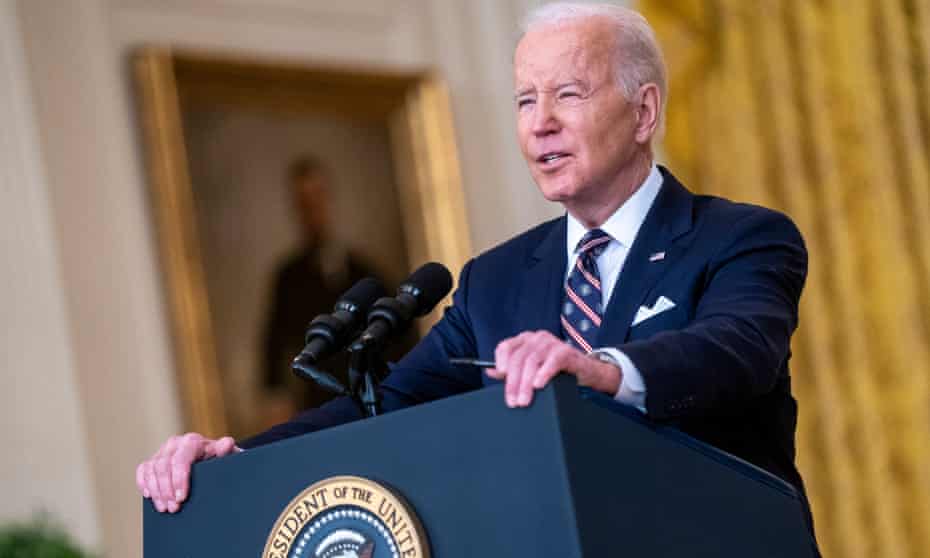
In a major foreign policy move, President Joe Biden announced on Wednesday that he will ask Congress to approve $100 billion in additional funding for Ukraine and Israel, two key allies facing security threats.

The president said that the funding will help bolster the defense capabilities of both countries, as well as support their economic development and democratic reforms. He also said that the funding will send a clear message to the adversaries of the United States and its allies that they will not tolerate any aggression or interference in their sovereignty.

The president’s announcement comes amid escalating tensions in Eastern Europe and the Middle East, where Russia and Iran have been accused of pursuing destabilizing actions and violating international norms. In recent weeks, Russia has amassed tens of thousands of troops near the border with Ukraine, raising fears of a possible invasion or annexation of parts of the country.

Meanwhile, Iran has continued to enrich uranium beyond the limits set by the 2015 nuclear deal, which the United States withdrew from in 2018 under former President Donald Trump.

The president said that he has been in close consultation with the leaders of Ukraine and Israel, as well as other allies and partners in Europe and the region, to coordinate a unified response to the challenges posed by Russia and Iran. He also said that he has been in dialogue with the leaders of Russia and Iran, urging them to de-escalate the situation and respect the international rules-based order.

The president stressed that the United States remains committed to diplomacy and dialogue, but also to defending its interests and values, as well as those of its allies and partners. He said that the proposed funding for Ukraine and Israel is not only a matter of security, but also of solidarity and shared values.

President Biden’s proposal is expected to face opposition from some members of Congress, who may question the need, cost, and effectiveness of such a large aid package. Some critics may also argue that the funding would escalate the tensions in the region, rather than reduce them. However, President Biden said that he is confident that he can persuade Congress to approve his request, saying that “this is not a partisan issue, but a national security issue”. He said that he will work with both parties to ensure that the funding is approved as soon as possible.

President Biden’s announcement has been welcomed by Ukraine and Israel, who expressed their gratitude and appreciation for the U.S. support. Both countries said that they share the same vision of a free, prosperous, and peaceful region, and that they are ready to cooperate with the U.S. and other allies to achieve it. They also said that they are willing to engage in constructive dialogue with Russia and Iran, but only on the basis of respect for their sovereignty and interests.

FTX settles customer property disputes to speed up bankruptcy proceedings, BNB Chain launches Greenfield mainnet

0

FTX, a leading cryptocurrency exchange, has announced that it has reached a settlement with its customers who had filed claims for their lost or frozen assets due to the platform’s bankruptcy. The settlement will allow FTX to distribute the remaining funds to its creditors and speed up the bankruptcy proceedings.

According to a blog post by FTX’s CEO Sam Bankman-Fried, the settlement was reached after months of negotiations and mediation with the customer representatives and the bankruptcy trustee. He said that the settlement was fair and reasonable, and that it would benefit all parties involved.

The settlement covers about 90% of the customer claims, which amounted to over $200 million in total. The customers who agreed to the settlement will receive a pro rata share of the available funds, which is estimated to be around 15% of their original claim value. The customers who did not agree to the settlement will have to wait for the bankruptcy court to decide on their claims, which could take years.

Bankman-Fried said that the settlement was a result of FTX’s commitment to its customers and its responsibility to the crypto industry. He said that FTX had always acted in good faith and tried to protect its customers’ interests, even when it faced unprecedented challenges and difficulties.

He also thanked the customer representatives and the bankruptcy trustee for their cooperation and professionalism, and expressed his hope that the settlement would help FTX move forward and focus on its future plans.

FTX filed for bankruptcy in April 2023, after it suffered a massive hack that resulted in the loss of over $1 billion worth of crypto assets. The hack also triggered a cascade of liquidations and margin calls, which caused many customers to lose their funds or have them frozen on the platform.

The hack was one of the largest and most devastating in crypto history, and it sparked a wave of lawsuits and investigations against FTX. The exchange has been cooperating with the authorities and trying to recover some of the stolen funds, but it has also faced criticism and backlash from some of its customers and competitors.ftxx

According to a report by Chainalysis, a blockchain analysis firm, the hack was carried out by a sophisticated group of cybercriminals who exploited a vulnerability in FTX’s hot wallet system. The hackers managed to bypass FTX’s security measures and access its private keys, which allowed them to transfer large amounts of crypto assets from FTX’s wallets to their own addresses.

The hackers also used various techniques to obfuscate their tracks and evade detection, such as using multiple wallets, mixing services, decentralized exchanges, and privacy coins. The report estimated that the hackers were able to launder about 40% of the stolen funds within a few weeks after the hack.

The report also identified some of the possible motives and origins of the hackers, based on their behavior patterns, language preferences, and online activity. The report suggested that the hackers were likely motivated by financial gain, ideological beliefs, or personal vendetta against FTX or its CEO. The report also speculated that the hackers were likely based in Eastern Europe, Asia, or Africa, based on their time zones, IP addresses, and VPN usage.

The report concluded that the hack was a highly coordinated and sophisticated operation that required extensive planning, resources, and skills. The report also warned that similar attacks could happen again in the future, unless crypto exchanges improve their security systems and protocols.

The settlement is expected to be approved by the bankruptcy court in the next few weeks, and FTX will then proceed to distribute the funds to its eligible customers. Bankman-Fried said that he was confident that FTX would emerge from this ordeal stronger and more resilient, and that he was grateful for the support and loyalty of its customers and partners.

BNB Chain launches Greenfield mainnet for Decentralized Data Storage

BNB Chain, a blockchain platform that aims to provide decentralized data storage solutions, has announced the launch of its Greenfield mainnet. The Greenfield mainnet is the result of months of development and testing, and it introduces several features and improvements to the BNB Chain network.

According to the official blog post, the Greenfield mainnet offers the following benefits:

Enhanced security and performance: The Greenfield mainnet adopts a new consensus algorithm called Proof of Space-Time (PoST), which leverages the unused disk space of the network participants to secure the network and validate transactions. PoST is more energy-efficient and scalable than traditional Proof of Work (PoW) or Proof of Stake (PoS) algorithms, and it also enables faster transaction confirmation and higher throughput.

Lower costs and higher rewards: The Greenfield mainnet reduces the storage fees for users and increases the rewards for storage providers. Users can store their data on the BNB Chain network for a fraction of the cost of centralized cloud services, and they can also earn BNB tokens by sharing their data with others. Storage providers can earn BNB tokens by renting out their disk space to the network, and they can also participate in governance and decision-making processes.

More use cases and applications: The Greenfield mainnet supports various types of data storage, such as files, databases, streams, and smart contracts. It also enables interoperability with other blockchains and platforms, such as Ethereum, IPFS, Filecoin, and Binance Smart Chain. This opens up new possibilities for developers and users to create and access decentralized applications (DApps) that leverage the power of BNB Chain’s data storage network.

The BNB Chain team invites everyone to join the Greenfield mainnet and experience the advantages of decentralized data storage. Users can download the BNB Chain wallet and start storing and sharing their data on the network. Storage providers can download the BNB Chain node software and start offering their disk space to the network. Developers can access the BNB Chain SDK and API documentation and start building DApps on the network.

The BNB Chain team also thanks its community and partners for their support and feedback throughout the development process. The team states that the Greenfield mainnet is only the beginning of their journey, and that they will continue to work hard to improve the BNB Chain network and ecosystem.

Scroll confirms mainnet launch following on-chain indications last week.

Scroll, a decentralized data storage and management platform, has officially announced its mainnet launch on October 18, 2023. The announcement comes after several on-chain indicators hinted at the imminent launch last week, sparking excitement and speculation among the crypto community.

Scroll aims to provide a secure, scalable and cost-effective solution for storing and managing large amounts of data on the blockchain. Scroll leverages the power of smart contracts and decentralized storage networks to enable users to create, access and share data across multiple platforms and applications.

According to the official blog post, Scroll’s mainnet launch marks the culmination of years of research and development, as well as extensive testing and auditing. The mainnet launch also introduces several new features and improvements, such as:

A native token (SCRL) that serves as the utility and governance token of the platform. SCRL holders can use the token to pay for data storage and management services, as well as participate in the governance of the platform.

A staking mechanism that allows SCRL holders to stake their tokens and earn rewards for securing the network and providing data storage capacity.

A marketplace that connects data providers and consumers, allowing them to exchange data and services in a trustless and transparent manner.

A developer portal that provides tools and documentation for developers to integrate Scroll into their applications and leverage its data storage and management capabilities.

Scroll’s mainnet launch is expected to attract more users and developers to the platform, as well as increase the demand and value of SCRL. Scroll claims that its platform can offer significant advantages over traditional cloud-based data storage solutions, such as:

Enhanced security and privacy, as data is encrypted and stored on decentralized nodes that are resistant to censorship, tampering and hacking.

Reduced costs and complexity, as data is stored on a single platform that eliminates the need for multiple intermediaries and service providers.

Increased efficiency and performance, as data is stored on a distributed network that enables faster access and delivery.

Scroll’s mainnet launch is a major milestone for the project and the crypto industry, as it demonstrates the potential of blockchain technology to revolutionize the data storage and management sector. Scroll invites everyone to join its platform and experience its benefits firsthand.

Federal Reserve governor throws cold water on future of CBDC in USA

0

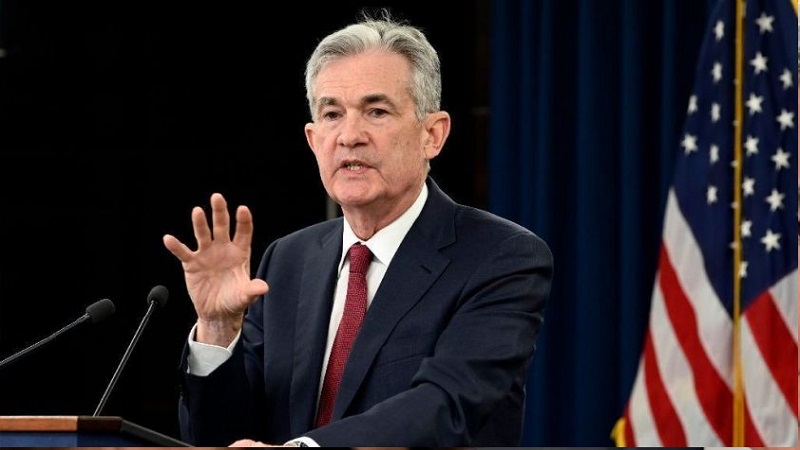
The Federal Reserve is not in a hurry to launch a central bank digital currency (CBDC), according to one of its governors. In a speech at the Peterson Institute for International Economics, Lael Brainard said that the Fed is still studying the benefits and risks of a CBDC, and that there are many unresolved issues that need to be addressed before making a decision.

Brainard argued that a CBDC would have significant implications for the financial system, the economy, and the role of the dollar as a global reserve currency. She said that a CBDC would need to be designed carefully to ensure that it does not undermine financial stability, monetary policy, or consumer protection. She also said that a CBDC would need to be interoperable with existing payment systems and compatible with international standards.

Brainard acknowledged that there are potential advantages of a CBDC, such as enhancing financial inclusion, reducing costs and frictions, and improving cross-border payments. However, she also pointed out some of the challenges and risks, such as cyberattacks, privacy issues, illicit activities, and competition with private sector innovations. She said that the Fed is collaborating with other central banks and researchers to learn from their experiences and experiments with CBDCs.

Brainard concluded that the Fed is committed to ensuring that the US payment system remains safe, efficient, and inclusive, but that it does not see an urgent need to issue a CBDC at this time. She said that the Fed will continue to engage with stakeholders and the public to solicit feedback and input on this important topic.

Mountain Protocol to strengthen USDM liquidity.

Wintermute, a leading algorithmic market maker for decentralized finance (DeFi) protocols, has announced a strategic partnership with Mountain Protocol, a novel stablecoin issuer that aims to create a more resilient and scalable US dollar-pegged token. The partnership will enhance the liquidity and stability of USDM, Mountain Protocol’s flagship stablecoin, which is backed by a diversified basket of crypto assets and governed by a decentralized autonomous organization (DAO).

USDM is designed to address some of the challenges faced by existing stablecoins, such as over-collateralization, centralization, and regulatory uncertainty. By leveraging Mountain Protocol’s innovative mechanism of dynamic collateral rebalancing, USDM can maintain its peg to the US dollar even in volatile market conditions, while minimizing the risk of liquidation and governance interference. USDM holders can also benefit from the protocol’s revenue-sharing model, which distributes a portion of the fees generated by the system to the DAO treasury and the USDM community.

Wintermute will provide liquidity for USDM across multiple DeFi platforms, including decentralized exchanges (DEXs), lending protocols, and yield aggregators. Wintermute will also support the growth and adoption of USDM by participating in the protocol’s governance and collaborating with other ecosystem partners. Wintermute’s expertise and experience in market making and DeFi will help USDM achieve greater efficiency, security, and accessibility for users and traders.

Evgeny Gaevoy, CEO of Wintermute, said: “We are excited to partner with Mountain Protocol, one of the most innovative and promising projects in the stablecoin space. We believe that USDM has the potential to become a leading alternative to existing stablecoins, offering users more value, transparency, and control. We look forward to working with the Mountain Protocol team and community to make USDM a widely used and trusted stablecoin in DeFi and beyond.”

Co-founder of Mountain Protocol said: “We are thrilled to have Wintermute as our strategic partner and liquidity provider. Wintermute is a renowned and respected market maker in the crypto industry, with a deep understanding of DeFi and its challenges.

Their support will be instrumental in enhancing the liquidity and stability of USDM, as well as expanding its reach and adoption across various DeFi platforms. We are confident that together with Wintermute and our other ecosystem partners, we can build a more resilient and scalable stablecoin that can serve the needs of the global crypto community.”

Exchange rates are a manifestation of currency demand and supply

0

One of the most important concepts in international economics is the exchange rate, which is the price of one currency in terms of another. The exchange rate affects how much we pay for imported goods and services, how much we earn from our exports, and how much we can invest or borrow abroad. But what determines the exchange rate? And why does it fluctuate over time?

The answer lies in the interaction of currency demand and supply in the foreign exchange market. Currency demand is the amount of a particular currency that people want to buy at a given exchange rate. Currency supply is the amount of a particular currency that people want to sell at a given exchange rate. The exchange rate is determined by the point where currency demand and supply meet, or the equilibrium point.

There are many factors that can affect currency demand and supply, such as interest rates, inflation, economic growth, trade balance, political stability, and market expectations. For example, if a country has higher interest rates than another country, it will attract more foreign investors who want to earn higher returns on their deposits or bonds.

This will increase the demand for its currency and appreciate its exchange rate. Conversely, if a country has higher inflation than another country, it will make its goods and services more expensive and less competitive in the global market. This will reduce the demand for its exports and increase the demand for its imports. This will decrease the demand for its currency and depreciate its exchange rate.

The exchange rate is not fixed or constant but changes constantly in response to changes in currency demand and supply. Sometimes, these changes are gradual and predictable, reflecting long-term trends or cycles in the economy. Sometimes, these changes are sudden and unexpected, reflecting short-term shocks or events that affect market sentiment or confidence. The exchange rate can also be influenced by government policies or interventions, such as setting a target range or pegging to another currency.

Interest rates are one of the key factors that influence the demand and supply of currencies in the foreign exchange market. Interest rates are the cost of borrowing or the return on lending money. They reflect the opportunity cost of holding or investing in a particular currency.

The higher the interest rate of a country, the more attractive its currency becomes to foreign investors who want to earn higher returns on their deposits or bonds. This increases the demand for that currency in the foreign exchange market, as investors buy it with other currencies. This also reduces the supply of that currency in the foreign exchange market, as investors hold it instead of selling it. The result is an appreciation of that currency’s exchange rate, or an increase in its value relative to other currencies.

The lower the interest rate of a country, the less attractive its currency becomes to foreign investors who want to earn higher returns on their deposits or bonds. This decreases the demand for that currency in the foreign exchange market, as investors sell it for other currencies. This also increases the supply of that currency in the foreign exchange market, as investors borrow it instead of holding it. The result is a depreciation of that currency’s exchange rate, or a decrease in its value relative to other currencies.

Therefore, interest rates have an inverse relationship with exchange rates. When interest rates rise, exchange rates tend to appreciate. When interest rates fall, exchange rates tend to depreciate. This is because interest rates affect the demand and supply of currencies in the global market.

Understanding how exchange rates are determined and how they affect the economy is essential for anyone who is involved in international trade, finance, or business. Exchange rates are not just numbers on a screen, but a manifestation of currency demand and supply in the global market.

Judge orders Genesis to respond to subpoena issued by Terraform; Zodia Custody expands Services

0

A major development has occurred in the ongoing legal dispute between Terraform, a cloud computing company, and Genesis, a blockchain platform. A judge has ordered Genesis to respond in five days to a subpoena issued by Terraform, which seeks to obtain evidence of Genesis’s alleged infringement of Terraform’s patents.

Terraform filed a lawsuit against Genesis in June, claiming that Genesis had copied Terraform’s proprietary technology for creating and managing virtual machines on the cloud. Terraform alleged that Genesis had violated its patents on methods for optimizing cloud resources, securing data transmission, and scaling up computing power.

Terraform Labs is a startup that develops the Terra blockchain and payment platform, which uses algorithmic stablecoins to power various Web3 applications. Terraform Labs was founded in 2018 by Do Kwon and Daniel Shin in Seoul, South Korea. Terraform Labs has raised more than $200 million from investors such as Arrington Capital, Coinbase Ventures, Galaxy Digital and Lightspeed Venture Partners.

The Terra blockchain is a secure smart contract platform that supports a robust development suite and open-source tooling, guides, and tutorials. Terra has several stablecoins that are pegged to different fiat currencies, such as TerraUSD (UST), which is pegged to the U.S. dollar. The stablecoins are backed by Luna, a reserve asset cryptocurrency that also serves as a governance token for the Terra community.

Genesis denied the allegations and argued that Terraform’s patents were invalid and unenforceable. Genesis also claimed that it had developed its own technology independently and that it had no access to Terraform’s trade secrets.

In August, terraform requested a subpoena to compel Genesis to produce documents and data related to its blockchain platform, including its source code, design specifications, and user agreements. Terraform argued that the subpoena was necessary to prove its case and to show that Genesis had indeed copied its technology.

Genesis opposed the subpoena, saying that it was overly broad, burdensome, and irrelevant. Genesis also said that complying with the subpoena would expose its confidential information and jeopardize its competitive advantage.

The order was issued by Judge Jed Rakoff of the U.S. District Court for the Southern District of New York on October 13, after Genesis failed to produce the requested documents by the previous deadline of October 9. The judge said that Terraform Labs had shown a reasonable basis for its claims and that the subpoena was relevant and proportional to the issues in the case.

The judge, however, sided with Terraform and granted the subpoena on October 18. The judge said that terraform had shown a reasonable basis for its claims and that the subpoena was relevant and proportional to the issues in the case. The judge also said that Genesis had failed to demonstrate how the subpoena would harm its interests or violate its rights.

The judge ordered Genesis to respond in five days to the subpoena and to produce the requested documents and data by November 1. The judge warned Genesis that if it failed to comply, it could face sanctions, including contempt of court, fines, or default judgment.

This is a significant setback for Genesis, which has been trying to avoid disclosing its internal workings and to delay the litigation process. The subpoena could reveal crucial information about Genesis’s platform and its similarities or differences with Terraform’s technology. This could affect the outcome of the case and the future of both companies.

The case is expected to go to trial in early 2024. If Terraform wins, it could seek damages and injunctive relief from Genesis, which could force Genesis to stop using or modify its platform. If Genesis wins, it could clear its name and continue its operations without interference from Terraform.

Zodia Custody expands institutional digital asset services to Australia

Zodia Custody, a leading provider of institutional-grade digital asset custody solutions, has announced its launch in Australia, offering secure and compliant storage and transfer services for cryptocurrencies and other digital assets. Zodia Custody is a joint venture between Standard Chartered, a global banking and financial services group, and Northern Trust, a leading asset servicing provider.

Zodia Custody leverages the expertise and experience of both partners to deliver best-in-class solutions for institutional investors who want to access the emerging digital asset class.

Zodia Custody’s expansion to Australia comes at a time when the demand for digital assets is growing rapidly in the region, driven by factors such as regulatory clarity, innovation, and institutional adoption. According to a recent report by Finder, 17% of Australians own some form of cryptocurrency, making it one of the most crypto-friendly countries in the world.

Moreover, Australia has a robust and supportive regulatory framework for digital assets, with clear guidance from the Australian Securities and Investments Commission (ASIC) and the Australian Transaction Reports and Analysis Centre (AUSTRAC).

Zodia Custody’s Australian operations will be led by David Christie, who has over 20 years of experience in financial services and technology. Christie will oversee the development and delivery of Zodia Custody’s products and services in Australia, as well as building relationships with clients, regulators, and industry stakeholders. Christie said:

“We are thrilled to bring Zodia Custody’s innovative and secure digital asset custody solutions to Australia, where we see a strong appetite and potential for this emerging asset class. Zodia Custody combines the best of both worlds: the trust and reliability of established financial institutions, and the agility and flexibility of a fintech start-up. We look forward to working with our clients and partners in Australia to help them achieve their digital asset goals.”

Zodia Custody’s platform supports a range of digital assets, including Bitcoin, Ethereum, Litecoin, Bitcoin Cash, Stellar Lumens, and XRP. Zodia Custody also offers value-added services such as staking, lending, borrowing, and trading of digital assets. Zodia Custody is regulated by the UK Financial Conduct Authority (FCA) and adheres to the highest standards of governance, compliance, risk management, and security.

Zodia Custody’s mission is to enable institutional investors to participate in the digital asset ecosystem with confidence and peace of mind. By providing a safe and reliable custody solution, Zodia Custody aims to unlock the full potential of digital assets for its clients and the wider economy.

Microsoft veteran joins Matter Labs to unlock ‘holy grail’ of web3 with zkSync

Matter Labs, a leading developer of zero-knowledge proof technology, has announced the addition of a new team member: David Rousset, a former Microsoft engineer and web standards expert. Rousset will be working on Matter Labs’ flagship product, zkSync, a layer-2 scaling solution for Ethereum that leverages zero-knowledge proofs to achieve high throughput, low latency, and low fees.

Rousset has over 20 years of experience in the web industry, having worked on various projects such as Babylon.js, a 3D engine for the web, and WebAssembly, a binary format that enables high-performance applications on the web. He is also a co-chair of the W3C Immersive Web Working Group, which defines standards for virtual and augmented reality on the web.

Rousset said he was drawn to Matter Labs because of its vision to enable a more open, decentralized, and secure web, also known as web3. He said he believes that zero-knowledge proofs are the “holy grail” of web3, as they allow for privacy-preserving and scalable transactions without compromising on security or trust.

“I’m very excited to join Matter Labs and contribute to zkSync, which I think is one of the most promising technologies for web3,” Rousset said. “I’m looking forward to applying my web expertise and passion to make zkSync more accessible and user-friendly for developers and users alike.”

Alex Gluchowski, the co-founder and CEO of Matter Labs, welcomed Rousset to the team and praised his skills and achievements. He said he expects Rousset to play a key role in advancing zkSync’s development and adoption.

“David is a rare talent who combines deep technical knowledge, broad web experience, and a visionary mindset,” Gluchowski said. “He shares our mission to create a fairer and more inclusive web3 with zkSync, and we are thrilled to have him on board.”