DD
MM
YYYY

PAGES

DD
MM
YYYY

spot_img

PAGES

Home Blog Page 3680

Bitcoin could ‘easily’ reach $15 trillion market cap – Anthony Scaramucci

0

Bitcoin is on the verge of a massive breakthrough, according to Anthony Scaramucci, the founder and co-managing partner of SkyBridge Capital. In a recent interview with CNBC, Scaramucci said that Bitcoin could “easily” reach a $15 trillion market cap in the next decade, surpassing the combined value of gold and the S&P 500.

Scaramucci, who is also a former White House communications director, has been a vocal advocate of Bitcoin since launching a Bitcoin fund in December 2020. He believes that Bitcoin is the best way to store value in the digital age, and that more institutional investors will flock to the cryptocurrency as they realize its potential.

He said that Bitcoin is still in its early stages of adoption, and that it will benefit from the network effect as more people use it. He compared Bitcoin to Amazon, which started as an online bookstore and expanded into a global e-commerce giant. He said that Bitcoin will similarly evolve and innovate over time, and that it will become more user-friendly and accessible.

Scaramucci also dismissed the common criticisms of Bitcoin, such as its volatility, environmental impact, and regulatory uncertainty. He said that Bitcoin’s volatility is a natural consequence of its rapid growth, and that it will stabilize as the market matures. He said that Bitcoin’s environmental impact is overstated, and that it will become more energy efficient as it adopts renewable sources of power. He said that Bitcoin’s regulatory uncertainty is a temporary hurdle, and that it will eventually gain acceptance from governments and central banks.

He concluded by saying that Bitcoin is a revolutionary technology that will change the world for the better. He said that Bitcoin is not only a financial asset, but also a social movement that empowers people and promotes freedom. He said that Bitcoin is the future of money, and that he is confident that it will reach a $15 trillion market cap in the next 10 years.


As of October 16, 2023, the current market cap of Bitcoin is $526.36 billion USD, according to CoinMarketCap . This means that Bitcoin accounts for about 49.7% of the total cryptocurrency market cap, which is $1.06 trillion USD. The current price of Bitcoin is $28,239.34 USD, with a 24-hour trading volume of $5.3 billion USD. Bitcoin has increased by 0.33% in the last 24 hours, and by 3.16% in the last week.

Scaramucci also dismissed the common criticisms of Bitcoin, such as its volatility, environmental impact, and regulatory uncertainty. He said that Bitcoin’s volatility is a natural consequence of its rapid growth, and that it will stabilize as the market matures. He said that Bitcoin’s environmental impact is overstated, and that it will become more energy efficient as it adopts renewable sources of power. He said that Bitcoin’s regulatory uncertainty is a temporary hurdle, and that it will eventually gain acceptance from governments and central banks.

He concluded by saying that Bitcoin is a revolutionary technology that will change the world for the better. He said that Bitcoin is not only a financial asset, but also a social movement that empowers people and promotes freedom. He said that Bitcoin is the future of money, and that he is confident that it will reach a $15 trillion market cap in the next 10 years.

Tunisia returns 60m Euro of Aid from the European Union

0

In a surprising move, Tunisia has announced that it will return 60 million Euro of aid that it received from the European Union in 2019. The decision comes amid growing tensions between the North African country and the bloc over human rights and migration issues.

Tunisia is one of the main transit countries for migrants and refugees trying to reach Europe via the Mediterranean Sea. The EU has been providing financial and technical assistance to Tunisia to help it manage its borders, improve its asylum system, and prevent irregular migration. However, some critics have accused the EU of outsourcing its migration policy to Tunisia and other third countries, without ensuring adequate protection for the rights and dignity of the people on the move.

The Tunisian government said that it decided to return the aid money because it did not want to be seen as a “subcontractor” of the EU, and because it wanted to preserve its sovereignty and independence. The government also said that it was disappointed by the lack of solidarity and cooperation from the EU, especially after the political and economic crisis that followed the attempted assassination of President Kais Saied in July 2023.

The statement also expressed Tunisia’s gratitude for the EU’s support and partnership over the years and affirmed its willingness to continue cooperating with the EU on various issues of mutual interest. The statement added that Tunisia hopes to resume its dialogue with the EU once the situation stabilizes and a new government is formed.

The EU expressed its regret over Tunisia’s decision and said that it remained committed to supporting the country’s democratic transition and development. The EU also said that it hoped to resume a constructive dialogue with Tunisia on all areas of mutual interest, including migration and human rights.

The return of the aid money is likely to have a negative impact on Tunisia’s economy, which is already struggling with high unemployment, inflation, and debt. It may also affect the country’s relations with other international donors and partners, who may question its credibility and stability. Moreover, it could jeopardize the prospects of a new EU-Tunisia Association Agreement, which was supposed to be finalized by the end of 2023.

Some analysts have suggested that Tunisia’s decision to return the aid is a sign of its rejection of any external interference or pressure on its internal affairs, especially after some European officials and lawmakers criticized President Saied’s actions as a coup d’état and called for sanctions against Tunisia. Others have argued that Tunisia is trying to assert its autonomy and dignity in the face of the EU’s conditionalities and expectations, which are often perceived as intrusive and paternalistic by some segments of the Tunisian society.

Tunisia is facing a political and economic crisis that has been exacerbated by the COVID-19 pandemic and social unrest. The country, which is widely regarded as the only success story of the 2011 Arab Spring uprisings, has been struggling to secure foreign financing and implement reforms to revive its stagnant economy.

One of the main sources of external funding for Tunisia is the International Monetary Fund (IMF), which agreed in principle to provide a $1.9 billion loan last year. However, the loan has been delayed due to disagreements over the conditions attached to it, such as reducing public spending, cutting subsidies, and increasing taxes.

The IMF deal has also been a source of contention between Tunisia’s President Kais Saied and his Economy and Planning Minister Samir Saied, who are not related. The president, who seized sweeping powers from parliament in July, has repeatedly expressed his opposition to the IMF’s demands, calling them “foreign diktats” that would impoverish Tunisians and spark protests. He has also hinted that he would not seek parliamentary approval for the loan, which is required by the constitution.

The minister, on the other hand, has been a vocal advocate of the IMF deal, arguing that it is essential for restoring financial stability, attracting investors, and repaying debts. He has also warned that Tunisia faces a risk of default if it fails to secure the loan. He represented Tunisia at the annual meetings of the IMF and World Bank in Marrakech, Morocco, last week, where he reportedly discussed the progress of the negotiations with the IMF officials.

On Tuesday, October 18, President Saied decided to dismiss Minister Saied from his position, without giving any official reason. He assigned Finance Minister Sihem Boughdiri to temporarily run the economy ministry. The move came as a surprise to many observers, who saw it as a sign of escalating tensions between the president and his cabinet over the economic policy direction.

The dismissal of Minister Saied has raised concerns about the future of Tunisia’s relations with the IMF and other international donors, who have been waiting for clarity on the country’s reform agenda and political situation. Some analysts fear that the president’s decision could jeopardize the chances of reaching an agreement with the IMF before the end of the year, which could have serious consequences for Tunisia’s economy and social stability.

Others, however, hope that the president’s move could pave the way for a more constructive dialogue with the IMF and other stakeholders, based on Tunisia’s own capabilities and priorities. They argue that the president may have a different vision for addressing Tunisia’s economic challenges than his former minister, one that is more responsive to the needs and aspirations of the Tunisian people.

Tunisia’s budget bill for 2024, which was unveiled on Tuesday, reflects some of these differences. The bill proposes to maintain subsidies for fuel, electricity, and food, which are seen as vital for easing social pressures and protecting vulnerable groups. It also plans to increase taxes for banks, hotels, and liquor companies, which are perceived as profiting from the crisis. The bill does not mention any agreement with the IMF, or any specific reforms related to it.

Tunisia’s economy is expected to grow by 2.1% in 2024, after a modest recovery of 0.9% in 2023. The government aims to reduce its public wage bill from 14.4% of GDP in 2023 to 13.5% in 2024, and its fiscal deficit from 7.7% in 2023 to 6.6% in 2024. However, these targets depend largely on securing external financing and implementing structural reforms.

Tunisia’s economic future remains uncertain and challenging amid a complex political transition and a fragile social context. The dismissal of Minister Saied may have opened a new chapter in Tunisia’s economic policy debate, but it also poses new questions and risks for its economic outlook.

Tesla Announces November 30th for the Delivery of First Cybertruck

0

After numerous delays and much anticipation, Tesla has officially set a delivery date for the highly awaited Cybertruck electric pickup. In a company post shared on X (formerly Twitter), Tesla revealed that the Cybertruck’s first deliveries will take place during a special event at the Gigafactory in Austin, Texas, on November 30th.

This announcement was made alongside Tesla’s third-quarter earnings report, where the company’s CEO, Elon Musk, shared some insights into the challenges of ramping up production for the Cybertruck. Musk emphasized the complexity of this endeavor, noting that Tesla has ambitious plans to manufacture a quarter of a million Cybertrucks annually in the future. However, achieving this production volume is not expected to occur until after 2024.

Over the past few months, there have been sightings of Cybertrucks on the road, all labeled as either RC (for testing purposes) or prototype vehicles. Tesla had previously suggested that a delivery event would take place by Q3, but it did not materialize as initially planned.

Earlier in the year, Tesla indicated that limited production of the Cybertruck would begin during the summer, with mass production slated for 2024. However, it seems that Tesla was able to roll out at least one Cybertruck from its factory in July, signaling progress in the vehicle’s production journey.

The Cybertruck was initially announced by Tesla in 2019, but its production timeline faced multiple delays, partly due to the challenges posed by the COVID-19 pandemic. The company had fallen short of its initial preproduction target set for 2021.

Despite these setbacks, the Cybertruck continues to generate immense interest and intrigue. Since its unveiling, other automakers have joined the electric pickup truck race, introducing their own offerings, such as Ford’s F-150 Lightning and Rivian’s R1T. The Cybertruck remains a unique contender, with its distinctive design and features, including the much-discussed and eye-catching “humongous windshield wiper” that has left many wondering if it will indeed make it to the final production design.

The November 30th event is poised to be a milestone moment for Tesla enthusiasts and potential buyers eagerly awaiting the Cybertruck, as they finally get a chance to witness this groundbreaking electric vehicle in action and learn more about its features and capabilities.

As Tesla gears up for the long-anticipated Cybertruck launch, the electric vehicle market continues to evolve with an increasing number of automakers embracing the electrification trend, setting the stage for an exciting and competitive future for the automotive industry.

Crypto scams are a serious threat to the security and integrity of the crypto ecosystem

0

Crypto scams are a serious threat to the security and integrity of the crypto ecosystem. In this blog post, we will explore some of the most common types of crypto scams, how they work, and how to avoid them. We will also share some tips on how to protect your crypto assets and report any suspicious activity.

Crypto scams are fraudulent schemes that aim to deceive crypto users and steal their funds or personal information. Crypto scams can take many forms, such as phishing, fake exchanges, fake wallets, fake ICOs, Ponzi schemes, ransomware, and more. Crypto scams often exploit the lack of regulation, transparency, and education in the crypto space, as well as the high volatility and anonymity of crypto transactions.

Some of the most common types of crypto scams are:

Phishing: Phishing is a type of scam that involves sending fake emails or messages that impersonate legitimate entities, such as crypto exchanges, wallets, or projects. The goal is to trick users into clicking on malicious links or attachments or entering their credentials or private keys on fake websites. Phishing can result in the loss of access to your crypto accounts or funds, or the installation of malware on your device.

Fake exchanges: Fake exchanges are websites that pretend to offer crypto trading services but are actually designed to steal your money or personal information. Fake exchanges may lure users with attractive features, such as low fees, high returns, or exclusive offers. However, once users deposit their funds or provide their personal details, they may never be able to withdraw them or access their accounts again.

Fake wallets: Fake wallets are applications or websites that claim to store your crypto assets securely but are actually controlled by scammers. Fake wallets may look like legitimate ones, but they may have hidden backdoors that allow scammers to access your funds or private keys. Fake wallets may also generate invalid addresses or QR codes that redirect your funds to the scammers’ accounts.

Fake ICOs: Fake ICOs are initial coin offerings that promise to launch a new crypto project or token but are actually scams that run away with your money. Fake ICOs may create fake websites, whitepapers, social media accounts, and marketing campaigns to attract investors. However, once they collect enough funds from unsuspecting users, they may disappear without delivering any product or service.

Ponzi schemes: Ponzi schemes are scams that promise high returns on your investment but are actually paying old investors with new investors’ money. Ponzi schemes rely on a constant inflow of new investors to sustain their payouts, but eventually collapse when they run out of funds or get exposed. Ponzi schemes may use crypto as a cover for their operations or claim to offer crypto-related products or services.

Ransomware: Ransomware is a type of malware that encrypts your files or locks your device and demands a ransom in crypto to restore your access. Ransomware can infect your device through phishing emails, malicious downloads, or compromised websites. Ransomware can target individuals or organizations and may threaten to delete your files or expose your sensitive data if you don’t pay the ransom.

Crypto scams can be very sophisticated and convincing, but there are some steps you can take to protect yourself and your crypto assets from them:

Do your research: Before engaging with any crypto-related entity, such as an exchange, a wallet, a project, or an ICO, do your due diligence and verify their legitimacy and reputation. Check their official website, social media accounts, reviews, ratings, and feedback from other users. Look for signs of credibility, such as licenses, regulations, partnerships, audits, and security measures. Avoid entities that have red flags, such as poor grammar, spelling errors, unrealistic claims, or lack of transparency.

Use secure platforms: Only use trusted and reputable platforms for your crypto transactions and storage. Choose platforms that have strong security features, such as encryption, two-factor authentication (2FA), multi-signature (multisig), cold storage (offline), and anti-phishing protection. Avoid platforms that have been hacked or compromised in the past.

Protect your devices: Keep your devices updated with the latest software and security patches. Use antivirus software and firewall to prevent malware infections. Avoid using public Wi-Fi networks or devices for your crypto activities. Use a VPN (virtual private network) to encrypt your internet traffic and hide your IP address.

Protect your keys: Your private keys are the passwords to your crypto assets. Never share them with anyone or enter them on any website or application that you don’t trust. Store them securely in a hardware wallet (a physical device) or a paper wallet (a printed copy). Don’t store them online or on your device’s memory. Backup your keys and keep them in a safe place.

Be cautious: Don’t click on any links or attachments that you receive from unknown sources or that look suspicious. Don’t provide any personal information or credentials to anyone who asks for them unsolicited. Don’t send any funds to anyone who promises you high returns or rewards. Don’t download any software or applications that you are not familiar with or that are not from official sources.

Report scams: If you encounter or fall victim to a crypto scam, report it to the relevant authorities and platforms as soon as possible. You can also report it to online communities and forums, such as Reddit, Twitter, or Telegram, to warn other users and prevent further damage. You can also use websites, such as Scam Alert, Crypto Scam Checker, or Crypto Scam Database, to check or report crypto scams.

Crypto scams are a serious threat to the security and integrity of the crypto ecosystem, but they can be avoided with some awareness and caution. By following these tips, you can protect yourself and your crypto assets from scammers and enjoy the benefits of the crypto world safely and securely.

Amazon Tests New Humanoid Robots in A Warehouse Automation Push

0
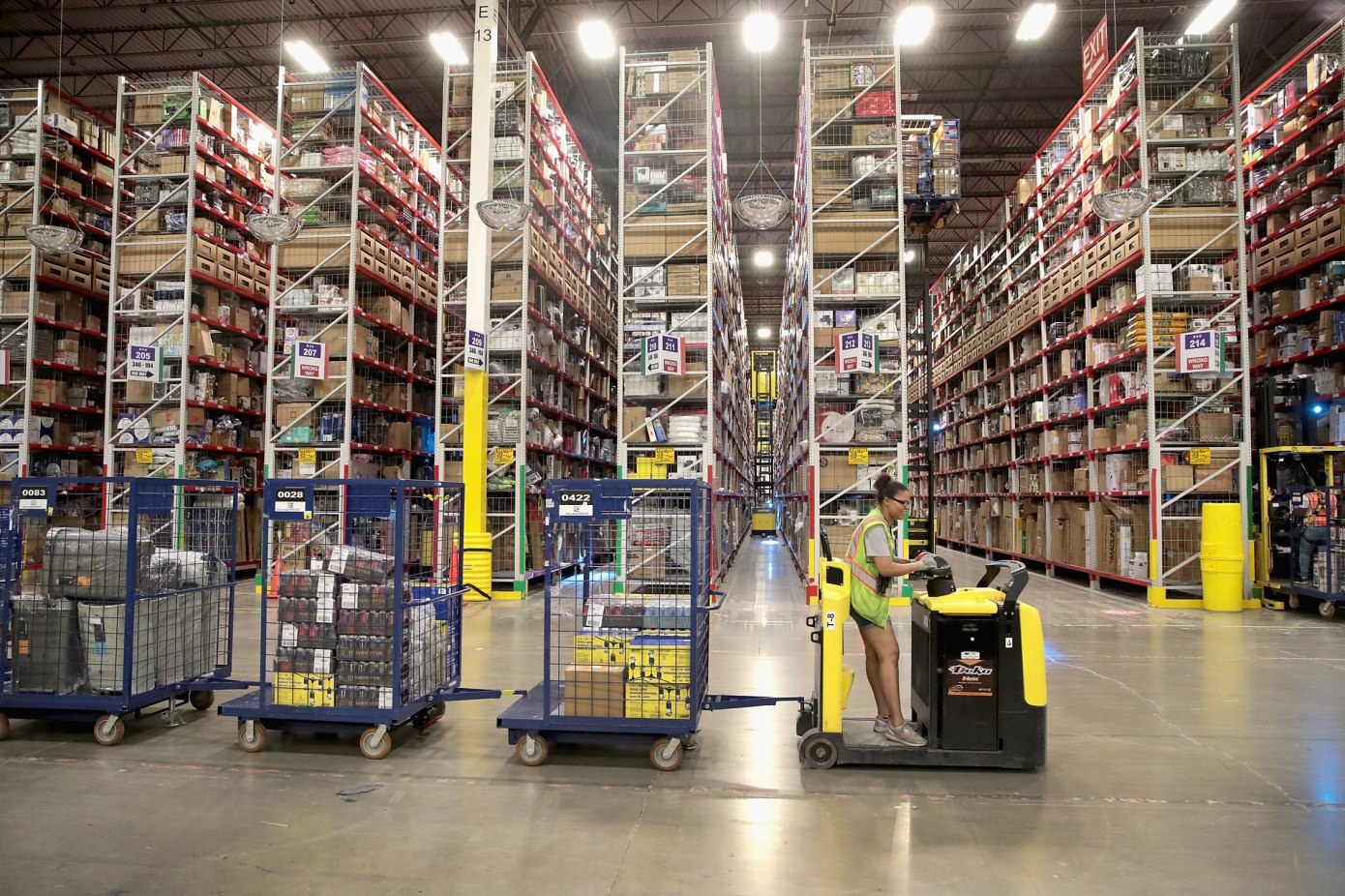
ROMEOVILLE, IL - AUGUST 01: Workers pack and ship customer orders at the 750,000-square-foot Amazon fulfillment center on August 1, 2017 in Romeoville, Illinois. On August 2, Amazon will be holding job fairs at several fulfillment centers around the country, including the Romeoville facility, in an attempt to hire more than 50,000 workers. (Photo by Scott Olson/Getty Images)

Amazon.com Inc., the world’s leading e-commerce giant, is forging ahead with its quest for greater automation in its vast network of warehouses, with the introduction of two groundbreaking technologies. In a recent blog post, the company revealed that it is currently experimenting with a humanoid robot and an inventory-sorting technology to improve operational efficiency.

The humanoid robot, affectionately named “Digit,” was developed by Agility Robotics Inc. This bipedal robot exhibits remarkable dexterity, as it can squat, bend, and manipulate objects using hand-like clasps. Initially, Digit’s role will be to assist employees in consolidating totes that have been emptied of their contents. Amazon took a significant step toward this initiative when it invested in Agility Robotics last year.

While Amazon has been employing robots in its warehouses for over a decade, primarily for transporting inventory to human workers, the company is now making strides toward a new warehousing paradigm. The traditional method of manually stocking inventory onto mesh shelving is evolving into a container-based storage system. This transformation accommodates the seamless integration of robotic arms and other automated technologies for sorting and selecting items.

The e-commerce giant cited significant safety improvements within Amazon Robotics sites. In 2022, these sites recorded a 15% reduction in recordable incident rates and an 18% drop in lost-time incident rates compared to non-robotics sites.

In addition to the introduction of Digit, Amazon is experimenting with “Sequoia,” an advanced technology designed to identify and sort inventory items into containers. These containers are then accessed by employees who retrieve items ordered by customers. For any remaining products, Amazon employs a robotic arm known as “Sparrow,” which was unveiled last year. According to Amazon, the Sequoia system is already operational in a Houston warehouse and has the potential to reduce order processing times by as much as 25%.

This technological shift in Amazon’s warehousing process brings the operation closer to an assembly line model, in contrast to the traditional approach where employees manually search for items on shelves.

Notably, Amazon is aligning these automation efforts with a focus on enhancing employee safety. The company has come under scrutiny from both Washington state and federal regulators due to injury rates exceeding industry averages. By automating repetitive tasks that often lead to injuries, Amazon aims to improve workplace safety and employee well-being.

Amazon’s continued investment in robotics and automation technology underscores its commitment to delivering products to customers more efficiently and safely, as it strives to stay ahead in the fiercely competitive e-commerce landscape.

The deployment of these innovative technologies is poised to revolutionize the warehousing industry and promises to play a pivotal role in shaping the future of logistics and e-commerce.

Amazon is revamping its warehouses with new artificial intelligence and robotics technology, beginning this week with a fulfillment center in Houston and rolling out over the next three to five years. The system, dubbed Sequoia, can identify and store inventory up to 75% faster and cut fulfillment time up to 25%, according to the company. Amazon said the new sorting machines, along with previously introduced robotic arms, are designed to work alongside employees and help reduce injuries, not eliminate jobs, The Wall Street Journal reports.

Amazon will also be testing a bipedal robot named Digit to handle empty totes. The company is now using drones to drop prescription medications on doorsteps for Amazon Pharmacy customers in College Station, Texas, it announced Wednesday.