DD
MM
YYYY

PAGES

DD
MM
YYYY

spot_img

PAGES

Home Blog Page 3682

Apple Unveils New Chips, Revamped Mac Series and New Pricing

0

Apple has unveiled new MacBook Pro and iMac computers along with three new chips: M3, M3 Pro, and M3 Max. These announcements were made on Monday during an online event primarily focused on professional users.

These new devices and chips are geared towards professional users. Apple’s Mac business has experienced significant growth since transitioning from Intel to its custom-designed chips in 2020, with its market share nearly doubling to around 11%.

Apple has gained a competitive edge by combining both central processing units (CPUs) and graphics processing units (GPUs) in its Apple silicon chips. This integration is said to provide better performance and battery life compared to traditional setups, where CPUs and GPUs often come from different manufacturers.

Key details of the new releases include:

Redesigned GPUs: Apple has redesigned its graphics processing units (GPUs), which are critical components of the new chips. This move positions Apple to compete with established players like Nvidia in the GPU market.

Pricing and Availability: The 14-inch MacBook Pro starts at $1,599 in the U.S., and the 16-inch version starts at $2,499. The new iMac desktop with the M3 chips starts at $1,299. Some of these products will be available as soon as next week, while others will ship later in November.

Market Share Growth: Apple’s Mac business has experienced significant growth since it began using its custom-designed chips in place of Intel processors, nearly doubling its market share to nearly 11% since 2020.

Secure Screen Sharing: Apple introduced a new secure screen-sharing feature aimed at business users. This feature allows users to access their machines remotely.

Apple Silicon: Apple’s custom-designed chips, using technology from Arm Holdings, have contributed to its Macs’ improved battery life and performance compared to Windows-based machines.

Unique Chip Integration: Unlike other laptop makers, Apple combines both central processing units (CPUs) and GPUs in its Apple silicon chips, claiming to offer better performance than rivals.

Competition: Apple’s success with its custom chips has encouraged competitors like Qualcomm and Nvidia to develop their Arm-based chips for laptops and PCs.

Corporate Buyer Impact: Apple’s changes to its product lineup, including eliminating a lower-priced 13-inch MacBook Pro, could affect corporate buyers’ choices between MacBook Air and MacBook Pro models.

3 Nanometer Technology: The new chips are the first for laptops and desktops to use 3 nanometer manufacturing technology, promising better performance and energy efficiency.

Comparison to Intel: Throughout the event, Apple emphasized the improved performance of its new machines compared to older models with Intel chips.

Apple’s ongoing expansion of its chip technology is aimed at maintaining its competitive edge and catering to professional users’ needs. As the technology landscape evolves, these developments will continue to influence the broader computing industry.

The tech giant has focused on attracting professional users, exhibiting the improved performance and capabilities of its new devices compared to previous Intel-based machines. The company aims to highlight the advantages of upgrading to Apple’s own chips for tasks such as content creation and AI research.

Tinubu Budgets Billions of Naira for Cars Amid Biting Economic Strains

0

Amid the outcry over the N75 billion spent by Nigerian lawmakers on official vehicles in the face of a biting economic situation, the federal government is planning to spend N1.5 billion on vehicles for the Office of First Lady.

The move, which comes amid calls on the government to cut the cost of governance, is believed to be part of the reasons President Bola Tinubu is pushing for a supplementary budget. The Nigerian government has requested a supplementary budget of N2.17 trillion (about $5 billion) from the National Assembly.

This additional budget comes amid economic challenges in the country and the removal of petroleum subsidy that has led to a significant hike in fuel prices.

However, a review of the supplementary budget conducted by Premium Times reveals expenditures that many have considered extravagant, given the nation’s current economic situation. For example, the budget includes N1.5 billion for vehicles for the Office of the First Lady, which is not recognized by the country’s constitution.

Additionally, N2.9 billion is allocated for Sport Utility Vehicles (SUVs) for the Presidential Villa, while another N2.9 billion is earmarked for replacing operational vehicles for the presidency. Renovations of the presidential and vice-presidential residences are also included, with N4 billion allocated for the president’s residence and N2.5 billion for the vice president’s residence. A total of N28 billion is proposed for the State House, and N12.5 billion is allocated for the Presidential Air Fleet.

The Presidential Air Fleet comprises a range of aircraft, including a Boeing Business Jet (Boeing 737-800 or NAF 001), one Gulfstream 550, one Gulfstream V (Gulfstream 500), two Falcons 7X, one Hawker Sidley 4000, two AgustaWestland AW 139 helicopters, and two AgustaWestland AW 101 helicopters. These aircraft are typically used for official presidential travel and transportation.

This budget allocation is expected to be funded with loans that the government is currently seeking to secure.

The budget has passed the second reading in the House of Representatives, suggesting that the lawmakers, who are already beneficiaries of extravagant spending, will have no problem approving it.

Government spending has remained a big issue in recent times, especially as the nation’s revenue continues to spiral downward – forcing it to depend mainly on borrowing. Nigeria’s public debt stock has risen to N87.38 trillion as of the second quarter of the year.

With the treasury empty and debt servicing taking about 96% of the nation’s earnings, the government has begun to apply a strategy that entails obtaining an immediate cash loan based on the anticipated revenues from a specified portion of future crude oil production

Against this backdrop, the Tinubu administration is planning to incur a total fiscal deficit of N30.6 trillion across the years 2024, 2025, and 2026, as detailed in the government’s medium-term expenditure framework (MTEF).

Notably, the 2024 budget proposal anticipates a fiscal deficit of N9.04 trillion. This would constitute a fiscal deficit to GDP ratio of 3.83%, surpassing the 3% limit outlined in the Fiscal Responsibility Act (FRA) of 2007.

Economic experts have warned of a dire financial crisis if the rising cost of governance is not urgently addressed.

Alienation Of Customary Rights To Land, Sub-Underleases and The Surrender Of Statutory Rights Of Occupancy In Nigeria

0

The subject of alienation of customary rights is an interesting topic that does not seem to have gotten much attention as most learned opinions on the subject matter tend to gloss over it in favour of more  detailed provisions regarding statutory rights of land.

This article will be dealing with the topics of :-

– Circumstances allowing for the prohibition of alienation of customary rights of land.

– Sub-Underleases

– Devolution of occupancy rights upon death

– Effects of deeds or wills where non-customary law applies

– The surrender of statutory rights of occupancy

When is alienation of customary rights of occupancy prohibited under law?

– It shall not be lawful for any customary right of occupancy or any part thereof to be alienated by assignment, mortgage, transfer or possession,or sublease :- 

a). Without the consent of the governor where the property is to be sold by or under the order of any court under the provisions of the applicable Sheriff & Civil Process law or

b). In other cases , without the appropriate local government approval.

What is the provision of the Land Use Act concerning the prohibition of alienation of a customary right occupancy without a governor’s consent?

– A statutory right of occupancy cannot be sold without a governor’s consent provided that:-

a). It shall not be required to the creation of a legal mortgage over a statutory right of occupancy in favour of a person in whose favour an equitable mortgage over the same right of occupancy has already been created with the consent of the governor.

b). It shall not be required for the reconveyance or release by a mortgagee to a holder or occupier of a statutory right of occupancy which that holder or occupier has mortgaged to that mortgagee with the governor’s consent.

c). Regarding the renewal of a sublease presumed by reason only of his having consented to the grant of a sublease containing an option to renew the same .

What does the Land Use Act say about Sub-Underleases?

– A sub-lessee of a statutory right can, with the governor’s consent and approval of the holder of the statutory right, demise by way of a sub-underlease to another person the sub-leased land.

– This will require submitting the deed of sublease for endorsement by the governor.

What is the provision of law regarding the devolution of occupancy rights on the death of the occupier?

– The devolution of the rights of an occupier upon death shall :-

a). In the case of a customary right, unless non-customary law applies, be regulated by the customary law of the locality where the land is situated.

b). In the case of a statutory right (unless any non-customary law or other customary law applies) be regulated by the customary law of the deceased occupier at the time of his death relating to the distribution of property of like nature to a right of occupancy provided that  no customary law prohibiting, restricting or regulating the devolution on death to any particular class of persons or the right to occupy any land shall operate to deprive any person of any beneficial interest in such land other than the right to occupy same. 

– A statutory right of occupancy shall not be divided into 2 or more parts on devolution by the death of the occupier, except with the consent of the governor. 

What is the effect of a deed or will where non-customary law applies?

– In the case of the devolution or transfer of rights to which any non-customary law applies, no deed or will shall operate to create any proprietary rights over land except that of a plain transfer of the whole of the rights of occupation over the whole of the land.

What is the provision of law  regarding the surrender of statutory rights of occupancy?

– The governor may accept on such terms wm conditions as he may think proper the surrender of any statutory right of occupancy granted under the Land Use Act.

Gemini files against Genesis over $1.6 billion in GBTC shares

0
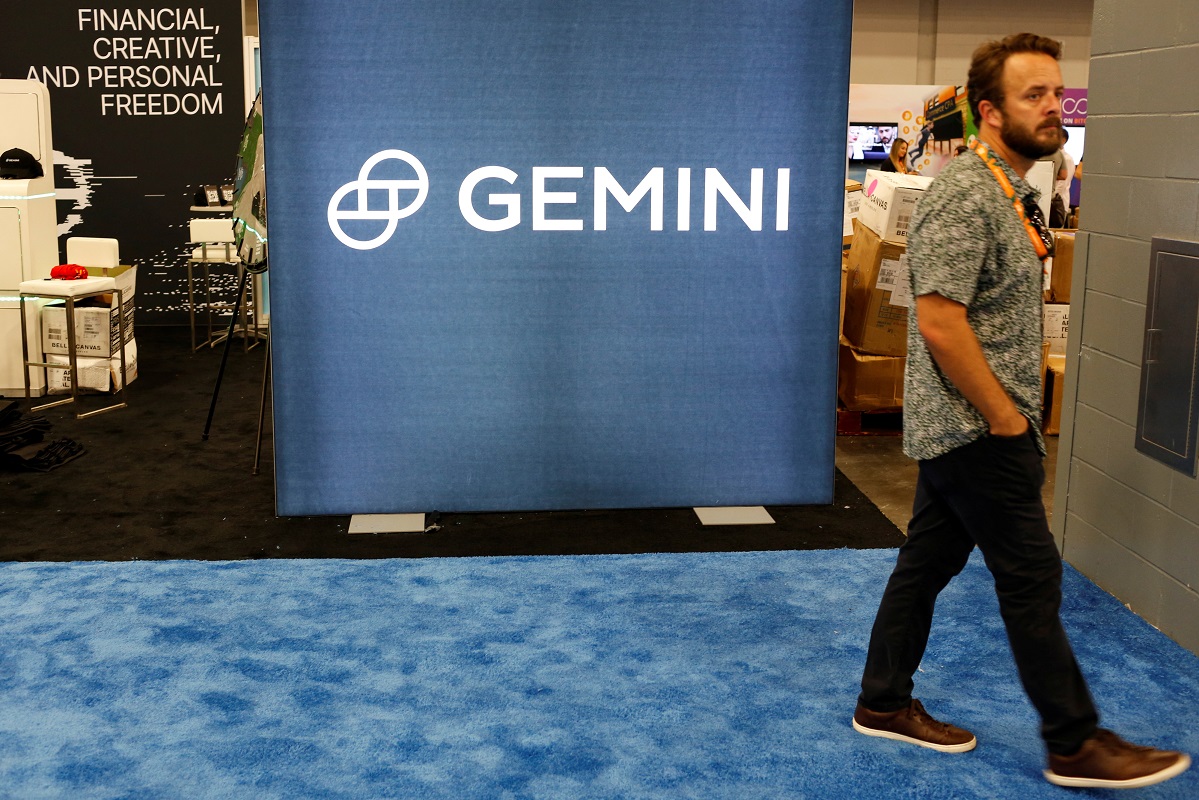
A man walks past the logo of Gemini Trust, a digital currency exchange and custodian, during the Bitcoin Conference 2022 in Miami Beach, Florida, U.S. April 6, 2022. REUTERS/Marco Bello/Files

Gemini, the cryptocurrency exchange founded by the Winklevoss twins, has filed a complaint against Genesis, a digital asset trading and lending platform, over $1.6 billion worth of Grayscale Bitcoin Trust (GBTC) shares. Gemini claims that Genesis breached a contract that gave Gemini the right to buy GBTC shares from Genesis at a discount.

GBTC is a publicly traded trust that holds bitcoin and tracks its price. Investors can buy and sell GBTC shares on the secondary market, but they cannot redeem them for actual bitcoin. GBTC shares often trade at a premium or discount to the underlying bitcoin value, depending on the supply and demand.

According to the complaint, Gemini and Genesis entered into an agreement in February 2020, where Genesis agreed to sell GBTC shares to Gemini at a 2% discount to the net asset value (NAV) of the trust. The agreement also gave Gemini the option to buy additional GBTC shares from Genesis at the same discount until February 2023.

However, Gemini alleges that Genesis stopped honoring the agreement in July 2021, when the GBTC shares started trading at a significant discount to the NAV. Gemini says that it exercised its option to buy more GBTC shares from Genesis, but Genesis refused to sell them. Gemini claims that it lost out on an opportunity to buy GBTC shares at a lower price and sell them at a higher price later.

Gemini is seeking damages for breach of contract, breach of good faith and fair dealing, and unjust enrichment. Gemini also wants the court to order Genesis to sell GBTC shares to Gemini at the agreed-upon discount. Genesis has not yet responded to the complaint, which was filed in the Supreme Court of New York on October 27. Genesis is a subsidiary of Digital Currency Group (DCG), which also owns Grayscale, the sponsor of GBTC. DCG is not named as a defendant in the lawsuit.

Gemini, the cryptocurrency exchange founded by the Winklevoss twins, has filed a complaint against Genesis, a digital asset trading and lending platform, over $1.6 billion worth of Grayscale Bitcoin Trust (GBTC) shares. Gemini claims that Genesis breached a contract that gave Gemini the right to buy GBTC shares from Genesis at a discount.

GBTC is a publicly traded trust that holds bitcoin and tracks its price. Investors can buy and sell GBTC shares on the secondary market, but they cannot redeem them for actual bitcoin. GBTC shares often trade at a premium or discount to the underlying bitcoin value, depending on the supply and demand.

In this article, we will explain what GBTC is, how it works, and why it is relevant to the lawsuit between Gemini and Genesis.

GBTC shares are created through a process called private placement, where accredited investors can buy GBTC shares directly from Grayscale at the NAV of the trust. NAV stands for net asset value, which is the value of the bitcoin held by the trust divided by the number of shares outstanding. Private placement is only available periodically and has a minimum investment amount and a lock-up period.

GBTC shares are also traded on the secondary market, where anyone can buy and sell them through brokers or platforms like OTC Markets. The secondary market price of GBTC shares may differ from the NAV of the trust, depending on the supply and demand of the shares. Sometimes, GBTC shares trade at a premium to the NAV, which means investors are willing to pay more than the value of the bitcoin held by the trust. Other times, GBTC shares trade at a discount to the NAV, which means investors are willing to pay less than the value of the bitcoin held by the trust.

The premium or discount of GBTC shares is influenced by several factors, such as the availability of private placement, the lock-up period of private placement investors, the market sentiment towards bitcoin, the regulatory environment for crypto assets, and the competition from other products that offer exposure to bitcoin.

According to the complaint, Gemini and Genesis entered into an agreement in February 2020, where Genesis agreed to sell GBTC shares to Gemini at a 2% discount to the NAV of the trust. The agreement also gave Gemini the option to buy additional GBTC shares from Genesis at the same discount until February 2023.

However, Gemini alleges that Genesis stopped honoring the agreement in July 2021, when the GBTC shares started trading at a significant discount to the NAV. Gemini says that it exercised its option to buy more GBTC shares from Genesis, but Genesis refused to sell them. Gemini claims that it lost out on an opportunity to buy GBTC shares at a lower price and sell them at a higher price later.

Gemini is seeking damages for breach of contract, breach of good faith and fair dealing, and unjust enrichment. Gemini also wants the court to order Genesis to sell GBTC shares to Gemini at the agreed-upon discount. Genesis has not yet responded to the complaint, which was filed in the Supreme Court of New York on October 27. Genesis is a subsidiary of DCG, which also owns Grayscale, the sponsor of GBTC. DCG is not named as a defendant in the lawsuit.

Binance’s market share continues to decline amid rally

0

Binance, the world’s largest cryptocurrency exchange by trading volume, has been losing ground to its competitors in recent months. According to data from CoinMarketCap, Binance’s market share of the total crypto market capitalization has dropped from 18.3% in January 2021 to 12.7% in October 2021, a decline of 5.6 percentage points.

This trend coincides with a strong rally in the crypto market, which has seen the total market cap surge from $776 billion at the start of the year to $2.6 trillion at the time of writing, an increase of 235%. However, Binance has not been able to capitalize on this growth as much as other platforms, such as Coinbase, FTX, Huobi and Kraken.

There are several possible reasons for Binance’s declining market share, including:

Regulatory challenges: Binance has faced increased scrutiny and pressure from regulators around the world, who have accused the exchange of operating without proper licenses, facilitating money laundering and tax evasion, and offering risky products to retail investors. Binance has been banned or restricted in several jurisdictions, such as the UK, Japan, Germany, Singapore, Canada and the US. These actions have forced Binance to limit some of its services, such as derivatives trading and fiat deposits and withdrawals, and to comply with stricter rules on KYC and AML.

Competition: Binance’s rivals have been expanding their offerings and gaining more users and liquidity. Coinbase, for example, went public in April 2021 and became the first crypto exchange to be listed on a major US stock exchange. FTX, which is backed by prominent investors such as SoftBank and Sequoia Capital, has been acquiring other platforms and businesses, such as Blockfolio, LedgerX and Crypto.Com’s naming rights to the Staples Center in Los Angeles. Huobi and Kraken have also been investing in new products and markets, such as NFTs, DeFi and metaverse.

Innovation: Binance’s innovation strategy has been questioned by some analysts and observers, who argue that the exchange has been relying too much on copying or cloning existing products and protocols, rather than creating original and unique solutions. For instance, Binance Smart Chain (BSC), the exchange’s own blockchain network, has been criticized for being a centralized and insecure version of Ethereum, with many of its popular dApps being forks or replicas of Ethereum-based projects. Binance has also been accused of plagiarizing whitepapers and code from other projects, such as Compound and BitMEX.

One of the main differences between Binance and Coinbase is their regulatory status and approach. Coinbase is based in the US and operates under a strict and transparent regulatory framework. Coinbase is licensed and registered in every state where it offers its services and complies with all the relevant laws and rules on KYC, AML, consumer protection, taxation and reporting. Coinbase also has a robust security system and insurance policy, which protects its users’ funds from hacking or theft.

Binance, on the other hand, is based in the Cayman Islands and has a more ambiguous and flexible regulatory stance. Binance does not have a clear legal domicile or jurisdiction and operates through a network of subsidiaries and affiliates around the world. Binance does not require its users to undergo extensive verification or identification processes and allows them to access a variety of products and features that may be prohibited or restricted in some countries. Binance also has a lower level of security and insurance coverage, which exposes its users to higher risks of losing their funds.

Another difference between Binance and Coinbase is their innovation strategy and competitive edge. Binance is known for being fast and aggressive in launching new products and features, as well as copying or cloning existing ones from other platforms. Binance has a large and diverse portfolio of businesses and initiatives, such as Binance Smart Chain (BSC), Binance Academy, Binance Charity, Binance Labs, Binance NFT and Binance Launchpad. Binance also has a loyal and engaged community of supporters and fans, who appreciate its low fees, high speed and wide range of options.

Coinbase is known for being more cautious and selective in developing and introducing new products and features, as well as creating original and unique solutions. Coinbase has a smaller but more focused portfolio of businesses and initiatives, such as Coinbase Pro, Coinbase Earn, Coinbase Commerce, Coinbase Ventures, Coinbase Wallet and Coinbase Prime. Coinbase also has a strong reputation and brand recognition among institutional investors, regulators, media outlets and mainstream audiences.

Both Binance and Coinbase have their strengths and weaknesses, advantages and disadvantages. They both face challenges and opportunities in the rapidly evolving crypto market. They both have to deal with increasing competition from other platforms, such as FTX, Huobi, Kraken, Gemini and Bitstamp. They both have to adapt to changing customer preferences, demands and expectations. They both have to balance their growth ambitions with their regulatory obligations.

Binance and Coinbase are not enemies or rivals, but rather partners and collaborators in the crypto ecosystem. They both contribute to the development and adoption of cryptocurrencies and blockchain technology. They both serve different segments and niches of the crypto community. They both have a lot to learn from each other.

Binance vs Coinbase: Which one is better? That depends on your personal goals, preferences and needs. There is no definitive answer or objective criteria to compare them. The best way to find out is to try them both yourself.

Binance’s market share decline does not necessarily mean that the exchange is doomed or irrelevant. Binance still remains the dominant player in the crypto space, with over $100 billion in daily trading volume and more than 60 million registered users. Binance also has a diversified portfolio of businesses and initiatives, such as Binance Academy, Binance Charity, Binance Labs, Binance NFT and Binance Launchpad. Moreover, Binance has a loyal and engaged community of supporters and fans, who appreciate its low fees, high speed and wide range of options.

However, Binance cannot afford to be complacent or arrogant in the face of increasing competition and regulation. The exchange needs to address its regulatory issues and improve its compliance standards, as well as its customer service and security. The exchange also needs to innovate more and deliver better value propositions to its users and partners. Binance may have been the king of crypto for a long time, but it is not invincible or immortal.