DD
MM
YYYY

PAGES

DD
MM
YYYY

spot_img

PAGES

Home Blog Page 3684

Alibaba Launches Upgraded Version of Its AI Model to Compete With Other Tech Rivals

0

Chinese giant tech company Alibaba has recently rolled out the latest version of its Artificial Intelligence (AI) model Tongyi Qianwen, to compete with other tech rivals.

The launch of Tongyi Qianwen 2.0, its latest Large Language Model (LLM) is coming as the tech giant seeks to dominate the Chinese rapidly evolving AI market.

Alibaba describes the Tongyi Qianwen 2.0 as a “substantial upgrade from its predecessor”, which was launched in April this year.

Tongyi Qianwen, which possesses Chinese and English language capabilities, was initially deployed on DingTalk, Alibaba’s workplace communication software, and Tmall Genie, a provider of smart home appliances.

The newly upgraded AI model will be integrated across Alibaba’s various businesses to improve user experience in the near future. The company’s customers and developers will have access to the model to create customized AI features in a cost-effective way.

Also, the chatbot will be fine-tuned with proprietary information and data from clients, reducing resources and costs for these companies.

Currently, the upgraded chatbot demonstrates remarkable capabilities in understanding complex instructions, reasoning, memorizing, copywriting, and prevention of hallucinations.

Alibaba also released AI models designed for applications in specific industries and uses, such as legal counseling and finance — as it angles in on businesses.

With hundreds of billions of parameters, metrics used to gauge AI model strength, Alibaba’s cloud computing arm announced that the upgraded Tongyi Qianwen 2.0 now ranks among the most powerful AI models globally.

It also disclosed that it has launched eight AI models for the finance, healthcare, entertainment, and legal industries. The upgrade of Tongyi Qianwen is coming just six months after the model’s initial release, signifying the pace at which tech companies are racing to take control of China’s nascent and rapidly increasing AI market.

With Tongyi Qianwen 2.0, Alibaba aims to facilitate businesses from all industries with their intelligence transformation, and ultimately help boost their business productivity, and expand their expertise and capabilities while unlocking more exciting opportunities through innovations.

It is worth noting that the world is currently at a technological watershed moment driven by generative AI, and businesses across all sectors have begun to embrace intelligence transformation to stay ahead.

In China, tech giants such as Baidu, Tencent, and Alibaba, amongst others, are banking on artificial intelligence to bolster their businesses, touting new features for their existing services as well as novel generative AI tools, as Beijing looks to rival the U.S. on tech paradigm shift.

The tech giants’ ambitions on AI reflect an escalating global arms race that is now underway as countries seek to gain leadership over the most sought-after technology.

Elon Musk-Owned Social Networking Platform X Valuation Drops to $19 Billion

0

Elon Musk-owned social networking platform formerly known as Twitter, has recorded a drop in valuation to $19 billion, from the $44 billion he paid for it last year.

The recent drop in X valuation shows a 55 percent drop in value from when Musk purchased the company last year in October. X’s recent valuation of $19 billion is however higher than the projected $16.9 billion that Fidelity which has a stake in the company valued in August.

Recent documentation about the platform’s stock awards disclosed that X would be providing the equity for $45 per share with employees able to accumulate restricted stock units over time. According to the company, employees who were issued shares under the previous management would still receive cash payments totaling $54.20 for those shares.

In March this year, Musk told employees that he believed the company was worth $20 billion which he described as an “inverse start-up”.

Recall that when Musk purchased the platform for $44 billion last year, he acknowledged that he had overpaid for it, which included $33.5 billion in equity and a share price of $54.20.

During an interview with media personality Tucker Carlson in April this year, Musk admitted that the purchase of X was not currently financially smart.

Since his takeover, Musk has implemented many changes on the platform, from laying off workers to the introduction of a verified subscription feature, amongst several others.

X lost 50 of its top 100 advertisers since Musk took over. Half of its top 100 advertisers appear to no longer be advertising on the website, in the wake of Musk’s decision to “revamp” the site.

As of Nov. 21, the brands accounted for almost “$2 billion in spending on the platform since 2020, and over $750 million in advertising in 2022 alone,” adding to a general downward shift in advertising dollars.

Also, Musk’s erratic decisions have led the company to reportedly witness a 60% drop in sales.

However, despite the drop in advertisements on the platform, Musk remains optimistic about the company’s growth strategy with his plans to transform it into an “everything app”.

In a meeting organized on the first anniversary of the acquisition of the platform, Musk said, “We’re rapidly transforming the company from sort of what it was, Twitter 1.0, to the everything app with an all-inclusive feature app where you can do anything you want on our system”.

Musk envisions X as an all-encompassing financial platform that covers every aspect of users’ financial lives, from money and securities to eliminating the need for traditional bank accounts.

He also spoke about including new features to the microblogging site including dating service. With the introduction of so many features on the platform, several analysts are optimistic that the platform will see a surge in its revenue.

According to Bloomberg, Musk explained that online platforms such as YouTube, LinkedIn, and Cision PR Newswire are seen as potential competitors of the X as it Decelerates towards becoming an all-in-one app.

One year after Elon Musk bought Twitter, the company now known as X is valued at $19 billion, or less than half the $44 billion purchase price. Multiple outlets are reporting on the new valuation, citing internal emails offering employees equity at $45 a share via restricted stock units. The valuation was “determined by the Board of Directors” — in other words, Musk himself, who has not appointed a board, notes The Verge. X has had a tumultuous year: Many advertisers left due to relaxed moderation under Musk, and in July he said the company was “still negative cash flow” because of it. In a disclosure Monday, Fidelity wrote down the value of its X shares even more, by 65%. (LinkedIn)

The New Naira FX Rules Must Consider Variables Like Ports Because They Matter

1
Naira USD

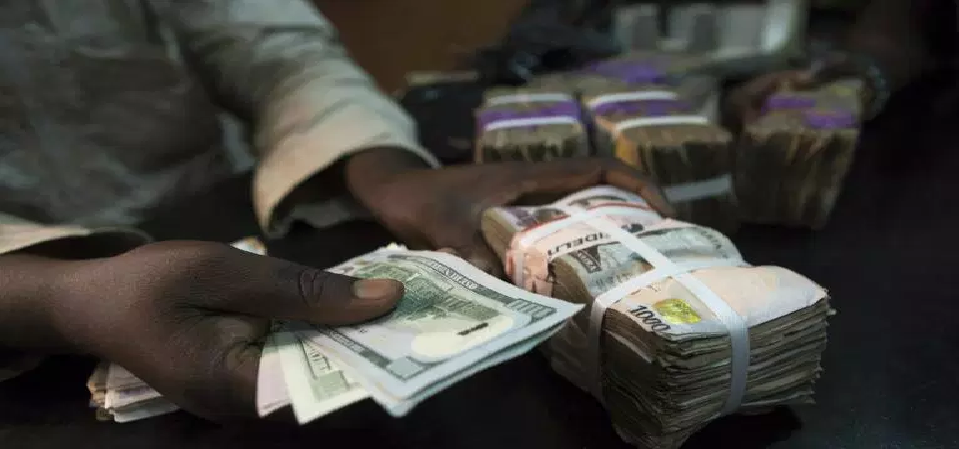
Waiting for the new rules to do the magic: “The government aims to expand the official market to include all legitimate transactions while cracking down on the illicit parallel market for foreign currency. The government sees a “fair price” for the dollar at N650 to N750. Currently, the official exchange rate is around N800 per dollar.”

Nigeria is planning to introduce new foreign exchange rules to reduce the gap between the official and parallel market rates for the naira, according to Bloomberg.

As part of the move, the government hopes to close the more than 45% gap by year-end, according to Taiwo Oyedele, chair of the presidential committee on fiscal policy and tax reforms. This means clearing a backlog of dollar demand, bolstering the naira forward market, and setting transparent rules for the official market’s operation.

‘…according to the sector operators, the cost of exporting 100 tons of cargo in Nigeria is $35,000, compared to $4,000 in Ghana…. “Today, the leading ports for West Africa are in Cote d’Ivoire, Ghana, Togo, and Benin Republic. All these countries have modernised their port management systems, leaving Nigeria far behind’ – Akinwunmi Adesina, African Development Bank President/ AriseTV.

The Port of Lome is the busiest  port in West Africa now because most Nigerian importers prefer it over the decades-old ones in Nigeria; Togo has a population of about 9.3 million people, to Nigeria’s 220 million.  So, as we work on the new rules, we have to pay attention to things which continue to hurt the Naira.

Yes, Nigeria has run down most anchors of industrialization and export services to the ground , and that is why this Naira FX fight should not be left for the central bankers. Simply, we have lost grounds on many dimensions of regional comparative advantages, making things exceedingly tough for businesses to export and improve Nigeria’s balance of trade and payment. Left or right, we must reverse those steps in order to advance the economy, and then help the Naira to compete globally in the league of currencies.

Nigeria to Introduce New Rules Before December to Close FX Gaps

Nigeria to Introduce New Rules Before December to Close FX Gaps

0

Nigeria is planning to introduce new foreign exchange rules to reduce the gap between the official and parallel market rates for the naira, according to Bloomberg.

As part of the move, the government hopes to close the more than 45% gap by year-end, according to Taiwo Oyedele, chair of the presidential committee on fiscal policy and tax reforms. This means clearing a backlog of dollar demand, bolstering the naira forward market, and setting transparent rules for the official market’s operation.

“We think all of that will happen before December, and maybe in a matter of a couple of weeks we will begin to see the results, such that before the end of the calendar year, naira should find its true value, not the one that is being done currently in the parallel market,” Bloomberg quoted Oyedele to have said.

The government aims to expand the official market to include all legitimate transactions while cracking down on the illicit parallel market for foreign currency. The government sees a “fair price” for the dollar at N650 to N750. Currently, the official exchange rate is around N800 per dollar.

Ongoing Efforts to Stabilize the Naira

Since Nigeria floated its FX market in mid-June, allowing the naira to trade more freely against the dollar, there has been a significant gap between the official and parallel-market rates, leading to issues of liquidity and the attractiveness of the parallel market’s premium.

Oyedele said the divergence between the official and parallel-market rates “means you are sucking liquidity and supply from the official market to the parallel market, because everyone wants the premium.”

The government has undertaken efforts to reverse this flow of dollars from the official FX window to the parallel market, with measures such as executive orders for dollar-denominated instruments and bonds. In addition, the central bank aims to bring more clarity to how the forex market operates.

The government has also made efforts to boost FX liquidity in the official market, aiming to force prices down in the parallel market. Part of the efforts was disclosed by finance minister, Wale Edun, at a summit in Abuja last week, that Nigeria expects to receive $10 billion of inflows in the coming weeks that will help ease liquidity and clear the backlog of overdue forward contracts weighing on the naira.

Also, President Bola Tinubu has signed two executive orders intending to stabilize Nigeria’s currency and attract investments. One order enables the issuance of dollar-denominated instruments for Nigerians holding dollars locally, while the second facilitates the issuance of dollar-denominated bonds for Nigerians abroad and foreign investors.

These measures are intended to reverse the flow of dollars from the official FX window to the parallel market, providing alternative channels for currency usage and investment. The executive orders are in the process of being officially announced.

However, these efforts have been juxtaposed by prevaricating management decisions of the central bank in striking a balance between a more flexible exchange rate system and maintaining stability in the currency. For instance, while the central bank initially indicated in June that the naira’s exchange rate would be determined by supply and demand, it later appeared to reintroduce controls to stabilize the currency following a 40% devaluation.

Naira Performance

However, the naira has appreciated in the market in recent days, a performance attributed to news that the government is working to secure a $10 billion loan to boost dollar liquidity.

But despite recent appreciation on the parallel market, the naira still faces a significant gap between the official and parallel rates. On the parallel market, the naira closed at N110/$ on Monday, compared to N1230/$ the previous Friday. In contrast, the official Investor & Exporter (I&E) window (newly renamed Nigerian automated foreign exchange market, NAFEM) closed at N993.82/$, weaker than the N789.94/$ the previous Friday.

Tekedia Investment and Portfolio Management program Begins on Nov 6; Register Now

0

The next edition of Tekedia Investment and Portfolio Management program will begin on Nov 6. This program is designed to provide learners with hands-on experience in performing investment research, investing capital, and managing a portfolio. The program runs for 8 weeks and it is completely virtual. Besides some pre-recorded courseware developed by eminent capital market experts, the program includes live Zoom sessions (the first 4 weeks).

In the academic component, the program prepares learners to master the institutional structure, and fundamental concepts of asset valuation, in financial markets, using analytical tools to study the valuation of different types of securities. Fundamentally, learners are equipped to understand investment theory, portfolio development and management.

It is divided into 3 core components – Investment Fundamental and Tools; Laboratories, Research & Investment Capture; and Lessons Learned.  The next edition begins Nov 6, 2023.

Cost: $400 or N180,000 naira per participant. Register here