DD
MM
YYYY

PAGES

DD
MM
YYYY

spot_img

PAGES

Home Blog Page 369

Bitcoin Miner IREN Secures More Multi-Year Cloud Contracts, as YZi Labs Announces $1B Builder Fund for BNB Ecosystem

0

IREN Limited (NASDAQ: IREN), a Nasdaq-listed Bitcoin mining company formerly known as Iris Energy, announced it has signed additional multi-year cloud services contracts with leading AI firms. These deals focus on deploying NVIDIA’s next-generation Blackwell GPUs, marking a significant pivot toward high-performance computing (HPC) and AI infrastructure while maintaining its core Bitcoin mining operations.

IREN is on track to have approximately 23,000 GPUs operational by the end of Q1 2026, targeting over $500 million in annualized run-rate revenue (ARR) from AI cloud services. Contracts are already secured for 11,000 of these GPUs, representing about $225 million in ARR expected to come online by the end of 2025.

The new agreements average around two-year durations, with pricing structured for an approximate two-year revenue payback period. This includes pre-delivery commitments for Blackwell GPUs, highlighting strong demand ahead of NVIDIA’s supply rollout.

IREN’s facilities in British Columbia, Canada, and the Horizon 1 & 2 data centers under construction in Childress, Texas, provide capacity for over 100,000 GPUs. The company has secured 2,910 MW of grid-connected power across more than 2,000 acres in the U.S., enabling rapid scaling. It leverages 100% renewable energy sources, including renewable energy certificates (RECs).

Alongside AI growth, IREN operates ~50 EH/s of self-mining capacity, positioning it as one of the world’s largest and lowest-cost Bitcoin producers. IREN was designated a “preferred partner” by NVIDIA in August 2025, granting priority access to GPUs amid global shortages.

Co-CEO Daniel Roberts emphasized the company’s flexibility: “Our ability to rapidly transition from ASICs to GPUs across our British Columbia campuses, and the speed at which we’re building Horizon 1 & 2, demonstrates how IREN is uniquely positioned to meet accelerating demand for AI compute.”

This move diversifies IREN beyond volatile Bitcoin mining into the booming AI sector, where demand for GPU cloud compute is surging. The company recently doubled its AI fleet to ~23,000 units by procuring additional NVIDIA and AMD accelerators.

IREN’s stock surged ~9% to around $63 on October 7, extending a remarkable 591% gain over the past year and trading near its 52-week high of $58.28. However, shares dipped ~6% later that day following news of an $875 million convertible debt offering potentially upsizing to $1 billion, aimed at funding further AI expansions.

Analysts project continued revenue growth, with IREN’s trailing 12-month sales up 167.65%.Broader ImplicationsThis development underscores a trend among Bitcoin miners peers like BITF and HIVE shifting toward AI/HPC to hedge against crypto market cycles.

IREN’s renewable-powered, fiber-connected sites give it an edge in attracting hyperscale AI clients. Ongoing discussions for additional expansions could push ARR well beyond current targets, though execution risks like GPU delivery timelines and utilization rates remain.

By securing ~$225M in annualized run-rate revenue (ARR) from AI cloud services by Q1 2026, with a target of over $500M, IREN reduces reliance on volatile Bitcoin mining revenue. This pivot into high-performance computing (HPC) and AI infrastructure taps into the growing demand for GPU cloud compute, providing more stable and predictable cash flows.

The AI cloud contracts, structured for a ~2-year revenue payback, offer higher margins than Bitcoin mining, which faces price volatility and rising network difficulty. IREN’s low-cost, renewable energy-powered facilities 100% renewable via RECs enable competitive pricing and attractive returns on GPU deployments.

With 2,910 MW of grid-connected power and over 2,000 acres in the U.S., IREN can scale its AI operations rapidly. The Horizon 1 & 2 data centers in Texas and existing British Columbia facilities support deploying over 100,000 GPUs, positioning IREN to capture additional market share as AI demand grows.

YZi Labs Announces $1 Billion Builder Fund for BNB Ecosystem

YZi Labs—formerly known as Binance Labs and rebranded in January 2025 under the leadership of Binance co-founder Changpeng “CZ” Zhao—unveiled a $1 billion Builder Fund dedicated to accelerating innovation within the BNB ecosystem, with a primary focus on projects building on the BNB Chain.

This initiative comes at a pivotal moment, as BNB has surged to new all-time highs above $1,300, becoming the third-largest cryptocurrency by market cap and adding over $40 billion in value during October alone.

The Builder Fund is designed to empower early-stage founders by combining financial support with hands-on resources, aiming to position BNB Chain as a global hub for blockchain innovation.

Ella Zhang, Head of YZi Labs, emphasized the fund’s vision: “BNB is a living network with global reach and onchain depth… We’re backing founders building tools that connect blockchain technology to real-world use, across sectors like DeFi, AI, RWA, DeSci, and more—those building the next generation of open systems that connect technology back to human progress.”

YZi Labs has a track record of fueling BNB Chain growth, with prior investments in projects like PancakeSwap, ListaDAO, Aster a multichain DEX, and Aspecta.

BNB Chain boasts 58M+ monthly active addresses, #1 daily DEX volume, sub-second block times via the Maxwell Hardfork, and ultra-low fees. Dual burn mechanisms quarterly Auto-Burn + real-time BEP-95 have reduced BNB’s total supply by over 30%, enhancing scarcity.

Backing for initiatives like the BNB Digital Asset Treasury and RWA funds, alongside high staking yields and utility in trading, DeFi, and Launchpool/Megadrop.

This announcement aligns with broader BNB momentum, including institutional adoption and a full-stack Web3 economy. For builders interested in applying, YZi Labs encourages submissions via their channels, with the fund signaling a “renewed commitment to founders with vision.”

PancakeSwap, a leading decentralized exchange (DEX) on the BNB Chain, has been a flagship investment for YZi Labs (formerly Binance Labs). PancakeSwap is a decentralized exchange built on BNB Chain, known for its automated market maker (AMM) model, low transaction fees, and high-speed transactions.

Offers token swapping, yield farming, staking, liquidity pools, NFT marketplaces, and prediction markets. As of October 2025, PancakeSwap remains the top DEX by daily trading volume on BNB Chain, with significant user adoption contributing to BNB Chain’s 58M+ monthly active addresses.

YZi Labs invested in PancakeSwap during its early stages, likely around 2020–2021, when PancakeSwap emerged as a key DeFi protocol on BNB Chain. The exact date and amount remain undisclosed, but it was part of Binance Labs’ broader strategy to back high-potential DeFi projects.

PancakeSwap raised funds through a combination of YZi Labs’ investment, community token sales, and liquidity incentives. YZi Labs typically provides seed or Series A funding, ranging from $1M to $15M for early-stage projects, though specific figures for PancakeSwap are not public.

The investment was part of YZi Labs’ portfolio expansion, which includes other BNB Chain projects like ListaDAO and Aspecta. PancakeSwap leveraged BNB Chain’s low-cost, high-speed infrastructure sub-second block times via Maxwell Hardfork.

Access to YZi Labs’ network of 460 million users, CoinMarketCap integrations, and Binance’s Launchpool for CAKE token distribution. Guidance on scaling, user acquisition, and global expansion through programs like the Most Valuable Builder (MVB) track.

PancakeSwap grew to handle billions in trading volume, becoming a cornerstone of BNB Chain’s DeFi ecosystem. Enabled features like Syrup Pools, IFOs Initial Farm Offerings, and cross-chain bridging.

With BNB’s price surpassing $1,300 and a $1B Builder Fund announced by YZi Labs on October 8, 2025, PancakeSwap continues to benefit from ecosystem growth. The new Builder Fund offering up to $500K per startup suggests YZi Labs may further support PancakeSwap’s expansion into areas like AI-driven DeFi, real-world assets (RWA), or next-gen wallets.

PancakeSwap’s high daily DEX volume and user base align with BNB Chain’s metrics 58M+ monthly active addresses, low fees, amplifying the value of YZi Labs’ early investment. YZi Labs’ investment in PancakeSwap underscores its strategy of backing scalable, user-focused DeFi protocols that drive BNB Chain adoption.

PancakeSwap’s success has validated this approach, contributing to BNB’s rise as the third-largest cryptocurrency by market cap in 2025.Sources and VerificationInformation is drawn from posts on X mentioning YZi Labs’ portfolio.


Dogecoin (DOGE) and Shiba Inu (SHIB) Can’t Compete with Little Pepe (LILPEPE), New Meme Coin Set to Explode 18730%

0

Dogecoin (DOGE) and Shiba Inu (SHIB) have long dominated the market of meme coins, but they will soon face a new competitor rising to prominence: Little Pepe (LILPEPE). LILPEPE is poised to go viral with an innovative Layer 2 blockchain and a high level of presale performance, and analysts estimate a potential 18,730% return. As investors are rushing to ensure that they have their presence established before the price skyrockets, Little Pepe is poised to be the next big venture in the meme coin industry due to its growth rate and uniqueness.

Dogecoin (DOGE): Facing Stagnation Despite Strong Community Support

Dogecoin (DOGE), the first meme coin, has had a tough time sustaining the same momentum. DOGE was an early crypto favorite, reaching its peak in 2021 with over $0.70. The cost of the coin has since considerably reduced, trading at about 0.25. Despite the well-established Dogecoin community and the involvement of celebrities like Elon Musk, the coin has not been able to expand its usage. DOGE is now facing resistance at the $0.30 level, and analysts are watching the next major resistance level at the $0.34 level. Nonetheless, as its price fluctuations are less volatile, Dogecoin is perceived by many investors not as a risky but as a high-reward investment. Despite the network upgrades and influx of industrial miners, the price performance of Dogecoin does not offer the explosive feature that many investors now desire in the meme coin industry. This low potential may render it more difficult to repeat its performance in the past, especially with the emergence of other players such as Little Pepe.

Shiba Inu (SHIB): Consolidation and Limited Potential for Growth

Shiba Inu (SHIB) has been facing the same difficulties. Despite the peak in 2021 of $0.000088, the price of SHIB fell significantly in 2025, ranging between $0.00001 and $0.0000176. Such a sharp increase in the rate of burns, over 5.7 million SHIB tokens burned within a single 24 hours, suggests an effort to reduce circulation. However, SHIB does not show very active price dynamics, and the general growth of the company is slowly undermined. At present trading at approximately $0.000012, analysts estimate that SHIB might be worth up to 300% should market conditions continue to be positive. However, such growth is nothing in comparison with the explosive returns that investors are now seeking in meme coins. Despite good community and the recent introduction of ecosystem improvements with Shibarium, the future price trend of Shiba Inu is constrained by the already established positions on the market. Without a significant break or an innovation, SHIB might fail to achieve the same atmosphere of explosive growth that it previously enjoyed, especially with the growing competition of newer projects like Little Pepe.

Little Pepe (LILPEPE) Presale Momentum and Growth Potential

Little Pepe (LILPEPE) has rapidly gained popularity as a meme coin, and analysts think the value can potentially skyrocket by 18,730%. LILPEPE is an example of a Layer 2 blockchain that is Ethereum-compatible, has low transaction fees, and allows high-speed transactions, potentially appealing to investors interested in scale and high returns. More than $26.72 million has already been collected in the presale, a fact that demonstrates that numerous investors now are confident and enthusiastic about what the token will do in the future. As of now, the LILPEPE presale is in Stage 13 and costs $0.0022 per token, and with high demand, 16,316,569,198 tokens have already been sold, which is 94.5% of the Stage 13 target. So far, the presale has raised over $26,721,455, nearly meeting its target of $28,775,000 at this point. The next stage, 14, will increase the price to $0.0023, representing a 130% jump from its initial Stage 1 price of $0.0023. The increased momentum of the token and the nearing presale goal point to a bright future, which places LILPEPE in a favorable position to grow exponentially.

Incentives and Investor Opportunities in the LILPEPE Presale

The LILPEPE presale not only provides users with an opportunity to invest in a promising token at an early stage, but it also comes with attractive incentives that encourage participation. Little Pepe is conducting a giveaway of $777,000; ten winners will win $77,000 worth of tokens each. Moreover, the Mega Giveaway will reward the top 3 largest buyers and 15 randomly selected buyers during Stages 12 through 17, with a total prize pool exceeding 15 ETH. Through these promotions, the project has increased the buzz with the presale and interest in the project.  With only a small fraction of the Stage 13 target remaining, the price is expected to rise soon, making early investment particularly appealing. Currently, LILPEPE is trading at $0.0022, and it could reach as high as $0.414, offering investors a potential 18,730% return.

Why LILPEPE Is Set to Outpace DOGE and SHIB

Little Pepe (LILPEPE) is not a regular meme coin. It stands out due to its focus on creating a complete meme coin ecosystem, powered by its Ethereum-compatible Layer-2 blockchain, unlike Dogecoin and Shiba Inu. While DOGE and SHIB have had notable success in the meme coin space, they no longer offer the same growth potential they once did. In contrast, LILPEPE combines real utility with strong presale performance, positioning it for significant gains in the near future. Little Pepe offers zero trading tax, staking rewards, DAO governance, sniper bot protection, a dedicated meme launchpad, and an NFT marketplace, with plans for cross-chain compatibility. Supported by an active community and designed for scalability, LILPEPE is attracting investors seeking the next major opportunity in the meme coin space. With its low entry price and high growth potential, LILPEPE may outperform both DOGE and SHIB in market value, giving early investors a chance to capitalize before the token gains momentum.

Conclusion

Dogecoin (DOGE) and Shiba Inu (SHIB) have already joined forces in the meme coin market; however, their further development is not promising. However, Little Pepe (LILPEPE) is gaining rapid traction and rolling out their own Layer 2 and gorgeous presales. The price growth of LILPEPE is projected to be 18,730, which implies that it can explode and both DOGE and SHIB will be left behind in the short run.

For more information about Little Pepe (LILPEPE) visit the links below:

Website: https://littlepepe.com

Whitepaper: https://littlepepe.com/whitepaper.pdf

Telegram: https://t.me/littlepepetoken

Twitter/X: https://x.com/littlepepetoken 

Online Education Made Simple: A Complete Guide to Take My Online Class Responsibly

0

Online education has revolutionized learning, giving students the freedom to study from anywhere, at any time. From busy professionals to college learners, virtual classrooms have become an essential part of modern education. Yet, flexibility also brings challenges – staying organized, motivated, and disciplined. Many students search for ways to take my online class more effectively while balancing other commitments. This guide explores responsible strategies for online success, ethical academic support, and smart ways to use digital tools for better results.

Understanding What “Take My Online Class” Really Means

The phrase “take my online class” often sparks curiosity among students seeking help managing their workload. MyAssignmentHelp has recognized this growing need and provides responsible, learning-focused support to make online education easier. When learners search for these services, they’re not seeking shortcuts—they’re looking for legitimate ways to understand coursework better, manage time efficiently, and gain expert guidance. Ethically, taking your online class means engaging actively, completing your assignments honestly, and using study assistance only to enhance understanding. With the right support system, students can strengthen their academic performance while maintaining integrity.

Finding Responsible Academic Support

Many students face challenges when navigating the world of online education—tight deadlines, unclear instructions, or difficult subjects. The key is finding ethical academic support that helps you learn rather than replacing your effort. Reliable platforms like MyAssignmentHelp focus on mentorship, writing feedback, and academic coaching instead of doing assignments for students.

Such support empowers learners to develop their own skills while getting expert advice. Responsible help ensures that students stay in control of their learning journey while receiving the structure and clarity they need to succeed.

Challenges Students Face in Online Learning

While online education offers flexibility, it can also test a student’s discipline. Common challenges include procrastination, distractions, and a lack of motivation. Without the structure of physical classrooms, it’s easy to fall behind.

Technical problems and limited communication with instructors can make it harder to stay engaged. Additionally, many students feel isolated when learning remotely. Recognizing these issues early and developing strategies to overcome them is crucial for long-term success in online courses.

Effective Strategies to Take My Online Class Successfully

Success in online learning requires planning and self-discipline. Here are several proven strategies to help:

  1. Set a Schedule: Stick to a consistent study routine to build structure.
  2. Create a Study Zone: Designate a quiet, distraction-free area for learning.
  3. Stay Organized: Use digital planners like Google Calendar or Notion to track assignments.
  4. Engage in Discussions: Participate actively in forums and group projects.
  5. Seek Help Early: Don’t hesitate to reach out to instructors or tutors for clarification before small problems become big ones.

By applying these strategies, students can take my online class effectively while maintaining motivation and integrity.

Affordable and Premium Online Class Help

Students often have the option to choose between affordable and premium online class help, depending on their academic needs and budget. Affordable options provide basic tutoring, proofreading, and concept explanations at accessible rates. They are ideal for students who mostly study independently but need occasional guidance.

Premium options, meanwhile, offer a more personalized experience—such as one-on-one mentoring, detailed feedback, and continuous support. The best choice depends on your goals and study habits. Ethical services ensure transparency and balance, allowing students to select the level of assistance that fits their needs without compromising honesty.

How Technology Enhances Online Education

Technology is at the core of successful online learning. Tools like Zoom, Microsoft Teams, and Google Meet make it possible to collaborate with classmates and instructors in real time. Learning management systems (LMS) such as Canvas and Blackboard simplify assignments, discussions, and grading.

Beyond communication, apps like Grammarly, citation generators, and AI study aids help students learn more efficiently. The key is using these tools to complement your learning—not replace your effort. Students who take my online class responsibly leverage technology to save time, stay organized, and boost productivity.

Staying Motivated and Preventing Burnout

Maintaining motivation in online classes can be difficult, especially without in-person interactions. To avoid burnout, set realistic goals and reward yourself for meeting them. Divide larger projects into smaller, manageable tasks and celebrate progress along the way.

Connecting with peers through study groups or online discussions also helps you stay accountable. When needed, seek feedback or tutoring sessions from reliable sources to maintain clarity and focus. Regular communication and community engagement turn isolation into collaboration, keeping motivation alive.

Ethical Use of Academic Help

Using academic assistance responsibly ensures you uphold honesty and integrity. Ethical help means seeking support to understand material better, not to complete your work for you. Whether it’s tutoring, writing advice, or time-management coaching, responsible assistance strengthens learning rather than replacing it.

When students take my online class responsibly, they combine self-effort with expert insights. This approach fosters growth, independence, and a deeper understanding of their subjects—skills that extend far beyond the classroom.

Conclusion

Online education offers unmatched flexibility and opportunity, but success depends on discipline, integrity, and smart learning habits. The idea behind “take my online class” should represent responsibility, active participation, and a willingness to seek the right kind of help when needed.

Platforms like MyAssignmentHelp demonstrate how academic support can be both ethical and effective. By combining practical strategies, proper use of technology, and access to trusted resources, students can thrive in virtual learning environments. With commitment and focus, taking your online class can become not just a task—but a transformative step toward lifelong success.

Zero Knowledge Proof Whitelist Coming Soon: The AI Era Needs Cryptographic Truth

0

Artificial intelligence is rewriting the internet. From photorealistic images to autogenerated research papers, AI can create text, voices, and even identities that feel real but aren’t. Within a few years, the web will be filled with synthetic data — deepfakes, AI-generated contracts, and machine-written news.

The question isn’t whether AI will take over — it’s whether we’ll still be able to tell what’s real.

That’s where Zero Knowledge Proof (ZKP) steps in. This isn’t just a blockchain upgrade — it’s a cryptographic truth layer designed for the AI age. It allows any model, transaction, or digital action to be proven real without exposing sensitive information.

As the whitelist for this Next Generation Crypto Project opens soon, investors and technologists alike are eyeing a new era where blockchain becomes the verification engine of the intelligent web.

The Fake Data Problem

In the early days of the internet, truth was assumed. If something was published, it likely came from a human. Now, that assumption is gone. AI models can generate convincing misinformation at scale — fake invoices, fake credentials, fake transactions. Even AI-generated blockchain addresses can mimic real ones.

Traditional verification systems can’t keep up. Centralized authentication depends on trust — the very thing automation undermines. AI doesn’t just generate fake data; it generates fake proof.

To preserve truth online, verification must evolve beyond human moderation or centralized oversight. It must become mathematical — provable, decentralized, and incorruptible.

That’s exactly what Zero Knowledge Proof offers.

The ZKP Revolution: Proof Without Exposure

At its core, ZKP lets someone prove that a statement is true without revealing the underlying data. In the AI context, this changes everything.

  • For AI models: Prove that a model was trained on verified, non-biased data — without exposing the dataset itself.
  • For digital media: Prove that an image or video originated from a real device, not an AI generator.
  • For transactions: Prove that a payment, signature, or decision came from a verified source — without leaking private keys or metadata.

This cryptographic layer transforms blockchain from a ledger of transactions into a ledger of truth.

It’s why analysts already call ZKP technology the foundation of the Next Generation Crypto Projects — those built not just for decentralization, but for verification in an AI-driven world.

When AI Meets Blockchain

AI and blockchain have always been seen as separate revolutions — one driven by data creation, the other by data integrity. The future fuses them together.

AI will run the world’s automation, but blockchain will verify it.

ZKPs make this possible at scale. For instance:

  • A decentralized AI system can prove its output was generated by a verified algorithm.
  • An on-chain DAO can verify that its voting process was free from AI tampering.
  • A digital ID can prove a user is human, not a bot — without exposing personal data.

This fusion of AI authenticity and blockchain verification is the next trillion-dollar convergence. And projects like Zero Knowledge Proof are laying the rails.

Why Computation-Proof Matters

The power of ZKPs is that they reduce trust in computation to proof of computation. You don’t have to rerun AI training or blockchain validation — you only need to verify the proof that it happened correctly.

This makes global-scale trust possible. Imagine:

  • Verifying the authenticity of medical AI diagnoses without sharing private patient data.
  • Proving autonomous vehicles followed safety rules without uploading video feeds.
  • Confirming election results computed by algorithms, without revealing individual votes.

That’s not science fiction — it’s a cryptographic reality being built now. And the projects leading this shift are precisely what define the Next Generation Crypto Project category.

The Whitelist Advantage

With the whitelist for Zero Knowledge Proof’s presale opening soon, early adopters have a rare opportunity. This isn’t a meme play — it’s the infrastructure for digital truth.

Presale participants gain:

  • Early entry into the cryptographic verification narrative.

  • Exposure to a cross-sector use case spanning AI, DeFi, identity, and enterprise.
  • Alignment with institutional adoption, as companies seek to verify AI outputs and data integrity at scale.

This presale offers the kind of asymmetry early Ethereum and Polygon investors saw — real utility meeting the next global need.

A Future Built on Proof

AI will generate infinite content. But not all of it will be real. The value of information in the future will depend on provability, not creation.

That’s why ZKPs are more than a privacy feature — they’re a survival mechanism for digital trust. In a world where fakes are cheap and truth is expensive, cryptography becomes the arbiter of authenticity.

Zero Knowledge Proof doesn’t fight AI — it partners with it, ensuring that as intelligence scales, so does integrity.

This is what makes the project’s upcoming presale stand out among the Next Generation Crypto Projects of 2025: it’s not just riding trends; it’s building the infrastructure for a provable internet.

Proof Is the New Intelligence

AI will blur the line between real and synthetic, human and machine. But blockchain, powered by ZKPs, will redraw that line with cryptographic certainty.

The Zero Knowledge Proof whitelist, opening soon, marks a pivotal moment — where privacy, scalability, and authenticity converge. It’s a future where every model, transaction, and interaction can be proven real, mathematically and immutably.

As the world drowns in AI-generated noise, proof becomes the new signal. And that’s why Zero Knowledge Proof is more than a project — it’s the Next Generation Crypto Project defining digital truth in the age of machines.

BlackRock Bitcoin ETF Surpasses Its Flagship S&P 500 Fund in Revenue, as BTC Exchange Flows Plunge to 3-Year Lows

0

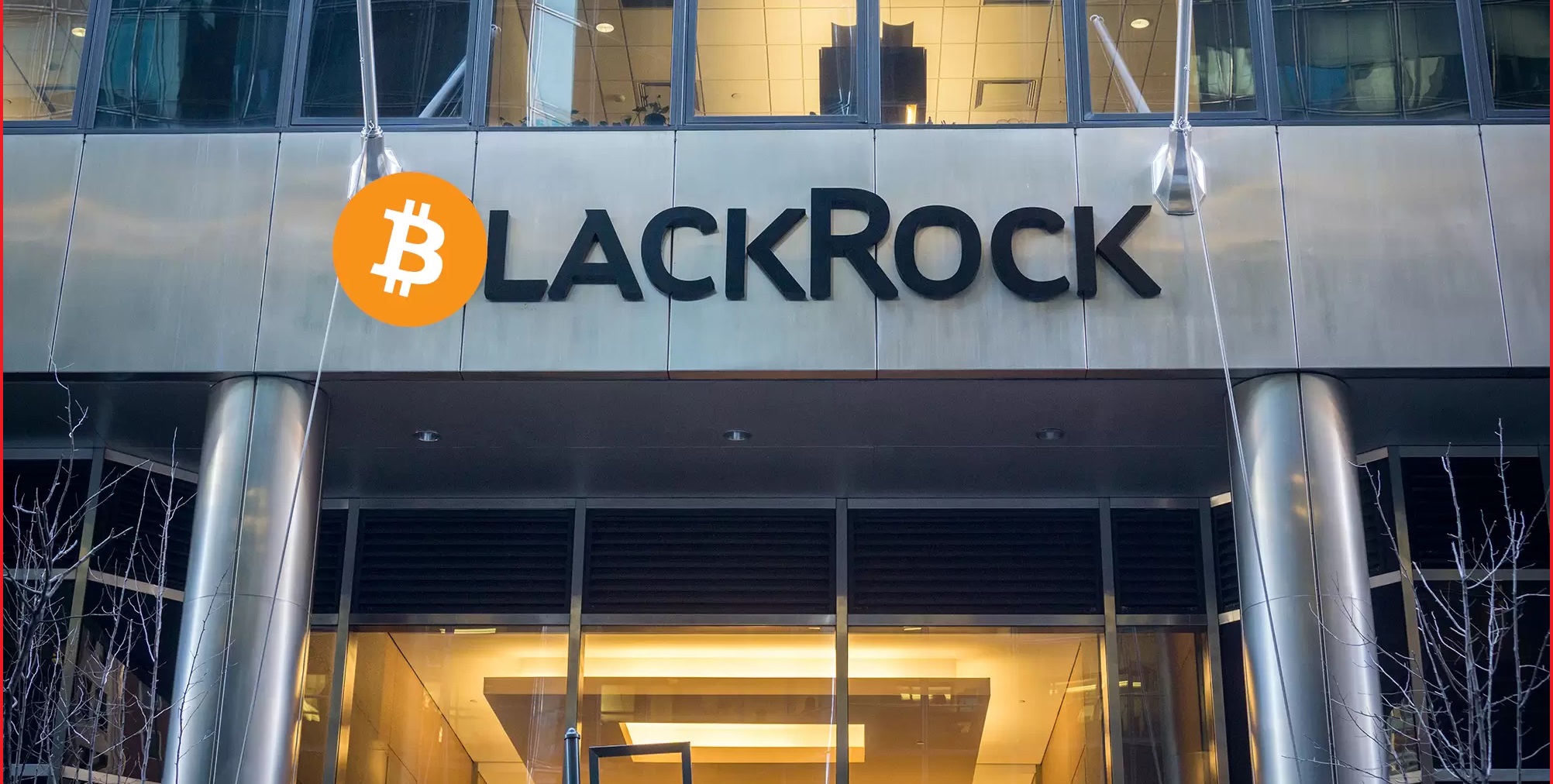
BlackRock’s iShares Bitcoin Trust ETF (IBIT) has out-earned its 25-year-old iShares Core S&P 500 ETF (IVV) in annual fee revenue, marking a significant milestone for cryptocurrency’s integration into traditional finance.

This development, first reported in July 2025 and reaffirmed in recent analyses, underscores the explosive demand for regulated Bitcoin exposure amid the asset’s price rally to new highs.

As of early October 2025, IBIT’s revenue lead has widened further, driven by its rapid asset growth and higher fee structure. IBIT launched in January 2024 as one of the first U.S. spot Bitcoin ETFs, quickly becoming BlackRock’s fastest-growing product.

Despite managing far fewer assets than IVV, IBIT generates more revenue due to its expense ratio being over eight times higher 0.25% vs. 0.03%. This “revenue density” highlights how crypto products command premium fees in a nascent market, contrasting with the fee compression in mature equity ETFs.

Bloomberg analyst Eric Balchunas October 2025 update; earlier July 2025 figures showed a narrower gap of $187.2M vs. $187.1M. IBIT has seen inflows in 17 of its first 18 months, attracting institutions like hedge funds and pensions seeking Bitcoin as a “store of value” without direct custody risks.

This reflects broader Wall Street adoption, with Bitcoin ETFs capturing $54 billion in total inflows since approval. As the world’s largest asset manager $10+ trillion AUM, BlackRock’s CEO Larry Fink has called Bitcoin “digital gold.”

IBIT now ranks as the firm’s top revenue-generating ETF, outpacing even other iShares staples. Analysts predict this could pave the way for ETFs on Ethereum, Solana, or tokenized real-world assets (RWAs).

The milestone signals Bitcoin’s maturation beyond speculation. With BTC trading around  $124,000 13% above of all-time highs as of July 2025, July’s historical 7% average gains suggest momentum could push IBIT toward $100 billion AUM soon—faster than Vanguard’s S&P 500 ETF took over 5 years to hit that mark.

This isn’t just about fees; it’s reshaping portfolios. Traditional investors can now blend Bitcoin for hedging inflation/volatility with S&P 500 exposure seamlessly. However, Bitcoin’s higher volatility means IBIT suits risk-tolerant allocations, not core holdings.

Bitcoin is earning blackrock the same money as the entire u.s. stock market index, with a fraction of the capital,” fueling speculation on an “altcoin ETF wave.

The fact that BlackRock’s iShares Bitcoin Trust ETF (IBIT) is out-earning its 25-year-old iShares Core S&P 500 ETF (IVV) in annual fee revenue carries significant implications for investors, the financial industry, and the broader cryptocurrency market.

Investors can now seamlessly include Bitcoin alongside traditional assets like stocks and bonds, potentially redefining portfolio diversification strategies. Bitcoin’s low correlation with equities makes it appealing as a hedge against inflation or market volatility.

IBIT’s 0.25% expense ratio, compared to IVV’s 0.03%, highlights the lucrative nature of crypto ETFs. With IBIT generating $244.5 million annually vs. IVV’s $204 million despite managing 7x fewer assets, asset managers can charge premium fees for crypto products due to their novelty and complexity.

BlackRock’s success with IBIT may spur competitors to launch or expand their own crypto ETFs, potentially covering altcoins like Ethereum or Solana, or even tokenized real-world assets (RWAs). This could accelerate product development in the crypto space.

For BlackRock, IBIT’s outperformance diversifies revenue away from low-fee equity ETFs, which face fee compression in mature markets. Other asset managers may follow suit to capture similar high-margin opportunities.

IBIT’s $52 billion in net inflows since its January 2024 launch 55% of the Bitcoin ETF market reflects strong investor appetite, particularly from institutions. This demand could drive further Bitcoin price appreciation, as Bitcoin trade around $124,000.

Bitcoin ETFs are generating outsized revenue with a fraction of the capital of equity ETFs. This efficiency could shift capital flows toward crypto, potentially challenging the dominance of traditional index funds in investor portfolios.

While IBIT offers regulated access, Bitcoin’s higher volatility compared to the S&P 500 means it’s better suited for risk-tolerant investors or smaller portfolio allocations. Investors must weigh potential returns against price swings.

The success of IBIT, following the SEC’s approval of spot Bitcoin ETFs in January 2024, may encourage regulators to greenlight more crypto-based financial products. This could include ETFs for other cryptocurrencies or innovative structures like tokenized asset funds.

BlackRock’s pivot to crypto aligns with its exploration of tokenizing real-world assets like real estate, bonds. IBIT’s profitability could fund further blockchain-based innovation, reshaping capital markets.

As more crypto ETFs enter the market, competition could drive down expense ratios, eroding the revenue advantage IBIT currently enjoys. Bitcoin’s rally and ETF accessibility could create wealth for early adopters but widen inequality if gains concentrate among institutions or high-net-worth investors.

This milestone is a pivotal moment for crypto’s integration into mainstream finance, with BlackRock’s IBIT signaling a new era of profitability and investor interest. However, it also underscores the need for careful risk assessment in this rapidly evolving space.

Bitcoin’s Exchange Flows Plunge to 3-Year Lows

Bitcoin (BTC) is riding high in early October 2025, trading steadily above $124,000 after smashing through a new all-time high of $126,000 earlier this week.

This surge isn’t just fueled by retail FOMO—on-chain metrics are painting a picture of deepening scarcity and holder conviction. Specifically, Bitcoin’s exchange net flows have cratered to their lowest levels in nearly three years, with a 14-day simple moving average (SMA) of net flow at -7,210 BTC as of October 4.

This means more BTC is being withdrawn from exchanges than deposited, a classic sign that long-term holders (HODLers) are opting to self-custody rather than sell. Over 7,200 BTC have exited exchanges in recent days, per CryptoQuant data.

This outflow reflects both short- and long-term holders stacking sats, reducing available liquidity on centralized platforms. Exchange reserves have dipped to around 2.4 million BTC—their lowest in six years—amplifying the “supply shock” narrative.

Spot Bitcoin ETFs have seen massive inflows, clocking nearly $1 billion in just three days and $3.2 billion last week alone. Institutional demand is outpacing miner emissions by a 3:1 ratio, with firms like Strategy and treasury adopters locking up supply.

Combined with $14 billion in total exchange outflows over two weeks, this dynamic is squeezing sellers out of the equation. Similar low-flow periods in past cycles like in 2021 preceded explosive rallies.

Analysts note that 99.3% of BTC supply is now in profit, which could invite short-term profit-taking, but the structural scarcity points to upside bias. The stars are aligning for BTC to test $130,000 soon, potentially by mid-to-late October.

Declining exchange balances since 2019; ETF inflows sustaining uptrend. ETF-driven momentum; slight trim from prior $135K forecast. Bullish if holds $118K support; bear low at $70K.

Technically, BTC is coiling in a bull pennant pattern above the $122K–$124K EMA support, with RSI at 69 elevated but not overbought. A break above $126.5K could trigger a squeeze toward $130K, though a tactical pullback to $118K–$120K remains possible if profit-taking hits.

Resistance at $127K is the immediate hurdle, but with MACD flashing green and social euphoria building like the Saylor and Pomp hyping new highs, the path of least resistance is up.

Daily RSI divergence and a flipping MACD could spark a cooldown, especially with $113 million in shorts liquidated recently—more squeezes mean volatility. Geopolitical tensions or a hotter-than-expected CPI could test $114K–$115K support.

If flows reverse and ETF inflows stall, a drop to $108K isn’t off the table, but current metrics make this low-probability. In short, these 3-year low exchange flows are a green light for accumulation, not distribution.

If institutional bids keep pouring in, $130K isn’t just a target—it’s the floor for what’s next. Reduced supply on exchanges, with steady or growing demand, often drives Bitcoin prices higher as buyers compete for fewer available coins.

Scarcity can reduce trading volume, making it harder to buy or sell large amounts without significantly impacting the price. With less Bitcoin available, price swings can become more pronounced due to lower liquidity and heightened sensitivity to buy/sell orders.

Scarcity often signals that investors are moving Bitcoin to cold storage, indicating long-term holding and reduced selling pressure.