DD
MM
YYYY

PAGES

DD
MM
YYYY

spot_img

PAGES

Home Blog Page 3692

The Real-World Asset narrative is Rapidly Evolving, as More and More People Transition to Web3

0

The Real-World Asset narrative is rapidly evolving, as more and more people transition to Web3. We will explore what Real-World Assets are, why they are important for the future of decentralized finance, and how they can unlock new opportunities for investors and entrepreneurs.

Real-World Assets (RWAs) are assets that exist in the physical world, such as real estate, art, commodities, or intellectual property. They are different from digital assets, such as cryptocurrencies, tokens, or NFTs, which are native to the blockchain. However, RWAs can be represented on the blockchain through tokenization, which is the process of creating a digital representation of an asset that can be verified, transferred, and traded on a decentralized network.

Tokenization of RWAs has several benefits, such as:

Increasing liquidity: Tokenization allows RWAs to be divided into smaller units that can be easily bought and sold by a larger pool of investors, without intermediaries or high transaction costs.

Enhancing transparency: Tokenization enables RWAs to have a clear and immutable record of ownership, provenance, and valuation on the blockchain, which reduces information asymmetry and fraud.

Improving efficiency: Tokenization streamlines the processes of issuing, managing, and transferring RWAs, by eliminating paperwork, bureaucracy, and middlemen.

Expanding access: Tokenization democratizes the access to RWAs, by lowering the barriers to entry and enabling anyone with an internet connection and a crypto wallet to participate in the global asset market.

Tokenization of RWAs is not only beneficial for the existing asset owners and investors, but also for the Web3 ecosystem as a whole. By bringing real-world value to the blockchain, tokenized RWAs can:

Diversify the crypto portfolio: Tokenized RWAs can provide exposure to different sectors and regions that are not correlated with the crypto market, which can reduce volatility and risk.

Enhance the DeFi infrastructure: Tokenized RWAs can serve as collateral for lending and borrowing platforms, or as underlying assets for derivatives and synthetic products, which can increase the liquidity and utility of DeFi protocols.

Bridge the gap between Web2 and Web3: Tokenized RWAs can attract more mainstream adoption and awareness of Web3 technologies, by connecting the traditional asset market with the innovative blockchain space.

Tokenization of RWAs is not a futuristic vision, but a reality that is happening right now. There are already several projects and platforms that are tokenizing various types of RWAs, such as:

RealT: A platform that tokenizes fractional ownership of US real estate properties, allowing investors to earn passive income from rent and capital appreciation.

Centrifuge: A protocol that enables asset originators to tokenize their real-world assets, such as invoices, royalties, or loans, and access liquidity from DeFi lenders.

NFTfi: A marketplace that allows users to borrow and lend using NFTs as collateral, such as digital art, gaming items, or domain names.

These are just some examples of how tokenization of RWAs is transforming the asset market and creating new possibilities for Web3. As more and more people transition to Web3, we can expect to see more innovation and adoption of tokenized RWAs in the near future.


Immutable (IMX) and Celestia (TIA) Show Exceptional Q1 Performance, Everlodge (ELDG) Token Listed Uniswap

0

Amid the market volatility that hit the crypto space at the start of the year, the prices of Immutable (IMX) and Celestia (TIA) have consistently increased, riding a bullish trend.

Concurrently, an innovative crypto venture, Everlodge (ELDG), has demonstrated a noteworthy price trajectory throughout its presale campaign, setting the stage for a successful debut. With the presale concluded, Everlodge has locked in a substantial 190% return on investment (ROI) for early buyers, establishing itself as one of the best cryptocurrency to invest in.

Immutable (IMX) Poised for Strong Price Appreciation in 2024

Achieving an average monthly gain of over 22%, Immutable (IMX) demonstrates a clear bullish stance. The cryptocurrency is currently trading within a weekly price range of $1.96 and $2.3, while boasting over 20% increase in its market capital which surged from $2.65 billion to $3.2 billion in the past week alone.

Based on its recent performance, analysts envisage potential compounding gains; particularly, they predict the Immutable token could surpass $5 by summer, offering a notable return both in short and long term.

Although several factors contribute to this optimistic prediction, the recent launch of the Immutable zkEVM Mainnet during its early access phase stands out as a significant milestone, paving the way for increased adoption of blockchain gaming in the mainstream.

Integrations like Immutable Passport further contribute to creating a smoother Web3 experience, captivating both casual and core gamers. Should the zkEVM platform meet expectations, analysts suggest that IMX is well-positioned for robust and sustained price appreciation over the next year.

Celestia (TIA) Exceptional Performance and Growth Outlook in Q1 2024

Celestia (TIA) has demonstrated exceptional performance since the beginning of the year, starting at approximately $11.88 on January 1. After undergoing volatile trading, TIA experienced a bullish surge following the SEC’s approval of spot Bitcoin ETFs.

Specifically, TIA initiated a rally, reaching a peak of $20.26 on January 15. In contrast to IMX, Celestia coin sustained its positive momentum throughout January, stabilizing around $18.39 by February. This performance translates to a notable 54.80% gain since the start of the year.

The impressive results have naturally attracted increased investor interest in TIA, prompting questions about whether Celestia is a top cryptocurrency for substantial gains in 2024. According to experts, TIA is expected to reach $28.95 by the end of 2024. This projection is grounded on the anticipation of TIA gaining more adoption, driven by Celestia’s modular data availability network.

Everlodge Token ELDG Launches on Uniswap: 30X ROI for Early Buyers

Everlodge (ELDG) leads the real estate revolution with its decentralized Web3 platform, offering investors a chance to own upscale vacation homes at a fraction of the cost. This innovative platform transforms real estate into verifiable NFT assets, accessible with investments as low as $100.

The native ELDG token powers all transactional engagements on the platform and offers users access to the Rewards Club, reduced trading costs, and passive revenue through staking. These factors contribute to ranking the project among the best crypto investments this year.

Following the conclusion of the presale, Everlodge has delivered an impressive 190% return on investment (ROI) for early token backers. Initially priced at $0.01 and reaching $0.029 by the presale’s end, the token has now transitioned to trading on Uniswap.

Analysts project a 30x when the project officially launches as it will also be listed on other tier-1 exchanges. With the real estate industry estimated to be worth $280 trillion dollars, Everlodge certainly remains one of the best crypto to invest in.

For more information about Everlodge (ELDG) please visit their website.

Next Bull Market Gems: Discover 3 Cryptos with Explosive Growth Potential

0

Amidst the search for top altcoins to invest in the next bull run, the searchlight has fallen on top crypto coins: Stacks (STX), Algotech (ALGT), and Ripple (XRP). Let’s explore the promising trajectories of these tokens and see what they have to offer!

Bitcoin L2 Darling: Stacks (STX) Poised for Takeoff with Innovation and Adoption

Since its introduction of the STX20 protocol in December 2023, Stacks (STX) has been steadily gaining momentum in the cryptocurrency space. The STX20 protocol, implemented on its Bitcoin layer two, aimed to explore the impact of Ordinals-style assets.

The launch of the STX20 protocol had a profound effect on Stacks’s (STX) price performance. Between December 2023, and January 2024, Stacks’s (STX) price soared from $0.89 to $2.02, marking a 134% price increase. However, the altcoin price plunged shortly after to the $1.25 price level. Nevertheless, Stacks (STX) didn’t remain down for long.

In February 2024, Luganodes, a powerhouse in blockchain infrastructure, announced its decision to support Stacks (STX) and also be a day-one Signer for Stacks’s (STX) upcoming Nakamoto upgrade. This move increased Stacks awareness and adoption, propelling STX’s price to the $1.80 mark in February 2024.

With Stacks’s growing network and promising developments, analysts predict that STX’s has the potential for a rebound to the $2 price level by March 2024. The altcoins resilience over the past months has attracted the attention of crypto enthusiasts as they anticipate further advancements and bullish price movements in the coming months.

Algotech (ALGT): DeFi Rocket Set for Launch in Bull Run Frenzy

Amidst the evolving landscape of DeFi cryptocurrencies, Algotech (ALGT) has emerged as a beacon of promise, poised to lead the charge in the upcoming bull run. Offering traders unparalleled data analysis capabilities, Algotech (ALGT) equips investors with the tools needed to navigate the volatile crypto markets with confidence.

Utilizing sophisticated algorithms and comprehensive market data, Algotech (ALGT) operates as one of the best DeFi projects, providing objective insights that enhance trading accuracy and profitability. These amazing features have attracted significant attention to the project’s presale.

With a limited token supply of 230 million, Algotech’s ERC-20 token, ALGT, offers holders governance rights within the Algotech (ALGT) community and a stake in the platform’s software. During its private presale, Algotech (ALGT) raised $1.1 million in just two days, establishing the ERC-20 token profit potential.

Currently, Algotech (ALGT) is in Stage 1 of its presale, selling for $0.04. It is expected to reach a 275% increase to $0.15 when the presale ends. As excitement builds, experts predict Algotech’s (ALGT) bullish potential will extend beyond its presale price target to the $2 mark post-launch, signaling significant growth opportunities for investors in the upcoming bull run.

Ripple Rises Above Legal Storm: Upgrades Fuel XRP Crypto Price Surge Amidst SEC Battle

Despite its ongoing legal feud with the SEC, Ripple (XRP) has made significant advancements since the year began, building investor’s confidence. In January 2024, Grayscale added XRP to its Digital Large Cap Fund, sparking discussions about potential XRP ETF approvals. This boosted the XRP crypto price from the $0.55 price level to the $0.60 mark in January.

However, following the XRP lawsuit update of SEC’s victory to obtain XRP’s financial reports in February, the price of the altcoin dropped to $0.52 price level. Nevertheless, XRP continued to build momentum.

In February, XRP Ledger (XRPL) received a significant upgrade, with the activation of the Clawback amendment and key modifications to Automated Market Makers (AMMs). The activation of the Clawback amendment and AMM enhancements positions XRPL as a competitive and user-friendly platform with the potential to attract wider adoption and use cases.

Market analysts predict that this move will restore XRP’s security and trust, ushering in a new era for the altcoin despite its legal battles with the SEC. Price projections show that this has the potential to push the XRP crypto price to the $0.74 mark by April 2024.

Visit Algotech Presale

Join The Algotech Community

Key Aspects of Decentralized Protocols and Smart Contracts

0

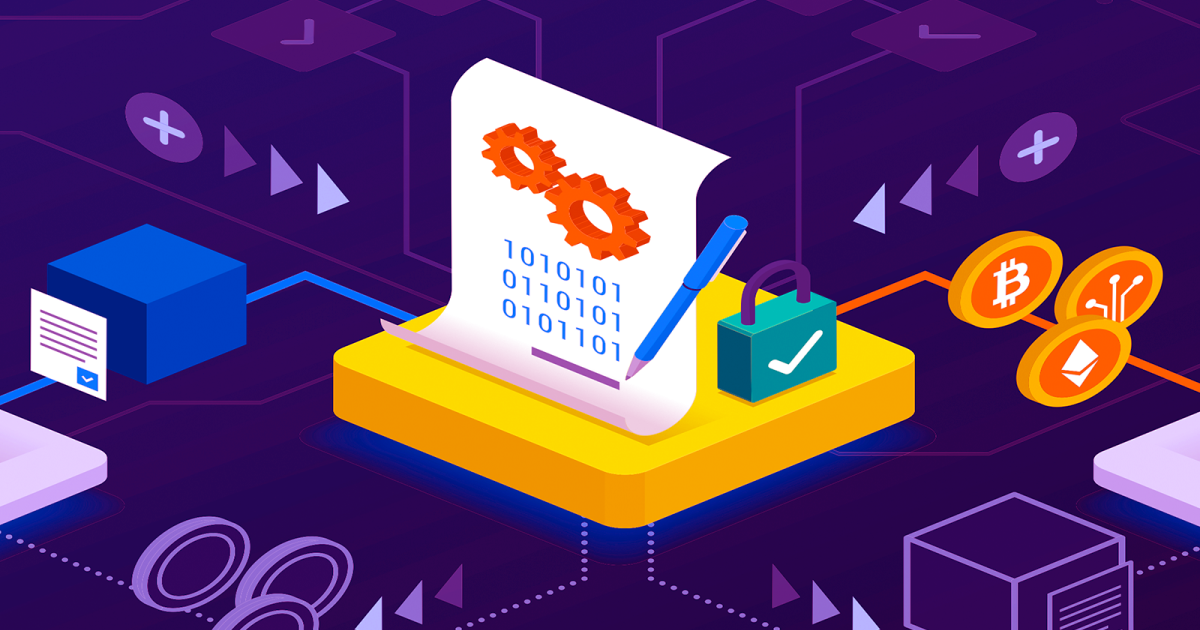
The emergence of blockchain technology has opened up new possibilities for the financial sector, especially in the areas of decentralized protocols and smart contracts. These innovations allow for the creation of novel forms of digital assets, such as cryptocurrencies, tokens, and non-fungible tokens (NFTs), that can be transferred, exchanged, and verified without intermediaries.

Moreover, they enable the automation of complex transactions and agreements, such as lending, borrowing, derivatives, and governance, through self-executing code that is transparent and immutable.

However, these developments also pose new opportunities and challenges for investors, issuers, and regulators. On the one hand, decentralized protocols and smart contracts can offer benefits such as lower costs, higher efficiency, greater inclusivity, and enhanced security.

On the other hand, they can also introduce risks such as volatility, fraud, hacking, scalability, and legal uncertainty. Therefore, it is important to understand the implications of these technologies for the financial system and to explore the best practices and frameworks for their adoption and regulation.

Decentralized protocols and smart contracts are two key aspects of the emerging blockchain technology that promises to revolutionize various domains such as finance, supply chain, governance, and more. In this blog post, we will explain what these concepts mean and why they are important for the future of the internet.

Decentralized protocols are rules or standards that enable different nodes or participants in a network to communicate and cooperate without relying on a central authority or intermediary. For example, the Bitcoin protocol allows anyone to join the network, verify transactions, and create new blocks without needing a trusted third party. This reduces the risk of censorship, fraud, corruption, and single points of failure.

Smart contracts are self-executing agreements that are encoded in a programming language and run on a blockchain. They can perform various functions such as transferring value, enforcing rules, verifying conditions, and triggering events. For example, a smart contract can automatically pay a supplier when a delivery is confirmed or refund a buyer if a product is defective. This increases the efficiency, transparency, and security of transactions.

Decentralized protocols and smart contracts enable the creation of decentralized applications (DApps) that run on a distributed network of computers instead of a centralized server. DApps can offer various benefits such as lower costs, faster performance, better privacy, and more innovation. Some examples of DApps are decentralized exchanges, lending platforms, prediction markets, and social networks.

Decentralized protocols and smart contracts are essential components of the blockchain technology that can transform the way we interact and collaborate online. They can empower users to have more control over their data and assets and create new opportunities for value creation and social impact.

25% of Ethereum Supply, now staked on the Network

Ethereum, the second-largest cryptocurrency by market capitalization, has reached a new milestone in its network development. According to the latest data from Etherscan, more than 25% of the total supply of ether (ETH), the native token of Ethereum, is now locked in smart contracts that support the network’s transition to a proof-of-stake (PoS) consensus mechanism.

This means that over 28 million ETH, worth more than $100 billion at current prices, are staked on the Ethereum 2.0 deposit contract, which allows users to become validators and earn rewards for securing the network. The deposit contract was launched in November 2020 and has since seen a steady inflow of ETH from investors who believe in the long-term vision of Ethereum.

The staking process is part of the Ethereum 2.0 upgrade, which aims to improve the scalability, security and sustainability of the network. Ethereum 2.0 will introduce a new blockchain architecture that will run in parallel with the current one, using a sharding technique to split the network into multiple sub-chains that can process transactions faster and cheaper.

The new blockchain will also switch from a proof-of-work (PoW) algorithm, which relies on miners to validate transactions and produce new blocks, to a PoS algorithm, which rewards validators for staking their coins and participating in the consensus.

The transition to PoS is expected to reduce the energy consumption and environmental impact of Ethereum, as well as increase its resistance to centralization and censorship. However, the upgrade is not without challenges and risks, as it requires a complex coordination among developers, users, validators and other stakeholders.

The Ethereum 2.0 roadmap is divided into multiple phases, each with its own goals and timelines. The first phase, called the Beacon Chain, was launched in December 2020 and established the foundation for the PoS system.

The next phase, called the Merge, was done in late 2021 or early 2022 and merged the current PoW chain with the new PoS chain, effectively ending the mining era on Ethereum. The final phase, called Shard Chains was launched in 2022 or later and will activate the sharding mechanism that will increase the throughput and capacity of the network.

The staking milestone of 25% shows that the Ethereum community is confident and committed to the success of the Ethereum 2.0 vision. It also indicates that the demand for ETH is strong and that users are willing to lock up their coins for a long period of time, as withdrawing from staking is not possible until the Merge phase is completed.

This could create a supply shortage and a bullish pressure on the price of ETH, which has already surged by more than 400% in the past year. As Ethereum continues to evolve and innovate, it remains one of the most dominant and influential platforms in the crypto space.

US Museum returns Ghana’s looted artifacts after 150 years

0

In a historic gesture of reconciliation, the Smithsonian National Museum of African Art in Washington, D.C., has announced that it will return 27 artifacts to Ghana that were looted by British soldiers during the colonial era.

The artifacts, which include gold jewelry, ceremonial swords, and musical instruments, were taken from the Asante Kingdom in 1874, after the British army invaded and burned the capital of Kumasi. The museum acquired the artifacts in 1964 from a private collector, who had bought them from a British auction house.

The decision to return the artifacts was made after a request from the Ghanaian government, which has been seeking the repatriation of its cultural heritage for decades. The museum said that it was motivated by its commitment to ethical stewardship and respect for the people of Ghana.

The museum also said that it hoped that the return of the artifacts would foster dialogue and collaboration between the two countries, as well as raise awareness about the history and significance of the Asante Kingdom.

The Asante Kingdom was one of the most powerful and influential states in West Africa from the 17th to the 19th centuries. It was known for its rich culture, art, and trade, as well as its resistance to colonial domination. The kingdom was eventually annexed by the British in 1901, after several wars and rebellions.

Many of its treasures were looted or destroyed by the colonial forces, while others were sold or donated to museums and private collectors around the world.

The return of the artifacts is expected to take place later this year, after the completion of legal and logistical procedures. The museum said that it would continue to work with Ghanaian authorities and experts to identify and document other items in its collection that may have been looted or acquired illegally.

The museum also said that it would support Ghana’s efforts to preserve and promote its cultural heritage, through exhibitions, research, education, and exchange programs.

The announcement was welcomed by Ghanaian officials and cultural activists, who praised the museum for its ethical leadership and goodwill. They said that the return of the artifacts would be a symbolic act of healing and justice, as well as an opportunity to celebrate and showcase the rich and diverse culture of Ghana.

They also expressed their hope that other museums and institutions around the world would follow suit and return other looted or stolen artifacts to their rightful owners.