DD
MM
YYYY

PAGES

DD
MM
YYYY

spot_img

PAGES

Home Blog Page 3695

The New CBN Governor Should Restructure how Nigeria’s Apex Bank Does Business, by Pushing Directors to Publish Working Papers

4

As we fight for the Naira, I have one recommendation for the new central bank boss in Nigeria: push your men and women to work on working papers, over just press releases. By forcing them to develop working papers, you push them to become more rigorous and analytical as they craft policies. If that becomes the way the bank operates, you will likely get deeper insights on previous policies, and that will help you architect future ones.

The website of the Central Bank of Nigeria (CBN) for years has no working papers the public could consume to see the data which is driving some of the policies. And when some policies are reversed, we do not have the benefit of going back to see what could be learned from those previous calls. I am yet to read a working paper or publication on the border closure benefits. No one has written on the economic impact of the recent Naira redesign . The R&D and Strategy units in CBN should not make these reports classified if they have them.

As that happens, there is a new major change: “The Central Bank of Nigeria (CBN) has disclosed reasons behind its decision to remove FX restrictions on 43 items previously placed under ban by Godwin Emefiele, the apex bank’s former governor.” Do we have a working paper to explain the benefits since this ban was implemented? Where are the papers? And now that we are reversing the call,  do we have models?

Sure – you will ask what has banking got to do with writing papers? I can reply that in central banking, it is a lot. Central banks work to stabilize national currencies while optimizing employment for the citizens. And they have many tools which they use to do those things. 

By publishing working papers which some of our professors can further examine in our economic departments, the path to a stronger economy could be better modeled. 

For years, we asked for the apex bank to publish its audited statements, nothing happened. Then when it did, we noticed that some of Nigeria’s future had been borrowed.  We need more openness in CBN.

Comment on Feed

Comment here

My ResponseYou may update that to “acceptable bad journalism” since New York Times, The Economist, Punch, Bloomberg, ThisDay, etc all use “fight”, “battle”, and “war” when describing rivalites around currencies, especially USD and Yuan.

Internally, it is “economic policy”, but in global trade, most see “currencies”. I want to import from China into Nigeria. I am not sure, my first call is Chinese economic policy; I will likely care to know the exchange rate between Yuan and Naira. As a result of that, currency is what many see, encapsulating “all the economic policies” from the outside.

In other words, it is economic policy propelling currencies to FIGHT.

Central Bank of Nigeria (CBN) Discloses Reasons Behind Its Decision to Lift The 43 FX Restricted Items

0

The Central Bank of Nigeria (CBN) has disclosed reasons behind its decision to remove FX restrictions on 43 items previously placed under ban by Godwin Emefiele, the apex bank’s former governor.

The announcement made by the CBN on Thursday has attracted mixed reactions from the general public.

“Lifting of the ban on importation of Toothpicks, Cement and other agricultural products that we can produce at home is a disastrous economic strategy. The nation’s scarce forex should be used to support local production not importation. The new CBN Boss should think of better ways,” Senator Shehu Sani said.

In a statement titled: ‘What You Need to Know About CBN’s Lifting of Forex Restrictions On 43 Items’, the CBN’s Corporate Communications Department, gives reasons why it reached the decision.

The reasons are summarized as follows:

Addressing Surplus Demand: The restrictions had led importers to turn to the parallel market for Forex, contributing to a surplus demand. This weakened the parallel-market exchange rate and caused price increases.

Promoting Orderliness: The CBN aims to ensure that market forces determine exchange rates based on a willing buyer-willing seller principle, promoting a more organized and professional foreign exchange market.

Establishing a Unified Market: The CBN seeks a unified Forex market with transparent and flexible pricing.

Ensuring Price Stability and Liquidity: By removing restrictions, the CBN aims to boost liquidity in the Forex market, which is expected to lead to more stable prices and a reduction in distortions.

Implications of Removing FX Restrictions:

Effective Monetary Policy: With a unified and well-functioning FX market, the CBN’s core functions become more achievable.

Clearing Exchange Rate: The willing-buyer and willing-seller system allows the exchange rate to adjust to clear the market, ensuring a steady supply.

Reduced Pressure on the Naira: Importers no longer need to rely on the parallel market for Forex, reducing demand pressures and narrowing the gap between official and parallel rates.

Impact on Inflation: The previous FX restrictions had contributed to inflation by causing prices of affected goods to rise.

Benefits for Local Production:

Cheaper Imported Inputs: Local production will benefit from more affordable imported inputs, potentially leading to lower retail prices for consumers.

Boost to Employment: Re-opening closed factories and stabilizing prices can lead to increased employment opportunities.

Read the full statement below:

The Central Bank of Nigeria (CBN), on Thursday, October 12, 2023, announced, among other policy issues, the lifting of foreign exchange restrictions hitherto placed on the importation of 43 items.

1. Why was there a restriction?

On June 23, 2015, the CBN issued Circular TED/FEM/FPC/GN/01/010, which put 41 product categories on a list of items not valid for FOREX in the Nigerian Foreign Exchange market. Two more product categories were added in subsequent years, bringing the total of imported product categories restricted from accessing FX to 43.

The restriction aimed at reducing foreign exchange demand for products that could be locally produced, improve employment generation, and conserve foreign reserves.

The items were Rice, Cement, Margarine, Palm kernel, Palm oil products, Vegetable oils, Meat and processed meat products, Vegetables and processed vegetable products; Poultry and processed poultry products; Tinned fish in sauce (Geisha)/sardine; Cold rolled steel sheets; Galvanized steel sheets; Wheelbarrows;
Head pans; Metal boxes and containers; Enamelware; Steel drums; Steel pipes, Wire rods (deformed and not deformed); Iron rods; Reinforcing bars; Wire mesh; Steel nails;

Security and razor fencing and poles; Wood particle boards and panels; Wood fiberboards and panels; Plywood boards and panels; Wooden doors; Toothpicks; Glass and glassware; Kitchen utensils, Tableware; Tiles-vitrified and ceramic; Gas cylinders; Woven fabrics; Clothes; Plastic and rubber products; Polypropylene granules; Cellophane wrappers and bags; Soap and cosmetics; Tomatoes/tomato pastes, and Eurobond/foreign currency bond/share purchases.

2. Was there an import ban on these products?

No. There was only a restriction on buying FOREX in the official market to import these items.

3. Why is the CBN now lifting the restrictions?

i. The restrictions pushed importers into the parallel market, contributing to the surplus demand for FOREX. This weakened the parallel-market exchange rate, pushing up prices.

ii. The CBN wants to promote orderliness and professional conduct by all Nigerian Foreign Exchange Market participants to ensure market forces determine exchange rates on a Willing Buyer – Willing Seller principle.

iii. The CBN wants a unified market for FOREX with flexible and transparent pricing.

iv. The CBN wants to ensure price stability and is seeking to boost liquidity in the Nigerian Foreign Exchange Market. As liquidity improves, we expect the distortions to moderate.

4. What are the implications of removing the FX restriction?

i. Monetary Policy tools become more effective with the attainment of a unified, well-functioning market for FX, where pricing is based on a willing-buyer and willing-seller system. With this, the CBN’s core functions and mandates become realizable.

ii. The willing-buyer and willing-seller system allows the exchange rate to adjust to clear the market and ensure that there is always supply. In recent months, the widening premium between the official rate and the parallel market indicates that the rate has not been setting a clearing price.

iii. Importers of these products rely on the parallel market to source FX for importing these goods. This puts additional demand pressures on the parallel market, thereby widening the gap with the official rate and permanently segmenting the market. Removing these restrictions eliminates the need for importers of these products to go to the parallel market, reducing the pressure on the naira.

Iv. The hitherto FX restrictions had implications on inflation, causing the prices of affected goods to increase.

5. How does this benefit local production?

i. Local production will benefit from cheaper imported inputs, and consumers will benefit from cheaper retail products. The policy is suitable for a unified FOREX market and positive as well for inflation.

ii. It is expected that employment generation will be boosted as closed factories re-open. Price stability will benefit the economy and the standard of living in general.

CFTC, Alameda Research, CBDC, Coinbase, CoinList and other Crypto News

0

The Commodity Futures Trading Commission (CFTC) has filed a civil enforcement action against Stephen Ehrlich, the co-founder and CEO of Voyager Digital, a cryptocurrency brokerage platform. The CFTC alleges that Ehrlich and his former company, Lightspeed Trading, engaged in fraudulent and deceptive practices in connection with the offer and sale of futures contracts on digital assets.

According to the complaint, Ehrlich and Lightspeed misrepresented the fees, commissions, and execution prices of the futures contracts, and failed to register as a futures commission merchant or a designated contract market. The CFTC seeks restitution, disgorgement, civil monetary penalties, and injunctive relief against Ehrlich and Lightspeed.

The story of Alameda’s downfall is a cautionary tale of financial mismanagement, political turmoil and public discontent. Alameda, once a prosperous city with a vibrant economy and a diverse population, became mired in debt after a series of ill-advised decisions, such as investing in risky ventures, borrowing heavily from creditors and raising taxes on residents.

The city’s fiscal crisis worsened as it faced lawsuits, audits and investigations from various agencies and stakeholders. The city council was divided and dysfunctional, unable to agree on a viable recovery plan. The citizens of Alameda grew frustrated and angry, protesting against the city’s policies and demanding accountability from their leaders. The situation reached a breaking point when the city declared bankruptcy, triggering a massive exodus of businesses, workers and residents. Alameda’s spiraling debt led to its dramatic implosion, leaving behind a legacy of ruin and regret.

The fate of the crypto legislation in the U.S. is hanging in the balance as a power struggle over the Speaker of the House position unfolds. The bill, which aims to provide clarity and regulation for the crypto industry, has been stalled by the uncertainty and division among the lawmakers. Some members of the House are pushing for a vote on the bill as soon as possible, while others are demanding a change in leadership before proceeding.

Nancy Pelosi is facing a challenge from a faction of her own party that wants to replace her with a younger and more progressive candidate. The drama has created a deadlock that prevents any major legislation from moving forward, including the crypto bill that many investors and entrepreneurs are eagerly awaiting.

The U.S. Department of Justice (DOJ) has announced that it has filed a criminal complaint against a former executive of a cryptocurrency trading platform for his alleged involvement in a fraudulent scheme that manipulated the prices of future contracts based on digital assets.

According to the DOJ, the defendant used his access to the platform’s trading system to selectively execute profitable trades for himself, while rejecting or delaying unprofitable ones, in a practice known as “cherry-picking”. The DOJ claims that the defendant’s scheme resulted in more than $8 million in illicit gains for himself and caused significant losses for other customers of the platform.

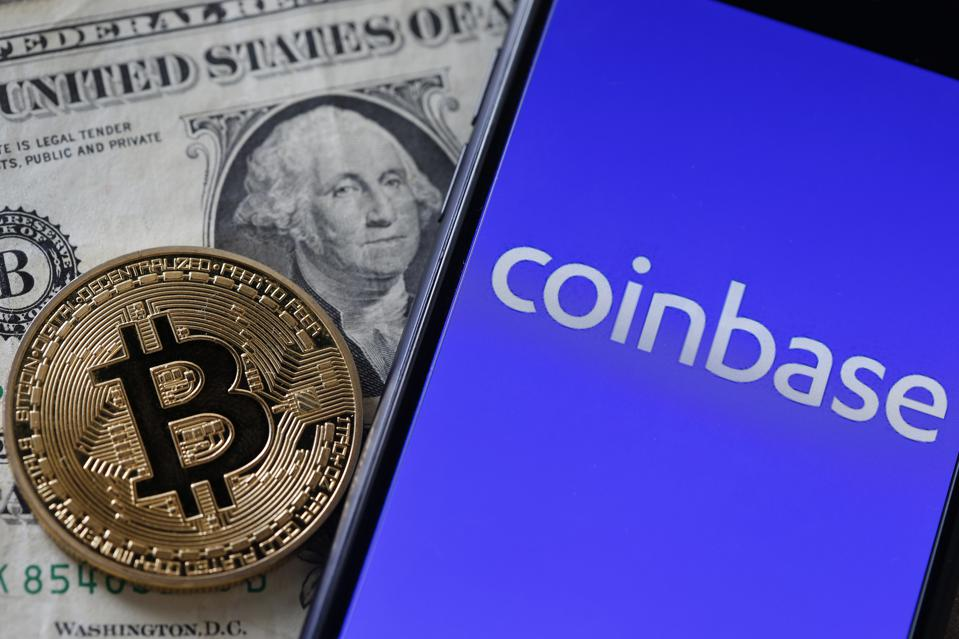
Coinbase, one of the largest cryptocurrency exchanges in the world, has expressed its ‘serious concerns’ about the proposed tax rules by the IRS that would require reporting of certain transactions involving digital assets. In a letter to the IRS, Coinbase argued that the rules are unclear, burdensome and potentially harmful to the innovation and growth of the crypto industry.

Coinbase also suggested some alternatives that would achieve the IRS’s objectives without imposing undue costs and risks on crypto users and businesses.

As China advances its development of a central bank digital currency (CBDC), it should also ensure that it prevents any potential abuse of the new technology, according to a former governor of the People’s Bank of China (PBOC). Zhou Xiaochuan, who led the PBOC from 2002 to 2018, said that while a CBDC could bring many benefits to the economy and society, such as improving financial inclusion and reducing transaction costs, it could also pose risks to privacy, security and social stability.

He urged the authorities to establish a clear legal framework and regulatory oversight for the CBDC, as well as to educate the public about its proper use and potential implications.

CoinList launches multi-chain Staking Fund for U.S. Accredited Investors

CoinList, a platform for token sales and crypto investments, has announced the launch of a new fund that will allow U.S. accredited investors to stake multiple cryptocurrencies and earn rewards. The fund, called CoinList Staking Fund, is the first of its kind in the U.S. and aims to provide investors with exposure to the fast-growing staking market.

Staking is a process where users lock up their crypto assets in a network to support its security and operations, and in return, they receive a share of the network’s inflationary rewards. Staking is an alternative to mining, which requires expensive hardware and electricity. Staking also enables users to participate in the governance of the network and influence its future direction.

CoinList Staking Fund will initially support four networks: Solana, Terra, Flow and Celo. These are some of the most promising and innovative blockchain projects in the industry, with strong teams, communities and use cases. CoinList Staking Fund will leverage the expertise and infrastructure of CoinList’s partners, such as Bison Trails, Figment and Chorus One, to provide secure and reliable staking services.

According to CoinList, the fund will offer investors several benefits, such as:

Diversification: Investors can access multiple staking networks with one investment, reducing the risk and complexity of managing individual tokens. Liquidity: Investors can redeem their shares in the fund at any time, without having to wait for the unlocking periods of each network. Tax efficiency: Investors can defer their capital gains taxes until they sell their shares in the fund, rather than paying taxes on each staking reward. Compliance: Investors can comply with the U.S. securities laws and regulations, as the fund is registered with the SEC and operates under an exemption from registration.

CoinList Staking Fund is open for subscription until November 15, 2021. The minimum investment amount is $25,000 and the annual management fee is 2%. Investors can learn more about the fund and apply on CoinList’s website.

New tattoo machine can ink your arm with an NFT, allowing artists to collect royalties.

Imagine getting a tattoo that is not only a unique piece of art, but also a digital asset that can be traded, sold, or collected. That’s the idea behind a new tattoo machine that can ink your arm with an NFT, or non-fungible token.

NFTs are digital tokens that represent ownership of a unique item, such as an artwork, a song, or a video. They are stored on a blockchain, a secure and transparent network of computers that records transactions and verifies their authenticity. NFTs can be bought and sold on online marketplaces, and their value can fluctuate depending on demand and rarity.

A new tattoo machine, developed by a team of engineers and artists, can create NFTs from the designs that it inks on the skin. The machine uses a special ink that contains nanoparticles that can be scanned by a smartphone app. The app then generates an NFT from the tattoo design and uploads it to the blockchain. The NFT is linked to the physical tattoo and can only be transferred if the owner agrees.

The creators of the new tattoo machine say that their invention has several benefits for both tattoo artists and customers. For artists, it allows them to collect royalties from their work, as they can receive a percentage of the sales of the NFTs that they create. For customers, it gives them a way to own a digital version of their tattoo, which they can display on social media, sell, or trade with other collectors.

The new tattoo machine is still in prototype stage, but the team hopes to launch it commercially soon. They say that they have already received interest from several tattoo studios and artists who want to try it out. They also plan to create a platform where customers can browse and buy NFT tattoos from different artists around the world.

The new tattoo machine is an example of how technology can transform the art of tattooing and create new possibilities for expression and ownership. It also raises questions about the ethical and legal implications of NFT tattoos, such as who owns the rights to the designs, how to protect the privacy of the customers, and how to ensure the safety and quality of the ink. These are issues that will need to be addressed as the new tattoo machine becomes more widely available.

Tinubu Pulls FCTA Out of TSA, Nigerian Lawyers Describe It as Illegal

0

The federal government has pulled the Federal Capital Territory Administration (FCTA) out of the Treasury Single Account (TSA), according to the Minister of the Federal Capital Territory (FCT), Nyesom Wike.

Wike said on Friday the approval was given by President Bola Tinubu to allow the FCT to use the territory’s Internally Generated Revenue (IGR) for the development of the Nigerian capital.

During a press conference, Wike also disclosed that President Tinubu has approved the establishment of the FCT Civil Service Commission, which will facilitate the career progression of FCT Administration staff.

The Treasury Single Account is a unified system of government bank accounts designed to provide a consolidated overview of the government’s cash inflows. Initially proposed by the federal government of Nigeria in 2012 during the Jonathan Administration, it was subsequently fully implemented during the Buhari Administration.

The primary objective of the TSA is to centralize all inflows from various government agencies into a single account held at the Central Bank of Nigeria. This centralized approach aims to combat corruption by addressing irregularities stemming from the existence of multiple government accounts, while also enabling enhanced tracking of all government revenues and ensuring greater financial accountability.

The International Monetary Fund (IMF) advocated for the establishment of the TSA, recognizing its potential to yield several benefits for the government. These advantages include the reduction of borrowing costs, expanded access to credit, and enhancements to the government’s fiscal policy.

Additionally, the IMF emphasized the importance of implementing a sound legal framework to underpin the TSA, ensuring its resilience and stability in the long run.

However, critics have described Tinubu’s decision to pull the FCTA from the TSA as illegal. They said the power lies with the House of Representatives which is the legislative body responsible for approving all FCTA financial budgets and revenues.

“BAT (Bola Ahmed Tinubu) is exhibiting pure disdain for our laws and the Constitution. Yesterday, against the clear provisions of Section 2 of the EFCC Act, he appointed one of his lackeys, who is clearly disqualified by the Section above, as the EFCC Chairman. Today, he has gone round Sections 80 and 162 of the Constitution to remove the FCT from the TSA,” human rights lawyer Abdul Mahmud wrote.

“The FCT has no powers under the law to spend what’s not appropriated for it by the House of Representatives. This ‘Pyongyangesque’ disdain of BAT for the Constitution certainly spells doom for the rule of law.”

Is blockchain a brand-new technology to the world- Discover the Blockchain development educational pathway

0

This is typical, and the world population today needs to be educated on it. In the urban region, roughly 70% of individuals don’t know about this technology, according to a case study using my own domain. The worst part is found when rural areas want to learn about and make use of their government’s offerings. My team and I collaborated to create a product called Dapplab.co, which is an open-source information resource training newcomers and airdrop hunters. Investigating the history of Dapplab.co provided the path for the creation of a blog to inform and encourage both urban and rural communities to get familiar with blockchain.

Numerous breakthroughs and innovations in problem-solving come from research. As a user using this technology, you are indirectly and directly learning about the history and purpose of the network as well as how important it is to the transaction process. This is the essence of blockchain technology for anyone to understand.

Despite the system’s rapid development, blockchain technology is still relatively young. There are a lot of people who are really perplexed about this technology, which has caused many to hesitate to participate. I emphasized in a recent essay that “the love of cryptocurrencies is the root of financial freedom.”
This will succinctly highlight the key elements that readers should research in this area.

Roadmap for Blockchain Education

Although blockchain education is open source, you still have to go for it in this system. USER must embrace their educational insight and documentation while participating in the emerging network in order to comprehend the nature of how this network/technology known as Blockchain functions. Participation in nodes, testnet, and incentive airdrops are crucial methods of understanding the origins and operation of a Blockchain project. There, users will be able to learn about and explore the Blockchain vocabulary and registry. Although blockchain technology is open source, users must constantly DYOR during this process in order to be satisfied.

However, when investigating blockchain, a user can never be completely satisfied. The way that people learn in the blockchain industry differs from how they are educated in classrooms. Your economics teacher isn’t the world’s best driver, but he or she is meant to be one of them. Learning about blockchain technology opens a wide range of opportunities to learn about contemporary economic advancement and data storage. Here, one will learn about the creation of money. This is truly a digital age that we are living in. As a user who is eager to master this talent, exploring the learning environment will introduce us to the various stages of the procedure.

Blockchain Education Insight Branches

Scientifically, researching will undoubtedly go through steps of the methodology of branches to discover the field of celebration in order to discover the technique, theory, and laws towards production as a researcher. Blockchain education is spreading like a virus right now, and a lot of projects and networks are being built inside of this technology to address a lot of issues. But as I said, they just address one issue. Discover the learning area by reading on.

Learning and Development Branches

1: Network development (Programming): Users with programming experience can investigate this field by studying the Blockchain programming language. Before taking this offer of learning, the learner must have a working knowledge of HTML, CSS, JavaScript, NODEJS, PHP, and ReactJS. Learners can explore the world of Solidity, the primary blockchain programming language, through this method. The student will understand the fundamentals of tokenomics and how it works. Explore development roadmap

2: Study of Tokenomics: Tokenomics is an amalgamation of two words “token” and “economics,” referring to the supply and demand characteristics of a crypto project. It takes into account the economics of a crypto token: issuance, attributes, distribution, supply, demand and other characteristics.
Here, students can gain knowledge of the design and creation processes for tokens and coins. This is the field of tokenomics, which is the study of tokens. The flow, allocation, and distribution of a token are determined by its economics. Not only that, but also its market cap, diluted circulation, and circulation.

3: Study of NFT: NFT means non-fungible tokens (NFTs), which are generally created using the same type of programming used for cryptocurrencies. In simple terms, these cryptographic assets are based on blockchain technology. They cannot be exchanged or traded equivalently like other cryptographic assets.
In this study, art is genuinely accepted and not excluded. The study of non-fungible tokens results in the creation of one’s own NFT for the market. In order to make art in the blockchain environment, the user will study the realm of art here. You will undoubtedly learn about and explore the world of tokenomics as a result of studying NFT road. Here, the market is for sponsorship and creativity.

4: EtherJs Learning: Ethers. js is a JavaScript library for Ethereum Blockchain development. It provides a simple and easy-to-use interface for interacting with Ethereum smart contracts. It supports contract deployment, function calls, and events handling. Explore

5: Blockchain technology with AI machine integration: This is a recently popular technology (AI) on the international market. I believe it is a good idea for individuals with experience in AI to start implementing after they have a basic understanding of how this system known as AI functions can efficiently sift through massive datasets to generate novel scenarios and identify data-driven patterns. Blockchain facilitates the elimination of flaws and fraudulent data sets. New classifiers and patterns generated by AI can be authenticated using a decentralized blockchain infrastructure.

6. Cryptocurrency: Blockchain’s most well-known use in finance is the development and administration of cryptocurrencies such as Ethereum and Bitcoin. Blockchain technology powers safe and decentralized transactions with these virtual currencies. To understand how to trade with digital currency you can connect with systems like Immediae Evista that help traders learn and bet according to market conditions.

In summary, embrace blockchain technology to succeed in the future.