DD
MM
YYYY

PAGES

DD
MM
YYYY

spot_img

PAGES

Home Blog Page 3697

Tekedia Capital Portfolio, MeekFi, Launches in Benin Republic with UBA, Moov and MTN

0

Join me to congratulate Tekedia Capital portfolio company, MeekFi, for launching its cardless withdrawal technology on Moov Mobile mobile money and MTN mobile money in Benin Republic, anchored on UBA, and to expand to other Francophone African countries. With the strength of Tekedia Capital, innovations like MeekFi become possible in Africa.

If you are a mobile money operator and you are looking for how users can withdraw cash in ATMs, etc, within your mobile money system, with no card, talk to MeekFi. Your users do not need to have any bank account, and they do not need to have any physical card.

Récupère ton argent – get your money, seamlessly. Go here and learn how Tekedia Capital is funding innovations across Africa

Deutsche Bank and SC Ventures, Chainalysis, Bitmain on mining rigs, and more

0

Deutsche Bank and SC Ventures, Standard Chartered Bank’s innovation platform, have conducted the first stablecoin swap on the Universal Digital Payment Network (UDPN) platform, a report by The Block reveals. The UDPN is a blockchain-based platform that allows digital assets such as stablecoins, central bank digital currencies (CBDCs), and other tokens to be exchanged across different networks.

The swap was conducted between Deutsche Bank and SC Ventures on October 25, 2023, and involved the exchange of USDC, a stablecoin based on the Ethereum network pegged to the U.S. dollar, and XSGD, a stablecoin based on the Zilliqa network pegged to the Singapore dollar. The transaction was completed in less than a minute and demonstrated UDPN’s ability to facilitate cross-border payments with digital assets.

North America leads world in crypto usage, Chainalysis says

A new report from blockchain analytics firm Chainalysis reveals that North America is the region with the highest cryptocurrency adoption in the world. According to the report, North America accounted for 34% of global crypto transaction volume in the first half of 2021, followed by Western Europe with 29% and East Asia with 16%.

The report attributes the high crypto usage in North America to several factors, such as the presence of large institutional investors, a mature regulatory environment, and a growing interest in decentralized finance (DeFi) applications. The report also notes that North America has a higher share of professional traders than other regions, who tend to use more sophisticated trading platforms and strategies.

The report also highlights some of the trends and challenges that shape the crypto landscape in North America, such as the rise of stablecoins, the impact of environmental concerns on mining activities, and the need for more clarity and consistency in tax policies. The report concludes that North America is likely to remain a leader in crypto innovation and adoption, as more businesses and consumers embrace the benefits of digital assets.

Bitcoin spot ETF is years overdue, says SEC commissioner

In a recent interview with Bloomberg, SEC commissioner Hester Peirce expressed her frustration with the lack of progress on approving a Bitcoin spot exchange-traded fund (ETF) in the US. She said that she was “mystified” by the SEC’s reluctance to greenlight a Bitcoin spot ETF, which would track the price of the underlying asset rather than futures contracts.

“I’ve been pretty outspoken about my view that we’re well overdue on approving one of these products,” Peirce said. “I think that we have dug ourselves into a bit of a hole by setting standards for approval that are difficult to meet.”

Peirce, who is known as “Crypto Mom” for her pro-crypto stance, argued that the SEC has been applying a higher level of scrutiny to Bitcoin spot ETFs than to other types of ETFs, such as those based on gold or oil. She said that the SEC should not impose its own views on the merits or risks of Bitcoin as an investment, but rather let investors decide for themselves.

“I think our role is to provide a clear set of rules and then let people make their own choices,” Peirce said. “And I think that by not approving a spot Bitcoin ETF, we’re really getting in the way of people being able to access something that they clearly want access to.”

Peirce also noted that the SEC’s delay on approving a Bitcoin spot ETF has created a regulatory arbitrage opportunity for other countries, such as Canada, which have already launched several Bitcoin ETFs. She said that this could undermine the US’s leadership role in the global financial system and innovation.

“I think it’s really important for us to embrace innovation and figure out how we can set clear rules and then let innovation flourish within those rules,” Peirce said. “And I think that by being so hesitant on something like a Bitcoin spot ETF, we’re sending a message that we’re not very open to innovation in this country.”

Peirce’s comments come as the SEC faces mounting pressure from the crypto industry and lawmakers to approve a Bitcoin spot ETF. Several applications are currently pending before the SEC, including one from VanEck, which has been repeatedly delayed and faces a final deadline of Nov. 14.

The SEC has already approved several Bitcoin futures ETFs, which have seen strong demand and trading volumes since their launch. However, many crypto experts and enthusiasts prefer a Bitcoin spot ETF, which they believe would be more efficient, transparent and cost-effective.

Bitmain plans to unveil mining rigs for Aleo Blockchain as Ex Israeli Military Rises $33M for Web3 Security

Bitmain, the world’s largest manufacturer of cryptocurrency mining hardware, has announced that it will launch a new line of mining rigs designed for the Aleo blockchain. Aleo is a privacy-focused platform that aims to enable decentralized applications with zero-knowledge proofs. Bitmain’s new mining rigs will support the Proof-of-Succinct-Work (PoSW) consensus algorithm that powers the Aleo network.

In a blog post, Bitmain said that it has been working closely with the Aleo team to optimize the performance and efficiency of its mining rigs for the PoSW algorithm. The company claimed that its new mining rigs will offer a significant advantage over existing solutions in terms of hash rate, power consumption, and profitability. Bitmain also said that it will provide technical support and customer service for its Aleo miners.

According to Bitmain, the Aleo blockchain has several features that make it attractive for miners and developers. First, it uses zero-knowledge proofs to ensure the privacy and security of transactions and smart contracts. Second, it employs a novel PoSW algorithm that rewards miners for both producing blocks and verifying proofs. Third, it supports a rich set of programming languages and tools for building scalable and interoperable applications.

Bitmain said that it will reveal more details about its Aleo mining rigs in the coming weeks, including the specifications, pricing, and availability. The company also invited interested parties to join its official Telegram group for the latest updates and announcements.

Ex-Israeli military alums raise $33 million for web3 security startup Blockaid

Blockaid, a web3 security startup founded by former Israeli military cybersecurity experts, has announced that it has raised $33 million in a Series A funding round led by Lightspeed Venture Partners. The company aims to provide a comprehensive solution for securing decentralized applications (dApps) and smart contracts on various blockchain platforms.

According to Blockaid’s website, the company leverages its team’s extensive experience in cyber warfare, intelligence and cryptography to offer a range of services, such as vulnerability assessment, code auditing, threat intelligence, incident response and forensics. Blockaid claims that it can help dApp developers and users protect their assets and data from malicious actors and prevent costly exploits and hacks.

Blockaid’s co-founder and CEO, Yossi Cohen, said in a press release that the web3 ecosystem is growing rapidly, but also faces significant security challenges. “We believe that web3 security requires a new approach that combines deep domain expertise, cutting-edge technology and proactive threat hunting. We are excited to partner with Lightspeed and other investors who share our vision and support our mission to make web3 safer and more trustworthy for everyone,” he said.

The company also revealed that it has already secured several high-profile clients, such as Polygon, Chainlink, Aave, Compound and Uniswap. Blockaid said that it plans to use the new funding to expand its team, scale its operations and develop new products and features.

Tal Morgenstern, partner at Lightspeed Venture Partners, said that he was impressed by Blockaid’s team and technology. “We have been following the web3 space closely and we believe that security is one of the key enablers for its mass adoption. Blockaid has a unique combination of talent, experience and vision that sets them apart from other players in the market. We are thrilled to join them on their journey to become the leading web3 security provider,” he said.

Tekedia Capital Remains Open for Investors – 10 Startups Available in Deal Room

0

Tekedia Capital is in active investment mode. We have 10 great startups in the deal room, and this cycle will end on Nov 14. Join us and see the pitch decks, the overview videos and the recorded archive of the demo day. Begin here 

Tekedia Capital offers a specialty investment vehicle (or investment syndicate) which makes it possible for citizens, groups and organizations to co-invest in innovative startups and young companies in Africa and beyond. Capital from these investing entities are pooled together and then invested in a specific company or companies. Learn more here 

MicroStrategy Bitcoin investment now at $745M Unrealized profit as Court Approves Oral Arguments in Battle Against the SEC

0

MicroStrategy, a leading business intelligence company, has made a remarkable return on its Bitcoin investment strategy. The company started buying Bitcoin in August 2020, when the price was around $11,000. Since then, it has accumulated more than 114,000 bitcoins, worth over $6 billion at the current market price. This means that MicroStrategy has an unrealized profit of about $745 million, or a 14% increase in its initial investment.

The company’s CEO, Michael Saylor, has been a vocal advocate of Bitcoin as a store of value and a hedge against inflation. He believes that Bitcoin is superior to traditional assets such as gold, bonds, and cash. He has also encouraged other corporations and institutions to follow his example and adopt Bitcoin as part of their treasury management.

MicroStrategy’s Bitcoin investment is not without risks, however. The cryptocurrency market is known for its high volatility and unpredictability. Bitcoin’s price can fluctuate significantly in a short period of time, depending on various factors such as supply and demand, regulatory developments, technical issues, and market sentiment. Moreover, MicroStrategy’s Bitcoin holdings are subject to cyberattacks, theft, loss, or seizure by authorities.

Therefore, MicroStrategy’s Bitcoin investment is not a guarantee of future success or profitability. It is a bold and visionary move that reflects the company’s confidence in the long-term potential of Bitcoin as a digital asset. It also demonstrates the company’s willingness to innovate and adapt to the changing economic environment. Whether MicroStrategy’s Bitcoin investment will pay off in the end remains to be seen, but it is certainly a fascinating case study for the crypto industry and the business world.

Big Win for Coinbase as Court Approves Oral Arguments in Battle Against the SEC

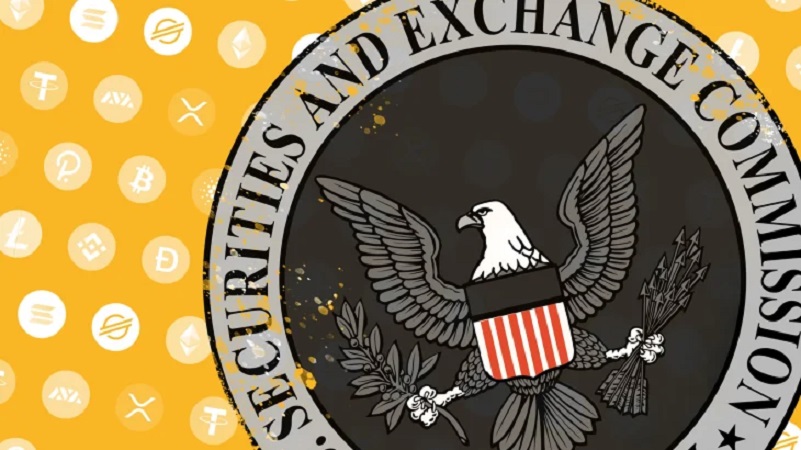
Coinbase, the largest cryptocurrency exchange in the US, has scored a major victory in its ongoing legal dispute with the Securities and Exchange Commission (SEC). On October 25, 2023, the US District Court for the Northern District of California granted Coinbase’s motion to hold oral arguments on its motion to dismiss the SEC’s lawsuit.

The SEC sued Coinbase in September 2021, alleging that the exchange violated federal securities laws by offering a lending product called Coinbase Lend, which would allow users to earn interest on their crypto holdings. The SEC claimed that Coinbase Lend involved the sale of unregistered securities, namely the contracts between Coinbase and its lenders.

Coinbase argued that the SEC’s lawsuit was baseless and that it had sought guidance from the regulator before launching Coinbase Lend but received no clear answer. Coinbase also asserted that its lending product did not involve any securities, as it did not promise any fixed returns or create any debt obligations. Coinbase filed a motion to dismiss the SEC’s complaint in October 2021, challenging the SEC’s jurisdiction and authority over its activities.

The court’s decision to allow oral arguments is a significant win for Coinbase, as it indicates that the judge is interested in hearing both sides of the case and is not inclined to dismiss Coinbase’s motion outright. Oral arguments are scheduled for November 15, 2023, and will last for one hour. Each party will have 30 minutes to present their arguments and answer the judge’s questions.

The outcome of this case could have far-reaching implications for the crypto industry, as it could set a precedent for how the SEC regulates crypto lending and other innovative products. If Coinbase succeeds in dismissing the SEC’s lawsuit, it could pave the way for more crypto platforms to offer similar services without fear of regulatory backlash. If the SEC prevails, however, it could stifle innovation and force crypto companies to comply with more stringent rules or face legal action.

Nigeria’s Proposed Social Media Bill: Striking the Balance Between Freedom of the Press, Freedom of Expression, State Policy, and Censorship

0

Since the Twitter ban in 2021, Nigeria has made frantic efforts to regulate and censor communications on the internet space. Recently, the Nigerian President Bola Tinubu-led federal government has unveiled a bill aimed at regulating digital platforms, focusing primarily on social media. This proposed legislation, submitted to the National Assembly, seeks to repeal and reenact the National Broadcasting Commission (NBC) Act, CAP L11, Laws of the Federation of Nigeria 2004. The bill is expected to address the growing challenges of social media. Before now, a draft of the Code of Practice for Interactive Computer Service Platforms/ Internet Intermediaries has been released to the public for consideration by NITDA. The fate of which we do not know at the time of writing this piece.

Seeing these trends, it is essential to consider the potential drawbacks of excessive censorship, the importance of enforcing freedom of expression and information, and the necessity of freedom of the press while adhering to international standards.

Striking the Balance

The central challenge posed by the proposed social media bill and other internet-related platform laws is striking the right balance between several critical aspects:

  1. Freedom of the Press: Freedom of the press is an essential pillar of democracy. It allows journalists to investigate and report on issues without fear of government censorship or persecution. Any attempt to curtail this freedom can have significant consequences for the public’s right to know.
  2. Freedom of Expression: Freedom of expression is a fundamental human right that includes the right to express one’s opinions and ideas freely. It is a cornerstone of democracy and must be protected even in the digital age.
  3. State Policy and National Interests: Governments have a legitimate interest in safeguarding national security, public order, and societal values. Regulations are necessary to curb the spread of hate speech, fake news, and other forms of harmful content that can incite violence and discord.
  4. Censorship: While regulation can serve as a necessary tool to combat harmful content, it must be carried out with caution to avoid stifling free speech and individual rights. 

The Evils of Censorship

Recognizing the potential disadvantages of heavy-handed censorship is essential when considering the impact of a law that imposes unconventional restrictions on digital content. Below are some of the negative consequences of internet censorship:

  1. Suppression of Free Speech: Excessive censorship can suppress free speech, which is a cornerstone of democracy. Citizens have the right to voice their opinions, even if they criticize the government or powerful entities. Censorship can stifle this essential aspect of a democratic society.
  2. Lack of Transparency: Censorship can lack transparency and accountability. Determining what content should be censored and on what grounds can become problematic, especially when those in power have significant influence over the process. Social media platforms have always been censoring the users on their platforms through policies that are not clear to users. Many of these platforms have algorithms that shadow-ban certain opinions or issues thereby hindering freedom of speech.
  3. Inhibiting Innovation: Social media platforms have played a significant role in fostering innovation, entrepreneurship, and creativity. Excessive censorship may hinder the free exchange of ideas and creativity, potentially limiting the growth of the digital economy.
  4. Chilling Effect on Reporting: Journalists rely on social media to report on sensitive or controversial issues. Censorship can deter reporters from tackling critical stories due to fear of government reprisals. The Internet should be a safe ground for easy reportage of news reports to inform the entire citizenry. We should be cautious not to overly restrict what can be shared on the internet, as doing so might obscure and suppress the truth in the name of advancing policies that threaten democracy.

The Social Media Bill and Section 39 of the Constitution of the Federal Republic of Nigeria

In the context of Nigeria’s proposed social media bill, it is imperative to highlight the significance of ensuring that the bill does not contradict the provisions of the Nigerian Constitution of 1999. The Constitution, as the grund norm, serves as the foundational legal document that governs the rights and freedoms of all Nigerian citizens. Specifically, Section 39 of the Nigerian Constitution addresses the crucial matter of freedom of expression, emphasizing the importance of protecting citizens’ right to express their opinions and share information. Here’s how Section 39 must be considered and respected in the context of the social media bill:

  1. Freedom of Expression: Section 39(1) of the Nigerian Constitution unequivocally affirms that every person is entitled to freedom of expression. This includes the freedom to hold opinions and to receive and impart ideas and information without interference. Any legislation, such as the proposed social media bill, must be scrutinized to ensure that it does not infringe upon this fundamental right. Limiting or censoring individuals’ ability to express themselves on social media platforms would run counter to the constitutional guarantee.
  2. Ownership and Operation of Media: Section 39(2) further extends the right to freedom of expression by asserting that every person is entitled to own, establish, and operate any medium for the dissemination of information, ideas, and opinions. While the Constitution recognizes certain regulatory authority for the government, as noted in the proviso, any legislation needs to respect the rights of individuals and entities to own and operate media outlets, including those in the digital space.
  3. Justifiable Restrictions: Section 39(3) acknowledges that certain restrictions may be permissible in a democratic society. These restrictions must meet the criteria of being “reasonably justifiable.” In the case of the social media bill, any limitations on freedom of expression must meet this standard. The Constitution provides examples of justifiable restrictions, such as preventing the disclosure of confidential information and maintaining the authority and independence of courts. However, any proposed restrictions should be carefully assessed to ensure they do not unduly infringe upon individuals’ rights.
  4. Compliance with the Constitution: Given that the Nigerian Constitution serves as the supreme law of the land, any legislation, including the social media bill, must comply with the provisions of the Constitution. It is a fundamental principle of constitutional law that no law, including new legislation, should contradict or undermine the rights and freedoms guaranteed by the Constitution. This means that the social media bill must be carefully crafted to respect the principles enshrined in the Constitution, including freedom of expression.

The Court of Appeal in the case of SOLOMON OKEDARA V ATTORNEY GENERAL OF THE FEDERATION (2019) LCN/12768(CA),  interpreting Section 39 together with Section 45 of the Constitution has held that the right to freedom of expression under Section 39 cannot be taken away “except to preserve the interest of defence, public safety, public order, public morality, public health or to protect the rights and freedom of other persons”.

Importance of the Freedom of Information Act

The Freedom of Information Act plays a vital role in the context of the proposed social media bill. This act is designed to ensure transparency and accountability by granting citizens access to government information. It allows individuals to seek and receive information critical for a functioning democracy. The enforcement of the Freedom of Information Act can help ensure that censorship is carried out transparently and in compliance with the law, safeguarding the principles of a democratic society.

Necessity of Freedom of the Press

Freedom of the press is fundamental in any democratic society. A vibrant and independent press is essential for holding the government and powerful entities accountable. It is the role of journalists to investigate, report, and inform the public about important issues. Any attempts to censor or curtail the freedom of the press can have far-reaching consequences for the public’s right to know and make informed decisions.

Adhering to International Standards

Nigeria should adhere to international standards when considering censorship measures. International bodies, such as the United Nations, have developed guidelines and standards for freedom of expression and the role of the press in a democratic society. Aligning regulations with these international standards ensures that the rights and freedoms of Nigerian citizens are respected on a global scale and that the country maintains its democratic values. Laws like the African Charter on Human and Peoples’ Rights (AFCHPR), Universal Declaration on Human Rights (UDHR), International Covenant on Civil and Political Rights (ICCPR), Declaration of Windhoek on Promoting an Independent and Pluralistic African Press, The International Declaration on The Protection of Journalists, etc. would be relevant for consideration.

Conclusion

The proposed social media bill in Nigeria presents a complex challenge: balancing freedom of the press, freedom of expression, state policy, and censorship. Striking the right balance is crucial to maintaining a democratic society that values both safety and freedom. The discussion should involve all stakeholders, including government, social media platforms, civil society, and the public, to ensure that any regulation is well-informed, and transparent, and respects individual rights and freedoms while meeting international standards. Ultimately, preserving democracy in Nigeria requires a delicate equilibrium that safeguards freedom and security in the digital age.