DD
MM
YYYY

PAGES

DD
MM
YYYY

spot_img

PAGES

Home Blog Page 37

Crypto Scams Hit Record Highs in 2025 as AI And Impersonation Fuel A New Wave of Fraud

0

Cryptocurrency scams reached unprecedented levels in 2025, driven by the rapid adoption of artificial intelligence, sophisticated impersonation tactics, and evolving laundering methods.

According to a Chainalysis report, an estimate of $17B was stolen in crypto scams and fraud in 2025, as impersonation scams recorded a massive 1400% year-over-year (YoY) growth. AI-enabled scams were 4.5 times more profitable than traditional scams.

Based on historical patterns, where annual estimates typically grow by an average of 24% between reporting periods, analysts now project that the 2025 total could surpass $17 billion as more illicit wallet addresses are identified in the coming months.

This surge reflects a rapidly evolving scam landscape. The average scam payment rose dramatically from $782 in 2024 to $2,764 in 2025, representing a 253% year-over-year (YoY) increase. Overall scam inflows have also skyrocketed, driven largely by impersonation-based schemes, which recorded a staggering 1,400% YoY growth.

While high-yield investment programs (HYIPs) and so-called “pig butchering” scams continue to dominate by volume, clear convergence is emerging across scam types. Fraudsters are increasingly blending impersonation, social engineering, and technical manipulation, while leveraging artificial intelligence (AI), phishing-as-a-service tools, and complex money laundering networks to improve their effectiveness.

The Rise of Impersonation Scams

Impersonation scams have become one of the most concerning developments of 2025. In this scheme, fraudsters pose as trusted institutions, public figures, or authority figures to scam victims, which grew more than 1,400% compared to the previous year. The average size of payments made to these scam clusters also increased by over 600%, underscoring both their scale and severity.

Unlike many other scam categories that rely heavily on centralized exchanges to launder stolen funds, impersonation scams have demonstrated a strong preference for decentralized finance (DeFi) platforms. Their laundering behavior has also evolved in waves. In 2024, activity spiked around smart contracts and token-based schemes. In 2025, those patterns shifted toward bridge usage in the first half of the year and decentralized exchanges (DEXs) in the latter half. This constant adaptation highlights how scammers routinely modify their laundering strategies in response to detection efforts and enforcement actions.

AI Intensifying Fraud

A defining feature of 2025 has been the growing role of AI in scam operations. While many scammers acquire AI tools through traditional payment channels, some purchase them directly on-chain, leaving traceable transaction footprints. This visibility has allowed analysts to compare AI-enabled scams with traditional ones, and the differences are stark.

Approximately 76% of scams with verifiable on-chain links to AI vendors fall into the high-value, high-volume category. These scams not only scale faster, with higher transaction rates, but also extract significantly more value. On average, AI-linked scam operations generate $3.2 million each, compared to $719,000 for those without such links—more than 4.5 times as much. AI is enabling scammers to manage more victims simultaneously and make their schemes more persuasive, signaling the industrialization of digital fraud.

According to Will Lyne, Head of Economic & Cybercrime at the Metropolitan Police, he noted that fraud linked to cryptocurrency continues to grow in both scale and sophistication. Organized criminal networks increasingly rely on impersonation tactics, AI-enabled tools, and advanced digital infrastructure. However, he also notes a turning point: international cooperation, specialized capabilities, and improved use of financial intelligence are strengthening law enforcement’s ability to disrupt these networks, seize illicit assets, and reduce harm.

With the surging crypto scams, certain demographics remain disproportionately affected. Older adults in particular face devastating financial consequences. In the United States alone, individuals aged 60 and above lost nearly $4.9 billion to fraud in 2024, according to AARP and FBI data. The FBI’s Internet Crime Complaint Center (IC3) further reported $2.8 billion in crypto-related losses among this age group.

Crypto ATMs have emerged as a key vulnerability. Many elderly victims are instructed to convert cash into cryptocurrency through these kiosks, after which funds are rapidly transferred. On-chain analysis shows that money originating from U.S.-based crypto ATMs often flows into wallets associated with Southeast Asian cybercrime-linked money laundering networks (CMLNs) and guarantee services.

Outlook

The data from 2025 reveal a scam ecosystem that is becoming more professional, efficient, and interconnected. Accessible AI tools, phishing services, and the blending of multiple scam techniques have lowered barriers to entry while increasing the scale of operations. Although enforcement successes provide some optimism, the networks driving these scams remain highly adaptive and persistent.

As digital assets become further embedded in the global economy, the challenge of combating crypto-enabled fraud will demand continuous innovation, stronger consumer protections, and deeper international collaboration. Without these measures, the economic and human toll of scams is likely to keep rising.

Lighter’s LIT Token Listed on Robinhood as BNB Burns $1.2B

0

Lighter’s LIT token has been listed on Robinhood, marking a significant step for the project. Lighter is a zero-knowledge rollup-based perpetual DEX (decentralized exchange) stack on Ethereum, and LIT serves as its native token.

Robinhood’s addition enables easier spot trading for retail users, boosting accessibility and liquidity. This listing follows a recent ~15% price dip in LIT tied to the rollout of its staking feature, which lets holders stake tokens to waive fees and earn rewards.

The news sparked a quick recovery, with reports showing LIT trading around $1.85–$2.11 recently live on Robinhood’s platform at approximately $1.87. Note that Robinhood has a disclosed financial interest in Lighter via its Series B funding participation.

BNB has seen major burns, but the exact $1.2B figure aligns most closely with recent quarterly events. In late 2025 (33rd quarterly burn, October 2025), BNB Chain burned ~1.44 million BNB worth approximately $1.2 billion, helping reclaim market cap rankings.

Kicking off 2026, the 34th quarterly burn completed around January 15, 2026 removed ~1.37 million BNB, valued at roughly $1.277 billion including auto-burn and Pioneer burn components. This reduced circulating supply to about 136.36 million BNB.

These burns are part of BNB’s deflationary mechanism (auto-burn based on trading volume/gas fees + real-time burns), aimed at reducing total supply toward 100 million tokens long-term. Combined with strong BNB Chain activity leading EVM chains in addresses and stablecoin supply, it’s seen as supportive for price potential in 2026, though broader market factors apply.

The recent developments with Lighter’s LIT token listing on Robinhood and BNB’s 34th quarterly burn completed January 15, 2026, removing ~1.37 million BNB worth about $1.277 billion carry several key implications for their respective ecosystems, token holders, and broader crypto markets.

This listing represents a major bridge between centralized retail platforms and DeFi infrastructure. Lighter is a zero-knowledge rollup-based perpetual DEX stack on Ethereum, focused on low-fee, high-efficiency perp trading. Robinhood’s massive retail user base— millions of users accustomed to easy stock/crypto trading now has direct spot access to LIT.

This lowers barriers for non-crypto-native investors, potentially driving higher trading volume, user adoption, and on-chain activity for Lighter’s protocol. The listing sparked a quick recovery from a ~15% dip tied to the recent staking rollout.

LIT has fluctuated post-listing: reports showed spikes toward $2.10–$2.11 initially, with current prices around $1.85–$2.00 e.g., ~$1.87 on Robinhood, ~$1.95–$2.00 on other exchanges like MEXC. Short-term volatility is expected as new buyers enter, but sustained retail inflows could stabilize and push higher if adoption grows.

Analysts frame LIT as a “distribution play” rather than pure fee-capture. With Robinhood’s backing including their Series B investment, Lighter could become a default backend for retail perp trading via Robinhood’s wallet/app integrations. This commoditizes high-fee perp trading (fees trend toward zero), rewarding liquidity sinks that attract “dumb” retail money—smart money (market makers) then pays to access that flow.

Long-term upside ties to user growth, mobile app traction, upcoming features like RWAs, prediction markets, and staking rewards (waiving fees + earning). Competition from other perp DEXs, token supply dynamics, and execution on product rollouts could cap gains. Robinhood’s financial interest adds some alignment but also potential conflicts.

This is bullish for LIT’s visibility and growth potential in 2026, especially if it captures even a fraction of Robinhood’s crypto-curious users.

Implications for BNB and the 34th Quarterly Burn

BNB’s deflationary mechanism continues strongly, with the burn reducing circulating supply to ~136.36 million BNB on path toward a 100 million cap long-term via auto-burn + real-time gas burns. Removing ~$1.277B worth of tokens directly reduces sell pressure and enhances scarcity.

Combined with BNB Chain’s strong on-chain metrics leading in addresses, stablecoin supply, TVL growth, transaction resurgence, this supports fundamental value accrual. The burn was largely “priced in,” leading to muted immediate impact—BNB dipped slightly post-transaction but recovered, holding firm above $900 currently trading around $932–$935, down modestly in the last 24h but up ~3% weekly.

Analysts see this as supportive for upside, with some targeting $950–$1,000+ resistance if momentum holds still ~30% below its 2025 ATH of ~$1,370. Predictable quarterly burns tied to BSC activity/profits + real-time burns reinforce BNB’s utility— gas, staking, ecosystem perks. As BNB Chain grows, burn amounts could increase, amplifying scarcity-driven appreciation.

Strong BNB Chain activity despite the burn being anticipated signals resilience. This could attract more developers/projects, further entrenching BNB’s position as a top utility token.

Both events highlight maturing crypto trends: retail onboarding via platforms like Robinhood for emerging DeFi projects (LIT), and proven supply-side mechanics for established ecosystems (BNB). LIT offers higher-risk/higher-reward growth potential tied to adoption, while BNB provides more stable, scarcity-backed upside amid network strength.

Zero Knowledge Proof Leads 2026: $5M Rewards and Daily Live Presale Auctions Capture Investor Attention

0

In 2026, crypto investors are becoming more selective about where they put early capital. The focus is shifting from hype to systems that protect data, structure access fairly, and deliver real incentives. Zero Knowledge Proof (ZKP) stands out in this environment. It combines privacy-first mechanics, live auctions, and a $5 million reward campaign that follows its own rules strictly.

These features are shaping a new type of early-stage investment experience. Investors now see ZKP in discussions about the best crypto to buy this year, not just because of its potential returns but because of how it operates.

Privacy as a Core Principle

Privacy is no longer optional for many crypto investors in 2026. With wallets, data marketplaces, and AI-driven computation growing, exposure risks are real. ZKP tackles this directly.

Its system uses zero-knowledge verification, allowing computations and actions to be confirmed without revealing underlying data. Participants do not have to sacrifice confidentiality for involvement. Privacy is built into every interaction by default.

Practically, this means transactions and validations can occur without exposing sensitive information. Investors can engage fully without revealing personal or financial details. This approach makes ZKP a serious contender for the best crypto to buy conversations in 2026.

For ZKP, privacy is not a marketing buzzword. It is the environment in which all other functions operate, ensuring confidence and security for every user.

A $5 Million Giveaway That Follows the Rules

Crypto giveaways are common, but many use shortcuts like side pools or private allocations. ZKP’s $5M reward campaign works differently.

  • 10 winners
  • $500,000 worth of ZKP each
  • Entry requires holding ZKP obtained through live auctions

No alternate entries exist. No special pricing. No bypassing the system. Participants must engage directly with the platform.

This design makes a difference. The campaign generates excitement without undermining fairness. It rewards genuine participation rather than shortcuts. For investors seeking the best crypto to buy, this transparency adds credibility.

The referral system extends reach but does not alter access or supply. ZKP keeps the structure intact while encouraging active involvement.

Live Presale Auctions That Drive Action

ZKP’s live auctions are central to its appeal. Tokens are released daily, and once an auction closes, conditions cannot be replayed or recreated. There are no delayed discounts or future adjustments.

This design changes investor behavior. Instead of waiting for announcements, participants must pay attention to timing. Every passing day permanently shifts entry opportunities.

The urgency comes from mechanics, not messaging. The auction continues regardless of market sentiment. For investors valuing structure over hype, ZKP’s auctions create a consistent reason to engage and appear in the best crypto to buy discussions in 2026.

How Privacy and Auctions Work Together

ZKP stands out because privacy and auctions reinforce each other. Auctions ensure fair pricing and access. Privacy ensures participation does not expose sensitive information.

The combination creates a secure environment for investors. With regulatory oversight and surveillance risks rising, this approach matters. Acquiring tokens is not just about potential upside; it is about how it is done safely and fairly.

For anyone choosing the best crypto to buy based on participation conditions rather than speculation, ZKP offers a unique advantage.

Growing Demand Without Hype

ZKP’s demand builds steadily, not through noise or exaggerated promotion. Auctions run daily. The $5M giveaway stays within strict limits. Privacy remains constant.

This creates consistent pull instead of sudden spikes. Investors join because the system keeps moving forward, not because of flashy marketing. In a market filled with repetitive messaging, ZKP’s quiet consistency stands out, reinforcing its position in best crypto to buy lists for 2026.

Summing It Up

ZKP’s rise is not about one headline feature. It is the combination of three elements: privacy by default, a $5M giveaway that rewards engagement fairly, and live auctions that redefine access. Each reinforces the other, creating a system where participation feels deliberate.

There are no shortcuts, resets, or alternate paths. Investors who value privacy, structured incentives, and consistent entry mechanics find ZKP compelling. It has earned attention in best crypto to buy discussions, not because it demands hype, but because its design consistently delivers.


Explore Zero Knowledge Proof:


Website: https://zkp.com/

Auction: https://auction.zkp.com/

X: https://x.com/ZKPofficial

Telegram: https://t.me/ZKPofficial

Trump Has No Plans to Sack Jerome Powell Despite Ongoing Investigation

0

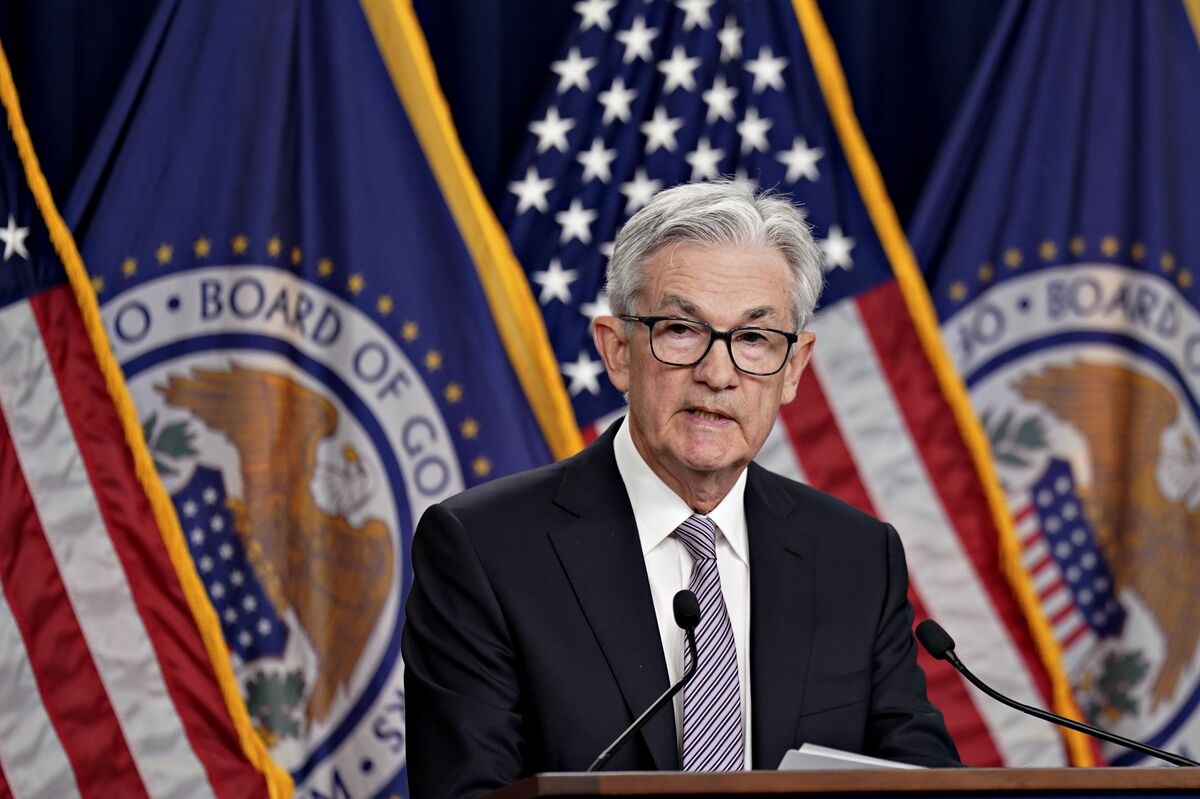
President Donald Trump explicitly told Reuters in an interview that he has no plans to fire Federal Reserve Chair Jerome Powell, despite an ongoing Justice Department criminal investigation into Powell related to the Fed’s headquarters renovation project and his congressional testimony about it.

Trump stated:

“I don’t have any plan to do that,” when asked directly if he would attempt to remove Powell. He added that it was “too early” to say if the probe would provide grounds for action, describing the situation as a “holding pattern” while potential replacements like Kevin Hassett or Kevin Warsh are considered for when Powell’s chair term ends in May 2026.

This comes amid heightened tensions: The investigation has been criticized by Powell as a pretext to pressure the Fed on interest rate decisions, rather than genuine concerns over spending. Powell publicly pushed back in a video statement, defending the Fed’s independence.

Trump has long criticized Powell whom he originally nominated in 2017 over monetary policy, previously threatening to fire him, but this latest comment walks back immediate removal plans. Powell’s term as Fed chair expires in May, but he could remain on the Board of Governors until 2028, potentially complicating any full ouster.

Reuters interview statement—that he has no plans to fire Federal Reserve Chair Jerome Powell despite the ongoing Justice Department criminal investigation—carries several key implications for monetary policy, Fed independence, markets, and broader U.S. economic governance.

The comment provides immediate breathing room after weeks of escalation. The DOJ’s grand jury subpoenas related to Powell’s congressional testimony on Fed headquarters renovation cost overruns had sparked fears of forced removal or intensified pressure.

Markets reacted positively in reports, with some surges noted as relief from worst-case scenarios like abrupt firing attempts that could unsettle financial stability. Bond yields and equities often dip on Fed independence threats due to inflation or credibility risks, so this walks back immediate volatility.

Powell’s chair term ends in May 2026, but his Board of Governors seat runs until 2028. He isn’t required to resign fully.

Analysts widely interpret Trump’s “no plans” as signaling no immediate ouster push, but the probe continues as leverage. Many Fed watchers now see higher odds Powell stays on as a governor post-May—potentially as a dissenting voice or institutional defender—rather than departing quietly.

If Powell remains on the board: Trump could appoint a new chair— he’s eyeing figures like Kevin Warsh or Kevin Hassett, but the board would lack a clear Trump-aligned majority only ~3 reliable appointees out of 7. This creates a “rival center of influence” inside the Fed, leading to more divided votes, slower consensus on policy, and potential gridlock on rate decisions.

Powell has pushed back hard e.g., rare video statement calling the probe a “pretext” for rate pressure, and the attacks may harden his resolve to stay and protect Fed autonomy. Trump wants aggressive rate cuts (he’s dismissed high rates and pushed for lower ones to boost growth). The Fed has cut rates recently but remains data-dependent.

With reduced firing threat: The Fed may stick to its independent stance, avoiding rushed cuts that could fuel inflation. Some observers predict fewer or delayed cuts in 2026 if Powell stays influential, as the probe backfired by making the Fed more resistant to perceived political interference.

Eroding perceived independence could still raise inflation expectations or weaken the dollar if global investors doubt U.S. central bank credibility. Trump’s dismissal of Fed independence concerns (“I don’t care… They should be loyal”) reinforces his view that the president should influence monetary policy directly—contrary to decades of bipartisan norms.

The probe launched under Trump ally U.S. Attorney Jeanine Pirro draws bipartisan criticism, including from some Republicans, as weaponizing the DOJ for policy ends. It risks setting precedents: Undermining Fed independence could affect global confidence in U.S. institutions, complicate future nominations, and invite legal challenges.

Politically, it highlights tensions within the GOP—some senators threaten to block Fed nominees until the probe resolves. This is a tactical pause rather than resolution. Trump keeps options open (“holding pattern,” “too early” to decide based on probe), while Powell gains leverage to finish his chair term and possibly linger on the board.

The standoff tests Fed resilience in an era of heightened executive pressure, with ripple effects on interest rates, inflation control, and economic predictability through 2026 and beyond.

Markets will watch nominee announcements and probe developments closely. Markets and analysts are watching closely, as any escalation could impact Fed independence, interest rates, and economic stability.

U.S. Treasury Complete Debt Back of $2B in Outstanding Treasury Securities

0

The US Treasury recently completed a debt buyback operation of $2 billion in outstanding Treasury securities, specifically targeting long-term nominal coupon bonds in the 20- to 30-year maturity range, with maturities from February 15, 2046, to November 15, 2055.

This occurred on January 14, 2026, with settlement on January 15, 2026. The Treasury announced it would purchase up to $2 billion par amount, and the results showed exactly that amount accepted out of over $25 billion offered by market participants.

This is part of the Treasury’s ongoing liquidity support buyback program, which resumed and expanded in 2024–2025 after a long hiatus. The program aims to: Improve liquidity in the Treasury market, especially for older “off-the-run” securities that trade less frequently.

Help manage the maturity profile of outstanding debt. Support smoother market functioning without directly impacting new issuance sizes. These buybacks are not the same as Federal Reserve quantitative easing (QE), as they are funded through regular Treasury operations often involving issuing new short-term debt to repurchase longer-term debt, rather than central bank balance sheet expansion.

However, they can have similar effects by injecting liquidity and potentially supporting bond prices or lowering yields in targeted segments. The current quarterly schedule covering November 2025–January 2026 and beyond includes multiple such operations, with up to $2 billion each in the 10–20-year and 20–30-year nominal buckets (four times per quarter in those ranges), contributing to a total liquidity support buyback cap of up to $38 billion per quarter across categories.

Larger weekly totals have occurred in some periods e.g., $14.5 billion in one reported week in late 2025, but individual operations are typically capped at these levels for liquidity-focused ones.

In context, $2 billion is modest relative to the US national debt well over $35–36 trillion, but these targeted repurchases help fine-tune debt management amid fiscal outflows, interest rate dynamics, and market conditions in early 2026.

The $2 billion US Treasury debt buyback settled January 15, 2026, targeting long-dated nominal coupon securities from 2046–2055 maturities is a routine operation under the ongoing liquidity support buyback program.

While modest in scale relative to the ~$36+ trillion national debt and quarterly borrowing needs ~$578 billion net privately-held marketable borrowing projected for Q1 2026, it carries several layered implications across debt management, market functioning, fiscal policy, and broader asset classes.

The program focuses on repurchasing “off-the-run” Treasuries to reduce bid-ask spreads, narrow off-the-run premiums, and improve overall market depth. Studies and operational data show these buybacks moderately boost prices and liquidity for targeted securities, especially when primary dealers hold elevated inventories.

This helps prevent dislocations in a market prone to stress from large issuance volumes and varying investor demand. By retiring longer-maturity debt often issued at higher coupon rates in prior environments, the Treasury can replace it with new issuance at potentially lower prevailing yields or shorter maturities.

This subtly reduces future interest expense burdens, though the $2 billion amount is too small for material fiscal relief. As per Treasury guidance, buybacks do not significantly alter privately-held net marketable borrowing because repurchased debt is offset by equivalent new issuance. It’s essentially a swap: longer-term debt out, often shorter-term or new coupons in.

These operations inject modest demand into the long end of the curve (20–30 year sector), which can exert slight downward pressure on yields in that segment or prevent sharper rises amid heavy supply. Recent patterns show operations like this contributing to smoother functioning without broad yield curve shifts.

Some market commentary frames these as “quiet QE” or stealth liquidity boosts supporting risk assets (stocks, crypto). However, the scale ~$2 billion per operation, with quarterly caps up to ~$38 billion across categories is negligible compared to Federal Reserve balance sheet dynamics or overall system liquidity.

It’s not expansionary like QE; it’s debt management funded by issuing other securities. Any positive ripple to equities or crypto is indirect and minor—more “plumbing fix” than stimulus. Amid ongoing high deficits, massive debt rollovers (trillions maturing in coming years), and rising interest costs, this is fine-tuning rather than a pivot.

Larger concerns e.g., potential yield spikes from rollover pressures or foreign demand weakness remain unaddressed by individual $2 billion operations. Since relaunching in 2024, the Treasury has repurchased hundreds of billions cumulatively ~$239 billion by late 2025 data, with plans for continued regular operations e.g., multiple $2 billion slots per quarter in longer buckets.

Expansions more frequent ops, potential non-dealer access in 2026 aim to make the tool more effective without altering issuance strategy. With deficits persistent and debt service costs soaring, buybacks help optimize amid these pressures but don’t solve underlying imbalances. They can indirectly support smoother auctions by freeing dealer balance sheets.

A separate $4 billion buyback— different maturity bucket was delayed January 16 due to technical issues, highlighting execution risks but with no reported systemic fallout. This $2 billion buyback reinforces Treasury market resilience and supports efficient debt management in a high-debt era—positive but incremental.

It doesn’t signal aggressive easing or resolve larger fiscal challenges. Markets largely treat these as background noise unless clustered operations align with other liquidity events. For investors, it’s a mild tailwind for bond liquidity especially long-end rather than a game-changer for broader risk-on trades.