DD
MM
YYYY

PAGES

DD
MM
YYYY

spot_img

PAGES

Home Blog Page 3700

African indigenous companies are globally undervalued

0

Africa is home to many innovative and resilient companies that have been creating value and solving problems for their communities and beyond. However, these companies face challenges in accessing capital, markets, and talent, as well as unfair competition from foreign firms that enjoy more favorable conditions. As a result, African indigenous companies are globally undervalued and underrepresented.

I will explore some of the reasons why African indigenous companies are globally undervalued, and what can be done to change this situation. I will also highlight some of the success stories of African indigenous companies that have overcome the odds and achieved global recognition and impact.

One of the main reasons why African indigenous companies are globally undervalued is the lack of awareness and appreciation of their potential and achievements. Many investors, consumers, and media outlets tend to overlook or underestimate the value proposition and competitive advantage of African indigenous companies, and instead focus on the risks and challenges they face. This creates a negative perception and bias that affects the valuation and growth prospects of these companies.

Another reason why African indigenous companies are globally undervalued is the lack of adequate support and enabling environment for their development. Many African countries lack the infrastructure, policies, regulations, and institutions that can foster a conducive ecosystem for entrepreneurship and innovation.

For instance, African indigenous companies often face difficulties in accessing finance, registering their businesses, protecting their intellectual property rights, complying with tax laws, and accessing quality education and training. These factors limit their ability to scale up, expand their markets, and attract talent.

A third reason why African indigenous companies are globally undervalued is the unfair competition they face from foreign firms that have more resources, networks, and influence.

Many foreign firms operate in Africa with preferential treatment from governments, donors, and multilateral organizations, such as tax breaks, subsidies, contracts, and grants. These firms also benefit from their global brand recognition, customer loyalty, and economies of scale.

This creates an uneven playing field for African indigenous companies that have to compete with these firms on quality, price, and innovation.

There are several actions that can be taken to change the situation of African indigenous companies being globally undervalued. Some of these actions include:

Raising awareness and appreciation of the value and impact of African indigenous companies among investors, consumers, media outlets, policymakers, and other stakeholders. This can be done by showcasing the success stories of African indigenous companies that have created innovative solutions, generated employment, contributed to social development, and improved environmental sustainability.

This can also be done by promoting positive narratives and images of Africa as a continent of opportunities, creativity, and diversity.

Providing adequate support and enabling the environment for the development of African indigenous companies. This can be done by improving the infrastructure, policies, regulations, and institutions that can facilitate entrepreneurship and innovation in Africa.

For instance, this can be done by increasing access to finance, simplifying business registration processes, strengthening intellectual property rights protection systems, streamlining tax laws, and enhancing education and training quality and relevance.

Leveling the playing field for African indigenous companies to compete fairly with foreign firms. This can be done by ensuring that foreign firms operate in Africa with transparency, accountability, and social responsibility.

This can also be done by encouraging foreign firms to partner with African indigenous companies to share knowledge, skills, resources, and markets. This can also be done by advocating for fair trade practices and policies that protect the interests of African indigenous companies.

Despite the challenges they face, many African indigenous companies have proven their worth and potential in the global market. Here are some examples of such companies:

Safaricom: Safaricom is a leading telecommunications company in Kenya that offers mobile money services through its M-Pesa platform. M-Pesa has revolutionized financial inclusion in Kenya and other countries by enabling millions of people to send and receive money using their mobile phones. M-Pesa has also enabled the development of other digital services such as e-commerce, healthcare, education, agriculture, and energy.

Flutterwave: Flutterwave is a fintech company that provides payment solutions for businesses across Africa. Flutterwave enables businesses to accept payments from customers using various methods such as cards, mobile money, bank transfers, and cryptocurrencies.

Flutterwave also enables businesses to access global markets by integrating with platforms such as Shopify, Amazon, and PayPal. Flutterwave has processed over $9 billion in transactions across 33 African countries.

Jumia: Jumia is an e-commerce platform that connects buyers and sellers across Africa. Jumia offers a variety of products such as electronics, fashion, beauty, groceries, and books.

Jumia also offers services such as food delivery, travel booking, and classifieds. Jumia has over 6 million active customers across 14 African countries and is the first African startup to be listed on the New York Stock Exchange.

Zipline: Zipline is a drone delivery company that delivers medical supplies such as blood, vaccines, and medicines to remote and hard-to-reach areas in Africa. Zipline uses autonomous drones that can fly up to 100 km and carry up to 1.8 kg of cargo. Zipline has delivered over 100,000 medical supplies to health facilities in Rwanda and Ghana, saving lives and improving health outcomes.

Andela: Andela is a talent marketplace that connects software developers from Africa with global companies that need their skills. Andela provides training, mentorship, and support to developers and matches them with projects that suit their expertise and interests. Andela has over 1,500 developers from six African countries working with companies such as Microsoft, IBM, and Facebook.

African indigenous companies are globally undervalued, but they have the potential and capacity to create value and impact for their communities and the world. They need more awareness, appreciation, support, and fair competition to thrive and grow. They also need more recognition and celebration for their achievements and contributions. African indigenous companies are the future of Africa and the world.
Israel seeks $10 billion in Emergency funding from USA

0
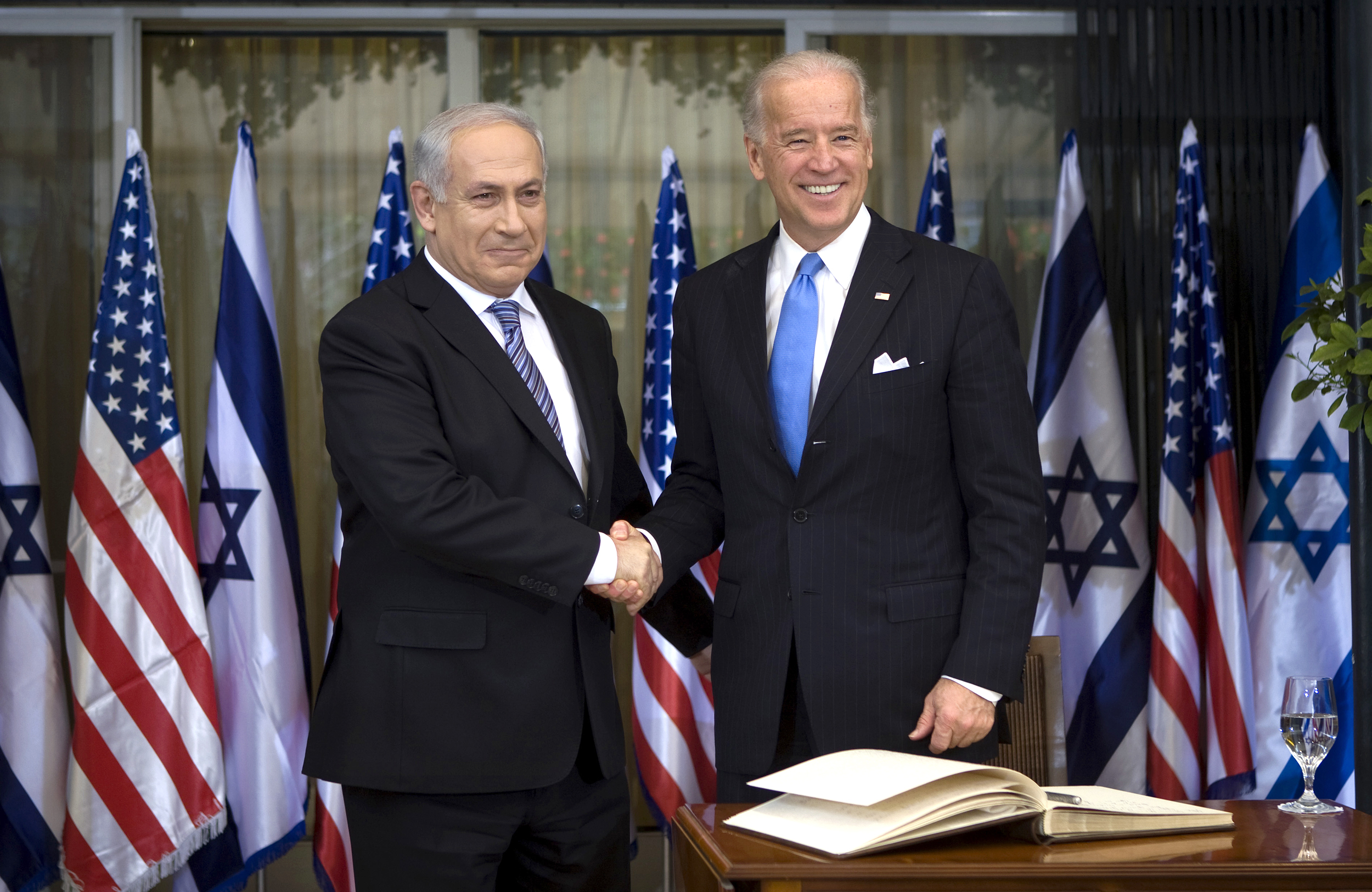
Benjamin Netanyahu and Joe Biden in Jerusalem, on March 9, 2010.

In a surprising move, Israel has requested $10 billion in emergency funding from the United States, citing the need to bolster its defense capabilities and economic recovery amid rising regional tensions and the impact of the COVID-19 pandemic.

The request, which was made public on Tuesday, comes as the Biden administration is trying to revive the 2015 nuclear deal with Iran, a move that Israel strongly opposes and has threatened to take military action against. The deal, formally known as the Joint Comprehensive Plan of Action (JCPOA), was signed by Iran and six world powers, and aimed to limit Iran’s nuclear activities in exchange for sanctions relief.

However, former President Donald Trump withdrew from the deal in 2018 and reimposed harsh sanctions on Iran, prompting Iran to resume some of its nuclear activities that were restricted under the deal. The Biden administration has expressed its willingness to rejoin the deal if Iran returns to full compliance, but the two sides have not yet reached an agreement.

Israel also faces growing challenges from Hezbollah in Lebanon, Hamas in Gaza, and Syria, where Iranian-backed militias have established a foothold. Israel considers Iran and its proxies as existential threats and has carried out hundreds of airstrikes against Iranian targets in Syria in recent years. Israel also accuses Iran of providing weapons and funding to Hezbollah and Hamas, which have launched rockets and missiles at Israeli territory on several occasions.

According to Israeli officials, the $10 billion would be used to purchase advanced weapons systems, such as the F-35 stealth fighter jet, the KC-46 aerial refueling tanker, and precision-guided munitions. The funds would also help Israel cope with the economic fallout of the pandemic, which has caused a sharp contraction in its GDP and a rise in unemployment and poverty.

The US is already Israel’s largest benefactor, providing $3.8 billion in annual military aid as part of a 10-year agreement signed in 2016. The emergency funding would be in addition to that amount and would require congressional approval. The US has previously granted Israel emergency aid in times of crisis, such as during the 1973 Yom Kippur War and the 1991 Gulf War.

The request has sparked mixed reactions in Washington, where some lawmakers have expressed support for Israel’s security needs, while others have questioned the timing and the rationale of the request.

Some critics have argued that Israel is trying to pressure the US into abandoning the Iran deal, or to compensate for its own mismanagement of the pandemic. Others have pointed out that Israel is one of the wealthiest countries in the region, and that the US should prioritize its own domestic needs amid the ongoing health and economic crisis.

The Biden administration has not yet responded to the request but has reiterated its commitment to Israel’s security and its support for a two-state solution to the Israeli-Palestinian conflict. The administration has also stressed the importance of diplomacy and dialogue with Iran and has urged Israel to refrain from any actions that could undermine the negotiations or escalate the situation.

Roblox integrates XRP as a payment method

0

Roblox, the popular online gaming platform, has announced that it will integrate XRP, the native cryptocurrency of the Ripple network, as a payment method for its users. This is a major milestone for both Roblox and XRP, as it will enable millions of gamers to access and use digital assets in a seamless and secure way.

Roblox is a platform where users can create and play games, as well as socialize and interact with other players. Roblox has over 200 million monthly active users, and more than 20 million games created by its community. Roblox also has its own virtual currency, called Robux, which can be used to buy items and access premium features in the platform.

XRP is a fast, scalable and low-cost cryptocurrency that powers the Ripple network, a global payment system that connects banks, payment providers, digital asset exchanges and corporates. XRP can be used to send and receive value across borders, without intermediaries or high fees. XRP also has a strong and growing ecosystem of developers and innovators who are building applications and solutions on top of it.

One of the main benefits of using XRP as a payment method is its speed. XRP transactions can be confirmed in seconds, compared to minutes or hours for other payment systems. This means that users can send and receive money almost instantly, without having to wait for intermediaries or deal with delays and uncertainties.

Another benefit of using XRP as a payment method is its low cost. XRP transactions have very low fees, typically less than a cent, regardless of the amount or destination of the payment. This makes XRP ideal for micropayments, remittances, and e-commerce, where high fees can eat into the margins or deter customers.

A third benefit of using XRP as a payment method is its scalability. XRP can handle thousands of transactions per second, which is much higher than most payment systems. This means that XRP can cope with high volumes of payments without compromising its performance or security.

XRP is also a versatile payment method that can support various use cases and scenarios. For example, XRP can be used to pay for goods and services online or offline, using QR codes, NFC, or other methods. XRP can also be used to send money to friends and family across the world, without having to worry about exchange rates or intermediaries. XRP can also be used to access decentralized applications and services on the XRP Ledger, such as smart contracts, decentralized exchanges, or NFTs.

By integrating XRP as a payment method, Roblox will offer its users a new and convenient way to buy Robux and other in-game items, as well as to cash out their earnings from creating games. Users will be able to link their Roblox account with their XRP wallet and use XRP to make transactions within the platform. Users will also benefit from the speed and low cost of XRP transactions, which can be confirmed in seconds and cost fractions of a cent.

Roblox’s decision to adopt XRP is a testament to the growing adoption and innovation of digital assets in the gaming industry. Roblox joins other leading gaming platforms, such as Fortnite, Minecraft and Decentraland, that have embraced cryptocurrencies and blockchain technology to enhance their user experience and create new opportunities for their communities.

Roblox’s integration of XRP will also expose millions of gamers to the potential and benefits of digital assets and foster greater awareness and education about this emerging technology.

XRP is a payment method that offers speed, low cost, scalability, and versatility. XRP can enable faster and cheaper cross-border payments, as well as support various use cases and scenarios. XRP is not only a digital asset, but also a payment solution that can benefit users and businesses alike.

Roblox’s integration of XRP is expected to launch in the first quarter of 2024, following a testing and development phase. Roblox and Ripple will provide more details and updates on the integration process in the coming months. In the meantime, users can sign up for early access and get a chance to win free XRP.

Does Bitcoin care how many bitcoins Exist?

0

One of the most intriguing aspects of Bitcoin is its limited supply. Unlike fiat currencies, which can be printed at will by central banks, Bitcoin has a fixed maximum number of coins that can ever be created: 21 million. This scarcity gives Bitcoin its value and makes it attractive to investors and users who want to preserve their purchasing power.

As of October 16, 2023, the current market cap of Bitcoin is $526.36 billion USD, according to CoinMarketCap . This means that Bitcoin accounts for about 49.7% of the total cryptocurrency market cap, which is $1.06 trillion USD. The current price of Bitcoin is $28,358.34 USD, with a 24-hour trading volume of $5.3 billion USD. Bitcoin has increased by 0.33% in the last 24 hours, and by 3.16% in the last week.

But does Bitcoin itself care how many bitcoins there are? Does the protocol have any mechanism to adjust the supply in response to changing demand or economic conditions? The answer is no. Bitcoin is designed to be indifferent to the quantity of bitcoins in circulation. It only cares about the quality of the network and the security of the transactions.

The reason for this is that Bitcoin is not a currency in the traditional sense. It is not a unit of account, a medium of exchange, or a store of value. It is a decentralized ledger that records the history of transactions and transfers of value among its participants. The bitcoins are simply tokens that represent the right to update this ledger and transfer value on it. They are not backed by anything other than the consensus of the network and the cryptographic proof of work that secures it.

Therefore, Bitcoin does not need to adjust its supply to maintain its value or stability. It only needs to ensure that the network is robust, resilient, and censorship resistant. The value of Bitcoin is determined by the market forces of supply and demand, which reflect the utility and trust that users derive from it.

The supply of bitcoins is predetermined by an algorithm that reduces the reward for mining new blocks every four years, until it reaches zero around the year 2140. This creates a predictable and transparent monetary policy that is immune to manipulation or interference.

Scaramucci dismissed the common criticisms of Bitcoin, such as its volatility, environmental impact, and regulatory uncertainty. He said that Bitcoin’s volatility is a natural consequence of its rapid growth, and that it will stabilize as the market matures. He said that Bitcoin’s environmental impact is overstated, and that it will become more energy efficient as it adopts renewable sources of power. He said that Bitcoin’s regulatory uncertainty is a temporary hurdle, and that it will eventually gain acceptance from governments and central banks.

He concluded by saying that Bitcoin is a revolutionary technology that will change the world for the better. He said that Bitcoin is not only a financial asset, but also a social movement that empowers people and promotes freedom. He said that Bitcoin is the future of money, and that he is confident that it will reach a $15 trillion market cap in the next 10 years.

Bitcoin does not care how many bitcoins there are, because it does not need to. It only cares about how secure and reliable its network is, because that is what gives it its value and utility.

Instances Where An Individual’s Freedom of Speech/ Expression May Be Limited

0

On today’s episode of learning the law; we will be looking at the instances where an individual’s freedom of speech or expression can be restricted, limited or denied. 

Freedom of speech remains one of the famous rights that accrue to every person in modern society. If you have the right to live, you should also have the right to speak up, express yourself, share your opinion, air your grievances or communicate with one another, hence freedom of speech is as important as the freedom to live or right to life. 

In the United States of America, this right to speak or freedom of speech as it is preferably called is provided for in the First Amendment rights while in Nigeria it is constitutionally provided for in section 39 of the constitution of the Federal Republic of Nigeria, 1999 (as amended) and it reads thus; 39. (1) Every person shall be entitled to freedom of expression, including freedom to hold opinions and to receive and impart ideas and information without interference.

This right to speak freely and express oneself is as well recognized in most jurisdictions of the world and any country that still censors speeches and limits citizens’ freedom to express themselves freely are always accused of being autocratic like the country of North Korea. 

But as we always point out in every general rule there must be an or some exceptions; the same exists in this right to speak. There are some instances where your right to speak or express yourself may be restricted, limited or totally denied.

It has been held by the Supreme Court of Justices of the United States of America that the parliament can limit citizens’ freedom of speech if the occasion demands, like in wartime. 

In the landmark case of Schenck v. United States, 249 U.S. 47 (1919), the Supreme Court of the United States while upholding the conviction of Charles Schenck and Elizabeth Baer for violating the Espionage Act of 1917 through actions that obstructed the “recruiting or enlistment service” during World War 1 held that freedom of speech and freedom of the press under the First Amendment could be limited if the words in the circumstances created “a clear and present danger.”

In the above case, Charles Schenck and Elizabeth Baer, members and leaders of the Socialist Party were circulating literature and articles to newly conscripted soldiers, the literature which was published with the intent of making the conscripted soldiers rebel. Some parts of the literature read that the drafting of the soldier for World War 1 was a form of involuntary servitude that violated the Thirteenth Amendment.

When they were arrested and charged, they raised the defense of having the freedom to express themselves which has been provided for under the First Amendment rights but the court while rejecting their defense ruled that there are limitations to such freedom of expressing oneself which an individual under a civilized society may enjoy and circulating articles that might make newly conscripted soldiers to rebel is an extreme way of expressing oneself. 

This case remains the locus classicus on limitations to freedom of speech.