DD
MM
YYYY

PAGES

DD
MM
YYYY

spot_img

PAGES

Home Blog Page 3717

Cardano and Scorpion Casino: A Comparative Analysis of Their Remarkable $4 Million Growth

0

The simultaneous success of Cardano and Scorpion Casino has captured the attention of the cryptocurrency community, with both projects achieving significant transaction volumes. Cardano, a well-established crypto giant, achieved an impressive $4 million in transactions within a mere two months. Meanwhile, the presale token Scorpion Casino has demonstrated remarkable performance, raising $3.8 million to date. As both projects continue to thrive, the crypto world eagerly awaits their ongoing progress.

In the investigation, we will delve into the complicated web of recent events surrounding Cardano and the explosive growth of Scorpion Casino, revealing crucial information that will help investors in making the right decisions – let’s dig in!

An Unmatched Presale Victory Of Scorpion Casino:

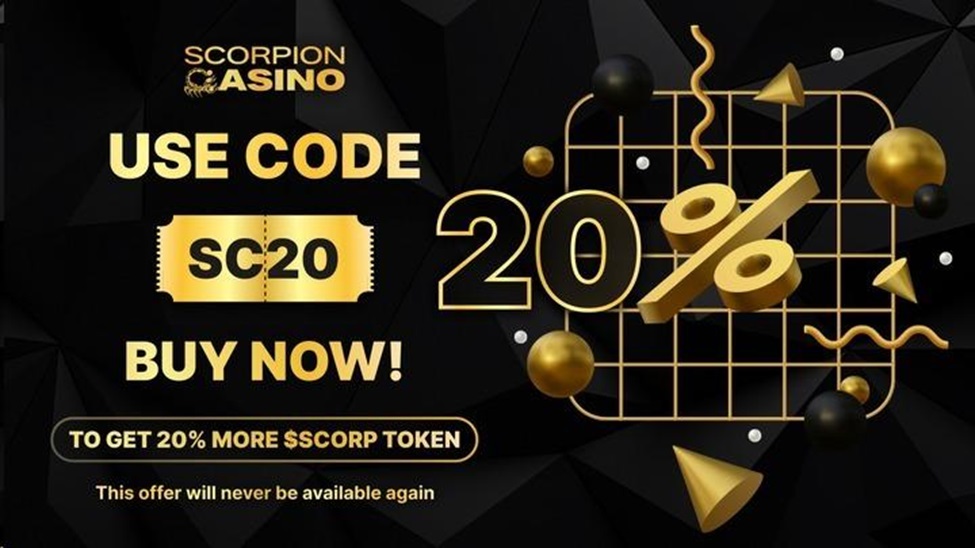
With its presale offerings, Scorpion Casino is causing a stir in the cryptocurrency community. The platform’s native token, $SCORP, is ranked as the top token globally and offers holders daily prizes to its presale community. One of the most eye-catching features of this presale is that investors can earn up to 10,000 USDT in rewards in daily passive staking income from a licensed and regulated global Casino and Betting Platform, no matter the market conditions. These rewards can be redeemed during the presale itself, offering early adopters a special opportunity to invest.

Scorpion Casino has so far raised $3.8 million and is to be listed on several exchanges for launch, including BitMart. In addition to this, the $SCORP team has revealed that they will announce the name of the second exchange on February 15th. With more than 300 million tokens out of 480 million purchased, the opportunity to enter presale shortens.

Exclusive Presale Buy-in Competition

To enhance the excitement and push towards the $4 million target, Scorpion Casino has introduced a distinctive presale buy-in competition featuring rewards of up to $10,000 USDT. in the month of February, participants can vie for prizes, with the top three winners receiving 2,000 USDT for third, 3,000 USDT for second, and 5,000 USDT for the first largest purchase, respectively. This tournament offers token buyers an enticing opportunity to secure their stake in Scorpion Casino’s potentially promising future.

Cardano Scores 4 Million Transactions in Just Two Months!

In just the last two months, Cardano has seen an astonishing spike in activity, with four million transactions recorded. This increase is a reflection of the Cardano network’s expanding interest and engagement. Eight new projects were succfessfully launched in December and January, while seventeen more projects are now in development. With 157 projects completed to date and 1,320 in development, the platform’s dynamic ecosystem is evident.
Cardano’s Advancements and the Power of Plutus Scripts

Cardano’s ascent in the world of cryptocurrencies can be attributed in part to its continuous technological innovations. One such milestone was the introduction of Plutus scripts, a critical element enabling smart contracts on the Cardano blockchain. These smart contracts, self-executing agreements governed by code, have revolutionized various aspects of blockchain technology.

Plutus V2 scripts, which are integral to Cardano’s smart contract capabilities, have seen a remarkable surge with a growth of 13,091 scripts, bringing the total count to an impressive 17,718. Additionally, Plutus V1 scripts have increased by 81, reaching a total of 6,332.

Cardano’s commitment to innovation doesn’t stop here. The upcoming Plutus V3, set to follow the Conway upgrade, promises to introduce features like integerToByteString and byteStringToInteger bitwise operations. These additions are designed to further enhance Cardano’s capabilities and expand its potential applications in the world of decentralized finance, governance, and beyond.

As Cardano’s infrastructure continues to evolve and strengthen, it solidifies its position as a pioneering blockchain platform with the power to shape the future of the cryptocurrency landscape.

Cryptocurrency enthusiasts are currently presented with intriguing opportunities as both Cardano and Scorpion Casino experience significant growth. Cardano is enhancing its position through technological advancements, while Scorpion Casino offers investors a unique chance to participate in a rewarding ecosystem. Take advantage of this opportunity by visiting the Scorpion Casino website and considering participation in the presale. Join us in this exciting journey.

More information on SCORP:

Presale: https://presale.scorpion.casino/

Twitter: https://twitter.com/ScorpionCasino

Telegram: https://t.me/scorpioncasino_official
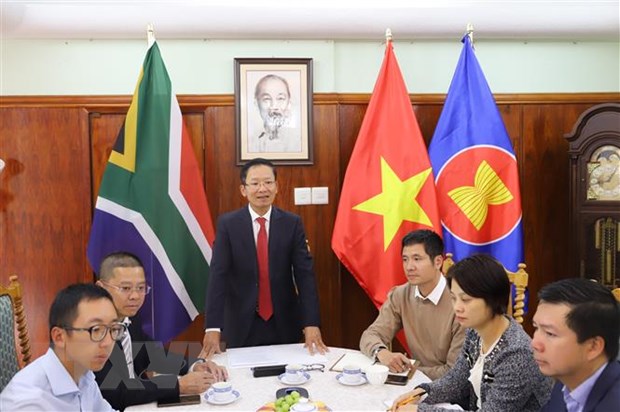
South Australia halts Central Vietnam Students’ admittance over rising number of missing student’s

0

The South Australian government has announced that it will temporarily suspend the admission of students from Central Vietnam, following reports of several missing cases in the region. The decision was made after consultation with the Australian Federal Police and the Vietnamese Embassy in Canberra.

According to a statement released by the South Australian Department of Education, the suspension will affect about 200 students who have applied for study visas to attend schools and universities in South Australia. The department said that the suspension is a precautionary measure to ensure the safety and well-being of the students and their families, as well as the local community.

The statement also said that the department will work closely with the relevant authorities to monitor the situation and provide support and assistance to the affected students and their education providers. The suspension will be reviewed on a monthly basis and lifted as soon as the situation improves.

The decision comes after several media outlets reported that at least 10 students from Central Vietnam have gone missing in South Australia in the past two months. The students, who were enrolled in various courses ranging from English language to engineering, were last seen or contacted by their families or friends in late December or early January.

The Australian Federal Police confirmed that they are investigating the cases and have not ruled out any possibilities, including human trafficking, illegal immigration, or voluntary disappearance. The Vietnamese Embassy in Canberra said that they are also working with the Australian authorities to locate the missing students and provide consular assistance to their families.

The embassy urged the Vietnamese community in Australia to report any information or suspicious activities related to the cases to the police or the embassy. The embassy also advised the Vietnamese students in Australia to comply with the local laws and regulations, maintain regular contact with their families and friends, and seek help from the embassy or their education providers if they encounter any difficulties or problems.

The cases of the missing students have raised questions about the safety and security of international students in Australia, especially those from vulnerable backgrounds.

According to the latest data from the Department of Education, Skills and Employment, there were 37,379 Vietnamese students enrolled in Australian education institutions as of June 2020, making Vietnam the fourth largest source country of international students in Australia.

Many of these students come from poor rural areas in Central Vietnam, where they face limited opportunities and challenges such as poverty, natural disasters, and social discrimination.

The Australian government has been promoting its education sector as a safe and welcoming destination for international students, especially amid the COVID-19 pandemic.

However, the cases of the missing students have cast a shadow over this image and raised doubts about the effectiveness of the government’s policies and regulations to protect international students from harm.

The government needs to take urgent action to address this issue and ensure that international students can study and live in Australia without fear or danger.

Celsius will distribute $3 billion of Cryptocurrencies in 12 months to Creditors

2

Celsius, a leading platform for earning and borrowing digital assets, announced today that it will distribute $3 billion in crypto to its creditors in the next 12 months. This is a significant increase from the $1 billion that Celsius distributed in 2023 and reflects the growing demand and adoption of its services.

Celsius offers its users up to 18% annual interest on their crypto deposits, as well as low-cost loans against their crypto collateral. Celsius claims to have over 10 million users worldwide, and to manage over $30 billion in assets. Celsius also shares 80% of its revenues with its community, in the form of weekly rewards paid in the same currency as the deposit.

Alex Mashinsky, the CEO and founder of Celsius, said: “We are proud to be the first and only platform that distributes billions of dollars in crypto to our loyal customers. We are creating a new financial system that is fair, transparent and inclusive. Our mission is to bring 100 million people into the crypto economy, and we are well on our way to achieving that.”

Celsius is not the only platform that offers interest and loans on crypto, but it is one of the most popular and trusted ones. Celsius has received multiple awards and recognitions, such as the Best Crypto Wallet of 2020 by FinTech Breakthrough, and the Most Innovative Crypto Company of 2021 by AIBC Summit. Celsius also has a strong security record, with no hacks or losses of funds since its launch in 2018.

Celsius Bankruptcy

Celsius had filed for bankruptcy protection in the US and UK, citing a series of unfortunate events that led to its financial collapse.

The first and most obvious factor was the crypto market crash that occurred in January 2022, wiping out more than 50% of the total market capitalization in a matter of days. Celsius, which had a large exposure to various crypto assets, suffered massive losses as a result of the price drop and the increased volatility.

The platform also faced a surge in withdrawal requests from its users, who wanted to liquidate their holdings and exit the market. Celsius was unable to meet these demands, as it had lent out most of its assets to borrowers and had insufficient liquidity reserves.

The second factor was the regulatory crackdown that followed the market crash, as authorities around the world sought to impose stricter rules and oversight on the crypto industry. Celsius, which operated in a largely unregulated space, was hit with multiple lawsuits and investigations from regulators in different jurisdictions, accusing it of violating securities laws, consumer protection laws, anti-money laundering laws, and tax laws.

Celsius was also accused of operating a Ponzi scheme, as it allegedly paid out interest to its users from new deposits rather than from actual returns on its investments.

The third factor was the internal mismanagement and fraud that plagued Celsius’ operations. According to reports, Celsius’ teammates were involved in several dubious deals and transactions that siphoned off millions of dollars from the platform’s funds.

Mashinsky also allegedly manipulated the platform’s data and metrics to inflate its performance and valuation. Furthermore, Celsius’ security systems were compromised by hackers who stole sensitive user data and funds from the platform’s wallets.

These factors combined to create a perfect storm that brought down Celsius, leaving its users and investors with little hope of recovering their money. Celsius’ bankruptcy is a stark reminder of the risks and challenges that face the crypto industry, especially in times of market turmoil and regulatory uncertainty.

It also highlights the need for more transparency, accountability, and governance in the crypto space, as well as the importance of due diligence and diversification for crypto users and investors.

Celsius is constantly adding new features and benefits to its platform, such as new coins, higher rates, lower fees, and more partnerships. Celsius also has a native token, CEL, which gives holders access to exclusive perks and discounts. CEL is currently ranked among the top 100 cryptocurrencies by market capitalization and has increased by over 1000% in the past year.

Celsius is a platform that empowers its users to earn more from their crypto, while also supporting the growth and development of the crypto industry. By distributing $3 billion in crypto to its creditors, Celsius is demonstrating its commitment and confidence in the future of crypto.

US Army gets solution to its Stinger missile stock problem; JCPOA and Iran’s nuclear ambitions

0
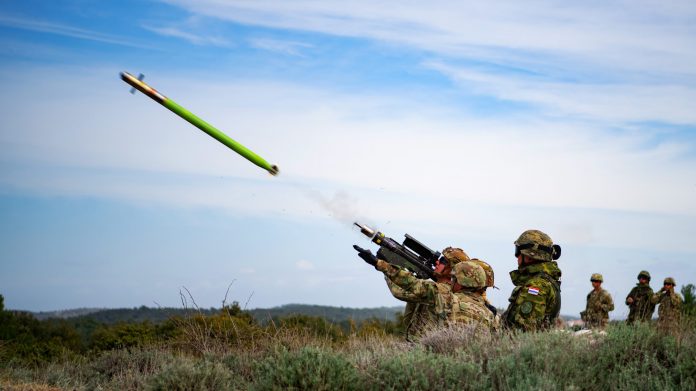
U.S. Army paratroopers assigned to the 173rd Airborne Brigade fire a FIM-92 Stinger during an air defense live-fire exercise alongside soldiers with the Croatian Air Defense Regiment. This training is part of Exercise Shield 22 at Kamenjak near Medulin, Croatia on April 9, 2022. Exercise Shield 22 is an annual Croatian air defense exercise that aims at strengthening the execution of the Air Defense tasks against low and medium altitude moving targets. During the exercise, the 173rd Airborne Brigade and Croatian Air Defense Regiment conduct joint training on Air Defense Tactics, Techniques and Procedures to include air-space control, deconfliction and surveillance as well as targeting and live fire engagement against flying objects on low and medium level altitudes. The 173rd Airborne Brigade is the U.S. Army's Contingency Response Force in Europe, providing rapidly deployable forces to the United States European, African, and Central Command areas of responsibility. Forward deployed across Italy and Germany, the brigade routinely trains alongside NATO allies and partners to build partnerships and strengthen the alliance.

The US Army has announced that it has found a solution to its Stinger missile stock problem, which has been plaguing the service for years. The Stinger missile is a short-range, air defense weapon that can be fired from a shoulder launcher or a vehicle-mounted system. It is designed to engage low-altitude, fixed-wing aircraft, helicopters, and unmanned aerial vehicles.

The problem with the Stinger missile is that it has a limited shelf life of about 10 years, after which it becomes unreliable and unsafe to use. The Army has been struggling to maintain its inventory of Stinger missiles, which are essential for countering the growing threats from drones and other low-flying targets. The Army has been relying on buying new missiles from the manufacturer, Raytheon, or refurbishing old ones, but both options are costly and time-consuming.

The solution that the Army has found is to use a new technology called the Service Life Extension Program (SLEP), which can extend the shelf life of the Stinger missile by up to 15 years. The SLEP involves replacing the missile’s battery, rocket motor, and other components with newer and more reliable ones. The SLEP also upgrades the missile’s software and hardware to improve its performance and compatibility with modern platforms.

The Army has about 19,000 Stingers in its arsenal, but only about 6,000 of them are serviceable, according to a recent report by the Government Accountability Office (GAO). The rest are either expired, damaged, or undergoing maintenance. The GAO found that the Army faces several challenges in managing its Stinger inventory, such as:

A lack of reliable data on the condition and location of the missiles. A shortage of qualified personnel and equipment to inspect and repair the missiles. A high demand for the missiles from operational units and allies. A limited supply of new missiles from the manufacturer.

The GAO recommended that the Army improve its data collection and analysis, increase its inspection and repair capabilities, prioritize its missile requirements, and coordinate with the manufacturer to address the supply issues. The Army concurred with most of the recommendations and is taking steps to implement them.

The Stinger missile is an important asset for the Army, especially in an era of increasing threats from unmanned aerial systems and near-peer adversaries. The Army needs to ensure that it has enough Stingers to meet its current and future needs, and that it can maintain them effectively and efficiently.

The Army has awarded a contract to Raytheon to perform the SLEP on up to 7,000 Stinger missiles over the next five years. The SLEP will not only save the Army money and time, but also enhance its air defense capabilities and readiness. The Army expects to receive the first batch of SLEP-modified Stinger missiles by the end of this year.

The fate of the JCPOA and Iran’s nuclear ambitions

Iran has announced that it is constructing a new nuclear reactor in the city of Isfahan, a major industrial and cultural center in central Iran. The reactor, which will be used for research and medical purposes, is expected to be completed by 2026, according to the Atomic Energy Organization of Iran (AEOI).

The AEOI said that the reactor will have a capacity of 10 megawatts and will use low-enriched uranium as fuel. The reactor will also produce radioisotopes for medical and industrial applications, such as cancer treatment and agriculture.

The AEOI claimed that the reactor will be under the supervision of the International Atomic Energy Agency (IAEA) and will comply with the safeguard’s agreement between Iran and the world.

The announcement comes amid heightened tensions between Iran and the United States over the 2015 nuclear deal, which was abandoned by former President Donald Trump in 2018. The deal, known as the Joint Comprehensive Plan of Action (JCPOA), aimed to limit Iran’s nuclear activities in exchange for sanctions relief.

However, since the US withdrawal and reimposition of sanctions, Iran has gradually breached some of the deal’s key provisions, such as enriching uranium beyond the agreed limits and installing advanced centrifuges.

Iran insists that its nuclear program is peaceful and that it has the right to develop nuclear technology for civilian purposes. It also says that it is willing to return to full compliance with the JCPOA if the US lifts all sanctions and rejoins the deal.

The current US administration, led by President Joe Biden, has expressed interest in reviving the JCPOA, but has also demanded that Iran reverse its violations first. The two sides have been engaged in indirect talks in Vienna since April 2021, but have not yet reached a breakthrough.

The new reactor in Isfahan is not part of the JCPOA and is not subject to the same restrictions as Iran’s other nuclear facilities. According to Iran’s Atomic Energy Organization (AEOI), the reactor will have a capacity of 10 megawatts and will use low-enriched uranium as fuel. The AEOI also claims that the reactor will not produce plutonium, a key ingredient for nuclear weapons.

The international community has reacted cautiously to Iran’s announcement. Some countries, such as Russia and China, have welcomed Iran’s efforts to develop nuclear medicine and have expressed support for the JCPOA negotiations. Others, such as Israel and some Arab states, have voiced concern that Iran’s nuclear activities pose a threat to regional stability and security. They have also accused Iran of pursuing a covert nuclear weapons program and of supporting militant groups across the Middle East.

The fate of the JCPOA and Iran’s nuclear ambitions remains uncertain as the talks in Vienna continue. Both sides face domestic pressures and external challenges that complicate the prospects of reaching a lasting agreement. The new reactor in Isfahan adds another dimension to the complex and contentious issue of Iran’s nuclear program.

The negotiations, which began in April 2021, are aimed at restoring the JCPOA and bringing both the US and Iran back into full compliance. However, the talks have faced many challenges and obstacles, such as political changes in both countries, regional tensions, technical issues and mutual distrust.

The latest round of talks, which started on November 29, 2023, has been described as “the last chance” to save the deal by some diplomats and analysts. However, there is still no clear sign of a breakthrough or a compromise. The main sticking points

Visa and Transak Partner to Streamline Cryptocurrency Offramping in Africa

0

Cryptocurrency adoption is growing rapidly in Africa, as more people are looking for alternative ways to access and use money. However, one of the main challenges that crypto users face is the lack of convenient and cost-effective ways to convert their digital assets into fiat currency and vice versa.

That’s why Visa, the global leader in digital payments, and Transak, a UK-based fintech company that provides fiat on/off ramps for crypto platforms, have announced a strategic partnership to streamline cryptocurrency offramping for African users.

The partnership will enable Transak to integrate Visa Direct, Visa’s real-time push payments platform, into its service, allowing users to send money from their crypto wallets to their bank accounts or Visa cards in minutes. This will significantly reduce the friction and fees associated with crypto-to-fiat conversions, as well as enhance the security and transparency of the transactions.

Transak currently supports over 40 African countries, including Nigeria, Kenya, South Africa, Ghana, and Uganda. The company works with local payment methods, such as mobile money, bank transfers, and cash deposits, to facilitate fiat-to-crypto and crypto-to-fiat transactions. By leveraging Visa Direct, Transak will be able to offer a faster and more seamless experience for its users across the continent.

Sam Hamilton, Senior Vice President and Global Head of Crypto at Visa, said: “We are excited to partner with Transak to bring the benefits of Visa Direct to crypto users in Africa. Visa is committed to supporting the growth and innovation of the crypto industry, and we believe that enabling easy and secure crypto-to-fiat conversions is a key step towards mainstream adoption. With Visa Direct, Transak can offer its users a simple and convenient way to access and use their crypto funds anytime, anywhere.”

Tanveer Singh, Co-Founder and CEO of Transak, said: “We are thrilled to partner with Visa to enhance our service and offer a better offramping solution for our users in Africa. Transak’s mission is to make crypto accessible and usable for everyone, and we believe that integrating Visa Direct will help us achieve that goal.

Visa Direct will enable us to provide faster, cheaper, and more reliable crypto-to-fiat transfers, which will ultimately improve the user experience and drive more adoption of crypto in Africa.”

Africa is a continent with huge potential for crypto adoption, due to its young and tech-savvy population, high mobile penetration, and widespread use of mobile money services. However, Africa also faces many challenges that hinder the growth of the crypto ecosystem, such as lack of access to banking services, high fees and delays for cross-border transactions, and regulatory uncertainty.

This is where Visa Direct can help. By integrating Visa Direct with crypto platforms, such as exchanges, wallets, and payment processors, crypto users in Africa can enjoy the following benefits:

Faster and cheaper access to fiat: Visa Direct can enable crypto users to cash out their crypto assets to their local currency in minutes, rather than hours or days. This can reduce the risk of price volatility and provide liquidity for their daily needs. Moreover, Visa Direct can offer lower fees than traditional methods of fiat withdrawal, such as bank transfers or mobile money.

Easier and safer cross-border payments: Visa Direct can also facilitate cross-border payments for crypto users in Africa, whether they are sending or receiving money from other countries. For example, a crypto user in Nigeria can send money to a family member in Ghana using Visa Direct, without having to convert their crypto to naira and then to cedi.

This can save time and money, as well as avoid the hassle of dealing with multiple intermediaries and currencies. Additionally, Visa Direct can provide more security and transparency for cross-border payments, as the sender and the recipient can track the status of the transaction and receive confirmation when it is completed.

Greater inclusion and innovation: Finally, Visa Direct can help crypto users in Africa to access more opportunities and services that are enabled by crypto technology. For instance, a crypto user in Kenya can use Visa Direct to pay for goods and services online or offline using their Visa card, without having to rely on a bank account or a mobile money provider. This can increase their financial inclusion and empowerment, as well as foster innovation and entrepreneurship in the crypto space.

Visa Direct is not only a service that can benefit crypto users in Africa, but also a strategic partner that can support the development and growth of the crypto ecosystem in the continent. By working together with crypto platforms and stakeholders, Visa Direct can help to bridge the gap between crypto and fiat and create a more inclusive and efficient financial system for everyone.