DD
MM
YYYY

PAGES

DD
MM
YYYY

spot_img

PAGES

Home Blog Page 3717

Nigeria Offers To host African Central Bank

0

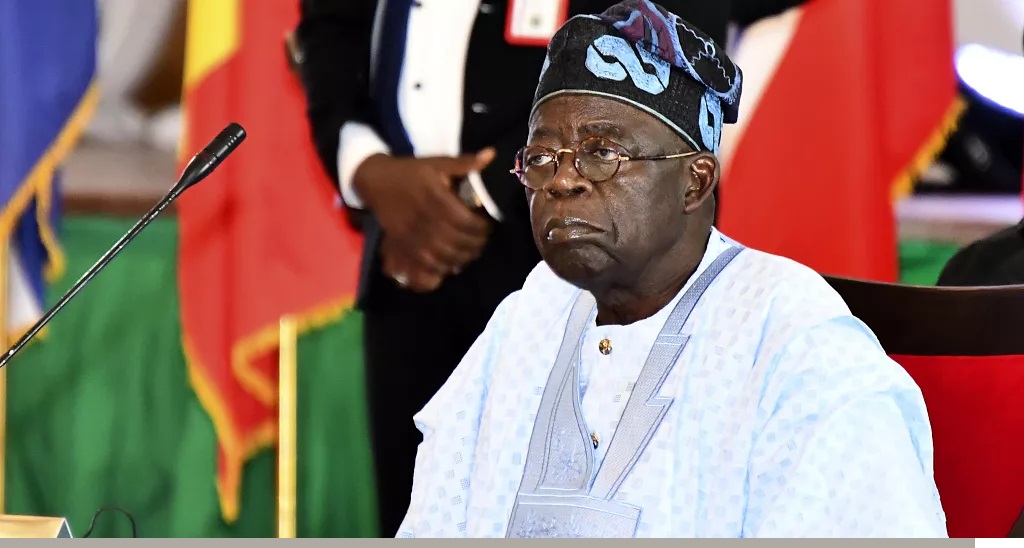
President Bola Tinubu says Nigeria is ready to host the African Central Bank in line with the vision of the Abuja Treaty.

Addressing leaders at the 37th Ordinary Session of the Assembly of Heads of State and Government of the African Union (AU) in Addis Ababa, Ethiopia, on Saturday, President Tinubu said his administration will engage the African Union Commission in collaboration with member states to ensure that the bank takes off as scheduled in 2028.

The President affirmed that Africa’s success in conclusively addressing its challenges hinges on the firmness of its resolution, built on a foundation of deep-rooted solidarity, if it is to avoid perpetuating existing problems and creating new ones.

“As a continent and as individual nations, we face strong headwinds and difficult hurdles threatening to complicate our mission to bring qualitative democratic governance and economic development to our people. Many of these obstacles, such as climate change and unfair patterns of global trade, are largely not of our making. However, some of the pitfalls, including coup-birthed autocracies and the deleterious tinkering with constitutional tenure provisions, are developmental cancers we as Africans are giving to ourselves,” he stated.

Speaking on the military takeovers in the Republics of Guinea, Burkina Faso, Mali, and Niger, and the exit of three of these nations from ECOWAS, the President said disagreements over the unconstitutional changes of government should not mean a permanent rupture of the abiding lines of regional affinity and cooperation.

“The drive for a peaceful, strong, and united West Africa is bigger than any one person or group of people. The bonds of history, culture, commerce, geography, and brotherhood hold deep meaning for our people. Thus, out of the dust and fog of misunderstanding and acrimony, we must seize the chance to create a new people-centric era of trust and accord.

“To all who care to listen, I declare that if you come to the table to discuss important matters in good faith, you will find Nigeria and ECOWAS already sitting there waiting to greet you as the brother that you are,” President Tinubu said.

On education, which is the theme of this year’s summit, the President said education is the core ingredient in the process of evolving creative solutions to the unique challenges long confronting the continent.

“In helping to achieve the Agenda 2063 objective of a peaceful, united and prosperous Africa, I consider African education, not only in the narrow context of the benign use of science and technology to improve the material standards of our people, but also in the nuanced appreciation of the fact that Africa must also become better educated in the humane art of democratic practice, diplomacy, and conflict resolution without violence.

“This year’s theme encourages us to remodel our educational systems to fit these goals. In Nigeria, my administration is devoting ample resources to education at all levels. From redesigning our school feeding programmes and academic curricula to making ourselves an Information and Communication Technology hub, through which we shall bring more youths into the classroom and furnish them with the tools required to flourish in the global economy of the 21st century,” he said.

The President used the occasion to extend invitation to the Africa Counter-Terrorism Summit scheduled to take place in April 2024, in Abuja, stating that the summit aims to expand discussions beyond military and law enforcement remedies to comprehensively tackle the root causes of violent extremism, such as poverty, inadequate political access, and the propagation of hateful ideologies.

Chief Ajuri Ngelale
Special Adviser to the President
(Media & Publicity)
February 17, 2024
The Competition from United Kingdom And The Economic Peril Ahead for Nigerian Lawyers

1

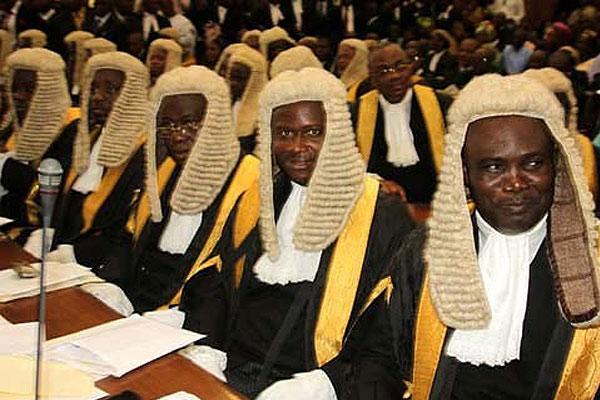
I am very happy that the  Nigerian Bar Association (NBA) is going to court, after the federal government’s bilateral agreement with the United Kingdom, will possibly allow UK lawyers to practice law in Nigeria, according to Premium Times.

The agreement, Enhanced Trade and Investment Partnership (ETIP), will among other things open the path for English lawyers to practice law in Nigeria, and in the process compete with Nigerian lawyers. Of course, if that stands, the Nigerian lawyers will struggle since the big men in Nigeria will likely prefer UK lawyers representing them in Nigerian courts!

People, is your lawyer a “white man” or are you still using these local lawyers? I pity Nigerian lawyers, economically of course. “Please go to court!”- you know what I mean. Hopefully, when you guys finish, you will push for necessary changes in the Nigerian judiciary.

To the federal government,  I do not support your thesis. Allowing British lawyers to practice in Nigeria will not improve investments in Nigeria. Rather, improving our judicial efficiency will do. Unless the British lawyers will have their own courts and judges, I am not sure what the difference will be.

With this,  Nigerian Law School London will be opened (I posit), and the kids of the “leaders’ can attend the London campus, live in London and practice law in Nigeria. What a plan!

Comment on Feed

Comment 1: “It will see the UK and Nigeria’s shared aspiration to facilitate each other’s lawyers practising foreign and international law in each other’s jurisdictions”- Nigerian lawyers could also practice in the UK directly. https://www.gov.uk/government/news/uk-signs-landmark-economic-partnership-with-

My Response: In your argument, Nigeria would not have required local content regulations in the oil and gas sector since Nigerian engineers can go to Texas and build oil wells, flow stations, etc. But Nigeria has that to protect the “weaker side”.  My understanding is that you try to protect the weaker side, and Nigeria is weak within the context. How many British brands will hire Nigerian lawyers to represent them in British Courts? If you do this, the balance of legal services may be 1:100 which means for every $1 made in the UK by Nigerian lawyers, UK lawyers are making $100 in Nigeria. Indeed, most foreign companies will use UK law firms for their operations in Nigeria.

We’re Here for You At Tekedia Capital When You’re Ready

0

Question: why did you make joining Tekedia Capital Syndicate very expensive?

Our response: we want only people who can afford to invest in startups to become our members. We do not want people to take money for Indomie, diapers and cereals, for fintechs, agtechs, etc. It is the right thing to do. Yes, protecting people who cannot take risks without affecting important things in life. We see those diapers, cereals, etc as more strategic than investing in companies, and if those important things are not guaranteed with investments, we ask you to focus on them. So, do not feel bad that we kept the barrier high.

Understand: I belong to We The People and that makes us think deeper on how to discourage people from taking risks they may not have the capacity to handle. Yes, when things stabilize, we’re here to welcome you to Tekedia Capital

We’re invested at a $1M valuation and in three years, a company is worth $300M. But that does not mean investments cannot disappear (we hope not in our community). I am responding again after a question during today’s Tekedia class. Young People, we are not against you; we just do not want people to take risks they cannot handle.

Take care of the basic things of life, and later come here at Tekedia Capital.

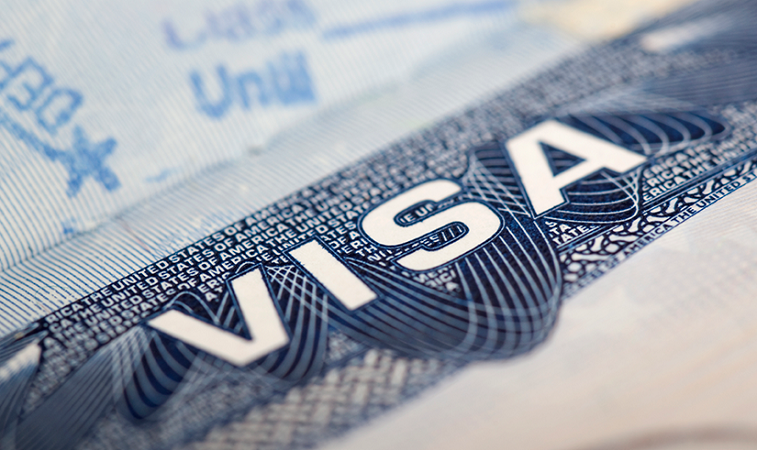
Thailand plans to wave visas for more countries

0

Thailand is one of the most popular tourist destinations in the world, attracting millions of visitors every year with its rich culture, stunning beaches, and delicious cuisine. However, many travelers face the hassle of applying for a visa before they can enter the country, which can be time-consuming and costly.

That’s why the Thai government has announced a new policy that will make it easier for tourists from more countries to visit Thailand without a visa. Starting from March 1, 2024, Thailand will waive the visa requirement for nationals of 45 countries, including Australia, Canada, France, Germany, Japan, South Korea, Singapore, and the United Kingdom.

This means that travelers from these countries can stay in Thailand for up to 30 days without a visa, as long as they have a valid passport and a return ticket. The visa waiver policy is part of Thailand’s efforts to boost its tourism industry, which has been hit hard by the COVID-19 pandemic.

The country hopes to attract more visitors and generate more revenue from tourism, which accounts for about 20% of its GDP. The policy is also expected to benefit the Thai people, who will have more opportunities to interact with foreign cultures and learn new languages.

According to the Tourism Authority of Thailand (TAT), the country received only 3.7 million international tourists in 2023, a sharp decline from the 39.8 million visitors in 2019. The tourism sector accounts for about 20% of Thailand’s gross domestic product (GDP) and employs millions of people.

The TAT hopes that the visa waiver policy will attract more tourists to Thailand, especially during the peak season from November to February. The TAT expects to welcome 10 million international visitors in 2024, generating about 500 billion baht ($15 billion) in revenue. The TAT also plans to promote Thailand as a safe and attractive destination, with strict health and safety measures in place to prevent the spread of COVID-19.

The visa waiver policy is a welcome news for travelers who want to explore Thailand’s rich culture, history, nature, and cuisine. Thailand offers a variety of attractions for different types of travelers, such as temples, beaches, islands, mountains, wildlife, shopping, nightlife, and gastronomy. Thailand is also known for its hospitality and friendliness, making it one of the most popular destinations in Southeast Asia.

If you are interested in visiting Thailand under the visa waiver policy, you should check the latest travel advice and requirements from your government and the Thai authorities before booking your trip.

You can also explore more of Thailand’s amazing attractions, such as Bangkok’s Grand Palace, Chiang Mai’s temples, Phuket’s beaches, and Krabi’s islands. Whether you are looking for adventure, relaxation, or culture, Thailand has something for everyone.

You should also follow the local rules and regulations regarding COVID-19 prevention and control during your stay in Thailand. By doing so, you can enjoy a safe and memorable holiday in the Land of Smiles.

BlackRock and Fidelity now hold 191,657 $BTC worth over $10 billion

0

Bitcoin ETFs are one of the hottest topics in the crypto space right now. They offer a way for investors to gain exposure to Bitcoin without having to deal with the technical and regulatory challenges of buying and storing the digital asset directly.

However, not all Bitcoin ETFs are created equal. Some of them track the price of Bitcoin using futures contracts, while others hold actual Bitcoin in custody and track its spot price. The latter are known as spot Bitcoin ETFs, and they have some advantages over their futures-based counterparts.

One of the main benefits of spot Bitcoin ETFs is that they avoid the negative effects of contango, which is when the futures price is higher than the spot price. This means that futures-based ETFs have to constantly roll over their contracts at a higher cost, which erodes their returns over time. Spot Bitcoin ETFs, on the other hand, do not have this problem, as they reflect the true market value of Bitcoin.

Another benefit of spot Bitcoin ETFs is that they increase the demand for Bitcoin in the market, as they have to buy and hold the underlying asset to back their shares. This creates a positive feedback loop, as more demand drives up the price, which attracts more investors, and so on.

Spot Bitcoin ETFs are still relatively new and rare in the crypto space, as they face more regulatory hurdles than futures-based ETFs. However, some of the biggest names in the financial industry have recently launched or announced plans to launch their own spot Bitcoin ETFs, signaling a growing interest and acceptance of this innovative product.

Among them are BlackRock and Fidelity, two of the largest asset managers in the world. According to a recent report by CryptoCompare, BlackRock and Fidelity now hold 191,657 BTC worth over $10 billion for their spot Bitcoin ETFs. This makes them the largest holders of Bitcoin among all ETF providers and shows their confidence and commitment to this emerging asset class.

BlackRock launched its spot Bitcoin ETF in Canada in October 2021, under the ticker BTCX. The fund has amassed over $7 billion in assets under management (AUM) as of February 2024, making it the largest Bitcoin ETF in the world. BlackRock also plans to launch a similar product in the US, pending regulatory approval.

Fidelity launched its spot Bitcoin ETF in Canada in December 2021, under the ticker FBTC. The fund has attracted over $3 billion in AUM as of February 2024, making it the second-largest Bitcoin ETF in Canada and the third largest in the world. Fidelity also filed for a US spot Bitcoin ETF in March 2021, but has not received a green light from the regulators yet.

Both BlackRock and Fidelity have stated that they believe in the long-term potential of Bitcoin as an alternative store of value and a hedge against inflation. They have also expressed their support for the development and innovation of the crypto ecosystem, and their willingness to offer more products and services to meet the growing demand from their clients.

The success of BlackRock and Fidelity’s spot Bitcoin ETFs is a testament to the maturity and resilience of the crypto market, as well as the increasing adoption and recognition of Bitcoin as a legitimate asset class by institutional investors. It also sets a positive precedent for other countries and regions that are considering allowing or launching their own spot Bitcoin ETFs, such as Europe, Asia, and Australia.

Spot Bitcoin ETFs are not without risks, however. They are subject to the volatility and unpredictability of the crypto market, as well as the operational and security challenges of storing and managing large amounts of digital assets. They also face regulatory uncertainty and scrutiny, as different jurisdictions have different rules and standards for approving and overseeing these products.

Nevertheless, spot Bitcoin ETFs are a game-changer for the crypto industry, as they offer a convenient and accessible way for investors to participate in the growth and innovation of this space. They also provide a strong incentive for more innovation and competition among crypto service providers, such as custodians, exchanges, and platforms, which ultimately benefits the entire ecosystem.

Spot Bitcoin ETFs are here to stay, and they are likely to grow even bigger and more popular in the future. BlackRock and Fidelity are leading the way, but they are not alone. More players are expected to join this exciting and lucrative market soon, bringing more diversity and dynamism to the crypto landscape.