DD
MM
YYYY

PAGES

DD
MM
YYYY

spot_img

PAGES

Home Blog Page 3728

Mocaverse introduces moca and airdrops Relics, Coinbase to offer BTC in Singapore

0

Mocaverse is a new platform that aims to revolutionize the world of NFTs and digital art. It allows artists and collectors to create, trade, and showcase their unique creations in a virtual reality environment. Mocaverse also introduces a new token standard, .moca, that enables more features and functionalities for NFTs, such as animation, interactivity, and customization.

To celebrate the launch of Mocaverse, the platform is airdropping Relics, which are rare and valuable NFTs that can be used to access exclusive content and events in the Mocaverse. Relics are randomly distributed to .moca holders who participate in the airdrop campaign. The more .moca you hold, the higher your chances of receiving a Relic.

To join the airdrop campaign, you need to follow these steps:

  1. Register on the Mocaverse website and create your account.

  2. Connect your wallet that supports .moca tokens, such as MetaMask or Trust Wallet.

  3. Buy or mint .moca tokens on the Mocaverse marketplace or on any supported exchange.

  4. Hold your .moca tokens until the end of the airdrop period, which is October 31st, 2023.

  5. Check your wallet for your Relic after the airdrop distribution, which will happen on November 1st, 2023.

Don’t miss this opportunity to join the Mocaverse and get your hands on a Relic. Relics are limited in supply and will never be minted again. They are not only beautiful and collectible, but also unlock amazing benefits and experiences in the Mocaverse. For more information, visit the Mocaverse website or follow their social media channels.

Veefriends announced more details on Veecon 2024 (August 9th-11th in LA)

Veefriends, the NFT project created by entrepreneur and social media star Gary Vaynerchuk, has announced more details on Veecon 2024, the exclusive event for Veefriends token holders. Veecon 2024 will take place from August 9th to 11th in Los Angeles, California, and will feature a variety of speakers, workshops, networking opportunities, entertainment and surprises.

Veecon 2024 is the second edition of the annual event that aims to bring together the Veefriends community and provide them with valuable insights, connections and experiences. The first edition, Veecon 2023, is scheduled for May 19th to 21st in Minneapolis, Minnesota.

According to the official website, Veecon 2024 will be “a celebration of entrepreneurship, creativity, culture and kindness”. The event will also showcase the latest developments and innovations in the NFT space, as well as the future vision of Veefriends and Gary Vaynerchuk.

Veefriends is a collection of 10,255 unique NFTs that represent different characters and traits inspired by Gary Vaynerchuk’s philosophy and values. Each NFT grants access to Veecon for three years (2023, 2024 and 2025), as well as other benefits such as personal interactions with Gary Vaynerchuk, access to a private Discord server, and potential airdrops of new NFTs.

Veefriends was launched in May 2021 and sold out in less than a week, generating over $40 million in sales. The secondary market for Veefriends has been very active, with some NFTs selling for over $200,000. The floor price for a Veefriend token is currently around $16,000. Veefriends is one of the most successful and influential NFT projects in the industry, and Veecon 2024 is expected to be one of the most anticipated and exciting events for NFT enthusiasts and collectors.

Coinbase approved to offer Bitcoin buy and sell services to institutions in Singapore

Coinbase, one of the leading cryptocurrency exchanges in the world, has announced that it has received approval from the Monetary Authority of Singapore (MAS) to offer its buy and sell services to institutional customers in the city-state. This is a significant milestone for Coinbase, as it expands its presence in the Asia-Pacific region and taps into the growing demand for digital assets among institutional investors.

According to a blog post by Coinbase, the approval from MAS covers four types of digital payment tokens: Bitcoin, Ethereum, Bitcoin Cash and Litecoin. Coinbase said that it will work closely with MAS and other regulators to ensure compliance with local laws and regulations, as well as to adhere to high standards of security and customer protection.

Coinbase added that it is committed to supporting the development of the crypto ecosystem in Singapore and the wider region, by providing access to its global liquidity pool, advanced trading tools and best-in-class custody solutions. Coinbase also said that it will continue to invest in local talent and partnerships, as well as to explore new opportunities to serve its customers in the region.

Coinbase’s approval from MAS comes at a time when Singapore is emerging as a hub for crypto innovation and adoption. The city-state has a supportive regulatory environment, a vibrant fintech scene and a strong appetite for digital assets among both retail and institutional investors. According to a recent report by Chainalysis, Singapore ranked fourth in the world in terms of crypto adoption, behind only Vietnam, India and Pakistan.

Recently, it received approval from the Bermuda Monetary Authority (BMA) to operate as a licensed Digital Asset Business in the island nation. This is a significant milestone for Coinbase, as it is the first major crypto company to obtain such a license in Bermuda.

Bermuda is a leading jurisdiction for fintech innovation and regulation, having introduced a comprehensive framework for digital asset businesses in 2018. The BMA’s Digital Asset Business Act (DABA) provides a robust and flexible regulatory environment for crypto companies, while ensuring consumer protection and compliance with anti-money laundering and counter-terrorism financing standards.

By obtaining the DABA license, Coinbase will be able to offer its full suite of products and services to customers in Bermuda, including its institutional and retail platforms, as well as its advanced trading and custody solutions. Coinbase will also be able to support the development of the local crypto ecosystem, by partnering with local entities and providing educational resources and training.

Coinbase’s Chief Legal Officer, Paul Grewal, said in a blog post that the company is “honored to receive the DABA license and look forward to expanding our business in Bermuda”. He added that “Bermuda’s forward-thinking approach to regulation makes it an ideal place for companies like Coinbase to thrive and contribute to the growth of the global crypto economy”.

Coinbase’s expansion in Bermuda is part of its broader strategy to increase its global presence and reach new markets. The company already has licenses and registrations in several jurisdictions, including the US, UK, Ireland, Japan, Germany, and Singapore. Coinbase also recently announced its plans to launch in India, Brazil, and Mexico, as well as to explore opportunities in Africa and Asia.

Coinbase is not the only crypto exchange that has received approval from MAS to operate in Singapore. Earlier this year, Binance, another leading crypto exchange, also obtained a license from MAS to offer its services to institutional customers in the country. Binance said that it plans to launch a fiat-to-crypto platform in Singapore soon, as well as to offer more products and services tailored to the local market.

The approval from MAS is also a boost for Coinbase’s global expansion strategy, as it seeks to diversify its revenue streams and grow its customer base beyond its core markets of the US and Europe. Coinbase has been actively pursuing new markets and regions, such as Japan, India, Latin America and Africa, where it sees huge potential for crypto adoption and growth. Coinbase said that it aims to be the most trusted and easy-to-use platform for anyone who wants to access the crypto economy.
“AI cannot crack Bitcoin”, says Elon Musk

0

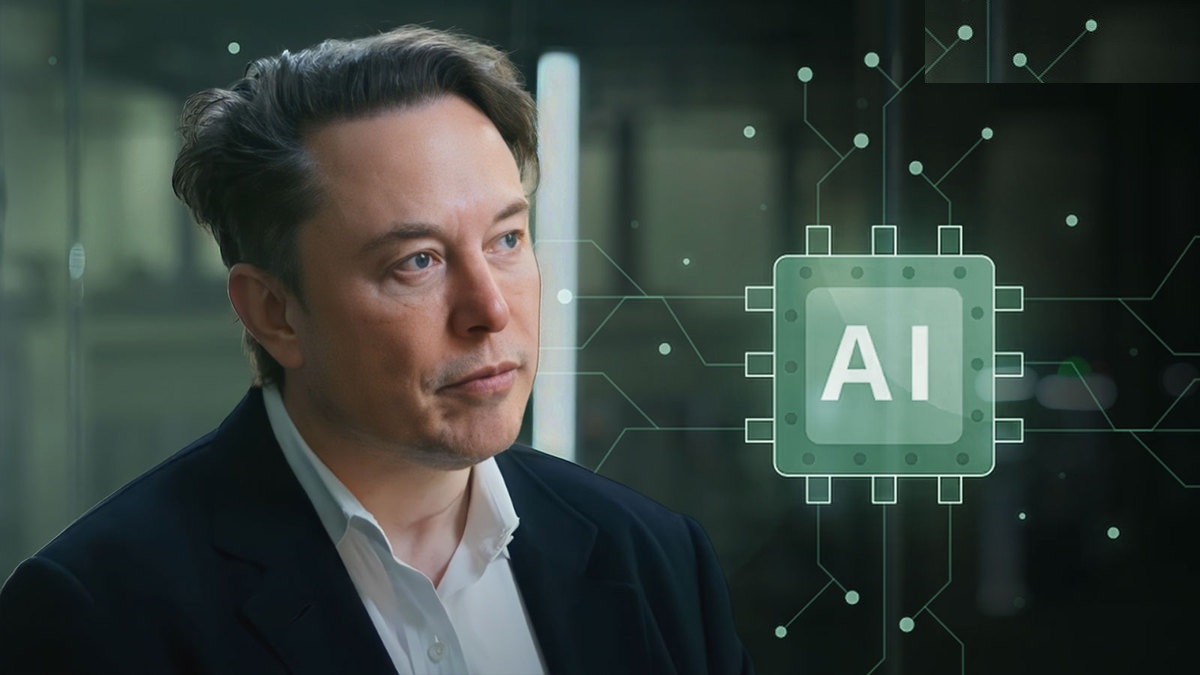
In a recent interview with Bloomberg, the billionaire entrepreneur and founder of Tesla and SpaceX, Elon Musk, shared his views on the future of artificial intelligence and cryptocurrency. He said that he does not believe that AI will be able to break the encryption of bitcoin, the most popular and valuable digital currency in the world.

Bitcoin is based on a decentralized network of computers that use a complex mathematical algorithm to verify transactions and create new coins. The security of bitcoin relies on the assumption that no one can solve the algorithm faster than the network, which would allow them to take control of the system and manipulate it.

Musk, who is known for his visionary and sometimes controversial opinions on technology, said that he thinks that AI is still far from reaching the level of intelligence and creativity that would be required to crack bitcoin. He said that AI is good at optimizing existing solutions, but not at inventing new ones.

There are several reasons why AI is good at optimization but not at innovation. One reason is that optimization is often well-defined and measurable, while innovation is often vague and subjective. For example, it is easy to define and measure the fuel efficiency of a car engine, but it is hard to define and measure the artistic value of a musical genre.

Another reason is that optimization is often incremental and convergent, while innovation is often radical and divergent. For example, optimizing a car engine involves making small and gradual improvements to an existing design, while inventing a new musical genre involves making big and sudden changes to an existing style.

A third reason is that optimization is often based on exploitation, while innovation is often based on exploration. For example, optimizing a chess strategy involves exploiting the known rules and patterns of the game, while inventing a new scientific theory involves exploring the unknown phenomena and principles of nature.

The fact that AI is good at optimization but not at innovation has important implications for the future of creativity and problem-solving. On one hand, it means that AI can help us achieve higher levels of efficiency and performance in many domains and tasks. On the other hand, it means that AI cannot replace human creativity and ingenuity in generating new ideas and solutions.

Therefore, the best way to leverage the power of AI is to combine it with human intelligence in a complementary and collaborative way. For example, we can use AI to optimize the existing solutions that we have, while we use human intelligence to invent new solutions that we need. Or we can use AI to explore the possible solutions that we can generate, while we use human intelligence to evaluate the value and impact of those solutions. By doing so, we can create a synergy between AI and human intelligence that can enhance our collective creativity and problem-solving capabilities.

Musk also said that he is not worried about the potential threat of AI to humanity, as long as it is aligned with human values and goals. He said that he supports the development of friendly and beneficial AI, and that he is involved in several initiatives to ensure that AI is used for good.

Musk, who has been a vocal advocate of cryptocurrency and has invested in bitcoin and dogecoin, said that he sees digital currency as a way to empower people and democratize finance. He said that he hopes that cryptocurrency will become more widely adopted and accepted as a form of payment, especially in developing countries where access to traditional banking is limited.

He also said that he is optimistic about the future of humanity and technology, and that he believes that we are on the verge of a new era of innovation and discovery. He said that he is working on several projects that aim to improve the quality of life and expand the horizons of human civilization, such as colonizing Mars, developing sustainable energy sources, and creating neural interfaces.

Nigerian Government Outlines A $5B Startup Funding Goal by 2027

0

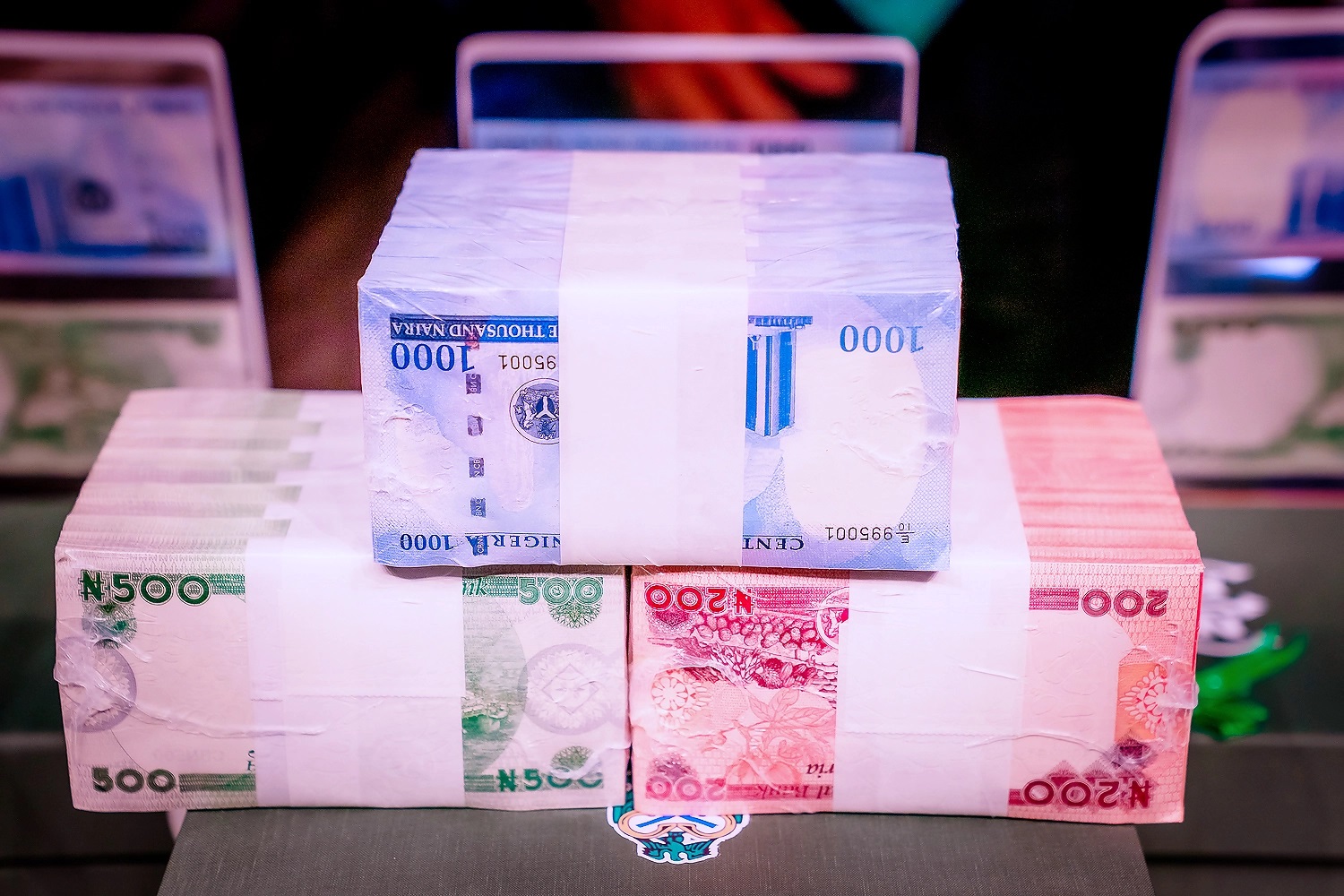
The Federal Government of Nigeria has set its sights on raising a $5 billion total investment target for startups by 2027.

This was disclosed by the Minister of Communications, Innovation and Digital Economy, Dr. Bosun Tijani, on Monday in a document titled, ‘Accelerating our Collective Prosperity through Technical Efficiency: A Strategic Plan for the Federal Ministry of Communications, Innovation & Digital Economy.’

Dr. Tijani expressed how access to capital was a major challenge for several startups in the country, which he noted is a critical component for a strong digital economy.

He further stated that the primary objective of the ministry as regards the raising of funds for startups, will be to stimulate their growth and sustainability, with a specific focus on those developing innovative solutions for critical sectors of the economy.

In his words,

“Recognising the critical role of patient capital in the growth of startups, we are committed to increasing the local availability of patient capital. We intend to create an environment for startups to raise the funding they require to thrive locally and promote the domiciliation of startups within our nation.”

He further declared that the ministry would establish an active sandbox environment to encourage and empower innovators and entrepreneurs to develop unique solutions for sectors considered to have limited exposure to technological innovation.

Mr. Tijani also noted that the country is hoping to increase the domiciliation of local technology startups from 1 percent to 25 percent by 2027, increasing their benefits to the economy.

According to him, “Digital transformation and innovation are fast becoming a catalyst for economic progress,” and the “intersection of a strong digital economy and our innovative and youthful population presents us with a unique opportunity to chart a course towards prosperity, inclusion, and global relevance.”

Despite a -29% decline YoY, Nigeria remained the largest market by far in Africa in terms of startup funding, with over 286 $100k+ deals  (+14% YoY ) during 2022 and an estimated $1.2 billion in funding, outperforming other countries in the region.

With at least 481 startups active across the country as of August 2022, Nigeria is one of Africa’s “big four” startup ecosystems alongside Egypt and Kenya.

Nigerian startups have access to extraordinary levels of ecosystem support, with almost half the 481 companies having undergone some form of acceleration or incubation since they were formed.

However, there is so much to accelerate in the Nigerian startup ecosystem. In comparison to other leading African startup ecosystems, Nigeria has seen relatively little support from its Federal Government, and an unpredictable regulatory terrain has often served to hinder the development of the ecosystem.

The Nigerian government must understand that funding is essential for startups in the country, as it provides them with the financial resources necessary for growth, innovative market entry, and resilience in a competitive business environment.

Notably, access to capital enables startups to achieve their goals, create jobs, and contribute to economic development in Nigeria.

Agenpo Technologies Unveils AceTraedr: Revolutionizing Agro-Commodity Trading in Africa

0

Agenpo Technologies, a trailblazing force in agricultural innovation, proudly announces the launch of AceTraedr, a groundbreaking platform set to reshape the landscape of agro-commodity trading in Africa.

With an unwavering commitment to empowering traders, AceTraedr promises to simplify and elevate the agro-commodity trading experience.

AceTraedr opens doors to a new era of agro-commodity trading, providing traders access to a diverse range of commodities, including highly sought-after grains like maize, sesame seeds, sorghum, and soybeans.

One remarkable thing that sets AceTraedr apart is the platform’s dedication to fostering trust and reliability by connecting traders with certified commodities, ensuring each transaction is a step toward success.

For both novice and seasoned agro-commodity traders, AceTraedr offers an intuitive and user-friendly experience, eliminating the headaches associated with existing methods and traditional approaches.

The comprehensive suite of features addresses the pain points of traders which include:

Verified Commodities: AceTraedr meticulously vets top-tier commodities, reducing uncertainty in every trade.

Seamless Transactions: The platform simplifies the entire trading process, from crafting offers to securing coveted commodities, empowering traders to engage confidently from anywhere in the world.

 Efficient Logistics: AceTraedr’s integrated logistics support ensures swift and secure commodity deliveries, eradicating bottlenecks and guaranteeing timely order fulfillment.

 Access to Off-takers and Food Processors: The platform boasts a network of off-takers and food processing organizations, enabling traders to make offers to fulfill orders conveniently. The delivery process is facilitated on the platform, ensuring a smooth experience, whether it’s delivering commodities to any part of Nigeria or expanding across Africa and beyond.

Obinna Onyejeli, the Founder of Agenpo Technologies, passionately articulates his vision about the platform, which he said, “AceTraedr is more than a platform; it’s a revolution. Our dream is to usher traders into an era of seamless transactions, fortified by trusted commodities and streamlined logistics. AceTraedr paves the path to unparalleled possibilities for traders across Africa.”

 About Agenpo Technologies

Agenpo Technologies stands at the forefront of agricultural innovation. Founded by Obinna Onyejeli, the company is dedicated to pioneering solutions that transform the agro-commodity trading landscape, driving economic growth and ensuring sustainable practices across the sector.

 About AceTraedr

AceTraedr, the brainchild of Agenpo Technologies, heralds a new dawn in agro-commodity trading. With an unwavering focus on quality, transparency, and accessibility, AceTraedr empowers agro-commodity trading firms to source, purchase, manage, sell, and deliver well-vetted African agro-commodities with ease, transparency, and convenience, helping them grow their trade and maximize revenue opportunities.

Agenpo Technologies extends a warm invitation to trading firms, entrepreneurs, and enthusiasts to join the agro-commodity revolution through AceTraedr.

By uniting innovation, trust, and efficiency, Agenpo Technologies envisions a future where every trade contributes to the growth of traders and the sector as a whole. Agro-commodity traders are encouraged to embark on the transformative journey that AceTraedr promises.

CEO Tim Cook on “low manufacturing wage” in China

0

In a recent interview with The Wall Street Journal, Apple CEO Tim Cook addressed the controversial issue of the low wages paid to workers in China who assemble Apple products. Cook defended Apple’s decision to outsource most of its manufacturing to China, saying that it was not driven by cost savings, but by the availability of skilled labor and supply chain efficiency.

Cook said that China has a large pool of workers who have the technical skills and the work ethic that Apple requires for its complex and high-quality products. He also said that China has a well-developed infrastructure and logistics network that allows Apple to source components and materials from different suppliers and deliver them to the factories in a timely manner.

Cook acknowledged that the wages paid to workers in China are lower than those in the US, but he argued that they are fair and competitive in the local market. He said that Apple pays more than the minimum wage and provides benefits such as health insurance, education, and training to its workers. He also said that Apple monitors the working conditions and labor practices of its suppliers and enforces a strict code of conduct that prohibits child labor, forced labor, excessive overtime, and other violations.

Many people assume that cheap labor is the key factor for successful manufacturing. They think that if a country has low wages, it can produce goods at a lower cost and compete in the global market. However, this is a misconception that ignores other important aspects of manufacturing.

First of all, what does it mean to say that something is a necessary condition? It means that without it, something else cannot happen. For example, water is a necessary condition for life. Without water, there can be no life. Similarly, cheap labor is a necessary condition for manufacturing. Without cheap labor, manufacturing costs would be too high, and the products would not be affordable or profitable.

However, what does it mean to say that something is a sufficient condition? It means that if it is present, something else will definitely happen. For example, fire is a sufficient condition for smoke. If there is fire, there will be smoke. However, cheap labor is not a sufficient condition for manufacturing. Even if a country has cheap labor, it does not guarantee that it will have successful manufacturing.

Why is that? Because there are other factors that affect manufacturing besides labor costs. For example, infrastructure, technology, innovation, quality, skills, regulations, markets, etc. These factors determine how efficiently and effectively a country can produce goods and services. If a country lacks these factors, it will not be able to utilize its cheap labor to the fullest potential.

For instance, imagine a country that has very low wages but also very poor infrastructure. The roads are bad, the electricity is unreliable, the water supply is scarce, etc. How can this country transport its raw materials and finished products? How can it operate its machines and equipment? How can it ensure the safety and hygiene of its workers and consumers? These challenges will increase the costs and reduce the quality of manufacturing.

Another example is a country that has cheap labor but also low technology and innovation. The machines and equipment are outdated, the processes are inefficient, the products are obsolete, etc. How can this country compete with other countries that have more advanced technology and innovation? How can it meet the changing needs and preferences of consumers? How can it improve its productivity and profitability? These limitations will hinder the growth and development of manufacturing.

Therefore, we can see that cheap labor alone is not enough for successful manufacturing. A country needs to have other factors that complement and enhance its cheap labor advantage. Otherwise, it will not be able to sustain its manufacturing sector in the long run.

Cook said that Apple is committed to improving the lives of its workers and supporting the economic development of China. He said that Apple has invested billions of dollars in China, creating millions of jobs directly and indirectly, and contributing to the country’s innovation and growth. He also said that Apple supports various social and environmental initiatives in China, such as providing clean energy, promoting education, and protecting wildlife.

Cook concluded by saying that Apple is proud of its relationship with China and its role as a global citizen. He said that Apple will continue to work with its partners and stakeholders in China to create products that delight customers and make a positive difference in the world.