DD
MM
YYYY

PAGES

DD
MM
YYYY

spot_img

PAGES

Home Blog Page 3742

The Benefits of Tokenization

0

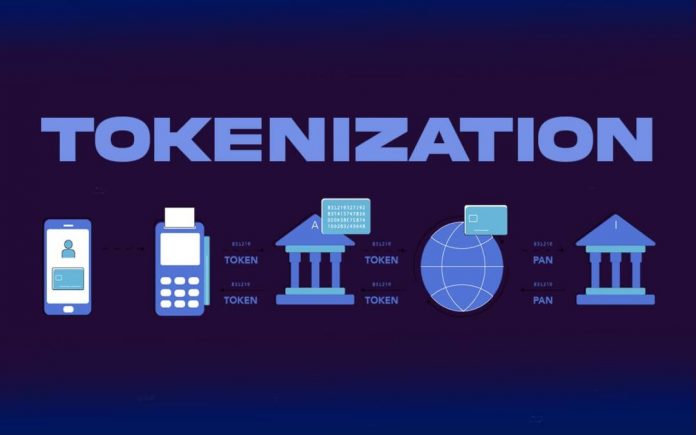
What is tokenization and why is it so important for the future of finance? Tokenization is the process of converting any asset or right into a digital token that can be stored, transferred, and traded on a blockchain.

Tokenization has the potential to revolutionize the way we access, own, and exchange value in the digital economy.

Some of the benefits of tokenization

Increased liquidity: Tokenization can unlock the value of illiquid assets such as real estate, art, or private equity by creating fractional ownership and lowering the barriers to entry for investors.

Enhanced security: Tokenization can reduce the risk of fraud, theft, and counterfeiting by using cryptography and smart contracts to verify and enforce the ownership and transactions of tokens.

Reduced costs: Tokenization can eliminate intermediaries and streamline processes such as settlement, clearing, and compliance by using decentralized networks and protocols.

Improved transparency: Tokenization can increase the visibility and traceability of assets and transactions by using immutable and auditable ledgers.

Greater inclusion: Tokenization can democratize access to financial opportunities and services by enabling anyone with an internet connection and a digital wallet to participate in the token economy.

Tokenization is not a new concept, but it has gained momentum in recent years thanks to the development of blockchain technology and the emergence of various platforms and standards for creating and managing tokens. Some examples of tokenization projects include:

Security tokens: These are tokens that represent regulated securities such as stocks, bonds, or derivatives. Security tokens aim to bring more efficiency, liquidity, and compliance to traditional financial markets. Examples of security token platforms include Polymath, Securitize, and tZERO.

Utility tokens: These are tokens that provide access to a service or network. Utility tokens are often used to incentivize users and developers to contribute to the growth and maintenance of a platform. Examples of utility token platforms include Ethereum, Filecoin, and Binance Coin.

Non-fungible tokens (NFTs): These are tokens that represent unique and indivisible assets or rights. NFTs can be used to create digital scarcity and provenance for things like art, collectibles, gaming items, or intellectual property. Examples of NFT platforms include CryptoPunks, NBA Top Shot, and OpenSea.

Tokenization is a game-changer for the financial industry because it enables new ways of creating and exchanging value in the digital world. Tokenization can also foster innovation, competition, and collaboration across various sectors and domains.

As the token economy grows and matures, we can expect to see more use cases and applications of tokenization that will transform the future of finance.

Gary Gensler lost the Spot Bitcoin ETF battle. Can he win his crypto war?

Meanwhile, Gary Gensler, the chairman of the U.S. Securities and Exchange Commission (SEC), has been facing a lot of criticism from the crypto industry and some lawmakers for his stance on regulating digital assets.

While he has repeatedly stated that he is pro-innovation and pro-competition, he has also made it clear that he will not compromise on investor protection and market integrity.

He has rejected several applications for Spot Bitcoin exchange-traded funds (ETFs) until recent in January 2024 when some were approved, arguing that they do not meet the standards of the federal securities laws. He has also warned that many crypto platforms, products and services may be operating in violation of the rules and could face enforcement actions.

But Gensler is not just playing defense. He is also pursuing a proactive agenda to bring more clarity and oversight to the crypto space. He has called on Congress to grant the SEC more authority and resources to regulate crypto, especially stablecoins, which he considers to be a threat to financial stability.

He has also expressed interest in creating a regulatory framework for decentralized finance (DeFi), which he views as a potential source of innovation but also of systemic risk.

He has urged crypto platforms to register with the SEC or seek exemptions, and to cooperate with the agency in providing data and information. He has also signaled that he is open to approving a Bitcoin futures ETF, which he believes would offer more transparency and investor protection than a spot ETF.

Gensler’s crypto war is not only about enforcing the existing rules, but also about shaping the future of the industry. He has a vision of a more regulated, mature and mainstream crypto market, where investors can access digital assets through registered intermediaries and products, and where innovation can flourish within the boundaries of the law.

He has a reputation of being a tough but fair regulator, who understands the technology and the market dynamics. He has a track record of reforming complex and opaque markets, such as derivatives and swaps, after the 2008 financial crisis.

But Gensler’s crypto war is not without challenges and trade-offs. He faces resistance from some segments of the industry, who accuse him of stifling innovation and imposing outdated regulations on a new and evolving technology.

He faces skepticism from some lawmakers, who question his authority and motives, and who demand more consultation and collaboration with other regulators and stakeholders.

He faces uncertainty from some courts, who may not agree with his interpretation of the securities laws and his jurisdiction over certain crypto activities. And he faces competition from some foreign jurisdictions, who may offer more favorable and flexible regulatory environments for crypto businesses and investors.

Gensler’s crypto war is not over yet. He may have lost some battles, such as the Bitcoin ETF approval, but he is still fighting for his vision of a more regulated and mainstream crypto market. He may not win every skirmish, but he is determined to win the war.

Tesla’s Bitcoin Strategy is Bold with Implications for EV and Cryptocurrency Sectors

0

Tesla, the world’s leading electric vehicle manufacturer, has recently announced that it has invested $1.5 billion in Bitcoin, the most popular cryptocurrency, and that it plans to accept Bitcoin as a payment method for its products in the near future.

This move has sent shockwaves across both the automotive and the crypto industries, as it signals a major endorsement of Bitcoin’s potential and value by one of the most innovative and influential companies in the world.

But Tesla’s Bitcoin strategy is not just about making a profit or diversifying its portfolio. It is also about aligning its vision and mission with the principles and values of the cryptocurrency community, such as decentralization, transparency, security, and sustainability.

By embracing Bitcoin, Tesla is not only tapping into a new and growing market of crypto enthusiasts, but also fostering a culture of innovation and collaboration that can benefit both the electric vehicle and the cryptocurrency sectors.

One of the possible benefits of Tesla’s Bitcoin strategy is that it can stimulate more research and development on how to integrate blockchain technology, the underlying infrastructure of cryptocurrencies, with electric vehicles.

Blockchain technology can offer various advantages for electric vehicles, such as enabling peer-to-peer energy trading, enhancing vehicle-to-grid communication, improving battery management, and facilitating smart charging.

For example, a blockchain-based platform could allow electric vehicle owners to sell their excess energy to other users or to the grid, creating a decentralized and efficient energy market. Alternatively, a blockchain-based system could enable electric vehicles to communicate with each other and with charging stations, optimizing their energy consumption and reducing their carbon footprint.

Another possible benefit of Tesla’s Bitcoin strategy is that it can encourage more cooperation and partnership between the electric vehicle and the cryptocurrency sectors. Both sectors share a common goal of disrupting the status quo and creating a more sustainable and inclusive future for humanity. By working together, they can leverage their respective strengths and resources, and overcome their challenges and limitations.

For instance, the electric vehicle sector can provide the cryptocurrency sector with more renewable and clean energy sources, which are essential for reducing the environmental impact of crypto mining. Conversely, the cryptocurrency sector can provide the electric vehicle sector with more secure and transparent payment methods, which are crucial for enhancing customer trust and satisfaction.

Tesla’s Bitcoin strategy is a bold and visionary move that may have far-reaching implications for both the electric vehicle and the cryptocurrency sectors. By adopting Bitcoin as a legitimate and valuable asset, Tesla is not only increasing its profitability and competitiveness, but also inspiring more innovation and collaboration between two of the most dynamic and promising industries of the 21st century.

Tesla, the electric vehicle and clean energy company, has announced that it did not sell any of its Bitcoin holdings in the fourth quarter of 2023. This is a significant update, as Tesla had previously invested $1.5 billion in the cryptocurrency in February 2021 and sold 10% of its stake in the first quarter of 2021.

Tesla’s CEO, Elon Musk, has been a vocal supporter of Bitcoin and other cryptocurrencies, often tweeting about them and influencing their prices. However, he has also faced criticism for his environmental impact, as Bitcoin mining consumes a lot of electricity and generates greenhouse gas emissions.

In May 2021, Musk announced that Tesla would stop accepting Bitcoin as a payment method for its products, citing environmental concerns. He later said that Tesla would resume accepting Bitcoin when there is more renewable energy used for mining.

Tesla’s decision to hold on to its Bitcoin in Q4 2023 indicates that the company is confident in the long-term value and potential of the cryptocurrency, despite its volatility and regulatory uncertainty. It also suggests that Tesla is satisfied with the progress made by the Bitcoin community in reducing its carbon footprint and increasing its energy efficiency.

According to a recent report by the Cambridge Centre for Alternative Finance, the share of renewable energy sources in the global Bitcoin mining mix increased from 39% in April 2020 to 56% in October 2021.

Tesla’s Bitcoin holdings are estimated to be worth around $2.4 billion as of January 2024, based on the current market price of around $48,000 per coin. This represents a substantial increase from the initial investment of $1.5 billion, which was worth around $19,000 per coin at the time.

Tesla’s Bitcoin investment has also outperformed its core business of selling electric vehicles, as the company reported a net income of $1.6 billion for the full year 2023.

Tesla’s announcement has been well received by the #Bitcoin community, as it shows that one of the most influential and innovative companies in the world is still bullish on the cryptocurrency and its future.

It also sets an example for other corporations and institutions that may be interested in investing in or adopting Bitcoin as a store of value, a medium of exchange, or a hedge against inflation.

Tesla’s Bitcoin strategy may also inspire more innovation and collaboration between the electric vehicle and cryptocurrency sectors, as both share a common vision of creating a more sustainable and decentralized world.

Central Bank of Nigeria Implements Sweeping Reforms in CRR Policy, Stops Daily Debits

0

In a bold move aimed at bolstering operational efficiency within the banking sector, the Central Bank of Nigeria (CBN) has unveiled an overhaul of its Cash Reserve Requirement (CRR) policy.

The transformative initiative, detailed in a circular addressed to all financial institutions, marks a departure from the conventional daily CRR debits, signaling a strategic shift towards a more predictable and adaptive mechanism.

The CBN’s decision to cease daily CRR debits is underpinned by a commitment to foster a stable and growth-oriented banking environment. The updated framework is envisioned to empower banks with enhanced liquidity management capabilities, enabling more effective financial planning and regulatory compliance.

Revamped Framework Unveiled in Two Distinct Phases

1. Incremental Approach:
Under the first phase of the revamped framework, an incremental approach has been introduced. The existing CRR ratios, standing at 32.5% for commercial banks and 10% for merchant banks, continue to form the basis for compliance. However, the application of these ratios is now intricately tied to increases in the weekly average adjusted deposits.

This strategic modification injects a level of flexibility into the CRR framework, allowing banks to adapt to changing financial circumstances without compromising on regulatory compliance. Unlike the previous practice where the CRR was applied to the total funds held by a bank, the incremental approach ensures that the percentage of funds set aside applies solely to the influx of new money, providing banks with a dynamic tool to navigate evolving market conditions.

2. Lending Incentive:
The second phase introduces a compelling incentive for banks to actively contribute to economic growth by increasing lending activities. A 50% CRR levy is imposed on banks failing to meet the minimum Loan to Deposit Ratio (LDR). This strategic move is designed to encourage banks to channel a larger portion of their deposits towards productive economic activities.

In essence, banks falling short of the prescribed lending threshold face a financial penalty, thereby incentivizing them to deploy a greater share of their resources into the real sector. This mechanism aligns with broader economic goals by fostering increased access to finance, supporting businesses, and stimulating overall economic growth.

The overarching goal of these reforms is to provide banks with a more dynamic and adaptive CRR framework. This, in turn, is expected to facilitate improved liquidity management, allowing banks to plan and monitor their financial resources more effectively. By moving away from daily CRR debits, the CBN aims to create an environment that fosters financial stability and growth.

The linkage of CRR compliance to LDR targets is a strategic move to nudge banks towards extending more credit, thereby contributing to economic expansion. The imposition of a CRR levy on banks failing to meet the minimum LDR is said to be a powerful mechanism to ensure that financial institutions actively participate in driving economic growth by providing financial support to businesses and individuals.

Dr. Adetona S. Adedeji, the Acting Director of the Banking Supervision Department at CBN, said that the new framework aligns with the central bank’s commitment to maintaining monetary stability while actively promoting economic expansion.

In essence, the CBN’s comprehensive overhaul of the CRR policy signifies a dual-purpose strategy. Firstly, it aims to streamline banking operations by providing a more structured and predictable regulatory framework. Simultaneously, it is incentivizing banks to become active contributors to economic growth by channeling funds towards productive activities.

This strategic move is not merely a shift in policy; it represents a visionary approach aimed at nurturing a financial ecosystem that thrives on adaptability, efficiency, and economic vibrancy. The ripple effect of increased lending is expected to stimulate business expansion, job creation, and overall economic prosperity.

The implementation of these sweeping reforms by the central bank denotes its commitment to utilizing monetary policy tools not only for stability but as a proactive driver of growth within the banking sector and the broader economy. The new CRR framework is expected to reshape banking operations in Nigeria, providing a solid foundation for sustained financial stability and economic expansion.

Ukraine, Russia complete prisoner exchange amid inclusion mystery

0

Ukraine and Russia have completed a prisoner exchange that involved swapping dozens of detainees, including some high-profile figures, amid the ongoing conflict in eastern Ukraine. However, the deal was shrouded in mystery and confusion, as some of the expected names were missing from the lists and others were added at the last minute.

The exchange took place on Saturday at a checkpoint near the city of Horlivka, in the Donetsk region, where pro-Russian separatists have been fighting Ukrainian government forces since 2014. According to the Ukrainian presidency, 34 Ukrainians were freed in exchange for 35 Russians or pro-Russian supporters. Among them were 24 sailors captured by Russia in the Kerch Strait in 2018, as well as filmmaker Oleg Sentsov, who was sentenced to 20 years in prison on terrorism charges after protesting against Russia’s annexation of Crimea.

The Russian side received some of its most wanted figures, such as Volodymyr Tzemach, a former commander of a separatist air defense unit who is considered a key witness in the downing of Malaysia Airlines Flight 17 over eastern Ukraine in 2014, killing all 298 people on board. Tzemach was arrested by Ukrainian special forces in June and was reportedly on the verge of revealing crucial information about the incident.

The prisoner swap was hailed as a major step towards easing tensions and resolving the conflict that has claimed more than 13,000 lives. Ukrainian President Volodymyr Zelensky, who made the exchange a priority since taking office in May, said it was “a very difficult but important step” and thanked his Russian counterpart Vladimir Putin for his “political will”. Putin, for his part, said he hoped the deal would “improve the atmosphere” and lead to a full settlement of the crisis.

However, the exchange also raised many questions and concerns, as some of the expected participants were left out or replaced by others. For instance, Ukrainian journalist Roman Yushchenko, who was sentenced to 12 years in prison in Russia for espionage, was not on the list of released prisoners, despite earlier assurances from Zelensky’s office. Instead, Russia freed Kirill Vyshinsky, the head of Russian state news agency RIA Novosti’s Ukraine branch, who was accused of treason by Kyiv for supporting the separatists.

Another controversial figure was Oleksandr Kolchenko, a Crimean activist who was arrested along with Sentsov and also sentenced to 20 years in prison. Kolchenko refused to take part in the exchange, saying he did not want to be traded for “people who have blood on their hands”. He also said he did not recognize himself as a Ukrainian citizen and demanded to be released as a political prisoner.

The prisoner swap was also criticized by some human rights groups and international organizations, who said it violated international law and undermined justice. They argued that some of the people exchanged were not prisoners of war or hostages, but criminal suspects or convicts who should face fair trials and investigations. They also warned that the deal could set a dangerous precedent and encourage further violations of human rights and international humanitarian law.

The prisoner exchange was seen as a possible precursor to a summit between Zelensky and Putin, along with the leaders of France and Germany, who are part of the so-called Normandy format that seeks to mediate the conflict.

The summit has been postponed several times due to disagreements over the implementation of the Minsk agreements, a peace plan signed in 2015 that envisages a ceasefire, a withdrawal of heavy weapons, and a political dialogue between Kyiv and the separatists. The last meeting of the Normandy format took place in 2016.

The prisoner swap was also seen as a test of Zelensky’s ability to negotiate with Putin and deliver on his campaign promises of ending the war and restoring peace. Zelensky, a former comedian and political novice, has faced criticism from some of his supporters and opponents for being too soft or naive in dealing with Russia.

He has also faced pressure from the United States, which has been providing military and financial aid to Ukraine since 2014. The US has recently been embroiled in a scandal over allegations that President Donald Trump pressured Zelensky to investigate his political rival Joe Biden and his son Hunter Biden, who had business dealings in Ukraine.

The prisoner exchange was a rare moment of cooperation between Ukraine and Russia, two countries that have been locked in a bitter confrontation since 2014. However, it also exposed the complexity and uncertainty of the situation, as well as the challenges and risks that lie ahead for both sides.

The exchange may have opened a window of opportunity for dialogue and diplomacy, but it also raised doubts and suspicions about the motives and intentions of each party. The fate of the remaining prisoners, as well as the future of eastern Ukraine and Crimea, remains unclear.

CBN Increases Customs’ exchange rate by 43% in 24hours, stirring Backlash

0

In the wake of economic uncertainties, the Central Bank of Nigeria (CBN) has raised Customs exchange rates twice within 24 hours, sparking vehement opposition from importers and Customs agents.

The initial increase from N952 to N1,356.883 per dollar on Friday was followed by another hike to N1,413.62. This move, amounting to a 43 percent rise, has drawn sharp criticism, particularly from Dr. Muda Yusuf, the Chief Executive Officer of the Centre for the Promotion of Private Enterprise (CPPE).

Dr. Yusuf expressed the severity of the situation, stating, “The drastic upward review of the exchange rate for the computation of import duty from N952 to N1,413.62 would have a negative effect on businesses across all sectors. This is a whopping 42.5% increase. This is like the last straw.”

His sentiments capture the gravity of the impact on businesses that are already grappling with the aftermath of recent currency devaluation and unification.

The CEO of CPPE emphasized that businesses, especially those in the real sector, are still reeling from the shocks of the recent unification of the exchange rate, which has driven the official rate to about N1400. The 42.5% increase in import duty rates is poised to exacerbate the challenges faced by businesses, leading to escalated production and operating costs.

One of the major concerns raised is the potential fueling of inflation as a result of these policy actions. Dr. Yusuf pointed out, “This action will further fuel inflation as production and operating costs get escalated. The vulnerable segments of the population will be further impoverished as cost-push inflation gets exacerbated.”

The socio-economic ramifications of such inflationary pressures are substantial, posing a threat to the well-being of the population at large.

The CPPE, recognizing the severity of the situation, appealed to the CBN to reverse the rate hike in consideration of the already impoverished segments of society and the numerous businesses teetering on the verge of collapse.

The recommendation to treat the determination of the exchange rate for import duty computation as a fiscal policy matter, falling within the remit of the finance ministry, reflects the urgency of realigning such policies with broader fiscal considerations.

Amidst these developments, there are speculations that the CBN is not done with its adjustments to the Customs exchange rate. Alhaji Tanko Ibrahim, the National Coordinator of the National Association of Government Approved Freight Forwarders (NAGAFF), said, “I heard from the grapevine that the CBN plans to push the Customs exchange rate to as high as N1,500 per dollar. That is their target, and they are going to do it soon.”

This speculation raises further concerns among stakeholders about the sustainability of the import business and the ability of the Nigeria Customs Service to meet its revenue targets for 2024.

The series of rate hikes has triggered a wave of concern among stakeholders, who view the government’s actions as insensitive. An angry stakeholder lamented, “The whole situation has given away this government as insensitive to the plight of Nigerians. While we are still discussing the implications of Friday’s increase and how it is going to impact the lives of ordinary Nigerians, this government went ahead to slam yet another increase.”

This sentiment reflects a growing disillusionment with the government’s economic policies and a perception of cruelty and insensitivity.

The recent spikes in Customs exchange rates in Nigeria have set off a chain reaction of economic concerns and discontent among stakeholders. The immediate repercussions on inflation, production costs, and the overall business environment underscore the need for a more nuanced and carefully considered approach to economic policies.

The call for a reversal of the rate hike and the suggestion to involve fiscal authorities in determining exchange rates for import duty computation point towards the necessity of aligning policies with broader economic considerations. The biting economic situation in the country makes it crucial for policymakers to address these challenges to ensure the stability and prosperity of businesses and the well-being of the Nigerian population.