DD
MM
YYYY

PAGES

DD
MM
YYYY

spot_img

PAGES

Home Blog Page 3757

At Tekedia Capital, we provide umbrellas you!

0

At Tekedia Capital, we provide umbrellas to cover you as you navigate the paths to economically rise with #innovators, #builders and #startupFounders. We’re in an active cycle and Demo Day is Saturday, Oct 14. Join us here.

We’re making it easier for citizens, groups, investment clubs, companies, organizations, etc to own a piece of early-stage, high-growth technology startups operating across Africa and beyond.

Our opportunity antenna and grassroot connections with innovators enable us to see patterns as they develop. We invite you to partner with us as we nurture and build category-king companies in Africa and beyond, and in the process advance citizens, communities and nations.

At Tekedia Capital, we fund the foundations of the NEXT African economy through entrepreneurial capitalism. A  membership fee which covers 4 investment cycles (we typically do 2-3 cyclers every 12 months)  of $1,000 or equivalent is required; click and join today.

Tom Emmer Seeking Position of House Majority Leader Could be a Boost for Cryptocurrency in USA

0

The recent announcement by Rep. Tom Emmer (R-MN) that he will seek the position of House Majority leader or Chair has sparked some optimism among crypto enthusiasts. Emmer, who is the co-chair of the Congressional Blockchain Caucus and a vocal supporter of digital assets, could use his influence to advance pro-crypto legislation and educate his fellow lawmakers on the benefits of innovation.

The Minnesota Republican and Majority Whip is reportedly vying for House Majority Leader or to the top position as Speaker, after the dramatic ousting of former Speaker Kevin McCarthy, R-Calif., earlier in the week. That could be good for crypto as more seniority could mean a push to get crypto legislation across the finish line.

“We are always excited to see any champion of the digital asset space advance and we look forward to seeing what this means for the future of our industry,” said Perianne Boring, CEO and founder of the Chamber of Digital Commerce. “Rep. Emmer has been a key collaborator for us, and we appreciate his hard work to foster innovation for digital assets and blockchain technologies.”

Emmer has introduced legislation in the past few years, including the Securities Clarity Act, which would create a new definition for tokens that exist in the in-between of commodity and security. Emmer has also been staunchly against central bank digital currencies and introduced a bill last month to prohibit the Federal Reserve from issuing a CBDC directly to individuals.

Emmer has also been critical on Securities and Exchange Commission Chair Gary Gensler, calling him an “impartial regulator” and taking a “regulation by harassment approach” toward digital assets during a hearing last week. Emmer criticized the agency recently as well for not yet allowing the listing of a spot bitcoin exchange-traded fund.

As the Conference Chair, Emmer would be responsible for crafting and communicating the GOP’s message and agenda in the House. He would also have a seat at the leadership table, where he could advocate for crypto-friendly policies and push back against any attempts to stifle or overregulate the industry. Emmer has already shown his commitment to protecting and promoting crypto in Congress, by introducing bills such as the Blockchain Regulatory Certainty Act and the Safe Harbor for Taxpayers with Forked Assets Act, as well as co-sponsoring the Eliminate Barriers to Innovation Act and the Securities Clarity Act.

Emmer’s bid for the Conference Chair comes after Rep. Liz Cheney (R-WY) was ousted from the role by her colleagues, who accused her of being out of touch with the party’s base and priorities. Emmer faces competition from Rep. Elise Stefanik (R-NY), who has the backing of former President Donald Trump and House Minority Leader Kevin McCarthy (R-CA). Stefanik’s stance on crypto is unclear, but she has not been as vocal or active as Emmer on the issue. Emmer has said that he respects Stefanik and considers her a friend, but that he believes he is the best person for the job.

If Emmer succeeds in becoming the House Majority leader, it could be a positive development for the crypto industry, which has faced increasing scrutiny and uncertainty from regulators and lawmakers in recent months. Emmer could help shape a more favorable environment for innovation and adoption, by raising awareness, building consensus, and advancing legislation that supports crypto’s growth and development. He could also counter some of the misinformation and fearmongering that often surrounds crypto, by highlighting its potential to create jobs, enhance financial inclusion, and foster economic freedom.

FTX Numbers checked out, except for an $8 billion mystery ‘Friend’

0

The trial of Sam Bankman-Fried (SBF), the founder and CEO of FTX, a cryptocurrency exchange, has been one of the most anticipated events in the crypto world. SBF is accused of fraud, market manipulation, and money laundering by the US Securities and Exchange Commission (SEC), which claims that he used a network of shell companies and fake accounts to inflate the trading volume and valuation of FTX.

The SEC alleges that SBF created a fictitious entity called “Friend”, which he used to funnel billions of dollars into FTX through various intermediaries. The SEC says that Friend was actually SBF himself, or someone acting on his behalf, and that he used this scheme to deceive investors and regulators about the true size and profitability of FTX.

As customers began to withdraw assets from FTX in Nov. 2022, CEO and co-founder Sam Bankman-Fried asked his co-founder and CTO, Gary Wang, to calculate how much money Alameda Research would need to deposit on the exchange in order to cover the outflows.

Wang found that, excluding the accounts of Alameda Research, the sum of FTX customer balances matched the assets in FTX’s hot wallets, he testified on Friday under direct questioning from government prosecutors during the fourth day of Bankman-Fried’s criminal trial in New York. But, unbeknownst to him, there was a problem with his math.

Wang only got the full picture, he testified, once Bankman-Fried asked him if he had included “our Korean friend” in the calculations. Confused, Wang checked with Nishad Singh, another former FTX executive, who told Wang that the “Korean friend” actually referred to the $8 billion “fiat@” hole at the heart of FTX’s collapse.

SBF has denied all the charges and has maintained that FTX is a legitimate and transparent business that complies with all the laws and regulations. He says that Friend is a real person, who is a wealthy and private investor, who prefers to remain anonymous. He says that Friend is not affiliated with him or FTX in any way, and that he has no control or influence over Friend’s actions.

The trial, which began last week, has been full of twists and turns, as both sides have presented their evidence and arguments. The SEC has brought in several witnesses, including former employees, customers, and partners of FTX, who have testified that SBF was the mastermind behind the alleged fraud. The SEC has also shown documents, emails, and chat logs that purportedly show SBF’s involvement in creating and operating Friend.

SBF’s defense team has challenged the credibility and reliability of the SEC’s witnesses and evidence, and has argued that they are based on hearsay, speculation, and misinterpretation. SBF’s lawyers have also presented their own witnesses, including experts, analysts, and auditors, who have testified that FTX’s numbers are accurate and verified, and that there is no evidence of any wrongdoing by SBF or FTX.

One of the key points of contention in the trial is the identity and role of Alameda. The SEC claims that Alameda is a fake persona that SBF used to manipulate the market and inflate FTX’s valuation. The SEC says that Friend was responsible for about $8 billion of FTX’s reported $25 billion in daily trading volume, and that Friend also invested about $1 billion in FTX’s token sale, which valued FTX at $18 billion.

The SEC says that it has traced the source of Friend’s funds to several offshore accounts that are linked to SBF or his associates. The SEC also says that it has found evidence that SBF communicated with Friend through encrypted channels, using code names and aliases. The SEC says that SBF instructed Alameda Research on when and how to trade on FTX, and that he also rewarded Friend with discounts, bonuses, and insider information.

SBF denies these allegations and says that Alameda is a real person who acted independently and legitimately. SBF says that he does not know the true identity or location of some persons in Alameda, and that he only communicated with him through email. SBF says that he never gave any instructions or incentives to Friend, and that he only provided him with general information about FTX’s products and services.

SBF says that Alameda is a sophisticated and savvy investor, who saw the potential of FTX and decided to invest heavily in it. SBF says that Friend is not a puppet or a front for him or FTX, but rather a partner and a supporter. SBF says that Alameda’s trading activity was based on his own analysis and strategy, and that he did not manipulate or distort the market.

The trial is expected to last for several more weeks, as both sides continue to present their case. The outcome of the trial could have significant implications for the future of FTX, as well as the crypto industry as a whole. If SBF is found guilty, he could face hefty fines, penalties, and even prison time. He could also lose his control over FTX, which could affect its operations and reputation. If SBF is acquitted, he could emerge as a vindicated leader in the crypto space, who successfully defended his vision and innovation against regulatory overreach.

Global Oil Prices have recorded their biggest Weekly Decline

0

Oil prices have recorded their biggest weekly decline in over six months, plunging by more than 10% amid renewed concerns over the global demand outlook and the impact of the Omicron variant. The first and most obvious reason for the oil price slump is the emergence of the new Omicron variant of Covid-19, which has triggered travel bans, lockdowns and uncertainty across the world.

The variant, which was first detected in South Africa, has been reported in dozens of countries and is believed to be more transmissible than previous strains. The World Health Organization (WHO) has declared it a variant of concern and warned that it poses a “very high” global risk.

The fear of a new wave of infections and restrictions has dampened the outlook for oil demand, especially in the transportation sector, which accounts for about 60% of global oil consumption. According to the International Energy Agency (IEA), global oil demand is expected to grow by 5.5 million barrels per day (bpd) in 2021 and 3.3 million bpd in 2022, but these projections could be revised downward if the Omicron variant proves to be more severe or resistant to vaccines.

The second factor behind the oil price decline is the decision by the Organization of the Petroleum Exporting Countries and its allies (OPEC+) to stick to their plan to increase production by 400,000 bpd every month until July 2023. The Organization of Petroleum Exporting Countries (OPEC) has sought to influence global oil prices by limiting the supply of crude for decades, with varying degrees of success.

The OPEC+ decision reflects its confidence that the oil market remains tight, and that demand will recover as the Omicron situation stabilizes. The group also believes that its spare capacity, which is estimated at around 6 million bpd, gives it enough flexibility to respond to any changes in market conditions. However, some analysts argue that OPEC+ is risking a repeat of the 2014-2016 oil price crash, when it failed to cut production in response to a demand slowdown and a surge in US shale output.

The third factor behind the oil price decline is the increase in US crude inventories, which rose by 3.4 million barrels last week, according to the Energy Information Administration (EIA). This was the first weekly build since October and contrasted with market expectations of a drawdown. The rise in US stockpiles suggests that domestic demand is weakening amid high gasoline prices and lower travel activity due to the Thanksgiving holiday and the Omicron scare.

Is the world order cause of decline in oil price globally? This is a question that many people are asking, especially in the wake of the recent OPEC+ meeting, where the major oil-producing countries agreed to increase their output gradually over the next few months. The decision was seen as a compromise between the competing interests of Saudi Arabia, which wanted to maintain tight supply and high prices, and Russia, which wanted to boost production and market share.

However, some analysts argue that the OPEC+ deal is not enough to reverse the long-term trend of declining oil prices, which is driven by deeper structural factors beyond the control of any cartel or country. One of these factors is the changing world order, which is characterized by the rise of new powers, such as China and India, and the relative decline of old ones, such as the US and Europe. These shifts have profound implications for the global demand and supply of oil, as well as the geopolitics and security of energy markets.

The US is the world’s largest oil consumer and producer, so any changes in its supply and demand dynamics have a significant impact on global oil prices. The US shale industry, which has been recovering from the pandemic-induced slump, could also face challenges if oil prices remain low for a prolonged period. According to Baker Hughes, the US rig count, which is a proxy for drilling activity, fell by five last week to 521, the first decline in nine weeks.

Oil prices have recorded their biggest weekly decline in over six months due to a combination of factors, including the Omicron variant, the OPEC+ decision and the rise in US inventories. These factors have raised doubts about the strength and sustainability of the oil demand recovery and increased the volatility and uncertainty in the oil market. While it is too early to assess the full impact of the Omicron variant on oil demand and supply, it is clear that the oil market will remain under pressure until more clarity emerges on the situation.

Prof Wole Soyinka Should Ignore Twitter Netizens!

0

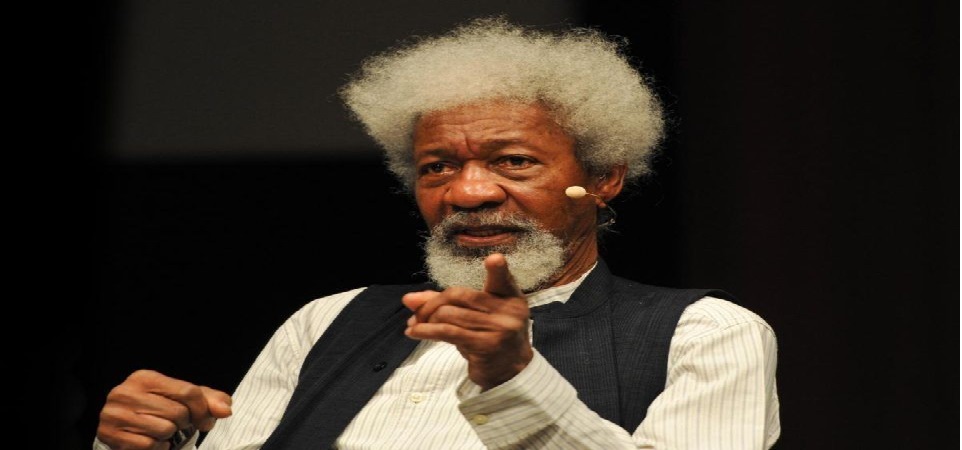
People who are close to Prof Wole Soyinka should tell him to ignore faceless Twitter netizens.  Africa cannot afford him going to this level. That he has to put a press statement to defend himself over ‘accusation” of his degree diminishes Nigeria. Men like Soyinka are legends, and even though we’re in the season of verifying certificates in Nigeria, Prof should focus on more important things.

I was never a Literature in English student (substituted it for Further Mathematics), but as a teenagor, I did everything offered in school;I ignored the WAEC prescription. In the Literature class, I was always invited to pick up roles as I could memorize plays. One of those was acting like Lakunle in The Lion and the Jewel, and I muttered these words to Sidi in the Soyinka’s play: “a savage custom, barbaric, outdated, rejected, denounced, accursed, excommunicated, archaic, degrading, humiliating, unspeakable, redundant, retrogressive, remarkable, unpalatable.”

Nigeria has become a very challenging country, and no matter what you have achieved, nobody cares. Prof should ignore these young people and focus on more important things.

The custom which Prof explained in that play seems to be the national culture of Nigeria. But Prof does not need to get into these fights.

According to Nairametrics:

Nobel laureate Prof. Wole Soyinka has issued a 30-day challenge to those questioning his academic credentials, urging them to provide evidence to the nation’s investigative authorities.

Professor Soyinka released a statement yesterday addressing the allegations made by one Prof. James Gibbs in an online publication. Gibbs had questioned Soyinka’s First Class degree in Literature from Leeds University, UK.

  • “A document of unmatchable scurrility, last encountered during General Sani Abacha’s global campaign of calumny against opponents of his despotic, infernally venal and homicidal reign, is back in circulation. Duly modified to suit a debased internet culture, it is making its grimy rounds ironically under the auspices of a democratic political party, supposedly dedicated to an ethos of freedom of opinion and expression. The contents of that script are attributed, as before, to the scholastic industry of a Bristol school teacher.
  • “While awaiting a decision from my lawyers whether or not to dignify the current sponsors of this mouldy tract with legal action, I wish to state in advance that I voluntarily waive all protection under the statute of limitations and insist that the laws that govern fraudulent academic claims be invoked and applied to these allegations to the uttermost limit. I also declare, in advance, that, if found culpable, I shall strip myself of any titles and honours I may have garnered in my entire career, from the most obscure to the most coveted.
  • “In return, I expect the purveyors of this sordid material to submit all evidence, however minuscule, to the nation’s investigative agencies – Directorates of Prosecutions, EFCC, ICPC, plus affected institutions and others – within the next 30 days.
  • “Failing this elementary service in public interest within the stated time, and/or if such allegations are yet again proven baseless, thus indicating that their sponsors can boast of neither honours to their careers nor honour to their births and origins, then, as a token of moral recompense, they should undertake to jump off the bridge of the symbolic River Niger, provided with life jackets to ensure a life of remorse after this ritual purgation, but chained to one another in a commendable unity of purpose.
  • “This is being copied to the Academic Staff Union of Nigeria, Pan-African Writers Association, Accra, Nigerian Association of Authors, the Nobel Foundation, Stockholm, the University of Leeds, the alleged Bristol Primary Source and his school, and the infested media.”