DD
MM
YYYY

PAGES

DD
MM
YYYY

spot_img

PAGES

Home Blog Page 3761

Egypt has officially stopped using the US dollar in trade

1
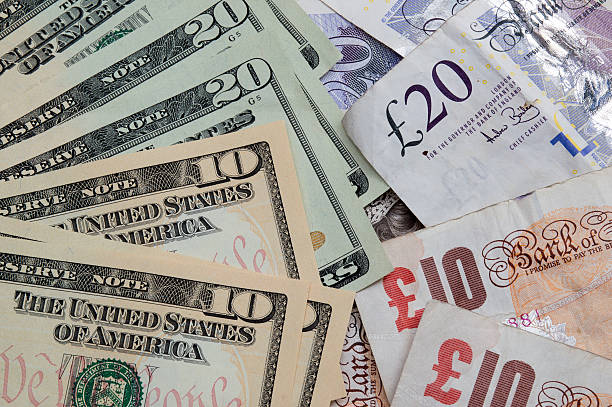
United States Ten and Twenty Dollar notes next to Ten and Twenty UK Pound Notes

Egypt has officially stopped using the US dollar in trade, a move that could have significant implications for the global economy and geopolitics.

On February 15th, 2024, Egypt announced that it would stop using the US dollar in all its trade transactions with other countries. Instead, it would use a basket of currencies that reflects its trade patterns and preferences.

The basket would include the euro, the Chinese yuan, the Russian ruble, the Turkish lira, the Indian rupee, and the African franc. Egypt said that this decision was based on economic rationality and sovereignty, and that it would enhance its trade competitiveness and financial stability.

Egypt is one of the largest economies in Africa and the Middle East, with a GDP of about $360 billion and a population of over 100 million. It is also a key ally of the United States in the region, receiving about $1.3 billion in military aid annually.

However, Egypt has been facing economic challenges in recent years, such as high inflation, public debt, and currency devaluation. The COVID-19 pandemic has also exacerbated these problems, as tourism and remittances, two major sources of foreign exchange, have declined sharply.

To address these issues, Egypt has been pursuing a series of reforms, including cutting subsidies, raising taxes, and liberalizing its exchange rate regime. In 2016, Egypt floated its currency, the Egyptian pound, allowing it to depreciate by about 50% against the US dollar.

This was done to attract foreign investment, boost exports, and secure a $12 billion loan from the International Monetary Fund (IMF). However, this also increased the cost of imports, especially of essential goods such as food and fuel, which are mostly denominated in US dollars.

To reduce its dependence on the US dollar and diversify its foreign reserves, Egypt has been exploring alternative currencies for trade and investment. In 2019, Egypt signed a currency swap agreement with China, allowing it to exchange Egyptian pounds for Chinese yuan.

This enabled Egypt to increase its trade with China, its largest trading partner, without using US dollars. Egypt has also been strengthening its ties with other emerging markets, such as Russia, Turkey, and India, and seeking to join regional economic blocs, such as the African Continental Free Trade Area (AfCFTA).

The move has been met with mixed reactions from other countries. Some have welcomed it as a sign of Egypt’s economic independence and diversification. Others have criticized it as a challenge to the US dollar’s dominance and a threat to the global financial system. The United States has expressed concern over Egypt’s decision and urged it to reconsider.

The US said that it would review its bilateral relations with Egypt, including its military aid and security cooperation. The US also warned that Egypt could face sanctions and isolation if it continued to defy the international monetary order.

Egypt’s decision to stop using the US dollar in trade is a bold and unprecedented one that could have far-reaching consequences for itself and the world. It could benefit Egypt by reducing its exposure to exchange rate fluctuations and enhancing its bargaining power with other countries.

It could also inspire other countries to follow suit and challenge the US dollar’s hegemony. However, it could also entail risks and costs for Egypt by alienating its traditional allies, inviting retaliation from the US, and disrupting its trade flows and financial markets.

A Better NATO on modified UN Security Council with “attack on one member of the Council is an attack on all”

0

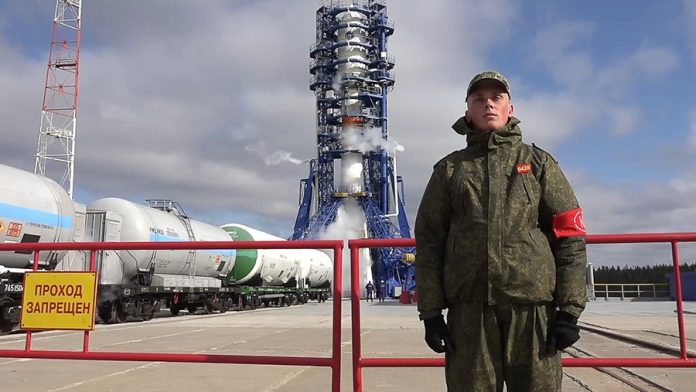
This is one of the auxiliary effects of the Russia-Ukraine war: “The White House has confirmed that the US has intelligence on Russia’s anti-satellite capability, which could pose a threat to the security and stability of the space domain. In a press briefing on Friday, the White House press secretary said that the US was aware of Russia’s development and testing of anti-satellite weapons, which could be used to damage or destroy satellites in orbit.”

Yes, with mutual trust gone, some of these nations will begin to work to bring sci-fi to reality. Like Mike Tyson said “Everybody has a plan until they get punched in the face”. Indeed, there are things which can hit this world, and all the defensive plans will fade. And nations like the US, Russia and China have those capabilities. Interestingly, the world has ceded rights for them to “keep” the world as permanent members of the UN Security Council. But yet, they show limited mutual respect among themselves. What again do they want?

These three countries are the only nations which have capacities to make military hardware, produce them and can sustain wars for years.  Others can barely last six months due to their production capacities and population. If that is the case, why can’t they just get along, and allow peace to reign?

With the announcement of Russia’s plan to have these nuclear anti-missile satellite capabilities, the US will up its own playbook from tomorrow, and in ten  years, Russia will up its own, and the vicious circle to world destruction continues. I call on the UN Security Council to modify its ordinance with “attack on one member of the Council is an attack on all”. That is a better NATO!

“US has intelligence on Russian Anti-Satellite capability” – The White House

“US has intelligence on Russian Anti-Satellite capability” – The White House

0

The White House has confirmed that the US has intelligence on Russia’s anti-satellite capability, which could pose a threat to the security and stability of the space domain.

In a press briefing on Friday, the White House press secretary said that the US was aware of Russia’s development and testing of anti-satellite weapons, which could be used to damage or destroy satellites in orbit.

The press secretary said that the US was concerned about the potential implications of such weapons for the peaceful use of outer space, as well as for the safety and sustainability of the space environment. The press secretary also said that the US was committed to maintaining and enhancing its space capabilities, and to working with allies and partners to deter and counter any threats to the space domain.

The press secretary urged Russia to refrain from any actions that could escalate tensions or undermine stability in space, and to engage in constructive dialogue on norms of behavior and responsible conduct in space.

The confirmation comes after a report by CNN earlier this week, which cited unnamed US officials as saying that Russia had conducted a test of a new anti-satellite missile system, known as Nudol, in December last year. The report said that the test was successful and demonstrated a significant improvement in Russia’s anti-satellite capability.

The report also said that the US intelligence community had assessed that Russia was developing other types of anti-satellite weapons, such as lasers and jammers, which could interfere with or disable satellites without physically destroying them.

Anti-satellite weapons are considered to be a serious threat to the security and stability of the space domain, as they could create debris that could endanger other satellites and spacecraft or create a situation of mutual vulnerability and mistrust among space-faring nations.

The US, Russia, China, and India are among the countries that have demonstrated anti-satellite capabilities in the past, either through kinetic or non-kinetic means. However, there is no international treaty or agreement that specifically regulates or prohibits the development or use of such weapons.

The only existing legal framework for outer space is the 1967 Outer Space Treaty, which bans the placement of nuclear weapons or other weapons of mass destruction in orbit but does not address conventional weapons or anti-satellite systems.

The US has been advocating for the development of norms of behavior and responsible conduct in space, as well as for enhancing transparency and confidence-building measures among space actors. The US has also been pursuing bilateral and multilateral cooperation on space security issues with allies and partners, such as NATO, Japan, Australia, India, and others.

The US has also expressed its willingness to engage in dialogue with Russia and China on space issues but has accused them of pursuing destabilizing activities and policies in space, such as developing anti-satellite weapons or proposing treaties that would limit US freedom of action in space.

Japan’s Economy Enters Recession: What does it Mean and What Can be Done?

0

Japan, the world’s third-largest economy, has officially entered a recession after its gross domestic product (GDP) shrank by 1.9% in the fourth quarter of 2023, following a 3.2% contraction in the previous quarter. This means that the country’s economic output has declined for two consecutive quarters, the common definition of a recession.

The main factors behind Japan’s economic slump are the ongoing impact of the COVID-19 pandemic, which has reduced consumer spending and business activity, and the global supply chain disruptions caused by the chip shortage and the energy crisis, which have hurt Japan’s exports and manufacturing sector.

Japan is not alone in facing these challenges, as many other countries have also experienced slowdowns or contractions in their economies due to the pandemic and its aftermath. However, Japan has some unique vulnerabilities that make it harder to recover from a recession, such as its aging population, its high public debt, and its dependence on imported energy.

So, what does this recession mean for Japan and the rest of the world? And what can be done to boost Japan’s economic growth and resilience?

One implication of Japan’s recession is that it could dampen the global economic recovery, as Japan is a major trading partner and investor for many countries, especially in Asia. A weaker Japanese economy could reduce the demand for goods and services from other countries, as well as the availability of capital and technology. This could have negative spillover effects on the regional and global markets.

Another implication of Japan’s recession is that it could worsen the social and political problems that Japan already faces, such as poverty, inequality, unemployment, and low birth rates. A prolonged recession could erode the living standards and well-being of many Japanese people, especially the elderly, the young, and the women, who are more vulnerable to economic shocks.

A recession could also undermine the public confidence and trust in the government and its policies, leading to social unrest and political instability. To overcome this recession and achieve sustainable growth, Japan needs to implement a comprehensive and balanced strategy that addresses both the short-term and long-term challenges.

In the short term, Japan needs to provide more fiscal stimulus and monetary easing to support the consumption and investment of households and businesses, as well as to accelerate the vaccination program and contain the spread of the virus.

In the long term, Japan needs to pursue structural reforms and innovation to enhance its productivity and competitiveness, such as by increasing its labor force participation, diversifying its energy sources, and promoting digital transformation.

Analysts Project Bright Future for Optimism (OP), Terra Classic (LUNC) and Pullix (PLX)

0

Optimism (OP), Terra Classic (LUNC) and Pullix (PLX) seem to be at the forefront of something big as the crypto dynamics continue to evolve. These three tokens are sparking curiosity and anticipation in the crypto sphere as analysts project a brighter future for them. With Optimism (OP), Terra Classic (LUNC) and Pullix (PLX) in the uptrend currently, let’s dive into the intricacies surrounding the current trends and why analysts view them as the best cryptos to invest in now for future gains.

Pullix (PLX) Launch in 70 Days, Experts Predict Bright Future

Along with optimism and Terra Classic, another token investors are bullish on is Pullix. The platform presale has generated huge traction in the market so far as the project solves the common problem occurring in top crypto exchanges. The platform will combine the features of both centralized and decentralized exchanges thereby creating a first-of-its-kind hybrid system.

Through this hybrid system, investors can maximize their earnings with zero commission on transactions, high liquidity, and a robust security mechanism. To cap it all, Pullix will act as a noncustodial wallet, allowing investors full control of their assets. This singular act is a game changer, giving opportunities for investors to invest their assets without any distractions from third parties.

Through these ideas, Pullix has been embraced by crypto investors which is evident from the over 15,000 subscribers who have signed up so far. The platform has raised an impressive $5 million in presale with more than 90 million PLX tokens sold. Having been listed on CoinGecko, Pullix is at the last two stages of presale with the PLX token sold for just $0.10. There is a further 25% deposit bonus for whoever purchases this ERC20 token PLX before the end of the presale.

During these last days of presale, users can further magnify their earnings through the profit share model where they earn a fixed percentage of daily income from the platform’s daily revenue. Consequently, there is a token burn feature at the end of the presale to preserve the project and stimulate the price.

As the project winds down, Pullix is one of the best cryptos to invest in now. Analysts have projected a 100x ROI when the project is launched in less than 70 days, making now the best time to join the project at a very good price point.

Optimism (OP) Extends Leads, Analysts Project Bright Future

Optimism (OP) holders are currently taking profits as the layer 2 blockchain extends its bullish lead amidst the market resurgence. Optimism coin has gained an impressive 17% in the past week as the token bid to surpass the support level of $3.5.

Having initially overcome the level, the bears recovered, pushing the price back to below $3.5. However, the bears may not last long at this support level and may have shifted base to the next support zone of $4. With this momentum, the Optimism price is expected to surmount the bear’s challenge and move past the $4 threshold by the end of the month.

Terra Classic (LUNC) Appreciates as Community Approves Major Proposal

In a bid to revitalize the downward spiral of Terra Classic (LUNC) which has seen it plummet by 13.31% in the past month, the Terra Classic community has approved a major proposal. The proposal made KYC obligatory for every user to deter shirt selling and bolster the security of the network.

The proposal has started paying off as Terra Classic has turned the tide, increasing by 2.08% in the past week. If this present momentum is sustained, analysts predict the Terra Classic price will hit $0.0003 before the end of Q1 of 2024.

For more information regarding Pullix’s presale see links below:

Visit Pullix

Join The Pullix Communities