DD
MM
YYYY

PAGES

DD
MM
YYYY

spot_img

PAGES

Home Blog Page 3770

Zambian Neobank Lupiya Secures $8.25m in Series A Round For Expansion Into New Markets

0

Lupiya, a Zambian venture-backed Fintech startup that provides online loans, has announced the raise of $8.25 million series A funding to expand into new markets.

The funding round was led by Alitheia IDF Fund, with participation from INOKS Capital SA and the German Investment Bank KfW DEG.

Lupiya will use the funds raised to enhance its technological infrastructure, expand its range of financial products, and expand its operations, enabling the Fintech startup to serve a broader customer base.

Speaking on the funds raised, Co-Founder and CEO of Lupiya Evelyn Chilomo Kaingu said,

“This Series A investment marks a significant milestone in our journey to continue serving our customers and the opportunity to further provide holistic financial solutions. The team at Lupiya has worked hard and is excited about the new phase of our growth. With the support of Alitheia IDF, INOKS Capital, Mastercard, and Kfw DEG, we are better poised to scale our operations and deepen our footprint not just in Zambia but also in the broader Southern and East African region.”

Also speaking on the funding round, lead investor and co-managing partner of Alitheia IDF Fund Polo Leteka said,

“We have always been on the lookout for startups that are at the cusp of making a significant impact in the financial sector of Africa. Lupiya’s vision and dedication to financial and gender inclusion resonates deeply with our own objectives. We believe that with this funding, they will be better equipped to make financial services accessible to many more Zambians”.

As fintech solutions continue to reshape the African financial ecosystem, Lupiya’s fresh capital infusion is yet another testament to the continent’s dynamic and evolving digital economy.

Founded in 2016, Lupiya operates as an online marketplace for microloans, offering an innovative digital microfinance platform. Leveraging technology, Lupiya simplifies the borrowing process, making it accessible to individuals and businesses across the country, including those in remote, rural areas.

Lupiya’s goal is to expand access to credit and lower the cost of borrowing for millions of Zambians.

The Fintech startup aims to level the playing field for all Zambians by offering low-cost lending products and attainable options for security.

Lupiya distances itself from traditional lenders by being accessible to marginalized and unbanked communities and offering lending practices that are transparent and fair.

More than profit, the startup is driven by creating a landscape that promotes an economically empowered Zambia.

Lupiya’s mission is to foster financial inclusion in Zambia by simplifying borrowing processes and requirements. The startup believes that every Zambian should be accorded a fair opportunity to access financing

Crypto firms cannot claim to be ‘Banks’ – Hong Kong

0

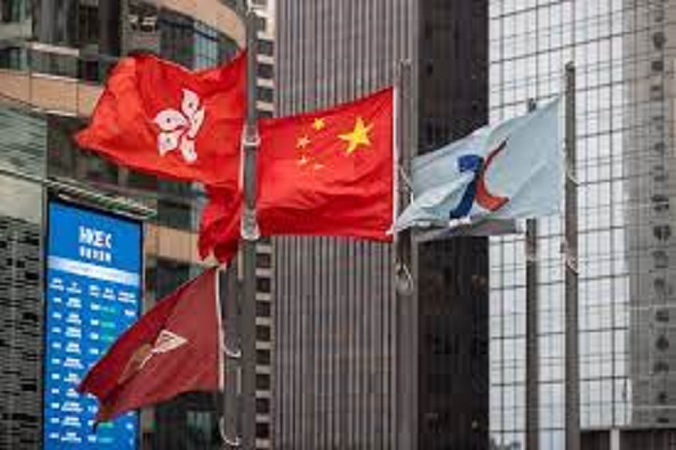
Hong Kong’s financial watchdog has issued a warning to cryptocurrency firms that they should not use the word ‘bank’ or any similar terms in their names or marketing materials. The Securities and Futures Commission (SFC) said that such practices could mislead the public into thinking that these firms are licensed or regulated by the authorities, when in fact they are not.

Cryptocurrencies have been gaining popularity and acceptance in recent years, as more people and businesses adopt them as a form of payment, investment, or speculation. However, the regulatory landscape for crypto exchanges, the platforms that facilitate the trading and exchange of cryptocurrencies, is still unclear and evolving.

The SFC said that it has noticed an increasing number of crypto-related platforms and service providers that have adopted names or logos that resemble those of legitimate financial institutions. Some of these firms have also claimed to offer banking services or products, such as deposits, loans, or debit cards, without having the necessary authorization or approval.

The SFC warned that these firms may be violating the Banking Ordinance, which prohibits any person from using the word ‘bank’ or any derivatives thereof in relation to any business carried on in Hong Kong, unless they are a licensed bank or an authorized institution. The SFC also said that it may take regulatory action against these firms if they are found to be engaging in any activities that pose risks to investors or the financial system.

One of the main challenges for crypto exchanges is to comply with the bank ordinance requirements, which are the rules and regulations that apply to banks and other financial institutions. These requirements aim to ensure the safety and soundness of the financial system, protect the interests of customers and investors, and prevent money laundering and terrorist financing.

However, crypto exchanges are not banks, and they operate in a different way. They do not hold or issue fiat currency, they do not offer deposit or lending services, and they do not have a central authority or intermediary. They rely on cryptography and blockchain technology to verify and record transactions, and they use digital wallets to store and transfer cryptocurrencies.

Therefore, some of the bank ordinance requirements may not be relevant or applicable to crypto exchanges or may pose significant challenges or costs for them to comply. For example, crypto exchanges may have difficulty in meeting the capital adequacy requirements, which are based on the risk-weighted assets of banks. Crypto exchanges may not have a clear way to measure or manage the risks associated with cryptocurrencies, which are volatile and subject to hacking or theft.

Another example is the customer due diligence requirements, which require banks to verify the identity and background of their customers, and to monitor their transactions for suspicious activities. Crypto exchanges may face challenges in implementing these requirements, as some of their customers may prefer to remain anonymous or pseudonymous, and some of their transactions may be encrypted or decentralized.

Therefore, there is a need for a clear and consistent regulatory framework for crypto exchanges, that takes into account their unique features and risks, and that balances the objectives of innovation, competition, and consumer protection. Some jurisdictions have already taken steps to regulate crypto exchanges, such as Japan, Singapore, Switzerland, and Malta. These jurisdictions have introduced licensing schemes, registration systems, or sandbox regimes for crypto exchanges, that set out specific rules and standards for them to operate legally and safely.

However, there is still a lack of global coordination and harmonization among regulators, which may create uncertainty and inconsistency for crypto exchanges that operate across borders. There is also a need for more research and dialogue among stakeholders, including regulators, industry players, academics, and consumers, to understand the benefits and challenges of crypto exchanges, and to develop best practices and guidelines for them.

The SFC urged investors to exercise caution when dealing with crypto-related firms and to check whether they are licensed or registered with the relevant authorities before engaging in any transactions. The SFC also reminded investors that crypto assets are highly volatile and subject to hacking, fraud, and cyberattacks, and that they may not have any legal protection or recourse if they suffer losses.

Crypto exchanges are an emerging and innovative form of financial intermediation that offer new opportunities and challenges for the financial system. They need to meet the bank ordinance requirements that are relevant and appropriate for their business model and risk profile. They also need to adapt to the changing regulatory environment that seeks to foster innovation while ensuring stability and security.

NASA’s Perseverance Rover Generates Oxygen In Mars, Heralds a Higher Human Survivability in the Red Planet

0

Human planetary exploration began more than six decades ago. This voyage of discovery into space has recently recorded a groundbreaking milestone after NASA space machine, ‘Perseverance rover’ produced oxygen in Mars. This quantum leap lends much credence to the possibility of the sustenance of human life beyond the confine of the earth and in the rep planet specifically.

NASA’s perseverance rover reportedly touched down on Mars in February 2021, and since then had been tending to its groundbreaking mission of converting the abundant carbon dioxide in Mars’ thin atmosphere into breathable oxygen. This has been possible through Perseverance’s inbuilt device, the Mars Oxygen In-Situ Resource Utilization Experiment (MOXIE).

NASA’s spatial breakthrough heralds a future where humans could potentially breathe Martian air and produce rocket fuel on-site. It is reported that since perseverance landed on Mars, MOXIE has generated a total of 122 grams of oxygen which is about what a small dog breathes in 10 hours.

It is also reported that NASA had been searching for signs of ancient life on Mars through its space machines, Perseverance and its predecessor, Curiosity. These rovers collected in Mars rock samples being used to analyze and provide insights about the red planet.

Pamela Melroy, NASA’s deputy administrator, was reported to have underscored the great leap of Perseverance in her remarks which come as follows:

‘’Developing technologies that let us use resources on the Moon and Mars is critical to build a long term lunar presence, create a robust lunar economy, and allow us to support an initial human exploration campaign to Mars.’’

Despite this great feat, other challenges still stand in the way of human full adaptation on Mars. Apart from the planet’s extreme cold, with temperatures averaging around minus 80 degrees Fahrenheit, which poses a deadly threat to unprotected humans, Mars’ low atmospheric pressure and lack of protective ozone layer expose explorers to dangerous radiation and bone-density loss during their journey.

However, this historic milestone by NASA’s Perseverance underscores the potential and continuing quest of the human race to explore the cosmic possibilities, dominate the world and expand its horizon.

Lagos Chamber of Commerce and Industry Calls on Nigeria’s Central Bank to Pause Interest Rate to Ease Inflationary Pressure

0

The Lagos Chamber of Commerce and Industry (LCCI) has suggested that the Central Bank of Nigeria (CBN) should temporarily halt interest rate increases as a measure to alleviate the supply-side pressures contributing to inflation. This recommendation comes in response to the recent inflation report indicating a rate of 25.80%.

According to a statement by Dr. Chinyere Almona, the Director-General of LCCI, a pause in interest rate hikes could help address the factors affecting inflation, particularly on the supply side.

The LCCI’s proposal, which also urged the federal government to implement prudent fiscal policy measures, highlights the need for a balanced approach to monetary policy to manage inflation and support economic stability.

According to the statement, the LCCI anticipates that businesses will adopt various cost-reduction strategies to mitigate the impact of inflation on their operations.

Businesses operating in Nigeria are expected to implement additional cost-cutting measures in response to the escalating inflation. This could involve reducing their workforce through downsizing and intensifying efforts to source raw materials locally.

Such strategies are driven by the need to control expenses and navigate the challenges posed by increasing inflation, which can erode profit margins and financial stability for businesses in the country.

These strategies may include downsizing and seeking local sources for input materials in order to manage operating expenses and sustain profitability in the face of rising inflationary pressures. This reflects the challenges businesses may face in maintaining their financial health and competitiveness in an inflationary environment.

Dr. Almona said that households’ real income would continue to experience a decline, especially in the near term, citing the business lobby group is concerned about the uptick in inflation (year-on-year) driven by the increase in both the food and core components of the CPI and also the indication that the path of price movements remains unclear in the near term.

She added that the inflationary shocks have created a need for the government to give tax breaks on basic food items.

“The Lagos Chamber of Commerce and Industry recommends government implement prudent fiscal policy measures.

“This is particularly in terms of borrowings as well as addressing the challenge of food inflation by immediately reducing and removing the tax on basic food items to protect the most vulnerable,” she said.

Nigeria’s inflation rate has seen a spike following new economic reforms introduced by President Bola Tinubu. The reforms include fuel subsidy removal and the floating of the Nigerian forex market. Inflation, led by the rising cost of foods and beverages, surged to 25.80% in August 2023, 1.72% points higher than the 24.08% recorded in July.

The LCCI also called for measures to alleviate the impact of escalating inflation on consumers. The organization called on the government to provide palliatives to help mitigate the effects of inflation, which include higher living costs and reduced purchasing power for individuals.

Additionally, the LCCI has advocated for a temporary halt in interest rate hikes as part of the strategy to address inflationary pressures and promote economic stability. These recommendations are expected to provide relief for both businesses and consumers in coping with the challenges posed by inflation.

“We implore the government to hasten the provision of the anticipated palliatives to lessen the impact of the rising trend in prices on economic agents.

“Furthermore, we urge the Central Bank of Nigeria (CBN) to pause interest rate hikes to relieve the pressures on the supply side, especially at this time,” she said.

What We’re Seeing on Startup Funding in H2 2023 in Nigeria, Africa

0
Fund, money cash dollar

In H2 2023, more foreign investors are investing in African (very early stage) tech-anchored startups at a rate faster than when they did at the same time last year. Here they invest between $50k to $500k. 

However, in the range from $500k to $5m, that has slightly dropped while from $10m is extremely challenging. Above $20m is now a miracle.

Yet, I do think the market is opening up because the “VC banking crisis” in the US is largely over, and they will be getting back to big deals. In the last few days, we have been getting more calls on due diligence for larger rounds, indicating that the big dance is returning. I expect things to normalize around Nov or early 2024 for mega deals.

In Tekedia Capital Syndicate, we typically do 6-7 startups in a cycle, but due to interests from some of our funding clubs, etc, we are extending the list to 10 startups, for the cycle starting on Oct 2, 2023, as we can see enough capital to take care of the needs of all the startups. Yes, we will make ten investments in the next 45 days to close the year.

As always, the best companies in Africa and Nigeria are yet to be established. #build one!