DD
MM
YYYY

PAGES

DD
MM
YYYY

spot_img

PAGES

Home Blog Page 3770

Bitcoin is Empowering And An Internet Store of Value for Different People

0

Bitcoin is a digital currency that operates on a decentralized network of computers, without the need for intermediaries or central authorities. Bitcoin is often referred to as the “internet of money” because it enables peer-to-peer transactions across the globe, without borders or barriers.

But Bitcoin is more than just a payment system. It is also a form of digital asset that can store value over time, independent of any government or corporation. I will explain why Bitcoin is “empowering” and “internet store of value”, and how it can benefit individuals and society.

Bitcoin is empowering because it gives users full control over their own money. Unlike traditional currencies, which are issued and controlled by central banks, Bitcoin is created and distributed by the network of users, following a set of rules that are transparent and verifiable.

Users can send and receive bitcoins without intermediaries, fees, censorship, or restrictions. Users can also choose their own level of security and privacy, depending on how they store and use their bitcoins. Bitcoin empowers users to be their own bank, and to participate in a global and open financial system.

For example, Alice is a freelance writer who lives in Nigeria. She works for clients from different countries, who pay her in different currencies. She used to face many challenges when receiving her payments, such as high fees, delays, exchange rate fluctuations, and fraud. She also had to deal with the instability and inflation of her local currency, the naira.

But ever since she started using Bitcoin, she has been able to receive her payments faster, cheaper, and more securely. She can also save her earnings in Bitcoin, which preserves her purchasing power and gives her more financial freedom.

Bitcoin is internet store of value because it has the properties of sound money. Sound money is money that has a limited supply, is durable, divisible, portable, fungible, and recognizable. Bitcoin has all these properties, and more. Bitcoin has a fixed supply of 21 million units, which ensures its scarcity and protects its purchasing power from inflation.

Bitcoin is durable because it exists as digital information that cannot be destroyed or corrupted. Bitcoin is divisible because each unit can be split into 100 million smaller units, called satoshis. Bitcoin is portable because it can be transferred anywhere in the world with an internet connection.

Bitcoin is fungible because each unit is interchangeable and indistinguishable from another. Bitcoin is recognizable because it has a unique and recognizable code that can be verified by anyone.

Bitcoin is not only a store of value, but also a growing one. Bitcoin’s value is determined by the supply and demand of the market, not by the whims of governments or corporations. Bitcoin’s value has increased over time, as more people adopt it and recognize its potential.

Bitcoin’s value is also supported by its network effect, which means that the more users and applications it has, the more valuable and useful it becomes. Bitcoin’s value is also enhanced by its innovation and improvement, which means that the network constantly evolves and adapts to new challenges and opportunities.

For example, Bob is an investor who believes in the long-term potential of Bitcoin. He started buying bitcoins in 2014, when they were worth around $500 each. He held on to his bitcoins through the ups and downs of the market, ignoring the short-term volatility and focusing on the long-term trend.

Today, his bitcoins are worth over $40,000 each, giving him a return of over 8000%. He plans to keep holding his bitcoins for the foreseeable future, as he expects them to appreciate even more as more people discover and use them.

Bitcoin is empowering and internet store of value because it offers a new way of thinking about money and finance. It challenges the status quo and opens up new possibilities for individuals and society.

It enables people to have more freedom, choice, and opportunity in their economic lives. It also creates a more fair, inclusive, and resilient financial system that can serve the needs of everyone.

For example, Carol is a social activist who cares about human rights and environmental issues. She supports various causes and organizations that work to make the world a better place. She uses Bitcoin to donate to these causes and organizations, as well as to support other activists around the world who face oppression or censorship from their governments or corporations.

She also uses Bitcoin to raise awareness and educate others about the benefits and potential of this technology. She believes that Bitcoin can empower people to create positive change in the world.

These are just some examples of how Bitcoin is empowering and internet store of value for different people in different situations. There are many more stories and use cases that illustrate the power and potential of this technology.

Quest OS is the Android Ice Cream Sandwich of VR

0

If you are familiar with the history of Android, you might remember that Ice Cream Sandwich (ICS) was a major update that unified the platform and introduced a new design language. It was also the first version of Android that supported both phones and tablets, making it a versatile and adaptable OS.

The Quest OS, which powers the Oculus Quest and Quest 2 VR headsets, is similar to ICS in many ways. It is a standalone VR platform that does not require a PC or a phone to run. It has a sleek and intuitive interface that lets you access a variety of apps and games. It also supports both 6DOF and 3DOF controllers, as well as hand tracking and voice commands.

The Quest OS is not just a VR version of Android, though. It is a custom-built OS that leverages the power of the Snapdragon XR2 chipset and the Oculus ecosystem. It offers features like Oculus Link, which lets you connect your Quest to a PC and play PC VR games; Oculus Air Link, which lets you do the same wirelessly; and Oculus Move, which tracks your fitness and calories burned in VR.

The Quest OS is also constantly evolving and improving, thanks to regular updates from Oculus. Some of the recent additions include Infinite Office, which lets you create a virtual workspace with multiple monitors; App Lab, which lets you sideload unofficial apps and games without developer mode; and Passthrough+, which lets you see your real surroundings in black and white.

One of the best features of the Quest OS is its ability to adapt and enhance itself over time, with frequent updates from Oculus. These updates bring new functionalities, performance improvements, bug fixes, and more to the Quest platform, making it a dynamic and cutting-edge VR system.

Whether it’s adding new ways to interact with your friends, streamlining the user interface, or introducing new content and experiences, the Quest OS updates always have something exciting and useful for the Quest users.

The Quest OS is not perfect, of course. It still has some limitations and drawbacks, such as limited storage space, battery life, and graphical fidelity. It also faces some competition from other standalone VR headsets, such as the HTC Vive Focus 3 and the Pico Neo 3. However, none of these rivals can match the Quest OS in terms of content, features, and user experience.

The Quest OS is based on Android 7.1.2 Nougat, which is the same version that powered the Ice Cream Sandwich update for Android smartphones back in 2011. Ice Cream Sandwich was a major overhaul of the Android system that introduced many new features and improvements, such as a redesigned user interface, enhanced multitasking, face unlock, and NFC support. It also unified the Android platform for both phones and tablets, making it easier for developers to create apps that work across different devices.

The Quest OS does something similar for VR. It unifies the Oculus Quest and Quest 2 headsets, which have different hardware specifications, into a single platform that runs the same software and apps. It also introduces a new user interface that is more intuitive and customizable, allowing users to access their apps and settings from anywhere in VR.

It also adds new features and enhancements, such as wireless PC streaming, app sharing, voice commands, and 120Hz refresh rate support. These features make the Quest OS more versatile and powerful than ever before.

The Quest OS is the Android Ice Cream Sandwich of VR because it is a game-changer that sets a new standard for the industry. It is not just a VR headset, but a VR platform that offers unparalleled freedom and flexibility. It is also a VR ecosystem that connects you with millions of other users and developers. It is the future of VR, and it is here today.

On chain sleuth ties Ethereum Foundation to 2016 GateCoin Hack as US SEC delays BlackRock’s Spot Ethereum ETF

4

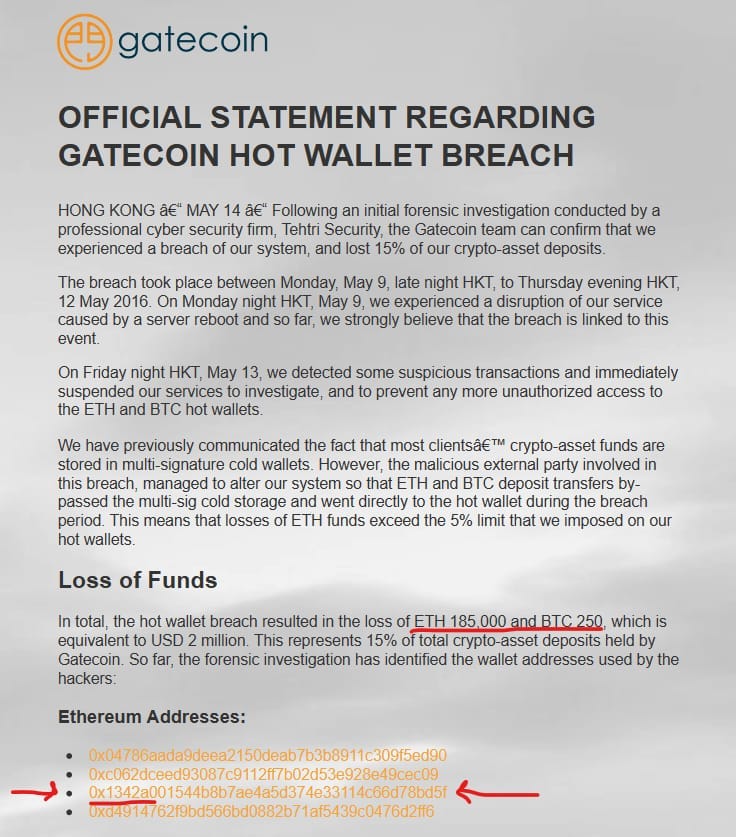
A new investigation by an on-chain sleuth has revealed that the Ethereum Foundation may have been involved in the 2016 Gate Coin Hack, which resulted in the theft of more than 185,000 ETH and 250 BTC from the Hong Kong-based exchange.

The on-chain sleuth, who goes by the pseudonym of Boringsleuth, published a detailed report on X, where he traced the origin and destination of the stolen funds using blockchain analysis tools. He claims that he found evidence that some of the hacked ETH was sent to an address controlled by the Ethereum Foundation, and that the Foundation later sold some of the tainted coins on Kraken.

The Gatecoin Hack occurred between May 9th and May 12th, 2016, prior to at the onset of The DAO’s token sale & 1 Month Prior to The Dao Hack. Per Gatecoin’s official statement on May 14th, the hack resulted in losses of 185K Ethereum, valued at more than $460M today. At the time, Gatecoin “claimed” that the hacker was able to alter their own system to bypass their multi-sig cold storage, so that all inbound Deposits into Gatecoin went straight to their exploitable Hot Wallet.

They list the 4 Hacker Eth address’ below involved in the Exploit, Among the 4 ETH address’, one address, 0x1342a0, was originally funded PRIOR to the exploit. Our focus in this thread is looking into who it was that funded this Hacker’s wallet, in hopes of gaining an idea of who it was that was behind the Hack.

Boringsleuth’s report is based on the assumption that the hacker used a smart contract to split the stolen funds into smaller amounts and send them to different addresses. He says that he identified the hacker’s contract by looking for transactions that had a high gas price and a low value, which indicated that they were used to deploy a contract.

He then analyzed the contract’s code and found that it had a function called split Funds, which took an array of addresses and amounts as inputs and sent ETH to each address accordingly.

Boringsleuth says that he tracked down all the addresses that received ETH from the hacker’s contract and found that one of them belonged to the Ethereum Foundation. He says that he verified this by comparing the address with the list of addresses that received ETH from the genesis block, which are known to be controlled by the Foundation.

He also says that he checked the balance history of the address and found that it received 2,000 ETH from the hacker’s contract on March 15, 2016, which was one day after the Gate Coin Hack.

Boringsleuth claims that he further followed the trail of the stolen ETH and found that some of it was sold on Kraken between April and June 2016. He says that he identified the Kraken deposit address of the Foundation by looking for transactions that had a high value and a low gas price, which indicated that they were used to transfer ETH to an exchange.

He then cross-referenced the address with Kraken’s API and found that it matched with one of the Foundation’s accounts. He also says that he checked the trading history of the account and found that it sold 1,337 ETH for BTC between April 4 and June 13, 2016.

Boringsleuth concludes his report by saying that he has contacted both Gate Coin and the Ethereum Foundation to inform them of his findings but has not received any response from either party. He says that he hopes that his investigation will shed some light on one of the biggest unsolved hacks in crypto history, and that he will continue to monitor the movement of the remaining stolen funds.

US SEC delays BlackRock’s Spot Ethereum ETF

Meanwhile, the US Securities and Exchange Commission (SEC) has postponed its decision on the approval of BlackRock’s Spot Ethereum ETF, a fund that would track the price of the second-largest cryptocurrency by market capitalization. The SEC said it needed more time to evaluate the proposal, which was filed by BlackRock in October 2023. The new deadline for the SEC’s decision is March 29, 2024.

BlackRock is one of the world’s largest asset managers, with over $9 trillion in assets under management. The company has been exploring the crypto space for a while, and already offers exposure to Bitcoin futures through some of its funds. However, the Spot Ethereum ETF would be the first of its kind to directly invest in the underlying asset, rather than derivatives.

The SEC has been cautious about approving crypto ETFs, citing concerns about market manipulation, volatility, custody, and investor protection. So far, the regulator has only approved Bitcoin futures ETFs, which trade on regulated exchanges and are subject to margin requirements and clearinghouse oversight. Spot ETFs, on the other hand, would hold the actual cryptocurrencies in custody, and would require the SEC to grant exemptions from some of its rules.

The crypto community has been eagerly awaiting the approval of spot ETFs, as they would provide a more convenient and accessible way for investors to gain exposure to the nascent asset class. Spot ETFs would also potentially boost the liquidity and price discovery of the underlying cryptocurrencies, as well as attract more institutional investors to the space.

However, the SEC’s delay is not surprising, given its history of postponing or rejecting crypto ETF proposals. The regulator has repeatedly asked for more information and feedback from the public and the industry on various aspects of crypto ETFs, such as valuation, liquidity, arbitrage, market surveillance, and investor education. The SEC has also indicated that it prefers a comprehensive regulatory framework for crypto assets before approving spot ETFs.

BlackRock is not the only company that is seeking to launch a spot Ethereum ETF in the US. Other firms, such as VanEck, WisdomTree, and Bitwise, have also filed similar proposals with the SEC, but have not received any response yet. Meanwhile, Canada has already approved several spot crypto ETFs, including Bitcoin and Ethereum ones, which have attracted significant inflows and trading volumes.

It remains to be seen whether the SEC will finally greenlight a spot Ethereum ETF in 2024, or whether it will continue to delay or deny such products. The crypto industry is hopeful that the regulator will eventually recognize the benefits and potential of spot ETFs and will align its stance with other jurisdictions that have already embraced them.

A bold move from Governor Sanwo-Olu on Lagos Airline, and New Airport

0

A bold move from Mr. Governor: ‘Over the last five months, the Deputy Governor and I have been working to put a concise plan together for the establishment of an airline, but we did not make the plan open because of the need to get adequate knowledge about the operational procedures of airlines,” Governor Sanwo-Olu remarked. “The business plan is viable, and there is no issue about financing. The conversation has gone to an advanced stage, but we need to get the proper information on operations before we go ahead to implement the plan.”’

Yes, Lagos Air or Eko Air or whatever they decide to call it is coming. And I score it A because it is viable. Yes, Lagos Air is more viable than Nigeria Air for many reasons which include that a convergence at Lagos does not need any push, since it is already there.

As the nation’s commercial capital where more than 80% of local flights revolve around, a successful Lagos Air will give the current local operators a really tough competitive moment. You will like that as competition will serve the customers better.

That said, I am not of the opinion that states should operate airlines in Nigeria (excuse Lagos, a top-10 largest economy in Africa if you consider it a country). I will prefer for states to build airports and allow private sector participants to use those airports for their airlines. Be the hub and not the spoke especially in a place where the customer base is still evolving.

Comment on Feed

Not really. I think an airport in the Lekki area is a good playbook for Lagos. Over time, all the traffic will move there. The economy of Eti Osa LGA is bigger than the GDP of Gambia and Lagos’ GDP is possibly closer to Ghana’s. An airport there is not bad. But an airline, NOT a good move since Lagos cannot even run a train well.

Lagos State Unveils Ambitious Plan to Launch Commercial Airline and Construct New Airport

Lagos State Unveils Ambitious Plan to Launch Commercial Airline and Construct New Airport

0

Governor Babajide Sanwo-Olu of Lagos State has announced plans for the establishment of a state-owned commercial airline and the construction of a new airport in Lekki.

The governor made this revelation during the presentation of the administration’s achievements at the Lagos West Senatorial District People’s Town Hall Meeting on Thursday.

According to him, the idea of a state-owned airport has been under consideration for several months, and the state government is now in the final stages of determining the financing model for this ambitious project. Sanwo-Olu acknowledged that the next crucial steps involve securing Federal Government approval and establishing operational contingencies for the proposed commercial airline.

“Over the last five months, the Deputy Governor and I have been working to put a concise plan together for the establishment of an airline, but we did not make the plan open because of the need to get adequate knowledge about the operational procedures of airlines,” Governor Sanwo-Olu remarked. “The business plan is viable, and there is no issue about financing. The conversation has gone to an advanced stage, but we need to get the proper information on operations before we go ahead to implement the plan.”

The governor promised that the senatorial district would benefit significantly from the intracity railway development projects, with major passenger hubs of Blue Line and Red Line trains located in Lagos West.

Stakeholders applaud the move

Stakeholders within the aviation industry, who spoke to The Punch, have expressed optimism about the Lagos State government’s plans. Kingsley Nwokoma, Chairman of the Association of Foreign Airlines and Representatives in Nigeria, sees this development as positive for the industry.

“The aviation sector benefits from increased players, addressing recurring issues like low service quality, delayed flights, and cancellations,” he said.

Nwokoma further noted that having more airlines would be advantageous, addressing concerns such as flight delays and cancellations, which have been key issues for the Minister of Aviation.

“In the past, we had only a few airlines, but the current expansion is a welcomed and beneficial development for the sector. Nigeria requires more standardized airlines, potentially reaching the IATA clearing house,” he added.

The General Secretary of the Aviation Safety Round Table Initiative, Olumide Ohunayo, supported the need for more airlines to address the current demand-supply imbalance in the industry. He pointed to recent incidents of exorbitant Christmas ticket prices reaching N250,000 due to high demand, underscoring the necessity for growth.

However, Ohunayo advised the Lagos State Government to draw inspiration from the success of Ibom Air in Akwa Ibom, suggesting a state-dependent, professionally managed structure similar to Ibom.

The aviation expert noted the need for more players in the industry, citing Ibom Air as an example that a state could run an airline successfully.

“The industry is not unsaturated. We need more. We saw what happened during the last Christmas when tickets hit the roof of about 250,000 naira. So we had less supply. We would not have gotten to that fair price if the demand had outpaced supply,” he said. “I would advise that they shouldn’t make it a civil service airline but they should look at the Ibom structure whereby it is managed by professionals. That is the route to take.”

Lagos State’s Aviation Aspirations: A Historical Perspective

Nigeria’s aviation history is marked by several failed attempts by both the government and private entities to establish sustainable airlines. In 2017, Imo State became the first Nigerian state to have its own airline, aiming to operate regular scheduled flights to major cities across the country. Unfortunately, this venture, like many before it, turned into another unfortunate investment story.

Thus, Lagos State’s attempt to establish its airline is, however, met with skepticism in many quarters, given the historical challenges faced by previous national carriers in Nigeria. From the defunct Nigerian Airways of 1958 to ventures like Virgin Atlantic and the ill-fated Nigeria Air in 2023, these endeavors have sent a message of the state’s inability to successfully operate a national carrier.

Amidst the excitement and optimism, voices of concern and skepticism regarding Lagos State’s foray into the aviation industry persist. Some critics view this move as a potential waste of taxpayers’ money, questioning the state government’s ability to run a successful airline. Despite the success of Ibom Air, founded by Akwa Ibom state in 2019, as a potential benchmark, doubts remain about the viability of Lagos State’s venture.

Critics argue that Lagos should prioritize providing diverse means of transportation, expanding initiatives like the rail line launched last year to ease traffic congestion—a significant impediment to the state’s economic development.

While the aviation industry may benefit from increased players, some believe that the state’s resources could be better allocated to address pressing issues such as infrastructure road, and rail transportation that have remained a clog in the economic development of the state.