DD
MM
YYYY

PAGES

DD
MM
YYYY

spot_img

PAGES

Home Blog Page 3780

US SEC is reviewing Grayscale, Spot Bitcoin ETF Applications

0

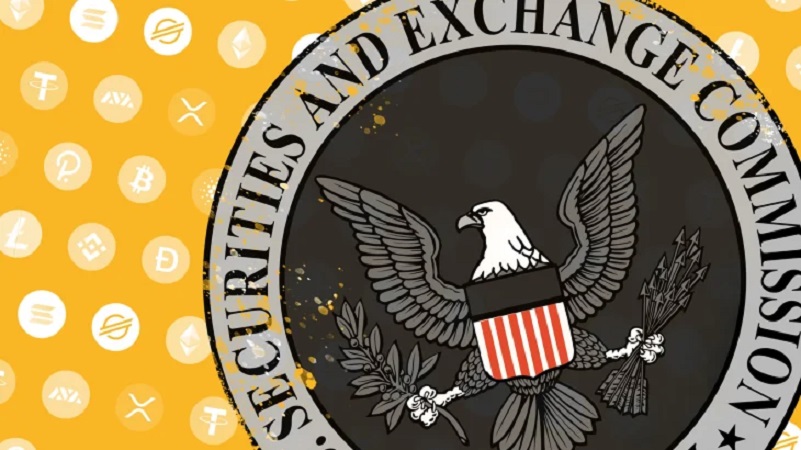
The Securities and Exchange Commission (SEC) is currently reviewing several applications for bitcoin exchange-traded funds (ETFs), including those from Grayscale Investments and spot bitcoin ETFs, according to SEC Chair Gary Gensler. In a recent interview with Bloomberg, Gensler said that the SEC is looking at different types of bitcoin ETFs, such as those that hold bitcoin futures contracts or physical bitcoins and evaluating their compliance with the federal securities laws.

An ETF, or exchange-traded fund, is a type of investment fund that tracks the performance of an underlying asset or index. For example, a gold ETF tracks the price of gold, while a S&P 500 ETF tracks the performance of the S&P 500 index. ETFs are traded on stock exchanges, just like stocks, and offer investors a convenient way to diversify their portfolios and access different markets.

Gensler also indicated that he is more open to approving bitcoin futures ETFs than spot bitcoin ETFs, as the former are regulated by the Commodity Futures Trading Commission (CFTC) and have more investor protection measures. He said that the SEC has been in communication with the CFTC and other regulators on this issue. However, he did not give a timeline for when the SEC might approve any bitcoin ETFs.

Grayscale Investments, the largest digital asset manager in the world, has been seeking to convert its flagship product, the Grayscale Bitcoin Trust (GBTC), into a bitcoin ETF since 2016. GBTC is currently traded on the over the counter (OTC) market and has a significant premium or discount to its net asset value (NAV). By becoming an ETF, GBTC would trade on a national securities exchange and track the price of bitcoin more closely.

Spot bitcoin ETFs, on the other hand, are those that directly hold physical bitcoins in custody and reflect their market price. Several firms, such as VanEck, Valkyrie, and WisdomTree, have filed applications for spot bitcoin ETFs with the SEC, but none have been approved yet. Spot bitcoin ETFs are seen as more attractive by some investors, as they offer more exposure to the underlying asset and avoid the risks and costs associated with futures contracts.

The SEC has been reluctant to approve any bitcoin ETFs in the past, citing concerns about market manipulation, fraud, custody, liquidity, and investor protection. However, some observers believe that the SEC may be more receptive to bitcoin ETFs under Gensler’s leadership, as he has a background in financial technology and cryptocurrency regulation. Gensler taught a course on blockchain and digital currencies at MIT and served as the chairman of the CFTC during the Obama administration.

Bitcoin ETFs are widely considered to be a catalyst for the mainstream adoption of cryptocurrencies, as they would provide an easier and more regulated way for institutional and retail investors to access the market. Bitcoin ETFs are already available in some countries, such as Canada, Brazil, and Germany, and have attracted significant inflows of capital. The U.S., however, remains the largest and most influential market for cryptocurrencies, and many investors are eagerly awaiting the SEC’s decision on bitcoin ETFs.

One of the main benefits of a Bitcoin ETF is that it can bring more liquidity and transparency to the crypto market. A Bitcoin ETF would attract more institutional and retail investors, who may otherwise be reluctant or unable to invest in Bitcoin directly. This would increase the demand and trading volume for Bitcoin, which could boost its price and stability. Moreover, a Bitcoin ETF would be subject to the same regulations and oversight as other ETFs, which could enhance the credibility and legitimacy of Bitcoin as an asset class.

Another benefit of a Bitcoin ETF is that it can offer more tax efficiency and flexibility for investors. Unlike buying and selling Bitcoin directly, which may trigger capital gains taxes, investing in a Bitcoin ETF may allow investors to defer taxes until they sell their shares. Additionally, a Bitcoin ETF may offer more options for investors to hedge their positions, trade on margin, or short sell.

However, a Bitcoin ETF also faces some challenges and limitations. One of the main challenges is regulatory approval. So far, no Bitcoin ETF has been approved by the U.S. Securities and Exchange Commission (SEC), which has raised concerns about the market manipulation, fraud, custody, and valuation of Bitcoin. The SEC has also stated that it needs to see more progress in the areas of market surveillance, investor protection, and compliance before it can approve a Bitcoin ETF.

Another challenge is technical feasibility. A Bitcoin ETF would need to track the price of Bitcoin accurately and efficiently, which may not be easily given the volatility and fragmentation of the crypto market. A Bitcoin ETF would also need to secure and store its Bitcoin holdings safely, which may pose operational and security risks.

Bitcoin ETF is a type of investment fund that tracks the price of Bitcoin and offers investors a convenient way to access the crypto market. A Bitcoin ETF has many potential benefits, such as increasing liquidity, transparency, credibility, tax efficiency, and flexibility for the crypto market and its investors. However, a Bitcoin ETF also faces some challenges and limitations, such as regulatory approval and technical feasibility. A Bitcoin ETF is widely considered to be a catalyst for the mainstream adoption of cryptocurrencies, but it is not yet a reality.


Zodia Custody to offer digital asset services in Singapore

0

Zodia Custody, a digital asset custodian by Standard Chartered, in association with Northern Trust and SBI Holdings, has announced that it will provide digital asset services in Singapore. The company, which was launched in 2020, aims to offer institutional-grade custody solutions for cryptocurrencies and other digital assets.

Zodia Custody is a pioneer in the field of digital asset custody, offering a secure and compliant solution for institutional investors. Zodia Custody combines the expertise and experience of Standard Chartered, a leading global bank, and Northern Trust, a leading global custodian, to provide a best-in-class platform that meets the highest standards of governance, risk management and operational resilience.

Zodia Custody is one of the first regulated digital asset custodians in the world, having obtained the approval of the Financial Conduct Authority (FCA) in the UK. Zodia Custody supports multiple cryptocurrencies, including Bitcoin, Ethereum, XRP, Litecoin and Bitcoin Cash, and plans to expand its offering to other digital assets in the future.

Zodia Custody enables institutional investors to access the opportunities and benefits of the digital asset ecosystem, while mitigating the risks and challenges associated with self-custody or unregulated service providers. Zodia Custody is committed to advancing the adoption and innovation of digital assets, while adhering to the highest standards of regulation, compliance and security.

More so, Zodia Custody’s CEO, Julian Sawyer, described Singapore as a “leading global financial hub and a key market for digital assets in Asia”. He added that Zodia Custody is committed to “setting the highest standards of governance, compliance, and security” for its clients.

Zodia Custody’s COO, Olivier Relandeau, said that the company’s mission is to “bridge the gap between traditional finance and the digital asset world”. He said that Zodia Custody will leverage its expertise and technology to offer “a seamless and secure custody solution” that meets the needs and expectations of institutional investors.

Zodia Custody is one of the first regulated digital asset custodians in the world. The company claims to have a robust operational framework that adheres to the same standards as conventional custodians. Zodia Custody also claims to have a comprehensive risk management system that covers legal, regulatory, operational, cyber, and fraud risks.

Zodia Custody’s launch in Singapore follows its recent expansion to Europe, where it obtained a license from the UK Financial Conduct Authority (FCA) in July 2021. The company said that it plans to continue growing its global footprint and adding more digital assets to its platform in the future.

…press release

 Zodia Custody, a leading institution-first digital asset custodian whose shareholders include Standard Chartered, SBI Holdings and Northern Trust, has expanded its presence to Singapore. This makes Zodia Custody the first entity that is owned by, and partnered with, banks to provide digital asset custody services for financial institutions in Singapore.

Zodia Custody’s entry into Singapore comes at a pivotal moment for the business. The custodian seeks to expand across the Asia-Pacific region to cater to increased demand from institutions to provide bank-grade custody of digital assets, and to respond to existing client demand for its services in the region.

The firm arrives at a time when local regulators are seeking to build a better-defined digital asset ecosystem, with the Monetary Authority of Singapore (MAS) recently presenting a new framework for the use of digital money, including central bank digital currencies and stablecoins. The MAS has also recently proposed draft legislation around how digital assets are safeguarded, paving the way for custodial services to become a key component of digital asset infrastructure in Singapore. As a business created on the thesis of segregation of assets, the proposal means that Zodia Custody will be well placed to serve institutional needs for robust risk management and governance controls in the jurisdiction.

“Singapore is no stranger to digital assets, having long been a hub for financial technology innovation,” said Julian Sawyer, CEO of Zodia Custody. “But even in a mature market, challenges remain. Having been created by Standard Chartered Ventures, we have a deep understanding of institutional needs and requirements not just to enter the space, but thrive within it. As we engage with the local ecosystem, we’ll be providing market participants with cutting-edge technology, bank-level compliance, and governance to accelerate their digital asset adoption journeys.”

The last year has seen a number of partnerships for Zodia Custody, including the likes of LMAX Digital, Hidden Road, BlockFills, and Blockdaemon. Driving these collaborations has been Zodia’s market-leading Interchange offering, providing institutions with additional layers of risk management, secure custody and solvency protection. In the wake of recent market turbulence, measures such as these are essential to facilitate institutional participation in the digital asset market without compromising robust safety requirements.

The expansion is the latest example of Zodia Custody’s global growth, which in the past year has included expanding into both Japan — as part of a joint venture with SBI Digital Asset Holdings — and into Luxembourg, with the latter also seeing the firm be registered as a VASP in that market. Zodia Custody’s entry into Singapore also follows a successful US$36 million Series A raise.


Note: The names of Zodia CEO and COO were updated. Apologies for the mistakes.

Hypercommercializing Tani Olohun Case in Nigeria

0

The case of Isese activist Adegbola Abdulazeez, known widely as Tani Olohun, has gripped Nigeria, unfolding a saga that has played out not only in courtrooms but also in the ever-watchful eyes of social media and mainstream media. Tani Olohun’s story is not the first religious-related case to become a spectacle in these digital arenas, and it certainly won’t be the last. As long as people and digital platforms continue to create spaces for discussions and debates, such cases will continue to garner attention. However, beneath the surface of this digital spectacle lies a complex issue: the hypercommercialization of Tani Olohun’s case.

The Digital Age: A Platform for Public Discourse

In the digital age, where information flows ceaselessly through the internet’s arteries, issues like Tani Olohun’s case take on a life of their own. Social media and mainstream media outlets act as conduits, connecting millions of people to the latest developments in real time. The ability to instantaneously share news, images, and videos has given rise to a globalized public sphere where narratives are shaped, opinions are formed, and justice is demanded.

The Problem of Hypercommercialization

However, a troubling trend has emerged amid the digital fervour surrounding cases like Tani Olohun’s. Rather than serving as platforms for informed debate and calls for justice, established and emerging content curators often prioritize profit over principle. Instead of focusing on creating a space that enables democratic structures to resolve the case fairly, they sometimes turn the proceedings into a lucrative spectacle, generating surplus value for themselves and leaving little to no exchange value for Tani Olohun and other key actors in the conflict.

Between the moment of Tani Olohun’s arrest and the commencement of his prosecution, hundreds of pieces of content in various forms – news articles, images, and videos – have flooded both social and mainstream media. These pieces have been shared widely, both nationally and globally. While this widespread coverage has brought attention to the case, it has also raised concerns about the ethics and consequences of hypercommercialization.

The Rush for Clicks and Eyeballs

One of the primary drivers of hypercommercialization in cases like Tani Olohun’s is the relentless pursuit of clicks, likes, shares, and eyeballs. In the digital age, engagement metrics translate directly into advertising revenue, and this economic incentive can lead content creators to prioritize sensationalism and drama over the pursuit of truth and justice.

As Tani Olohun’s case unfolded, some content creators raced to be the first to report on each new development. They used clickbait headlines, provocative images, and dramatic videos to capture the attention of the digital masses. While these tactics may have driven traffic and generated revenue, they also risked turning a serious legal matter into a form of entertainment.

The Impact on Justice and the Public Sphere

Hypercommercialization has consequences beyond mere entertainment value. It can distort public perceptions and hinder the pursuit of justice. In the case of Tani Olohun, the hypercommercialization of court proceedings may have influenced public opinion, potentially swaying perceptions of guilt or innocence. This raises questions about the fairness of the legal process and the ability of the accused to receive a fair trial in the court of public opinion.

Moreover, the surplus value generated by content creators often fails to benefit those at the heart of the conflict. Tani Olohun and others directly involved in the case may find themselves overshadowed by media sensationalism, struggling to have their voices heard amidst the noise of commercialized narratives.

Balancing Profit and Justice

In addressing the issue of hypercommercialization, it is essential to strike a balance between the legitimate pursuit of profit and the imperative of upholding justice. Content creators have a right to monetize their work, but they also bear a responsibility to maintain ethical standards, especially when covering sensitive legal matters.

One way to address this challenge is through greater self-regulation within the media industry. Content creators and media organizations can establish ethical guidelines that prioritize accuracy, fairness, and responsible reporting. They can also commit to providing comprehensive coverage that includes diverse perspectives and ensures that all parties involved in a case have a fair opportunity to present their side of the story.

The case of Tani Olohun serves as a stark reminder of the power and pitfalls of the digital age. While the internet and social media have democratized information sharing, they have also raised complex ethical dilemmas, particularly in high-profile legal cases. Balancing profit and justice requires a concerted effort from content creators, media organizations, and the wider public. By prioritizing responsible reporting and ethical journalism, we can ensure that cases like Tani Olohun’s receive the scrutiny they deserve without sacrificing the principles of justice and fairness. In doing so, we can harness the potential of the digital age to promote transparency, accountability, and a more just society.

Court grants FTX Clearance to Liquidate $3.4B in Crypto Assets

0

FTX, one of the largest cryptocurrency exchanges in the world, has obtained a court order to liquidate $3.4 billion worth of crypto assets from its customers who defaulted on their margin trading positions. The exchange, which is based in Hong Kong and registered in Antigua and Barbuda, filed a petition with the High Court of Hong Kong on September 7, seeking authorization to sell the crypto assets of more than 800,000 customers who had negative balances on their accounts.

According to the petition, FTX had suffered massive losses due to the extreme volatility of the crypto market in August and September, when several major cryptocurrencies plunged by more than 50%. The exchange said that it had tried to contact the defaulting customers and request them to deposit more funds or close their positions, but most of them failed to do so.

According to the company’s quarterly report, FTX’s total revenue decreased by 35% from $1.2 billion in Q2 to $780 million in Q3, while its net income fell by 50% from $600 million to $300 million. The company also saw a decline in its trading volume, user base and market share, as many investors withdrew from the crypto space or switched to other platforms.

FTX’s CEO Sam Bankman-Fried said that the company was prepared for the market downturn and had taken measures to mitigate its impact, such as reducing its leverage ratio, increasing its liquidity reserves and diversifying its revenue streams. He also expressed confidence that the crypto market would recover soon and that FTX would regain its momentum and growth.

“We are not discouraged by the temporary setback. We believe that crypto is the future of finance and that FTX is well-positioned to capture the opportunities that lie ahead. We have a strong team, a loyal community and a solid product that offers a superior trading experience. We will continue to innovate, improve and expand our services to meet the needs and expectations of our customers,” he said.

The court granted FTX’s request on September 13, giving the exchange the green light to liquidate the crypto assets of the defaulting customers at the best available market prices. The court also ordered FTX to deposit the proceeds of the liquidation into a separate account and report back to the court within 30 days.

FTX said that it regretted having to take this drastic action, but it was necessary to protect its solvency and the interests of its other customers. The exchange also said that it would try to minimize the impact of the liquidation on the crypto market and avoid causing further price fluctuations.

One of the main challenges that FTX faces is how to protect its users and funds from potential losses due to market volatility, hacking, or other unforeseen events. In this blog post, we will explore some of the steps that FTX takes to mitigate against loss and ensure a secure and reliable trading experience for its customers.

The liquidation order is one of the largest in the history of the crypto industry and reflects the high risks involved in margin trading, which allows traders to borrow funds from exchanges or other platforms to amplify their profits or losses. Margin trading can be very profitable in a bull market, but it can also lead to huge losses in a bear market, especially if traders do not have enough collateral or fail to monitor their positions closely.

Elon Musk’s Starlink Made $1.4 Billion in 2022, Falls Short of $7 Billion Projection

0

Starlink, an Elon Musk-owned satellite internet constellation that provides coverage to over 60 countries, is reported to have made $1.4 billion in revenue in 2022, up from $222 million in 2021, but however fell short of the $7 billion projection.

According to a report from Wall Street, the revenue which was a significant increase from 2021, however, fell short of Musk’s projections during a 2015 presentation to investors.

The Wall Street wrote,

“Starlink is bumping up against a reality articulated by many skeptics of satellite Internet. The majority of the world’s population that the business could serve and that can afford high-speed broadband lives in cities. In those regions, Internet service is readily available, usually offers cheaper monthly costs than Starlink, and doesn’t require specialized equipment”.

According to WSJ, Musk who is known for his aggressive goal setting as he did with the 2015 projections, has however stated a more modest ambition for Starlink, pointing out that low-earth orbit satellite ventures have a history of going bankrupt.

SpaceX president and COO Gwynne Shotwell said in February that Starlink is expected to turn a profit this year. While Starlink’s profit or loss for the year 2023 remains unknown, the company recorded significant profits in the first three months of this year after two annual losses.

SpaceX’s first quarter (Q1) 2023 numbers reportedly included a $55 million profit on $1.5 billion in revenue.

Starlink subscriber numbers are up since 2022, but not by a huge amount. SpaceX reported that the satellite internet constellation had about 1.5 million users in May 2023.

Reports reveal that Starlink has been slower to sign up customers than Musk expected, signing up roughly one million active subscribers by the end of 2022, a major decline from the 20 million subscribers Musk expected to have.

According to McKinsey & Company, the uptake of satellite internet has been limited for various reasons. Among those reasons, two major reasons are high costs and poor performance.

However, Starlink has addressed performance issues by using a low Earth orbit satellite constellation. It has also managed hardware costs by slashing the prices of Starlink terminals.

On a step forward on profitability, SpaceX’s Vice President of Starlink Jonathan Hofeller announced that the company was no longer losing money producing Starlink terminals. He further noted that mass-producing Starlink terminals was one of the internet provider’s keys to success.

Starlink currently boasts the largest network of low-Earth orbit (LEO) broadband satellites, with over 4,700 satellites in orbit. This technical feat has allowed the company to provide high-speed internet to remote areas where traditional cable or fiber is unavailable.

The satellite internet constellation has entered the European market and demonstrated the technology’s promise while previously raising its support for Ukraine’s telecommunications needs, during the Russian invasion.

Unlike conventional internet providers, which rely on hundreds of miles of cabling, Starlink uses a constellation of low-orbit satellites to provide the world with high-speed internet access.

Starlink’s service has continued to spread across the globe, as it now covers many of the countries with the lowest internet adoption rates.

The satellite internet ambition is to penetrate mobile dead zones, which has driven much of its work and has grown its subscriber base.