DD
MM
YYYY

PAGES

DD
MM
YYYY

spot_img

PAGES

Home Blog Page 3780

The Near Impossibility of Nigeria’s Central Bank Converting USD to Naira in Dorm Accounts

1

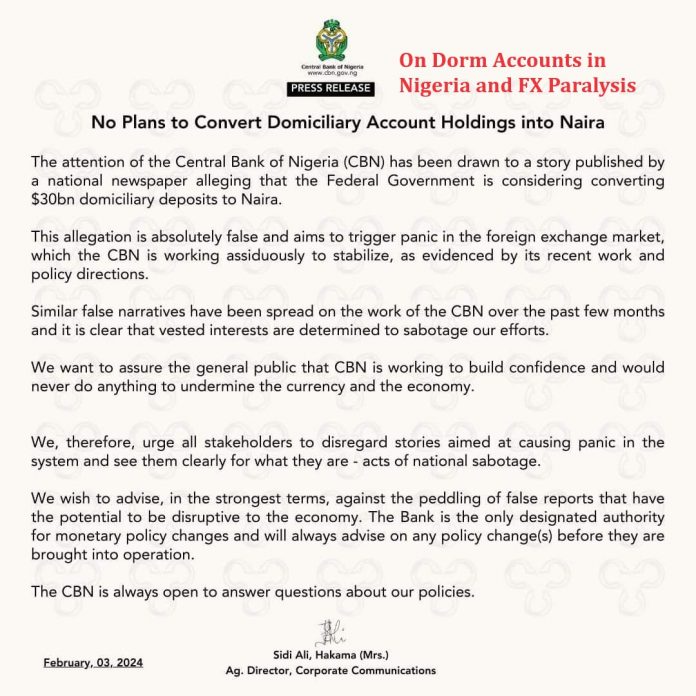
The big rumour: “There are strong indications that the Federal Government is mulling a policy that will result in the conversion of foreign currencies in domiciliary accounts of citizens to naira to stabilise the national currency”.

My Response:  There is no basis to convert USD to Naira and no government can do that. If that should happen, Nigeria will become like Zimbabwe. Even if you convert USD to Naira, that does not solve the problem since most of these dollars are not in Nigerian bank vaults. I worked in the banking sector. Yes, you may not have access to USD in cash or other means to fix the forex challenges. 

Typically, they keep a few percent of FX holdings and warehouse the rest with their correspondent banks across the globe. That is why they may not have $200 to give you in cash even though they can do a wire of $20,000 for you on the same day. Why? No physical cash is in Nigeria – they’re in New York, London, etc.

So, if you think Nigeria can convert say $1 billion in a bank’s book and have access to $1 billion in US dollar cash, you are dreaming.  I worked in the bank as a young graduate and in the Systems Automation Unit, the most privileged unit in any bank in the world. I used to open the doors for the Treasury FX team to enter to have access to the FX vault area.

If you visit all the banks in Nigeria, their FX vaults do not have enough cash to cover up a percent of their dollar deposits. It makes sense since keeping physical dollars increases costs of insurance due to fire, theft, fraud, etc. So, the smart thing is to avoid that. 

So, anyone who tells you that Nigeria can convert the balance in your dorm account and exchange for Naira, and have access to your US dollar has not worked in banking. Banking is an industry where money is assumed to be everywhere but look deeper, they have transmuted that money to capital, and few money is everywhere, physically.

You can have a $1 billion USD deposit but the vault cannot accommodate $5 million in cash, and that fund is not with the central bank but scattered across the world in the form of capital since banks are designed to take money and build capital to make money. The $30 billion you may see in bank books in Nigeria could be with MTN, Unilever, Dangote Group, Airtel, etc as foreign denominated loans. That said, consult your senator as he/she is the best person to calm you down; I am just a village boy enjoying myself in this nice world.

Yet, Nigeria needs to innovate. If we have $30 billion in the dorm accounts, it does mean that Nigeria has not provided reasons for people to invest in the country. That is why I praise people like Dangote who despite all things take risks by building companies over warehousing funds in banks. The question is this: what can Nigeria do to make it exciting for people to invest those billions which are sitting idly in bank vaults? Many nations have answered that question and transitioned from invention to innovation economies.


Comment on LinkedIn Feed

Comment 1: What’s the difference between capital and money in this context?
I know I could have googled, but I’ve done so before and gotten different definitions.

My Response: You give a bank N1m in deposit as money. They invest that in a real estate project while making sure there’s liquidity in case you need your money. Specifically, that your money (N1m) is not idly in a bank vault. The bank believes on the faith that all depositors cannot come at the same time for their funds. So, it can keep just 20% of the money and convert the rest into capital via loans, investments, TB, bonds, etc.

That real estate firm can have a moneyman come to buy those loans, repackage them as debt assets and resell to investors, marking the percentages. Those investors are fund managers who represent family offices, etc. In an efficient system, you see N1m in your bank wallet but that money is now in real estate, debt buyers, etc. Simply, the bank has converted the N1m money into capital, unlocking massive opportunities along the way.

Money is a subset of Capital, and companies and nations which allow Money to rule over them underperform. Money does one thing: means to exchange goods and services. In short, the unit of Capital is money (i.e capital is measured in monetary terms). I explained further here

Beyond Reflective Electricity Tariffs, Nigeria MUST Still Subsidize Electricity for Industrial Customers

1

Question:  “Nigeria’s Minister of Power, Adebayo Adelabu, has expressed concerns over the poor electricity supply situation in the country caused by a plethora of issues including outstanding subsidy debts. One of his solutions is that Nigeria should migrate to a full cost-reflective tariff regime if the federal government cannot pay for subsidies owed. He noted that Nigeria pays the lowest tariff compared with Niger, Ghana and Ivory Coast. What is your comment?”

My Response: The Honourable Minister is correct that our electricity challenges are massive. But we know the solution. Recall that Nigeria privatized our electricity distribution (DISCO) with a juicy template on electricity rate. Many foreign investors came on that agreed rate which would have made the DISCOs profitable companies. But as soon as they completed the investment, some Nigerians went to court, and the court aborted the agreed new rates.

 With the new rates gone, DISCOs became like charities, unable to generate profits. Over time, most of them went bankrupt.  (Think of going to Court to force DSTv to show European Football for nothing, and as a result of that, over time, DSTv will not have funds to pay for  future rights). I explained these issues here in 2017 and they remain till today:

The generation companies (gencos) do not see the pricing as optimal to waste their efforts generating power. The distribution companies (discos) do not even bother accepting all available electricity to sell to consumers. Discos think it makes no sense selling something at a loss. And the consumers do not want to see any increase because the past ones have not resulted in any improvement in power supply…Mr. President, if the court had struck the increased tariff, ask the Attorney General to support the Nigerian Electricity Regulatory Commission (NERC) which I understand is challenging the ruling in the court. Until we can fix this pricing issue, we will not make progress.”

(You can also add the reason why we do not have working water boards. In some states, water rates have not been updated for more than two decades, making such investments of no value).

So, I support increasing the electricity tariff but I also support energy subsidies. Nigeria provides gas to Ghana  and Ivory Coast to run their power plants. We also sell electricity to Niger at least before the ECOWAS sanctions. Simply, their cost of electricity should be more than Nigeria’s; that is expected.

Yet, in some of these countries, they have a strategy. There are 3 classes of electricity customers – Residential, Commercial and Industrial. You use reflective tariffs for residential (homes) and commercial (like bank offices) while you subsidize industrial (like cement, biscuit factories). In Ethiopia, Dangote Cement – an industrial customer – receives massive subsidies and runs on the national grid.  In Nigeria,  the company  is not connected to the grid and as they have an independent power plant. That creates a big problem for DISCOs – some of their best customers in Nigeria have alternatives to the national grid, and even if you invest and improve capacity, you are left with residential and low-tier commercial customers which to a large extent are challenging to serve and not as lucrative as the industrial.

Dangote Group uses about 40% of Nigeria’s total distributed energy capacity, and that is revenue lost by Discos, transmission companies and generating companies because the company has nothing to do with the national grid. Under that system, most investors do not want to invest especially in the distribution phase which remains challenging.

In summary: we can have reflective tariffs for residential and commercial customers even as we subsidize electricity and fossil fuels for productive industrial customers. 

Of course, this is wishful thinking as someone somewhere will go to court and one judge will strike down any reflective tariff since Nigeria has all the rights for cheap electricity to watch European football. If not, why should a minister be lamenting on the national media when he could effect this change himself? He knows that unless we reform the judiciary and the rascality we see everywhere, it is a waste of time. In my office in Owerri, we’re not connected to the national grid – we run on two generators and we have peace!

Chainlink (LINK), Internet Computer (ICP) and Pullix (PLX) Look Bullish For February

0
  • Chainlink is bullish on the charts and can soon reach new heights as it moves above the $22 range.
  • In the meantime, Internet Computer (ICP) can also see a major upswing, resulting in a climb to $20.12.
  • Pullix (PLX) is at the forefront with its presale. Fueled by a vast ecosystem and massive token utility, it’s shaping up to be one of the best projects to get into for 2024.

Internet Computer (ICP) has showcased bullish performance on the weekly chart and could soon reach new heights based on the most recent on-chart data. In addition, Chainlink (LINK) is moving upwards in value and could initiate the next bull run. The most bullish crypto for February remains Pullix (PLX) as its already given early investors an ROI of 150%, and newer investors can expect to get even more, with a projected upswing of 40x.

Chainlink (LINK) Poised to Move Above $22 by the End of 2024

Chainlink (LINK) is also moving upward in value as it recently found support at the $15 price after climbing by 100% during the past year. In the past seven days alone, the Chainlink price moved from a low point of $13.55 to a maximum value of $15, indicating that $20 is its next major price barrier.

The Chainlink crypto is showcasing a bullish crossover at the 50-day EMA, and if the Chainlink crypto continues and climbs above the 150-day EMA, it is primed for more significant growth. Its current sentiment is bullish for February, but by the end of the year, according to the Chainlink price prediction, it can reach $22.86.

Internet Computer (ICP) to Climb in February and End 2024 at $20.12

Internet Computer (ICP) has also performed well during the past week, and its price momentum could result in even more significant gains. The Internet Computer price moved up from a low point of  $9.62 to $12.95 during the past week, and support was found at the $12 range.

Now, an increase above this point would spell good news for the Internet Computer crypto, as a break above the $15 price barrier could result in even more significant gains. The MACD line and signals indicate a bullish crossover can occur, which, according to the Internet Computer price prediction, would result in a price upswing of $20.12.

Pullix (PLX) Enters Stage 7 of Presale – Can Surge by 100x Following Its Launch

Pullix (PLX) as a DeFi project can introduce a Web3 marketplace that will create a combination of the best elements found in CEXs and DEXs, through which investors can maintain full control over their assets without the interference of any third-party.

  • With this approach, the platform can combine a much higher level of trust with transparency and security.
  • There will be automated tools available as-well, which can help traders make well-informed decisions.
  • For the inexperienced traders, there will even be a Copy Trader infrastructure, where through it, anyone can copy the most successful traders.

To get fixed passive income, anyone can also provide liquidity to the automated market maker, which operates through the liquidity provision system. Selling over 80 million tokens, Pullix is making a name for itself with the blockchain ICO. Now at Stage 7, it trades at just $0.10, and analysts project an upswing of 40x for the native crypto of this DeFi project.

For more information regarding Pullix’s presale see links below:

Visit Pullix

Join The Pullix Communities

Algotech (ALGT) Presale Gears up for a Rally, as Liquidity Rotates Out of Mantle (MNT) and Bitcoin Cash (BCH)

0

A lot is happening in the crypto market as liquidity rotates out of Mantle (MNT) and Bitcoin Cash (BCH). However, the Algotech (ALGT) presale is gearing up for a rally. This is because of the significant use in demand due to the large influx of investors in Algotech (ALGT) who see it as the best cryptocurrency to buy in 2024.

TLDR

  • Algotech (ALGT) is in high demand; it is now a top crypto to buy in 2024
  • Mantle (MNT) is expected to trade between $0.56 and $0.82 by 2025.
  • There is a possibility that Bitcoin Cash’s (BCH) price will reach $435.51 by 2024.

Why Algotech Has a Large Influx of Investors

After its groundbreaking success, raising a whopping $1.1 million in a $0.02/token seed sale, Algotech (ALGT) has become the leading decentralized cryptocurrency trading platform. Algotech (ALGT) doesn’t just simplify the process of cryptocurrency trading; it also offers investors dividends, active roles, and voting rights.

The seed sale, which created the foundation for several public presale stages, saw increases in the prices of Algotech (ALGT). Algotech’s (ALGT) focus on research and development in areas like trend following and mean reversion makes it a leading decentralized algorithmic crypto trading platform.

Early investors have a source of passive income as they get a share in the dividends from Algotech’s (ALGT) lucrative funds. Also, these investors can partake in some decision-making in Algotech (ALGT) as they have voting rights.

This innovative platform offers investors a part of the 30% performance fee it charges users who benefit through its algorithms. As Algotech (ALGT) continues to progress through several public presale stages, analysts forecast an increase in the value of its token.

Algotech (ALGT) began its journey from $0.04 in Stage 1 and is projected to reach $0.15 at launch, indicating a 275% surge from its initial price. This increase will pave the way for Algotech (ALGT) tokens to enter major exchanges, making it the best crypto to invest in.

Mantle (MNT) Price Analysis & Forecast: How High Can Mantle (MNT) Go In 2025?

Mantle (MNT) is currently in a bearish sentiment with a Fear and Greed Index Value of 61 (indicating greed). Furthermore, the Mantle (MNT) saw 13 green days out of 30 green days (43%), with price volatility of 8.37% over the past 30 days.

Furthermore, Mantle (MNT) has an RSI value of 44.15, indicating that the Mantle market is neutral. By next week, analysts expect the Mantle (MNT) price to fall between $0.59 and $0.62. Throughout 2024, Mantle (MNT) should trade between $0.56 and $0.82.

Experts’ prediction of Mantle (MNT) price in 2025 reveals a trading price between $0.56 and $0.81. This means that if it reaches the higher value target of $0.81, it would increase by 44.74%.

By 2030, experts predict that Mantle (MNT) can reach a maximum price of $4.09, while on average, it should be valued at around $3.76. If the trend is bullish, the MNT coin price may surpass the forecast.

Bitcoin Cash Price Prediction: Is Bitcoin Cash a Good Investment?

With a boost in Bitcoin’s trend momentum due to the SEC’s approval of all ETFs, altcoins are climbing the bullish ladder. Like other cryptocurrencies, it is difficult to tell if Bitcoin Cash (BCH) will be a good investment.

Technical indicators signal a neutral bullish market sentiment on Bitcoin Cash (57%) with a Fear & Greed Index Value of 55 (Greed). Over the past month, Bitcoin Cash (BCH) experienced 13/30 (43%) green days with a price volatility of 5.03%.

Bitcoin Cash (BCH) is surging in this bull market, driving the rally nearer to $300. Experts have revealed their Bitcoin Cash price prediction for 2024. With Bitcoin Cash’s (BCH) recent price surge, its price could reach $435.51 by 2024. However, considering the flip side, the Bitcoin Cash (BCH) price may bottom out at $260.

The Bitcoin Cash price prediction for 2025 reveals that it could be a year of growth for Bitcoin Cash (BCH), with the possibility of the price oscillating between $595 and $714. The average Bitcoin Cash (BCH) price could be at $654.50.

Visit Algotech Presale

Join The Algotech Community

Why China Is Winning The World via Global Logistics Subsidy

0

I have posited that Africa cannot effectively copy China’s industrialization policy for many reasons. You can read that piece in Harvard here. Many things happen in China and one of those things is how China subsidizes production elements for its companies.

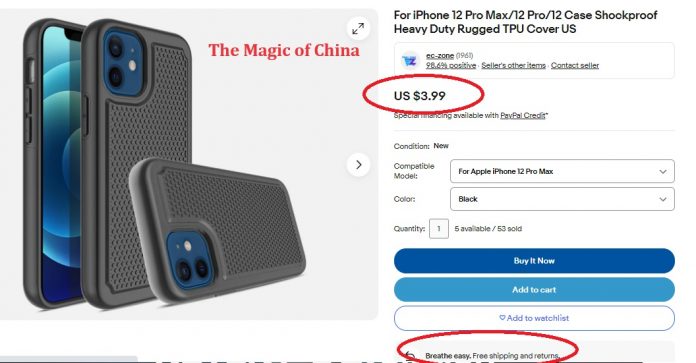
If you live in New York, you can buy an iPhone cover for $4 from Chinese firms and their secondary affiliates. That $4 includes shipping and handling. How can someone make an iPhone cover in China and ship it to you in New York for $4 and still remain in business?

Yes, China has subsidized logistics, and it is the world’s best in doing that.

It is on this thesis that I note that Nigeria has to pick one element in our production system to subsidize. Energy is always a suspect. Note: India is big on energy subsidy; according to the Brookings Institution, “The Government of Delhi’s household electricity subsidy is amongst the most generous in India.” which means that India subsidizes energy.

In this piece, I explain why Nigeria must bring fuel subsidy back, with the corruption removed, if we want to re-ignite our economy.

Why I like Strategic Subsidies And Why Nigeria Must Reform and Return Them