Meta-owned social messaging platform WhatsApp has launched a new feature known as ‘Flows’, that will enable businesses to improve their customer service and enhance in-app shopping experience for users.
With the launch of Flows, businesses can offer more experiences for users like quickly booking a train seat, ordering a meal, or booking an appointment, which can be done all on a chat.
Also, with the feature, businesses will be able to provide rich menus and customizable forms that support needs.
Meta disclosed that it has been testing Flows with businesses such as Brazilian bank Banco Pan, retailer MagaLu, Lenovo, Indian travel service Redbus, India-based bank SBI, and car reselling platform Spinny.
These tests have helped WhatsApp refine the feature and ensure that it can cater to various use cases such as product customization, appointment scheduling, form filing, and event registration.
Speaking on the launch of Flows, WhatsApp wrote,
“We’re launching Flows so businesses can offer more experiences like quickly choosing your train seat, ordering a meal, or booking an appointment, all without leaving your chat. With Flows, businesses will be able to provide rich menus and customizable forms, that support different needs.
“We’re making it easier to complete a purchase directly in the chat. Starting today, people in India can add items to their cart and send a payment using the method of their choice from all supported UP apps, debit and credit cards, and more. We’re excited to be working with partners Razorpay and PayU to make paying for something as simple as sending a message”.
WhatsApp noted that Flows will be available to businesses around the world using the WhatsApp Business Platform in the coming weeks.
Also, the company announced that it will be making it possible for businesses to receive verification from Meta, which will help users know that they are chatting with the right business.
To become Meta Verified, businesses must demonstrate their authenticity to Meta and in return receive a verified badge, enhanced account support, and impersonation protection.
For businesses interested in signing up, Meta Verified will come with additional premium features including the ability to create a custom WhatsApp page that is easily discoverable via a web search, and multi-device support so multiple employees can respond to customers.
WhatsApp disclosed that it will begin testing Meta Verified soon with small businesses using the WhatsApp Business app before introducing it to businesses on the WhatsApp Business Platform in the future.
In June 2023, WhatsApp announced that its Business app had crossed over 200 million monthly active users, a significant increase from 50 million active users in 2020.
With the introduction of Flows, WhatsApp wants to continue improving its business platform, by enhancing the end-to-end shopping experience for users in order to increase frequent business transactions.
One of the things that determine the financial success of a business, especially a start-up, is its capacity to woo both local and foreign investors as well as individual and institutional investors. When a business has little or no funding from institutional investors such as angel investors and venture capitalists, it may mean that such a business is yet to develop the capacity to deliver sustainable value to its shareholders or stakeholders, and this negatively impacts its financial credibility.
The following are factors both individual and institutional investors consider before funding a start-up:
Antecedents
Generally, in accessing the financial credibility of a business, both individual and institutional investors often want to find out how much has been raised by the company in the past, and how it has been able to pay returns to investors.
Social Proof
There is a direct link between financial credibility and social proof. While financial credibility indicates a company’s ability and capability to attract influential investors, social proof increases when this happens and is debated constructively by subscribers and non-subscribers of the businesses on social networking sites.
In our context, social proof signifies strategic review of people’s mixed feelings about the businesses’ value creation and strategic engagement with the stakeholders and shareholders. What have people said about this particular company? Where is the context of the messages or views? How trustworthy are the actors in the forum/social networking site where the company is being discussed?
Consistency
Investors are also interested in how consistent the business is with regard to their methodologies and implementation strategies. If a company is consistent with its production methodologies and management strategies, there is a possibility that it would generate expected revenue and be profitable when uncertainties are managed effectively and efficiently. A company that lacks consistency as a principle won’t be accountable because accountability connects with how the people internally see their tasks and their roles towards the end goals of maximizing shareholders and stakeholder’s value.
Customer/Investor Relations
Apart from seeing commitment within the context of how employees work and behave towards corporate and personal goals in relation to value creation, the company is expected to also exhibit commitment to a cordial a relationship with customers, investors and its immediate host community members, especially the vulnerable. If they are giving back, it’s a great sign that they are empathetic and act in a meaningful way. Some investors, especially international non-profits, want to know how the businesses they want to commit their fund to are giving back to the society.
Also, the relationship between the staff and inventors is very paramount as it creates room for proper interaction and a sense of relief for potential investors. Investors want to be sure that the business is not only concerned about getting funding but are also committed to ensuring the continued trust and happiness of their investors.
Resources:
The Rules of Investing In Nigerian Agritech Business. 2021. FIDAS Africa
Closeup - Woman is checking Bitcoin price chart on digital exchange on smartphone, cryptocurrency future price action prediction.
Forex Market and Its Trading Hours
The forex market is an international decentralized exchange where currencies can be traded around-the-clock five days a week, 24 hours a day starting Sunday evening (GMT) and ending on Friday evening (GMT). While trading can occur anytime throughout the week, certain traders opt out on Mondays and Fridays due to market conditions or personal trading strategies.
Market Opening Volatility and Weekend Gap Risk
On Monday mornings after weekend breaks, the forex market often experiences increased volatility when opening again after its break. Traders may observe “weekend gaps,” which occur when prices at market opening are significantly different than at close on Friday due to geopolitical events, economic news or market sentiment changes over the weekend. Trading during these times can be risky due to unexpected price movements which catch traders off guard and could result in substantial losses for them.
On Fridays, many traders tend to avoid taking new positions or holding existing trades over the weekend due to uncertainty that may arise during non-trading hours. Unexpected events could occur that cause market gaps when markets open on Monday morning, which could cause potential losses for traders who held positions over the weekend.
Economic Calendar Events and Their Influence on FIBO Group
Mondays and Fridays can also present significant economic calendar events that make trading on these days riskier for traders who prefer less volatile conditions, as economic indicators and major news releases often occur on these dates. It would therefore be prudent for traders who prefer smooth market conditions to forego trading when such critical data releases take place.
FIBO Group, an acclaimed brokerage firm, understands the significance of providing its traders with access to tools and information necessary for making informed trading decisions. By offering access to an economic calendar forex, FIBO Group ensures their traders remain well-informed of upcoming economic events or news releases which could impact forex trading markets; staying informed this way allows traders to plan trading activities more effectively while managing positions more efficiently.
Conclusion: Its Although the forex market operates 24 hours a day, five days a week, some traders choose not to trade on Mondays and Fridays due to market volatility and economic events. Market opening on Monday can create weekend gaps leading to unexpected price movements; major economic calendar events on these days can create high volatility and uncertainty; however with brokers like FIBO Group’s economic calendar forex service they can keep informed of all major economic events for an informed trading decisions throughout the week. Prudent analysis and risk management should guide such decisions.
Turaco, a Kenyan tech-enabled insurance company that offers affordable insurance to users, has acquired MicroEnsure Ghana, to deepen its footprint in West Africa.
Under the acquisition deal, MicroEnsure will rebrand to Turaco Ghana and retain the expertise of the existing team and leadership.
The acquisition which is part of Turaco’s mission to expand its services to millions of people across Africa, will see the insurtech company now operating in four markets in Africa which include Ghana, Kenya, Uganda, and Nigeria.
Also, the acquisition will provide an opportunity for Turaco to bolster partnerships with incumbents and develop a strategic reinsurance partnership with MIC Global, one of the leading micro-insurance businesses in the world.
Speaking on the acquisition of MicroEnsure, Co-Founder & CEO of Turaco, Ted Pantone said,
“This deal marks a significant milestone for our growth and expansion strategy for Africa and a strategic move to drive innovation into a market that has one of the continent’s highest insurance coverage rates.
“We are excited about the opportunity to build on the 15-year legacy of MicroEnsure and leverage our customer-centric tech solution to provide affordable and accessible cover. Turaco Ghana is a fantastic team with lots of enthusiasm and most importantly, expertise for this next chapter, which we are confident will make this transition period seamless for our partners and customers”.
Also speaking on the acquisition deal, Co-Founder and COO MIC Global Harry Croydon said,
“I am delighted to partner with Turaco as they take over the management and operations of MicroEnsure Ghana (now Turaco Ghana). We are confident that our micro-insurance products and the unique Turaco model will drive continued success in providing millions of customers the insurance safety net they need”.
MicroEnsure before its acquisition by Turaco, addresses the disparity between low and high-risk mass-market consumers by providing insurance for individuals without access.
According to 2021 census data, Ghana has one of Africa’s widest insurance coverage levels, with more than 60 percent of its population holding either the National Health Insurance Scheme (NHIS) or a private health insurance scheme.
Yet millions of Ghanaians still lack access to healthcare, with more than 10 percent experiencing catastrophic financial shocks due to yearly health expenditures.
With Turaco’s acquisition of Microensure, the Insurtech company aims to address these challenges in the West African country, by streamlining insurance access and claims processes, making insurance more user-friendly.
Launched in 2019, Turaco uses technology to increase access to affordable insurance with a seamless and customer-centric approach.
Turaco’s B2B2C business model leverages partnerships with tech-enabled, mass-market companies such as telcos, banks, and fintechs, to provide easy distribution and insurance management.
The company partners with leading mobile network operators (MNOs), technology-enabled companies, and financial institutions to embed and distribute insurance products to their customers. With Turaco, individuals can secure insurance coverage with premiums starting as low as $1 per month.
Turaco has a vision to insure a billion people within the next 25 years, doubling the number of insured people globally
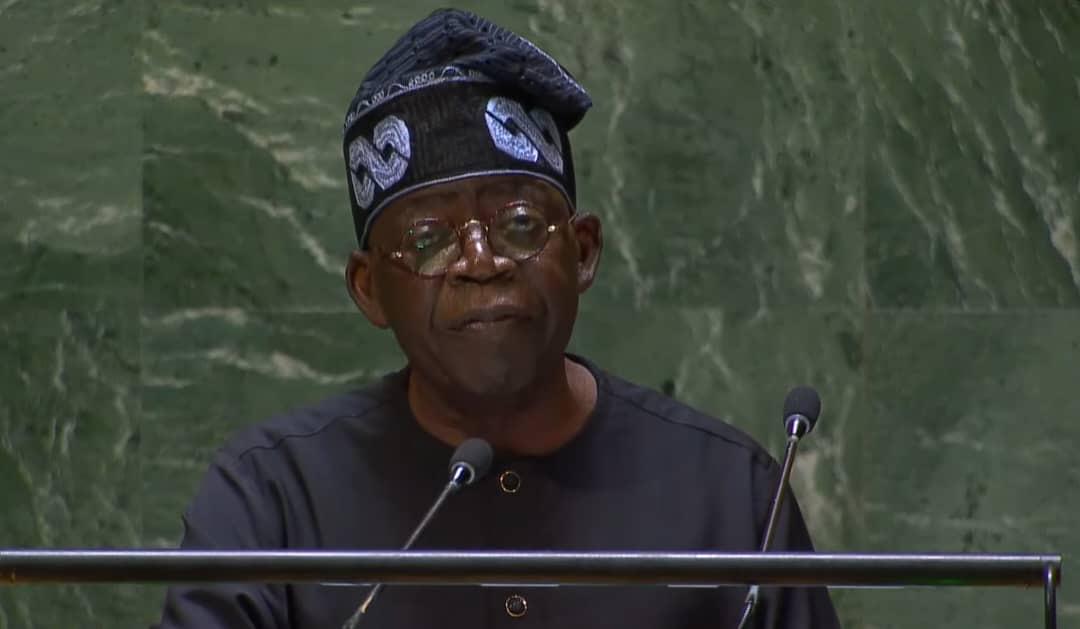
President Tinubu addressed the 78th General Assembly of the United Nations in the morning of Wednessday, September 20, 2023.
In his maiden address to the UN General Assembly, the Nigerian President stressed on the need for Africa to overcome the limitations of foreign exploitation to reach its lofty potential.
President Tinubu’s speech encapsulates five cogent points needed to strengthen Africa’s position and contribution in the global economy. These are enumerated as follows:
International organizations and other nations of the world with their private sector players must consider Africa’s development as a priority.
Democracy must be well entrenched in Africa and upheld as the best form of governance for Africa’s progress.
Global leaders should work with Africa to curtail the illegal inflow of arms and violent individuals into the region who pose security threats to the bonafide African people.
African nations should work closely together to secure the continent’s mineral rich areas from pilfering and conflict.
Africa must look inward for solutions to locally address its Climate change problems
The President’s full speech is below:
On behalf of the people of Nigeria, I congratulate you on your well-deserved election as President of this Session of the United Nations General Assembly.
We commend your predecessor, His Excellency, Mr. Csaba Korosi for his able stewardship of the Assembly.
We also commend His Excellency, Antonio Guterres, Secretary General of the United Nations, for his work seeking to forge solutions to humanity’s common challenges.
This is my first address before the General Assembly. Permit me to say a few words on behalf of Nigeria, on behalf of Africa, regarding this year’s theme.
Many proclamations have been made, yet our troubles remain close at hand. Failures in good governance have hindered Africa. But broken promises, unfair treatment and outright exploitation from abroad have also exacted a heavy toll on our ability to progress.
Given this long history, if this year’s theme is to mean anything at all, it must mean something special and particular to Africa.
In the aftermath of the Second World War, nations gathered in an attempt to rebuild their war- torn societies. A new global system was born and this great body, the United Nations, was established as a symbol and protector of the aspirations and finest ideals of humankind.
Nations saw that it was in their own interests to help others exit the rubble and wasteland of war. Reliable and significant assistance allowed countries emaciated by war to grow into strong and productive societies.
The period was a highwater mark for trust in global institutions and the belief that humanity had learned the necessary lessons to move forward in global solidarity and harmony.
Today and for several decades, Africa has been asking for the same level of political commitment and devotion of resource that described the Marshall Plan.
We realize that underlying conditions and causes of the economic challenges facing today’s Africa are significantly different from those of post war Europe.
We are not asking for identical programs and actions. What we seek is an equally firm commitment to partnership. We seek enhanced international cooperation with African nations to achieve the 2030 agenda and Sustainable Development Goals.
There are five important points I want to highlight.
First, if this year’s theme is to have any impact at all, global institutions, other nations and their private sector actors must see African development as a priority, not just for Africa but in their interests as well.
Due to both longstanding internal and external factors, Nigeria’s and Africa’s economic structures have been skewed to impede development, industrial expansion, job creation, and the equitable distribution of wealth.
If Nigeria is to fulfil its duty to its people and the rest of Africa, we must create jobs and the belief in a better future for our people.
We must also lead by example.
To foster economic growth and investor confidence in Nigeria, I removed the costly and corrupt fuel subsidy while also discarding a noxious exchange rate system in my first days in office. Other growth and job oriented reforms are in the wings.
I am mindful of the transient hardship that reform can cause. However, it is necessary to go through this phase in order to establish a foundation for durable growth and investment to build the economy our people deserve.
We welcome partnerships with those who do not mind seeing Nigeria and Africa assume larger roles in the global community.
The question is not whether Nigeria is open for business. The question is how much of the world is truly open to doing business with Nigeria and Africa in an equal, mutually beneficial manner.
Direct investment in critical industries, opening their ports to a wider range and larger quantity of African exports and meaningful debt relief are important aspects of the cooperation we seek.
Second, we must affirm democratic governance as the best guarantor of the sovereign will and well-being of the people. Military coups are wrong, as is any tilted civilian political arrangement that perpetuates injustice.
The wave crossing parts of Africa does not demonstrate favour towards coups. It is a demand for solutions to perennial problems.
Regarding Niger, we are negotiating with the military leaders. As Chairman of ECOWAS, I seek to help re-establish democratic governance in a manner that addresses the political and economic challenges confronting that nation, including the violent extremists who seek to foment instability in our region. I extend a hand of friendship to all who genuinely support this mission.
This brings me to my third crucial point. Our entire region is locked in protracted battle against violent extremists. In the turmoil, a dark channel of inhumane commerce has formed. Along the route, everything is for sale. Men, women and children are seen as chattel.
Yet, thousands risk the Sahara’s hot sand and the Mediterranean’s cold depths in search of a better life. At the same time, mercenaries and extremists with their lethal weapons and vile ideologies invade our region from the north.
This harmful traffic undermines the peace and stability of an entire region. African nations will improve our economies so that our people do not risk their lives to sweep the floors and streets of other nations. We also shall devote ourselves to disbanding extremist groups on our turf.
Yet, to fully corral this threat, the international community must strengthen its commitment to arrest the flow of arms and violent people into West Africa.
The fourth important aspect of global trust and solidarity is to secure the continent’s mineral rich areas from pilfering and conflict. Many such areas have become catacombs of misery and exploitation. The Democratic Republic of the Congo has suffered this for decades, despite the strong UN presence there. The world economy owes the DRC much but gives her very little.
The mayhem visited on resource rich areas does not respect national boundaries. Sudan, Mali, Burkina Faso, CAR, the list grows.
The problems also knocks Nigeria’s door.
Foreign entities abetted by local criminals who aspire to be petty warlords have drafted thousands of people into servitude to illegally mine gold and other resources. Billions of dollars meant to improve the nation now fuel violent enterprises. If left unchecked, they will threaten peace and place national security at grave risk.
Given the extent of this injustice and the high stakes involved, many Africans are asking whether this phenomenon is by accident or by design.
Member nations must reply by working with us to deter their firms and nationals from this 21st century pillage of the continent’s riches.
Fifth, climate change severely impacts Nigeria and Africa. Northern Nigeria is hounded by desert encroachment on once arable land. Our south is pounded by the rising tide of coastal flooding and erosion. In the middle, the rainy season brings floods that kill and displace multitudes.
As I lament deaths at home, I also lament the grave loss of life in Morocco and Libya. The Nigerian people are with you.
African nations will fight climate change but must do so on our own terms. To achieve the needed popular consensus, this campaign must accord with overall economic efforts.
In Nigeria, we shall build political consensus by highlighting remedial actions which also promote economic good. Projects such as a Green Wall to stop desert encroachment, halting the destruction of our forests by mass production and distribution of gas burning stoves, and providing employment in local water management and irrigation projects are examples of efforts that equally advance both economic and climate change objectives.
Continental efforts regarding climate change will register important victories if established economies were more forthcoming with public and private sector investment for Africa’s preferred initiatives.
Again, this would go far in demonstrating that global solidarity is real and working.
CONCLUSION
As I close, let me emphasize that Nigeria’s objectives accord with the guiding principles of this world body: peace, security, human rights and development.
In fundamental ways, nature has been kind to Africa, giving abundant land, resources and creative and industrious people. Yet, man has too often been unkind to his fellow man and this sad tendency has brought sustained hardship to Africa’s doorstep.
To keep faith with the tenets of this world body and the theme of this year’s Assembly, the poverty of nations must end. The pillage of one nation’s resources by the overreach of firms and people of stronger nations must end. The will of the people must be respected. This beauty, generous and forgiving planet must be protected.
As for Africa, we seek to be neither appendage nor patron. We do not wish to replace old shackles with new ones.
Instead, we hope to walk the rich African soil and live under the magnificent African sky free of the wrongs of the past and clear of their associated encumbrances. We desire a prosperous, vibrant democratic living space for our people.
To the rest of the world, I say walk with us as true friends and partners. Africa is not a problem to be avoided nor is it to be pitied. Africa is nothing less than the key to the world’s future.