DD
MM
YYYY

PAGES

DD
MM
YYYY

spot_img

PAGES

Home Blog Page 3790

Yellow Card And MoonPay Partner to Drive Crypto Accessibility in Nigeria

0

Yellow Card, one of the largest cryptocurrency exchanges on the African continent, has partnered with MoonPay, a global leader in the cryptocurrency ecosystem, to drive crypto accessibility in Nigeria.

This strategic partnership is geared towards enabling Nigerians to engage in peer-to-peer crypto transactions with unprecedented ease, as well as eliminating the barriers that prevent them from participating in the crypto economy.

Yellow Card, one the largest cryptocurrency exchanges on the African continent with operations across 16 countries, offers a crypto exchange, easy cross-border payments powered by crypto, and an API suite for companies to on-and-off-ramp anyone on the continent and abroad.

Yellow Card strives to bring financial inclusion to everyone in Africa. The crypto exchange’s strategic partnership with MoonPay signifies a turning point in the accessibility and usability of cryptocurrencies within the region.

Speaking on the company’s recent partnership with MoonPay, West Africa Regional Manager at Yellow Card, Uzoma James said,

At the core of our company’s mission is the belief that everyone should have access to the power and potential of cryptocurrencies. By joining forces with MoonPay, we aim to eliminate the barriers that prevent Nigerians from participating in the crypto economy. Together, we can help make crypto trading easy, intuitive, and available to all”.

On the other hand, MoonPay, a crypto exchange that offers a fast and simple way to buy and sell cryptocurrencies, has established itself as a frontrunner in the cryptocurrency industry, offering a comprehensive suite of solutions that simplify the onboarding process for newcomers to the crypto world.

With the recent partnership with Yellow Card, the crypto exchange is poised to extend its reach into the Nigerian market, catering to the specific needs and challenges faced by the local population.

Co-founder and CEO at MoonPay, Ivan Soto-Wright said,

Supporting local bank transfers unlocks immense opportunities for crypto users, and we’re eager to introduce this experience to Yellow Card’s fast-growing ecosystem. Offering a simple, inclusive transaction method for users across Africa is an exciting step forward in our vision to onboard the world to Web3”.

Yellow Card and Moon Pay strategic collaboration seeks to enhance the use of Bitcoin and cryptocurrencies among Nigerians, to overcome transaction delays and drive business growth.

Leveraging local bank transfers, users can eliminate many of the obstacles that have traditionally hindered the crypto purchasing process.

Despite the restriction of crypto trading in Nigeria, the country has emerged as a powerhouse in the African cryptocurrency landscape, with increasing numbers of individuals turning to digital assets to hedge against inflation and economic uncertainty.

As the cryptocurrency landscape continues to evolve, the power of digital currencies empowers individuals and offers financial opportunities even in the most challenging circumstances.

South African Payment Service Provider Stitch Launches no Code Payment Links Solution For Small Businesses

0

Stitch, a payments service provider that offers a single, powerful and reliable API built on direct integrations with multiple banks and networks across South Africa, has launched a no-code payments solution, known as “WigWag”, for small businesses.

As Stitch solidifies its focus on building solutions for enterprise businesses with complex payment needs, the company realized it was only solving part of the payments problem, which spurred it to roll out WigWag.

The launch of WigWag will enable small and growing businesses to begin the acceptance of local and international card payments in minutes, without the need for a website or developer resources.

All that they simply need to do is to send a unique payment link to customers in a chat or email. Customers open it, put in their card details, and make payments.

Speaking on the launch of WigWag, the company’s product manager, Danielle Laity said,

“At Stitch, we realize payments aren’t one size fits all. Small businesses require access to simple, out-of-the-box tools that can make it easier and faster to collect payments. We created WigWag specifically with these small business clients in mind. Now anyone can have access to reliable payments, powered by Stitch API, and offer their customers a truly seamless experience”.

With WigWag, growing businesses can accept local and international card payments, without a website, developers, or even a POS machine. They can simply tell customers “WigWag me!” and send a unique payment link in any chat or via email.

Businesses can track pending payments and reconcile all transactions via the dashboard. They can also easily collect delivery details as part of the payment process, to track where they need to send goods upon payment.    

Every month, these businesses receive an invoice from WigWag. The invoice is a summary of their past months on the platform. The invoice provides details on; The total payments received each day, The processing fees charged, The VAT on those fees, and Payouts businesses made to themselves.

Transactions on WigWag are safe and secure, as all transactions are made through the platform 3D-secure, which requires customers to do a multi-factor Authentication (MFA) to complete a purchase.

Founded in February 2021, Stitch is a payments infrastructure company that helps businesses scale faster, and operate more efficiently.

The Stitch payments API and tools reduce the effort required for businesses across sectors to connect to the financial system and deliver delightful experiences for their users.

The startup has raised a total of US$27 million in Funding and has offices in Cape Town, Johannesburg, and Lagos.

Stitch is backed by leading investment firms, such as 500 Global, RaliCap, Future Africa Fund, first-minute capital, CRE Venture capital, PayPal ventures, and Village Global, amongst other founders and early builders from some of the most successful fintech companies in the world.

Squid, Mountain Protocol, FTX, Celsius, Polygon Labs and other Market News

0

Squid, a decentralized exchange (DEX) platform that allows users to trade tokens across different blockchains, has announced a new feature that enables direct swaps between Cosmos and Ethereum Virtual Machine (EVM) compatible chains. This means that users can now swap tokens from networks like Terra, Binance Smart Chain, Polygon and others without going through intermediaries or bridges.

Squid’s direct swap feature is powered by the Inter-Blockchain Communication (IBC) protocol, which is a standard that allows different blockchains to communicate and transfer value with each other. IBC is the core innovation of the Cosmos network, which aims to create an internet of blockchains that can interoperate seamlessly.

By integrating IBC, Squid can offer users a fast, secure and low-cost way to swap tokens across different ecosystems. Users can simply connect their wallets to Squid and select the tokens they want to swap from a list of supported chains. Squid will then automatically route the swap through the IBC protocol and execute it in a single transaction.

Squid claims that its direct swap feature is the first of its kind in the DEX space, and that it will open up new possibilities for cross-chain liquidity and interoperability. Squid also plans to add more chains and tokens to its platform in the future, as well as other features such as liquidity pools, governance and staking.

According to Gracy Chen, the managing director of Bitget, a global cryptocurrency exchange platform, the regulatory environment for crypto assets is likely to become stricter in the near future. She believes that the Know Your Customer (KYC) process, which requires crypto users to verify their identity and source of funds, will be more rigorous and comprehensive as governments seek to prevent money laundering, tax evasion and other illicit activities involving cryptocurrencies.

Chen says that Bitget has been complying with the KYC standards of different jurisdictions and has been working closely with regulators to ensure a safe and transparent trading environment for its customers. She also advises crypto investors to be aware of the potential risks and challenges that may arise from the changing regulatory landscape and to choose a reliable and compliant exchange platform that can protect their interests and assets.

Mountain Protocol, a decentralized platform for creating and managing synthetic assets, has announced the launch of its yield-bearing stablecoin, MTS. The stablecoin is backed by a basket of cryptocurrencies and can be minted or burned by users through the protocol’s smart contracts. MTS holders can also earn passive income by staking their tokens in the protocol’s liquidity pools.

In addition to launching MTS, Mountain Protocol has also revealed that it has raised $10 million in a private funding round led by prominent investors and funds in the crypto space. The fundraise will help the protocol expand its team, develop new features and integrations, and grow its user base and community. Mountain Protocol aims to become a leading platform for synthetic asset creation and trading, offering users exposure to a wide range of assets across different markets and sectors.

Celsius, the leading platform for earning and borrowing digital assets, has announced the formation of a new board of directors to oversee its global expansion and governance. The board will include prominent figures from the fields of finance, technology and blockchain, such as former Algorand COO Sean Ford, former WeWork CFO Artie Minson, and former UBS Group Americas CEO Robert Wolf. The board will also include Celsius founder and CEO Alex Mashinsky, as well as two independent directors to be appointed in the near future.

FTX, the cryptocurrency exchange founded by Sam Bankman-Fried, has revealed some of its assets in a recent filing with the Securities and Exchange Commission (SEC). According to the document, FTX owns $1.2 billion worth of SOL, the native token of the Solana blockchain, which is one of the fastest-growing platforms in the crypto space. FTX also owns a property in the Bahamas, valued at $8 million, which serves as its headquarters. The filing shows that FTX has a diversified portfolio of assets, both digital and physical, that reflect its vision and strategy in the crypto industry.

Polygon Labs, a leading blockchain technology company, has sent a letter to the US Senate Finance Committee, urging them to reconsider their proposed tax legislation on cryptocurrency transactions. The letter argues that the bill would stifle innovation and economic growth in the emerging sector and compares the situation to the early days of the internet, when lawmakers supported the development of online platforms and services.

The letter also uses an analogy of an apple orchard to illustrate the difference between cryptocurrency and traditional assets. It explains that while an apple orchard produces apples that can be sold for income, a cryptocurrency network produces tokens that are used to power the network and enable transactions. Therefore, taxing cryptocurrency tokens as income would be like taxing the apples before they are harvested, which would discourage investment and maintenance of the orchard.

Polygon Labs hopes that the senators will take their letter into account and amend the bill to provide more clarity and fairness for the cryptocurrency industry. The company believes that blockchain technology has the potential to transform various sectors of the economy and society, and that the US should not miss this opportunity to become a global leader in this field.

The cryptocurrency market experienced a sharp drop on Tuesday, as Bitcoin fell below $25850 for the first time in nearly a month. The decline was triggered by speculation that FTX, one of the largest crypto exchanges, might sell some of its holdings to fund its recent acquisitions and expansion plans. FTX has denied any plans to sell its crypto assets, but investors remain cautious about the potential impact of such a move on the market liquidity and sentiment.

Instacart’s IPO valuation. Instacart, which was valued at a whopping $39 billion in a 2021 fundraising round, is now targeting a more modest valuation of $8.6 billion in its upcoming IPO. That’s according to the Wall Street Journal, which notes that the online delivery app’s upcoming listing on the Nasdaq exchange (under the ticker CART) will nonetheless be “a bellwether for the IPO market.” (Fortune)

Communication is the Foundation of All High-Performing Teams

1

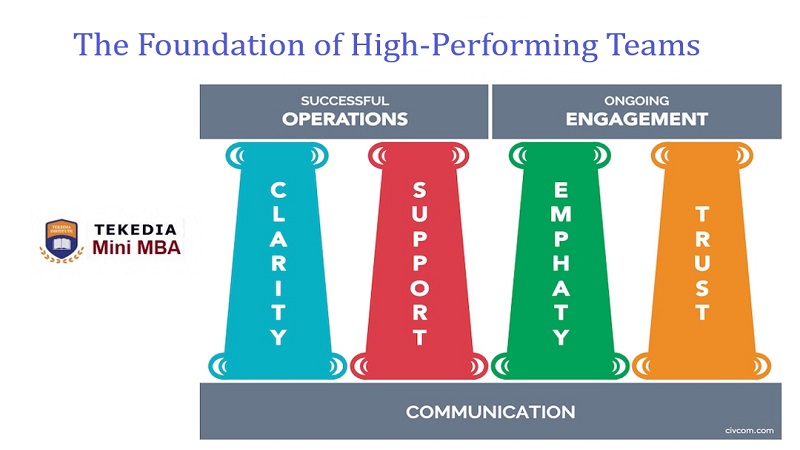
Structural and civil engineers put significant efforts on the foundations of skyscrapers or tall buildings. If you do not get that foundation right, that project is imperiled because nothing else matters. Simply, the foundations of buildings determine their strength, durability, and reliability. 

Interestingly, when building high-performing teams, the foundation of everything  is COMMUNICATION. It is upon communication that the 4 pillars of support, clarity, empathy and trust would be established. And those pillars will carry your Operations and Engagement. 

Just like in civil engineering, when engineers consider the strength of materials, in building teams, the strength & quality of communication is catalytic. Improve your #communication (written, verbal, posture, etc) in your team, because until you do so, you cannot have a high-performing team.

How Can You Lead by Example and What Are the Benefits?

0
Leader vs follower concept

While some leaders will simply sit back and let others around them get on with it, there are many more who much prefer to lead by example. This blog post will present a defense of people in the latter camp, describing a few ways that you can do this more effectively, as well as outlining the benefits of taking on this style of leadership.

Be seen to get involved

Rather than being a backseat driver, you are much better off getting involved in the ins and outs of the work. For example, at the start of the project, you may want to delegate work effectively, ensuring that everyone has their own specific tasks to accomplish. You should set out your own work at this stage. As well as showing your team that you are happy to get stuck in, you can also see how the project is going at the ground level, which can help you to make better decisions along the way.

Avoid micromanaging

While getting involved is one thing, you don’t want to micromanage your team, as this can have the opposite effect to the one that you had intended. Make sure you know what everyone is doing, but don’t look over their shoulders all the time and attempt to get involved at every single stage. Of course, you can have some checkups and a general overview of how the project is going. This will show that you are involved but not overly so and will help other members of the team to avoid micromanaging as well.

Take productivity breaks

Another important part of leading by example is showing that your team members don’t need to have their noses to the grindstone all the time. Instead, you can encourage them to take productivity breaks as these can help to refresh their mindsets and leave them feeling more like they can tackle anything that comes their way all over again. Everyone should be free to do what they like on their productivity breaks, whether this is the rejuvenating effects of a walk outside or the simple escapism of playing some games on jackpotcitycasino.com/canada/. The latter option is great as it offers hundreds of game titles at high audio and visual quality that allows for a highly interactive experience in short bursts when needed.

Provide constructive feedback

Another element of leading by example comes from the feedback side of things. This way, you can ensure that you are offering a constructive approach to your staff members that can certainly be taken on board. People should know how they can improve, and providing this level of feedback can lay the groundwork and ensure that greater levels of trust can be achieved all along.

Leading by example helps to promote trust and a sense of faith in your leadership at the same time. It is worth maintaining this throughout, as it makes it much more likely that the project will be a success and your team will be confident in all that you are doing now and in the future.