DD
MM
YYYY

PAGES

DD
MM
YYYY

spot_img

PAGES

Home Blog Page 3799

The Brilliance of Victor Osimhen and Building High Performance Teams

1

When he touched the zenith of African football, winning the CAF Player of the Year award, I dropped these lines on Victor Osimhen: “Victor has been phenomenal and has created a new era in Napoli Italy. Today, we have the eras of Diego Maradona and Victor Osimhen (that is not an exaggeration if you follow Serie A).” 

Watching this young man is supremely delightful. He works hard for his team. He is generous to his team. He has an electrifying vision, making teammates better. His tenacity is unbounded. For his attacking prowess, he uses offense to build a great defense, allowing his goalkeeper to enjoy the game!

His field work rate is consistent with legends. They are great, and they deliver super-greats in teams. Usain Bolt ran the world’s best 9.58 seconds for 100 meters. But four Jamaicans ran the 4 x 100 meters relay at 36.84 seconds. If you run the numbers, each became better, running 100 meters, on average, at 9.21 seconds, when they ran together. Simply, by running together, they beat the individual world’s 100 meters record. 

The effort of Victor today reminds me of Nigerian-native but Greek- registered Giannis Antetokounmpo who plays for Milwaukee Bucks. Giannis in some games will have the most points, most blocks, most assists, and everything! Through that, he led a team to an NBA championship.

Victor is very promising. For the very first time, I felt like I was watching a super eagle. Why? When you bring an eagle home in ancestral Igbo, the elders will take you to Ikoro, the large wooden drum the size of a room. Today, I watched “Super Eagles” and if they continue to fly this way, my car stops at all the good parties and the laurels can come home – and they can enter the “Ikoro” of Nigeria!

And for all, find “Victors” in your team. They do offer great assists in producing high performance teams, well beyond their individual brilliance.


NoteAs a lover of sports who has zero skill on any sports (always coming last), I branched into sports analysis and strategy, earning the nickname Sausa, the sports strategist in Secondary Technical School Ovim, Abia State. So bear with me; I like to analyze sports. 

Today in America, my Baltimore Ravens are going against the Kansas Chiefs and we’re hoping that Lamar Jackson plays his best game against Patrick Mahomes & Team. (Your prayer for Ravens will be appreciated as it will make this teacher happy as they need to WIN).

Again, Super Eagles, bring it home. I am available to offer the toast.

Suzuki USA issues stop sale order on 2024 Hayabusas as Cars produced in Romania set new records in 2023

0

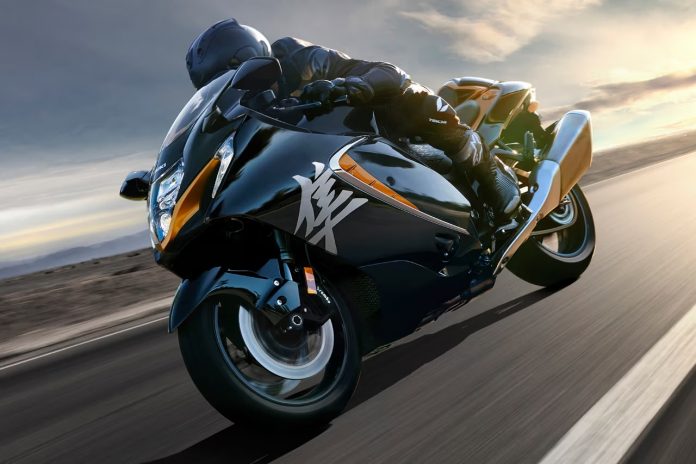
Suzuki USA has announced a stop sale order on all 2024 Hayabusa motorcycles due to a potential brake fluid leak that could affect the braking performance of the bike. The company said that it has received reports of some customers experiencing a loss of brake pressure or a spongy feeling in the brake lever while riding the new Hayabusa, which was launched earlier this year.

According to Suzuki, the cause of the problem is a faulty seal in the front brake master cylinder, which may allow air to enter the brake system and reduce the hydraulic pressure. Suzuki said that it is working with its supplier to fix the issue and provide a remedy as soon as possible. In the meantime, customers who have purchased or reserved a 2024 Hayabusa are advised not to ride their bikes until further notice.

How Suzuki Created the Ultimate Sport Motorcycle

The name Hayabusa means “peregrine falcon” in Japanese, a fitting choice for a bike that can fly faster than any other production motorcycle in the world. The peregrine falcon is also known for hunting blackbirds, which was a subtle jab at the Honda CBR1100XX Super Blackbird, the previous speed king that Suzuki aimed to dethrone.

The first generation Hayabusa (1999-2007) was unveiled at the 1998 Intermot show in Germany, and it immediately caused a sensation. It had a sleek and aerodynamic design, inspired by fighter jets and wind tunnel testing.

It had a massive 1,299 cc inline-four engine that produced 173 horsepower and 102 lb-ft of torque. It had a top speed of 303 to 312 km/h (188 to 194 mph), depending on the source, which was 16 to 23 km/h (10 to 14 mph) faster than the Super Blackbird.

The Hayabusa was not only fast, but also balanced, stable, and comfortable. It handled well on the track and on the road, offering a smooth and exhilarating ride. It was praised by critics and riders alike for its all-round performance and versatility. It invented a new category called “Ultimate Sport”, combining the best of sport bikes and touring bikes.

The first generation Hayabusa also sparked a controversy over the safety and environmental impact of such high-speed machines. In 1999, there were fears of a European regulatory backlash or import ban that could limit the top speed of motorcycles.

To avoid this, the Japanese and European manufacturers agreed to voluntarily restrict the top speed of their bikes to 299 km/h (186 mph) from 2000 onwards. This meant that the 1999 and 2000 models of the Hayabusa remained the fastest production motorcycles ever made, until they were surpassed by the Kawasaki Ninja H2 in 2015.

Suzuki apologized for the inconvenience and said that it is committed to ensuring the safety and satisfaction of its customers. The company also said that it will contact the affected customers directly and arrange for a free inspection and repair of their bikes at authorized Suzuki dealerships. Customers who have any questions or concerns can call Suzuki customer service at 1-800-444-5077 or visit www.suzuki.com for more information.

The 2024 Hayabusa is the fourth generation of Suzuki’s flagship sportbike, which debuted in 1999 and became famous for its speed, power and aerodynamics. The new model features a redesigned bodywork, a more powerful engine, improved electronics and suspension, and a host of advanced rider.

Cars produced in Romania set new records in 2023

The year 2023 was an exceptional year for the Romanian automotive industry, which saw an impressive increase in car production and exports. According to data published by the Association of Automobile Manufacturers and Importers (APIA).

Romania produced over 800,000 cars in 2023, 15% more than in 2022 and 25% more than in 2021. This is the highest number of cars produced in Romania in a single year, surpassing the previous record of 672,000 units in 2019.

The biggest contributions to this success came from the two largest car factories in Romania: Dacia and Ford. Dacia, which is part of the Renault group, produced more than 600,000 cars in 2023, 12% more than in 2022 and 20% more than in 2021. Dacia has launched two new models in 2023.

Dacia Spring, its first electric model, and Dacia Bigster, a compact SUV with a modern and robust design. Both models were in high demand on the domestic and foreign markets, consolidating their position.

Ford, which has a factory in Craiova, produced more than 200,000 cars in 2023, 25% more than in 2022 and 40% more than in 2021. Ford has benefited from significant investments in recent years that have allowed it to expand production capacity and introduce new models to the market.

Ford in 2023 launched the Ford Puma ST, a sporty version of its popular crossover, and the Ford EcoSport Hybrid, a hybrid model that combines a gasoline engine with an electric motor Ford managed to grow.

In addition to Dacia and Ford, Romania hosted other companies that produced cars or auto components in 2023. These include Hyundai, which produced over 50,000 cars under the Kia brand in Pitesti, Volkswagen, which produced over 40,000 cars under the Skoda brand in Timisoara, and Toyota, which produced over 30,000 cars under the Suzuki brand in Brasov.

Romania has also been an important supplier of auto parts and accessories for other European markets, such as Germany, France or Italy.

The increased production of cars in Romania has had a positive impact on the national economy, generating income and jobs for thousands of Romanians. According to APIA, the Romanian automotive industry contributed over 15% to Romania’s Gross Domestic Product (GDP) in 2023 and directly or indirectly employed over 300,000 people.

Also, the Romanian automotive industry has been an important factor for the development of road and rail infrastructure in Romania, as well as for stimulating innovation.

In conclusion, 2023 was a remarkable year for cars produced in Romania, which set new records and demonstrated their quality and competitiveness on the international market. This trend is expected to continue in the coming years, as Romania consolidates its position as an important player in the European and global automotive industry.

Femi Otedola Reveals Plan to Increase Stake in Dangote Cement

0

Nigerian entrepreneur Femi Otedola has revealed he plans to expand his stake in Dangote Cement Plc, a move that has contributed to the recent surge in the wealth of Aliko Dangote, the founder of the cement giant.

This decision follows Otedola’s recent acquisition of N6 billion worth of Dangote Cement shares, which has significantly boosted the company’s market performance.

Dangote Cement’s shares have witnessed an impressive rally, more than doubling in the current month alone, adding a remarkable $6.9 billion to Aliko Dangote’s wealth, which reached $22 billion as of Thursday, according to the Bloomberg Billionaires Index.

Otedola’s decision to expand his holdings comes at a pivotal moment for Dangote Cement, which has emerged as Nigeria’s leading company by market capitalization, surpassing Airtel Africa. The company, currently valued at an impressive N8.35 trillion, crossed the N10 trillion threshold earlier this week.

Otedola stated that his recent purchases are still a “work in progress” and were initiated last week. He plans to disclose the extent of his stake once it reaches a regulatory disclosure threshold.

Dangote Cement, recognized as Africa’s largest producer of construction materials, has played a crucial role in Aliko Dangote’s diversified business portfolio. The surge in its share prices is not only propelling Aliko Dangote’s wealth to new heights but is also influencing the performance of the Nigerian stock market. With the cement maker being a significant component of the equity benchmark, the NGX All Share Index has experienced a notable 36% jump, marking the best January performance since at least 1998.

Otedola’s move to increase his holdings in Dangote Cement aligns with his track record of making strategic investments that have triggered substantial rallies in the shares of the targeted companies. Notable instances include his investments in FBN Holdings Plc in 2022 and Transnational Corp. of Nigeria in the previous year.

Otedola said Dangote Cement’s unique position as the “only Nigerian cement company with two export terminals and a substantial export capacity” makes it an attractive investment opportunity. He highlighted this uniqueness and sees the cement maker as a proxy for Dangote’s colossal new refinery, which is considered the world’s largest facility of its kind in a single location.

The diversification into refining positions Dangote Cement to benefit from the growing demand for refined products both within Nigeria and on the international stage.

“With projected annual revenues of around $30 billion from products like urea, fertilizer, polypropylene, and other refined petroleum products, the refinery will substantially enhance his business interests beyond the traditional sectors like cement,” Otedola said.

While Dangote Cement has demonstrated remarkable performance with its 81.4% return in the last 52 weeks, the majority of its outstanding shares, approximately 85.8%, are under the control of Dangote Industries Limited, overseen by Africa’s wealthiest individual, Aliko Dangote.

The surge in the cement maker’s shares has led to speculation about the potential listing of other entities within the Dangote Group, including the newly operational Dangote Petrochemical Refinery. Analysts project that the listing of Dangote Refinery, along with Dangote Foods (a result of the ongoing merger of Dangote companies) and NNPC Limited, could be major boosts for the capital market.

Otedola’s investment comes at a crucial time for Dangote Cement, as the company has been contending with strong competition from its rival, BUA Cement. The latter lowered its prices late last year, responding to increased criticism regarding the high cost of cement in Nigeria. The move was seen by many as a competition strategy, even though BUA Cement’s Chairman, Abdul Samad Rabiu, stated that it aligns with the company’s mission to support development in the building materials and infrastructure sectors.

As investors closely watch the progress of Dangote’s newly operational Petrochemical Refinery, the milestone achieved by Dangote Cement on the NGX has fueled optimism of potential foreign investment into other subsidiaries of the Dangote Group. The new 650,000 barrel-a-day oil refinery, which started operations earlier this month, is expected to contribute significantly to Dangote’s business interests beyond traditional sectors.

Otedola’s decision to expand his holdings in Dangote Cement is seen as a confidence booster in the company’s future growth prospects, particularly with the operationalization of the refinery. Analysts believe the investment signals a positive trajectory for both investors and the Nigerian economy.

Digital Pound Legislation will provide protections to Privacy and Control

0

The UK government has announced that it will introduce legislation to regulate the use of digital pound, a new form of digital currency that will be backed by the Bank of England. The digital pound, also known as Britcoin, will be a complement to cash and bank deposits, and will aim to provide a secure and efficient way of making payments in the digital age.

According to the government, the digital pound legislation will ensure that users have adequate protections for their privacy and control over their money. The legislation will also set clear rules and standards for the providers of digital pound services, such as banks, fintech firms and payment platforms. The government said that it will consult with stakeholders and the public on the design and implementation of the digital pound system.

The government claimed that the digital pound will bring several benefits to the UK economy, such as:

Enhancing financial inclusion and access to digital payments for everyone. Supporting innovation and competition in the financial sector. Reducing costs and risks associated with cash handling and cross-border payments. Strengthening the resilience and stability of the payment system. Supporting the UK’s role as a global leader in fintech and digital finance

The government also said that it will work closely with the Bank of England, which will have the sole authority to issue and destroy digital pounds, as well as to oversee the monetary policy implications of the new currency. The Bank of England has been conducting research and experiments on the feasibility and impact of a central bank digital currency (CBDC) since 2015 and has recently established a CBDC unit to coordinate its work on the topic.

The Bank of England is exploring the possibility of creating a new form of digital money that would be issued by the central bank. This is known as a central bank digital currency (CBDC), and it could have significant implications for the future of money and payments in the UK.

A CBDC would be a new type of money that would exist alongside cash and bank deposits. It would be denominated in pounds sterling and backed by the Bank of England. Unlike cash, which is physical, or bank deposits, which are electronic, a CBDC would be digital and accessible through devices such as smartphones or computers.

The Bank of England has not decided whether to introduce a CBDC or not. It is still conducting research and experiments to understand the benefits, risks and challenges of a CBDC. The Bank is also engaging with stakeholders from the public sector, private sector and civil society to gather their views and feedback on a CBDC.

Some of the potential risks and challenges of a CBDC include:

Disrupting the banking sector by reducing the demand for bank deposits and affecting the profitability and business models of banks. Affecting privacy and data protection by creating new issues around the collection, storage and use of personal information related to CBDC transactions. Introducing operational and cyber risks by requiring a complex and secure technological infrastructure to support a CBDC.

The Bank of England is committed to ensuring that any decision on a CBDC is based on rigorous analysis and evidence. The Bank is also committed to ensuring that any CBDC would be designed in a way that respects the values and expectations of the British people, such as privacy, security and trust.

The UK is not the only country that is exploring the possibility of launching a CBDC. According to a recent survey by the Bank for International Settlements (BIS), 86% of central banks are actively researching CBDCs, 60% are experimenting with them, and 14% are deploying pilot projects. Some of the countries that have already launched or are planning to launch CBDCs include China, Sweden, Bahamas, Japan, South Korea and Nigeria.

Ghana must completely abolish death penalty – Xavier Sosu

0

Ghana is one of the few countries in Africa that still retains the death penalty as a form of punishment for certain crimes. However, this practice is outdated, inhumane and ineffective. We will argue that Ghana must completely abolish the death penalty and adopt alternative measures to ensure justice and deterrence.

First, the death penalty violates the right to life, which is enshrined in the Universal Declaration of Human Rights and the African Charter on Human and Peoples’ Rights. The death penalty is irreversible and carries the risk of executing innocent people.

According to Amnesty International, at least 174 people have been exonerated from death row in the United States since 1973. How many more innocent lives have been lost in countries that lack adequate legal safeguards and transparency?

Second, the death penalty does not deter crime more than other forms of punishment. There is no conclusive evidence that the death penalty has any unique deterrent effect on crime. In fact, some studies have shown that the death penalty may actually increase the incidence of violent crimes by creating a culture of violence and devaluing human life. Moreover, the death penalty is often applied in a discriminatory and arbitrary manner, targeting the poor, the marginalized and the minorities.

Third, the death penalty is costly and wasteful. The death penalty imposes a huge financial burden on the state and the taxpayers, as it requires more resources for trials, appeals and security than other forms of punishment. The money spent on the death penalty could be better used for improving the criminal justice system, providing rehabilitation and reintegration programs for offenders, and supporting the victims and their families.

Therefore, I urge the government of Ghana to heed the call of Xavier Sosu, a human rights lawyer and a member of parliament, who has recently filed a private member’s bill to abolish the death penalty in Ghana.

This bill is supported by various civil society organizations, religious groups and international bodies. Abolishing the death penalty would be a progressive step for Ghana to uphold its human rights obligations, enhance its democratic credentials and join the global trend towards abolition.

The impact of abolishing the death penalty in Ghana

Ghana has recently joined the growing list of African countries that have abolished the death penalty for most crimes, a move that has been welcomed by human rights activists and advocates.

On 25 July 2023, Ghana’s Parliament voted to amend the country’s Criminal and Other Offences Act, 1960 and the Armed Forces Act, 1962, removing the use of capital punishment for crimes such as murder, genocide, piracy and smuggling. The only exception is for acts of high treason, which still carry the death penalty under the Constitution.

This decision is a major step forward for Ghana, which has not carried out an execution since 1993, but has continued to impose death sentences on its citizens. According to Amnesty International, seven new death sentences were handed down in Ghana in 2022, bringing the total number of people facing the death penalty in the country to 172 by the end of the year, including six women. These people are now likely to have their sentences commuted to life imprisonment once the President signs the bills into law.

The abolition of the death penalty in Ghana reflects the global trend towards ending this cruel, inhuman and degrading punishment, which violates the right to life as proclaimed in the Universal Declaration of Human Rights. As of today, 124 countries have abolished the death penalty for all crimes, and 41 others are considered abolitionist in practice as they have not carried out executions for more than 10 years.

In Africa, Ghana is the 29th country to abolish the death penalty for all or most crimes, following recent examples such as Sierra Leone, Burkina Faso, Central African Republic, Equatorial Guinea and Zambia.

The abolition of the death penalty in Ghana also shows that the country is committed to upholding human rights and respecting the dignity of its people. The death penalty is an unfair and discriminatory punishment that disproportionately affects vulnerable individuals from deprived backgrounds, who often lack access to adequate legal representation and fair trials. The death penalty also does not bring justice or closure to the victims of crime or their families, nor does it deter offenders from committing crimes.

The decision to abolish the death penalty in Ghana was initiated by Hon. Francis Xavier Sosu, a member of Parliament and a human rights lawyer, who introduced two bills to amend the relevant laws in June 2021.

He was supported by civil society organizations such as The Death Penalty Project and Amnesty International Ghana, who provided legal and technical assistance and campaigned for public awareness and support. He was also backed by President Nana Akufo-Addo, who expressed his willingness to remove the death penalty from the statute books in November 2022.

However, the abolition of the death penalty in Ghana is not complete yet. The Constitution still provides for high treason to be punishable by death, and this provision needs to be revised in order to achieve total abolition. Moreover, Ghana needs to establish an official moratorium on executions, commute all existing death sentences to prison terms, and ratify international treaties that prohibit the use of the death penalty, such as the Second Optional Protocol to the International Covenant on Civil and Political Rights.

The abolition of the death penalty in Ghana is a historic achievement that deserves recognition and celebration. It is also an opportunity for Ghana to continue its progress towards becoming a human rights champion in Africa and beyond. As Samira Daoud, Amnesty International’s West and Central Africa Director, said: “Today’s parliamentary vote is a major step by Ghana towards the abolition of the death penalty. It is also a victory for all those who have tirelessly campaigned to consign this cruel punishment to history and strengthen the protection of the right to life.”