DD
MM
YYYY

PAGES

DD
MM
YYYY

spot_img

PAGES

Home Blog Page 38

Intel’s AI-Fueled Comeback Hits a Reality Check as Supply Bottlenecks Rattle Investors

0

Intel’s sharp sell-off at the end of the week did more than erase tens of billions of dollars in market value. It exposed the fault lines in a comeback story that, until now, had been powered largely by belief that the chipmaker was finally re-entering the center of the artificial intelligence boom it once ceded to rivals.

Shares of Intel fell 14% after the company issued quarterly profit and revenue guidance that missed expectations, jolting investors who had bid the stock up aggressively over the past year. If losses hold, more than $35 billion will be wiped from Intel’s market capitalization, a stark reversal for a company whose shares surged 84% in 2025 and extended that rally into early 2026 with a further 47% gain in January.

At a surface level, the irony is hard to miss. After years of watching Nvidia dominate AI workloads with its graphics processors, Intel is now grappling with the opposite problem: too much demand and not enough supply.

The AI spillover effect

What has changed is the nature of demand in data centers. While Nvidia’s GPUs remain the backbone of AI training and inference, they do not operate in isolation. They require traditional server CPUs to orchestrate workloads, manage memory, and connect systems at scale. Intel, long the incumbent supplier of these processors, is now seeing a surge in orders as data center operators race to expand capacity.

That surge has reignited interest in Intel’s core server business, helping convince investors that the company could still play a meaningful role in an AI-dominated computing landscape. High-profile backing from the U.S. government, SoftBank, and even Nvidia itself added further credibility to the turnaround narrative, reinforcing the idea that Intel was strategically important to the future of advanced chip manufacturing.

But demand alone does not translate into earnings if it cannot be met. Intel’s factories are running at full capacity, and the company has struggled to shift its production mix quickly enough toward the most in-demand data center processors. Chief Financial Officer David Zinsner acknowledged that available supply hit its lowest point in the first quarter, with improvement expected only from the second quarter.

Analysts broadly agree with that timeline. Jefferies said the supply shortage would likely bottom out in March, while Oppenheimer expects constraints to ease in the second quarter. Still, for a market that had priced in a faster payoff from AI-related demand, that lag proved disappointing.

“The rally had been largely driven by the dream rather than the near-term reality or fundamentals,” TD Cowen analysts said, reflecting a growing view on Wall Street that Intel’s share price had outrun its operational progress.

Capacity, complexity, and miscalculation

Bernstein analysts were more direct, arguing that while the server upgrade cycle appears genuine, Intel “woefully misjudged it,” leaving its capacity footprint “massively caught off guard.” Unlike fabless rivals that rely on external manufacturers, Intel must retool its own factories, a process that is capital-intensive and slow-moving. Changing what a fabrication plant produces is not a matter of weeks or even months, and that rigidity is now weighing on Intel’s ability to respond to the AI-driven upswing.

The problem is compounded by the company’s broader manufacturing transition. Intel is in the midst of a complex effort to modernize its process technologies, regain leadership in chipmaking, and, eventually, attract external customers to its foundry business. Each of those goals competes for capital, engineering resources, and management focus.

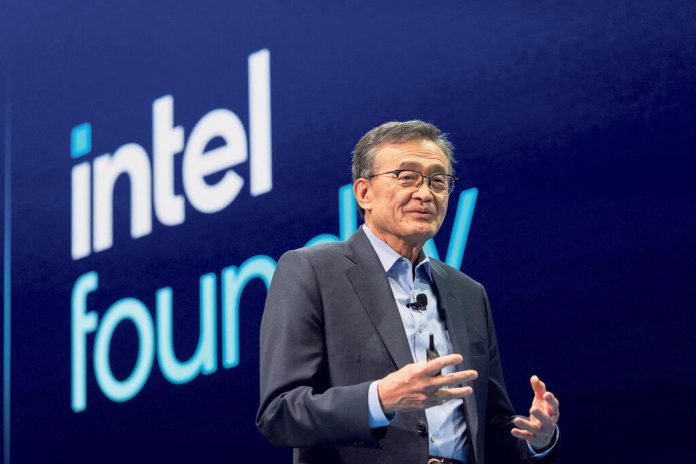
That balancing act became more visible in the latest earnings call. Much of the stock’s rally ahead of results had been fueled by expectations that Intel would announce new external foundry customers, validating its ambition to manufacture chips for other companies. Instead, CEO Lip-Bu Tan said two potential customers had only evaluated the technical details of Intel’s upcoming 14A manufacturing process, stopping short of firm commitments.

That reminded investors that Intel’s foundry aspirations remain a work in progress rather than a proven growth engine.

PC market headwinds return

Beyond data centers, Intel is also facing renewed pressure in its largest business segment: personal computers. A global memory supply shortage is expected to push prices higher, which could dampen demand for PCs just as Intel prepares to launch its “Panther Lake” chips. Those processors were widely seen as a chance for Intel to claw back market share lost to AMD after years of competitive setbacks.

If higher component costs slow PC upgrades, Intel’s hoped-for recovery in that segment could be delayed, limiting its ability to offset volatility elsewhere in the business. That risk added to investor unease, particularly given how central PCs remain to Intel’s revenue base.

All of this feeds into a broader reassessment of Intel’s turnaround under Tan, who has emphasized cost discipline and a more focused strategy. He has already scaled back some of the expansive ambitions around contract manufacturing that raised concerns about cash burn under previous leadership. While that shift has been welcomed by parts of the market, it also means Intel must prove that a leaner approach can still deliver growth and strategic relevance.

Friday’s sell-off suggests investors are no longer willing to take that on faith. The enthusiasm that carried Intel’s shares higher over the past year was built on the idea that the company was finally aligned with the AI wave. The latest results show that alignment exists, but execution is lagging.

Looking ahead into the next few quarters, investors will be watching closely for signs that supply constraints are easing, that AI-driven demand is converting into sustained revenue growth, and that Intel’s manufacturing roadmap is attracting real external customers rather than tentative interest.

Nissan to Exit South African Manufacturing as Chery Moves In, Marking a Strategic Shift in the Auto Market

0

Nissan Motor said on Friday it plans to sell its manufacturing assets in Rosslyn, South Africa, to Chery Automobile’s local subsidiary.

The move is understood to underline the Japanese carmaker’s deepening retreat from underperforming production hubs while highlighting the growing footprint of Chinese automakers across Africa. It is seen as a window into the pressures reshaping South Africa’s auto industry, the strategic retreat of some legacy carmakers, and the accelerating advance of Chinese manufacturers across emerging markets.

At the center of the deal is Nissan’s Rosslyn facility, a plant with more than 50 years of history that once symbolized the Japanese automaker’s long-term commitment to local manufacturing. If regulatory approvals are secured, Chery South Africa will take ownership of the land, buildings, and associated assets in mid-2026. Production of the Navara pickup truck, the plant’s sole remaining model, is expected to end in May, effectively drawing a line under Nissan’s manufacturing chapter in the country.

The sale marks another step in a painful global reset for Nissan. The company is closing or consolidating seven plants worldwide as it attempts to stabilize finances after years of weak sales, internal restructuring, and strategic missteps.

South Africa has been particularly challenging. The end of NP200 production in 2023 removed a key volume driver, while competition in the pickup segment intensified. Toyota’s Hilux, Ford’s Ranger, and Isuzu’s D-Max have tightened their grip on the market, benefiting from stronger product cycles, deeper localisation, and, in some cases, export scale.

Nissan Africa president Jordi Vila’s reference to “external factors” weighing on Rosslyn’s viability points to a mix of issues: underutilization, rising input costs, currency volatility, and a market that has become less forgiving of marginal players. While Nissan declined to disclose the plant’s capacity, industry analysts say utilization had fallen well below levels needed to justify continued investment, particularly as Nissan prioritizes capital allocation to fewer, more competitive global hubs.

Yet while Nissan is pulling back, Chery’s move in the opposite direction highlights a structural realignment. Chinese automakers are no longer content with exporting finished vehicles into Africa. They are increasingly seeking local manufacturing footprints to reduce costs, qualify for incentives, and anchor long-term growth.

Thus, acquiring Rosslyn offers a shortcut for Cherry. Building a greenfield plant in South Africa can take years, not just because of construction timelines, but due to permitting, localization requirements, and labor negotiations. Taking over an existing facility provides immediate industrial infrastructure and a trained workforce. Nissan’s commitment that most affected employees will be offered roles by Chery on similar terms is likely designed to smooth the transition and limit political and social friction.

The deal also intersects with South Africa’s automotive policy ambitions. The government has long used incentives under the Automotive Production and Development Programme (APDP) to attract and retain manufacturers, with an emphasis on exports and local value addition. A key question now is whether Chery will commit to exporting vehicles from Rosslyn, which would be crucial for maintaining economies of scale and preserving South Africa’s role as an automotive hub rather than a purely domestic assembly base.

Chery’s broader strategy suggests it might. The automaker has expanded aggressively across Africa, positioning itself as a volume player with competitive pricing and a growing portfolio that includes internal combustion, hybrid, and electric vehicles. Local production would strengthen its hand against rivals, including other Chinese brands that are currently importing vehicles duty-paid.

The transaction also carries implications for South Africa’s trade relationships. Local production can help manufacturers tap preferential trade agreements, including access to regional African markets and, potentially, the United States under the African Growth and Opportunity Act (AGOA), depending on product mix and rules of origin. For Chinese automakers facing trade barriers in Western markets, Africa increasingly offers both growth and strategic optionality.

For Nissan, maintaining a sales and service presence — with new models such as the Tekton and Patrol planned for the 2026 financial year — signals a shift to a lighter, asset-lean approach. The company is effectively betting that it can remain relevant in South Africa as an importer, even as it concedes manufacturing ground. That strategy carries risks, particularly in a price-sensitive market where locally built vehicles often enjoy cost and policy advantages.

More broadly, the Rosslyn handover reflects a changing balance of power in the global auto industry. As legacy manufacturers streamline and retrench, Chinese firms are stepping into spaces they vacate, not just with vehicles, but with capital, factories, and long-term industrial ambitions. South Africa, with its established automotive ecosystem and access to regional markets, has become a key battleground in that shift.

Ledger Reportedly Targeting a U.S. Initial Public Offering 

0

Ledger, the leading French manufacturer of cryptocurrency hardware wallets like the popular Ledger Nano series, is reportedly preparing for a U.S. initial public offering (IPO) that could value the company at over $4 billion.

Ledger has enlisted major investment banks—Goldman Sachs, Jefferies, and Barclays—to lead the potential listing, likely on the New York Stock Exchange (NYSE). The IPO could happen as early as later this year, though plans are preliminary and subject to change.

This would represent a significant increase from Ledger’s last reported private valuation of around $1.5 billion in 2023 following a funding round. That’s roughly a 2.7x jump, driven by strong growth in the crypto security space.

Ledger has seen record revenues in recent years, including triple-digit millions, fueled by surging demand for secure self-custody solutions amid rising crypto hacks and thefts over $3.4 billion stolen in 2025 alone, per some reports. The company now secures over $100 billion in Bitcoin and other assets for users.

This fits into a broader wave of crypto firms eyeing public markets, following successes like Circle’s IPO in 2025. Institutional interest in crypto custody infrastructure is growing, positioning companies like Ledger as key players.

The move signals mainstream validation for hardware wallet providers as crypto adoption continues. However, as with any IPO, details like exact timing, share pricing, and final valuation will depend on market conditions and regulatory approvals.

Ledger’s potential U.S. IPO at a valuation over $4 billion reportedly targeting the NYSE, with Goldman Sachs, Jefferies, and Barclays leading carries several significant implications across the crypto ecosystem, traditional finance, investors, and users.

This comes amid a broader wave of crypto firms pursuing public listings in a more favorable regulatory environment. A jump from ~$1.5B in 2023 to >$4B represents roughly 2.7x growth in under three years. This reflects explosive demand for hardware wallets driven by record crypto thefts over $3.4B stolen in 2025 alone and Ledger’s reported triple-digit million revenues, plus securing $100B+ in assets.

Going public would provide fresh funding for R&D (e.g., new devices, enterprise custody tools, software/services), expansion into institutional markets, and potential acquisitions. It could shift Ledger toward more recurring revenue beyond one-time hardware sales via subscriptions or services. Public status means quarterly reporting, regulatory compliance (SEC filings), and shareholder demands for profitability/margins. Past controversies (e.g., recovery service backlash) could resurface under greater visibility.

This positions hardware wallets/cold storage as critical infrastructure—not just retail gadgets but essential for institutional adoption. It signals mainstream confidence in “not your keys, not your crypto” amid rising hacks and centralized exchange risks.

Ledger joins firms like Circle, Galaxy, and others listing in the U.S. under pro-crypto policies. Success could encourage more infrastructure plays (custody, security, wallets) to go public, accelerating integration with traditional finance.

Reinforces crypto’s maturation—shifting focus from speculative tokens to real-world utility companies. Could boost overall sector visibility and attract more institutional capital. 2023 investors like True Global Ventures, 10T Holdings stand to see major returns if the IPO prices successfully.

Public markets will scrutinize revenue quality, growth sustainability, and competition e.g., Trezor, BitBox, or software alternatives like multisig. A strong debut could lift valuations across similar companies; a flop might cool enthusiasm. Volatility in crypto prices, regulatory shifts, or execution issues could impact post-IPO performance.

Greater mainstream exposure could drive adoption, especially among institutions needing compliant self-custody solutions. Public funding might accelerate product improvements such as better UX, recovery options, integration with DeFi and ETFs.

Highlights the sector’s growth—more players may emerge, but Ledger’s lead (market share, brand) could strengthen. This move underscores crypto security as one of the most resilient, high-growth niches in the space right now. It’s a bet on long-term institutional demand for secure, non-custodial storage in a world of escalating threats.

Defi Development Corp Sunsets 30% of Supply Due to Alleged Internal Trading

0

DeFi Development Corp. (DFDV), a Nasdaq-listed company specializing in Solana-based digital asset treasury management, made headlines by launching DisclaimerCoin (DONT), marking the first instance of a publicly traded entity creating and deploying a memecoin.

The token, deployed on the Solana blockchain via the Bonk.fun platform, emphasizes its experimental nature with no roadmap, utility, advisors, team, or promises—its branding explicitly warns potential buyers with the message “Don’t buy this.”

The company positioned the launch as a way to showcase Solana’s technical strengths, such as speed, scalability, and low fees, while reigniting grassroots cultural energy in the ecosystem.

The token’s supply breakdown includes 40% allocated to public liquidity pools on Raydium, 30% held permanently on DFDV’s balance sheet, 20% for ecosystem and community initiatives, and 10% for early contributors.

Its contract address http://FbmmdcCYHL7WETG89xtWmNFMzQAaQ8Zs9NXVbimibonk quickly gained traction, reaching a market cap of around $26-28 million shortly after launch, though it has since fluctuated amid volatility. However, the rollout was immediately overshadowed by insider trading allegations.

Blockchain data from Solscan revealed a Solana wallet ending in “8FziB” purchased approximately 29 billion DONT tokens for about $4,000 roughly 25 minutes after the token’s creation but before DFDV’s public announcement at around 8:30 a.m. ET.

Following the promotion, the token’s price surged, turning that investment into over $1.1 million in value within hours, yielding a 276x return. On-chain analysts, including Lookonchain, flagged the activity on X, noting the wallet’s funding paths and staking ties to infrastructure potentially linked to DFDV, such as its validator nodes.

Additional wallets reportedly sold billions of tokens for substantial profits without open-market purchases, further fueling speculation of privileged access or information leaks. Social media erupted with discussions, with some users viewing it as a “betrayal of trust” and others labeling it a “classic whale game setup.”

Posts on X highlighted the irony of a disclaimer-heavy token facing such scrutiny, with comparisons to past Solana memecoin controversies involving snipers, bots, and alleged rug pulls. Critics argued the connections—such as the sniper wallet holding DFDV’s liquid staking tokens—suggested front-running via insider validator access, potentially eroding retail investor confidence in Solana’s memecoin ecosystem.

In response, DFDV conducted an internal review and attributed the trades to an “early sniper”—a bot or trader systematically scanning for new tokens—rather than insiders.

The company burned over 17 billion DONT tokens, part of the suspicious holdings to address concerns and reiterated that the launch was an organic experiment without privileged distribution.

Despite the defense, skepticism persists, with some analysts pointing to Solana’s history of high-profile memecoin issues, including MEV bot exploitation and influencer-driven pumps.

DFDV’s stock price dipped about 2.33% amid the news, reflecting broader market jitters, while the token itself saw volatile trading. No formal regulatory investigations have been announced, but the event has sparked debates on corporate accountability in crypto, especially for publicly traded firms blending traditional finance with decentralized experiments.

This incident underscores ongoing tensions in Solana’s memecoin space, where rapid launches often attract both hype and suspicion.

As the first publicly traded company to directly issue a memecoin, this blurs lines between traditional finance and decentralized crypto experiments. Public companies face strict SEC rules on disclosures, insider trading, and market manipulation.

The rapid pre-announcement buying by a wallet turning $4K into over $1M triggered insider trading allegations, with on-chain links to DFDV’s validator infrastructure or staking tokens raising red flags. Even though DFDV attributed it to an “early sniper” bot and burned recovered tokens (5% of supply), skepticism persists.

This could invite formal SEC investigations, especially given DFDV’s public status and holdings e.g., large SOL treasury plus 30% of DONT supply. Broader precedent: If unaddressed, it might prompt tighter rules on corporate-issued tokens, treating them more like securities or penny stocks prone to pumps/dumps.

DFDV’s stock dipped modestly ~2-3% initially, trading around $6.29–$6.44 post-launch amid broader volatility, but the event highlights risks for shareholders. The company holds substantial DONT on its balance sheet, tying its value to a highly speculative, no-utility asset.

Critics see this as diluting focus from core Solana treasury strategy, potentially eroding trust among institutional or retail investors wary of crypto-native volatility. If allegations escalate, it could pressure the stock further — especially with DFDV already down significantly in recent months — and raise questions about fiduciary duty in blending corporate treasuries with memecoin experiments.

BitGo IPO Goes Live Priced Around $18

0

BitGo’s IPO has gone live, marking the first major crypto-related initial public offering of 2026.

The digital asset custody and infrastructure firm BitGo Holdings (ticker: BTGO) priced its IPO at $18 per share on January 21, 2026—above the marketed range of $15–$17—and began trading on the New York Stock Exchange (NYSE) on January 22, 2026.

The company sold approximately 11.8 million shares, raising about $212.8 million, with a valuation of around $2.08 billion at the IPO price. On its debut day: Shares opened up significantly, jumping as much as 25–36% in early trading reaching highs near $24.50 in some reports.

It closed modestly higher at around $18.49 up about 2.7% from the IPO price, with some intraday volatility. This performance signals renewed investor interest in crypto infrastructure plays, even amid broader market uncertainty including Bitcoin’s recent selloff.

BitGo, founded in 2013, is a leading provider of crypto custody, wallets, staking, trading, and other services, with over $90 billion in assets on platform as of mid-2025. It serves institutions, financial firms, and others, and acts as a custodian for various spot crypto ETFs.

The strong though tempered debut is seen as a positive sign for crypto’s integration into traditional finance, potentially paving the way for more listings. Recent X posts and news reflect excitement around this milestone, with some noting tokenized versions of the stock appearing on-chain via platforms like Ondo Finance shortly after the NYSE debut.

BitGo’s IPO, which priced at $18 per share above the $15–$17 range and raised $212.8 million on January 21, 2026, before debuting on the NYSE (ticker: BTGO) on January 22, carries several key implications for the company, the broader crypto industry, and traditional finance integration.

BitGo focuses on “plumbing” — secure custody, wallets, staking, and infrastructure services — rather than volatile trading or speculation. Over 80% of its revenue comes from recurring, sticky fees tied to custody and staking, making earnings more predictable than peers like Coinbase which relies more on transaction volumes.

Assets under custody grew ~96% year-over-year to $104 billion as of late 2025, with revenues up ~65% in a down market, showing resilience. The company turned profitable recently— net income in the low millions for 2025 after prior losses and is on track for significant scaling.

Analysts from VanEck project revenues exceeding $400 million and EBITDA over $120 million by 2028, potentially justifying a premium valuation due to its high-quality, service-driven earnings.

With federal trust status, zero hacking losses historically, and services for spot crypto ETFs, BitGo benefits from stricter disclosures as a public company, which could build trust and attract more institutional clients amid evolving rules.

As the first major crypto-related IPO of 2026 following others like Circle and Gemini in 2025, its solid debut — opening up ~25–36% intraday before closing modestly higher at ~$18.49 — signals renewed investor appetite despite Bitcoin’s recent selloff and market headwinds.

This acts as a bellwether: success could encourage more listings, while struggles might delay them. The positive reception highlights demand for regulated, compliant “picks-and-shovels” plays in crypto rather than direct token exposure.

This aligns with growing trends like real-world asset (RWA) tokenization up sharply and stablecoin adoption, where secure custody is essential. Analysts see 2026 as a possible “supercycle” for IPOs, with BitGo’s performance potentially paving the way for unicorns in AI, space, or other sectors — but especially more crypto infrastructure names.

It underscores crypto’s maturation: from 2021’s hype-driven listings to 2026’s focus on cash-flowing, profitable businesses backed by blue-chip underwriters. BitGo’s listing and quick on-chain tokenization of shares via platforms like Ondo Finance on Ethereum, Solana, etc. bridges TradFi and crypto, offering regulated exposure to digital asset services.

This could accelerate institutional inflows, as custody providers become gateways for ETFs, tokenized securities, and corporate balance sheets. Volatility in crypto prices could still impact sentiment, and competition in custody is intensifying. But the debut defied recent Bitcoin weakness, suggesting investors view BitGo as less correlated to token swings.

This milestone reinforces crypto’s shift toward institutional-grade infrastructure and mainstream acceptance — a positive sign for long-term adoption even in uncertain markets.