DD
MM
YYYY

PAGES

DD
MM
YYYY

spot_img

PAGES

Home Blog Page 3800

LayerZero Labs Faces Legal Action from FTX

0

LayerZero Labs, a blockchain development company that claims to offer “zero-trust solutions for decentralized finance”, is facing a lawsuit from FTX, one of the largest cryptocurrency exchanges in the world. The lawsuit alleges that LayerZero Labs used insider information to withdraw their funds from FTX before the exchange temporarily suspended withdrawals due to a technical issue.
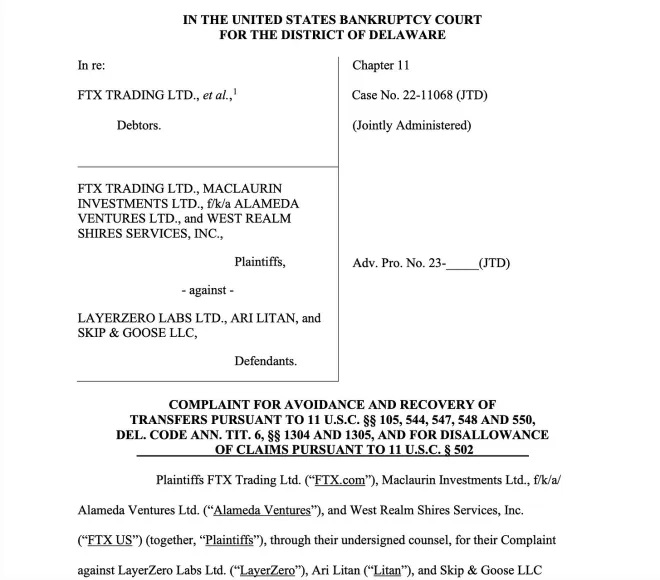
According to the complaint filed by FTX, LayerZero Labs had access to confidential information about FTX’s operations and security protocols as part of a partnership agreement. The complaint claims that LayerZero Labs breached the agreement and violated the fiduciary duty of loyalty and good faith by using this information to withdraw their funds from FTX on September 8, 2022, just minutes before the exchange announced that it was pausing withdrawals due to a “network congestion” problem.

FTX claims that LayerZero Labs’ withdrawal caused significant losses to the exchange and its users, as it reduced the liquidity and stability of the platform. FTX also accuses LayerZero Labs of spreading false rumors and misinformation about the exchange’s solvency and integrity, in an attempt to damage its reputation and market share.

FTX is seeking compensatory and punitive damages from LayerZero Labs, as well as an injunction to prevent them from further accessing or disclosing any confidential information about FTX. FTX’s new CEO, who took over the role from the founder Sam Bankman-Fried in August 2023, said in a statement that FTX will not tolerate any “unethical or illegal behavior” from its partners or competitors, and that it will “vigorously defend” its interests and rights in court.

LayerZero Labs has not yet responded to the lawsuit or the allegations. The company’s website and social media accounts have been inactive since September 8, 2023. LayerZero Labs was founded in 2021 by a team of former engineers and researchers from Google, Facebook, and Microsoft. The company claims to have developed several innovative products and protocols for the DeFi sector, such as LayerZero Swap, LayerZero Vault, and LayerZero Bridge.

FTX claims that LayerZero Labs breached its contract and caused damages to the exchange by taking advantage of a “network congestion” issue that affected FTX’s withdrawal system. LayerZero Labs, on the other hand, argues that it acted in self-defense and that FTX was trying to prevent it from accessing its funds. First, let us review the facts of the case. According to the complaint filed by FTX, LayerZero Labs is a DeFi project that aims to create a “zero-trust” platform for cross-chain transactions.

LayerZero Labs deposited about $1.6 million worth of various cryptocurrencies on FTX in order to trade and hedge its positions. However, on September 7, 2022, LayerZero Labs decided to withdraw all its assets from FTX, citing concerns about the security and reliability of the exchange. LayerZero Labs claims that it noticed that FTX was experiencing a “network congestion” problem that delayed or failed some withdrawal requests from users. LayerZero Labs alleges that this problem was caused by FTX’s own negligence or malfeasance and that it posed a serious risk to its funds.

FTX, however, denies these allegations and accuses LayerZero Labs of acting in bad faith and violating its terms of service. FTX admits that it had a “network congestion” issue on September 7, 2022, but claims that it was due to an external factor beyond its control: a sudden spike in gas fees on the Ethereum network. FTX argues that this issue affected all Ethereum-based transactions, not just withdrawals from FTX, and that it was resolved within a few hours. FTX also asserts that it notified its users about the issue and advised them to wait until it was fixed before requesting withdrawals.

FTX contends that LayerZero Labs ignored this advice and exploited the situation by submitting multiple withdrawal requests in rapid succession, hoping to bypass FTX’s security checks and withdraw more funds than it was entitled to. FTX claims that this behavior constituted a breach of contract and fraud and that it resulted in losses for FTX and other users.

Based on these facts, we can analyze the legal and ethical implications of this dispute. From a legal perspective, the outcome of the lawsuit will depend on how the court interprets the contract between FTX and LayerZero Labs and whether it finds evidence of fraud or negligence on either side. The contract, which is available on FTX’s website, states that users are responsible for their own transactions and that FTX is not liable for any losses or damages caused by “network delays, computer failures or malicious attacks”.

The contract also gives FTX the right to suspend or terminate users’ accounts if they violate its terms of service or engage in any illegal or unethical activities. However, the contract also stipulates that users have the right to withdraw their funds at any time and that FTX will process their requests as soon as possible.

Therefore, the key legal questions are: Did LayerZero Labs violate the contract by withdrawing its funds during a “network congestion” issue? Did FTX breach the contract by failing to process LayerZero Labs’ withdrawal requests in a timely manner? Did LayerZero Labs commit fraud by trying to withdraw more funds than it had? Did FTX act negligently or maliciously by causing or prolonging the “network congestion” issue? These questions will require further investigation and evidence from both parties.

From an ethical perspective, the outcome of the lawsuit will depend on how one evaluates the motives and actions of both parties. One could argue that LayerZero Labs acted ethically by withdrawing its funds from FTX, as it had a legitimate reason to do so: protecting its assets from a potential security breach or loss. One could also argue that FTX acted unethically by suing LayerZero Labs, as it had no valid reason to do so: preventing its users from accessing their funds or punishing them for leaving its platform.

Alternatively, one could argue that LayerZero Labs acted unethically by withdrawing its funds from FTX, as it had no valid reason to do so: taking advantage of a technical glitch or stealing from other users. One could also argue that FTX acted ethically by suing LayerZero Labs, as it had a legitimate reason to do so: enforcing its contract or recovering its losses.

Therefore, the key ethical questions are: Did LayerZero Labs have a moral duty to keep its funds on FTX or to withdraw them? Did FTX have a moral duty to process LayerZero Labs’ withdrawal requests or to deny them? Did LayerZero Labs have a moral right to withdraw its funds from FTX or to forfeit them? Did FTX have a moral right to sue LayerZero Labs or to drop the case? These questions will require further reflection and judgment from both parties.

The lawsuit between FTX and LayerZero Labs is a complex and controversial case that involves legal and ethical issues. The answer to the question: Does FTX have the moral ground suing LayerZero Labs? is not clear-cut and may vary depending on one’s perspective and values. However, one thing is certain: this case will have significant implications for the future of cryptocurrency exchanges and DeFi projects and will likely set a precedent for similar disputes in the future.

The Environmental Effects of Bitcoin Mining

0

Bitcoin is the most popular and valuable cryptocurrency in the world, with a market capitalization of over $900 billion as of September 2023. However, Bitcoin also has a significant environmental impact due to its high energy consumption and carbon emissions.

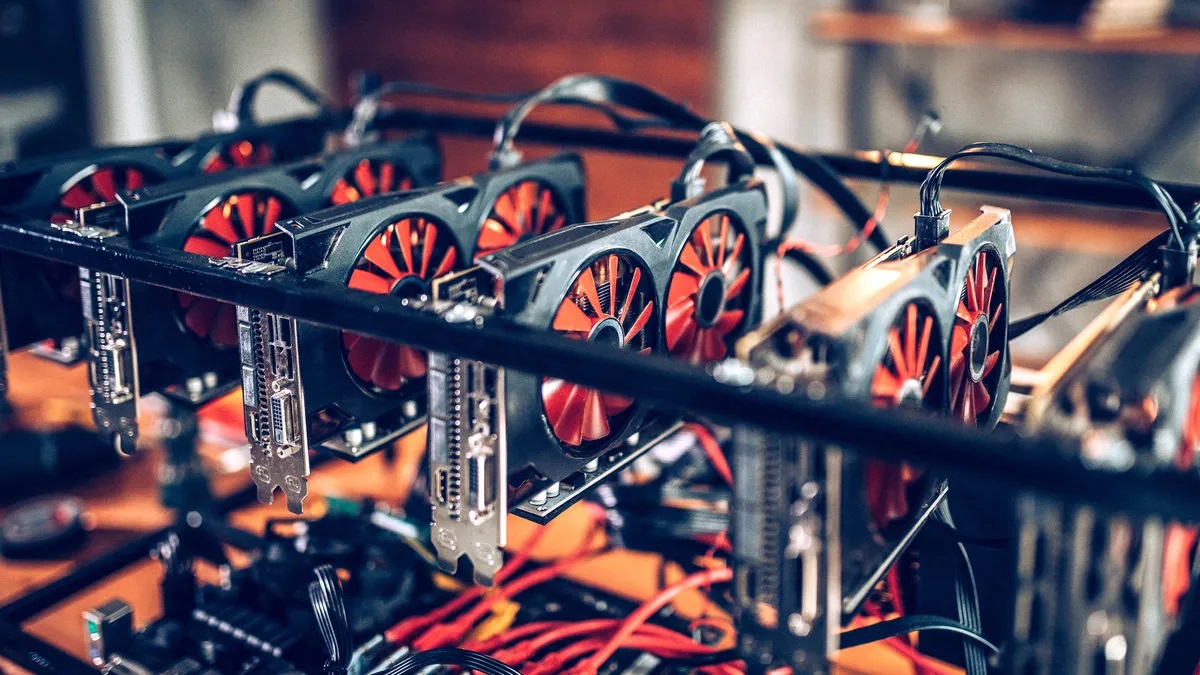
Bitcoin is a decentralized digital currency that operates on a peer-to-peer network of computers called nodes. Nodes validate transactions and blocks of transactions using a consensus algorithm called proof-of-work (PoW). PoW requires nodes to solve complex mathematical puzzles that are hard to compute but easy to verify. The node that solves the puzzle first gets to add the block to the blockchain, the public ledger of all Bitcoin transactions, and receives a reward in newly minted bitcoins and transaction fees.

The difficulty of the puzzles adjusts every 2016 blocks (about every two weeks) to maintain a steady rate of one block every 10 minutes. As more nodes join the network and compete for the reward, the difficulty increases, requiring more computing power and energy to solve the puzzles. This creates an arms race among miners, who invest in specialized hardware called application-specific integrated circuits (ASICs) that can perform billions of calculations per second.

According to the Cambridge Bitcoin Electricity Consumption Index, Bitcoin mining consumed an estimated 85 terawatt-hours (TWh) of electricity per year as of September 2023, equivalent to 0.38% of global electricity consumption and more than the annual electricity consumption of countries like Belgium and Finland. Another estimate by Digiconomist puts the figure at 130.3 TWh per year, equivalent to 0.59% of global electricity consumption and more than the annual electricity consumption of countries like Sweden and Argentina.

The energy consumption of Bitcoin mining depends on several factors, such as the number of active miners, the efficiency of their hardware, the cost and availability of electricity, and the price and volatility of Bitcoin. The higher the price of Bitcoin, the more profitable it is to mine, and the more incentive there is for miners to increase their computing power and energy consumption.

The environmental effects of Bitcoin mining are mainly related to its carbon footprint and electronic waste. The carbon footprint of Bitcoin mining is determined by the source and mix of electricity used by miners. According to Cambridge University, about 65% of Bitcoin mining takes place in countries that rely mostly on fossil fuels for electricity generation, such as China, Iran, Kazakhstan, Russia, and the United States. These countries account for about 80% of Bitcoin’s carbon emissions, which are estimated at 22 to 22.9 million metric tons of CO2 per year. This is equivalent to the annual CO2 emissions from the energy use of 2.6 to 2.7 billion homes or 5.5 million cars.

The electronic waste generated by Bitcoin mining is another environmental concern. As mining hardware becomes obsolete due to increasing difficulty and competition, miners discard their old equipment and replace it with newer models. According to Digiconomist, Bitcoin mining produces about 37.8 kilotons of electronic waste per year, equivalent to the annual e-waste output of countries like Luxembourg or Estonia.

The environmental impact of Bitcoin mining is not only limited to its direct effects on climate change and resource depletion. It also has indirect effects on social and economic aspects, such as human health, wildlife conservation, energy security, geopolitical stability, and financial inclusion.

What are some possible solutions to reduce the environmental impact of Bitcoin mining?

There are several possible solutions to reduce the environmental impact of Bitcoin mining, ranging from technical innovations to policy interventions. Some of these solutions are:

Switching to renewable energy sources: Miners can reduce their carbon footprint by using renewable energy sources such as solar, wind, hydro, or geothermal power for their operations. Some miners have already moved to regions with abundant and cheap renewable energy, such as Iceland, Norway, or Canada. However, renewable energy is not always available or reliable, and may require additional infrastructure and investment.

Improving energy efficiency: Miners can improve their energy efficiency by using more advanced hardware that can perform more calculations per unit of energy consumed. However, this may also increase the difficulty and competition among miners, leading to a rebound effect that negates some of the energy savings.

Adopting alternative consensus algorithms: Bitcoin can adopt alternative consensus algorithms that do not rely on PoW or require less energy-intensive computations. For example, proof-of-stake (PoS) is a consensus algorithm that selects validators based on their stake or number of coins they own, rather than their computing power. PoS is used by some cryptocurrencies such as Ethereum, Cardano, and Polkadot, and claims to be more energy-efficient and secure than PoW. However, PoS also has its own challenges and trade-offs, such as centralization, security, and governance issues.

Implementing carbon taxes or caps: Governments can implement carbon taxes or caps on Bitcoin mining to discourage its use of fossil fuels and incentivize its transition to renewable energy. However, this may also create regulatory uncertainty and compliance costs for miners and may drive them to relocate to jurisdictions with less stringent environmental policies.

Educating and engaging the public: Consumers and investors can educate themselves and others about the environmental impact of Bitcoin mining and make informed decisions about their participation in the cryptocurrency market. They can also engage with the Bitcoin community and stakeholders to advocate for more sustainable practices and innovations in the industry.

Bitcoin mining is a complex and controversial topic that has significant environmental implications for the planet. While Bitcoin offers some benefits as a decentralized and innovative digital currency, it also poses some challenges and risks as a high-energy-consuming and carbon-intensive activity. There is no simple or definitive answer to whether Bitcoin mining is bad for the environment, as it depends on various factors and perspectives. However, there are some possible solutions that can help reduce its environmental impact and make it more compatible with the global efforts to combat climate change and achieve sustainable development.

The Power Of Meme Coins Unleashed: Decoding The Crypto Ecosystem Evolution With Shiba Inu, Floki Inu, & Elonator

1

The world of digital finance is in awe as it witnesses the fascinating evolution of the entire crypto ecosystem thanks to innovative meme coins. No one can underscore the pivotal roles of decentralized applications (dApps), decentralized finance (DeFi) projects, and non-fungible tokens (NFT) innovations in making this happen. We dive into Shiba Inu (SHIB), Floki Inu (FLOKI), and Elonator (ETOR)’s plans to strengthen their ecosystems and compare their strategies and investment potential.

<< Click Here To Learn More About Elonator Presale >>

How Meme Coins Reshape The Crypto Ecosystem

No one would have anticipated Shiba Inu to conquer the meme coin landscape. What primarily attracted the attention of investors and the general public (aside from the token’s cuteness) is its emphasis on ensuring no man is accountable in its ecosystem. Everyone has the freedom to be creative, and the SHIB community soon grew in numbers.

Floki Inu continued the dog-inspired theme. Although it started as a mere meme coin that hops on the trend, its goal widened to providing utility by creating its own crypto ecosystem and contributing to charity. The creators view FLOKI as a movement and not just a meme coin. SHIB and FLOKI aren’t the only coins that wish to go beyond their roots.

Elonator, a presale meme coin, developed a crypto ecosystem that allows everyone to earn crypto instantly, even without the necessary knowledge and skills. They attract early investors by promoting their unique staking model and lottery system. They will also provide reward opportunities (through vested bonuses and referral tokens) and host competitions where users can win huge prizes.

The Role Of DApps

The Shiba Inu crypto ecosystem has a main dApp called the ShibaSwap decentralized exchange. It’s designed to allow users to trade various tokens. This includes the SHIB token and its offspring tokens Bone ShibaSwap (BONE) and Doge Killer (LEASH). Unfortunately for SHIB, ShibaSwap faced security concerns, and the crypto community commented on how it’s similar to other decentralized exchanges.

The team behind FLOKI is still working on completing the coin’s roadmap, including the launch of its dApps in the Floki Inu ecosystem. At the time of writing, FLOKI had already launched Shop Floki and established the Floki Finance Pay partnership. Meanwhile, Elonator is still in the process of building the Elonator Swap. It’s an automated market maker (AMM) that offers users a seamless trading experience. Elonator Swap will leverage the infrastructure of Uniswap, which is Ethereum’s leading decentralized exchange.

Elonator Showcases Investment Potential

Shiba Inu has been soaring this year, and many think it’s because of the Shibarium blockchain. In fact, it’s primarily due to investors’ greed. Now, investors are more willing to take significant risks to earn greater rewards. Still, we can say that the impending launch of the Shibarium blockchain in its crypto ecosystem has a partial role in the coin’s surge.

Investment sentiment doesn’t favor Floki Inu that much, given that the coin didn’t receive any major push even after adding an NFT gaming metaverse in the Floki Inu ecosystem. By the looks of it, Elonator will soon be on the crypto stage to showcase its enormous investment potential. Firstly, ETOR attracts early investors with the chance to win substantial prizes like a brand-new Tesla car. Secondly, it introduces creative initiatives, such as organizing an NFT competition. Eventually, it will also open the Elonator Store, where anyone can buy merchandise designed by NFT artists.

<< Buy Into The Elonator Presale >>

The Inspiring Journey Of Meme Coins

Meme coins have reshaped the crypto ecosystem, and their journey to innovating for the sake of utility, community engagement, and investment potential is worth watching. Shiba Inu strengthens its ecosystem further by launching innovative projects, while Floki Inu continues to improve its roadmap. Meanwhile, Elonator empowers its community by launching innovative staking models, rewarding opportunities, and fostering a growing marketplace.


Invest In Elonator Today:

Presale: https://buy.elonator.com/

Website: https://elonator.com

Telegram: https://t.me/ElonatorCoin

Twitter: https://twitter.com/ElonatorCoin

Buckle Up for 100x Returns: Polygon, Solana & DogeMiyagi’s Magic Explored, From Meme to Millions

0

Have you ever experienced the electrifying thrill of potentially multiplying your investment by a jaw-dropping 100 times? Well, the time has arrived as we take you on a journey through the realms of cryptocurrencies where the dream of 100x returns becomes a reality.

In this article, we delve into the magical world of Polygon, Solana, and DogeMiyagi (MIYAGI), and discover why these cryptocurrencies might just be your ticket to 100x returns.

Solana – An Unstoppable Force Of Decentralized Potential

Solana has risen in the cryptocurrency world after tackling scalability issues that its other competitors struggle with. It gained attention for its super-fast transactions and low fees, especially after teaming up with Coca-Cola in Serbia and SolSea for NFT issuance during a concert. This news boosted SOL’s value by 23.2% in just two weeks. With a hybrid consensus system merging proof-of-history and proof-of-stake, Solana offers more than just speed, it’s a DeFi dynamo. Despite a drop of over 92% from its peak, early backers have still seen over 8,000% ROI. Solana is proving its crypto prowess loud and clear. The Solana Blockchain is designed for speed and efficiency, with transaction speeds that will leave you blinking in disbelief.

Polygon – Where Scalability Gets A Turbo Boost

Polygon has made a remarkable journey, reshaping itself into a Layer-2 scaling solution. Its profound rebranding in 2021 aimed to revolutionize Ethereum’s transaction speed and cost efficiency, resonating with both developers and the crypto community. With over 19,000 hosted dApps, Polygon is a stalwart in a tumultuous market, offering not just technical brilliance but also the potential for impressive 100x returns for savvy investors.

The Polygon 2.0 update, with its enhanced community governance and strategic partnerships, makes Polygon a transformative force in the crypto universe. When MATIC originally went onto the open market in 2019, it was worth about $0.00263. In February 2021, Matic Organization rebranded to Polygon to give a versatile form of Ethereum’s framework. Polygon held the name of its local token MATIC. The token continued to acquire by over 200% throughout the following 30 days and soared to break past $1 in May.

DogeMiyagi – Crawling Into The Future of DeFi For 100x Returns

DogeMiyagi’s innovative mix of memes and blockchain technology makes it a distinct player in the crypto market. Community-driven initiatives and a controlled approach to development are the main components of MIYAGI’s goal to establish a vibrant and involved community.

By incorporating the Ethereum blockchain, MIYAGI gains access to a wide range of platforms for decentralized banking, non-fungible token markets, and more potentially establishing the groundwork for future growth.

According to experts, DogeMiyagi has the potential to rise significantly in the short term, with price predictions ranging from $0.05 to $0.08 by the end of 2023. As the crypto market continues to mature, an explosion in 2025 could see DogeMiyagi’s price soaring even higher, potentially reaching $0.10 or more.

The altcoin season presents itself as an opportunity for all investors to invest in a wide variety of meme coins apart from traditional cryptocurrencies. Amongst these are Solana & Polygon which have faced the test of time and integrated blockchain technology with strong fundamentals and growth potential. The rise of DogeMiyagi is imminent as it adds a touch of a community-driven approach and access to a wide range of decentralized banking and NFT solutions. The DogeMiyagi (MIYAGI) Presale has presented itself as an opportunity for investors to invest early and stand the potential to gain 100x returns.


DogeMiyagi (MIYAGI):

Website: https://dogemiyagi.com

Twitter: https://twitter.com/_Dogemiyagi_

Telegram: https://t.me/dogemiyagi

Utilizing Liquidity Management in Blockchain Technology: Scorpion Casino Token vs. Bitcoin and Litecoin

0

Liquidity is not a strange term in the world of finance but it, in crypto and blockchain technology in general, has become a term of high importance. Liquidity in this regard dictates the quantity of crypto investors are willing to buy and sell.

In this comparative article, we will analyze the liquidity management practices of Scorpion Casino Token in the betting industry and contrast them with the approaches of Bitcoin and Litecoin. By examining how these companies ensure sufficient liquidity for their users, we can gain valuable insights into the role of blockchain technology and crypto and how it can be utilized for success.

Bitcoin: Liquidity Challenges in Blockchain Technology

Bitcoin, the pioneering cryptocurrency, has faced challenges in terms of liquidity management. As Bitcoin’s popularity and adoption continue to grow, its limited transaction throughput hinders maintaining sufficient liquidity. The scalability issues associated with Bitcoin often result in higher transaction fees and longer confirmation times, impacting the overall liquidity experience for users.

While Bitcoin’s decentralized nature is a key strength, it also poses challenges when it comes to liquidity. The distributed network of miners responsible for processing transactions can introduce delays, making it less suitable for time-sensitive betting activities. These factors highlight the need for alternative cryptocurrencies that can address the liquidity constraints of Bitcoin.

Litecoin: Addressing Liquidity Challenges

Litecoin, often referred to as the silver to Bitcoin’s gold, has made notable strides in addressing liquidity challenges in the betting industry. Litecoin offers faster block generation times and a more efficient transaction verification process, resulting in quicker confirmations and improved liquidity. Its improved scalability allows for a higher volume of transactions, reducing congestion and enhancing the overall liquidity experience for users.

By leveraging blockchain technology and implementing effective liquidity management strategies, Litecoin ensures a great liquidity management strategy. The high value of the coin can be attributed to its liquidity and a high volume of transactions. This activity indicates that the currency is highly in demand and is frequently traded.

Scorpion Casino Token: Ensuring Liquidity in the Betting Industry

 Scorpion Casino Token is a cutting-edge cryptocurrency that leverages blockchain technology to provide users with a unique and secure betting experience. Built on a decentralized platform, Scorpion Casino Token offers a range of benefits, including passive income opportunities and the potential for significant returns on investment. With its focus on the betting industry, Scorpion Casino Token aims to revolutionize the way users participate in online gambling while ensuring ample liquidity for its users.

Scorpion Casino Token takes a comprehensive approach to liquidity management, employing several strategies to ensure a smooth and vibrant ecosystem for its users. One of the key methods employed by Scorpion Casino Token is the establishment of liquidity pools. These pools serve as reservoirs of tokens, allowing users to trade and exchange their holdings without experiencing significant price slippage.

Moreover, Scorpion Casino Token implements mechanisms that leverage smart contracts to provide liquidity on decentralized exchanges. This ensures a constant supply of tokens and enhances the liquidity of Scorpion Casino Token within the betting industry. By utilizing blockchain technology, Scorpion Casino Token creates a transparent and efficient marketplace for users, eliminating intermediaries and enabling seamless transactions.

In conclusion, Scorpion Casino Token stands out as a leader in liquidity management within the betting industry, leveraging blockchain technology to ensure a vibrant and secure ecosystem for its users. The establishment of liquidity pools, automated market-making mechanisms, and the transparency provided by blockchain technology contribute to Scorpion Casino Token’s success in maintaining ample liquidity.

Contrasting the liquidity practices of Bitcoin and Litecoin, we observe the challenges faced by Bitcoin due to scalability limitations and transaction throughput. Litecoin, on the other hand, addresses these challenges by offering faster transactions and improved scalability, positioning itself as a suitable alternative for users seeking enhanced liquidity in the betting industry.

For More On Scorpion Casino Token


Presale: https://presale.scorpion.casino/

Twitter: https://twitter.com/ScorpionCasino

Telegram: https://t.me/scorpioncasino_official