DD
MM
YYYY

PAGES

DD
MM
YYYY

spot_img

PAGES

Home Blog Page 3801

Nigeria’s future will be better! #believe

1

No matter what you may think, it remains a #great nation. Many of us who got the best out of it remain hopeful that the good days will return, for others. The days of choices with jobs lined up months to graduation. The days of absolute free education. Indeed, a nation where dreams come true. It came for me from many angles, and I remain grateful to Nigeria.

Yes, I asked for great teachers; it provided. I asked for scholarships; it provided. I never even asked for a job, it sent many. Many here can attest to that generous nation. On this beautiful day, never forget to pray for Nigeria.

I am an optimist and I do believe that better days are ahead. In the miry clay of Abacha days, one day Obasanjo came, and the eastern sun broke through. Banks hired in thousands. Telecoms hired in thousands. Young men and women bought nice cars 3 months into their first jobs.

The future became “touchable” and our cities were centers of happiness. Everyone was a Nigerian and the demons of tribes faded. Men and women were returning from the UK, USA, etc to join us in the banks. Yes, they relocated because Lagos was offering them better deals than London, New York, etc. Let’s pray for the nation even as we work harder to fix whatever that we need to fix. The good days must return. Let’s work HARDER towards it.

I lead this prayer and Nigeria will rise, and as we say in the Scripture Union, the next praise will be better because more songs will be discovered. Nigeria’s future will be better! #believe

UK Bill to seize illicit Crypto moves to Final Stages of Approval, Coinbase Gets Green Light from Bank of Spain

0

The UK government is close to passing a new bill that would give law enforcement agencies the power to seize cryptocurrencies that are linked to criminal activities. The bill, which has been in the works for over a year, is expected to receive royal assent in the next few weeks and become law by the end of the year.

The bill aims to address the challenges posed by the growing use of cryptocurrencies for illicit purposes, such as money laundering, terrorism financing, fraud and cybercrime. According to the Home Office, cryptocurrencies are increasingly being used by criminals to evade detection and prosecution, as they offer a high degree of anonymity and decentralization.

The bill would amend the Proceeds of Crime Act 2002, which currently allows authorities to confiscate cash and other assets that are derived from or intended for criminal conduct. The bill would extend this provision to include cryptocurrencies, such as Bitcoin, Ethereum and Monero, as well as any other digital tokens that have a value or function as a medium of exchange.

The bill would also create a new category of “crypto assets subject to seizure”, which would cover any cryptocurrencies that are held or controlled by a person who is suspected of being involved in criminal activity, or who has been convicted of a relevant offence. The bill would empower the police, the National Crime Agency and other authorized agencies to apply for a seizure order from a court, which would allow them to take possession of the crypto assets and transfer them to a secure wallet.

The bill would also establish a framework for the valuation, storage and disposal of seized crypto assets. The bill would require the authorities to use an approved method of valuation, such as a reputable exchange rate or an independent expert opinion, to determine the value of the crypto assets at the time of seizure. The bill would also require the authorities to store the crypto assets in a secure and auditable manner, and to dispose of them in accordance with the court’s directions.

The bill has received support from various stakeholders, including law enforcement agencies, regulators, industry associations and crypto experts. They have welcomed the bill as a necessary and proportionate measure to combat the misuse of cryptocurrencies and protect the public from harm. They have also praised the bill for being technology-neutral and flexible, as it can accommodate any changes or innovations in the crypto space.

However, the bill has also faced some criticism from civil liberties groups, privacy advocates and some crypto enthusiasts. They have raised concerns about the potential impact of the bill on the rights and freedoms of legitimate crypto users, as well as the technical and practical challenges of implementing the bill. They have argued that the bill could undermine the core principles of cryptocurrencies, such as privacy, autonomy and decentralization, and create a chilling effect on innovation and adoption.

The bill is currently in its final stages of parliamentary scrutiny, after passing through both houses with minor amendments. It is expected to receive royal assent in November and come into force by December 2023. The bill will apply to England, Wales and Northern Ireland, while Scotland will have its own legislation on crypto seizure.

Coinbase Gets Green Light from Bank of Spain to Operate in the Country

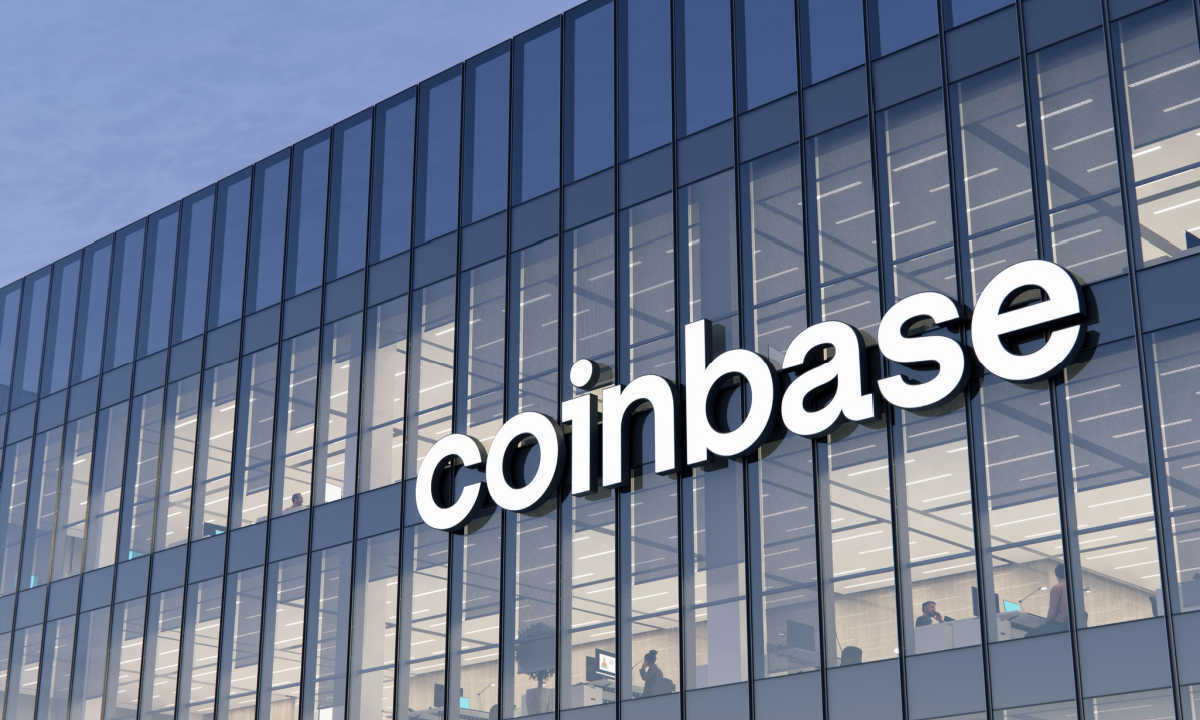
Coinbase, one of the leading cryptocurrency exchanges in the world, has announced that it has obtained an AML Registration from the Bank of Spain. This means that Coinbase is now authorized to provide crypto-related services in Spain, such as buying, selling, storing, and transferring digital assets.

But what is an AML Registration and how does it work? AML stands for Anti-Money Laundering, and it refers to a set of rules and procedures that aim to prevent the use of cryptocurrencies for illicit activities, such as money laundering, terrorism financing, and tax evasion.

The AML Registration is a requirement for crypto service providers in Spain, following the transposition of the Fifth Anti-Money Laundering Directive (5AMLD) into national law. The directive is a European Union regulation that sets common standards for the crypto sector across the bloc.

To obtain the AML Registration, Coinbase had to submit an application to the Bank of Spain, providing information about its business model, governance structure, risk management policies, and compliance procedures. The Bank of Spain then reviewed the application and verified that Coinbase met the criteria established by the 5AMLD and the Spanish law.

Coinbase said that it is proud to be one of the first crypto platforms to receive the AML Registration from the Bank of Spain, and that it is committed to complying with the highest standards of regulatory compliance and customer protection. Coinbase also said that this milestone reflects its vision to create an open financial system for the world, and that it will continue to expand its presence and offerings in Europe and beyond.

But how does Coinbase compare to other crypto exchanges? According to CoinMarketCap, Coinbase ranks second among the top cryptocurrency spot exchanges by trading volume, liquidity, traffic, and confidence. It offers a range of products and services, such as Coinbase Pro, Coinbase Prime, Coinbase Commerce, Coinbase Card, Coinbase Earn, and Coinbase Wallet. It also operates Coinbase Ventures, an investment arm that supports early-stage crypto startups.

Coinbase is a global leader in the crypto industry, with over 68 million verified users in more than 100 countries. It supports 244 cryptocurrencies and fiat currencies such as USD, EUR, GBP. It also has a high level of security and transparency, as it stores 98% of its customers’ funds offline and publishes regular reports on its operations.

Other crypto exchanges that compete with Coinbase include Binance, Kraken, Bybit, KuCoin, OKX, Bitstamp, Bitfinex, Gate.io, HTX, and many more. Each exchange has its own advantages and disadvantages in terms of fees, features, customer service, user experience, and reputation. Cryptoradar is a useful tool that helps users compare different crypto exchanges based on various criteria.

Ultimately, choosing a crypto exchange depends on one’s personal preferences and needs. However, Coinbase is undoubtedly one of the most popular and trusted platforms in the market.

Declaring something as ‘FREE’ does not explain Value Proposition.

0

This month, 9ja Cosmos is one year old.

To mark the occasion. We decided to give away 5% of the business to supporters of our presence and community in online platforms.

We split this among 500 prospective respondents on a first come first served basis. The terms are following the 9ja Cosmos LinkedIn page, and joining our Discord Server. Further T&C apply. So each share equates to 0.01% of the business.

The celebration exercise has become somewhat of a learning experience. This is one of several lessons learned, and the second time we are writing about it.

I got this question – ‘What are the benefits?’

I have to admit, the question took me by surprise. My first thought was, well, why is someone asking me this? We are celebrating year 1. We are offering something far more valuable than a bit of merch or a worthless airdrop. There is no need to pay to attend an expensive in-person event to get it.

Business communities understand that to an entrepreneur, a bootstrapped start-up is like their baby. Asking what the benefits are, is a little bit like saying:

‘Well, before I agree to attend a party for your ‘one year old’, I will need a list of the egusi soup, pounded yam, fried chicken, jollof rice, Hero, 33, coke, and so on, that is at the party, because I have to send it over by my guy at KPMG to tell me what the value proposition is for attending!

But then, I took an emotional step back from it, and thought about it, and realized it is actually quite a reasonable question.

Nothing is ultimately free. When things are offered free, it often just means the path to monetization isn’t obvious.

We think about services like Canva, Remove BG, Gmail, or Zoom, as being ‘FREE’, but from my own side, I have always wanted to get to the bottom of how these companies are monetizing my free use of their product.

I don’t believe things are free, because when companies fail to monetize what they do, they go broke. I may still use the free services once I find out what the revenue strategy is, but even when it is free, I don’t want to use it without knowing that.

So, having now realized the question is reasonable – I now set out to answer it. This is how I answered the LinkedIn DM:

‘Firstly – 9ja Cosmos is a business.

To ascertain if the business is in alignment with what you believe in, or what aligns with your own business interests, you need to visit the site  https://9jacosmos.com/home/ and familiarize yourself with the objectives, existing products and forward planning.

This will give you an idea of where we are

The Discord Server on the other hand, is a Community Channel.

A Community Channel is where people with interest in the mission, aspirations, services or products of 9ja Cosmos come together to discuss.

Most Community Channels in support of Web 3 products are not organic. Bots and paid contributors are brought in once a project has some significant funding. This is done to pump numbers and create momentum.

We are offering a small share in the business to grow the community organically and transparently from the gound up.

At the moment there isn’t sufficient critical mass in the Community to support a spontaneous discussion environment, which is where we want to be with it. When community is active enough, it justifies its benefits to its members organically – it doesn’t need product ownership to drive that

Though right now, due to the bear market, there are web 3  communities which are ghost towns today though they have thousands of active members. 18 months ago, they were flourishing
But when we look at a business somewhat similar to ours (although they started with a much narrower objective) – <name removed for legal reasons>
They were given a 68m injection by Pantera Capital for less than half percent of the business in February 2022. So in context, giving away 0.01% of the business to ‘Community Founders’ isn’t a small thing.
Its a more open and transparent way to encourage community growth than getting a team of paid community activists posing as regular members, and padding that out with bots.

And on the long term it’s more sustainable.’

This was the simplest and most transparent answer I felt I could give in the moment.

I then thanked the person for the question.

As bootstrapped entrepreneurs, we can’t always find ways to support communities, through jobs, contracts, or even merch.

When we find novel ways of offering value to communities which isn’t transactional, we need to understand, it isn’t obvious to everyone, that accepting is a no-brainer!

Update: The follower count on the 9ja Cosmos page https://lnkd.in/eKUYM-Nv is now 434, so there are just 66 potential anniversary shares left.
Follow-though to the Discord Server is low with only 37 of the 434 arrived. The server invitation is https://lnkd.in/evx_b6Pq
Shares limit to ‘First 500’ followers of the 9ja Cosmos page joining the Discord Server on or before November 1. Voids of ‘First 500’ followers not on Discord Server in time, will be retained by 9ja Cosmos, not made available to subsequent 9ja Cosmos page followers.

9ja Cosmos is here… 

Get your .9jacom and .9javerse Web 3 domains  for $2 at:

.9jacom Domains

.9javerse Domains

Visit 9ja Cosmos

Follow us on LinkedIn HERE


GRVT raises funds at $39M valuation As Jiritsu Secures $10.2M to develop Verifiable Computing

0

GRVT, a startup that aims to create a hybrid crypto exchange platform, has announced that it has raised an undisclosed amount of funding at a $39 million valuation. The funding round was led by XYZ Ventures, a prominent VC firm in the blockchain space, and joined by several other investors.

According to GRVT, its hybrid crypto exchange will combine the best features of centralized and decentralized exchanges, such as high liquidity, low fees, fast transactions, and enhanced security. The platform will also support multiple types of assets, including cryptocurrencies, stablecoins, tokens, and NFTs.

GRVT’s co-founder and CEO, said that the funding will help the company accelerate its product development and launch its beta version by the end of this year. He also added that GRVT’s vision is to democratize access to the crypto economy and empower users with more control and transparency over their assets.

Blockchain tech firm Jiritsu secures $10.2 million to develop verifiable computing

Jiritsu, a blockchain technology company based in Tokyo, Japan, announced that it has raised $10.2 million in a Series A funding round led by SoftBank Ventures Asia. The round also included participation from existing investors NTT Docomo Ventures and Mitsubishi UFJ Capital.

Jiritsu is developing a platform that enables verifiable computing, a technique that allows users to verify the correctness and integrity of computations performed by third-party servers or cloud providers. Verifiable computing can enhance the security, privacy and efficiency of various applications, such as decentralized finance (DeFi), artificial intelligence (AI), and internet of things (IoT).

Jiritsu’s platform leverages blockchain technology to create a network of nodes that can perform computations and provide cryptographic proofs of their results. Users can submit their tasks to the network and pay for the service using Jiritsu’s native token, JRT. Users can also verify the proofs using Jiritsu’s open-source software or hardware devices.

Jiritsu’s co-founder and CEO (not to be confused with the pseudonymous creator of Bitcoin), said that the company’s vision is to create a trustless and transparent computing infrastructure that can empower users and developers.

“We believe that verifiable computing is a key technology that can unlock the full potential of blockchain and other emerging technologies. By providing a platform that can guarantee the correctness and integrity of computations, we can enable users to outsource their tasks without worrying about malicious or faulty servers. We can also enable developers to create innovative applications that can leverage verifiable computing, such as DeFi protocols that can execute complex financial contracts, AI models that can preserve data privacy, and IoT devices that can optimize energy consumption,” Nakamoto said.

Jiritsu plans to use the new funds to expand its team, develop its platform, and launch its mainnet in 2024. The company also aims to collaborate with other blockchain projects and industry partners to promote the adoption of verifiable computing. Seungyeon Kim, a partner at SoftBank Ventures Asia, said that he was impressed by Jiritsu’s team and technology.

“Jiritsu is one of the few companies in the world that is working on verifiable computing, a cutting-edge technology that can solve some of the major challenges in the blockchain space, such as scalability, security and privacy. We are excited to support Jiritsu’s vision of creating a verifiable computing platform that can benefit various industries and applications,” Kim said.

XYZ Ventures’ partner said that they were impressed by GRVT’s team, technology, and vision. She said that GRVT has the potential to disrupt the crypto exchange market and create a new standard for user experience and security. She also expressed her confidence in GRVT’s ability to execute its roadmap and deliver value to its customers and stakeholders.

GRVT is one of the latest examples of how the crypto industry is attracting more attention and capital from investors and entrepreneurs. As the demand for crypto assets and services grows, GRVT aims to provide a unique and innovative solution that can cater to the needs of both novice and experienced crypto users.

EU Commission Fines Intel €376m for Antitrust Conduct that Blocked AMD, Others’ Market Access

0

On Friday, Intel received a 376 million euro ($400 million) fine as a result of an EU antitrust case. This case originated from the U.S. chipmaker’s anti-competitive actions nearly two decades ago, aimed at obstructing rival companies.

Although certain aspects of Intel’s actions, such as concealed rebates, were dismissed on appeal due to insufficient evidence of harm, the European Union Commission maintained its stance that Intel engaged in payments to PC manufacturers with the intention of postponing or constraining the use of AMD processors in their products.

In 2009, Intel initially faced a substantial fine of 1.06 billion euros for its misconduct and related practices. However, this fine was overturned last year by the General Court in Luxembourg, which is Europe’s second-highest court.

Nevertheless, the General Court did concur with the European Commission’s assertion that Intel had unlawfully marginalized competitors in the market. This agreement prompted the EU antitrust watchdog to re-open the case.

In the 2009 ruling, Intel was accused of obstructing its rival, Advanced Micro Devices (AMD).

On Friday, the EU watchdog announced the re-imposition of a fine for practices that occurred between November 2002 and December 2006.

The Commission provided examples, including instances where Intel made payments to HP to discourage the sale of AMD-powered business PCs to small and medium-sized businesses through direct channels from 2002 to 2005.

Additionally, Intel paid Acer to postpone the launch of an AMD-based notebook from late 2003 to early 2004 and similarly paid Lenovo to delay the release of AMD notebooks by six months.

According to the General Court’s findings, Intel’s imposition of these conditions on payments enabled the company to restrict the competitive challenge posed by AMD desktops in crucial market segments.

The European Commission stated that the newly imposed fine of €376 million reflects Intel’s actions in hindering the development and growth of its primary competitors in the x86 CPU market for nearly five years.

“The General Court confirmed that Intel’s naked restrictions amounted to an abuse of dominant market position under EU competition rules,” the European Commission said in a statement.

“As a result of those restrictions, computer manufacturers halted, delayed or placed restrictions on the commercialization of products based on a competitor’s chipsets, which they had actively planned and for which there was consumer demand,” the statement added.

The Commission said Intel’s naked restrictions therefore had a detrimental effect on competition in the market, by depriving customers of a choice which they would have otherwise had.

Intel, which is currently awaiting the Commission’s approval for nearly 10 billion euros in German state subsidies to build a chipmaking facility in Germany, said it’s analyzing the ruling to decide whether to appeal or not.

“We are analyzing the decision and the amount of the fine to determine the possible grounds and prospects of success of an appeal to the European Courts.,” the company said in a statement.

The European Commission has appealed against the other aspects of the General Court’s ruling from last year that pertain to the conditional rebates provided by Intel. This appeal has been filed at the EU Court of Justice, which is the highest court in Europe.

It’s worth noting that while Intel did not appeal the €376 million fine, there is still the possibility of additional fines if the appeal court ultimately determines that the conditional rebates offered by Intel also violated competition laws.

The €376 million fine stands as it is, but the outcome of the appeal regarding the rebates could potentially result in further penalties for the company.