DD
MM
YYYY

PAGES

DD
MM
YYYY

spot_img

PAGES

Home Blog Page 3805

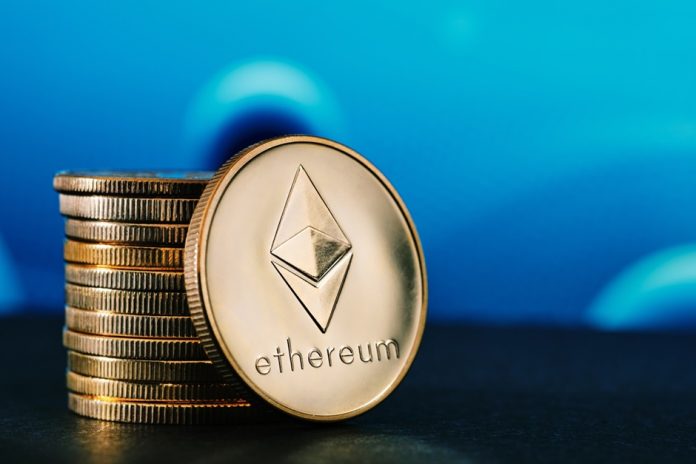
Harvest files to launch a Spot Bitcoin ETF in Hong Kong; Ethereum, Solana emerges as minting destination for rising and established artists

0

Harvest Global Investments, a leading asset manager in Asia with over $230 billion in assets under management, has filed an application with the Hong Kong Securities and Futures Commission (SFC) to launch a new exchange-traded fund (ETF) that will track the price of Bitcoin.

The proposed Harvest Bitcoin ETF will be the first of its kind in Hong Kong, offering investors exposure to the largest and most liquid cryptocurrency in the world.

According to the filing, the Harvest Bitcoin ETF will invest in spot Bitcoin and will use a third-party custodian to store the digital assets. The ETF will also employ a market maker to provide liquidity and ensure fair pricing. The filing did not disclose the fees, launch date, or ticker symbol of the ETF.

The Harvest Bitcoin ETF is expected to face regulatory scrutiny from the SFC, which has been cautious about approving crypto-related products in the past. In 2019, the SFC issued a statement that it would not authorize any crypto ETFs unless they met the same standards as conventional ETFs. The SFC also warned investors of the high risks and volatility associated with crypto investments.

However, the Harvest Bitcoin ETF may benefit from the growing demand and acceptance of Bitcoin in Hong Kong and globally. In 2020, Hong Kong saw a surge in Bitcoin trading volume and adoption, as more people turned to the cryptocurrency as a hedge against inflation and currency devaluation amid the Covid-19 pandemic and political unrest.

Moreover, several major institutions and corporations have embraced Bitcoin as a legitimate asset class, adding credibility and legitimacy to the crypto space.

The Harvest Bitcoin ETF will also compete with other Bitcoin ETFs that have been launched or are in the pipeline in other jurisdictions, such as Canada, Brazil, and the US. The first Bitcoin ETF in North America, the Purpose Bitcoin ETF, debuted in February 2021 on the Toronto Stock Exchange and has amassed over $1 billion in assets under management.

Several other Bitcoin ETF applications are pending approval from the US Securities and Exchange Commission (SEC), which has so far rejected all previous proposals due to concerns over market manipulation, fraud, and custody.

The Harvest Bitcoin ETF will be a milestone for the crypto industry in Hong Kong and Asia, as it will provide investors with a convenient and regulated way to access the booming Bitcoin market. The ETF will also enhance the innovation and diversity of Hong Kong’s financial sector, which is one of the world’s leading hubs for asset management and fintech.

The ETF will offer several benefits to investors who want to tap into the potential of Bitcoin as an alternative asset class. First, it will lower the barriers to entry for crypto investing, as investors will only need a brokerage account to buy and sell the ETF units, just like any other stock or fund.

Second, it will reduce the risks and costs associated with holding Bitcoin directly, such as hacking, theft, loss of private keys, or high transaction fees. Third, it will enhance the liquidity and efficiency of the Bitcoin market, as more institutional and retail investors will be able to access and trade the cryptocurrency.

The Harvest Bitcoin ETF, which is expected to debut on the Hong Kong Stock Exchange in February 2024, is the result of a collaboration between Harvest Global Investments, a leading asset management firm in Asia, and Bitwise Asset Management, a pioneer in crypto index funds. The ETF will follow the Bitwise Bitcoin Index, a rules-based and transparent benchmark that reflects the true price of Bitcoin across multiple exchanges.

Ethereum, Solana emerges as minting destination for rising and established artists

In the world of blockchain and digital art, Ethereum has long been the dominant platform for creating, buying and selling non-fungible tokens (NFTs). However, in recent months, a new challenger has emerged: Solana.

Solana is a fast, scalable and low-cost blockchain that claims to offer superior performance and user experience for NFT creators and collectors. According to its website, Solana can process over 50,000 transactions per second, with an average fee of less than $0.01 and a confirmation time of 0.4 seconds. In comparison, Ethereum can handle about 15 transactions per second, with an average fee of over $10 and a confirmation time of several minutes.

These advantages have attracted many artists and collectors to Solana, especially as the demand for NFTs has skyrocketed in the past year. According to data from Solanart, a leading NFT marketplace on Solana, the total sales volume of NFTs on Solana reached over $250 million in November 2021, up from less than $1 million in July 2021.

According to data from Solana Beach, the total sales volume of NFTs on Solana in 2024 has reached over $10 billion, surpassing the previous record of $7.5 billion in 2023. This shows the increasing demand and adoption of NFTs on Solana, as well as the innovation and creativity of the NFT projects and creators.

Some of the most popular NFT projects on Solana include Degenerate Ape Academy, a collection of 10,000 pixelated apes with various traits and accessories; Solana Monkey Business, a similar project featuring 5,000 monkeys; and Aurory, a fantasy-themed project with 10,000 unique characters. These projects have sold for millions of dollars each, with some individual NFTs fetching over $100,000.

Solana has also emerged as an attractive minting destination for rising artists and established artists alike. For example, FTX, a leading cryptocurrency exchange that runs on Solana, recently launched a platform called FTX NFTs, where anyone can create and sell NFTs on Solana or Ethereum. FTX NFTs has hosted auctions for prominent artists such as Beeple, Damien Hirst and Steve Aoki, as well as celebrities such as Tom Brady, Gisele Bündchen and Steph Curry.

Another example is Metaplex, a decentralized protocol that allows artists to create their own NFT storefronts on Solana. Metaplex has enabled artists such as RAC, a Grammy-winning musician; Star Atlas, a sci-fi gaming metaverse; and The DAO Records, a music label powered by blockchain; to launch their own NFT collections and communities on Solana.

The growth of Solana as an NFT hub has not gone unnoticed by the wider crypto industry. Several investors and funds have poured money into Solana-based NFT projects and platforms, such as Solrise Finance, a decentralized asset management platform.

Metaverse Ventures, a fund dedicated to investing in Solana metaverse projects; and Solanium, a launchpad for Solana projects. Additionally, Solana Labs, the company behind Solana, has announced a $100 million fund to support global NFT projects on Solana.

While Ethereum still remains the most popular and liquid NFT platform, with over $10 billion in total sales volume according to DappRadar, Solana is quickly catching up and challenging its dominance. With its speed, scalability and low-cost advantages.

Solana offers a compelling alternative for NFT creators and collectors who value efficiency and user experience. As the NFT market continues to grow and evolve, Solana is poised to become a major player in the digital art revolution.
How Can Nigeria Earn US Dollars After Spending 50% of Dollar Outflows to Service Foreign Debts in 2023?

1

Nigeria’s problems did not start in 2023. This problem has been brooding for years. What happened in 2023 was a major acceleration due to some policy changes. To understand this, consider when you were introduced to two topics in junior secondary: (1) simple and compound interests and (2) arithmetic and geometric progressions. You saw how compounding a principal could deliver higher principal over time, and how being on a geometric path is certainly better than a mere arithmetic one, for a good call.

Nigeria was on a simple path, running arithmetically. But we got it into a new lane and compounded  geometrically on a race to the bottom, and we’re living it. Yes, there have always been problems. The only difference now is that we have accelerated the pace. But you cannot blame one government. When was the last time Nigeria invested in catalytic projects or infrastructure? When was the last time we invested in innovation-enablers? 

As I have written here, as a student in FUTO, during internships, I worked on gas pipelines from PHC piping gas to Aba. Of course, the PHC – Aba was delightful then. The train from Ovim to Aba was working. Even Ovim NIPOST which was bigger than the general post office in both Owerri and Umuahia was functioning. The Ovim community contributed money and built it, and invited the Postmaster General to take over; I attended the event as a secondary school student.. The community had a veterinary clinic which was donated to the government. Today, all those assets have gone.  I mean everything has gone!

Excluding the first four years of Obasanjo’s presidency. what IBB accomplished in 8 years as a military man could challenge everything from 2003 on infrastructure and other physical assets. Abacha, another general, was a better economic man than most of these politicians. Under Abacha, Nigeria was constant for years. I used to tune in my small radio while in FUTO to listen to his budget. He was always clear: no transaction in US dollars, all contracts must be domiciled in Naira. This is not to praise him because he made many mistakes.

In this new era of loans, we have adopted new developmental models. US currency drives the agenda. Interestingly, the US dollar is not a common currency. Only America has the special printer to print it. For Nigeria, it has to earn it to have it. And what that means, from our agriculture policy to everything, we construct all on how to earn US dollars. So, they spend time to formulate policies for sesame seeds when every person in Ovim is interested in yam/cassava, but because the latter are not export-moving, no one cares.

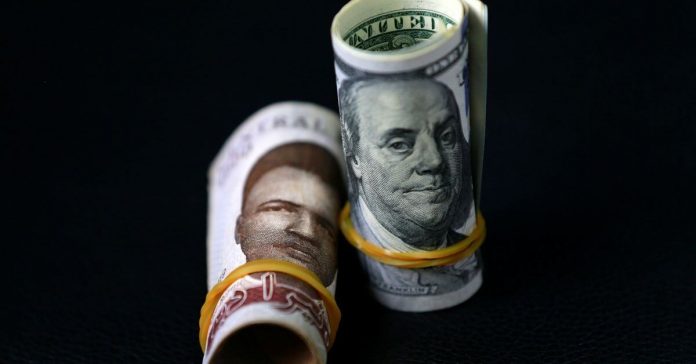
The challenge for Nigeria now is to earn US dollars.  Why?  We need to service debts: “According to the Central Bank of Nigeria (CBN), the country spent $9.8 billion, or 50% of its total dollar outflows, to service its foreign debts in that year. This was a significant increase from the $6.5 billion, or 35%, spent in 2022.”

Check… from 35% to 50%. That could get to 70%. Good People, these challenges are huge because if you have such debts on your balance sheet, your business could be doomed. Now, imagine a nation.

The real question today is this: how can we earn US dollars since these loans are running and America will not allow us to order the dollar-printers? That is a national essay topic I am proposing, and please send to the minister in charge of budget and economic planning.

How many Bitcoins does the US Government possess?

0

Bitcoin is a decentralized cryptocurrency that operates outside the control of any central authority. However, this does not mean that governments have no influence or interest in the Bitcoin network. In fact, some governments have acquired significant amounts of Bitcoin through various means, such as seizures, auctions, and mining.

One of the most prominent examples of a government holding Bitcoin is the United States. According to a recent report by Chainalysis, a blockchain analytics firm, the U.S. government holds an estimated 194,188 BTC, worth about $8.6 billion at the time of writing. This makes the U.S. government one of the largest holders of Bitcoin in the world, surpassing many institutional investors and hedge funds.

How did the U.S. government acquire so much Bitcoin? The majority of its holdings come from law enforcement actions against illicit actors who used Bitcoin for criminal activities, such as money laundering, drug trafficking, and cybercrime.

For instance, in 2013, the FBI seized 144,336 BTC from the online black-market Silk Road and its founder Ross Ulbricht, who is currently serving a life sentence in prison. The U.S. government later sold these Bitcoins in several auctions between 2014 and 2015, generating over $100 million in revenue.

Another notable source of Bitcoin for the U.S. government is the hack of Mt. Gox, once the largest Bitcoin exchange in the world. In 2014, Mt. Gox collapsed after losing 850,000 BTC to a cyberattack, leaving thousands of customers without access to their funds.

However, in 2018, a Japanese court ruled that Mt. Gox’s trustee, Nobuaki Kobayashi, had to return some of the recovered Bitcoins to the creditors of the exchange. As part of this process, Kobayashi transferred 35,841 BTC to the U.S. Department of Justice, which had been investigating the hack and pursuing legal action against some of the suspects.

The U.S. government also owns some Bitcoin that it mined itself. According to a report by Vice News in 2016, the Pentagon’s Defense Advanced Research Projects Agency (DARPA) had been running a Bitcoin node since 2014 and had accumulated about 1,000 BTC through mining rewards. The purpose of this project was to study the security and resilience of the Bitcoin network and to explore potential applications for blockchain technology in the military.

What does the U.S. government do with its Bitcoin holdings? The answer is not clear, as there is no official disclosure or transparency on how the government manages its cryptocurrency assets. However, some possible scenarios are:

The government could sell its Bitcoin on the open market or through auctions, as it did with the Silk Road Bitcoins, to generate revenue or to influence the price of Bitcoin.

The government could hold its Bitcoin as a strategic reserve or as a hedge against inflation or currency devaluation, similar to how some central banks hold gold or foreign currencies. The government could use its Bitcoin for diplomatic or geopolitical purposes, such as imposing sanctions, facilitating trade, or supporting allies or allies.

The government could donate its Bitcoin to charitable causes or public initiatives, such as disaster relief, education, or research. The government could lose or forget its Bitcoin due to technical errors, human mistakes, or organizational changes, as it has happened with some other digital assets.

The U.S. government’s involvement in Bitcoin is a complex and controversial topic that raises many questions and challenges for both policymakers and investors. As Bitcoin becomes more mainstream and valuable, it is likely that the government’s role and influence in the cryptocurrency space will increase and evolve over time.

Nigeria spent 50% of dollar outflows to service foreign debts in 2023

0

In 2023, Nigeria faced a serious challenge in managing its external debt obligations. According to the Central Bank of Nigeria (CBN), the country spent $9.8 billion, or 50% of its total dollar outflows, to service its foreign debts in that year. This was a significant increase from the $6.5 billion, or 35%, spent in 2022.

The main factors that contributed to this situation were the depreciation of the naira, the rise in global interest rates, and the impact of the COVID-19 pandemic on the economy. The naira lost about 20% of its value against the dollar in 2023, making it more expensive to repay foreign loans.

The global interest rates also increased as major economies recovered from the pandemic and tightened their monetary policies. This raised the cost of borrowing for Nigeria, which had to refinance some of its maturing debts at higher rates. The COVID-19 pandemic also affected the country’s revenue generation and economic growth, reducing its ability to service its debts.

The high debt service burden posed a serious threat to Nigeria’s macroeconomic stability and development prospects. It reduced the amount of foreign exchange available for other productive uses, such as imports of capital goods, raw materials, and intermediate inputs.

It also increased the risk of debt distress and default, which could damage the country’s credit rating and reputation in the international financial markets. It also constrained the fiscal space for public spending on social services, infrastructure, and human capital development.

To address this challenge, Nigeria needs to adopt a comprehensive and sustainable debt management strategy that balances its financing needs with its repayment capacity. This strategy should include:

Reducing the reliance on external borrowing and increasing domestic resource mobilization through tax reforms, improved revenue administration, and enhanced transparency and accountability.

Diversifying the sources and terms of external financing to reduce exposure to currency and interest rate risks. This could involve seeking more concessional loans from multilateral and bilateral partners, issuing longer-term bonds in local currency or other stable currencies, and exploring alternative financing options such as diaspora bonds, green bonds, and sukuk.

Negotiating with creditors for debt relief or restructuring where necessary to ease the debt service burden and create fiscal space for development spending. This could involve seeking moratoriums, grace periods, interest rate reductions, maturity extensions, or principal write-offs.

Strengthening the institutional and legal framework for debt management to ensure coordination, efficiency, and accountability. This could involve establishing a dedicated debt management office, enhancing the capacity of debt managers and analysts, developing a medium-term debt management strategy, and improving the quality and timeliness of debt data and reporting.

Ditching US Dollar for trade settlements is a top priority for Russia

0

Russia has announced that it will phase out the use of the US Dollar for trade settlements by the end of 2024, as part of its efforts to reduce its dependence on the American currency and to counter the effects of US sanctions. This is a major development that could have significant implications for the global economy and geopolitics.

Why is Russia ditching the US Dollar?

Russia has been gradually reducing its exposure to the US Dollar since 2014, when it faced a series of sanctions from the US and its allies over its annexation of Crimea and its involvement in the conflict in eastern Ukraine. The sanctions targeted Russia’s energy, banking, defense, and other sectors, limiting its access to international financing and trade.

In response, Russia adopted a policy of “de-dollarization”, which aimed to diversify its foreign exchange reserves, increase its use of other currencies such as the Euro, the Chinese Yuan, and its own Ruble, and promote bilateral and regional trade agreements that bypassed the US Dollar.

According to the Central Bank of Russia, the share of the US Dollar in Russia’s foreign exchange reserves fell from 46% in 2013 to 22% in 2020, while the share of the Euro rose from 24% to 32%, and the share of the Chinese Yuan rose from 1% to 12%. Russia’s motivation for de-dollarization is not only driven by sanctions, but also by a broader strategic vision of reducing its vulnerability to external shocks and increasing its economic sovereignty and security.

Russia views the US Dollar as a tool of American hegemony and influence, which can be used to exert pressure on other countries and interfere in their domestic affairs. By ditching the US Dollar, Russia hopes to weaken the US’s ability to impose sanctions and to challenge its global leadership.

What are the challenges for Russia?

While Russia has made significant progress in de-dollarizing its economy, it still faces several challenges and risks in achieving its goal. One of them is the inertia and preference for the US Dollar among its trading partners and investors.

The US Dollar remains the most widely used and accepted currency in international trade and finance, accounting for about 60% of global foreign exchange reserves, 40% of global payments, and 50% of global debt issuance. Many countries and businesses still prefer to use the US Dollar for convenience, stability, liquidity, and trust.

Another challenge is the potential backlash from the US and its allies, who may view Russia’s move as a threat to their interests and influence. The US may impose more sanctions on Russia or try to dissuade other countries from following its example.

The EU may also be concerned about Russia’s increasing reliance on the Euro, which could expose it to more volatility and political pressure from Moscow. Moreover, some countries may be reluctant to abandon the US Dollar for fear of losing access to the US market or facing retaliation from Washington.

A third challenge is the uncertainty and instability that may arise from a rapid shift away from the US Dollar. Such a shift could disrupt global trade and financial flows, create exchange rate fluctuations and inflationary pressures, and trigger a loss of confidence in the international monetary system.

It could also create coordination problems among countries that use different currencies or have diverging interests and preferences. For example, China may not share Russia’s enthusiasm for de-dollarization, as it benefits from maintaining a stable and cooperative relationship with the US.

What are the consequences for other countries and regions?

Russia’s decision to ditch the US Dollar could have significant consequences for other countries and regions, depending on their economic ties with Russia, their exposure to the US Dollar, and their geopolitical alignment with either Washington or Moscow. Here are some possible scenarios:

For China, Russia’s move could be seen as an opportunity to expand its economic cooperation and influence with Moscow, especially in areas such as energy, infrastructure, technology, and defense. China may also support Russia’s de-dollarization as part of its own efforts to internationalize its currency and challenge the US Dollar’s dominance.

However, China may also be cautious about aligning too closely with Russia or antagonizing the US too much, as it seeks to balance its interests and avoid a confrontation with Washington.

For Europe, Russia’s move could pose both challenges and opportunities. On one hand, Europe may face more pressure from Russia to use the Euro for trade settlements or risk losing access to Russian markets or resources. Europe may also face more volatility and uncertainty in its financial markets and exchange rates due to Russia’s de-dollarization.

On the other hand, Europe may benefit from increased demand for its currency and bonds from Russia and other countries that seek alternatives to the US Dollar. Europe may also have more leverage and influence over Russia in areas such as security, human rights, and climate change.

For the Middle East, Russia’s move could have mixed implications. Some countries, such as Iran, Syria, and Turkey, may welcome Russia’s de-dollarization as a way to reduce their dependence on the US and to strengthen their ties with Moscow. These countries may also follow Russia’s example and use other currencies for trade settlements or create their own regional payment systems.

Other countries, such as Saudi Arabia, the UAE, and Israel, may be wary of Russia’s de-dollarization as a threat to their strategic partnership with the US and to their stability and security in the region. These countries may also face more competition from Russia in the global energy market.

For the rest of the world, Russia’s move could have varying effects depending on their economic and political situation. Some countries, such as India, Brazil, and South Africa, may see Russia’s de-dollarization as an opportunity to diversify their foreign exchange reserves and trade partners, and to enhance their economic autonomy and resilience.

Other countries, such as Japan, Australia, and Canada, may see Russia’s de-dollarization as a challenge to their alliance with the US and to their role in the global economy and governance.

Of course, for individuals and businesses affected by international sanctions, consulting with sanctions solicitors can provide essential guidance and support. These legal experts specialize in navigating the complexities of sanctions law and can help protect your interests in this evolving landscape.