DD
MM
YYYY

PAGES

DD
MM
YYYY

spot_img

PAGES

Home Blog Page 381

Implications of $1 Trillion Shifting from Emerging Market Bank Deposits to US Stablecoins by 2028

0

Analysts Geoffrey Kendrick and Madhur Jha project that up to $1 trillion could shift from emerging market (EM) bank deposits into US dollar-pegged stablecoins by the end of 2028.

This reflects growing demand for stablecoins as a hedge against local currency volatility, inflation, and limited access to traditional USD accounts. Approximately $173 billion two-thirds of the global stablecoin supply is already held in EM savings wallets.

Forecast by 2028: EM stablecoin savings could reach $1.22 trillion, driving over $1 trillion in outflows from EM banks. Global Stablecoin market is expected to hit $2 trillion by end-2028, with EMs accounting for the majority of growth.

Stablecoins like USDT and USDC offer: Low-friction USD exposure: Users can hold digital dollars via mobile wallets, bypassing local banks’ credit risks and restrictions.

24/7 accessibility: Ideal for remittances, payments, and savings in high-inflation environments. Even without yields prohibited for US-compliant issuers under the recently passed GENIUS Act, stability trumps returns for many users.

The report anticipates broader retail adoption, evolving from large institutional wallets to millions of small household holdings.Most Vulnerable EM CountriesStandard Chartered highlights nations with high inflation, weak reserves, and large remittance inflows as prime candidates for deposit flight.

Larger EMs like India, China, Brazil, and South Africa are also flagged for accelerating adoption, potentially disrupting traditional banking. Shrinking deposits could erode fee income from FX and payments, but opportunities exist in stablecoin custody and treasury services.

EM authorities may accelerate digital currency pilots to compete, as stablecoins enable cheaper cross-border transfers. This “trillion-dollar migration” could mark one of the decade’s largest shifts in global savings, from fiat banks to blockchain-based systems.

Banks may lose fee income from foreign exchange (FX) transactions, cross-border payments, and remittance services as stablecoins offer cheaper alternatives. Banks could pivot to offering stablecoin custody, wallet integration, or treasury services to remain competitive.

Reduced deposits may weaken bank balance sheets, especially in vulnerable EMs like Egypt, Pakistan, or Sri Lanka, potentially triggering financial instability. Increased demand for USD-pegged stablecoins could exacerbate pressure on local currencies, worsening inflation or devaluation in countries with weak reserves.

As savings shift to stablecoins, central banks may struggle to manage money supply and interest rates, complicating monetary policy. Stablecoins’ ease of transfer could accelerate capital outflows, especially in crisis-prone economies like Sri Lanka or Colombia.

EM regulators may fast-track central bank digital currencies (CBDCs) to compete with private stablecoins, offering state-backed digital alternatives. Countries may impose restrictions on stablecoin use to protect banking systems, though enforcement could be challenging due to decentralized platforms.

Governments may introduce taxes or KYC/AML requirements for stablecoin transactions to retain some control over capital flows. Stablecoins provide low-cost, 24/7 access to USD exposure, benefiting unbanked populations and those in high-inflation environments.

Stablecoins could dominate remittance markets in Bangladesh, Pakistan cutting costs compared to traditional services like Western Union. Retail adoption could grow from institutional wallets to millions of household users, fundamentally altering how savings are stored and transferred.

Widespread stablecoin adoption would further entrench the US dollar’s role in global finance, as most stablecoins are USD-pegged. A $2 trillion global stablecoin market with $1.22 trillion from EMs would accelerate blockchain infrastructure adoption, from wallets to DeFi platforms.

Countries reliant on USD stablecoins may face reduced financial sovereignty, while the US could gain indirect influence over EM economies. Stablecoin issuers like Tether, Circle face scrutiny over reserve backing and stability, with potential for runs if trust erodes.

The US GENIUS Act passed recently prohibits yield-bearing stablecoins, which could limit their appeal compared to interest-bearing bank deposits. Increased retail adoption raises risks of hacks, scams, or wallet vulnerabilities, particularly in less tech-savvy EM populations.

Stablecoins could streamline trade in EMs, reducing reliance on costly SWIFT-based systems. EM banks could partner with stablecoin providers to offer hybrid services, blending fiat and crypto ecosystems.

This shift could redefine global savings, with EMs leading a transition to blockchain-based systems. However, it also poses risks of financial disruption if not managed carefully.

F1® Team Bets on BlockDAG: Why BDAG Might Be the Best Crypto to Buy Right Now, Beating DOT, BNB, & HYPE!

0

Crypto is shifting gears again, and this time, projects with real delivery are taking the lead. Testnets are going live, partnerships are getting global visibility, and investors are looking for coins that prove their worth beyond promises. It’s not about quick flips anymore; it’s about joining something that’s actually building momentum.

Among the names lighting up the track, BlockDAG is leading the charge with a Formula 1® partnership and a live testnet already humming. But Polkadot, Binance Coin, and Hyperliquid aren’t far behind, each running its own strong laps. If you’re scanning for the best crypto to buy right now, these four are the standouts, but only one is really crossing the finish line in full throttle. 

1. BlockDAG: The F1® Backed Powerhouse of 2025!

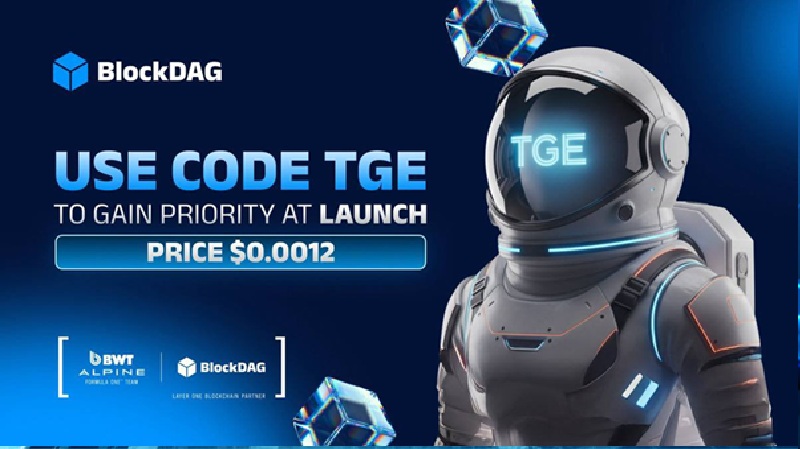
BlockDAG has pulled off what few presales ever manage, delivering before launching. Its multi-year partnership with the BWT Alpine Formula 1® Team gives it unmatched mainstream visibility, and its Awakening Testnet proves the network is live and working. Buyers have poured in over $420 million, and now the network has locked the BDAG price at $0.0012! Moreover, BlockDAG has introduced a new limited-time TGE code.

Code “TGE” allows early access at launch, depending on your rank:

1– 300 Rank: Instant Airdrop

301 – 600 Rank: Airdrop after 30 min

601 – 1000 Rank: Airdrop after 60 min

1001 – 1500 Rank: Airdrop after 2 h

1501 – 2000 Rank: Airdrop after 4 h

2001 – 5000 Rank: Airdrop after 6 h

5001 Rank: Airdrop after 24 h

Moreover, the F1® partnership activation in Singapore wasn’t just another crypto event; it featured the team’s official F1® car, driver meet-ups, fan simulators, and live demos of BlockDAG’s blockchain tools. The project is now part of every Grand Prix weekend, connecting its tech to millions of fans worldwide through on-track zones, hackathons, and developer showcases. It’s a rare mix of utility and spectacle.

With its 1,400 TPS speed, EVM-compatible architecture, and planned gasless transactions via EIP-4337, BlockDAG is positioning itself for scale. Add the F1® exposure, a thriving community of miners and developers, and nearly half a billion dollars raised, and it’s easy to see why BlockDAG is steering ahead of the rest. Among the best cryptos to buy right now, BDAG isn’t just accelerating, it’s already lapping the field. 

2. Polkadot: Multi-Chain Power and ETF Buzz

Polkadot (DOT) has found a new spark heading into Q4 2025. Its price jumped from $3.88 to $4.30, confirming renewed investor confidence as governance reforms tightened treasury oversight and the long-awaited ETF application moved closer to approval. The ETF, filed through 21Shares, is now DTCC-listed, a procedural step that could bring institutional flows into DOT within weeks.

The buzz doesn’t stop there. The proposed pUSD stablecoin is under community review, which could finally give Polkadot its own DeFi backbone. The Web3 Foundation’s transparency revamp and milestone-based project funding also mark a cultural reset toward discipline and clarity. Traders see Polkadot consolidating around $4.10 support with room to climb toward $4.50 if the ETF gets the nod.

With multi-chain interoperability still its core strength and stronger governance taking shape, Polkadot remains one of the best cryptos to buy right now for investors looking beyond hype. It’s a project that has weathered cycles and still keeps innovating quietly, not fast like F1® speed, but steady enough to keep finishing on the podium.

3. Binance Coin: The Utility Engine That Never Slows

Binance Coin (BNB) isn’t new, but it keeps rewriting what sustainability looks like in crypto. Trading near $1,172 in October 2025, BNB has climbed past the four-figure mark thanks to strong demand, frequent token burns, and Binance’s unmatched ecosystem reach. Every staking reward, launchpad entry, and trading fee cycle keeps the token in motion, like the engine that never cools.

The BNB Smart Chain (BSC) still dominates on-chain activity, hosting one of the largest pools of daily transactions and decentralized exchanges. Analysts are eyeing $1,500 as the next potential milestone if this momentum holds through “Uptober.” With its deflationary supply and wide real-world utility, BNB sits comfortably in almost every long-term portfolio conversation.

Even though it’s a large-cap asset, BNB’s consistency and resilience give it a unique appeal among the best crypto to buy right now. While other tokens chase visibility, BNB’s ecosystem does the heavy lifting, quietly powering most of Web3’s busiest roads.

4. Hyperliquid: High Leverage Meets High Volume

Hyperliquid (HYPE) has built a name as the traders’ favorite, a decentralized exchange moving billions in perpetuals while pushing innovation at breakneck speed. Hovering around $35 to $50, HYPE remains a top-performing DeFi token, backed by over $1.57 trillion in annual trading volume. That’s no small feat for a platform that went live less than two years ago.

Recent headlines keep the hype literal: Circle integrated native USDC on Hyperliquid’s EVM and Core chains, enabling faster settlements and deeper liquidity. Plans for a native stablecoin (USDH) are also in motion, potentially creating self-contained liquidity loops for leveraged trading. Meanwhile, proposals like HIP-4 aim to embed “event perpetuals”, hybrid prediction markets that remove reliance on external oracles.

Institutional players are also entering the pit lane, with firms such as Lion Group and Hyperliquid Strategies Inc. announcing treasuries exceeding $500 million each. With huge leverage options (up to 40×) and a culture of innovation, HYPE deserves a slot on any best crypto to buy right now checklist, especially for traders who like living life in the fast lane.

The Bottom Line

When you stack up Polkadot’s governance push, Binance Coin’s consistency, and Hyperliquid’s DeFi dominance, it’s clear crypto isn’t short of solid contenders. These three bring real movement to the market and justify their inclusion among the best cryptos to buy right now; they’re all strong, purposeful projects with room to grow.

But BlockDAG is in a league of its own. With its BWT Alpine Formula 1® Team partnership, live Awakening Testnet, a $420M+ crypto presale, and a special $0.0012 price, it’s turning potential into visible delivery. It’s not waiting for mainnet or headlines; it already has both.

Every Grand Prix weekend becomes another billboard for blockchain adoption. For investors chasing speed, scale, and story, BlockDAG isn’t just another entry; it’s the one crossing the line first, proving it’s the best crypto to buy right now before the rest even hit full throttle.


Ondo Finance Completes Acquisition of Oasis Pro

0

Ondo Finance, a leading real-world asset (RWA) tokenization platform managing over $1.6 billion in assets, finalized its acquisition of Oasis Pro, a U.S.-based SEC-registered broker-dealer, Alternative Trading System (ATS), and Transfer Agent (TA).

This move provides Ondo with a comprehensive suite of U.S. regulatory licenses to expand its tokenized securities offerings, bridging traditional capital markets with blockchain infrastructure. The deal was initially announced on July 4, 2025, with completion confirmed last week. Financial terms were not disclosed.

Oasis Founded in 2019 and backed by investors like Mirae Asset Ventures, Oasis Pro specializes in the issuance, transfer, and secondary trading of tokenized RWAs, including equities, corporate debt, and structured products. It was one of the first U.S. firms authorized for digital securities settlement in both fiat and stablecoins.

Ondo enables regulated tokenized equity trading and 24/7 on-chain access to over 100 U.S. stocks and ETFs, initially launched on Ethereum for non-U.S. investors in regions like Asia, Europe, Africa, and Latin America.

Strengthens Ondo’s existing products, such as tokenized U.S. Treasurys (OUSG) and yield-bearing USDY tokens. Positions Ondo ahead of competitors like Robinhood, Kraken, Coinbase, and Gemini in the growing RWA tokenization space, where over $12 billion is currently locked in protocols.

Pat LaVecchia, CEO of Oasis Pro, has joined Ondo Finance to lead the combined operations. Nathan Allman, CEO of Ondo Finance: “This acquisition unlocks the next major chapter of tokenized finance… We now have the most comprehensive suite of licenses and infrastructure necessary to develop compliant and regulated tokenized securities markets in the U.S.”

Pat LaVecchia, Former CEO of Oasis Pro: “This acquisition combines our brokerage platform and licenses with Ondo’s existing institutional-grade infrastructure and products, [creating] a comprehensive foundation for a regulated tokenized securities ecosystem.”

The acquisition aligns with surging interest in tokenized assets. A joint Ripple-Boston Consulting Group report projects the market could exceed $18 trillion by 2033, driven by benefits like faster settlements, programmable ownership, and global access.

Ondo recently launched the Ondo Catalyst fund with Pantera Capital, committing $250 million to RWA projects, further signaling its aggressive expansion.This development underscores Ondo’s commitment to compliant, on-chain finance, potentially accelerating mainstream adoption of tokenized securities in the U.S.

The acquisition enables Ondo to expand its tokenized U.S. stock and ETF offerings to non-U.S. investors in regions like Asia, Europe, Africa, and Latin America. This positions Ondo as a global leader in providing 24/7 on-chain access to traditional financial assets.

With over $1.6 billion in assets under management and now a full suite of regulatory licenses, Ondo is positioned ahead of competitors like Robinhood, Kraken, Coinbase, and Gemini in the tokenized RWA market. This acquisition strengthens its ability to capture a significant share of the projected $18 trillion tokenized asset market by 2033.

Combining Oasis Pro’s brokerage and trading capabilities with Ondo’s existing blockchain infrastructure such as tokenized Treasurys like OUSG and USDY creates a robust, end-to-end platform for issuing, trading, and settling tokenized securities.

Ondo can now offer tokenized versions of over 100 U.S. stocks and ETFs, enabling fractional ownership, faster settlements, and programmable features on blockchain. This appeals to both retail and institutional investors seeking efficient, accessible investment options.

Oasis Pro’s ability to settle transactions in stablecoins alongside fiat enhances Ondo’s flexibility, catering to crypto-native and traditional investors alike. The acquisition opens opportunities for Ondo to generate fees from trading, custody, and transfer services for tokenized securities, diversifying its revenue beyond existing products.

By integrating regulated financial infrastructure with blockchain technology, Ondo is well-positioned to bridge traditional finance (TradFi) and decentralized finance (DeFi). This could attract institutional players hesitant to engage with unregulated crypto platforms.

The acquisition signals to investors and regulators that tokenized RWAs are maturing as a legitimate asset class, potentially encouraging broader participation from banks, asset managers, and retail platforms.

The acquisition complements Ondo’s $250 million RWA-focused fund with Pantera Capital, enabling faster deployment of capital into tokenized projects and reinforcing Ondo’s role as a catalyst for RWA innovation.

Ondo’s strengthened position may pressure other crypto and fintech platforms to pursue similar acquisitions or partnerships to secure regulatory licenses and compete in the tokenized RWA space.

The successful integration of a regulated broker-dealer into a blockchain-native platform could serve as a model for other firms, potentially influencing U.S. regulators to clarify or expand rules around tokenized assets.

As Ondo scales its offerings, it could drive increased liquidity and adoption in the $12 billion+ tokenized RWA market per DeFiLlama, spurring innovation in areas like programmable securities, cross-border trading, and DeFi integrations.

Merging Oasis Pro’s operations with Ondo’s blockchain infrastructure may present technical and operational challenges, requiring significant investment in systems and personnel. The crypto and RWA markets remain volatile, and any downturn could affect investor confidence in tokenized assets, impacting Ondo’s growth.

Ondo Finance’s acquisition of Oasis Pro positions it as a frontrunner in the tokenized RWA market, with enhanced regulatory capabilities, expanded product offerings, and a stronger bridge between TradFi and DeFi. The move could accelerate the adoption of tokenized securities, reshape competitive dynamics, and set a precedent for regulated blockchain finance.

Galaxy Digital Launches GalaxyOne: A Unified Platform for Crypto, Stocks, and High Yields

0

Galaxy Digital Holdings Ltd, the crypto-focused financial services firm led by Mike Novogratz, officially launched GalaxyOne, a retail-oriented super-app designed to bridge traditional finance and digital assets for U.S. users.

This marks Galaxy’s major push into the consumer market, building on its institutional expertise in crypto lending and trading. The platform is available nationwide via mobile app and web, and it’s built on the technology from Fierce, a fintech startup Galaxy acquired for $12.5 million in December 2024.

GalaxyOne combines yield-generating accounts, crypto trading, and stock/ETF brokerage into a single, seamless interface. FDIC-insured high-yield savings account via Cross River Bank up to $250,000 insured. Interest calculated daily and auto-reinvestable into crypto like BTC, ETH.

Structured investment note backed by Galaxy’s $1.1B institutional lending book. Minimum $25K investment, max $1M per user overall program cap: $250M. Interest paid monthly into Cash account. Up to 8.00% APY for accredited U.S. investors only.

Not FDIC-insured; requires income/net worth eligibility (e.g., $200K+ annual income or $1M+ net worth). Powered by Galaxy’s lending operations—no teaser rates.

GalaxyOne Crypto

Trade and custody major digital assets, starting with Bitcoin (BTC), Ethereum (ETH), Solana (SOL), and Paxos Gold (PAXG). Custody via regulated partner Paxos. The platform emphasizes simplicity and automation—e.g., you can earn yield on idle cash and instantly reinvest into crypto or stocks without switching apps.

All crypto assets are held in regulated custodial wallets, and the app prioritizes security with features like two-factor authentication and real-time monitoring. This launch positions GalaxyOne as a direct rival to apps like Robinhood, Coinbase, SoFi, and Cash App, which also blend crypto, stocks, and banking.

Galaxy’s institutional-grade yields tied to its proven lending desk and crypto depth, appealing to yield-hungry users in a low-interest-rate environment. Post-announcement, Galaxy Digital’s stock surged 8% to around $15.20, reflecting investor optimism about retail expansion.

Early buzz on X highlights the yields and ease of use, with users calling it a “Robinhood killer” for crypto natives. However, the 8% tier’s accreditation barrier limits it to high-net-worth individuals, while the 4% cash option is broadly accessible. High volatility; potential for total principal loss. Not FDIC/SIPC insured.

Yields: 8% APY involves lockup risks and is unsecured; rates could fluctuate with market conditions. Fully compliant for U.S. users, but international access is unavailable at launch. The launch of GalaxyOne by Galaxy Digital has significant implications across retail investing, the crypto industry, and the broader financial landscape.

Combining crypto trading, stock/ETF brokerage, and high-yield savings in one app lowers barriers for retail users who might otherwise juggle multiple platforms such as Coinbase for crypto, Fidelity for stocks, Marcus for savings. This could shift user behavior toward unified fintech apps, intensifying competition with Robinhood, SoFi, and Cash App.

The 8% yield’s restriction to accredited investors requiring $200K+ income or $1M+ net worth reinforces wealth inequality in access to high-yield opportunities. Non-accredited users are capped at 4%, which, while solid, may feel exclusionary, potentially sparking demand for more inclusive structured products.

GalaxyOne’s regulated, user-friendly interface built on Fierce’s tech could accelerate crypto adoption by making digital assets as accessible as stocks. Auto-reinvestment of yields into Bitcoin or Ethereum simplifies entry for non-crypto natives, potentially onboarding millions to crypto markets.

Leveraging Galaxy’s $1.1B institutional lending book for yields and Paxos for custody adds trust, addressing concerns about crypto scams or exchange failures (e.g., FTX). This could pull users from less-regulated platforms, especially post-2022 crypto scandals.

Starting with major assets BTC, ETH, SOL, PAXG and promising more tokens, GalaxyOne could drive trading volume and liquidity in the crypto market. Planned staking/lending features may further integrate DeFi-like yields into a regulated framework, appealing to risk-averse retail users.

GalaxyOne’s zero-spread crypto trading and commission-free stock trading directly challenge Robinhood and Coinbase, which rely on spread-based revenue or higher fees. The 8% yield also outpaces most fintech savings accounts. Rivals may need to innovate or cut fees to compete.

Traditional banks, already struggling with low savings rates, face further erosion as GalaxyOne’s 4% FDIC-insured account offers better returns with crypto upside. This could force banks to rethink retail offerings or partner with crypto firms.

Galaxy Digital’s 8% stock surge post-launch to ~$15.20 signals investor confidence in its retail pivot. If GalaxyOne captures significant market share, it could elevate Galaxy’s valuation and influence in fintech, potentially sparking M&A activity in the crypto-fintech space.

The 8% yield’s unsecured nature and crypto’s volatility introduce risks. A market downturn or lending defaults could dent Galaxy’s lending book, impacting yields or investor confidence. Retail users new to crypto may also misjudge risks, necessitating clear disclosures.

The $250M cap on the Premium Yield program and $1M per-user limit suggest constrained capacity, potentially capping growth unless Galaxy expands its lending operations. Regulatory caps on uninsured products could also hinder scaling.

With global interest rates still low in many markets, GalaxyOne’s high yields could pull capital from traditional savings or bonds, redirecting it to crypto-backed products. This might amplify crypto’s role in retail portfolios but also heighten systemic risk if markets crash.

The app’s sisimplicity like the auto-reinvesting yields into crypto could educate retail users about digital assets, fostering financial literacy but also raising concerns about overexposure to volatile markets without adequate risk warnings.

Planned features like DeFi integrations and advanced analytics could make GalaxyOne a hub for sophisticated retail investors, potentially integrating AI-driven tools like those from xAI for portfolio management.

GalaxyOne’s launch is a bold step toward mainstreaming crypto within a regulated, user-friendly platform, challenging fintech incumbents and banks alike. Its high yields and all-in-one design could drive retail adoption, but risks like crypto volatility, regulatory shifts, and exclusivity barriers loom.

Bernstein Initiates Coverage on Figure Technologies (FIGR)

0

Analysts at Bernstein Research launched coverage of Figure Technologies (NASDAQ: FIGR), a blockchain-based lending platform, with an “Outperform” rating and a $54 price target. This implies approximately 35% upside potential from the stock’s closing price of $40 on Friday, October 3, 2025

Following the note, FIGR shares rose about 6% in early trading on Monday, reaching around $42.76. Bernstein positions Figure as a pioneering force in tokenizing real-world assets (RWAs), particularly in the credit markets, drawing parallels to how stablecoins revolutionized payments.

The firm argues that blockchain tokenization will “digitize and disintermediate” the $2 trillion+ U.S. consumer lending market by enabling faster, more efficient transactions without heavy reliance on intermediaries

Figure holds ~75% share of the $17 billion tokenized private credit market, making it the dominant player. Overall, ~$33 billion in RWAs excluding stablecoins are currently tokenized on blockchains, with private credit leading the charge.

Figure’s Provenance blockchain and Connect marketplace transform traditional “balance-sheet heavy” lending into a “capital-light” model. This reduces operating costs by over 90% and loan turnaround times by ~75%, allowing investors direct access to tokenized consumer loans.

Bernstein forecasts 30% annual revenue growth, from $341 million in 2024 to $754 million by 2027. Earnings are expected to quadruple to $427 million, with margins expanding from 30% to 57%

Founded in 2018 by former SoFi CEO Mike Cagney, Figure originated $5.1 billion in home equity line of credit (HELOC) loans in 2024, capturing 13% of the non-bank market. Analysts predict this share will grow to 25% by 2027, with tokenization extending to equities and other assets

At current levels, FIGR trades at ~19x EV/2027 EBITDA and 30x P/E—a premium multiple justified by its first-mover advantage, profitability, and exposure to the booming RWA tokenization trend. The $54 target suggests a ~$11.5 billion market cap

Figure went public in early September 2025, pricing its IPO at $25 per share and raising nearly $788 million at a $787.5 million valuation. Shares have since surged ~75%, reflecting strong market enthusiasm for blockchain’s role in traditional finance.

This coverage aligns with a wave of bullish initiations from firms like Goldman Sachs, Piper Sandler, and Mizuho, underscoring Figure’s potential as “the Nasdaq of blockchain-based lending.”

The $54 price target implies ~35% upside from the October 3, 2025, closing price of $40, signaling strong confidence in Figure’s growth. The 6% stock price increase to ~$42.76 on October 6 reflects immediate market enthusiasm.

Trading at ~19x EV/2027 EBITDA and 30x P/E, Figure commands a premium due to its first-mover advantage in tokenized lending. Investors may see this as validation of its high-growth potential, though some may question the rich valuation.

Combined with bullish coverage from firms like Goldman Sachs and Piper Sandler, Bernstein’s note could attract more institutional and retail investors, potentially driving further stock gains.

Bernstein’s framing of Figure as a leader in tokenizing real-world assets (RWAs) underscores blockchain’s growing role in transforming the $2 trillion+ U.S. consumer lending market. This could accelerate institutional adoption of blockchain for credit products.

Figure’s Provenance blockchain and Connect marketplace reduce reliance on traditional intermediaries, cutting costs by over 90% and loan turnaround times by ~75%. This efficiency could pressure legacy lenders to adopt similar technologies or lose market share.

With ~$33 billion in tokenized RWAs excluding stablecoins and Figure’s 75% share of the $17 billion tokenized private credit market, the firm is well-positioned to capture growth as tokenization extends to equities and other assets.

Bernstein’s forecast of 30% annual revenue growth from $341M in 2024 to $754M by 2027 and earnings quadrupling to $427M with 57% margins highlights Figure’s scalable, capital-light model. This could make FIGR a compelling growth stock.

Figure’s 13% share of the non-bank HELOC market in 2024, projected to reach 25% by 2027, positions it as a leader in a high-demand segment, especially as home equity lending grows amid high interest rates.

Figure’s dominance in tokenized private credit gives it a head start, but competitors may emerge as blockchain adoption grows. Established fintechs or banks could challenge Figure if they invest heavily in similar platforms.

While blockchain offers efficiency, regulatory scrutiny of tokenized assets and decentralized finance (DeFi) could pose challenges. Figure’s ability to navigate regulations will be critical to maintaining its edge.

Figure’s success could inspire other fintechs to integrate blockchain, accelerating the convergence of traditional finance and DeFi. This may lead to new business models and investment opportunities.

Bernstein’s view of Figure as “the Nasdaq of blockchain-based lending” suggests tokenized platforms could redefine capital markets, making them more accessible, liquid, and efficient. This could attract significant capital inflows to blockchain-focused firms.

The projected growth of tokenized RWAs could shift investor attention toward companies like Figure, driving capital toward blockchain innovators and potentially creating a new asset class.

Achieving 30% revenue growth and 25% HELOC market share requires flawless execution, including technological reliability and customer adoption. High interest rates or economic slowdowns could dampen demand for HELOCs, impacting Figure’s growth trajectory.

Bernstein’s bullish outlook reinforces Figure’s position as a trailblazer in blockchain-based lending, with significant implications for its stock performance, the adoption of tokenized assets, and the evolution of credit markets. Investors may see FIGR as a high-growth opportunity, but risks like regulation and competition warrant caution.