DD
MM
YYYY

PAGES

DD
MM
YYYY

spot_img

PAGES

Home Blog Page 3814

Nigeria Accounted For The Highest Remittance Flow Into Sub-Saharan Africa in 2022 – World Bank

0

According to a report by the World Bank, Africa’s most populous nation Nigeria, accounted for the highest remittance flow into sub-Saharan Africa in 2022.

Remittance flow into the region reached $53 billion, and Nigeria accounted for 38% ($20.1 billion), followed by Ghana and Kenya with $4.7 and $4.1 billion respectively.

Zimbabwe recorded $3.1 billion, followed by Senegal at $2.5 billion, the Democratic Republic of Congo at $1.7 billion, Sudan at $1.5 billion, Uganda at $1.3 billion, Mali at $1.1 billion, and South Africa at $900 million.

Remittance flows to Sub-Saharan Africa grew by 6.1% in 2022 to $53 billion. The trend was largely driven by strong remittance growth in Nigeria (38%), Ghana (12%), Kenya (8.5%), Tanzania (25%), Rwanda (21%), and Uganda (17%).

Meanwhile, growth in remittances to the Middle East and North Africa fell by 3.8% to $64 billion in 2022 after posting strong growth of 12.2% in 2021. Economies in the region that saw slight gains in remittance flows included several Maghreb countries.

However, according to the World Bank report, the overall rise in remittances to the Sub-Saharan region helped several struggling African nations that are grappling with drought, floods, and debt servicing issues.

Also, the World Bank stated that compared to foreign direct investment (FDI), official development assistance (ODA), and portfolio investment flows, remittances have continued to represent an even larger source of external finance for MICs over the past year.

This is to say that remittances have become several of these countries’ most important foreign exchange earners.

Globally, the average cost of sending $200 was 6.2% in the fourth quarter of 2022, up slightly from 6% a year ago, and more than twice the Sustainable Development Goal target of 3%, according to the Bank’s Remittances Price Worldwide Database.

The World Bank revealed that Banks are the costliest channel for sending remittances, with an average cost of 11.8%, followed by post offices (6.3%), money transfer operators (5.4%), and mobile operators (4.5%). While mobile operations are the cheapest, they account for less than 1% of total transaction volume.

In 2023, remittance inflows are projected to grow by 1.7% with the outlook differentiated across regional subgroups depending on dominant host countries and the degree of exposure to higher inflation and financial volatility.

It is worth noting that while remittance flow in Africa has multifaceted impacts, ranging from economic stability to poverty reduction and improved access to healthcare, governments in this region must also consider how to manage the challenges associated with remittances to ensure their positive effects are maximized.

In this light, the Central Bank of Nigeria (CBN) has continued to urge Nigerians abroad to consider eNaira as a payment option for diaspora remittances.

In a circular addressed to the International Money Transfer Operators (IMTOs) and the public and signed by CBN’s director of Trade and Exchange Department, Ozoemena Nnaji, the CBN noted that the move was in furtherance of efforts to liberalize the payout of diaspora remittances.
MicroStrategy has over $520M unrealized loss on its Bitcoin investment, As Bitmain plans to Invest in Core Scientific

0

One of the most prominent advocates of Bitcoin in the corporate world is Michael Saylor, the CEO of MicroStrategy, a business intelligence software company. Saylor has been vocal about his belief that Bitcoin is the ultimate store of value and a hedge against inflation. He has also led his company to invest heavily in Bitcoin, buying more than 100,000 coins since August 2020.

However, not everything is rosy for MicroStrategy and its Bitcoin bet. According to a recent report by Bloomberg, the company currently has a $520 million unrealized loss on its Bitcoin investment, as the price of the cryptocurrency has fallen sharply from its all-time high of nearly $65,000 in April 2021. As of September 26, 2021, Bitcoin was trading at around $43,000, which means that MicroStrategy’s average cost of $26,080 per coin is higher than the current market value.

This does not seem to deter Saylor from his bullish stance on Bitcoin. He has repeatedly stated that he is not concerned about the short-term volatility of the market, and that he views Bitcoin as a long-term asset that will appreciate over time. He has also said that he plans to buy more Bitcoin whenever he can, and that he will not sell any of his holdings.

Saylor’s confidence in Bitcoin may be admirable, but it also exposes his company to significant risks. MicroStrategy’s balance sheet is now heavily dependent on the performance of Bitcoin, which is notoriously unpredictable and volatile. The company also faces regulatory uncertainty, as some governments around the world are cracking down on cryptocurrencies or imposing stricter rules on their use and taxation. Moreover, MicroStrategy may face competition from other companies that are also investing in Bitcoin or other digital assets, such as Tesla, Square, or Coinbase.

MicroStrategy’s Bitcoin investment may turn out to be a brilliant move in the long run, if Saylor’s vision of Bitcoin becoming a global reserve asset comes true. However, in the short term, the company may have to endure more losses and challenges as it navigates the turbulent waters of the crypto market.

Bitcoin mining rig maker Bitmain plans to invest $54 million in bankrupt Core Scientific

Bitmain, one of the world’s largest manufacturers of cryptocurrency mining hardware, has announced that it will invest $54 million in Core Scientific, a US-based company that filed for bankruptcy in July. The investment is part of Bitmain’s strategy to expand its presence and influence in the North American market, where it faces stiff competition from other players such as MicroBT and Canaan.

According to a press release, Bitmain will acquire a 9.9% stake in Core Scientific, which will continue to operate as an independent entity under the leadership of its current CEO, Mike Levitt. Core Scientific is one of the largest providers of blockchain hosting and digital asset mining services in North America, with over 70,000 mining machines and 300 megawatts of power capacity across four states.

The deal will also strengthen the partnership between Bitmain and Core Scientific, which have been collaborating since 2019. Core Scientific is the largest customer of Bitmain’s Antminer series of mining rigs, and also offers repair and maintenance services for Bitmain’s products in North America. Bitmain said that it will leverage Core Scientific’s expertise and infrastructure to provide better service and support to its customers in the region.

Bitmain’s investment in Core Scientific comes at a time when the global cryptocurrency mining industry is undergoing a major shift, following China’s crackdown on mining activities earlier this year. Many miners have relocated their operations to other countries, such as the US, Canada, Kazakhstan, and Russia, where they can access cheaper and more reliable sources of energy. Bitmain said that it is committed to supporting the growth and development of the mining ecosystem in North America, which it considers to be one of the most important markets for its business.

Binance, Outlier Ventures, Linear Finance, Sam Bankman-Fried, Other Crypto News

0

Binance, one of the world’s leading cryptocurrency exchanges, has recently taken part in a discussion with the European Banking Authority (EBA) on the proposed Markets in Crypto-Assets (MiCA) regulation. The discussion aimed to provide feedback and insights from the crypto industry on how to foster innovation and consumer protection in the digital asset space.

Binance shared its views on topics such as the scope and definitions of MiCA, the authorization and supervision of crypto-asset service providers, the issuance and governance of crypto-assets, and the prevention of market abuse and manipulation. Binance expressed its support for a harmonized and balanced regulatory framework that would enable the growth and development of the crypto ecosystem in Europe, while ensuring a high level of security and transparency for users.

The US Court of Appeals has denied the request of Samuel Bankman-Fried, the founder and CEO of FTX, to be released from custody pending his trial. Bankman-Fried is facing charges of securities fraud, market manipulation and money laundering related to his involvement in the GameStop stock frenzy earlier this year. The court ruled that Bankman-Fried posed a flight risk and a danger to the community, and that no conditions of release could reasonably assure his appearance in court or the safety of others.

Bankman-Fried’s lawyers argued that he is a respected businessman who has cooperated with the authorities and has no criminal history. They also offered to post a $100 million bond and surrender his passport. However, the court was not convinced by these arguments and upheld the decision of the lower court to keep him in jail until his trial date, which is scheduled for next month.

Outlier Ventures, a leading venture platform for the open metaverse, has announced a major leadership change. Stephan Apel, who joined the company in 2019 as Chief Operating Officer, has been appointed as the new Chief Executive Officer. He will be responsible for driving the company’s vision, strategy and growth in the emerging metaverse economy.

Jamie Burke, the founder and former CEO of Outlier Ventures, will transition to the role of Chairman. He will focus on supporting the company’s portfolio of over 50 Web3 projects and leading its thought leadership initiatives.

Linear Finance, a decentralized finance (DeFi) protocol that allows users to create and trade synthetic assets, has announced that it was the victim of a cyberattack that resulted in the loss of USD liquidity from its pools.

According to a post-mortem report published by the team, the attacker exploited a vulnerability in the protocol’s reward distribution logic, which allowed them to claim excessive amounts of USD rewards and then sell them on the market. The team estimates that the attacker drained about $7.6 million worth of USD from the protocol, causing a significant drop in its price and liquidity.

A federal judge has ruled that some of the witnesses subpoenaed by the defense team of Sam Bankman-Fried, the founder and CEO of FTX, will not be allowed to testify in his upcoming trial. Bankman-Fried is facing charges of market manipulation, fraud and insider trading related to his involvement in the GameStop stock frenzy earlier this year. The judge said that the witnesses, who include prominent figures from the crypto industry, the media and the government, are irrelevant to the case and would only cause confusion and prejudice to the jury.

The prosecution welcomed the decision, saying that it would prevent the defense from turning the trial into a circus. The defense, however, argued that the witnesses are crucial to show that Bankman-Fried acted in good faith and in accordance with the law. The trial is scheduled to begin next month and is expected to last for several weeks.

The legal team of Binance.US, the US-based affiliate of the global cryptocurrency exchange Binance, has filed a motion to dismiss the lawsuit brought by the Securities and Exchange Commission (SEC) against them. The motion argues that the SEC has failed to show that Binance.US violated any securities laws or regulations, and that the case is based on unfounded allegations and speculation. The motion also claims that the SEC is trying to stifle innovation and competition in the crypto industry by targeting Binance.US, which is one of the largest and most compliant platforms in the US market.

Blockchain.com CEO said in an interview with Bloomberg that he does not expect the crypto credit markets to recover fully after the collapse of 3AC, a major crypto lending platform that defaulted on its debts in September. Smith said that 3AC’s failure exposed the risks and vulnerabilities of the crypto credit industry, which relies on overcollateralized loans and high interest rates.

He said that Blockchain.com, which also offers crypto lending services, has been more conservative and selective in its lending practices, and has not been affected by 3AC’s default. He added that he expects the crypto credit markets to evolve and become more regulated and transparent in the future, but not to return to the same level of growth and activity as before.

Reinvent founded by creator of FarmVille raises $33M from a16z crypto and others

0

One of the pioneers of social gaming, Mark Pincus, has announced that his new venture, Reinvent Technology Partners, has raised $33 million in a Series A funding round led by a16z crypto, the venture capital firm’s dedicated crypto fund. Reinvent Technology Partners is a blank-check company that aims to merge with a technology startup and take it public. Pincus, who co-founded Zynga, the maker of popular games like FarmVille and Words with Friends, said that he wants to use his experience in building and scaling consumer internet businesses to help the next generation of entrepreneurs.

According to a press release, Reinvent Technology Partners will focus on finding and partnering with a “category-defining” technology company that has the potential to create long-term value for shareholders and society. The company said that it will leverage Pincus’ network and expertise in gaming, social media, e-commerce, and fintech, as well as the insights and resources of a16z crypto and other investors. Some of the other investors in the Series A round include Ribbit Capital, SV Angel, Slow Ventures, Kindred Ventures, and True Ventures.

Pincus said that he believes that crypto is a “fundamental innovation” that will transform many aspects of the internet and society. He said that he is excited to partner with a16z crypto, which has been at the forefront of investing in and supporting crypto projects and communities. He also said that he is looking for a “visionary founder” who shares his passion for building products that delight millions of users and create positive social impact.

a16z crypto general partner Katie Haun said that she is impressed by Pincus’ track record of creating and scaling some of the most iconic internet companies. She said that she is confident that Reinvent Technology Partners will be able to identify and support a “breakout” technology company that can benefit from going public through a merger. She also said that she is eager to see how Pincus will apply his insights and experience to the crypto space, which she said is ripe for innovation and disruption.

Reinvent Technology Partners is one of the many special purpose acquisition companies (SPACs) that have emerged in recent years as an alternative way for startups to go public. SPACs are shell companies that raise money from investors and then look for a private company to merge with, allowing the target company to bypass the traditional initial public offering (IPO) process. SPACs have become especially popular in the tech sector, where many high-profile companies like Coinbase, DraftKings, Opendoor, and Virgin Galactic have gone public through SPAC deals.

Interestingly, Polkadot, the blockchain platform that aims to connect multiple chains and enable interoperability, is looking to scale up its network of parachains in the future. Parachains are independent blockchains that run in parallel to the main Polkadot chain, called the relay chain. They can have their own rules, features and tokens, but they also benefit from the security and communication provided by the relay chain.

Currently, Polkadot has a limit of 100 parachains that can be connected to the relay chain at any given time. These parachains are allocated through a process of auctions and crowdloans, where projects bid for a slot using their own or borrowed tokens. The slots are leased for a period of 6 to 24 months, after which they have to be renewed or released.

However, Polkadot’s developers have stated that they plan to increase the number of parachains in the future, potentially reaching up to 1,000. This would allow more projects to join the Polkadot ecosystem and create a more diverse and vibrant network of chains. The developers have also hinted at some possible ways to achieve this goal, such as:

Introducing nested relay chains, where a relay chain can host other relay chains that in turn host parachains. This would create a hierarchical structure that could support more layers of chains.

Implementing sharding, where the relay chain is split into smaller pieces that can process transactions in parallel. This would increase the throughput and scalability of the network.

Optimizing the parachain communication protocol, where the messages between parachains and the relay chain are compressed and aggregated. This would reduce the bandwidth and storage requirements of the network.

These are some of the ideas that Polkadot’s developers are exploring to support more parachains in the future. However, they have not given a specific timeline or roadmap for when these changes will be implemented. They have also emphasized that any changes will be subject to rigorous testing and governance processes, involving the community and stakeholders of Polkadot.

Polkadot is one of the most ambitious and innovative projects in the blockchain space, aiming to create a web of interconnected chains that can cooperate and exchange value. By supporting more parachains in the future, Polkadot could become a platform for innovation and experimentation, where diverse projects can coexist and collaborate.

Pincus said that he thinks that SPACs are a “great innovation” that can help entrepreneurs access capital and liquidity faster and more efficiently. He said that he hopes that Reinvent Technology Partners will be able to offer a “unique value proposition” to its future merger partner, by providing not only capital but also strategic guidance, operational support, and access to a global network of partners and customers.

As Risevest Acquires Chaka, Nigeria’s $500M Startup Harvest Time Begins

1

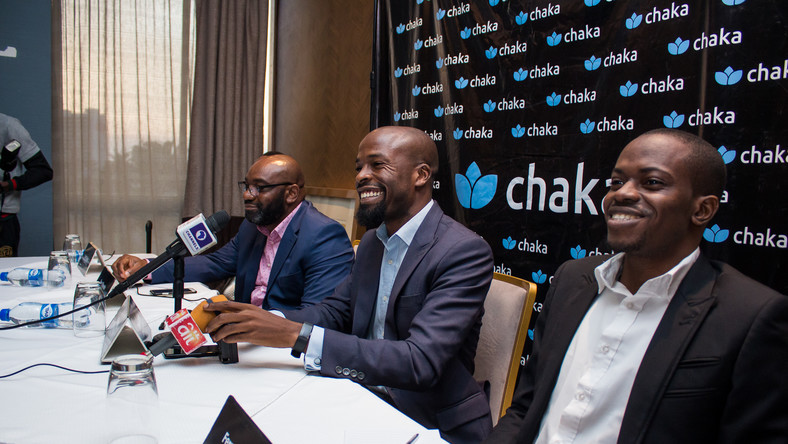
The news today is that Risevest has acquired Chaka: ”Talks of acquisition began early in 2023 when a mutual investor in the two startups suggested the deal to Risevest co-founder Eke Urum. Informal talks began in March, and the deal was finalised in September. Urum and Chaka founder Tosin Osinbodu said they got along quickly and shared a similar vision for the future of fintech in Africa. The investors on both sides were also supportive of the deal”, TechCabal wrote.

Good People, Nigeria/Africa’s startup harvest season begins and by 2026, Africa will have many exits.  As I look at the industry, I can see emerging category-kings and category-winners. Those entities will absorb the smaller ones in a profitable way. Why? Africa’s heterogeneous markets make it nearly impossible for economies of scale to become an absolute competitive advantage across territories. That you are big in Aba does not mean you are in Sokoto because those markets are entirely different across many domains. So, acquisitions and mergers will happen.

From Jan 2024 to Dec 2025, we will see huge capital raise from many category-kings. Those war chests will be used to position  and consolidate many territories – and that would be exits for many firms. The consolidation will then trigger a season of mega harvest when we will see IPOs. Yes, Interswitch, Moniepoint, Flutterwave and a couple others will have to hit the big market. By the time these companies are done, I posit about $500M new funding available for the next class of startups and companies.

Yes, many young people will become rich and about $500 million will be available, and most will invest in companies. That would be the largest “investment fund” in Nigeria, higher than any fund managed by any foreign entity with Nigerian focus. That fund will then lead secondaries, enabling young companies to move to the next level.

If the most valued financial institution in West Africa is less than 10 years old, if the most valued logistics firm is less than 10 years old, if the most valued stock trading company is less than 10 years old, you will get the idea that Nigeria and indeed Africa are being structurally transformed by technology components, across sectors. The future looks very promising; begin to #build.