DD
MM
YYYY

PAGES

DD
MM
YYYY

spot_img

PAGES

Home Blog Page 3814

Bullish XRP Price Prediction with 4.8B Volume; Cardano Nears ATH & Big Eyes Infinity’s Presale Turns Heads

0

The XRP price prediction for September 2023 looks decidedly bullish, with Santiment’s report indicating that the crypto made a spectacular entrance into the month. XRP achieved its highest on-chain transaction volume since February, boasting an impressive 4.8 billion in volume.

Cardano, not to be outdone, also celebrates its skyrocketing transaction volume. It reportedly surged by a staggering 1,700% since January! If you think the excitement stops here, wait until you hear this: Big Eyes Infinity (BIGINF) rolls out its presale red carpet. It debuts its ICO (initial coin offering) game, allowing savvy investors to hit 150% returns at each stage.

Bullish ADA Market Cap, Impressive BIGINF Presale, and XRP Ripple News

The crypto landscape sizzles with excitement following the recent surge in on-chain activity for Ripple (XRP) and Cardano (ADA), along with the promising presale of Big Eyes Infinity (BIGINF). These developments have sparked excitement and optimism among crypto investors.

XRP, the fifth-largest cryptocurrency by market capitalization, has kicked off September with a bang. On-chain analytics firm Santiment reports a seven-month high in on-chain transaction volume, with a staggering 4.8 billion XRP tokens exchanged. This surge, combined with increased circulation and development activity, hints at a promising future for XRP, even as its price experiences fluctuations.

Cardano adds to the bullish narrative with a remarkable journey of its own. Since January, ADA’s on-chain transaction volume has soared by over 1,700%, demonstrating its growing utility and social dominance. This inevitably drives the ADA market cap to amazing levels! Notably, ADA recently touched an all-time high (ATH).

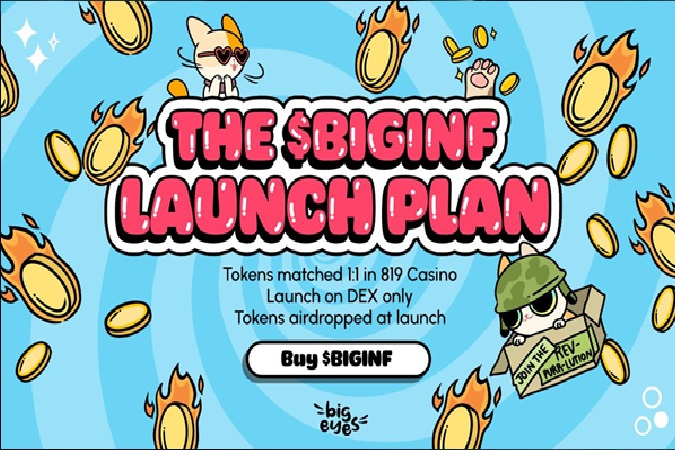
Amidst this excitement, Big Eyes Infinity (BIGINF) emerges as a meme coin with tremendous potential. Its four-month limited presale promises substantial returns, offering investors a chance to secure a 150% ROI at each stage.

Deciphering the Surge and Bullish Potentials

The surging on-chain activity of ADA and XRP is no coincidence — it’s a result of various factors coming into play. Understanding the reasons behind their remarkable growth sheds light on the crypto landscape’s dynamics.

ADA and XRP’s impressive performances are attributed to institutional interest, a surge in development activity, and increased utility. Undeniably, Cardano’s feat is mind-blowing. Yet, XRP’s success is on a next level considering how overwhelming “XRP vs SEC” headlines shaped the crypto universe for months! This surge in activity has rekindled interest in XRP, showcasing its resilience in the face of price fluctuations.

Amid these trends, Big Eyes Infinity stands out as a potential gem in crypto land. With its limited four-month presale and the promise of substantial returns, BIGINF has captured the attention of investors seeking the next big opportunity.

Big Eyes Infinity Hosts Four-Month-Long Presale Game

The ADA market cap and XRP Ripple news undeniably ignite excitement in the market. This sets a bullish course for the new meme token, Big Eyes Infinity (BIGINF). As a utility token in the Big Eyes ecosystem, BIGINF finds utility in the upcoming 819Casino within the cat-themed crypto world. Through BIGINF, users can claim tokens with ease, thanks to the hassle-free airdrop launch.

<< Big Eyes Infinity’s Four Presale Stages >>

Big Eyes Infinity’s airdrop will kick off after the curtain falls on the token’s presale. Currently, BIGINF is impressing meme coin investors with its affordable and lucrative price point, promising 150% returns at every stage. With the token offering four phases, this means investors could potentially secure 600% returns if they bought $BIGINF when it was priced at $0.00006.

To further stoke excitement, BIGINF introduces the 1:1 Match Guarantee. This provides a bonus match of the purchased tokens, which goes directly into a user’s 819Casino account for future use once the BIGINF presale concludes. The 819Casino is set to be publicly available by the end of September.

The Promising Crypto Sphere

The highly optimistic XRP price prediction, the remarkable 1,700% surge in on-chain transactions for Cardano, and the impressive 6x returns offered by Big Eyes Infinity all illustrate that the crypto sphere is brimming with opportunities. It generously rewards the courageous and maven crypto investors who believe in the potential of digital assets.


Big Eyes Infinity (BIGINF)

Presale: https://buy1.bigeyes.space/

Website: https://bigeyes.space/

Telegram: Contact@BIGEYESOFFICIAL

Twitter: https://twitter.com/BigEyesCoin

Bitcoin Gold’s Price: Is The Domino Effect Influencing Signuptoken, And How Well Is Filecoin Doing?

0

Cryptocurrency investments have gained significant attention in recent years, with Bitcoin Gold (BTG) rising as a prominent player and showing remarkable growth and buoyancy in the market.  As Bitcoin Gold’s price experiences an upward trajectory, a pertinent question arises: Is this upward momentum indicative of a larger trend affecting other cryptocurrencies like Signuptoken.com (SIGN)? Additionally, an examination of Filecoin’s (FIL) performance is crucial in order to shed light on the resilience and adaptability of various digital assets in the crypto market.

This article delves into the interplay between Bitcoin Gold’s rising prominence, its potential influence on Signuptoken, and the ongoing performance evaluation of Filecoin

Bitcoin Gold Price Soars 60%, Making Waves In News

Bitcoin Gold’s price experienced a remarkable upward shift, ascending from $13.38 on July 30 to $21.41 on July 31, resulting in a significant 60% surge within a single day. The trading volume also underwent a substantial transformation, surging from approximately one million on July 30 to $347 million on July 31, reflecting an astounding 34,600% escalation. This unexpected surge in BTG’s price sent shockwaves through the cryptocurrency market. The surge can be attributed to a complex interplay of factors, including but not limited to market sentiment, trading volume, and the influence of macroeconomic events.

Filecoin: Trying To Mirror Bitcoin Gold

Filecoin’s current price is $4.09, with a 24-hour trading volume of $101,148,403. In the last 24 hours, Filecoin dropped by 1.62%. If FIL’s price maintains momentum above $4.5, it might surge to the $4.7 resistance. Alternatively, if it loses momentum, FIL could fall below the $4.1 support.

During the second quarter of 2023, Filecoin displayed remarkable progress, boasting an impressive 64% increase in active deals on a quarter-over-quarter basis. A pivotal development during this period was the introduction of the Filecoin Virtual Machine, which ushered in new possibilities for application and simultaneously amplified the platform’s capacity. This combined growth underscores Filecoin’s emerging significance in the decentralized storage landscape.

Bitcoin Gold’s Meets Signuptoken: Forging A Path To Collective Wealth

SignUp Token (SIGN) stands poised to reap substantial benefits from the recent surge in Bitcoin Gold’s price. The surge in Bitcoin Gold’s price inevitably attracts heightened attention from traders and investors seeking lucrative opportunities. As individuals enter the cryptocurrency landscape to capitalize on this bullish market, SIGN’s community-oriented approach offers a unique advantage. By fostering a decentralized exchange platform that places control firmly in the hands of its users, SignUp Token aligns with the ethos of Bitcoin Gold’s decentralized nature.

Furthermore, SIGN’s innovative referral system not only promotes community growth but also incentivizes users to invite new members, creating a self-reinforcing cycle of engagement. As Bitcoin Gold’s surge ignites interest in the crypto domain, SignUp Token’s inclusive vision of cultivating millionaires within its community gains greater traction, potentially leveraging the current market enthusiasm to its advantage.

As Bitcoin Gold’s rising momentum attracts attention, SignUp Token’s community-focused model and innovative referral system position it to capitalize on market enthusiasm. This convergence offers a chance for shared success, illustrating the dynamic evolution of cryptocurrencies and the potential for collective empowerment within the crypto community.

To maximize your investment potential, consider getting in on the SignUpToken presale early. By staying ahead of the curve, you position yourself for the best returns.

Signuptoken.com (SIGN):

Website: https://www.signuptoken.com

Twitter: https://twitter.com/_SignUpToken_

Telegram: https://t.me/SignUpToken

Welcome Learners to Tekedia Mini-MBA Edition 12

0

Good People, welcome again to Tekedia Mini-MBA edition 12. We remain thankful that you choose us to deepen your business and entrepreneurial knowledge. Thank you!

If you have any challenges, let us know; our support team is the best in the world of education with 24/7 support. They are there to provide non-academic support. For the academic ones, use our Comment section, in the class board, and our Faculty members are always available.

Over the next 12 weeks, we will be solving the equations of markets across 12 modules (strategy, law, marketing, operations, technology, etc), covering more than 100 courses:

  • 1. Innovation = Invention + Commercialization
  • 2. Great Company = Awesome Products + Superior Execution
  • 3. Business Momentum = Business Size X Growth Rate
  • Etc . Etc.

You have already seen some of these equations in the 50+ page Week 1 written material. We believe that business could be mastered in the same way we can understand natural philosophy. That is why, together, we will unravel the mechanics of business systems. Get ready for the physics of markets and the mathematics of business success!

The first LIVE lecture begins on Saturday and I will be leading it on Zoom.

Sat, Sept 16| 7pm-8.30pm WAT | Innovation, Growth and the Grand Mission of Companies – Ndubuisi Ekekwe | Zoom link in the Board.

Welcome to the #best school; we continue to receive registrations in case your friends want to join. Tell them to use this link .

  • Ndubuisi Ekekwe, MBA, PhD (Engineering), PhD (Banking / Finance)
  • Professor and Lead Faculty
  • Tekedia Institute

What Is A Zero-Knowledge Proof Technology?

0

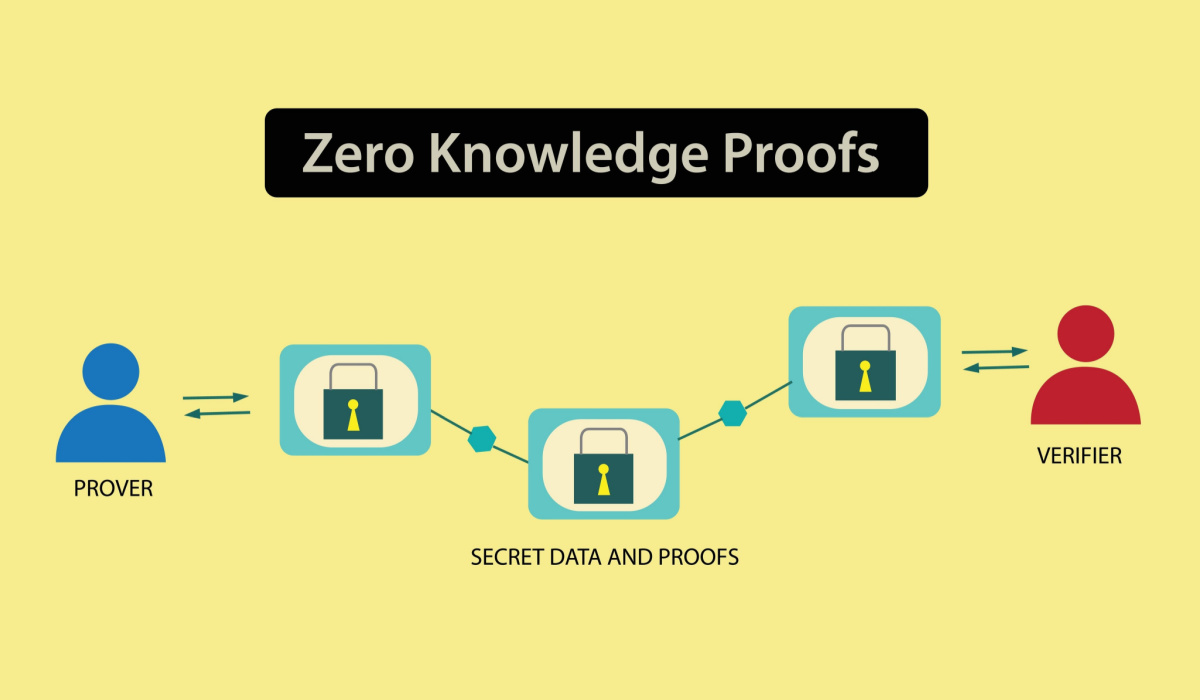
Zero-knowledge proof technology is a fascinating and powerful cryptographic technique that allows one party (the prover) to convince another party (the verifier) that a certain statement is true, without revealing any information beyond the validity of the statement itself. This may sound like magic, but it is based on rigorous mathematical principles and clever protocols that exploit the properties of randomness, encryption, and hashing.

One of the main benefits of zero-knowledge proof technology is that it enhances the security and privacy of data and transactions. For example, in a blockchain network, zero-knowledge proof technology can enable users to verify transactions without exposing their identities or the details of their transactions. This can prevent fraud, identity theft, and censorship, while also preserving the anonymity and confidentiality of the users.

Another benefit of zero-knowledge proof technology is that it reduces the computational and storage costs of verification. For example, in a cloud computing scenario, zero-knowledge proof technology can allow a client to prove to a server that they have performed a certain computation correctly, without sending the input or output data to the server. This can save bandwidth, storage space, and processing power, while also ensuring the correctness and integrity of the computation.

Zero-knowledge proof technology is important because it enables trustless and efficient verification of information and actions, without compromising security and privacy. It can also enable new forms of decentralized and distributed systems, where users can interact with each other without relying on intermediaries or authorities. Zero-knowledge proof technology is a key enabler of innovation and progress in the digital world.

In general, zero-knowledge proofs can enable more efficient, scalable, and transparent solutions that respect the privacy and sovereignty of individuals and organizations.

There are different types of zero-knowledge proofs, such as interactive, non-interactive, succinct, and zk-SNARKs. However, they all share some common features and steps. Here is a simplified overview of how a generic zero-knowledge proof works:

  1. The prover and the verifier agree on a common statement to be proved, such as “I know the secret word to open the magic door in the cave”.

  2. The prover and the verifier also agree on a common protocol to execute the proof, such as “The prover will enter the cave from one side and exit from the other side after opening the door with the secret word”.

  3. The prover generates some random inputs or secrets that are related to the statement, such as “The prover will choose either path A or B randomly before entering the cave”.

  4. The prover uses these inputs or secrets to compute some outputs or commitments that are sent to the verifier, such as “The prover will send a hash of the chosen path to the verifier”.

  5. The verifier challenges the prover by asking some questions or requests that are based on randomness, such as “The verifier will ask the prover to exit from either path A or B randomly”.

  6. The prover responds to the verifier by revealing some information or evidence that satisfies the challenge, such as “The prover will exit from the requested path after opening the door with the secret word”.

  7. The verifier verifies the response by checking whether it is consistent with the output or commitment and whether it follows the protocol, such as “The verifier will check whether the hash of the exit path matches the one sent by the prover and whether the prover could have opened the door without knowing the secret word”.

  8. The verifier accepts or rejects the proof based on whether it passes or fails the verification.

The key idea behind zero-knowledge proofs is that they rely on repeated rounds of interaction between the prover and the verifier, where each round involves some random elements that make it hard for the prover to cheat or for the verifier to learn anything. By increasing the number of rounds, the probability of a successful proof becomes higher and higher, while the probability of a false proof becomes lower and lower.

Zero-knowledge proof technology is not just a theoretical concept; it is already being used in practice by various projects and platforms. Here are some examples of zero-knowledge proof technology in action:

Zcash: Zcash is a cryptocurrency that uses zero-knowledge proofs (specifically zk-SNARKs) to enable private and anonymous transactions on a public blockchain. Zcash transactions hide the sender, receiver, and amount of each transaction, while still allowing anyone to verify their validity.

NuCypher: NuCypher is a network that provides encryption and access control services for decentralized applications. NuCypher uses zero-knowledge proofs (specifically zk-SNARKs) to enable provable delegation of decryption rights, meaning that users can grant access to their encrypted data without revealing their keys or data.

QEDIT: QEDIT is a platform that enables enterprises to collaborate on sensitive data without compromising their privacy or security. QEDIT uses zero-knowledge proofs (specifically zk-STARKs) to allow parties to verify each other’s data without disclosing it, such as proving creditworthiness, identity, or compliance.

One of the main challenges of ZKP technology is its complexity and cost. ZKP protocols require sophisticated mathematical techniques and algorithms that are not easy to understand or implement. Moreover, ZKP protocols often involve a lot of computation and communication between the prover and the verifier, which can increase the time and resources needed to execute them. For instance, some ZKP protocols require the prover to generate a large number of random challenges and responses, which can be computationally intensive and expensive.

Another issue of ZKP technology is its scalability and efficiency. ZKP protocols are usually designed for specific statements or problems, which means that they may not be suitable for general or dynamic scenarios. For example, a ZKP protocol that proves the validity of a transaction may not be able to prove the validity of multiple transactions or complex smart contracts.

Moreover, ZKP protocols may not be compatible with existing systems or standards, which can limit their interoperability and integration. For instance, a ZKP protocol that uses a different cryptographic hash function than the one used by a blockchain network may not be able to interact with it.

A third drawback of ZKP technology is its trust and security. ZKP protocols rely on certain assumptions and parameters that need to be agreed upon by both parties. However, these assumptions and parameters may not be verifiable or auditable by external parties, which can raise questions about their validity and reliability. For example, a ZKP protocol may assume that the prover has access to a secret information that is hard to guess or compute, but this assumption may not be true or provable.

Furthermore, ZKP protocols may be vulnerable to attacks or errors that can compromise their soundness or completeness. For example, a ZKP protocol may be fooled by a malicious prover who can generate a fake proof or exploit a flaw in the protocol.

Coinbase Cloud integrates Kiln platform for Native ETH Staking

0

Coinbase Cloud, the cloud-based service provider of Coinbase, has announced a new partnership with Kiln, a platform that enables users to stake Ethereum (ETH) without running their own nodes. The integration will allow Coinbase Cloud customers to stake any amount of ETH below the 32 ETH threshold required for solo staking on Ethereum 2.0.

Staking is the process of locking up a certain amount of cryptocurrency in order to participate in the network’s consensus mechanism and earn rewards. Staking on Ethereum 2.0 is expected to provide higher returns and lower risks than traditional mining, as well as contribute to the network’s security and scalability.

Validators are randomly selected to propose and attest to blocks, and they receive rewards for their service. However, they also face penalties if they act maliciously or go offline. Staking on Ethereum 2.0 requires a minimum of 32 ETH per validator, and it involves some technical knowledge and responsibility.

However, staking on Ethereum 2.0 also comes with some challenges, such as the need to run a dedicated node that is online and synced at all times, the risk of losing funds due to slashing or downtime penalties, and the high entry barrier of 32 ETH (currently worth over $100,000).

Kiln aims to solve these challenges by offering a user-friendly and secure platform that allows anyone to stake ETH with just a few clicks. Kiln leverages the power of decentralized cloud computing to run validator nodes on behalf of its users, ensuring high uptime and performance. Kiln also provides a dashboard that lets users monitor their staking performance, rewards, and fees.

By integrating Kiln into its cloud service, Coinbase Cloud enables its customers to access the benefits of staking ETH without having to deal with the technical complexities or the high capital requirements. Coinbase Cloud customers can simply connect their Coinbase account to Kiln and choose how much ETH they want to stake. They can then sit back and watch their ETH earn passive income while supporting the transition to Ethereum 2.0.

Coinbase Cloud is one of the first cloud service providers to offer native ETH staking below 32 ETH, giving its customers a competitive edge in the rapidly growing Ethereum ecosystem. Coinbase Cloud and Kiln share a vision of making Ethereum more accessible and inclusive for everyone, and this partnership is a major step towards achieving that goal.

ETH staking is a way of participating in the Ethereum network and securing its transactions. By staking ETH, you are locking up your funds in a smart contract and validating blocks of transactions. In return, you receive rewards in the form of new ETH. The more ETH you stake, the more rewards you earn.

However, staking ETH on your own requires a minimum of 32 ETH, and It also requires technical skills, hardware, and constant online availability. If you don’t have enough ETH or don’t want to deal with the hassle of running your own node, you can join a staking pool or use a third-party service provider. But these options come with their own drawbacks, such as fees, trust issues, and reduced control over your funds.

That’s why Coinbase Cloud was created. With Coinbase Cloud, you don’t need to run your own node or join a pool. You simply deposit your ETH to your Coinbase Cloud account and start earning rewards. You can also withdraw your ETH at any time, subject to network conditions.

Coinbase Cloud’s ETH staking is powered by its proprietary technology that ensures security, scalability, and reliability. We use secure hardware modules to store your private keys and sign transactions. We also use multiple nodes across different regions to ensure high availability and performance. And we monitor the network 24/7 to detect and mitigate any issues.

By staking ETH on Coinbase Cloud, you can enjoy the following benefits:

Low entry barrier: You can stake any amount of ETH below 32 ETH and start earning rewards immediately.

High returns: You can earn up to 8% annualized rewards on your staked ETH, depending on the network conditions.

No fees: We don’t charge any fees for staking ETH on Coinbase Cloud. You only pay the network fees when you deposit or withdraw your ETH.

Full control: You can withdraw your ETH at any time, subject to network conditions. You can also track your staking balance and rewards on your dashboard.

Security and trust: You can trust Coinbase Cloud to keep your funds safe and secure. We are a regulated and compliant company with over 10 years of experience in the crypto industry.

Staking ETH on Coinbase Cloud also involves some risks that you should be aware of:

Network risk: The Ethereum network is undergoing a major upgrade to Ethereum 2.0, which will transition from proof-of-work to proof-of-stake. This upgrade may cause delays, disruptions, or changes in the staking process and rewards.

Lock-up risk: When you stake ETH on Coinbase Cloud, you are locking up your funds in a smart contract. This means that you cannot access your funds until the network allows withdrawals, which may take months or years.

Slashing risk: If our nodes fail to validate blocks correctly or behave maliciously, they may be penalized by the network and lose some of their staked ETH. This may affect your staking balance and rewards.