DD
MM
YYYY

PAGES

DD
MM
YYYY

spot_img

PAGES

Home Blog Page 3817

How To Create A Lasting Legacy As CEO – Tekedia Startup Masterclass Will Help

0

You’re a founder or becoming one. We’ll help you become a CEO. Create a lasting legacy in that company. Begin with Tekedia Startup Masterclass. We will help you understand the physics of markets, and the chemistry of business, so that at the end, your growth equations will balance. Come speak with Ndubuisi Ekekwe live on Zoom, one-on-one, and let us help you create that FUTURE! Begin here 

Tekedia Startup Masterclass: from Start-Up to Unicorn is designed to help founders, entrepreneurs, and those generally working in the startup ecosystems, to master the mechanics of building category-king startups. The program runs for 8 weeks. Besides some pre-recorded courses for the 8 weeks, the program includes an hour-long one-on-one live Zoom session every week, per participant, with Tekedia Institute’s Lead Faculty, Prof Ndubuisi Ekekwe.

Participants can enroll and begin anytime. In other words, there is no specific start date as it is customized for the learner via the one-on-one live Zoom sessions. If you pay today, you will begin immediately.

The goal of the Masterclass is to help the participants master modern business mechanics which are used to scale and blitzscale ideas into unicorns (startups with a minimum of $1 billion in valuation).

JP Morgan says BTC ETF will now be Approved in the United States

0
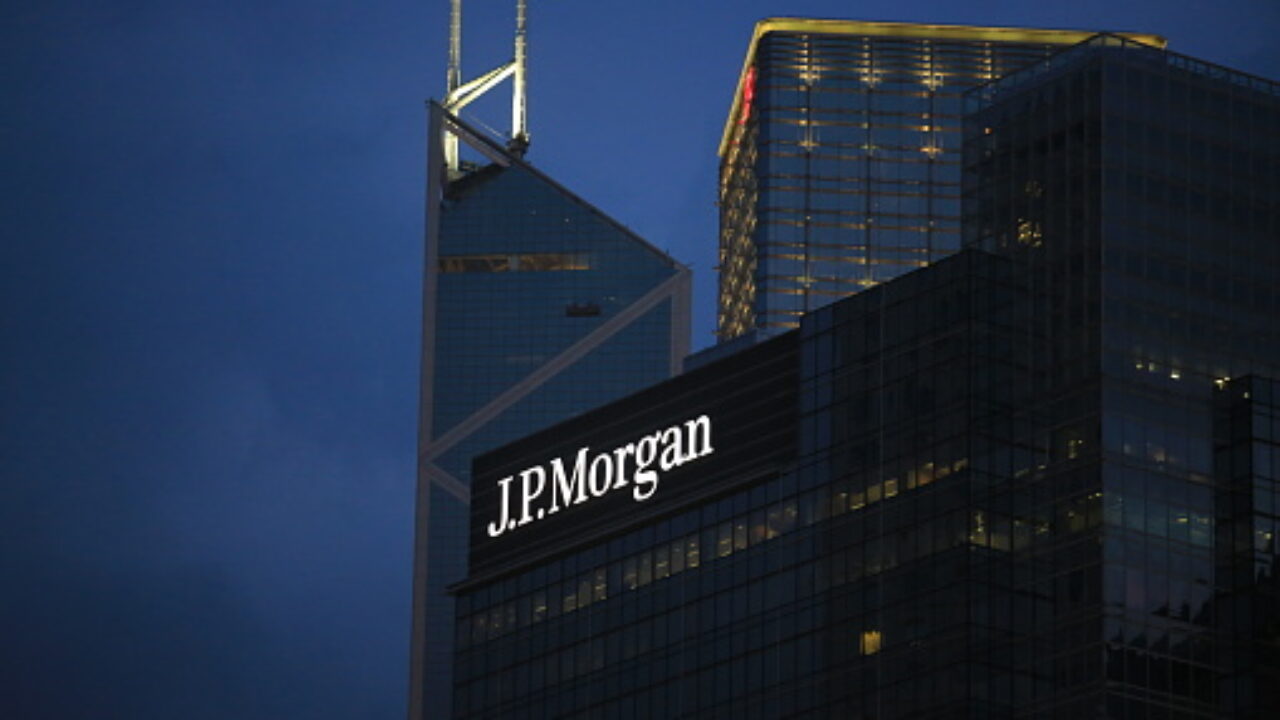
Hong Kong, October 08 2017: JPMorgan Chase & Co. building in Central, Hong Kong . JPMorgan is a Swiss global financial services company, One of big financial company in the world

JP Morgan, one of the largest investment banks in the world, has recently issued a statement that predicts the approval of a Spot Bitcoin exchange-traded fund (ETF) in the US. This is a major development for the cryptocurrency industry, as it could open the door for more institutional investors to enter the market and boost the demand and price of Bitcoin.

A Bitcoin ETF is a financial product that tracks the price of Bitcoin and allows investors to buy and sell shares of it without having to deal with the technical aspects of owning and storing the digital asset. Currently, there are several Bitcoin ETFs available in Canada and Europe, but none in the US, where the Securities and Exchange Commission (SEC) has repeatedly rejected or delayed the applications of various firms.

However, JP Morgan believes that this situation will change soon, as the SEC is under pressure to approve a Bitcoin ETF due to the growing popularity and acceptance of cryptocurrencies. The bank cites several factors that indicate a favorable environment for a Bitcoin ETF, such as:

The success of the Bitcoin futures ETFs that were launched in October 2021. These products, which track the price of Bitcoin futures contracts rather than the spot price, have attracted billions of dollars in assets under management and trading volume, demonstrating a strong demand and interest from investors.

The increasing competition from other jurisdictions that have already approved Bitcoin ETFs, such as Canada and Europe. These markets have seen significant inflows and growth in their Bitcoin ETFs, which could motivate the SEC to follow suit and not lose its regulatory edge and influence.

The SEC is the federal agency that regulates the securities markets in the US, and it has the authority to approve or reject any ETF application. The SEC’s main concern with Bitcoin ETFs is whether they can protect investors from fraud, manipulation, and other risks associated with the cryptocurrency market. The SEC has repeatedly stated that it needs to see evidence of a “surveillance-sharing agreement” between the ETF sponsor and a regulated Bitcoin market, such as a futures exchange or a spot exchange, to ensure that the ETF price reflects the true value of Bitcoin and that any market abuse can be detected and prevented.

However, such agreements are hard to come by, as most Bitcoin markets are unregulated or operate outside the US jurisdiction. Moreover, the SEC has also raised questions about the liquidity, custody, valuation, and governance of Bitcoin ETFs, as well as the potential impact of Bitcoin’s volatility, scalability, and security issues on the ETF performance and investor protection. The SEC has rejected several Bitcoin ETF applications in the past, citing these reasons.

For example, in 2017, the SEC rejected the Winklevoss Bitcoin Trust ETF, which was proposed by Cameron and Tyler Winklevoss, the founders of Gemini, a US-based cryptocurrency exchange. The SEC said that it did not find that the proposed ETF would be consistent with the requirements of the Exchange Act, which requires that the rules of a national securities exchange be designed to prevent fraudulent and manipulative acts and practices. The SEC also said that it did not find that the proposed ETF would be able to enter into a surveillance-sharing agreement with a significant, regulated market for Bitcoin.

In 2018, the SEC rejected nine more Bitcoin ETF proposals from various sponsors, including ProShares, Direxion, and GraniteShares. The SEC reiterated its concerns about the lack of a surveillance-sharing agreement and the risk of fraud and manipulation in the Bitcoin market. The SEC also said that it did not find that the proposed ETFs would be able to demonstrate that they have sufficient mechanisms to prevent fraudulent or manipulative acts and practices in their trading.

In 2019, the SEC rejected another Bitcoin ETF proposal from Bitwise Asset Management, which claimed to have addressed some of the SEC’s concerns by using data from multiple regulated exchanges and third-party custodians. However, the SEC said that it did not find that Bitwise had met its burden to demonstrate that its proposed ETF would be consistent with the Exchange Act. The SEC also said that it did not find that Bitwise had provided sufficient evidence to support its assertion that it could track a reliable Bitcoin price index.

In 2020, the SEC rejected yet another Bitcoin ETF proposal from Wilshire Phoenix, which aimed to reduce Bitcoin’s volatility by holding a mix of Bitcoin and US Treasury bills. The SEC said that it did not find that Wilshire Phoenix had provided enough information to show that its proposed ETF would be resistant to market manipulation and that it would have adequate surveillance-sharing agreements.

As of 2023, there are still several Bitcoin ETF applications pending before the SEC, including those from VanEck, Valkyrie, WisdomTree, Kryptoin, and NYDIG. Some of these proposals claim to have improved their compliance with the SEC’s standards by using regulated futures contracts or spot exchanges as reference prices for their ETFs. However, it is unclear whether these proposals will be able to satisfy the SEC’s requirements and whether they will be approved or rejected.

The SEC has not set a definitive timeline for its decision on these applications, but it has indicated that it is open to considering them on a case-by-case basis. The SEC has also said that it is actively monitoring the developments in the cryptocurrency market and that it is willing to engage with potential ETF sponsors and other stakeholders to facilitate innovation and investor protection.

JP Morgan concludes that a Spot Bitcoin ETF approval in the US is now more likely than ever, and that it could happen as soon as early 2024. The bank expects that a Bitcoin ETF would have a positive impact on the price of Bitcoin, as it would increase its liquidity, accessibility, and legitimacy. The bank also estimates that a Bitcoin ETF could attract up to $50 billion in inflows in its first year of operation, which would translate into an increase of about $10,000 in the price of Bitcoin.

The bank’s statement is a bullish sign for the cryptocurrency industry, as it shows that one of the most influential and respected financial institutions in the world is optimistic about the future of Bitcoin and its potential to become a mainstream asset class. It also reflects the changing attitude and perception of Wall Street towards cryptocurrencies, which have gone from being dismissed as a fad or a scam to being recognized as a viable and innovative investment opportunity.

Health-tech Startup mPharma, Lays off 150 Employees as it Navigates Economic Conditions

0

mPharma, a Ghanaian-based health-tech startup that offers solutions to health insurance and pharmaceutical companies, has laid off 150 employees, as it navigates tight economic conditions.

The company announced that the difficult decision was taken to right-size the team which was attributed to the current macroeconomic conditions driven by the devaluation of the Naira.

Announcing the layoff, the company CEO Gregory Rockson said, “We took the difficult decision to right-size the team. The layoffs are in the light of the current macroeconomic conditions driven by the devaluation of the naira”.

mPharma disclosed that severance packages were provided to support the affected employees. The company also demonstrated its commitment to their well-being, allowing them to keep their health insurance and extending the period for exercising their stock options from 90 days to 3 years.

As mPharma parts ways with some of its employees, this will enable the company to double down on its main healthcare business, Mutti. Mutti is mPharma’s online pharmacy, catering to over 200,000 patients each month.

With a renewed focus on Mutti, mPharma aims to establish the product in every community across the African continent.

Notably, mPharma has been successful in securing significant investments, raising a total of $90 million, including a $35 million series D funding round last year. In line with its expansion strategy, the company acquired a majority stake in HealthPlus, a leading pharmacy chain in Nigeria, and bought stakes in Vine Pharmacy in Uganda and Halton’s Pharmacy in Kenya.

Currently, the health-tech startup partners with over 150 hospitals, and operates in nine African countries, which include Nigeria, Rwanda, Ghana, Kenya, Gabon, Zambia, Malawi, Ethiopia, and Uganda.

Since its inception in 2013, mPharma has evolved from managing prescription drug inventories to offering a range of services, including retail pharmacy operations and market intelligence for hospitals, pharmacies, and patients.

By using the technology infrastructure it has built, the company connects patients, pharmacies, and hospitals through cloud-based software. The system enables doctors to track in real-time which drugs are available and at which location, thus giving patients reliable access to medicines.

In response to the COVID-19 pandemic, the company expanded its offerings to include telehealth services. Additionally, mPharma played a crucial role in facilitating the procurement of vaccines for the Ghanaian government in 2020.

By harnessing technology to eliminate the inefficiencies and price fluctuations that prevent drug prescriptions from reaching sick people, mPharma has helped 400,000 patients make savings on high-quality medicines.

The health-tech startup envisions an Africa that is in good health and has ensured that it will not cease until every person on the continent has access to safe and affordable medicine.

Understanding Post-No-Debit/Freezing Orders on Bank Accounts in Nigeria

0

One fundamental human right guaranteed under Nigerian law is the right to own property guaranteed by The Constitution of The Federal Republic of Nigeria 1999(as amended), but this right is not without its limits.

In the interest of justice and the preservation of the proceeds of crime, a court of law or special prosecution agency can through a temporary instrumentality known as a Post-No-Debit or Freezing/Forfeiture order made ex-parte (meaning “on one side only”or without an appearance by the party the order is aimed at), freeze a bank account or even blacklist a Bank Verification Number (BVN) of a person deemed a suspect with a view to ensuring that criminal proceedings, particularly investigation and prosecution, does not become a waste of time or nullity.

This article will be looking at Post-No-Debit/Forfeiture Orders on bank accounts , from their requirements to lifespan to courts with jurisdiction to grounds for revoking them.

Which court is vested with jurisdiction regarding the power to make Post-No-Debit or Forfeiture orders?

The Federal High Court of Nigeria is vested with the original jurisdiction to make Forfeiture orders as long as they are banking matters not within the scope of banker/customer relations.

Which agencies dubbed ‘special prosecutors’ also have the power to procure temporary forfeitures on bank accounts in Nigeria?

– The Economic and Financial Crimes Commission (EFCC)  through its Sections 29&34 of the Economic and Financial Crimes Commission 2004 is empowered to approach the court for an interim order of forfeiture and freezing order on banks or other financial institutions and such order may only be discharged where the defendant is discharged and acquitted.

– The Asset Management Corporation of Nigeria (AMCON) through relevant provisions of the AMCON Act 2019 also has the power to obtain an order ex-parte to freeze a debtor’s account and such order may subsist till judgment or a final determination/conclusion of the action.

– The Recovery of Public Property (Special Provisions) Act allows the court to make an interim attachment in a pending trial where a prima facie case has been made out warranting the grant of the Post-No-Debit order.

– The Proceeds of Crime (Recovery & Management) Act 2022 through its Section 19 provides that freezing orders on property like bank accounts can be granted where such accounts are believed to possibly and reasonably contain monies constituting the proceeds of crime.

What are the requirements for making Post-No-Debit/Forfeiture orders?

To secure a post-no-debit or forfeiture order, the following requirements must be present :-

– A situation of urgency which is not attended to by an order, will render any further proceedings of no effect and an exercise in futility.

– Showing sufficiently that granting such orders are in the interest of justice.

– An undertaking to indemnify the party against whom the order is made  against any damages suffered should subsequent legal proceedings in that regard turn out to be frivolous.

How long do such freezing orders typically last, especially when granted by the Federal High Court?

Freezing orders on bank accounts are not meant to be perpetual or indefinite . Therefore, they last for the following periods :-

– Not more than 14(Fourteen) days after the party or person affected by the order has applied for the order to be varied or discharged.

– Another 14 days after an application to vary or discharge it has been argued.

– In the case where an application to vary or discharge an order ex-parte is not taken within 14 days of Its being filed, the ex-parte freezing order shall lapse save for where the court makes a direction to the contrary in the interest of justice.

– A party affected by a freezing order made ex-parte can make an application to discharge or vary it within 14 days after service.

Sonik Coin, Pepe Coin, and the new meme coin revolution

0

Summer of 2023 has seen the resurgence of interest in new and old meme coins. The meteoric rise of Pepe coin in late April which soon skyrocketed to a $1 billion market cap, and news surrounding Shiba Inu’s Shibarium Layer 2 are just a few reasons why people are flocking to meme coins again. In this overview piece, we take a look at some of the new meme coins rocking the Web3 world.

What is Pepe Coin?

Pepe Coin is a young meme based cryptocurrency that hit the crypto market towards the end of April 2023. Within a few days from it’s launch, Pepe coin – inspired by the polarizing green cartoon character sharing the same name – experienced a huge price increase and surpassed the highly coveted $1.5 billion market cap figure in a few days after its launch.

What is ApeMax and why are people excited about the ApeMax Presale?

ApeMax is one of the newest crypto coins. ApeMax is the world’s first boost-to-earn token, and holders are free to stake or boost entities they like and get rewards in the process. ApeMax merges aspects of fun and meme coin culture with its youthful image and cartoon space ape character, all the while incorporating real utility with the boost staking.

>> Visit the ApeMax Website <<

The ApeMax presale is currently open for a limited time. Eligible buyers can snap up their ApeMax tokens and enjoy presale rates and even discounts via the limited early bird loot boxes. ApeMax is a testament of the innovation and dynamism of the ever evolving and exciting meme coin space.

Sonik Sensations? A look at Sonik coin and Harry Potter Obama Sonic 10 Inu coin.

The lovable blue retro video game character seems to be a new source of inspiration for meme coins in 2023. Harry Potter Obama Sonic 10 Inu coin coin makes use of a mascot character with elements borrowed from this iconic gaming figure. This new token made a big splash coming onto the scene recently with a name like we have never seen before. Harry Potter Obama Sonic 10 Inu coin’s long name and humorous website intrigued and entertained meme coin buyers who flocked to this unique new coin. Another token, Sonik Coin, had a rapid and fast growing presale, amassing a legion of fans in record time.

What is going on with Copium Coin?

Copium coin is a meme based crypto coin which was inspired by the copium memes. Copium set itself apart with a dark theme, poking fun at the meme coin and crypto space in a playful way. Copium coin hit the market soon after Pepe coin’s successful entry and had its debut with a private sale.

What’s going on with OG meme coins Dogecoin and Shiba Inu? 

Dogecoin has been in the news lately in part due to speculations surrounding its association with tech billionaire Elon Musk. On the other hand, much of the news on Shiba Inu has been related to its new L2 Shibarium, and more recently about the possible development of a burn portal for Shiba Inu. Dogecoin is widely regarded as one of the first meme cryptocurrencies and this token famously started out as a joke, but has become fairly popular in recent years with meme coin fans.

Before you consider any cryptocurrency, it’s essential to engage in thorough independent research, consult with independent advisors, and gain a full and comprehensive understanding of the risks involved. All Cryptocurrencies, including meme coins, can be highly unpredictable, display significant price fluctuations over short timeframes, as well as inherently risky. It’s crucial to understand that all cryptocurrencies carry risks, so exercise prudence and only spend what you can afford to lose. Moreover, crypto may not be suitable for all individuals. Furthermore, it’s worth noting that ApeMax is inaccessible for purchase by individuals residing in specific jurisdictions. The list of ineligible restricted countries comprises countries such as the USA, Canada, as well as other restricted countries. Verify your eligibility on the ApeMax website before proceeding.