DD
MM
YYYY

PAGES

DD
MM
YYYY

spot_img

PAGES

Home Blog Page 3821

Access Holdings Plc on Acquisition of MegaTech as Nigerian stocks surged last week

0

Access Holdings Plc, a leading provider of financial services and solutions, has successfully completed the acquisition of Megatech Insurance Brokers Limited, a reputable insurance brokerage company with a strong customer base and a wide range of products. This acquisition is part of its strategic vision to expand our presence and capabilities in the insurance sector, and to offer her clients more value-added services and solutions.

Megatech Insurance Brokers Limited has been operating since 2010 and has established itself as one of the most trusted and reliable insurance brokers in the market. They offer a variety of insurance products, such as life, health, property, motor, travel, and business insurance, as well as risk management and consultancy services. They have a team of experienced and qualified professionals who are committed to delivering excellent customer service and satisfaction.

By acquiring Megatech Insurance Brokers Limited, they are adding a valuable asset to our portfolio of businesses, and we are enhancing our ability to serve our clients better. We will leverage the expertise, network, and reputation of Megatech Insurance Brokers Limited to offer more comprehensive and competitive insurance solutions to our existing and potential customers.

We believe that this acquisition will create significant value for our shareholders, customers, employees, and partners. We look forward to working closely with the management and staff of Megatech Insurance Brokers Limited to ensure a smooth transition and a successful integration. We also welcome their customers to the Access Holdings Plc family, and we assure them that we will continue to provide them with the best service and support possible.

We would like to thank all the parties involved in this transaction for their cooperation and professionalism. We would also like to express our gratitude to the relevant regulatory authorities for their timely approval and guidance. We are confident that this acquisition will strengthen our position as a leading financial services provider in the region and will enable us to achieve our long-term goals and objectives.

Nigerian stocks surged last week. The All-Share Index gained 13.84% last week.

Nigerian stocks soared to new heights last week, as investors cheered the positive economic outlook and the easing of covid-19 restrictions. The All-Share Index, which tracks the performance of all listed equities on the Nigerian Stock Exchange, gained 13.84% last week, closing at 48,544.43 points on Friday. This was the highest weekly gain since April 2015, and the highest closing level since February 2018.

The rally was driven by strong demand for blue-chip stocks across various sectors, such as banking, consumer goods, oil and gas, and telecommunications. Some of the top gainers were Dangote Cement, MTN Nigeria, Zenith Bank, Nestle Nigeria, and Guaranty Trust Bank. Analysts attributed the bullish sentiment to several factors, including the recovery of oil prices, the stability of the naira exchange rate, the improvement of foreign exchange liquidity, and the optimism about the covid-19 vaccine rollout.

The Nigerian stock market has been one of the best performing in the world in 2020, despite the challenges posed by the pandemic and the recession. The All-Share Index ended the year with a whopping 50.03% return, outperforming other major indices such as the S&P 500 (16.26%), the FTSE 100 (-14.34%), and the MSCI Emerging Markets (18.31%). The market capitalization of listed equities also increased by 62.42% to N21.06 trillion in 2020.

Looking ahead, experts believe that the Nigerian stock market will continue to enjoy positive momentum in 2021, as the economy rebounds from the recession and the vaccination program accelerates. They also expect more corporate earnings growth, dividend announcements, and attractive valuations to support the market performance. However, they also cautioned that investors should be mindful of the potential risks, such as political uncertainty, security challenges, inflationary pressures, and external shocks.

NNPCL Unveils Utilization Plan for $3.3 Billion Afreximbank Loan Amidst Controversy

0

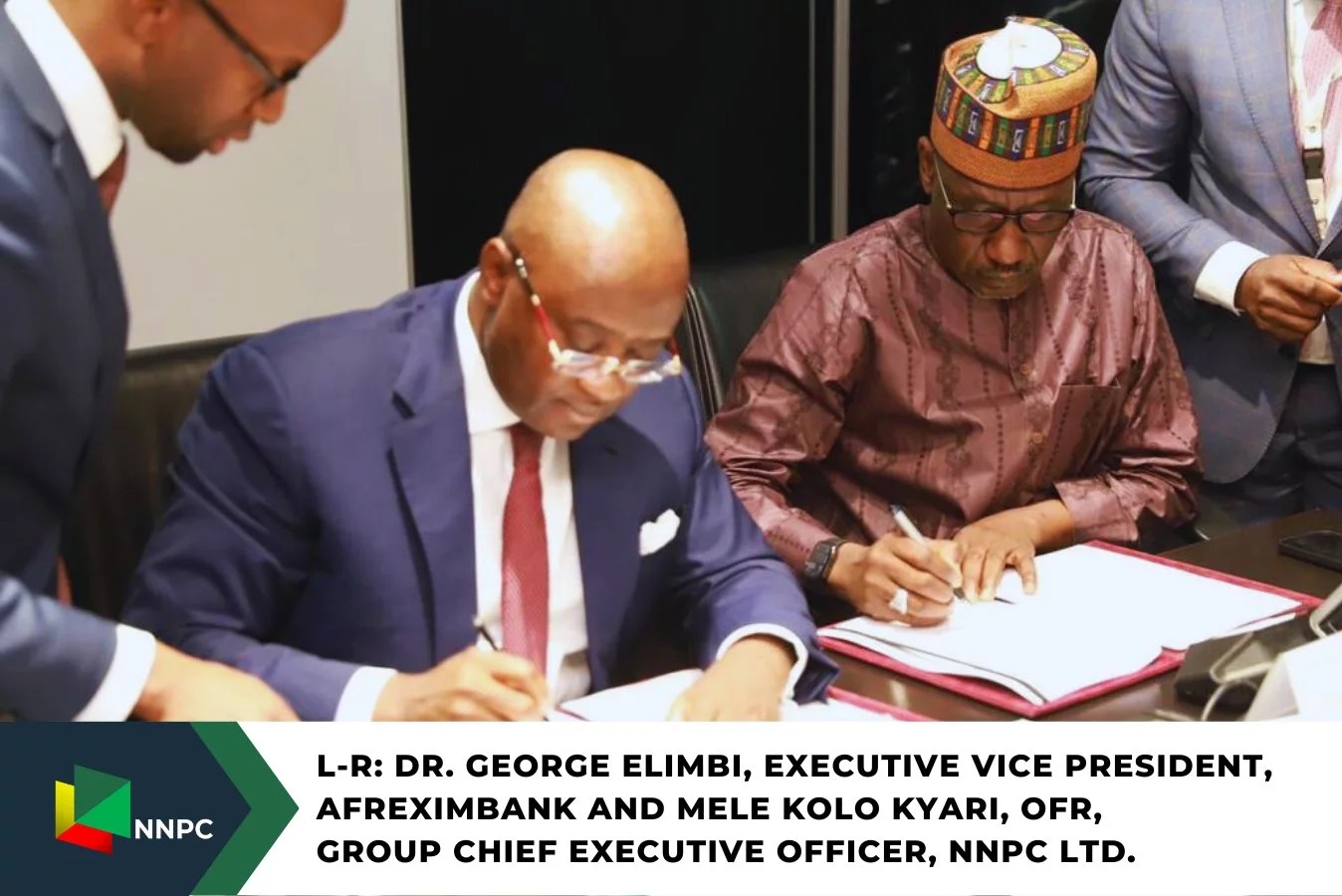
The Nigerian National Petroleum Company Limited (NNPCL) has outlined its comprehensive strategy for deploying the $3.3 billion loan acquired from the African Export-Import Bank.

The announcement made on Sunday, articulated through the document ‘Frequently Asked Questions – Project Gazelle,’ released by Olufemi Soneye, Chief Corporate Communications Officer of NNPCL, sheds light on the ambitious objectives aimed at fortifying operational capabilities, fulfilling tax and royalty obligations, and stabilizing the nation’s foreign exchange market.

The primary objective of the loan, according to the NNPCL, is to meet operational needs, including the upfront payment of tax and royalties to the Nigerian government. In addition, the loan aims to contribute to the stabilization of the foreign exchange market and bolster the country’s foreign reserve.

“This project provides immediate USD financing for NNPC Limited’s operational needs, including paying its tax and royalty obligations to Nigeria upfront. By using the upfront funding, Nigeria can maintain the stability of its currency, the Naira, and increase its foreign exchange reserves,” the document stated.

To insulate the repayment plan from the volatility of the international oil market, the NNPCL has adopted a conservative crude oil benchmark price of $65 per barrel. The company said that this approach provides a safety margin for potential price fluctuations in the future. However, it acknowledged that higher oil prices would result in a faster repayment of the loan, and vice versa.

In terms of practical implementation, the NNPCL disclosed that it has earmarked 90,000 barrels of crude oil for the payment process, ensuring a steady cash flow. Moreover, the company assured that the loan arrangement would not significantly impact future government earnings from oil sales.

The genesis of this financial maneuver dates back to August when the NNPCL and the African Export-Import Bank (Afreximbank) jointly announced a $3 billion emergency crude repayment loan. This initiative was part of a larger strategy to strengthen the Nigerian Naira, with the loan being repaid against a portion of proceeds from future crude oil production.

By December, the first tranche of the loan, amounting to $2.5 billion, had been received by the federal government, with UBA serving as the arranger.

Energy expert questions the loan deal

However, not everyone is applauding this financial arrangement. Kelvin Emmanuel, an energy expert and financial analyst who serves as the CEO of Dairy Hills, has raised critical questions and expressed concern about the legality and implications of the loan.

Emmanuel has posed four pivotal questions that demand answers: 1. Why is the NNPC as a private company borrowing on behalf of the FGN (their principal shareholder)?

2 Why is the Ministry of Finance Incorporated (MOFI) not leading as the entity warehousing GOEs?

3 Why is NNPC still holding the shares of FGN in Government Owned Enterprises like West African Gas Pipeline Company and NLNG?

4 What happens to the naira equivalent of $3.4bn; Will it be paid into the CRF for use in one budget cycle only?

Emmanuel further scrutinized the loan deal, pointing out discrepancies that he believes could set a dangerous precedent for the economy. He highlighted aspects such as the daily allocation of crude, the total repayment period, the structure of the Special Purpose Vehicle (SPV), and the handling of price differentials between forward sales and spot prices.

In his critique, Emmanuel suggested that the transaction structure could be creating a pseudo-excess crude account, potentially denying Nigeria the benefits of fluctuations in the global oil markets. He expressed disapproval of resource-backed loans and likened the forward sales agreement to the financialization of future oil and gas assets.

“I am NOT a fan of resource-backed loans, and this forward sales agreement that is akin to financialization of future oil and gas assets is an anomaly in statecraft that the National Assembly should fight with all rigor,” Emmanuel remarked. “There is no genius in it; it is a lazy approach to getting FX dollars to improve your balance of payment position.”

He further questioned the need to involve private sector banks as lead arrangers in the syndicate, suggesting that dealing directly with Multilateral Development Banks (MDB) could be a more cost-effective option with lengthier moratorium periods.

In a detailed financial analysis, Emmanuel calculated a differential of $8.8 billion from the total amount, which he classified as fees for facilitation with an MDB, excess for prepayment facility, and credit into a Debt Service Reserve Account (DSRA). He raised a rhetorical question, “How can $8.8 billion be classified as fees for facilitation when you already have a sinking fund in the CRF? Am I missing something?”

He further noted that the revenue generated from a $65 benchmark, considering 90,000 barrels per day over 60 months (1,825 days), amounts to $12.8 billion. Subtracting the actual principal of $3.4 billion and the accrued interest of $591 million over 581 days, the resulting differential is $8.8 billion, representing 258% of the initial loan.

“How can $8.8bn be classified as fees for facilitation with an MDB in Cairo and excess for prepayment facility as well as credit into a DSRA, when you already have a sinking fund in the CRF. Am I missing something?” he queried.

As the controversy surrounding the NNPCL loan continues to unfold, it remains to be seen how the government, financial institutions, and regulatory bodies will respond to the concerns raised by Emmanuel and whether any adjustments will be made to the current financial arrangement.

Lagos State Bans the Use of Styrofoam, Single-use plastics Over Environmental Pollution

0

In a move to combat the escalating environmental crisis in Lagos, the Lagos State Government, through the Commissioner for Environment and Water Resources, Tokunbo Wahab, has officially imposed a ban on the use and distribution of single-use plastics, with a particular focus on non-biodegradable Styrofoam.

The announcement, made on January 21, 2024, is seen as a signal of commitment to environmental sustainability in one of Africa’s most populous states.

Commission’s announcement came with a sense of urgency as he noted the detrimental impact of single-use plastics on the state’s environment.

“Following the menace which single-use plastics, especially non-biodegradable Styrofoam, are causing on the environment, the Lagos State government through the Ministry of the Environment and Water Resources is hereby announcing a ban on the usage and distribution of Styrofoam and other single-use plastics in the State with immediate effect,” he said.

To ensure the effective enforcement of the ban, the Lagos State government has ordered a swift crackdown on all production companies and distribution outlets within the state. This comprehensive measure aims to staunch the further proliferation of the banned products.

The commissioner said he has directed the Lagos State Waste Management Authority (LAWMA) and the Kick Against Indiscipline (KAI) to initiate immediate action in implementing the ban.

Wahab justified the government’s action by referencing existing laws and regulations, including the National Environmental (Sanitation and Waste Control) Regulation 2009. This regulation, established under the NESREA Act, had long prohibited single-use plastics in the country but had not been rigorously enforced.

Additionally, the commissioner cited the 2017 State Environmental Management and Protection Law, which grants the state authority to prevent activities likely to harm human health or the environment.

The commissioner issued a stern warning to producers, distributors, and end-users of Styrofoam packs, urging them to take the ban seriously or face severe consequences. Heavy fines, penalties, and the possibility of premises being sealed await those who fail to comply.

Wahab stated that these entities could also be held accountable for the costs of daily cleanup efforts, which amount to tens of millions of naira.

“Our state cannot be held hostage to the economic interests of a few wealthy business owners compared to the millions of Lagosians suffering the consequences of indiscriminate dumping of single-use plastics and other types of waste,” he stated.

The commissioner stressed the importance of public cooperation in the success of this initiative. He urged residents to boycott Styrofoam packs and single-use plastics, educating them about the well-known consequences of such materials, including climate change, flooding, and diseases like cholera.

In a bid to promote sustainable practices, he encouraged the adoption of reusable food containers and water bottles, emphasizing that the convenience of single-use plastic comes at a substantial cost to society.

“The convenience of single-use plastic comes at a huge cost to the society. We must all make small sacrifices for our collective well-being,” he said.

The Lagos State Government’s bold move to ban Styrofoam and single-use plastics is believed by many to be a reflection of a deep commitment to environmental sustainability and public health. With the ban now in effect, attention turns to its enforcement, public awareness campaigns, and the willingness of stakeholders to embrace eco-friendly alternatives.

This initiative marks a pivotal step in the ongoing battle against plastic pollution, setting a precedent for other states to follow suit in synergy with the global fight for a cleaner, greener future. However, with Styrofoam and single-use plastics worth millions of naira already pushed out in the markets, the ban is expected to bring about heavy economic losses.

Labour Party’s Gbadebo Rhodes-Vivour Criticizes Hasty Plastic Ban Implementation

In a press statement released on Monday, the governorship candidate of the Labour Party, Gbadebo Rhodes-Vivour, expressed strong criticism against the abrupt implementation of the plastic ban in Lagos State. Titled “Plastic Ban: Hasty Impulsive Decisions Are No Substitute For Critical Policy Making,” the statement highlights concerns regarding the lack of a well-thought-out alternative policy and potential economic ramifications.

Rhodes-Vivour acknowledged the importance of addressing environmental issues, particularly the impact of plastic pollution in Lagos. However, he voiced deep concern over the sudden enforcement of the ban, emphasizing the absence of a comprehensive alternative policy.

“While I acknowledge the importance of addressing environmental concerns and the impact of plastic pollution in Lagos, I find the sudden implementation of this ban without a well-thought-out alternative policy deeply troubling.

“This decision lacks consideration for the significant investments made by manufacturers, retailers, and wholesalers of these products, potentially causing severe economic implications,” he said.

The statement raised questions about the government’s consideration for the thousands of retailers and small business owners whose livelihoods are closely tied to the production and sale of plastic products. Rhodes-Vivour questioned whether the government had evaluated the potential loss of jobs and the overall devastation this swift ban could bring to manufacturers and the associated value chain.

“Did the government care to think about what would happen to the thousands of retailers and small business owners, from Idumota to Oshodi and Ojota, whose livelihoods are tied to this product? Did it think about the potential loss of jobs and the utter devastation it would bring to manufacturers?” he queried.

According to Rhodes-Vivour, the administration’s approach lacks the temperament to engage stakeholders and the discipline required to create meaningful policies that address critical issues without causing harm to citizens’ livelihoods.

Proposing a more sustainable and phased-out approach, Rhodes-Vivour suggested alternative policy measures to address the environmental challenges posed by single-use plastics:

Education and Awareness Programs: Launch comprehensive public awareness campaigns to educate citizens on the environmental impact of single-use plastics and encourage responsible consumption and disposal.

Incentives for Alternatives: Provide incentives and support for businesses to transition to environmentally friendly alternatives, such as biodegradable materials and reusable packaging.

Recycling Infrastructure: Invest in robust recycling infrastructure to facilitate the collection and proper disposal of plastic waste.

Regulate the Pricing of Plastic Bottles: Ensure that plastic bottles are priced (N5 – N10 per bottle) to provide citizens with the needed incentive for proper disposal while earning a tangible amount.

Extended Producer Responsibility (EPR): Implement EPR policies to hold producers accountable for the entire life cycle of their products, encouraging sustainable practices.

Collaboration with Stakeholders: Engage stakeholders, including manufacturers, retailers, environmental experts, and community representatives, to develop a holistic and inclusive strategy.

Rhodes-Vivour urged the Lagos State government and the commissioner of environment to reconsider the abrupt ban and collaborate with stakeholders to develop a more comprehensive and sustainable approach to address plastic pollution in the state.

Although the ban seems to be in synergy with global best practices on single-use plastics, the call for a measured and inclusive policy-making process aims to balance environmental concerns with the economic well-being of citizens and businesses in Lagos.

The Lagos State Government, in announcing the ban, said “Our state cannot be held hostage to the economic interests of a few wealthy business owners compared to the millions of Lagosians suffering the consequences of indiscriminate dumping of single-use plastics and other types of waste.”

Peter Obi Decries Worsening Security Situation in Nigeria, Criticizes Government Approach

0

The presidential candidate of the Labour Party, in Nigeria’s last general election, Peter Obi, has voiced his concerns over the rising spate of kidnappings in the country, despite significant increase in defense spending.

In a social media post on Monday, the former Anambra State governor said the situation, which has given birth to crowdfunding on social media, is not being given adequate attention by the government.

“How much politicians in Nigeria care about national insecurity has long been correlated with how close it gets to their mansions in Abuja, the capital,” he said.

Obi, responding to those criticizing his issue-based constructive criticism of Nigeria’s governance, called on detractors to read The Economist’s report on the country’s escalating kidnapping crisis. The report, published on January 18, 2024, sheds light on the worrisome surge in kidnappings, especially under President Tinubu’s administration.

In 2023 alone, the report noted, more than 3,600 people were abducted, marking the highest number on record. Despite a notable increase in defense spending, the security situation has deteriorated, with almost 9,000 Nigerians losing their lives in conflicts during the same year.

“A crowdfunding effort to pay the ransom was even backed by a former minister. But the kidnappers instead killed one of the girls and demanded more cash. The wife of President Bola Tinubu publicly lamented a “devastating loss”. Yet such horrors are still appallingly frequent—and largely ignored by politicians,” Obi stated.

“In one incident last week in southeast, 45 people were kidnapped and are still missing, yet few leaders spoke out. The deadliest zone is the northeast, where jihadists linked to Islamic State attack the army and villages,” he added.

The Economist noted a lack of an effective response from politicians, linking it to their apparent detachment from the insecurity affecting ordinary citizens. It added that President Tinubu’s security plan mirrors the strategies of his predecessor, focusing on military solutions and investing heavily in high-tech weaponry.

However, the report criticizes the neglect of underlying issues such as poverty and poor education. The widespread deployment of the military across all 36 states is also questioned, with a call for the police to assume a more prominent role in domestic security.

Graft in security spending emerges as a significant issue, with allegations that funds are diverted to reward political allies. The report highlights the problematic practice of “security votes,” amounting to approximately $700 million annually, which lacks public oversight and contributes to corruption.

Despite a nearly threefold increase in the defense budget since 2019, wasteful purchases and corruption persist, hindering effective security measures, it said.

The report noted that General Christopher Musa, Chief of Defense Staff, acknowledges the limitations of relying solely on military efforts for lasting peace. It said he emphasizes the importance of addressing root causes, including poverty and poor education.

Furthermore, the report notes a prevailing trend among politicians who prioritize personal expenditures over creating conditions for peace. Examples include the approval of expensive SUVs for lawmakers and substantial funds allocated for improving presidential accommodations.

In stark contrast, these expenditures come amid a backdrop where over 80 million Nigerians live on less than $2.15 a day.

“In November the national assembly approved SUVs for all 460 lawmakers, at a reported cost of $150,000-plus per car,” Obi said.

“In two months the government has budgeted $31m to improve accommodation for the president and vice-president—in a country of around 220m people where more than 80m are reckoned to live on less than $2.15 a day and many fear being kidnapped.”

The escalating security crisis, as highlighted in the report, raises serious concerns about the allocation of resources and the government’s ability to address the pressing issues facing the nation.

Read Obi’s full statement below:

For those who have continued to see my issue-based constructive criticism of a bad system as bad and are maligning my person and the Obidients for seeking good governance and a better future for all Nigerians, let them now read this report from the respected international newsmagazine, The Economist of London and do the same.

The Economist’s piece of 18th January 2024: Kidnappers are wreaking havoc in Nigeria – Yet President Tinubu’s security plan is worryingly like his predecessor’s.

How much politicians in Nigeria care about national insecurity has long been correlated with how close it gets to their mansions in Abuja, the capital. On its outskirts on January 2nd a father and his six daughters were kidnapped, prompting a rare outcry on high.

A crowdfunding effort to pay the ransom was even backed by a former minister. But the kidnappers instead killed one of the girls and demanded more cash. The wife of President Bola Tinubu publicly lamented a “devastating loss”. Yet such horrors are still appallingly frequent—and largely ignored by politicians.

In one incident last week in the southeast, 45 people were kidnapped and are still missing, yet few leaders spoke out. The deadliest zone is the northeast, where jihadists linked to Islamic State attack the army and villages.

The north-west, too, is riddled with gangs that routinely kidnap for ransom. A decades-long conflict between mostly Muslim herders and largely Christian farmers rumbles on in the country, where on Christmas Eve gunmen mowed down at least 160 people.

Separatist violence still smolders in Southeast Nigeria. At his inauguration last May Mr. Tinubu declared security his “top priority”. Yet more than 3,600 people were kidnapped in 2023, the most ever, according to ACLED, a global monitor of conflict.

The snatching rose sharply after Mr Tinubu took office. And almost 9,000 Nigerians were killed in conflict last year (see chart). The government stresses that, in its most recent budget, spending on defense and the police took the biggest share, about 12% in all.

Defense got a fifth more than it did last year. Yet inflation is running at 29%, so in real terms the defense budget has fallen. The government tends to splurge on fancy weapons systems that fail to tackle the roots of the problem, which are poverty, poor education, and anger at army atrocities.

The latest budget includes funds for six t-129 Turkish attack helicopters on top of the 12 costly Bell choppers bought last year from America for $1bn, not to mention 12 Super Tucano attack aircraft. Buying strike drones has become so popular that the army runs in a fleet alongside that of [other] Forces. But drones are very good at guarding schools from kidnappings, and heavy weaponry risks disaster. A drone recently killed at least 85 civilians at a festival in Kaduna state—not the first such cock-up.

The army promised to “fine-tune” its operations, but more radical change is needed. The police, well equipped but able to use better human intelligence, should lead on domestic security, not the army, which has been deployed in all 36 of Nigeria’s states.

Another huge problem is graft in security spending. “Defence is a prime part of the budget where you can take large quantities of money out without people being any the wiser,” says Matthew Page of Chatham House, a think-tank in London.

Much of the budget, he says, is still about rewarding those who paid to get Mr Tinubu elected. Sometimes the army fails to receive its budget allocation. This is worsened by a system known as “security votes”, whereby parts of defense spending are deemed too sensitive to require public oversight. The practice, which accounts for perhaps $700m a year, increased sharply under the last president and may well jump more under Mr Tinubu.

The defense budget has nearly tripled since 2019. But thanks to inflation, wasteful purchases, sales, and corruption, Nigerians do not suffer. General Christopher Musa, the chief of defence staff, appears to understand the roots of the insecurity. “Military effort alone is incapable of restoring enduring peace,” he says, adding that the army helped build hundreds of schools under his command in the north-east.

Yet many politicians seem keener to spend on themselves, rather than create the conditions for peace or fill the country’s fiscal hole. Even if Mr Tinubu resists the temptation to reinstate the petrol subsidy that he largely removed last year, debt servicing alone in 2024 may gobble up 61% of revenue.

In November the national assembly approved SUVs for all 460 lawmakers, at a reported cost of $150,000-plus per car. In two months the government has budgeted $31m to improve accommodation for the president and vice-president—in a country of around 220m people where more than 80m are reckoned to live on less than $2.15 a day and many fear being kidnapped.

Poker Players Who Are Great at Sports

0

If you follow the professional poker circuit, you’ll know it boasts many colorful characters and personalities. Some players prefer to remain lowkey, allowing their skills at the table to do the talking while working to hold onto their air of mystery. Others thrust themselves into the limelight, eager to showcase their skills to the world, using their personality to attract fans and win cash-rich sponsorship deals. Which type of poker player do you prefer? We all have our favorites, and the current scene provides something for everyone.

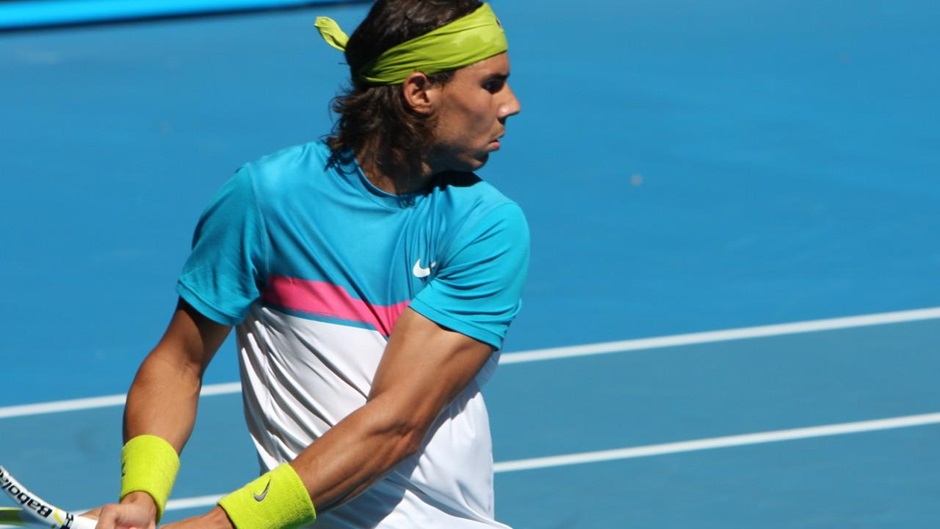
Many professional athletes enjoy playing poker, but some are better than others. The celebrity poker nights you’ll see broadcast live on TV on occasion boast some household names from the sporting arena. Every so often, they uncover a diamond in the rough. A skilled sportsperson who can also hold their own at the table in decent company. Tennis ace Rafael Nadal is a great example of a sportsman with a flair for poker, and the Spaniard is the brand ambassador for a major poker site.

Nadal used his fame and passion for poker to open another lucrative income stream by allowing a poker app to use his name and image. That opened the door for many other famous faces to follow Rafa’s example. You’ll now see some top-performing athletes act as ambassadors for betting sites in Florida and beyond. Those names include cricketer Shane Warne, swimmer Michael Phelps, and footballer Gerard Pique.

Multi-skilled poker players

Celebrities from sports moving into poker and online gambling is nothing new. We’ve seen many articles written on the love for the most popular card game by the likes of Nadal, Warne, and Phelps. Those make for interesting reads, and we’d encourage you to do a little more digging on sports players with a love for poker. But, on this page, we’d like to take a slightly different approach, looking at the close relationship between poker and sports from another angle.

Let’s take time out from following the poker scene to have a little fun. We flip the tables on the topic and look at not sports stars who are great at poker but poker players who are great at sports. The list may surprise you, and there are some multi-skilled players operating in plain sight. Some names from the pro poker circuit are better than others, but some possess the skills to jump the fence and make a career on either side.

Keep reading as we aim to entertain by highlighting some instantly recognizable names from the world of poker who are passionate and talented at their chosen sport. You’ll find the story of a lacrosse lover, tennis enthusiast, and expert chess player. Let’s dive into the thick of our article and reveal those names. Also, if we missed anyone in our list you think should’ve been included, we’d love to hear from you as we may revisit this subject in the future.

Google Images Creative Commons Licenses

Vanessa Selbst

Vanessa Selbst, a retired American professional poker player, is widely regarded as one of the most accomplished women in the poker world. Before making her mark in poker, Selbst excelled in academics, earning a degree in political science from Yale University. However, her brilliance extended beyond the classroom.

Selbst is a talented lacrosse player, having played the sport at the collegiate level. Her success on the lacrosse field showcased her competitive spirit and strategic thinking—attributes that later defined her poker career. Selbst’s transition from the lacrosse field to poker tables highlights her ability to excel in diverse arenas, requiring a combination of mental acuity and tactical prowess.

Gus Hansen

Danish poker professional Gus Hansen boasts a remarkable story that stretches from the tennis court to the poker felt. Hansen, initially a talented tennis player, competed professionally in his youth before transitioning to poker. We once dreamt of making it onto the ATP Tour, where he would rub shoulders with the elite, including Andy Murray, Roger Federer, and the previously mentioned Nadal.

Hansen’s success in tennis was a testament to his athletic abilities, but it was his foray into poker that truly solidified his place in the world of competitive games. Known for his aggressive playing style and fearless approach, Hansen’s journey showcases the adaptability of athletes who find success in the dynamic and strategic world of poker. Hansen has spoken of arriving at a crossroads in his life where he had to choose between his two main passions. That’s not a bad problem to have, of course, but his results in poker prove he made the right decision by swapping the grass for the felt.

Fedor Holz

Fedor Holz, a German poker sensation, first rose to prominence as a chess prodigy in his youth. His early years were marked by achievements in chess tournaments, showcasing his analytical mind and strategic thinking.

Holz’s transition from chess to poker was seamless, and he quickly became one of the most feared players in the poker world. His success at a young age, including winning the World Series of Poker (WSOP) bracelet and High Roller events, underscores the strategic brilliance that transcends different competitive platforms. Despite his commitment to poker, Holz remained a keen chess player.

Chris Moneymaker

Chris Moneymaker, the man whose name became synonymous with the poker boom, had a diverse journey before claiming the 2003 WSOP Main Event title. Prior to his poker success, Moneymaker was an accomplished baseball player in college.

Moneymaker’s background in baseball imparted him with discipline, resilience, and a competitive edge—qualities that served him well at the poker table. His Cinderella story of turning a $39 online satellite entry into a multimillion-dollar WSOP victory highlighted the cross-disciplinary skills that athletes can bring to the poker arena.

Erick Lindgren

Erick Lindgren’s journey to poker greatness took an unexpected detour through the world of golf. Lindgren, a skilled golfer, initially pursued a career in professional golf before discovering his passion for poker.

Lindgren’s background in golf, with its emphasis on focus, patience, and precision, seamlessly translated into his poker career. He became known for his strategic approach, accumulating numerous poker titles and solidifying his reputation as a force to be reckoned with in the poker world.