DD
MM
YYYY

PAGES

DD
MM
YYYY

spot_img

PAGES

Home Blog Page 3828

Apply for World Economic Forum Young Global Leaders, if you can

0

If you do something amazing, and want to build the world’s finest pipeline to connect to the 1%, I recommend the World Economic Forum Young Global Leaders. If they accept you, they will give you access to connect with practically any influential person in the world.  So, when they open it, ask someone to nominate you or follow whatever the process is. (This is the season with WEF Annual Event). The day mine came, I was in the engineering lab in Carnegie Mellon University in Pittsburgh when our campus in Africa congratulated me. Within days, WEF provided access to people who continue to assist in my missions.

Don’t listen to the misinformation about WEF; that is natural when it is the gathering of the most powerful people who run this world. The key is access where you can learn from hedge fund kings, cardinals, bank leaders, political leaders, tech CEOs, etc. During my time, my mentor was then CEO of $196 billion publicly traded SAP, Bill McDermott. Bill assisted in many areas, making key referrals for me.

WEF YGL brings enormous credibility to missions. Go for it if you can because the “club” delivers value. You will join a community where you will meet people around the world who can assist you. An ex-US president’s daughter was on my set, and everyone was like averaged!

Cases Where The Courts Held Airlines Liable For Delaying Of Flights In Nigeria

0

Airlines are always behaving like mini gods in Nigeria; they delay flights at will without any regard for the repercussions. They even reschedule or cancel flights at the boarding time with no just cause leaving some Passengers to feel that nothing can be done about it or that they are not entitled to seek damages and compensation.

Contrary to that notion which is understandably facilitated by the slow judicial system in Nigeria, airlines and even their directors, captains, pilots and the hosts/hostesses have been severally held accountable for their lackadaisical attitudes and fined millions of naira by both the courts and the federal consumer protection agency for flights delays, late boarding, flight reschedule or cancellation of flight or general mishandling of their passengers or their passengers’ luggages.

In 2020, the High Court of the federal capital territory fined Arik Air Ltd ten million naira as damages for delaying the flight of a passenger in the case of Mallam Isa Ibrahim Modibbo V Arik Air Ltd (2020) FCT High Court. One of the passengers, Mallam Isa Modibbo brought an action against Arik Air Ltd for delaying the flight without any reasonable justification causing him to skip taking his drugs. The court while delivering judgment in favor of the passenger held that the failure of the airline to fulfill its contractual obligation of airlifting the plaintiff from the scheduled location to another scheduled location at the stipulated time indicated on the flight ticket is a serious breach of contract and infringement of the

plaintiff’s right to free movement and this breach entitles the passenger to compensatory damages.

Even foreign airlines have been held liable and fined by Nigerian courts for delays, cancellation or mishandling of a passenger or a passenger’s luggage. In the case of BRITISH AIRWAYS v. ATOYEBI (2014) LPELR-23120(SC) the Supreme Court affirmed that airlines owe a duty of care to their passengers failure to fully live up to that duty will grant the passenger the right of action to seek compensation for damages.

In the above case, the respondent at the Supreme, Mr Atoyebi Oyetola, Muyiwa SAN was a first-class passenger of the Appellant’s flight, British Airways on 7th May 2000. He was flying from Heathrow Airport, London to Lagos, Nigeria and he was advised by the airline staff that his handbag was too bulky to be hand luggage and he was advised to check in the handbag. He obeyed and checked in the handbag, but on reaching Lagos, he was told that his checked-in bag was left in London. The airline subsequently failed to send the bag down to Lagos or release the bag to someone else and the respondent had to fly back to London for the sole purpose of getting the bag himself.

Subsequently, the passenger wrote to the airline requesting compensation and reimbursement for the money he spent flying himself back to London just to get the back bag but the airline failed to reimburse or compensate him. This led to the passenger filing an action at the federal high court Lagos for the compensation and the court held in his favor that he is entitled to be reimbursed and compensated by the airline. The appeal court and the Supreme Court concurred with the judgment of the high court.

In these mentioned cases and many other cases, we have seen airlines cautioned, chastised and even fined by the courts for mishandling passengers, canceling flights, delaying flights or acting as mini gods, this attests to the high-end legal principle that “no one is above the law”, not even airlines and this is, therefore, to say that any passenger who has been delayed by an airline with no reasonable justification or your flight canceled or rescheduled, or you have been mistreated by an airline, you are entitled to compensation by the airline or you will have a right to approach the court to seek damages.


Supercharged EOAs will save cost and cement the EVM’s network effects

0

One of the most exciting developments in the Ethereum ecosystem is the emergence of supercharged externally owned accounts (EOAs). These are smart contract wallets that can interact with other contracts and protocols without requiring a separate transaction fee. Instead, they use meta-transactions that are sponsored by relayers or other parties who benefit from the wallet’s activity.

This innovation has several advantages for both users and developers. For users, it means that they can enjoy a seamless and user-friendly experience without having to worry about gas fees, network congestion, or wallet management. They can also access a variety of services and incentives from different protocols and platforms that integrate with supercharged EOAs.

For developers, it means that they can attract and retain more users by offering them a frictionless and cost-effective way to use their applications. They can also leverage the composability and interoperability of the Ethereum Virtual Machine (EVM) to create new and innovative features and functionalities.

EOA’s from FooBar’s Standpoint

Smart contract wallets are welcome infrastructure, but EOAs remain 99.9% of all addresses. Several reasons for this – cheaper gas, familiarity, wallet support, counterfactual multichain addresses, compatibility with msg.sender == tx.origin checks, compatibility with EIP-712 message signing.

Can smart contract wallets address these problems in due time? Potentially! But this will be a multiyear rollout process before there’s even sufficient maturity for most users to consider migrating. In the meantime, the path-dependent blockchain wars rage on and the EVM must supercharge EOAs to remain an attractive option. Far from competing, light clients points out that EIP-3074 makes EOAs compatible with 4337.

EOAs are 99.9% of all used Ethereum addresses. From a censorship resistance and permissionless perspective, creating an EOA is a trivial off-chain activity which can take place on any device, doesn’t require connectivity and doesn’t require any funds or sponsor. Creating an account with a contract wallet requires either a funded EOA to start from or a sponsor.

Counterpoints

“We should be moving beyond EOAs, not enshrining them even further” – This is a mindset of jealousy not growth. I hope smart contract wallets thrive, but dangerous to do so by handicapping EOA functionality and fearfully blocking improvements.

Nobody would suggest crippling existing EOA functionality so SC wallets can grow; likewise, we should not reject EOA improvements proposals so SC wallets can grow. EOAs were already enshrined in the core protocol on day 1, improving them is just that – an improvement not an enshrinement.

Supercharged EOAs are not only beneficial for the individual actors in the ecosystem, but also for the network as a whole. By reducing the transaction costs and increasing the usability of the EVM, supercharged EOAs will drive more adoption and activity on the network, creating a positive feedback loop that will strengthen the network effects and security of the EVM. This will make it harder for competing platforms to challenge Ethereum’s dominance and leadership in the decentralized space.

Supercharged EOAs are a game-changer for the Ethereum ecosystem. They will save millions of dollars for users and developers and cement the EVM’s network effects. They will also enable new and exciting possibilities for innovation and collaboration in the decentralized web.

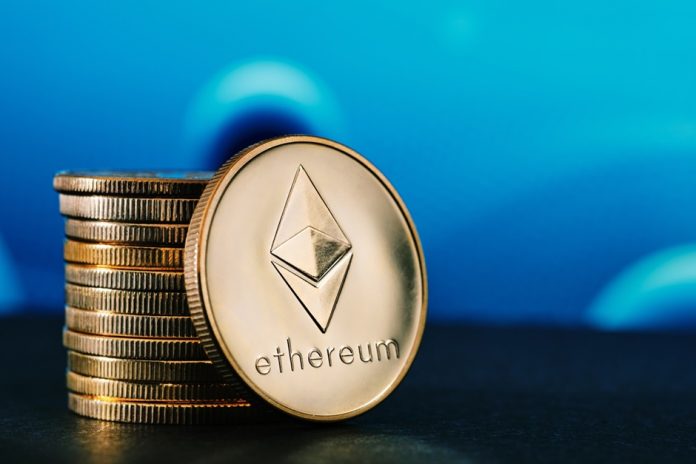
Why a Spot ETF is a Game-Changer for Ethereum

Ethereum, the second-largest cryptocurrency by market capitalization, has been on a remarkable rally in the past year, reaching new all-time highs and gaining more adoption and recognition from investors, developers, and regulators.

However, one of the main challenges that Ethereum faces is the lack of accessibility and liquidity for retail investors who want to gain exposure to its price movements without having to deal with the technical and regulatory hurdles of buying and storing it directly.

This is where a spot ETF, or exchange-traded fund, comes in. A spot ETF is a type of investment vehicle that tracks the price of an underlying asset, such as Ethereum, and allows investors to buy and sell shares of the fund on a regulated stock exchange, just like any other stock.

A spot ETF differs from a futures-based ETF, which tracks the price of futures contracts that are derived from the underlying asset and may not reflect its true value due to factors such as contango, backwardation, and rollover costs.

A spot ETF for Ethereum would be a game-changer for several reasons. First, it would provide a simple and convenient way for retail investors to access the Ethereum market without having to worry about the complexities and risks of buying and storing it themselves. This would lower the barriers to entry and increase the demand and liquidity for Ethereum, which could boost its price and adoption.

Second, it would provide a more accurate and transparent representation of the Ethereum market than a futures-based ETF, which may suffer from tracking errors and discrepancies due to the nature of futures contracts. A spot ETF would reflect the actual spot price of Ethereum at any given time, which would benefit both investors and regulators who want to have a clear picture of the market dynamics.

Third, it would enhance the credibility and legitimacy of Ethereum as an asset class, as it would attract more institutional investors who are looking for regulated and compliant ways to invest in cryptocurrencies. A spot ETF would also signal that regulators are becoming more comfortable and supportive of Ethereum and its potential to transform various sectors of the economy through its decentralized applications.

A spot ETF for Ethereum would be a game-changer for the cryptocurrency industry, as it would provide a more accessible, accurate, and credible way for investors to participate in the Ethereum market. While there are still some regulatory and technical challenges to overcome before such a product can be launched, there is no doubt that the demand and interest for it are growing rapidly. A spot ETF for Ethereum would not only benefit Ethereum itself, but also the entire ecosystem of developers, users, and innovators who are building on its platform.

Access Bank Holdings Obtains CBN License to Establish A Consumer Lending Subsidiary

0

Nigerian multinational commercial bank, Access Bank Holdings plc has received the Central Bank of Nigeria (CBN) approval-in-principle, to establish a consumer lending subsidiary to be known as Oxygen X Finance Company Limited.

The bank announced that the proposed subsidiary will make a positive impact on the financial landscape by providing innovative and seamless digital lending solutions to address distinct challenges faced by businesses and individuals.

The proposed subsidiary will commence operation upon obtaining the final operating license from the Central Bank of Nigeria.

Access Bank Holdings’ launch of a lending subsidiary is the second diversification the company is making after a week ago, it announced the acquisition of Lagos-based Megatech Insurance Brokers.

Both of these are part of the corporation’s plan to branch out from core banking into new areas within the financial services sector in a bid to diversify and grow more revenue.

With the launch of Oxygen X, Access Bank seeks to target micro-SMEs and retail customers including lower and middle-income salary earners as well as self-employed individuals as its clientele.

According to its 5-year strategy document, the lending subsidiary product offerings encompass traditional consumer and SME lending (asset and device, financing, personal loans, working capital financing), emerging consumer lending (Buy Now Pay Later, savings & investment products, and value-added services.

While other lending companies in the financial services space have focused on fintech, Access Bank holdings has become the first to make a play for standalone digital lending with the launch of Oxygen X.

The bank’s lending subsidiary (Oxygen X) will look to compete with digital lenders like Opay and Carbon in the growing consumer lending industry in Nigeria.

The consumer lending industry in Nigeria, is reported to be growing at a significant rate. It is worth noting that in the first quarter of 2023, the Central Bank of Nigeria disclosed that Consumer credit in Nigeria rose by 1.3 percent to N2.35 trillion, from N2.32 trillion in the previous quarter.

Personal loans constituted a substantial portion, totaling N1.75 trillion or 74.5 percent, while retail loans accounted for the remaining 25.5 percent at N598.3 billion.

Also, other Depository Corporations (ODCs) contributed about 7.8% of consumer credit in Q3 2023. Based on the sectoral distinction, these ODCs constitute mostly of fintech lending startups, microfinance banks, and players in the alternative lending market, among others.

Financial experts have stated that the surge in consumer credit in Nigeria, is indicative of the evolving financial landscape in the country, with fintech playing a pivotal role in expanding access to credit and formal financial services.

8 Bites in a bleak January with some hope for a strong Cryptofuture

0

Coindesk 20 endorsed by Perpetual Futures

I’ve long argued that those declaring FIAT as worthless are contradicting themselves – when saying the value of a cryptocurrency is rising, measured against a FIAT – for example the US Dollar.

Other instruments rising or falling against the $USD often says more about what is happening to the $USD and the US Economy, than it is about whatever the other instrument is.

You could probably say the same about instrument comparisons to any of the other IMF reserve currencies – Euro, Yuan (Renminbi), Pound and Yen.

Worthless means worth 0. So it doesn’t matter if an instrument (crypto or not) did 2x , 10x or whatever.

Even 1000x zero is still zero. That’s a mathematics fundamental.

The Coindesk 20 has been around for a while.

What’s new, is that ‘Perpetual Futures’ based on the ‘Bullish’ CEX index, which owns CoinDesk, could help the CoinDesk 20 become a widely followed benchmark akin to the 128-year-old Dow Jones Industrial Average.

This creates the seeds for a mechanism for wider adoption of acknowledging the cryptofinance space should feature movers and shakers, which provide a better way of analysing performance than comparative worth with a FIAT.

Bullish, run by former NYSE President Tom Farley, offers futures contracts based on the CoinDesk 20

Take that, ETF.

Coindesk , no stranger to advertorials paid for by actors on EVM compatible networks, may not be the most transparent and reliable entity to impartially view the cryptocurrency spectrum as a whole.

However, they are a first mover in this area, and may become more impartial if the service moves in the direction of becoming core income.

Uses Content from Coindesk.

New launch by Parallel

Parallel, an NFT sci-fi card game, is preparing to launch tournaments and Planetfall, with plans to conduct public testing on Steam and Epic platforms.

The Parallel game is composed of digital collectible cards that can be used to build a deck of cards and played in an online/mobile game currently in development. Players will need to collect a minimum set of cards to compose a playable deck that is associated with one of the five Parallels — Earthen, Marcolian, Augencore, Kathari, and Shroud. Players can create more than one deck of cards, and play as any of the Parallels for each match.

The co-founder of Parallel, Kalos, also revealed that the company will be entering into significant collaborations with key markets. In October 2021, Parallel secured $50 million in funding, led by Paradigm.

Uses content from Foresight.

Gamestop shutting down their NFT marketplace

GameStop is shutting down its NFT marketplace about a year and a half after its launch.

The marketplace’s closure will happen Feb. 2, 2024.

It was previously a Jim Cramer pick, who described GameStop as ‘With Profits’

Despite the shutdown, previously minted tokens on blockchains remain accessible and can be traded on other platforms.

It is pointed out, they are not ‘genuine’ NFTs, as the bulk data relating to a GameStop mint remains off-chain on Immutable X or Loopring, as compared to genuine NFTs, which would be minted according to ERC 721, wholly and directly to the Eth core.

The departure from the crypto-tokenization space was not explained.

GameStop is well known for its retail stores, but had been expanding into the virtual domain amid struggles in the physical gaming sector.

Another nail in the coffin for the misuse of EVM Compatible technology for tradeable assets, to which this specific part of the wider Blockchain Ecosystem is unsuited.

Uses content from investing.com

SOL based token hit by ‘0x’ hacker

SolDragon’s token DRAGON has experienced a nearly 100% drop. The attacker, identified as 0x4c79, has exchanged a significant amount of DRAGON tokens for 1006.36 BNB, valued at approximately $304,600

SolDragon is a token minted off the Solana Network.

The Soldragon website doesn’t say a lot about any products in its ecosystem, or what the token is intended to support. The single page site merely makes a vague reference to 2024 being Chinese ‘Year of the Dragon’ (Starts February 10).

The rest of the site just says how to buy Soldragon –

  1. Use Phantom or other wallets that support you to own SOL
  2. Buy for yourselves some SOL via some reputable CEXs and send them to your wallet
  3. Choose the Buy link on our Social or do it manually by pasting the contract on Raydium to buy

It’s got a ‘Tokenomics’ section that doesn’t explain much beyond the total supply being 100m tokens. The footer section does carry links to its X and Telegram accounts which may have more information than the website.

Uses content from Foresight

Top 8 Bitcoin Lightning Wallets 2024

Bitcoin Lightning wallets support a process of the majority of transactions to take place off-chain, with the transactions broadcasted to the Bitcoin mainnet only after the user closes a payment channel.

They are software based, i.e. ‘hot’ wallets and carry greater risk than a cold wallet like my Ledger Nano X.

Some folk are ok with hot solutions, but they are less than ideal for ‘hodling’ virtual assets.

The list: Wallet of Satoshi – The best Lightning Bitcoin wallet overall

Breez – A Lightning node in your pocket

Phoenix – A non-custodial Bitcoin Lightning wallet

Strike – A popular Bitcoin payment app partnered with Shopify

Zap – A Lightning wallet software for desktop and mobile devices

Muun – A Lightning wallet combining the benefits of on- and off-chain transactions

Blue Wallet – A powerful Bitcoin wallet with Lightning Network support

ZEUS Wallet – A Bitcoin Lightning wallet that caters to both power users and the average user

If like me, you try to keep Web3 related engagements away from the Android, or iOS operating platforms, then Zap is the best pick.

Uses content from coincodex.com

Nigerian Communications Commission (NCC) halts MTN Nigerias’ existing permission to disconnect Globacom (Glo) subscribers.

MTN Nigeria and Globacom Limited (Glo) are two of the leading MNOs (Mobile Network Operators) in Nigeria. It seems that Glo had been leasing services from MTN and Glo customers are running on MTN networks. The NCC, with strong regulatory and administrative powers, had given MTN permission to disconnect Glo from its services due to outstanding debts.

MTN Nigeria and Globacom Limited (Glo) have since come to an accommodation privately, so the NCC has retracted the disconnection order, with effect from today (January 18). Adhering to NCC instructions is a condition of spectrum licences, without which MNOs cannot legally operate in Nigeria.   – Uses content from Techeconomy NG

COTI Foundation takes Privacy Seriously

Blockchain development company COTI Foundation has announced a $25 million grant through its ecosystem fund to promote the development of privacy-focused projects.

The first recipient of this funding is Soda Labs, a participant in the encrypted multi-party computation (MPC) field. Soda Labs will lead research efforts to expand garbled circuit protocols and other multi-party computation (MPC) protocols, ensuring secure and scalable privacy networks for COTI users.

-Uses content from Binance News

Africa Stablecoin Consortium Delays cNGN Launch

The Africa Stablecoin Consortium has announced the delay of the launch of its anticipated cNGN stablecoin, intended to happen on 17 February.

The consortium, consisting of Pan-African banks, fintech firms, and blockchain entities, blamed the delay on slow progress of regulatory clearance.

cNGN is intended to operate like USDT and USDC across multiple public blockchains, and similarly, will be backed by a Naira reserve.

Management of cNGN will remain with the consortium unlike the eNaira (CBDC) which is managed by CBN (Central Bank of Nigeria).

The eNaira made history in October 2021 as only the second CBDC in the world (after China).

The eNaira is built on top of the Hyperledger Fabric blockchain protocol, which is an open-source project started by the Linux foundation. The project has implemented this as a private blockchain network. eNaira nodes are only run by CBN and a limited number of third parties it approved. It is capable of 3,000 TPS.

The eNaira is seen as an expensive failure, with negligible adoption rates.

– Uses content from Techdigest .ng and Cornell University.

9ja Cosmos is here…

Get your .9jacom and .9javerse Web 3 domains  for $2 at:

.9jacom Domains

.9javerse Domains

Visit 9ja Cosmos LinkedIn Page

Visit 9ja Cosmos Website

Preview our Sino Amazon/Sinosignia releases