DD
MM
YYYY

PAGES

DD
MM
YYYY

spot_img

PAGES

Home Blog Page 3836

Samsung Ushers in The Era of AI on Smartphones with The launch of Groundbreaking Galaxy S24 Ultra

0

In a symphony of technological advancements, South Korean multinational manufacturing conglomerate, Samsung, has ushered in the era of Artificial Intelligence (AI) on smartphones, with the latest launch of the extraordinary Galaxy S24 Ultra.

Unveiled at the Galaxy Unpacked 2024, the S24 Ultra comes with several AI features aimed at enhancing use, especially the phone’s most fundamental role, communication. When users need to defy language barriers, the S24 ultra makes it easier than ever.

Speaking on the rollout of the groundbreaking S24 Ultra, the President and Head of Mobile experience (MX) Business at Samsung Electronics, TM Roh said,

“The Galaxy S24 series transforms our connection with the world and ignites the next decade of mobile innovation. Galaxy AI is built on our innovation heritage and deep understanding of how people use their phones. We are excited to see how our users around the world empower their everyday lives with Galaxy AI to open up new possibilities.”

The S24 Ultra comes with a major design update, marking a move to a titanium frame (available in four colors: titanium yellow, grey, violet, and black), unlike its previous flagship that featured an aluminum chassis. Samsung says the new frame allows for better durability.

Here is an overview of some amazing features of the newly launched Samsung S24 Ultra

Interpreter Feature

The Samsung S24 Ultra comes with an Interpreter feature, that enables live conversations to be instantly translated on a split-screen view, so people standing opposite each other can read a text transcription of what the other person has said. It works without cellular data or Wi-Fi.

Chat Assist

For messages and other apps, Chat Assist can help perfect conversational tones to ensure communication sounds as it was intended. The Al built into the Samsung Keyboard can also translate messages in real-time in 13 languages.

The organization also gets a major boost with Note Assist in Samsung Notes, featuring Al-generated summaries, template creation that streamlines notes with pre-made formats, and cover creation to make notes easy to spot with a brief preview.

Online Search

In the S24 ultra, Galaxy marks a milestone in the history of search as the first phone to debut intuitive, gesture-driven Circle to Search with Google. To give Galaxy users an incredible new tool, Galaxy turned to the worldwide leader of search, Google, and opened up new forms of discovery with a simple gesture.

With a long press on the home button, users can circle, highlight, scribble on, or tap anything on Galaxy S24’s screen to see helpful, high-quality search results.

Improved Camera

Galaxy S24 comes with a proVisual Engine, which is a comprehensive suite of Al-powered tools that transform image-capturing abilities.

The S24 Ultra camera works with the 50MP sensor to enable optical-quality performance at zoom levels from 2x, 3x, and 5x to 10×10 magnification thanks to the Adaptive Pixel Sensor. Images also show crystal clear results at 100x with enhanced digital zoom.

After pictures are captured, innovative Galaxy Al editing tools enable simple edits like erase, re-compose and remaster. For easier and more efficient optimizations, Edit Suggestion12 uses Galaxy Al to suggest perfectly suitable tweaks for each photo.

When a picture is crooked, Al will fill in the borders. When an object needs to be slightly moved to be in the perfect position, Al lets users adjust the position of the subject and generates a perfectly blended background in its original spot.

Advanced Security And Privacy

The S24 ultra comes with Advanced Security and privacy which empowers user Choice and Trust Secured by Samsung Knox, Galaxy’s defense-grade, multi-layer security platform.

The feature safeguards critical information and protects against vulnerabilities with end-to-end secure hardware, real-time threat detection, and collaborative protection.

Also, users have the full controllability over how much they allow their data to enhance Al experiences, through Advanced Intelligence settings which can disable online processing of data for Al features.
If Netanyahu falls, Israel’s democracy will need new political realignments

0
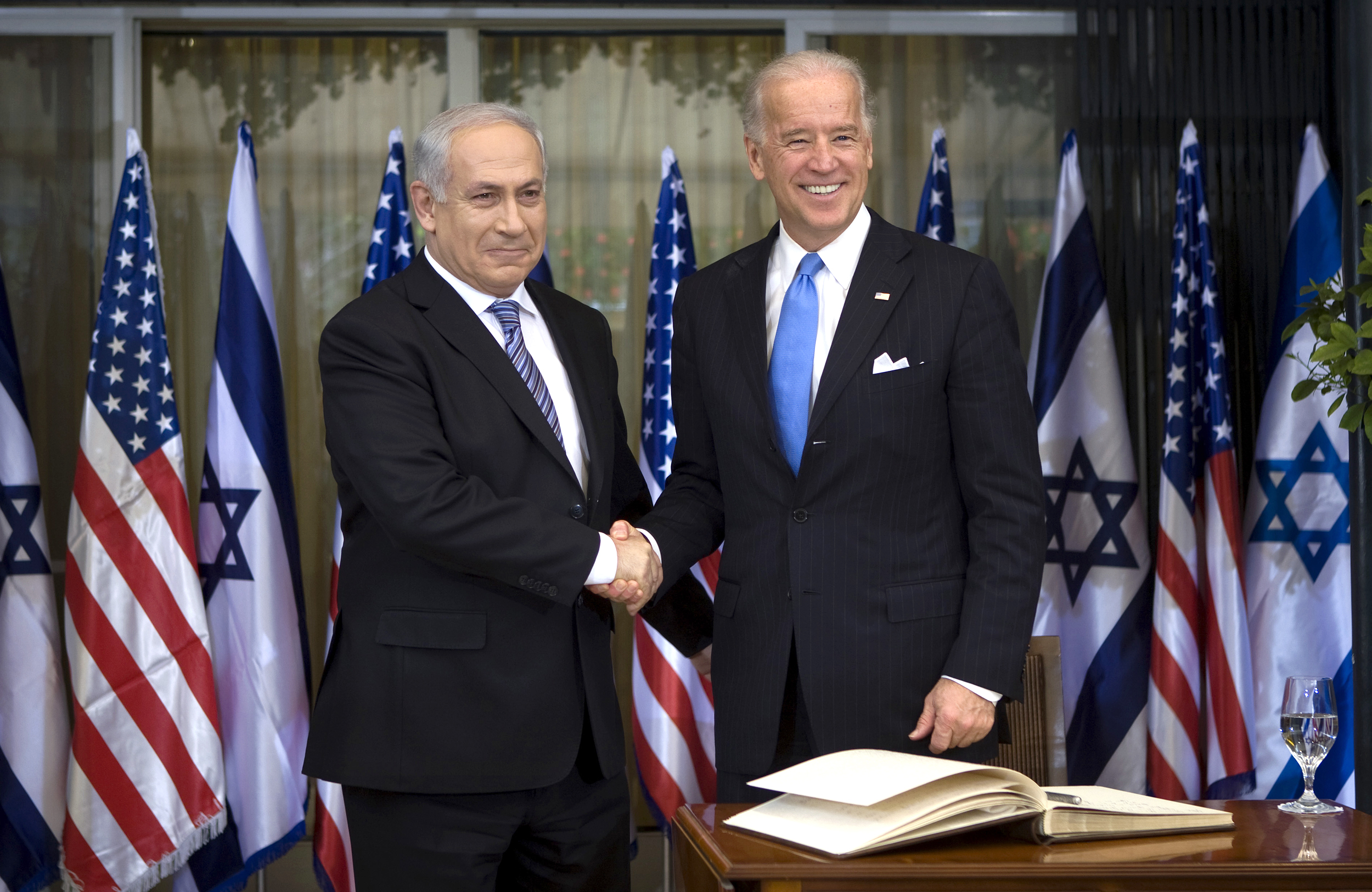
Benjamin Netanyahu and Joe Biden in Jerusalem, on March 9, 2010.

The recent political turmoil in Israel has exposed the fragility of its democracy and the deep divisions within its society. The long reign of Prime Minister Benjamin Netanyahu, who is facing corruption charges and a possible jail sentence, has been challenged by a diverse coalition of parties that span the ideological spectrum, from the far-right to the Arab-led Joint List.

The coalition, led by former Netanyahu ally Naftali Bennett, has agreed to form a government that would end Netanyahu’s 12-year rule and usher in a new era of Israeli politics.

But what would this mean for Israel’s democracy and its future? How would the new government deal with the pressing issues of security, peace, economy, and social justice? And how would it cope with the internal and external pressures that threaten to tear it apart?

One thing is clear: when Netanyahu falls, Israel’s democracy will need new political realignments. The current coalition is unlikely to last long, as it is held together by a common desire to oust Netanyahu rather than a shared vision for the country.

The coalition partners have different and often contradictory agendas, such as annexing parts of the West Bank, pursuing a two-state solution, strengthening the rule of law, or weakening the judiciary. The coalition also faces fierce opposition from Netanyahu’s loyalists, who accuse it of betraying the right-wing voters and forming an illegitimate government with the support of Arab parties.

The new government will have to find a way to balance these competing interests and build trust among its members and the public. It will have to address the deep-rooted problems that plague Israel’s democracy, such as the lack of a constitution, the erosion of civil rights, the discrimination against minorities, and the influence of religion on politics. It will also have to restore Israel’s image and relations with its allies, especially the United States, which have been damaged by Netanyahu’s confrontational style and policies.

The new government will have a historic opportunity to reshape Israel’s democracy and society for the better. But it will also face enormous challenges and risks. It will need courage, wisdom, and pragmatism to succeed. And it will need the support of all Israelis who care about their country’s future.

Israel is a country that prides itself on being the only democracy in the Middle East, but it also faces many challenges and criticisms regarding its political system and its treatment of minorities and the occupied territories. In this blog post, I will explore some of the ways that Israel’s democracy can be improved, based on my own opinions and observations.

One of the main issues that affects Israel’s democracy is the electoral system, which is based on proportional representation with a low threshold of 3.25% for parties to enter the parliament. This system leads to a fragmentation of the political spectrum, with many small parties competing for votes and seats, and often results in unstable coalitions that depend on the support of extremist or sectarian factions.

A possible solution to this problem is to raise the electoral threshold to a higher percentage, such as 5% or 10%, which would reduce the number of parties and encourage more moderation and compromise among them. Alternatively, Israel could adopt a mixed electoral system, with some seats allocated by proportional representation and some by district-based voting, which would increase the accountability and representation of individual candidates and regions.

Another issue that undermines Israel’s democracy is the lack of a written constitution that defines the basic rights and principles of the state and its citizens. Israel has a set of Basic Laws that serve as a quasi-constitution, but they are not comprehensive or coherent, and they can be easily amended or overridden by a simple majority in the parliament.

A written constitution would provide a clear and consistent framework for the rule of law, the separation of powers, and the protection of human rights, especially for minorities and marginalized groups. A written constitution would also help to resolve some of the conflicts between the secular and religious sectors of Israeli society, by establishing the boundaries and limits of state intervention in matters of personal status, education, culture, and public life.

A third issue that affects Israel’s democracy is the ongoing occupation of the Palestinian territories, which has lasted for more than half a century and has created a situation of inequality, oppression, and violence for millions of people. The occupation not only violates international law and human rights norms, but also erodes Israel’s own democratic values and institutions, by creating a dual legal system, a military bureaucracy, a culture of impunity, and a climate of fear and hatred.

The only way to end the occupation and its negative consequences is to reach a just and lasting peace agreement with the Palestinians, based on the two-state solution that recognizes their right to self-determination and sovereignty alongside Israel. Such an agreement would also enhance Israel’s security, legitimacy, and integration in the region and the world.

These are some of the ideas that I have for improving Israel’s democracy, but I am sure that there are many others that could be discussed and debated. I believe that Israel has the potential and the responsibility to become a more democratic, inclusive, and peaceful country, for the benefit of all its citizens and neighbors.

Nigeria has a sovereign debt problem

0

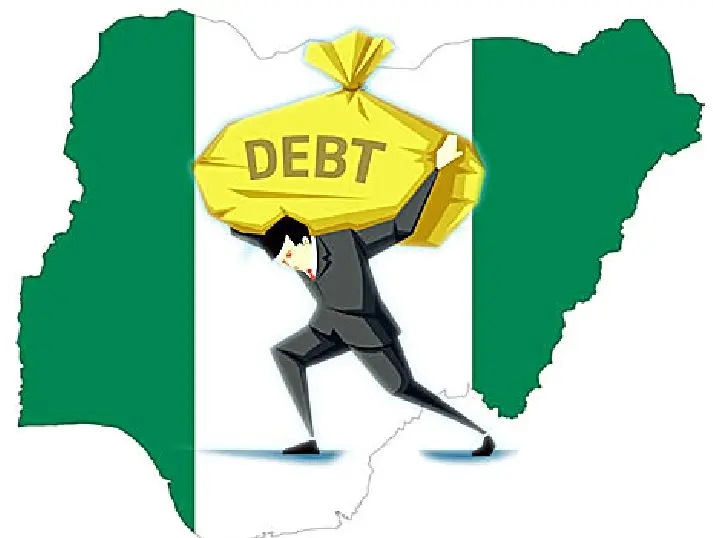
Nigeria has a debt management bureaucracy. We hope it ends there, as if care is not taken, even the ministry of finance will become a ministry of debt management. Yes, our sovereign debt is looking amorphous, unbounded and unconstrained: “Credit ratings agency Fitch has sounded the alarm over Nigeria’s economic challenges, highlighting persistent foreign exchange shortages and a soaring debt service-to-revenue ratio as factors contributing to a precarious sovereign credit rating.

“Gaimin Nonyane, Fitch’s Director of Middle East and Africa Sovereigns, voiced concerns regarding the Central Bank of Nigeria’s (CBN) struggles to amass sufficient foreign exchange reserves, leaving them ill-equipped to clear the forex backlog and meet the substantial external financing needs of the private sector.”

Yet, we must acknowledge the efforts of those tasked with this challenge. That said, we hope they focus on not using finance-only strategy, but production-first strategy. The Federal Government of Nigeria can pick 6 cities in the six geopolitical regions and guarantee 24/7 electricity since it is obvious we cannot deliver such nationwide for 25 years. With that energy certainty, companies will at least know where they can cite their factories.

In AO Lawal’s textbook of economics, he noted that one of the factors which do affect the location and localization of industries is availability of energy. That remains till today, and Nigeria needs to fix that loophole for our Naira to rise again.

Fitch Sounds Alarm Over Nigeria’s Forex Shortages and Soaring Debt: Says it Poses Threats to Economic Stability

Fitch Sounds Alarm Over Nigeria’s Forex Shortages and Soaring Debt: Says it Poses Threats to Economic Stability

0

Credit ratings agency Fitch has sounded the alarm over Nigeria’s economic challenges, highlighting persistent foreign exchange shortages and a soaring debt service-to-revenue ratio as factors contributing to a precarious sovereign credit rating.

Gaimin Nonyane, Fitch’s Director of Middle East and Africa Sovereigns, voiced concerns regarding the Central Bank of Nigeria’s (CBN) struggles to amass sufficient foreign exchange reserves, leaving them ill-equipped to clear the forex backlog and meet the substantial external financing needs of the private sector.

Nonyane drew attention to the current 30% disparity between the official and parallel exchange rates, emphasizing the resultant pressure on the Nigerian naira.

“We think that the central bank is still very well short of the amount it needs to be able to clear the foreign exchange backlog and also meet the extremely large external financing by the private sectors,” she stated.

Toby Iles, Fitch’s Head of Middle East and Africa Sovereigns, echoed Nonyane’s concerns about Nigeria’s economic vulnerability, particularly with interest payments to revenue ratio exceeding 40%. This ratio, four times higher than the median for B-rated sovereigns, poses a significant weakness for the country’s credit rating.

Iles noted that interest-to-revenue ratios across Africa have more than doubled since 2014, driven by heightened borrowing and increased costs due to global interest rate hikes.

The Central Bank of Nigeria has initiated efforts to clear a substantial backlog of foreign exchange forwards, estimated to be around $7 billion, facilitating cash repatriation by companies.

The Minister of Finance, Wale Edun, had last year, acknowledged the impact of the overdue forward payments in the foreign exchange market on the depreciation of the naira. Edun stressed the importance of addressing this issue for the stabilization of the local currency.

To tackle the forex backlog, the CBN announced the government’s move to raise about $10 billion with the assistance of banks.

Earlier this week, the apex bank announced it has successfully cleared approximately $2 billion of the backlog in the past three months and pledged to ensure liquidity in the forex market.

Despite the macroeconomic malaise, including record-level inflation, a weakening naira, and sluggish crude oil production, Fitch currently rates Nigeria at B- with a stable outlook.

However, concerns over Nigeria’s escalating debt levels persist, with the debt service to revenue ratio skyrocketing to 183% in the first quarter of 2023.

The country’s total public debt stands at N87.9 trillion as of Q3, 2023. In the 2024 budget proposal presented to the National Assembly, the federal government intends to borrow N7.83 trillion to address a budget deficit of N9.18 trillion. Despite this borrowing plan, the federal government said it is making concerted efforts to diminish reliance on debts and increase revenue through the Committee on Fiscal Policy and Tax Reforms.

The outcome of these concerted efforts and the ability of the Nigerian government to navigate these economic challenges will play a pivotal role in shaping the country’s economic stability in the coming months.

As Fitch’s warnings denote, addressing forex shortages and managing the debt burden are imperative for Nigeria’s financial resilience and creditworthiness on the global stage.

Kidnapping is rising in Nigeria

0

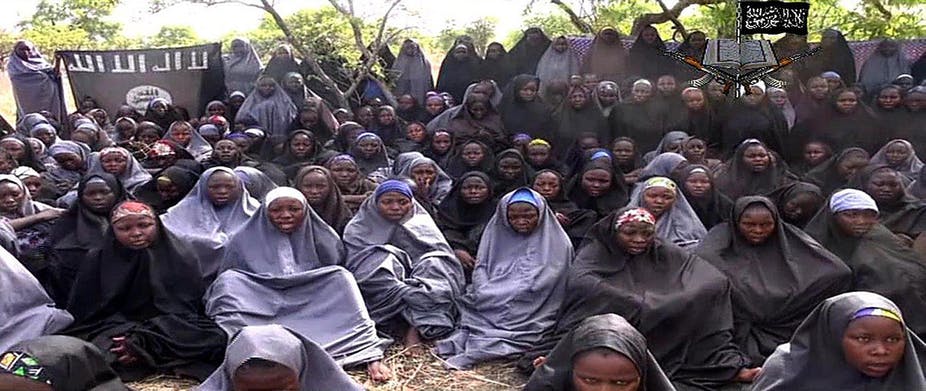
Kidnapping is a serious crime that involves abducting someone and holding them against their will, usually for ransom or political gain. Kidnapping is not a new phenomenon in Nigeria, but it has become more prevalent and violent in recent years.

According to the Global Database on Kidnapping, Nigeria recorded 1,061 kidnapping incidents in 2020, up from 685 in 2019 and 455 in 2018. Nigeria ranks third in the world for the number of kidnappings, behind Mexico and India. There are several factors that contribute to the rise of kidnapping in Nigeria, including:

Economic hardship: Nigeria is facing a recession, high inflation, unemployment and poverty. Many people are struggling to make ends meet and some resort to kidnapping as a way of making quick money. Kidnappers often target wealthy individuals, business owners, politicians, celebrities and foreigners who can pay high ransoms.

Political instability: Nigeria is dealing with various security challenges, such as the insurgency of Boko Haram in the northeast, the separatist movement of the Indigenous People of Biafra (IPOB) in the southeast, the banditry and cattle rustling in the northwest, and the militancy and piracy in the Niger Delta.

These groups often kidnap people for political reasons, such as demanding the release of their members, pressuring the government to meet their demands, or creating chaos and fear.

Weak law enforcement: Nigeria’s security forces are overstretched and underfunded. They lack the capacity and resources to prevent, respond to and investigate kidnapping cases. Many kidnappings go unreported or unresolved due to fear of reprisal, lack of trust in the authorities, or corruption. Some security personnel are even accused of being involved in or facilitating kidnapping activities. Kidnapping has negative impacts on individuals, communities and the country as a whole, such as:

Loss of lives: Many kidnapping victims are killed by their captors if their ransom is not paid or if they try to escape. Some die from injuries, illnesses or torture while in captivity. Some kidnappers also kill innocent bystanders or security personnel during their operations.

Psychological trauma: Kidnapping causes immense psychological distress to the victims and their families. They suffer from fear, anxiety, depression, post-traumatic stress disorder (PTSD), and other mental health issues. Some victims may develop Stockholm syndrome, where they sympathize with their captors. Some families may resort to selling their assets, borrowing money or going into debt to pay the ransom.

Economic loss: Kidnapping affects the economy by disrupting businesses, reducing investments, lowering productivity and increasing costs. Many businesses have closed down or relocated due to kidnapping threats. Many investors have withdrawn or reduced their investments in Nigeria due to security concerns. Many workers have lost their jobs or income due to kidnapping incidents. Many families have spent their savings or incurred debts to pay the ransom.

Social unrest: Kidnapping fuels social unrest by eroding trust, increasing tension and violence, and undermining social cohesion. Many people have lost faith in the government’s ability to protect them and provide basic services. Many communities have formed vigilante groups or armed themselves to defend themselves against kidnappers. Some ethnic or religious groups have blamed each other for kidnapping activities or retaliated against perceived enemies.

How can kidnapping be reduced in Nigeria?

Kidnapping is a complex and multifaceted problem that requires a holistic and coordinated approach from all stakeholders, including:

The government: The government should strengthen its security forces by providing them with adequate training, equipment, intelligence and incentives. The government should also improve its judicial system by ensuring speedy trials, fair sentences and accountability for kidnappers and their accomplices. The government should also address the root causes of kidnapping by implementing economic reforms, social policies and political dialogue.

The civil society: The civil society should raise awareness and educate the public about the dangers and consequences of kidnapping. The civil society should also advocate for the rights and welfare of kidnapping victims and their families. The civil society should also monitor and report on kidnapping cases and hold the government accountable for its actions or inactions.

The media: The media should report on kidnapping cases responsibly and ethically. The media should avoid sensationalizing or glamorizing kidnapping stories or divulging sensitive information that could endanger the lives of the victims or compromise the rescue operations. The media should also highlight positive stories of successful interventions or recoveries.

The private sector: The private sector should invest in security measures to protect their employees, customers and assets from kidnapping threats. The private sector should also cooperate with the authorities and share information on kidnapping incidents or suspects. The private sector should also support social initiatives that aim to prevent or reduce kidnapping.

The individuals: The individuals should be vigilant and cautious about their personal safety and security. The individuals should avoid traveling alone or at night, especially in high-risk areas.

The individuals should also avoid flaunting their wealth or status or sharing too much information about themselves or their activities on social media or other platforms. The individuals should also report any suspicious activities or persons to the authorities or the nearest security agency.