DD
MM
YYYY

PAGES

DD
MM
YYYY

spot_img

PAGES

Home Blog Page 3836

US wage growth is decelerating slower than inflation

0

The latest data from the Bureau of Labor Statistics shows that the average hourly earnings of all employees in the US increased by 4.1% in the year ending in November 2023. This is a slower rate of growth than the previous year, when wages rose by 4.7%. However, this does not mean that workers are worse off. In fact, the opposite is true.

The reason is that inflation, which measures the change in the prices of goods and services, has also slowed down. The Consumer Price Index (CPI), the most widely used measure of inflation, increased by 5.8% in the year ending in November 2023, compared to 6.8% in the previous year. This means that the purchasing power of workers’ wages has actually increased in real terms.

To see this more clearly, we can calculate the real wage growth by adjusting the nominal wage growth for inflation. The formula is: Real wage growth = Nominal wage growth – Inflation.

Using this formula, we can see that the real wage growth in the year ending in November 2023 was: Real wage growth = 4.1% – 5.8% = -1.7%. This means that workers’ wages decreased by 1.7% in real terms. However, this is still better than the previous year, when the real wage growth was: Real wage growth = 4.7% – 6.8% = -2.1%. This means that workers’ wages decreased by 2.1% in real terms.

Therefore, we can conclude that even though nominal wage growth has decelerated, real wage growth has actually improved. This is good news for workers and the economy, as it means that people have more money to spend and save, which can boost consumption and investment.

The lower inflation rate may also ease some of the pressure on consumers, who have been facing higher costs for many goods and services. However, some analysts warn that inflation may not be over yet, as there are still some factors that could push prices higher in the coming months.

The Federal Reserve, which is the central bank of the US, has the dual mandate of maintaining price stability and maximum employment. To achieve these goals, it uses various tools, such as setting the federal funds rate, which is the interest rate that banks charge each other for overnight loans. The federal funds rate affects other interest rates in the economy, such as mortgages, credit cards, and loans, as well as the money supply and inflation expectations.

In response to the rising inflation and strong economic recovery from the pandemic-induced recession, the Federal Reserve started to tighten its monetary policy in late 2022. It announced four interest rate hikes in 2022, raising the federal funds rate from 0.25% to 1.25%. It also signaled that it would continue to raise rates in 2023, with three more hikes expected by June. The Federal Reserve’s actions have had the desired effect of cooling down the inflationary pressures and reducing the demand for goods and services.

Another major factor that contributed to the lower inflation in December was the decline in energy prices. Energy is one of the main components of the CPI basket, accounting for about 7% of its weight. Energy prices are volatile and depend on various factors, such as supply and demand, geopolitics, weather, and technology.

The lower energy prices also had a spillover effect on other categories of the CPI basket, such as transportation and food. Transportation costs fell by 1.9% in December, mainly due to lower airfares and car rental fees. Food costs rose by only 0.2%, compared to 0.9% in November, as lower energy costs reduced the costs of production and transportation of food items.

The fall in inflation in December was welcome news for consumers and businesses, who have been struggling with higher costs and lower incomes for months. However, it is too early to celebrate or relax. Inflation is still above the Federal Reserve’s target of 2%, and there are still many uncertainties and risks that could push it higher again. For example, the new Omicron variant of Covid-19 could disrupt global supply chains and demand patterns; labor shortages and wage pressures could increase production costs; geopolitical tensions could affect oil markets; and inflation expectations could become unanchored.


Amazon Unveils AI Tool That Answers Customers’ Questions

0

In a move to revolutionize its online shopping experience, Amazon has introduced a cutting-edge artificial intelligence tool designed to swiftly address customer inquiries about products.

Amazon spokesperson Maria Boschetti said the move is part of the e-commerce giant’s dedication to innovation and customer satisfaction.

“We’re constantly inventing to help make customers’ lives better and easier, and are currently testing a new feature powered by generative AI to improve shopping on Amazon by helping customers get answers to commonly asked product questions,” she said.

The new feature in Amazon’s mobile app prompts users to pose questions about a specific item, generating responses within seconds by summarizing information sourced from product reviews and listings. This innovation aims to streamline the shopping process, reducing the need for users to navigate through extensive reviews or sift through product details manually.

Unlike OpenAI’s ChatGPT, Amazon’s tool doesn’t engage in conversational interactions but exhibits creative capabilities. For instance, on a women’s vest product listing, the tool can craft a haiku or describe the item in the style of Yoda from Star Wars. The tool is programmed to stay on-topic and issues an error message if faced with queries outside its scope, such as “Who is Jeff Bezos?”

Marketplace Pulse, an e-commerce research firm, was the first to identify this innovative tool, showcasing Amazon’s ongoing commitment to experimenting with generative AI. This introduction is part of a series of AI-driven enhancements Amazon has made to its platform in recent months.

Last June, Amazon initiated tests on AI-generated summaries of product reviews, providing customers with concise insights into others’ experiences with a particular product.

Furthermore, AI features for third-party sellers have been launched, assisting them in crafting product listings and generating visuals for advertisements. Amazon has also unveiled “Q,” an AI chatbot designed to aid companies in daily tasks, and Bedrock, a generative AI service tailored for Amazon Web Services customers.

However, as tech giants like Amazon incorporate AI into their services, concerns about job displacement arise. The integration of automation and AI technologies raises questions about the future of various job roles. While AI streamlines processes and improves efficiency, it also has the potential to replace certain tasks traditionally performed by humans.

The threat to jobs extends beyond Amazon, with other companies also embracing AI. For example, Google has integrated AI algorithms into its search engine, providing users with more accurate and personalized results. Microsoft utilizes AI in its cloud services, automating various tasks and enhancing data analysis. Tesla’s advanced driver-assistance system relies heavily on AI, marking a significant step toward autonomous driving.

During Amazon’s recent earnings call, CEO Andy Jassy highlighted the broader applications of generative AI within the company, mentioning its use in inventory forecasting and optimizing last-mile delivery routes for drivers.

In a conversation with CNBC’s Jim Cramer, Jassy expressed optimism about the transformative potential of generative AI, stating, “Generative AI is going to change every customer experience, and it’s going to make it much more accessible for everyday developers, and even business users, to use. So I think there’s going to be a lot of societal good.”

While the integration of AI holds promises of improved customer experiences and operational efficiency, striking a balance that ensures job security and adaptation to this technological shift is crucial. There are growing calls to address the impact of the technology on employment and foster a workforce that can thrive alongside AI, especially as the resulting job loss becomes an increasingly pressing concern for society at large.

X receives money transmitter license for payment services in Utah

0

X, a leading provider of payment solutions, announced today that it has obtained a money transmitter license from the Utah Department of Financial Institutions. This license enables X to offer its innovative and secure payment services to customers and merchants in Utah, expanding its reach and presence in the US market.

X’s payment services allow users to send and receive money, pay bills, buy goods and services, and access financial products such as loans and savings accounts. X leverages blockchain technology and smart contracts to create a fast, transparent, and low-cost payment network that connects people and businesses around the world.

X’s CEO, Y, said: “We are thrilled to receive the money transmitter license from Utah, which is a testament to our commitment to compliance and consumer protection. Utah is a vibrant and dynamic state with a strong entrepreneurial spirit and a growing demand for digital payment solutions. We look forward to serving the people and businesses of Utah with our innovative and secure payment platform.”

X’s money transmitter license in Utah is the latest milestone in its regulatory journey in the US. X has already obtained money transmitter licenses in 15 other states, including California, New York, Florida, and Texas. X is also pursuing licenses in the remaining states and territories, as well as federal registrations and approvals from agencies such as FinCEN, OFAC, and the IRS.

One of the main challenges that X Money may face is obtaining a license in each state where it operates or has customers. This can be a costly and time-consuming process, as each state has different fees, application forms, background checks, bonding requirements, reporting obligations, and audits. Some states may also impose restrictions on the types of currencies or assets that can be transmitted, such as banning or limiting the use of cryptocurrencies.

Another challenge that X Money may face is complying with federal laws and regulations that apply to money transmitters. These include the Bank Secrecy Act (BSA), which requires money transmitters to register with the Financial Crimes Enforcement Network (FinCEN), implement anti-money laundering (AML) and counter-terrorism financing (CTF) programs, conduct customer identification and verification (KYC), report suspicious activities and transactions (SARs), and maintain records of transactions. X Money may also have to comply with the Office of Foreign Assets Control (OFAC) sanctions programs, which prohibit transactions with certain individuals, entities, countries, or regions.

X Money may also have to deal with other regulatory agencies or authorities that have jurisdiction over payment services, such as the Consumer Financial Protection Bureau (CFPB), the Federal Trade Commission (FTC), the Securities and Exchange Commission (SEC), or state attorneys general. These agencies or authorities may enforce consumer protection laws, privacy laws, securities laws, or other laws that affect the rights and obligations of X Money and its customers.

Despite these challenges, X Money may also offer some benefits and opportunities for the payment services industry in the US. For example, X Money may provide a cheaper and faster alternative to traditional remittance services, which often charge high fees and take days or weeks to complete cross-border transfers.

X Money may also enable greater financial inclusion and access for underserved populations, such as immigrants, refugees, or unbanked individuals, who may not have access to bank accounts or credit cards. X Money may also foster innovation and competition in the payment services market, by introducing new technologies and business models that challenge the status quo.

However, X Money may also pose some risks and challenges for consumers and businesses. For example, X Money may expose users to volatility and security risks associated with cryptocurrencies, such as price fluctuations, hacking attacks, or theft.

X Money may also lack consumer protection mechanisms or guarantees that are available for traditional payment services, such as chargebacks, refunds, dispute resolution, or insurance. X Money may also face legal uncertainty or ambiguity regarding its status and obligations under different jurisdictions and regulations.

X Money is a new platform that aims to revolutionize the payment services industry by using blockchain technology and smart contracts. However, as a money transmitter in the US market, X Money may face various legal and regulatory hurdles that could affect its operations and growth. X Money may also have positive and negative impacts on consumers and businesses who use its services.

Therefore, it is important for X Money to understand and comply with the applicable laws and regulations in each state where it operates or has customers. It is also important for consumers and businesses to be aware of the benefits and risks of using X Money as a payment service provider.

X’s mission is to democratize access to financial services and empower individuals and businesses to participate in the global economy. By obtaining the money transmitter license in Utah, X is one step closer to achieving its vision of creating a more inclusive and efficient payment system for everyone.

How To Change Apple Pay Developer Policy, Not With Court But Innovation

0

The laws of nations shape markets and commerce. And companies advance via business models they operate on. Yes, the US Supreme Court has normalized Apple Pay with an external link – “In the wake of the U.S. Supreme Court’s rejection to hear Apple’s appeal in its protracted legal battle with Epic Games, the tech giant has unveiled a series of substantial adjustments to the App Store Guidelines” – but Apple has also covered its flanks with a new “tax” – “Developers using alternative payment platforms will be subject to a commission of 12% if they are part of the App Store Small Business Program and 27% for other apps”.

Check carefully, there is no alternative: companies do not innovate only to disarm and even courts cannot make that happen.  The only solution to what people call an “unfair” Apple Pay policy is to create a better product than Apple.

Good People, what is the difference between 12 and a dozen? Ask the new Apple Pay policy! Poor Epic Games, you just made some lawyers richer for largely nothing.

Get me right, I am not into those activism. The New York Times refused to pay Twitter but expected people to pay for its content. Microsoft Office did not allow many things until Google Doc came. And Yahoo Mail was terrible with 4MB space until Gmail was launched. Simply, there is a way to put companies in line, and using courts and lawyers rarely deliver any transformational real change, as when you close one, they open another flank. To get real change, a new basis of competition is required and that is the message Apple Pay policy will listen to.

Apple Reverses App Store Guidelines, Allows External Link Payment Following Supreme Court Decision in Epic Games Battle

Global Consensus Emerging on AI Regulation – Microsoft CEO Satya Nadella

0

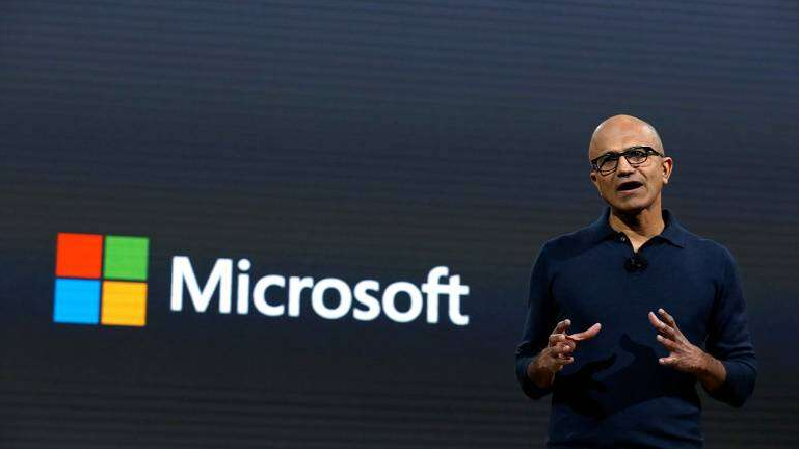
In an interview at the prestigious World Economic Forum in Davos, Switzerland on Tuesday, Satya Nadella, the CEO of Microsoft, shared his perspective on the evolving global consensus surrounding artificial intelligence (AI).

Despite recognizing the diversity in regulatory approaches across different jurisdictions, Nadella pointed at the imperative for global coordination, the establishment of standards, and the implementation of apt guardrails for the burgeoning field of AI.

Engaging in a thoughtful conversation with Klaus Schwab, the Chairman of the World Economic Forum, Nadella articulated the importance of a global regulatory approach to AI, stating, “I think a global regulatory approach to AI is very desirable because I think we’re now at this point where these are global challenges that require global norms and global standards.”

He emphasized the necessity of such unified efforts to effectively confront challenges, enforce regulations, and advance crucial research in the field of AI.

“Otherwise, it’s going to be very tough to contain, tough to enforce, and tough to quite frankly move the needle even on some of the core research that is needed,” Nadella added. “But that said, I must say, that there seems to be a broad consensus that is emerging.

Highlighting Microsoft’s pivotal role in the AI industry, Nadella brought attention to the substantial investments the company has made in OpenAI, a key player in the development of AI technologies. Microsoft’s total contributions, amounting to a staggering $13 billion, exemplify the company’s unwavering commitment to propelling advancements in AI.

Furthermore, Nadella pointed out that OpenAI’s technologies have been seamlessly integrated into Microsoft’s Office, Bing, and Windows products, showcasing the broad applicability of AI across diverse domains.

Nadella acknowledged the global momentum behind the push for consensus on AI rules, citing a significant milestone achieved at an AI safety summit in the U.K. Here, world leaders came together and agreed to collaborate on establishing global standards and frameworks for the safe development of AI.

The Microsoft CEO noted the significance of rigorous evaluations, red teaming, and safety measures, particularly in the context of large language models.

“If I had to sort of summarize the state of play, the way I think we’re all talking about it is that it’s clear that, when it comes to large language models, we should have real rigorous evaluations and red teaming and safety and guardrails before we launch anything new,” said Nadella. Red teaming is a term describing the testing of AI vulnerabilities.

“And then when it comes to applications, we should have a risk-based assessment of how to deploy this technology.”

Discussing the application of AI in specific sectors, Nadella proposed a risk-based assessment for deploying AI technology. He emphasized aligning industry-specific regulations with AI applications, stating, “If you’re deploying it in health care, you should apply health-care regulations to AI; if you’re deploying it in financial services, you should deploy the financial risks or considerations.”

When queried about the potential establishment of a global AI agency for regulating AI, Nadella expressed uncertainty. However, he noted that countries are actively engaging in discussions about applying similar safeguards to AI.

Despite the complexity of the issue, Nadella concluded on an optimistic note, saying, “So I think that, if we take even something as simple as that as a basis to build some consensus and norms, I think we can come together. So I’m hopeful.”

His optimism suggests a shared commitment among nations to navigate the complexities of AI regulation collectively.