DD
MM
YYYY

PAGES

DD
MM
YYYY

spot_img

PAGES

Home Blog Page 3836

YCombinator’s Summer 2023 List Shows That Investors LOVE AI Startups

2

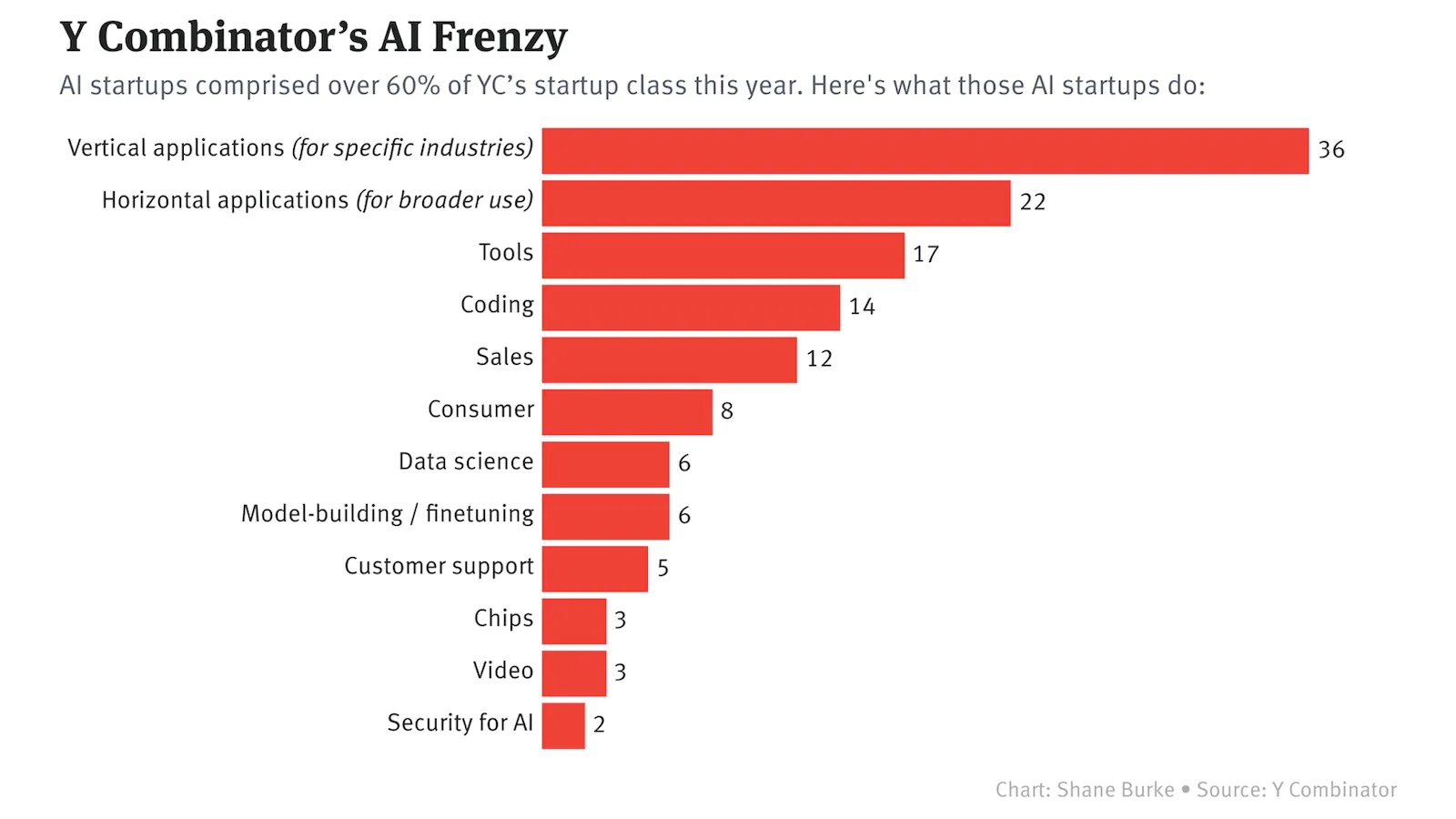
It is an intriguing data from Summer 2023 YCombinator class: of the  218 startups the US-based accelerator is backing, about 159 are broadly AI-anchored companies. The Information wrote: “This year, more than 60% of the group—or 134 startups—are building applications or tools around artificial intelligence, mostly related to large-language models, according to YC’s startup directory. In past YC groups, the percentage of startups bucketed under “AI” has trended below 20%. The huge increase demonstrates the recent fervor from founders and investors alike for this hyped-up industry.” Tekedia Capital Syndicate invested in one of these startups.

Then the shocker: of these 218 companies, only three are coming from Africa (Nigeria, Kenya/Rwanda and Congo/US/Canada)

Finding a native AI-company is challenging in Africa. To balance our portfolio for the next edition of Tekedia Capital investment cycle, as there is just no way we can present the startups to members without an AI company, we resorted to shopping at Silicon Valley, and co-invested with YCombinator.

But what is an AI company? But what is an AI company? In the simplest of terms, a company which applies the wonders of AI in any of the many things we do daily or in company operations, where AI becomes the catalyst to improve performance, reduce cost and accelerate innovation. Yes, you can have an AI application in your agro-business, retail business, ecommerce, etc. It is time for that transformation in Africa. If you are building a really good one, let me know

Child Custody Under Nigerian Law

0

Custody of a child involves the care, control and maintenance of a child as granted by a court to one of his parents as obtainable via an order of court in a divorce or separation suit or a situation of the child being orphaned. 

This article will be focused on the concept of child custody, with a focus on :-

– Factors involved in granting child custody.

– Maintenance of a child in custody

– Legal Framework governing child custody in Nigeria

What are the factors taken into consideration when granting an order of child custody in Nigeria?

The factors that influence who gets a grant of child custody include :-

– The wish of the child

– The conduct/character profile of the parties in the custody dispute

– The age and sex of the child

– The existence of welfare arrangements for the child

– The child’s age and gender

– Medical needs of the child

What are the most important provisions of Nigerian law regarding child custody?

The Matrimonial Causes Act 

– Section 71(1) states that in proceedings with respect to the custody, guardianship, welfare, advancement or education of children of a marriage, the court shall regard the interests of those children as the paramount consideration and subject thereto, the court may make such order in respect of those matters as it thinks proper.

– Under Subsection (1) of the provision above, the court may adjourn all proceedings until a report has been obtained from a welfare officer on such matters relevant to the proceedings as the court considers desirable, and any such report may thereafter be received in evidence.

– In proceedings with respect to the custody of children of a marriage, the court may, if it is satisfied that it is desirable to do so, make an order placing the children, or such of them as it thinks fit, in the custody of a person other than a party to the marriage.

– Where the court makes an order placing a child of a marriage in the custody of a party to the marriage, or of a person other than a party to the marriage, it may include in the order such provision as it thinks proper for access to the child by the other party to the marriage, or by the parties or a party to the marriage as the case may be.

The Child Rights Act

– Section 69 of the Child Rights Act provides that the court may :-

a). On the application of the father or mother of a child make such order as it may deem fit with respect to the custody of the child & the right of access to the child of either parent, having regard to :

– The welfare of the child and conduct of the parent.

– The wishes of the mother and father of the child.

b). Alter, vary or discharge an order made under the paragraph a) above of the Section 69 (1) of the Child Rights Act on the application of :-

– The father or mother of the child.

– The guardian of the child, after the death of the father or mother of the child.

c). In every case, make such order with respect to costs as it may think just.

The power of the court under Section 69 (1) of this section to make an order as to custody of a child and the right of access to the child may be exercised notwithstanding that the mother of the child is at that time not residing with the father of the child .

What are the provisions of Nigerian law regarding maintenance of the child and which party is to financially responsible for it?

The Child Rights Act provides that :

– Where a court makes an order granting custody of the child to one one parent, the court may further order that the other party shall pay to the custodial parent monetary sums towards the maintenance of the child on a weekly or other prescribed time basis as the court may, having regard to the means of the paying parent, think reasonable.

What is the validity of child custody clauses in separation deeds?

Under Nigerian law, no agreement contained in any separation deed made between the father and mother of a child shall be invalid by reason only of its providing that the father of the child gives up the custody or control of the child to the mother.

The Story Of A Man, His Son and a Horse!

0

A man with his son embarked on a journey. They opted to use a horse as their means of transportation. They both mounted on the horse and were riding together when passersby saw them and started complaining and calling them names; accusing them of being wicked to have subjected the horse to such inhuman treatment. The Passersby told them; “How can you both be this wicked, How can two of you sit and ride a horse, Don’t you see that the horse is tired and might collapse, your actions are inhuman and wicked”. 

The man with his son paid attention to what the passersby were saying and decided that only one of them should mount the horse while the other person would trek along the horse. The man asked his son to ride on the horse while he walked alongside them so they wouldn’t be accused of treating the horse harshly. 

Immediately as the journey progressed, they met another set of passersby who severely complained and called the son a prodigal boy and asked him how he was able to comfortably ride on a horse whilst his old and fray-looking father was walking alongside them. The boy was called a series of names and then they decided since it’s like this; they both can’t ride on the horse without being accused of maltreating the horse, only the son cannot ride without people tagging the son as a prodigal, they decided that the father should instead ride on the horse while the son will walk along with them on foot. 

The dad mounted on the horse and the boy trekked alongside as they had decided but immediately the journey progressed they met another set of people who stopped them and asked the father how come he was such an irresponsible man to have mounted himself and ridden on the horse while his young son is walking along on a bare foot. They called the father names, and criticized him for doing that. 

At this point, the father and son decided that they should both walk along on foot with the horse. Since they have met stern criticisms riding the horse together and individually. 

As they were both walking along with the horse, they met another set of people laughing at them and calling them foolish. The people asked them how they had a horse and decided to walk along the horse when they could have ridden on the horse to make their journey smoother and faster.

At this point the father and son have exhausted all their options, having found out that whatever they do there must be people along the way who must murmur, complain or criticize their actions. 

There are many morals and lessons to this story but the most important  moral lesson I want you to pick out today from this  is “Do you”. Do  whatever you feel okay with, don’t be a people pleaser, and don’t pay attention to criticisms. If you do, you will get confused and remain on the spot because people must talk. 

PEPT Judgment: Nigerians Cry Blue Murder As Tribunal Quashes Cases Against Tinubu

0

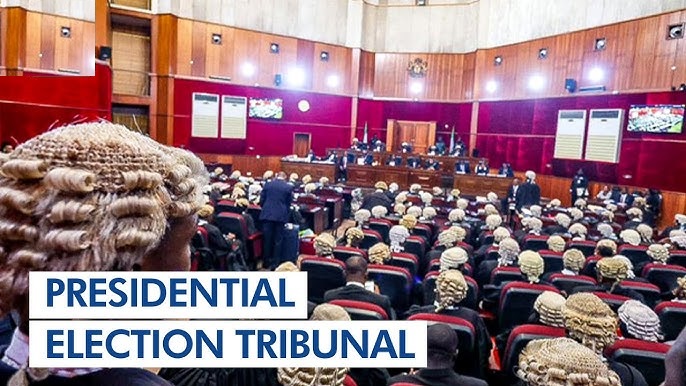
Nigerians are registering their displeasure as the Presidential Election Tribunal delivers its judgment on petitions against the outcome of the February 25 presidential election.

They have cried blue murder, describing the rulings of the PEPT led by Justice Haruna Tsammani as a miscarriage of justice. Other members of the Court of Appeal are: Justice Stephen Adah of the Court of Appeal Asaba division, Justice Misitura Bolaji-Yusuf of the Court of Appeal also of Asaba Division, Justice Boloukuoromo Ugoh of Kano Division and Justice Abba Mohammed of Ibadan Court of Appeal.

The PEPT on Wednesday announced its judgments on suits filed by the Labour Party (LP), the Peoples Democratic Party (PDP), and the APM challenging the election of President Bola Tinubu. 

The petitioners had alleged that Tinubu did not qualify to contest the presidential election owing to his record of forfeiture of $460,000 in proceeds of drug trafficking to the U.S. government. They also alleged that the vice president, Abubakar Shettima, received a double nomination. 

The petitioners also contended that Tinubu did not score 25% of votes in the Federal Capital Territory (FCT) Abuja, as required by law. 

Tinubu’s education also came into question. The petitioners had questioned his claim that he graduated from Chicago State University, without any record of primary and secondary education.

Nevertheless, the bone of contention has been the outcome of the election – which was largely believed to be fraudulent. Voters, political parties, and observers said that the Independent National Electoral Commission (INEC) fraudulently swayed votes to favor Tinubu, thereby subverting the people’s will. 

Based on these and other issues, the petitioners; Peter Obi (LP) and Atiku Abubakar (PDP) had prayed to the tribunal to disqualify Tinubu, with each of them asking to be declared the winner. In the alternative, they asked the court to nullify the election and order a rerun.

However, delivering its judgment, the PEPT quashed most of the prayers. On the issue of INEC’s refusal to comply with the electoral law to transmit results from polling units to IREV in real-time, the court rules: On the substantial non-compliance with provisions of the electoral act as claimed by Peter Obi and the Labour Party, the court holds that INEC can’t be compelled to electronically transmit election results to its results viewing portal or IREV.

On the double nomination charge against Shettima, the court says “disqualification of a candidate on the basis of double nomination is a pre-election matter.” It added that the Vice President’s double nomination was not intentional.

On the forfeiture of $460,000 over an alleged drug case; the court says the case in a US district court in the state of Illinois was a civil matter and not a criminal one. It added that the LP failed to show evidence that Tinubu was arraigned, tried, fined, and sentenced for any criminal offense. The PEPT says Tinubu was not banned from entering the U.S., adding that the U.S. court’s judgment is an action against the property of the president and not an action against his person.

Ruling on the issues of corrupt practices that Obi and the LP alleged marred the election, which include: suppression of votes, inflation of votes, alteration of results, and overvoting, the court says:

“In Rivers and Benue states, during the collation, the petitioners alleged that INEC embarked on massive misrepresentations by uploading fictitious and incorrect votes and that if things had been done properly, they would have won the elections massively in those states. 

“Apart from the figures stated in those 2 states, the other allegations were nebulous. Apart from stating material particulars, other crimes must be pleaded and clearly set out. The proof must be beyond reasonable doubt. The petitioner must produce two sets of results, one genuine, and one false.”

The court also held that Obi’s argument that Tinubu did not score the mandatory 25% in the FCT is “irrelevant.” It says that “the FCT does not enjoy a special status and that Abuja is inhabited by Nigerians and that Abuja does not enjoy any special privilege.”

The PEPT also dismissed 10 out of the 13 witnesses of the Labour Party, saying they lacked probative value. It also held that the EU report on the outcome of the 2023 election was inadmissible.

These, among other judgments of the court centered on the cases of the APM and the LP, have so far been announced against the petitioners, upholding Tinubu’s presidency.

Nigerians cry blue murder

Following the rulings, Nigerians have been expressing their disappointment in the judicial system, saying among other things, that Nigerian courts are for sale.

“To you people thinking Peter Obi Lawyers didn’t file the case well, something is wrong in your head. Their opponents own the field. They own the ball. They own the referee,” Lola Okunri writes on X. “They own the VAR. Peter Obi lawyers cannot escape technicalities bla bla bla. If they do everything right, they will still bring out something. Does this look like sensible judgment to you? Celebrate your nonsense ke koshi danu.”

“Someone who did all that to get into power, you think they’ll just fold hands and wait for some judgment to determine if they will cling on to power or not? The earlier you realize this country is a circus, the sooner you have your peace of mind,” another X user writes.

“These Judges did a better job defending Tinubu than the legal team of Tinubu himself,” Toluwani said.


Grayscale to meet US SEC in the coming week for Possible Conversion of its Funds into Spot Bitcoin ETF

0
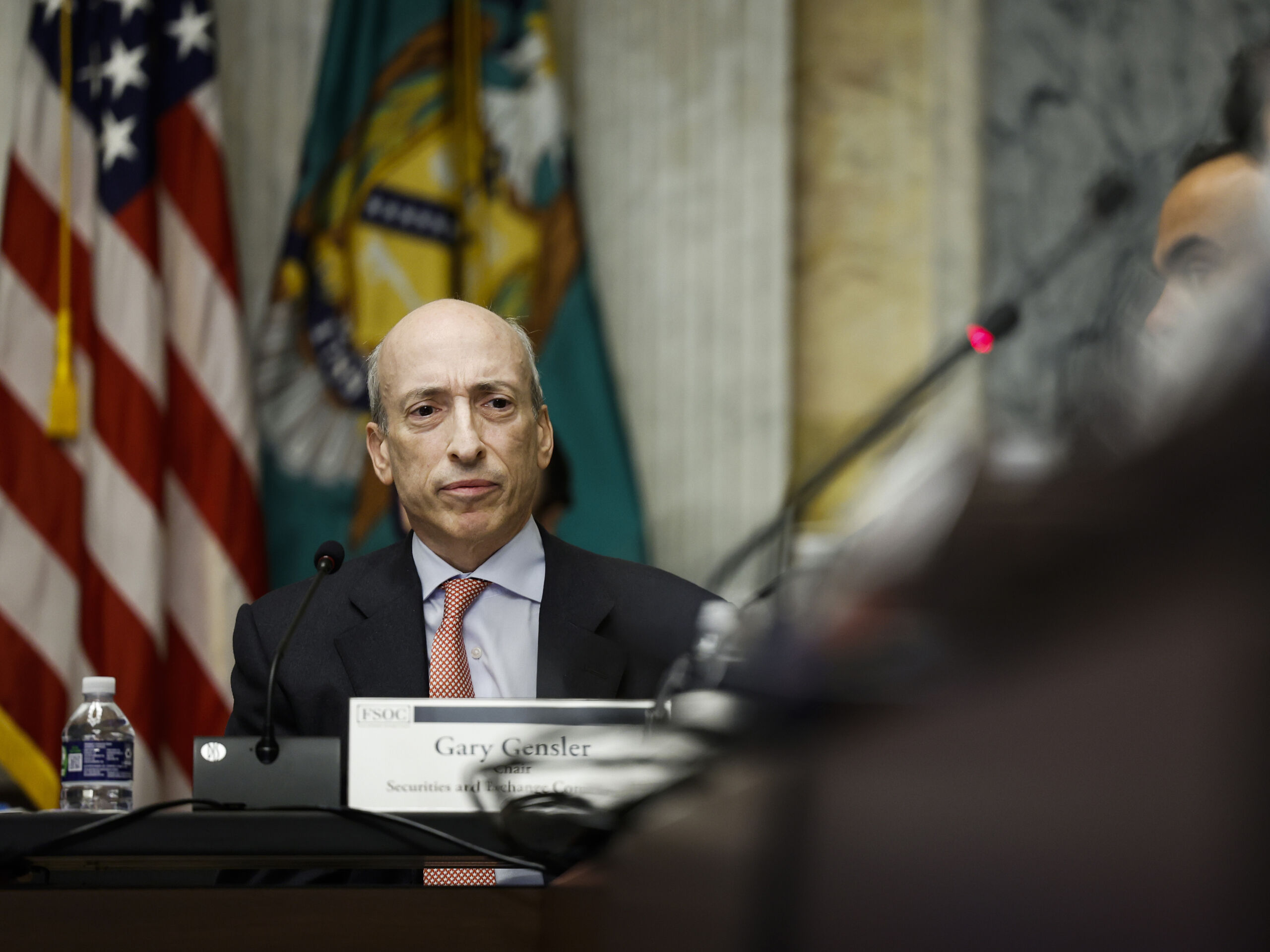
WASHINGTON, DC - OCTOBER 03: Securities and Exchange Commission (SEC) Chair Gary Gensler listens during a meeting with the Treasury Department's Financial Stability Oversight Council at the U.S. Treasury Department on October 03, 2022 in Washington, DC. The council held the meeting to discuss a range of topics including climate-related financial risk and the recent Treasury report on the adoption of cloud services in the financial sector. (Photo by Anna Moneymaker/Getty Images)

Grayscale, the largest digital asset manager in the world, has announced that it has requested a meeting with the U.S. Securities and Exchange Commission (SEC) to discuss the possibility of converting its flagship Grayscale Bitcoin Trust (GBTC) into a spot Bitcoin exchange-traded fund (ETF).

This move comes after the SEC approved several Bitcoin futures ETFs in October, which have attracted billions of dollars in inflows from investors seeking exposure to the cryptocurrency market. However, Grayscale argues that a spot Bitcoin ETF would be more beneficial for investors, as it would track the actual price of Bitcoin rather than the futures contracts, which often trade at a premium or discount to the spot price.

Grayscale also claims that a spot Bitcoin ETF would reduce the operational and regulatory risks associated with holding Bitcoin directly, as well as lower the fees and expenses for investors. Currently, GBTC charges a 2% annual management fee, while the Bitcoin futures ETFs charge between 0.65% and 1% per year.

Futures-based bitcoin ETFs use contracts that promise to buy or sell bitcoin at a specified price and date in the future. They do not hold any actual bitcoin, but rather trade on derivatives markets that reflect the price movements of the underlying asset. Spot-based bitcoin ETFs, on the other hand, hold actual bitcoin in custody and track its market price directly.

One might expect that spot-based bitcoin ETFs would be more popular than futures-based ones, since they offer a more direct and accurate exposure to the cryptocurrency. However, in reality, futures-based bitcoin ETFs have been more successful in attracting investors and gaining regulatory approval.

There are several reasons why futures-based bitcoin ETFs are more popular than spot ones. Here are some of them:

Regulatory hurdles: Spot-based bitcoin ETFs face more challenges from regulators, who are concerned about the security, custody, and transparency of the underlying bitcoin. Futures-based bitcoin ETFs, however, do not have to deal with these issues, since they do not hold any actual bitcoin. They only have to comply with the rules and regulations of the derivatives markets, which are more established and familiar to regulators.

Cost efficiency: Futures-based bitcoin ETFs tend to have lower fees and expenses than spot-based ones, since they do not have to incur the costs of buying, storing, and securing bitcoin. They also avoid the risks of theft, loss, or hacking of the underlying bitcoin. Spot-based bitcoin ETFs, however, have to pay for these services and bear these risks, which can eat into their returns.

Liquidity and volatility: Futures-based bitcoin ETFs benefit from the high liquidity and low volatility of the derivatives markets, which allow them to trade more efficiently and smoothly. They also have access to leverage, which can amplify their returns or losses. Spot-based bitcoin ETFs, however, are subject to the liquidity and volatility of the actual bitcoin market, which can be more erratic and unpredictable. They also have no leverage, which limits their potential gains or losses.

Investor preference: Futures-based bitcoin ETFs appeal to a wider range of investors, who may not want to deal with the complexities and hassles of owning and managing actual bitcoin. They also cater to investors who want to speculate on the price movements of bitcoin without taking a long or short position on the cryptocurrency itself. Spot-based bitcoin ETFs, however, are more suitable for investors who want to own and hold actual bitcoin as a long-term investment or a hedge against inflation.

Grayscale’s CEO Michael Sonnenshein said in a statement: “We believe now is the time to convert GBTC into an ETF, and we are eager to make our case to the SEC for why they should approve our application. We have been working closely with our legal and regulatory advisors to prepare for this meeting, and we are confident that we can address any concerns or questions that the SEC may have.”

Grayscale’s meeting with the SEC is expected to take place in the coming weeks, but there is no guarantee that the regulator will approve its proposal. The SEC has been cautious about allowing spot Bitcoin ETFs, citing concerns about market manipulation, fraud, custody, and investor protection. The SEC’s chairman Gary Gensler has indicated that he prefers Bitcoin futures ETFs over spot ones, as they fall under the more stringent rules of the Commodity Futures Trading Commission (CFTC).

However, Grayscale is not giving up on its vision of creating a spot Bitcoin ETF, which it believes would be a game-changer for the crypto industry and its investors. Grayscale’s GBTC is currently the largest crypto fund in the world, with over $40 billion in assets under management. If it converts into a spot Bitcoin ETF, it will become the first and largest of its kind in the U.S., potentially attracting more institutional and retail investors to the crypto space.