DD
MM
YYYY

PAGES

DD
MM
YYYY

spot_img

PAGES

Home Blog Page 3839

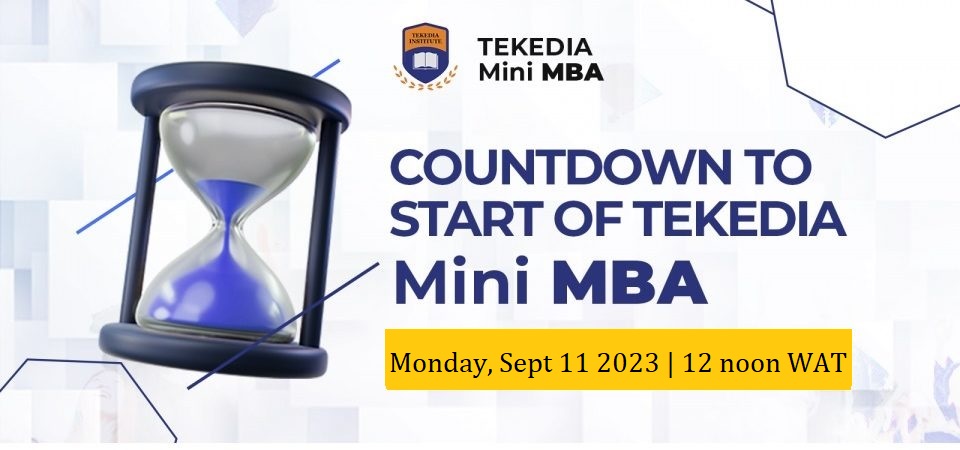
Countdown to the Start of Tekedia Mini-MBA – Monday, Sept 11, 2023

0

Do not miss this academic knowledge festival which begins at 12 noon WAT on Monday, Sept 11, 2023 . The knowledge of a people is the wealth of a people. Tekedia Institute is the temple for the mastering of the mechanics of Africa’s entrepreneurial capitalism.

We have got many NEW courses developed by business executives from companies you admire. Go into the future of markets with them. Be a #Champion. Be an #Innovator. Ascend into that New #leadership position. We have got the tools to help you. But you need to come to the festival.

Register today and join us here .

I will be the main compass and I promise you, you will graduate with deeper insights on business, your personal economy and your world. Tekedia Mini-MBA >> the #best school

Kraken Enables PayPal Deposits in UK and Europe, As Ex FTX Exec Pleads Guilty

0

Kraken, one of the leading cryptocurrency exchanges in the world, has announced that it is gradually enabling PayPal deposits for its users in the UK and Europe. This is a major milestone for the platform, as it will allow its customers to easily and securely fund their accounts with fiat currency using one of the most popular payment methods in the world.

According to a blog post by Kraken, the PayPal integration will be rolled out in phases, starting with the UK, where users can already deposit GBP via PayPal. The next phase will include Germany, France, Italy and Spain, where users will be able to deposit EUR via PayPal. The final phase will cover the rest of the European countries that Kraken supports.

To use PayPal as a deposit method, users will need to have a verified Kraken account and a verified PayPal account. The minimum deposit amount is 10 GBP or EUR, and the maximum is 35,000 GBP or EUR per transaction. There is also a 0.9% deposit fee, which is lower than most other fiat funding options on Kraken.

Kraken claims that PayPal deposits are fast and convenient, as they only take a few minutes to complete. Users can also benefit from PayPal’s security features, such as buyer protection and fraud prevention. Additionally, users can link their bank accounts or debit cards to their PayPal accounts, which gives them more flexibility and choice when funding their Kraken accounts.

Kraken’s PayPal integration is part of its ongoing efforts to improve its fiat on-ramps and off-ramps, and to make cryptocurrency more accessible and mainstream. Earlier this year, Kraken also launched its mobile app in Europe, which allows users to buy and sell cryptocurrencies on the go. With PayPal deposits, Kraken hopes to attract more users who are looking for a simple and reliable way to enter the crypto space.

Ex-FTX Exec Ryan Salame to plead guilty to Criminal Charges

Ryan Salame, a former executive at the cryptocurrency exchange FTX, is expected to plead guilty to criminal charges related to his involvement in a fraudulent scheme, according to a report by Bloomberg. Salame, who served as the head of over-the-counter trading at FTX until June this year, was arrested in July along with two other individuals for allegedly participating in a conspiracy to defraud investors of more than $20 million.

According to the indictment, Salame and his co-conspirators operated a fake cryptocurrency trading platform called Coinflux, which they used to solicit funds from unsuspecting victims. They allegedly lured investors with false promises of high returns and manipulated the prices of digital assets on the platform. They also allegedly transferred some of the funds to their personal accounts and used them for lavish expenses.

Salame is facing charges of wire fraud, securities fraud, and money laundering, which carry a maximum sentence of 20 years in prison each. He is scheduled to appear in a federal court in Manhattan on September 15, where he is expected to enter a guilty plea, Bloomberg reported, citing unnamed sources familiar with the matter.

FTX, which is one of the largest and fastest-growing cryptocurrency exchanges in the world, has distanced itself from Salame and his alleged crimes. The company said in a statement that it was not aware of Salame’s activities and that it terminated his employment as soon as it learned of his arrest. FTX also said that it cooperated fully with the authorities and that it was not a target of the investigation.

The case against Salame and his co-conspirators is part of a broader crackdown by the U.S. government on fraud and misconduct in the cryptocurrency industry, which has seen a surge in popularity and value in recent years. The authorities have warned investors to be wary of scams and schemes that exploit the hype and volatility of the digital asset market.

Nigeria’s Telecom Sector Contributed 16% in Q2 2023, to The GDP

0

In a recent report published by the Nigerian Communications Commission (NCC), Nigeria’s telecom sector significantly contributed 16 percent in the second quarter (Q2) of 2023, to the country’s GDP.

Executive Vice Chairman of NCC, Prof. Umar Danbatta, said that from a 14.13 percent contribution in the first quarter of 2023, and up from the 15 percent all-time high record contributed in the second quarter of 2022, the telecom sector set a new record with the 16% contribution.

Prof. Danbatta noted that from about 8 percent contribution to GDP in 2015, the telecom quarterly GDP has increased significantly to reach its current threshold of 16 percent and that this has continued to positively impact all aspects of the economy.

In his words,

“Through sustained regulatory excellence and operational efficiency by the commission, the industry has grown in leaps and bounds over the past two decades and this has impacted on all other sectors of the economy. The effective regulatory regime emplaced by the NCC and with the support from all stakeholders has been our major success factor as an industry”.

As the telecom sector strives to contribute significantly to the Nigerian economy, it is however faced with barriers to deployment, ranging from fiber cuts, the high capital requirement for deployment, multiple taxation, regulations, and right of way (RoW), amongst others.

On connectivity challenges, the NCC disclosed that some clusters of access gaps all over the country have been identified, and a significant drop in the number of access gaps has been recorded, as it continues to drive initiatives that boost access to telecommunications services.

With its efforts to stimulate infrastructure development, effective allocation of spectrum, and driving the e-government ecosystem, the NCC is confident that the commission will attain a 50 percent broadband penetration threshold by the end of 2023 and 2025.

The telecommunications sector in Nigeria has been contributing greatly to Nigeria’s GDP reaching new heights yearly.  Through the effective regulatory environment put in place by NCC, the sector has recorded tremendous growth from an initial investment profile of $500 million as of 2001.

In 2022, the sector contributed a whopping N10.126 trillion, as an aggregate quarterly contribution to the nation’s GDP.

The growth trajectory has continued this year as the telecommunications and information services sector delivered a handsome N2.508 trillion in terms of financial value contribution to the nation’s gross domestic product, GDP, representing 14.13 percent in the first quarter of 2023.

The sector has continued to show a positive outlook, which is credited to the innovative and predictable telecom regulatory environment promoted, and implemented by the NCC.

Taiwan to Ban Offshore Crypto Exchanges Operations if not Compliant with Regulations

0

Taiwan is taking a tough stance on offshore cryptocurrency exchanges that offer services to its residents without complying with local regulations. According to a senior official from the Financial Supervisory Commission (FSC), the island nation plans to ban such platforms from operating in its jurisdiction.

Taiwan is one of the most progressive and innovative countries in Asia when it comes to cryptocurrency and blockchain technology. The island nation has a vibrant and diverse crypto community, with many startups, exchanges, investors, and enthusiasts. Taiwan also has a supportive and pragmatic regulatory environment, which allows for the development and adoption of crypto-related products and services.

The FSC’s Securities and Futures Bureau Deputy Director-General Tsai Li-ling said that the regulator has been monitoring the activities of offshore crypto exchanges and has found some of them to be violating the Money Laundering Control Act and the Terrorism Financing Prevention Act. She added that the FSC will soon issue a notice to these exchanges, asking them to stop providing services to Taiwanese customers or face legal consequences.

Tsai explained that offshore crypto exchanges are required to register with the FSC and obtain a license before they can operate in Taiwan. She said that the FSC has already issued licenses to six local crypto exchanges, but none of the offshore ones have applied for one. She also warned that Taiwanese customers who use unlicensed offshore crypto exchanges may face risks such as fraud, hacking, or money laundering.

Taiwan does not have a specific law or regulation that defines or regulates cryptocurrencies. Instead, cryptocurrencies are treated as virtual commodities, which means they are subject to the general rules of the Civil Code and the Commodity Inspection Act. This also means that cryptocurrencies are not considered as legal tender, securities, or electronic currencies in Taiwan.

However, this does not mean that cryptocurrencies are unregulated or illegal in Taiwan. The Financial Supervisory Commission (FSC), the main financial regulator in Taiwan, has issued several guidelines and notices to clarify the legal status and obligations of crypto-related businesses and activities. For example, the FSC has stated that:

Crypto exchanges are required to register with the FSC and comply with anti-money laundering (AML) and counter-terrorism financing (CTF) rules.

Crypto transactions are subject to income tax and capital gains tax, depending on the nature and purpose of the transaction.

Crypto mining is legal in Taiwan, but miners need to obtain a license from the Ministry of Economic Affairs and pay electricity fees according to their consumption.

Crypto ICOs are allowed in Taiwan, but issuers need to follow the Securities and Exchange Act and disclose relevant information to investors.

Crypto derivatives are subject to the Futures Trading Act and need to be approved by the FSC before launching.

Taiwan is constantly updating and improving its crypto regulations to keep up with the fast-changing and evolving crypto industry. The FSC has established a dedicated task force to study and monitor the development of crypto-related businesses and activities, and to propose new rules and measures when necessary.

The FSC has also expressed its intention to adopt a more comprehensive and holistic approach to crypto regulations, which would cover aspects such as consumer protection, market integrity, financial stability, innovation, and international cooperation.

One of the main goals of the FSC is to create a friendly and conducive environment for crypto innovation and adoption in Taiwan, while ensuring that potential risks and challenges are properly addressed. The FSC has stated that it welcomes constructive feedback and suggestions from the crypto community and other stakeholders, and that it is open to dialogue and collaboration with them.

Taiwan is undoubtedly one of the most promising and attractive markets for crypto enthusiasts and entrepreneurs in Asia. With its progressive and pragmatic crypto regulations, Taiwan offers a unique opportunity for anyone who wants to explore and participate in the crypto space there.

The FSC’s move is part of its efforts to enhance the oversight and regulation of the crypto industry in Taiwan, which has seen a surge in popularity and adoption in recent years. The FSC has also been working on drafting a comprehensive legal framework for crypto assets, which is expected to be completed by the end of this year. The FSC hopes that by establishing clear and consistent rules, it can foster a healthy and orderly development of the crypto market in Taiwan, while protecting the interests and rights of investors and consumers.

Nigeria is losing out on Blockchain Regulations

0

Blockchain technology is a revolutionary innovation that has the potential to transform various sectors of the economy, such as finance, health, education, agriculture, and governance. Blockchain is a distributed ledger that records transactions in a secure, transparent, and immutable way, without the need for intermediaries or central authorities. Blockchain can enable faster, cheaper, and more efficient transactions, as well as enhance trust, accountability, and inclusion.

However, despite the immense benefits of blockchain, Nigeria is lagging behind in adopting and regulating this technology. According to a recent report by Chainalysis, Nigeria ranks eighth in the world in terms of cryptocurrency adoption, but it has no clear legal framework or guidelines for blockchain and crypto-related activities. This creates uncertainty and risks for both users and investors, as well as limits the growth and innovation of the blockchain industry in Nigeria.

One of the major challenges facing blockchain regulation in Nigeria is the lack of coordination and collaboration among different stakeholders, such as the government, regulators, industry players, academia, civil society, and consumers. There is no unified vision or strategy for blockchain development and regulation in Nigeria, and different agencies have conflicting or overlapping mandates and interests.

For instance, the Central Bank of Nigeria (CBN) has issued several circulars warning against the use of cryptocurrencies and restricting banks from facilitating crypto transactions, while the Securities and Exchange Commission (SEC) has recognized crypto assets as securities and proposed a regulatory framework for them. Moreover, there is a lack of awareness and education among the public and policymakers about the benefits and risks of blockchain technology, as well as the best practices and standards for its implementation.

Therefore, there is an urgent need for Nigeria to develop a comprehensive and coherent policy and regulatory framework for blockchain technology, that balances innovation and protection, fosters collaboration and coordination among stakeholders, and aligns with global trends and standards. Such a framework should:

Define the scope and classification of blockchain and crypto assets and clarify the roles and responsibilities of different regulators and agencies.

Establish clear rules and guidelines for blockchain and crypto-related activities, such as licensing, registration, reporting, taxation, consumer protection, anti-money laundering, cybersecurity, dispute resolution, etc.

Promote a conducive environment for blockchain innovation and development, by providing incentives, funding, infrastructure, research, education, and capacity building for the blockchain industry and ecosystem.

Encourage public-private partnerships and stakeholder engagement, by creating platforms for dialogue, consultation, feedback, and collaboration among the government, regulators, industry players, academia, civil society, and consumers.

Harmonize Nigeria’s blockchain policy and regulation with regional and international standards and best practices.

Blockchain technology has been gaining popularity in Nigeria in recent years, as it offers a decentralized and transparent way of storing and transferring data. However, blockchain also poses some challenges and risks for the government, such as tax evasion, money laundering, cybercrime, and regulatory uncertainty. Therefore, it is important for Nigeria to increase regulation on blockchain to ensure its safe and responsible use.

One possible way to increase regulation on blockchain is to establish a clear legal framework that defines the rights and obligations of blockchain users, service providers, and authorities. This would help to create trust and accountability in the blockchain ecosystem, as well as to protect the interests of consumers, investors, and the public. A legal framework could also provide guidelines for dispute resolution, data protection, and compliance with existing laws.

Another possible way to increase regulation on blockchain is to foster collaboration and coordination among different stakeholders, such as the government, the private sector, the civil society, and the international community. This would help to share best practices, exchange information, and harmonize standards and policies on blockchain. Collaboration and coordination could also facilitate innovation and development of blockchain solutions that address the needs and challenges of Nigeria.

A third possible way to increase regulation on blockchain is to promote education and awareness on blockchain among the public and the relevant sectors. This would help to increase the understanding and acceptance of blockchain technology, as well as to reduce the fear and mistrust that may arise from its novelty and complexity. Education and awareness could also empower the users and service providers of blockchain to make informed decisions and to use blockchain responsibly.

Blockchain technology offers many opportunities and benefits for Nigeria, but it also requires careful regulation to ensure its security, legality, and sustainability. By establishing a clear legal framework, fostering collaboration and coordination, and promoting education and awareness on blockchain, Nigeria can increase regulation on blockchain and harness its potential for social and economic development.

By adopting a proactive and holistic approach to blockchain regulation, Nigeria can leverage this technology to enhance its economic growth, social development, and global competitiveness. Blockchain technology offers Nigeria a unique opportunity to leapfrog its development challenges and achieve its vision of becoming a leading African economy in the 21st century.