DD
MM
YYYY

PAGES

DD
MM
YYYY

spot_img

PAGES

Home Blog Page 3839

Apple Appeals As Import Ban on Certain Company Watches Takes Effect

0

In a legal dispute between Apple, the tech giant, and Masimo, a medical monitoring technology company, Apple has lodged an appeal on Tuesday contesting the ruling that prohibits the import of specific Apple Watches. This decision came after President Biden opted not to veto the tribunal’s verdict.

The ban was initiated based on a complaint lodged by Masimo, accusing Apple of infringing upon its pulse oximetry technology.

Masimo accused Apple of illicitly integrating Masimo’s pulse oximetry technology into its coveted Apple Watch series, notably the Series 6, utilizing mechanisms for blood-oxygen-level assessments three years ago. Masimo contends that Apple engaged in talent poaching and misappropriation of its technology, igniting a fierce legal feud that has captured industry attention.

The ban, imposed by the U.S. International Trade Commission (ITC), serves as a hurdle obstructing the import and sales of Apple Watches employing this contested technology.

Despite Apple’s fervent plea to suspend the ban during the appeals process, the ITC dismissed the request, compelling Apple to swiftly challenge the decision before the U.S. Court of Appeals for the Federal Circuit.

“We vehemently oppose the USITC decision and the resulting exclusion order,” said an Apple spokesperson in a statement to CNBC, noting the company’s urgent efforts to expedite the return of affected Apple Watch models to American consumers.

However, the ban’s ripple effects extend beyond Apple’s sales sphere, dealing a blow to its wearables, home, and accessory division, which raked in $8.28 billion in revenue during the third quarter of 2023.

In response to Apple’s move, Masimo, the aggrieved party in this legal skirmish, has remained tight-lipped, refraining from commenting on Apple’s appeal and the subsequent developments.

While the embargo lingers, the U.S. Customs and Border Protection gears up to deliver a verdict by Jan. 12 on whether revamped iterations of Apple Watches violate Masimo’s patents. Apple stands poised, awaiting this crucial decision, aiming to alleviate the ban’s impact and resume sales of the affected watch models.

This legal saga pinpoints a growing trend of intellectual property disputes in the US tech industry – now including healthcare. The outcome of Apple’s appeal and the impending customs ruling are expected to wield significant influence, potentially reshaping the availability of these Apple Watch models in the U.S. market.

The ban does not impact the Apple Watch SE, a more affordable model, and sales of this particular version will persist. Additionally, previously sold watches are not subject to the ban and remain unaffected by these developments.

This standoff between Apple and Masimo echoes past patent disputes within the tech industry, notably reminiscent of the 2013 reversal of an import embargo on Apple’s products in a patent altercation with Samsung during the tenure of President Barack Obama’s administration.

In February, the Biden administration decided against vetoing an independent import ban on Apple Watches, which was established due to a patent-infringement complaint filed by medical technology company AliveCor, per CNBC. However, the ban imposed by the ITC has been suspended for other reasons.

Amidst this protracted legal wrangle, the fate of Apple’s Series 9 and Ultra 2 watches remains uncertain, leaving consumers and industry stakeholders on edge.

Apple is now asking a federal court to overturn a sales ban on two models of its popular smartwatches. The company was forced to stop selling its Apple Watch Series 9 and Ultra 2 in the U.S. after a federal trade agency found that Apple infringed on two patents for a blood-oxygen sensor held by Masimo. On Tuesday, the White House ultimately decided against reversing the sales ban. The stakes are high, since the Apple Watch — driven largely by sales of the Series 9 and Ultra 2 — accounts for about $17 billion in revenue. Apple’s Vision Pro mixed-reality headset is expected to be launched in retail stores in late January or February, analysts and insiders say. (LinkedIn News)
Nigeria Needs A Consumer Credit System for an Era of Responsible Lending and Borrowing

0

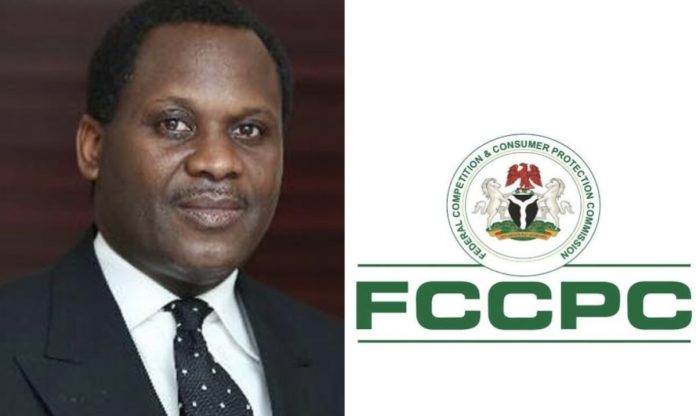
Nigeria’s Federal Competition & Consumer Protection Commission (FCCPC) is working. I think the team there is doing a great job. Since Babatunde Irukera arrived, we have seen decent reforms there. We commend all the team for serving.

Yet, I want to challenge the FCCPC on the new frameworks: “The Federal Competition & Consumer Protection Commission (FCCPC) has announced plans to roll out a new regulatory framework to address the rising debt rate to loan apps in 2024.” I do think we know why people are borrowing more as the matter is clear: sovereign, corporate and consumer debts in Nigeria are climbing, and that typically happens when incomes and expenses cannot balance without loans.  This calls for a more nuanced approach as we unveil new frameworks.

Yes, if a man needs to borrow N10,000 to take his sick child to a hospital and only online lenders can provide that fund, blocking that N10,000 to save him from debt, may not be appreciated by him. Indeed, we need to invest efforts to deepen responsible lending and borrowing, and that includes a credit system in the nation.  There is no way we can protect the citizens and the lenders without developing a functioning credit system, and I challenge  FCCPC to drive that playbook, especially in the consumer domain.

“One of the big issues that we’re seeing is that there’s now a significant level of loan default because people are not able to use these unethical and inappropriate loan recovery mechanisms and I’m insistent that you cannot say to me that the only language Nigerians understand is to abuse them. No, I disagree.  

“We must necessarily do the work no matter how hard it is to find a more sensible way to recover loans because I also agree that if these digital money lenders are unable to recover their loans and drop out of the market, it’s a consumer protection problem because of those who need those types of short-term unsecured lending. 

So, we have to find the balance and so some of the regulations that will come out in 2024 will be abroader approach to responsible borrowing and responsible lending by individuals and corporates. I’m hopeful that the future of what we’re building is that even school landlords would be able to report to a centralized credit system about the conduct of tenants, students, and parents so that we can know each person’s level of fiscal responsibility or credit wordiness.

“So, we can address that if there is a central place where they could get information about individuals and their creditworthiness. If you don’t have access to credit you must build your responsibility and your creditworthiness and so there’s quite a lot still in the pipeline that we’ve been working on and we anticipate that 2024 will cause that to emerge.”

Loan Indebtedness: FCCPC Nigeria Announces Plan to Roll Out New Regulatory Framework to Curb Rising Debt Rate in 2024

Loan Indebtedness: FCCPC Nigeria Announces Plan to Roll Out New Regulatory Framework to Curb Rising Debt Rate in 2024

0

The Federal Competition & Consumer Protection Commission (FCCPC) has announced plans to roll out a new regulatory framework to address the rising debt rate to loan apps in 2024.

This was disclosed by the Chief Executive Officer of the commission, Mr. Babatunde Irukera, during a live program on TVC, stating that the high rate of unpaid debts is alarming, hence the need to address it.

He lauded the commission for its efforts in reducing abuse and harassment of several loan apps to defaulters but however noted that Nigerians taking loans from these platforms have continued to default. Irukera further added that the rising debt rate could lead to the collapse of the digital lenders that are also playing critical roles in the nation’s economy.  

In his words,

“One of the big issues that we’re seeing is that there’s now a significant level of loan default because people are not able to use these unethical and inappropriate loan recovery mechanisms and I’m insistent that you cannot say to me that the only language Nigerians understand is to abuse them. No, I disagree.  

“We must necessarily do the work no matter how hard it is to find a more sensible way to recover loans because I also agree that if these digital money lenders are unable to recover their loans and drop out of the market, it’s a consumer protection problem because of those who need those types of short-term unsecured lending. 

So, we have to find the balance and so some of the regulations that will come out in 2024 will be abroader approach to responsible borrowing and responsible lending by individuals and corporates. I’m hopeful that the future of what we’re building is that even school landlords would be able to report to a centralized credit system about the conduct of tenants, students, and parents so that we can know each person’s level of fiscal responsibility or credit wordiness.

“So, we can address that if there is a central place where they could get information about individuals and their creditworthiness. If you don’t have access to credit you must build your responsibility and your creditworthiness and so there’s quite a lot still in the pipeline that we’ve been working on and we anticipate that 2024 will cause that to emerge.”

As Nigerian traditional institutions are often unwilling to offer loans, this has spurred a lot of people to resort to Digital Money Lenders (DMLs) for loans.

While the FCCPC plans to launch a new regulatory framework to address the rising rate of indebtedness to loan apps, it can be quite a Herculean task due to Nigeria’s dwindling economic situation.

The rising cost of living has forced many Nigerians to borrow from online lending platforms, as default rates continues to rise. Experts say that there has been a significant increase in the rate of lending caused by high inflation, poverty, unemployment, and other economic challenges facing the country.

Russia to Make Significant Bitcoin Mining Data Centers in Africa

0

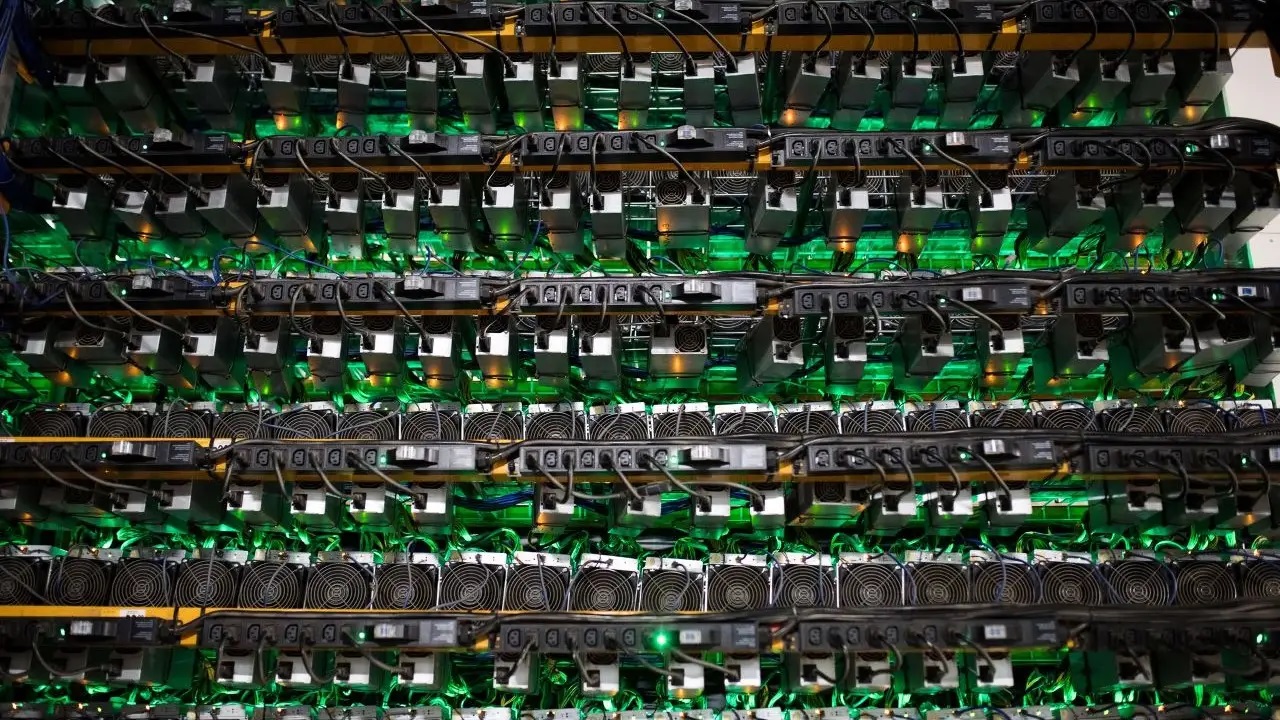
Russia is planning to establish a large-scale Bitcoin mining operation in Africa, according to a recent report by CoinDesk. The project, which is expected to cost around $200 million, will be located in an undisclosed African country and will have a capacity of 400 megawatts.

The mining facility will be used to produce cryptocurrencies and other digital assets that require intensive computational power and electricity. By locating the facility in Africa, Russia aims to reduce its carbon footprint and environmental impact, as well as to gain a competitive edge in the global market for digital currencies and technologies.

The report cites anonymous sources who claim that the Russian government is behind the initiative, as part of its efforts to diversify its economy and reduce its dependence on oil and gas exports. The sources also say that the project will use renewable energy sources, such as solar and wind, to power the mining rigs and reduce the environmental impact of Bitcoin mining.

Bitcoin mining is the process of creating new bitcoins by solving complex mathematical problems using specialized hardware. The process consumes a lot of electricity, which makes it expensive and challenging to operate in countries with high energy costs or unreliable power grids.

By setting up a mining facility in Africa, Russia hopes to take advantage of the continent’s abundant and cheap renewable energy resources, as well as its favorable climate and political stability. Renewable energy, such as solar, wind and hydro power, has many benefits for the environment and the economy. It reduces greenhouse gas emissions, enhances energy security, creates jobs and stimulates innovation.

The project is also seen as a strategic move by Russia to increase its influence and presence in Africa, which is considered to be one of the fastest-growing regions in the world. By investing in Bitcoin mining, Russia aims to foster economic cooperation and development with African countries, as well as to promote the adoption and use of cryptocurrencies in the region.

The report does not specify when the project will be launched or which African country will host it, but it suggests that it could be operational by the end of 2024. The report also notes that Russia is not the only country interested in Bitcoin mining in Africa, as China and Iran have also been exploring the possibility of setting up similar operations in the continent.

Russia is pursuing a strategy of establishing a mining facility in Africa, aiming to leverage the continent’s plentiful and low-cost renewable energy sources. The facility would allow Russia to increase its production and competitiveness in the global market, while also reducing its environmental impact and dependence on fossil fuels.

JPMorgan is Starting to get Loud about Its Blockchain Products

0

J.P. Morgan, one of the world’s leading financial institutions, has recently announced that it is ramping up its efforts to promote and expand its blockchain product suite, Onyx. Onyx is a platform that leverages distributed ledger technology (DLT) to provide innovative solutions for payments, clearing and settlement, trade finance, and digital asset management.

According to the company’s website, Onyx aims to “reimagine the way the world moves money and conducts business” by harnessing the power and potential of blockchain. Some of the products that are part of Onyx include:

JPM Coin: A digital currency that enables instantaneous cross-border payments and settlement between institutional clients.

Liink: A network that connects banks and corporates to streamline information exchange, verification, and compliance processes.

Confirm: A solution that facilitates the confirmation of foreign exchange trades and reduces operational risks and costs.

IIN: An interbank information network that enables faster and more secure cross-border payments by sharing payment-related data among participating banks.

Dromaius: A platform that digitizes trade finance transactions and enables real-time visibility, collaboration, and automation across the trade ecosystem.

J.P. Morgan has been vocal about its blockchain ambitions and achievements in various forums and media outlets. For instance, the company recently hosted its annual Blockchain Summit, where it showcased its Onyx products and shared insights from its blockchain experts and partners.

The company also published a report titled “Blockchain 2025: A Roadmap for Digital Asset Adoption”, where it outlined the drivers, challenges, and opportunities for blockchain adoption in various sectors and regions.

The company’s blockchain leadership has also been recognized by several industry awards and rankings. For example, J.P. Morgan was named as one of the “Most Innovative Companies in Blockchain” by Fast Company in 2020, and as one of the “Blockchain 50” by Forbes in 2021. The company also ranked first in the “Blockchain in Banking” category in the 2021 IDC FinTech Rankings.

J.P. Morgan’s blockchain journey is not without challenges, however. The company faces competition from other financial institutions, technology firms, and startups that are also developing and deploying blockchain solutions.

Moreover, the company has to navigate the complex and evolving regulatory landscape that governs the use of blockchain and digital assets in different jurisdictions. Additionally, the company has to overcome the technical and cultural barriers that may hinder the adoption and integration of blockchain across its businesses and clients.

To illustrate the value proposition of Onyx, here are some quotes from some of J.P. Morgan’s clients who have used or are planning to use its blockchain products:

“We are excited to be a part of Liink as it will help us streamline our payment processes and enhance our customer experience.” – Rajesh Mehta, Regional Head of Treasury Services for Asia Pacific at Citi

“We see JPM Coin as a game-changer for cross-border payments. It will enable us to settle transactions faster, cheaper, and more securely.” – Takis Georgakopoulos, Global Head of Wholesale Payments at J.P. Morgan

“We are impressed by the capabilities of Dromaius as it will allow us to digitize our trade finance operations and reduce manual work and errors.” – Daniel Schmand, Global Head of Trade Finance at Deutsche Bank

“We are looking forward to using Confirm as it will simplify our foreign exchange trading process and improve our risk management.” – Marc Badrichani, Global Head of Markets at J.P. Morgan

Nonetheless, J.P. Morgan seems determined to pursue its blockchain vision and mission with Onyx. As Umar Farooq, the CEO of Onyx, said in a recent interview: “We are shifting from being builders to being operators of this network. We are bringing people to actively use the network.”

CCTP launch has increased USDC liquidity and activity across Cosmos Blockchain

Meanwhile, the Cosmos Blockchain has witnessed a significant boost in USDC adoption and circulation since the launch of the Cross-Chain Transfer Protocol (CCTP) last month. The CCTP is a decentralized protocol that enables the seamless transfer of USDC, the world’s leading digital dollar stablecoin, between different blockchains.

This allows users to access a wide range of decentralized applications (DApps) and services across the Cosmos ecosystem, such as DeFi, NFTs, gaming, and more.

According to the latest data from CoinGecko, the total value locked (TVL) of USDC on Cosmos has increased by over 300% since the CCTP launch, reaching over $1.5 billion as of December 26, 2023. The number of active USDC addresses on Cosmos has also grown by more than 400%, surpassing 100,000. Moreover, the volume of USDC transactions on Cosmos has spiked by over 500%, exceeding $10 billion in the same period.

These impressive figures indicate that USDC is becoming a dominant force in the Cosmos Blockchain, providing users with a fast, secure, and low-cost way to move value across different chains. USDC also offers users a stable and reliable store of value, as it is backed by fully reserved assets and redeemable on a 1:1 basis for US dollars.

Furthermore, USDC is compliant with the highest standards of regulation and transparency, as it is regularly audited by independent firms and governed by the Centre Consortium, a collaboration between Circle and Coinbase.

The CCTP launch has not only increased USDC liquidity and activity on Cosmos, but also enhanced the interoperability and innovation of the entire blockchain industry. By enabling cross-chain transfers of USDC, the CCTP has opened up new possibilities for collaboration and integration between different projects and platforms.

For instance, users can now easily swap USDC for other native tokens on Cosmos using decentralized exchanges (DEXs) such as Osmosis and Gravity DEX. Users can also leverage USDC to participate in lending and borrowing markets on Cosmos using protocols such as Anchor and Kava. Additionally, users can utilize USDC to create and trade NFTs on Cosmos using platforms such as Juno and Starname.

The CCTP launch has been a milestone for both USDC and Cosmos, demonstrating the power and potential of cross-chain communication and coordination. As more blockchains join the CCTP network, USDC will continue to expand its reach and utility across the blockchain space, creating more value and opportunities for users and developers alike. The future of USDC on Cosmos is bright, and we are excited to see what lies ahead.