DD
MM
YYYY

PAGES

DD
MM
YYYY

spot_img

PAGES

Home Blog Page 384

Citadel Explores Expansion in Prediction Markets

0

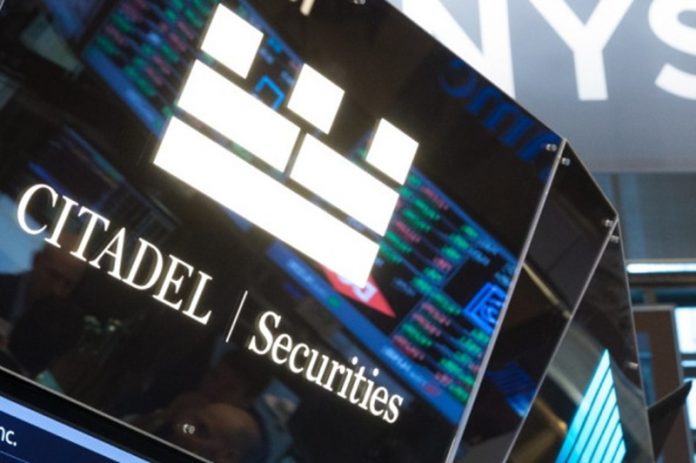
Citadel, the prominent Chicago-based hedge fund founded by Ken Griffin in 1990, is reportedly exploring opportunities in the burgeoning prediction markets sector.

With over $60 billion in assets under management (AUM), Citadel’s potential entry could signal mainstream institutional adoption of these platforms, which allow users to bet on real-world event outcomes like elections, economic indicators, or sports results.

Prediction markets leverage crowd-sourced data for more accurate forecasting than traditional polls, and recent U.S. regulatory shifts—such as the CFTC’s approval of event contracts—have fueled growth.

Bloomberg reported on October 6, 2025, that Citadel is considering launching or investing in a prediction and betting platform. This aligns with broader Wall Street interest in the space, where markets have seen explosive growth post-2024 U.S. elections.

Citadel’s quantitative trading expertise makes prediction markets a natural extension. The firm already dominates high-frequency trading and market-making via Citadel Securities (valued at billions and handling ~40% of U.S. equity volume). Entering here could diversify into event-driven bets, similar to how they’ve profited from volatility in equities and fixed income.

No firm launch date is confirmed, but exploration is in early stages. It may involve building an in-house platform or partnering with existing players, potentially integrating blockchain for decentralized elements.

This move comes amid a prediction markets boom:Investor Inflows: Billionaires like Charles Schwab and Citadel Securities CEO Peng Zhao invested in Kalshi a CFTC-regulated platform in June 2025, valuing it at $2 billion. Henry Kravis KKR co-founder is also backing the sector.

Platforms like Polymarket crypto-native are attracting TradFi. On October 6, 2025, the NYSE’s parent, Intercontinental Exchange (ICE), neared a $2 billion investment in Polymarket, pushing its valuation to ~$9 billion.

Analysts estimate the global prediction markets could reach $1 trillion in volume by 2030, driven by accuracy in forecasting (e.g., Polymarket outperformed polls in 2024 elections).

Crypto communities are hyped, with posts noting ties to Citadel alumni like Kaito AI founder Yu Hu (ex-Citadel). Tokens in the sector (e.g., Limitless, GLM) saw brief spikes, with speculation on 20-30x upside for early projects.

Liquidity remains a hurdle—current volumes ~$1B/month across platforms pale vs. Citadel’s scale. Regulatory scrutiny— gambling vs. info markets could slow rollout. If Citadel commits, it could accelerate TradFi-crypto convergence, drawing more capital and legitimacy.

This development underscores prediction markets’ evolution from niche crypto experiments to Wall Street’s next frontier. Citadel, a $60B+ hedge fund with a reputation for quantitative excellence, entering the space would signal to traditional finance (TradFi) that prediction markets are a viable asset class.

Institutional backing could push prediction market volumes from ~$1B/month (2025) toward the projected $1T by 2030. Citadel’s scale and market-making expertise via Citadel Securities could enhance liquidity, addressing a key bottleneck.

Beyond elections, Citadel could pioneer markets for niche events like corporate earnings, geopolitical risks, or climate outcomes, leveraging its data-driven edge.

Citadel’s entry could bridge TradFi and crypto-native platforms like Polymarket. It might integrate blockchain for transparency while maintaining regulatory compliance, creating hybrid platforms that appeal to both retail and institutional users.

Tokens tied to prediction mamarket like Limitless, GLM could see increased speculation and adoption. Citadel’s move may draw more quant talent from TradFi into crypto, accelerating innovation. The precedent of Citadel alumni like Yu Hu (Kaito AI) suggests a pipeline of expertise.

The CFTC’s 2025 approval of event contracts paves the way, but Citadel’s involvement could push for clearer U.S. regulations distinguishing prediction markets from gambling. This would reduce legal risks and encourage broader adoption.

Citadel’s global reach could influence regulators in Europe and Asia, where prediction markets face stricter scrutiny, potentially harmonizing rules for cross-border platforms. Increased scrutiny from gambling regulators or anti-speculation lawmakers could slow progress, especially if platforms are perceived as enabling unregulated betting.

Kalshi ($2B valuation) and Polymarket ($9B) could face competition if Citadel builds an in-house platform or acquires a player. Its market-making prowess could outpace smaller platforms in liquidity and pricing efficiency.

Alternatively, Citadel might partner with or invest in Kalshi/Polymarket, as seen with ICE’s $2B Polymarket deal. This could consolidate the market, favoring a few dominant players.

Prediction markets’ accuracy outperforming 2024 election polls could be amplified by Citadel’s data analytics, benefiting industries like insurance, policy planning, and risk management.

Citadel’s brand could draw retail investors, especially via user-friendly platforms or integration with brokerage services, democratizing access to prediction markets.

Scaling a prediction market platform requires new infrastructure, regulatory compliance, and user acquisition, which could strain resources. Low liquidity and high volatility in early-stage markets could lead to losses if Citadel overextends without sufficient hedging.

Citadel’s exploration of prediction markets could reshape the sector by driving institutional capital, enhancing liquidity, and bridging TradFi and crypto. It may accelerate regulatory clarity and market growth but risks competition, scrutiny, and operational challenges.


Gold Hits Historic $4,000 Milestone— First Time in History

0

Gold has crossed $4,000 per ounce for the first time ever, marking a watershed moment in financial markets. Spot gold surged above this psychological barrier on October 7, 2025 (Tuesday), with futures trading as high as $4,005.80 per ounce amid heightened global uncertainty.

This caps a remarkable year where gold has gained over 50%, outpacing stocks and bonds as investors flock to the “safe-haven” asset. It’s fueled by a perfect storm of economic and geopolitical pressures.

The Federal Reserve’s ongoing interest rate cuts expected to continue are weakening the dollar, which has dropped about 10% in 2025. Lower rates make yield-less assets like gold more attractive compared to bonds or the dollar.

Echoing the 1979 surge when gold jumped over 100% amid high inflation and Middle East tensions, today’s environment includes sticky inflation, U.S. debt concerns, and a potential recession. Central banks have bought over 100 metric tons of gold in September alone via ETFs.

Trade wars, tariffs, and global conflicts are pushing diversification away from U.S. assets. Foreign central banks are accelerating shifts from U.S. Treasuries to gold, a trend that’s intensified this year.

Hedge fund legend Ray Dalio recommended allocating 15% of portfolios to gold this week, calling it the “one asset that does very well when the typical parts of your portfolio go down.”

This isn’t just hype—gold’s total market value now exceeds $27 trillion, underscoring its role as a hedge against fiat currency erosion. To put this in perspective, here’s a brief timeline of gold’s major milestones spot prices in USD per ounce.

Gold started 2025 around $2,000 and has nearly doubled, with no signs of slowing. Analysts are bullish, but with caveats: Goldman Sachs: Predicts $4,900 by end-2026, driven by central bank demand. A surge in private investor buying could push it to $4,500 sooner.

JP Morgan: Eyes $4,000 by Q2 2026, tied to recession odds. Yardeni Research: Targets $4,000 by year-end 2025 and $5,000 by 2026. Some traders on X warn of resistance at $4,000, with support possibly at $3,900 by late October. Volatility is high—gold’s up 1.6% today alone.

Market chatters are calling it a “gold rush” and a “giant blow to the fiat system,” with memes and charts flooding timelines. One post summed it up: “We are watching history in real time.”If you’re holding or considering gold, this validates its long-term appeal—but remember, it’s volatile.

The Fed’s ongoing interest rate reductions, with more expected, weaken the U.S. dollar down ~10% in 2025. Lower rates make non-yielding assets like gold more attractive than bonds or cash.

Persistent inflation and rising U.S. debt levels nearing $35 trillion are eroding confidence in fiat currencies. Investors see gold as a hedge against currency devaluation.

Escalating global tensions—trade wars, tariffs, and conflicts—are pushing investors and central banks to diversify away from U.S. assets. Central banks bought over 100 metric tons of gold in September 2025 via ETFs, a record high.

Economic uncertainty, including recession fears and recent bank failures, drives investors to gold as a reliable store of value. Hedge fund leaders like Ray Dalio are advocating for higher gold allocations 15% of portfolios.

These factors create a feedback loop, boosting demand and pushing prices higher. Keep an eye on Fed policy and global events for potential shifts.

Tekedia Institute Visits The Palace of His Imperial Majesty, the Soun of Ogbomosoland

0

Today, destiny found alignment with royalty as Tekedia Institute was graciously received by His Imperial Majesty, Oba Ghandi Afolabi Olaoye, Orumogege III, the Soun of Ogbomosoland. On the throne of his ancestors with rich heritage, a King, a monarch, and a transformer extended a hand in partnership.

Our Eyitayo Adeleke, a native of Ogbomoso, got the Tekedia logo to the palace. My special gratitude extends to Ennovate Lab Ogbomoso, led by Jesudamilare Adesegun-David, for this collaboration to empower the young innovators of Ogbomoso.

To His Majesty, thank you for the Majestic honour today.

Zero Knowledge Proof Whitelist Coming Soon: The Selective Disclosure Revolution and the Best Crypto To Buy

0

The modern internet runs on oversharing. To prove age, you hand over your full ID. To make a purchase, you broadcast your entire transaction on-chain. To log in, you surrender a password that could unlock far more than intended.

Every interaction leaks more data than necessary, leaving individuals and companies vulnerable. Breaches, hacks, and surveillance aren’t anomalies — they’re the natural consequence of systems that demand exposure. In blockchain, the problem is amplified. Transparency was meant to build trust, but instead it left users open to constant scrutiny.

The solution? Selective disclosure. And the technology enabling it is Zero Knowledge Proof (ZKP). With its whitelist presale coming soon, this project turns selective disclosure into a practical investment narrative — positioning itself as the Best Crypto To Buy for 2025.

What Selective Disclosure Really Means

Contrary to common belief, ZKPs aren’t about secrecy. They’re about revealing only what matters. With ZKPs, you can:

  • Prove you’re over 18 without revealing your exact birthdate.
  • Prove a bank holds sufficient reserves without exposing every account.
  • Prove a transaction is valid without showing sender, receiver, or amount.

This isn’t “hiding” — it’s precision trust. By sharing less, you actually create more confidence, because proofs are mathematically unbreakable.

The Technology Behind It

ZKPs let one party (the prover) demonstrate knowledge of a fact without revealing the fact itself. This cryptographic magic powers real-world applications:

  • zk-Rollups: Bundle thousands of Ethereum transactions into a single proof, cutting gas fees.
  • zkEVMs: Deliver Ethereum compatibility with private, low-cost execution.
  • Recursive Proofs: Create “proofs of proofs,” compressing massive workloads into a single verification.

Each of these technologies turns selective disclosure into practical tools for Web3. Together, they represent a new paradigm — not secrecy, not transparency, but proofs without exposure.

Why This Matters Beyond Crypto

The impact of selective disclosure stretches far beyond blockchain.

  • Finance: Auditors can verify solvency without combing through every private ledger.
  • Healthcare: Patients can prove medical eligibility without exposing full records.
  • Governance: Citizens can prove voting eligibility without revealing their identity.
  • Enterprises: Companies can prove compliance without leaking proprietary data.

Every sector is drowning in oversharing. ZKPs give them a way out. That’s why institutions, regulators, and developers are all paying attention. For investors, this translates to a project with cross-industry adoption potential — a strong candidate for the Best Crypto To Buy.

From Social Problem to Investment Opportunity

Crypto often thrives by solving problems that traditional systems can’t. Transparency brought trust but created new risks. ZKPs solve both: enabling verifiable trust without oversharing.

This presale captures that transition. It’s not just offering a token. It’s offering a stake in a movement toward digital discretion. That movement isn’t optional — it’s inevitable. The more data leaks and hacks dominate headlines, the more urgent selective disclosure becomes.

Why Early Investors Have the Edge

History proves the value of early entry into infrastructure projects.

  • Ethereum’s ICO sold tokens for less than $1.
  • Polygon’s token launched at pennies.
  • Solana raised at under $0.25 before hitting triple digits.

Each project wasn’t just a coin — it was an early-stage solution to a structural problem. ZKP-based selective disclosure sits in the same category. This presale is the earliest and most direct way for retail investors to participate. That’s why analysts are calling it one of the Best Cryptos To Buy Now.

The Whitelist Advantage

The whitelist opening soon provides a ground-floor opportunity. It ensures:

  • Discounted entry before public listings.
  • Guaranteed allocation in a limited pool.
  • Access to a project that solves the oversharing dilemma.

In crypto, presale pricing often determines who captures 10x gains versus who ends up buying near the top. Whitelist access ensures investors are positioned ahead of demand.

Why Selective Disclosure Will Define the Next Cycle

Crypto cycles are narrative-driven. In 2017, it was ICOs. In 2021, DeFi and NFTs. As we move deeper into 2025, privacy + scalability + compliance are emerging as the dominant themes.

ZKPs sit at the center of that convergence. They solve privacy without breaking transparency. They scale blockchains without sacrificing trust. They enable compliance without exposure. Selective disclosure isn’t just another feature — it’s the framework for mass adoption.

Conclusion: Less Sharing, More Trust

Oversharing has been the cost of trust in the digital age. ZKPs replace that cost with mathematical proof. This isn’t secrecy — it’s discretion by design.

The whitelist presale coming soon offers investors a chance to own a piece of the Selective Disclosure Revolution. With demand from regulators, enterprises, and everyday users, it’s not just another token launch. It’s a chance to back infrastructure that solves one of the internet’s biggest problems.

For those scanning the market for the Best Crypto To Buy in 2025, the answer isn’t in hype-driven memes. It’s in technologies that replace oversharing with proof. That’s the revolution ZKPs deliver — and the whitelist is your entry point.

Retail Finally Wins: Zero Knowledge Proof (ZKP) Opens Access Before Institutions

0

For years, retail investors have watched from the sidelines as large institutions quietly claimed the earliest, most favorable entries into new technologies. Whether it was the early allocations of promising tokens or the first rights to participate in key blockchain pilots, big players usually had the advantage. That script is different this time. The upcoming whitelist for Zero Knowledge Proof (ZKP) changes the order of access. Retail investors will be able to secure their entry before institutions step in. This opportunity is more than just a chance to buy early—it’s a chance to position ahead of enterprise adoption in a network built for privacy, scalability, and compliance.

Why Institutions Want It

Institutions have been circling blockchain projects that can handle compliance while delivering privacy. Public chains like Ethereum opened the door to smart contracts, but financial entities, governments, and enterprises have hesitated to adopt because of one critical gap—confidentiality. Every transaction on most blockchains remains visible, which makes sense for transparency but creates problems for sensitive business data.

This is why Zero Knowledge Proof (ZKP) is on their radar. The project’s use of zk-rollups, confidential DeFi platforms, and selective disclosure systems provides the privacy institutions need without sacrificing verification or auditability. In addition:

  • Confidential DeFi protocols let trades and lending happen without exposing full transaction details.
  • Zero-knowledge KYC allows compliance checks without forcing users or companies to reveal sensitive identity data.
  • zk-Rollups bundle transactions for scalability, making enterprise-scale throughput possible.

Institutions know this design fits into regulatory frameworks while protecting core business secrets. But for once, they won’t be the first to move.

Retail Gets the Head Start

Normally, by the time retail investors hear about projects with institutional interest, the terms have already shifted. Exclusive allocations, higher entry points, and long lock-ups often keep individuals out of the real upside. The whitelist for Zero Knowledge Proof (ZKP) reverses this pattern.

With the whitelist opening soon, individuals can step into the network at the ground level before institutions finalize their strategic allocations. This is rare, because in most blockchain rollouts, retail follows long after pilots and corporate partnerships have set the tone. Here, the project is deliberately creating space for community participation first.

That means:

  • Entry-level pricing during whitelist access.
  • Participation before enterprise-driven demand pushes up valuation.
  • Early inclusion in governance, ensuring retail voices help shape the network.

For once, the timing works in favor of smaller participants. When institutional interest eventually peaks, retail will already be positioned.

Infrastructure, Not Just Speculation

Many projects sell a vision but never deliver practical infrastructure. Zero Knowledge Proof (ZKP) is different because it already focuses on solving real adoption problems. Privacy, scalability, and compliance readiness are not just narratives—they are requirements for banks, enterprises, healthcare systems, and even governments.

The network integrates multiple features that move it beyond a speculative play:

  • Shielded smart contracts allow sensitive applications to run without exposing internal logic.
  • Cross-chain interoperability connects ZKP with Ethereum, Solana, and other ecosystems.
  • Formal verification and auditing reduce risks that plague other networks.
  • Post-quantum resilience ensures long-term security.

These features make ZKP usable infrastructure. When institutions begin deploying, they will be doing it on a system that individuals had access to first. This flips the normal timeline, allowing retail to enter not just ahead of hype, but ahead of practical enterprise integration.

Why the Whitelist Matters Now

The whitelist is more than just a presale—it is a positioning strategy. Institutions are not ignoring Zero Knowledge Proof (ZKP); in fact, they are quietly exploring its compliance features and throughput. What’s different here is the sequencing. Retail is being offered the first access point, ensuring broad community distribution before concentrated capital arrives.

This matters because:

  • Timing shapes value. Once institutional demand enters, the entry pricing won’t look the same.
  • Governance begins early. Retail participants will be shaping proposals and voting ahead of enterprise actors.
  • Network effects start with users. The more distributed early adoption is, the stronger the project becomes before major integrations happen.

This is the type of early window people usually reference years later—when they say the signs were clear, but only a few moved fast. The whitelist is that moment, designed to let retail establish a base before institutions dominate.

Final Take

The opening of the whitelist for Zero Knowledge Proof (ZKP) represents a shift in how blockchain adoption unfolds. Instead of watching institutions control early access, individuals now have the first opportunity to step in. That opportunity aligns with a project not built for speculation but for real-world use—covering financial privacy, enterprise compliance, and scalable infrastructure. Institutions are already interested, but they’ll enter later. Retail investors now have a chance to position before them. When adoption accelerates, this moment will stand out as the time individuals got there first, not last. The whitelist ensures retail gets priority in a system designed for the long run.