DD
MM
YYYY

PAGES

DD
MM
YYYY

spot_img

PAGES

Home Blog Page 3841

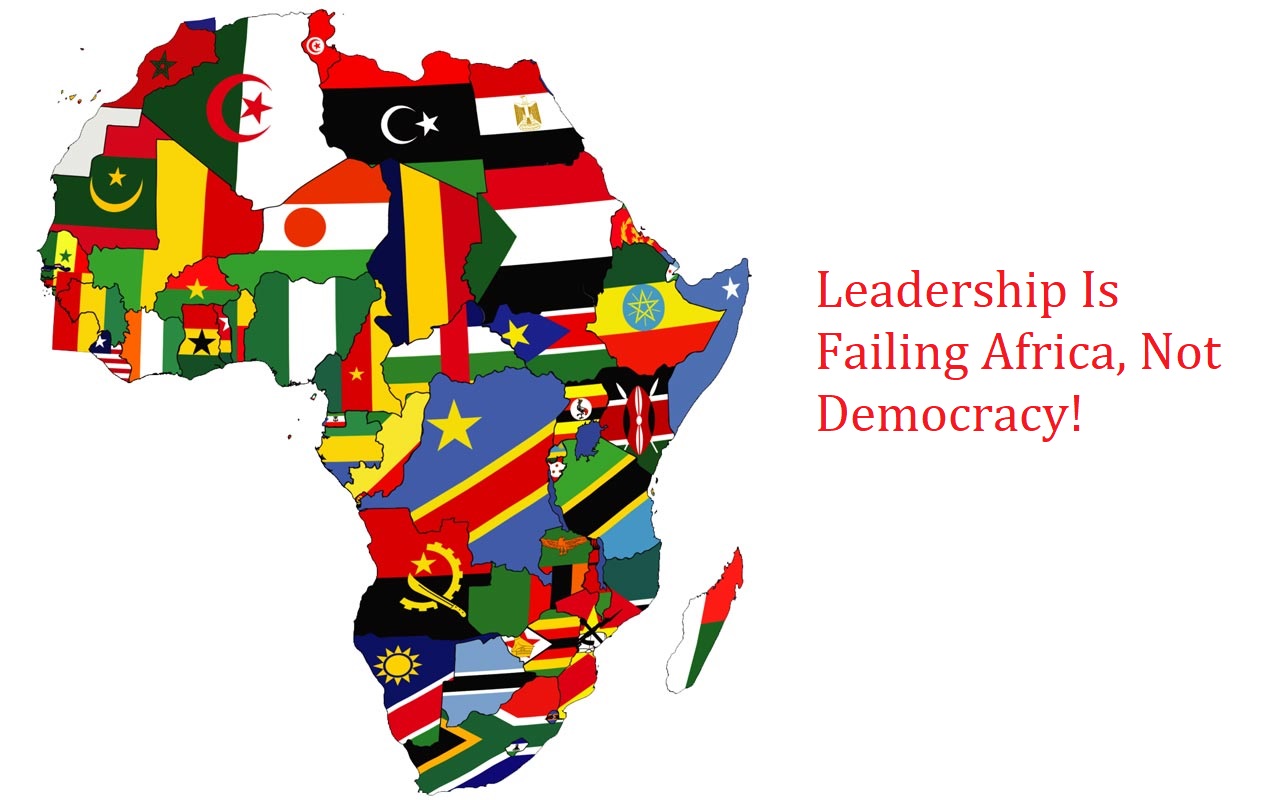
Leadership Is Failing Africa, Not Democracy!

2

As Gabon goes into paralysis, many are writing that Africa should do away with “democracy” because it has not delivered sustained dividends to the people. Yes, poverty, hopelessness and despair continue to be the byproducts of Africa’s democracy.

But the question is this: what is the alternative? Certainly, not the military because we have seen their results also. Yes, they’re “no good”, and there is no way we can forget in a hurry how decades of military rule destroyed Africa. When politicians steal, you know. But when the khaki men steal, you see no records because they keep none.

My postulation is simple: we need to focus on Leadership and not just on “Democracy” with the colouration of the Western mindset. As a certified village boy who did not leave the village until they forced me to leave the village for college, I can tell you that most African communities have indigenous democratic systems.

In most Igbo communities, the oldest man in the clan runs the community and he seeks counsel from other elders. Even though he may seem to be the boss, he does not wield any unusual power; he folds into the antennas of the citizens. In Ovim, the Ojengwa women are like police officers. They have the power to excommunicate stubborn people and ban them. But before that is done, everyone must agree that the person is really bad. Consensus and democratic ideals!

Democracy is not for the Western world. What you can say they have more than us is better leadership. But Africa cannot have better leadership when we vote based on tribe, religion, etc. The fact is this: poverty does not respect tribe, religion, etc.

Good People, Africa’s problem is not Western Democracy. And the solution is not military rule. What we have to do is become real, and that means leaving behind tribalism, religiosity, etc as we choose leaders. The solution is good governance and that cannot come without a filtering process.

If we can improve the electoral process, democracy will give us what we need. I have advocated that the African Union should take over conducting elections as it makes no sense to allow sitting presidents to supervise elections their parties or themselves are participating in. 

Interestingly, I made that point in the City of Democracy, Libreville, Gabon, as the now deposed president of Gabon smiled. I called it the African Democratic Commission with a clear mandate to conduct free and fair elections under the tenets of the AU within member states!

Comment on Feed

Comment 1: I completely agree with you, Prof. Ndubuisi Ekekwe!

Whenever I condemn military coups, some folks erroneously believe that it means I agree with our current democratic anomaly in Africa; no, I don’t agree with our current system a bit.

As you’ve noted, a redesign of our system (African Union serving as electoral umpire) and building leadership in all spheres of our institutions (beyond looking for a presidential savior) is what we need.

I witnessed some of the years during Nigeria military juntas; those guys are very abusive and power drunk. I remember several times how a private officer would beat up older men in their SUVs on the roads (at the slightest provocations), the scale of corruption (no one dared report, etc. Since then, I have loathed the military regime and detested them in power; they are made for Command and control.

Africa needs to build its own systems, have its own debates (we need to learn how to disagree to agree), and its own identity. We do not need a ‘Boss’ at the helm of affairs; we need ‘leaders’ throughout our organizations.

Comment 2: Political leaders in Africa are pushing the people to the wall. What is playing out should serve as a reminder to them that there are alternatives to democracy, and it’s a different conversation whether those alternatives are acceptable or not. In any case, the people should have a say in what the acceptable mode of political governance is. AU, ECOWAS and the rest should design a mechanism to develop metrics for leadership and governance, and encourage subtle peer review.

You cannot be beating a child and tell him or her not to cry. The people will support any alternative at this point because democracy in Africa seems to be a safe haven for leadership without purpose

China’s Blockchain System in Shanghai

0

Blockchain technology is one of the most promising and disruptive innovations in the digital era. It has the potential to transform various industries and sectors, such as finance, trade, logistics, healthcare, and governance. Blockchain technology enables secure, transparent, and decentralized transactions and data sharing among multiple parties, without the need for intermediaries or central authorities.

China is one of the global leaders in blockchain development and adoption. According to a report by PwC, China ranked second in the world in terms of blockchain projects, patents, and investments in 2020. China has also launched its national blockchain service network (BSN), which aims to provide a unified and low-cost platform for blockchain applications across different sectors and regions.

To address these challenges and promote the development and adoption of blockchain technology in China, the Shanghai Municipal Government has launched a blockchain infrastructure system that aims to provide a unified platform for blockchain applications and services. The system, which is called the Shanghai Blockchain Engineering Technology Research Center (SBERC), was officially inaugurated on August 18, 2023.

The SBERC is a joint initiative of the Shanghai Municipal Government, the Shanghai Jiao Tong University, the Shanghai Academy of Social Sciences and several leading enterprises in the blockchain industry. The SBERC will serve as a hub for blockchain research, innovation, education and collaboration. It will also provide technical support, policy guidance and standardization for blockchain projects in Shanghai and beyond.

The SBERC will focus on four major areas:

Blockchain infrastructure: The SBERC will build a high-performance, low-cost and secure blockchain infrastructure system that can support various types of blockchain applications and services. The system will consist of a public chain, a consortium chain and a private chain, as well as a cross-chain communication protocol and a smart contract engine. The system will also integrate with existing information systems and platforms, such as cloud computing, big data and artificial intelligence.

Blockchain applications: The SBERC will develop and promote blockchain applications in various domains, such as finance, logistics, healthcare, education, government affairs and social welfare. The SBERC will also facilitate the integration of blockchain technology with other emerging technologies, such as 5G, IoT and biometrics.

Blockchain standards: The SBERC will establish and implement blockchain standards and norms that are compatible with international standards and regulations. The SBERC will also participate in the formulation and revision of national and regional blockchain policies and laws.

Blockchain talent: The SBERC will cultivate and attract blockchain talent through education, training and exchange programs. The SBERC will also establish a blockchain innovation incubator that will provide mentoring, funding and resources for blockchain startups and entrepreneurs.

The SBERC is expected to play a key role in advancing the development and adoption of blockchain technology in China and beyond. It will also contribute to the construction of the Shanghai International Financial Center, the Shanghai Science and Technology Innovation Center and the Shanghai Free Trade Zone. The SBERC is a milestone in the history of blockchain technology in China and a testament to the vision and leadership of the Shanghai Municipal Government.

One of the key areas where China is focusing its blockchain efforts is Shanghai, the country’s financial and commercial hub. Shanghai has been designated as a pilot zone for blockchain innovation and application by the central government. The city has launched several initiatives and policies to support blockchain development, such as establishing a blockchain industry alliance, setting up a blockchain innovation center, and issuing blockchain-related standards and regulations.

Shanghai’s ambition is to build a world-class blockchain infrastructure system by 2025, according to a recent plan released by the Shanghai Municipal Commission of Economy and Informatization. The plan outlines the vision, goals, and strategies for developing Shanghai’s blockchain ecosystem in the next five years.

The plan envisions that by 2025, Shanghai will have:

A comprehensive and high-quality blockchain infrastructure system that covers the whole city and connects with the national BSN and other major blockchain platforms.

A mature and vibrant blockchain industry that nurtures leading enterprises, attracts global talent, and fosters innovation and collaboration.

A rich and diverse blockchain application scenario that covers various fields, such as finance, trade, logistics, healthcare, government affairs, social governance, culture, and education.

A sound and effective blockchain governance mechanism that ensures the security, legality, and compliance of blockchain activities.

To achieve these goals, the plan proposes several strategies and measures, such as:

Strengthening the construction and integration of blockchain infrastructure, such as cloud computing, big data, artificial intelligence, internet of things, 5G, etc.

Promoting the research and development of core blockchain technologies, such as consensus mechanisms, encryption algorithms, smart contracts, cross-chain interoperability, etc.

Supporting the cultivation and growth of blockchain enterprises, especially small and medium-sized ones, by providing financial incentives, tax benefits, subsidies, etc.

Encouraging the exploration and innovation of blockchain applications in various sectors and scenarios, such as digital currency, supply chain finance, digital identity, traceability certification, etc.

Enhancing the regulation and supervision of blockchain activities, such as establishing a blockchain registration system, setting up a blockchain security monitoring center, issuing blockchain-related laws and standards, etc.

Improving the education and training of blockchain professionals and talents, such as launching blockchain courses in universities and vocational schools, organizing blockchain competitions and hackathons, etc.

Building a favorable environment for blockchain development, such as strengthening international cooperation and exchange on blockchain issues, creating a positive public opinion atmosphere for blockchain awareness and acceptance. Shanghai’s plan to develop a blockchain infrastructure system by 2025 reflects its determination and confidence to seize the opportunities and challenges brought by blockchain technology by leveraging its advantages in finance.

How To Get Sexual Blackmailers Off Your Back

0

I have written a series of articles (all is available and accessible here on Tekedia) on how sexual blackmail and sextortion is a crime not just in Nigeria but in other jurisdictions around the world, it is punishable with at least 5 years jail term. For the umpteenth time, I will be writing on sexual blackmail and sextortion again because I recently learnt that it is the most lucrative internet fraud in Nigeria at the moment.

For the past two weeks, I have had three briefs from victims of sexual blackmail. According to them, how they became a victim of having their private pictures and videos in the hands of the blackmailers is that some folks pose as beautiful and horny ladies on social media, they spam strangers and anybody that accepts or responds to the spam message becomes a potential victim.

The beautiful lady who is obviously a fake persona will either request they exchange nudes or that they should engage in online sex. Once you agree to that and send your private pictures or videos over to them they will start using them to blackmail you; threatening to release them online if you do not meet their demands which are usually money requests. 

The other incident is an angry ex-lover who wants to get back at his ex-girlfriend for dumping him. They regularly exchanged nudes while they were dating, When the relationship went sour the ex-boyfriend decided to leverage on the sex tapes and nudes of the lady to blackmail and extort money from her. 

The other incident is that these criminals hack into people’s devices and if they see any compromising private pictures or videos, they will download them and start using them to blackmail and extort money from you. 

If you ever find yourself in any of these situations or something similar to it, one thing you should know about blackmailers is that once you have paid them or succumbed to their demands once they will never let you go again, you will automatically become their cash cow. They will keep demanding payouts from you until you give up or decide to call their bluff. 

Therefore, the recommended best way to get not just sexual blackmailers but every other kind of blackmailer off your back is to call their bluff and ignore them, while you are doing that also report to law enforcement agencies: it is a crime so it falls under the purview of the Nigeria police force, in fact, I just filed a petition at the Interpol division of the Nigerian police force this morning on behalf of a client who is currently a victim of sexual blackmail. 

Most importantly, you as an internet user or a lover should exercise some level of discretion, Not every private picture or video you should send across and if you must share those private files with your online lovers, make sure that your face cropped your face off, blurred your face or just ensure that your face  is not showing on them. 

Blackmailers are criminals who threaten to reveal embarrassing or damaging information about someone in order to extort money or something else of value. Blackmail is a crime under federal and state law. It is a felony that can carry over a year in prison and high fines. Blackmailers often have information that is damaging to the victim. They may threaten to reveal this information to family members or associates, rather than to the general public. Blackmailers may also threaten to tell a harmful secret about someone in order to try to force them to do something.

Blackmail is a crime based on information, while extortion is a crime based on force. Blackmailers may want the victim to believe they are in the clear, but they will start harassing the victim again as soon as they are comfortable. This can make the victim break down and think there is no way out other than giving the suspect what they want.


South Korea Requires Crypto Exchanges Operating in the Country to Hold $2.3M Reserves

0

A new regulation will take effect in South Korea next month that will require cryptocurrency exchanges to hold at least 3 billion won ($2.3 million) in bank accounts as a measure to protect consumers from possible losses or fraud. This is part of the government’s efforts to tighten oversight and transparency of the crypto industry, which has been growing rapidly in the country.

The Financial Services Commission (FSC), the main regulator of the financial sector, announced the rule on August 24, saying that it aims to prevent exchanges from using customer funds for their own operations or investments. The FSC also said that the rule will help ensure that exchanges have enough liquidity to refund customers in case of bankruptcy or hacking incidents.

According to the FSC, there are currently 63 crypto exchanges operating in South Korea, but only four of them have obtained a license to offer real-name accounts that are linked to customers’ bank accounts. The rest of the exchanges use anonymous or virtual accounts that are more vulnerable to money laundering and fraud.

A major regulatory change is looming for the cryptocurrency industry in South Korea. The Financial Services Commission (FSC), the country’s top financial watchdog, has set a deadline of September 24 for all crypto exchanges operating in the country to register with the authorities and comply with the new rules. This deadline is part of the revised Act on Reporting and Use of Certain Financial Transaction Information, which was passed in March 2020 and came into effect in March 2021. The act aims to prevent money laundering, tax evasion, and other illicit activities involving cryptocurrencies, and to protect investors from fraud and scams.

According to the act, crypto exchanges must obtain an Information Security Management System (ISMS) certification from the Korea Internet and Security Agency (KISA), and partner with a bank that can provide real-name accounts for their customers. The ISMS certification is a standard that evaluates the security level of an organization’s information systems and management practices. The real-name account system is a measure that requires crypto users to verify their identity with a bank before they can deposit or withdraw funds from an exchange.

These requirements are intended to enhance the transparency and accountability of the crypto industry, and to align it with the global standards set by the Financial Action Task Force (FATF), an intergovernmental body that combats money laundering and terrorist financing.

However, meeting these requirements has proven to be a challenge for many crypto exchanges in South Korea, especially for smaller and mid-sized ones. As of August 27, only four exchanges have obtained both the ISMS certification and the bank partnership: Upbit, Bithumb, Coinone, and Korbit. These are the four largest exchanges in the country, accounting for more than 90% of the market share. The rest of the exchanges, which number around 60, are either still waiting for the ISMS certification, or have failed to secure a bank partnership. Some banks have been reluctant to work with crypto exchanges due to the high risks and costs involved, as well as the uncertainty over the future of the industry.

The FSC has made it clear that there will be no extension or grace period for the deadline, and that any exchange that fails to register by September 24 will face legal consequences. This means that unregistered exchanges will have to cease their operations or face criminal charges and hefty fines. Moreover, their customers will not be able to withdraw their funds or access their accounts after the deadline. The FSC has urged crypto users to check whether their exchange is registered or not, and to move their assets to a registered exchange or a personal wallet before September 24.

The deadline is expected to have a significant impact on the crypto industry and market in South Korea, which is one of the most active and vibrant in the world. According to a report by Chainalysis, a blockchain analysis firm, South Korea ranked third in the world in terms of crypto adoption in 2020, behind only Vietnam and India.

The report also estimated that South Koreans traded about $7 billion worth of cryptocurrencies in 2020, up from $600 million in 2019. The country has also been a leader in innovation and development in the crypto space, with various projects and initiatives involving blockchain technology, decentralized applications, non-fungible tokens (NFTs), and more.

The deadline may result in a consolidation of the industry, as only a few exchanges will survive and dominate the market. It may also lead to a loss of diversity and competition in the industry, as well as a reduction of choices and convenience for consumers. On the other hand, it may also improve the credibility and stability of the industry, as well as its compliance with international norms and regulations. It may also foster a more mature and responsible attitude among crypto users and investors, who will have to pay more attention to their security and risk management.

The deadline is a critical moment for the crypto industry in South Korea, as it will determine its fate and direction for the foreseeable future. It will also test the resilience and adaptability of the industry, as well as its potential for growth and innovation. The deadline is not only a challenge, but also an opportunity for the industry to prove itself as a legitimate and valuable part of the financial system.

The new regulation is expected to have a significant impact on the crypto market in South Korea, which is one of the largest and most active in the world. According to data from CoinMarketCap, South Korea accounted for about 4% of the global crypto trading volume as of August 28, ranking fourth after the US, China and Japan. Some industry experts and analysts have welcomed the move as a positive step to enhance consumer protection and trust in the crypto sector, while others have expressed concerns that it may stifle innovation and competition among smaller players.

Grayscale Wins SEC in latest rift on Bitcoin ETF

0

In a landmark decision, the US Court of Appeals for the District of Columbia Circuit has ruled that the Securities and Exchange Commission (SEC) acted arbitrarily and capriciously in denying the application of Grayscale Investments to launch a Bitcoin exchange-traded fund (ETF).

The ruling, issued on August 29, 2023, overturns the SEC’s order from March 2023, which rejected Grayscale’s proposal on the grounds that the Bitcoin market was too volatile, manipulative, and prone to fraud. The SEC also argued that Grayscale failed to demonstrate that its ETF would comply with the federal securities laws and protect investors.

However, the court found that the SEC’s analysis was flawed and unsupported by evidence. The court noted that the SEC did not adequately consider the benefits of a Bitcoin ETF, such as providing investors with exposure to a new asset class, enhancing liquidity and price discovery, and reducing counterparty risk. The court also pointed out that the SEC did not address how its concerns about the Bitcoin market could be mitigated by Grayscale’s proposed safeguards, such as using multiple custodians, tracking the net asset value of the ETF, and adhering to strict reporting and auditing standards.

The court concluded that the SEC’s decision was arbitrary and capricious, and violated the Administrative Procedure Act, which requires federal agencies to provide a reasoned explanation for their actions. The court remanded the case to the SEC and instructed it to reconsider Grayscale’s application in light of the court’s opinion.

The ruling is a major victory for Grayscale and the Bitcoin industry, as it might pave the way for the first Spot Bitcoin ETF in the US. A Bitcoin ETF would allow investors to buy and sell shares of a fund that tracks the price of Bitcoin, without having to deal with the technical challenges of buying, storing, and securing the cryptocurrency. A Bitcoin ETF would also increase the legitimacy and mainstream adoption of Bitcoin, as it would attract more institutional and retail investors to the market.

Grayscale is not the only company that has been seeking to launch a Bitcoin ETF in the US. Several other firms, such as VanEck, WisdomTree, Blackrock and Valkyrie, have also filed applications with the SEC, but have faced similar rejections or delays. The court’s ruling could have positive implications for these other applicants, as it sets a precedent for challenging the SEC’s authority and reasoning on this matter.

The SEC has not yet commented on the ruling or indicated whether it will appeal to the Supreme Court. However, some experts believe that the SEC may be more inclined to approve a Bitcoin ETF under its new chair, Gary Gensler, who has expressed a more nuanced and favorable view of cryptocurrencies than his predecessor, Jay Clayton. Gensler, who took office in April 2021, has also signaled that he wants to update and modernize the SEC’s regulatory framework for digital assets.

The court’s ruling is expected to have a significant impact on the Bitcoin market, as it could boost the demand and price of the cryptocurrency. According to some analysts, a Bitcoin ETF could attract billions of dollars in inflows from investors who are looking for an easy and regulated way to access the digital asset. At the time of writing, Bitcoin is trading at around $26,155 USD per coin, up about 2.7% since the ruling was announced.

However, not everyone is happy with the SEC’s decision. Some of Grayscale’s competitors, such as VanEck, Valkyrie, and WisdomTree, have also filed for Bitcoin ETFs, but have not received any response from the SEC. They argue that Grayscale’s product is not a true ETF, but rather a conversion of its existing trust, and that it does not meet the standards of diversification, liquidity, and valuation that are required for an ETF.

Moreover, some crypto enthusiasts believe that a Bitcoin ETF is unnecessary and even harmful for the industry, as it would centralize the ownership and custody of Bitcoin and expose it to more regulatory scrutiny and manipulation. They prefer to buy and hold Bitcoin directly, or through decentralized platforms that offer more autonomy and innovation.

The debate over Bitcoin ETFs is likely to continue, as more players enter the market, and more countries adopt different approaches. For example, Canada and Brazil have already approved several Bitcoin ETFs, while China has banned all crypto-related activities. The US market, however, remains the most influential and sought-after one, and Grayscale’s win could have significant implications for the future of Bitcoin and crypto.